‘Dad, What’s a Ballistic Missile?’

By Firas Al Nassan

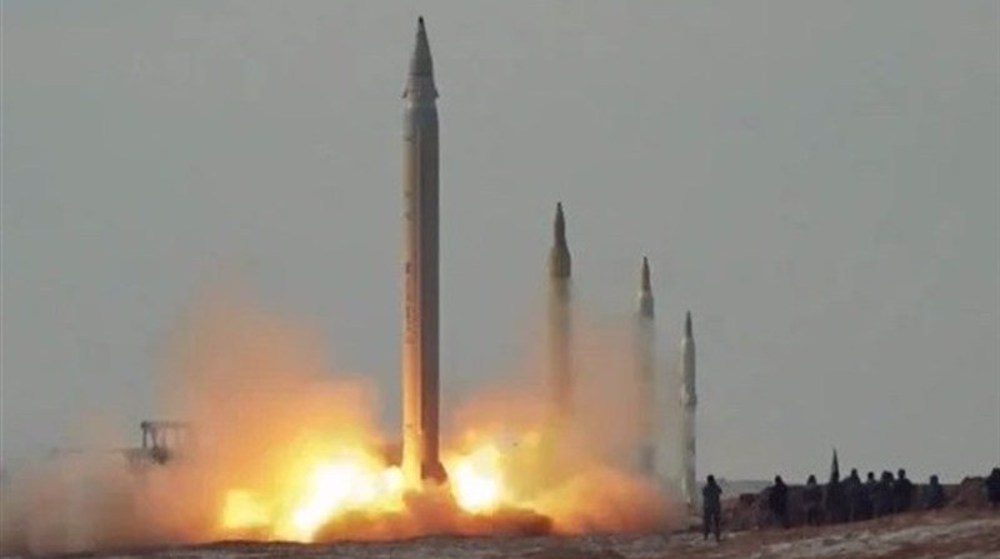
Suddenly, I realized that the war with Iran had changed the words we use every day, adding a new vocabulary to our lives, along with the sarcastic lexicon that accompanied footage of people staying up all night watching missiles, hearing air raid sirens, and brazenly dragging missile debris behind them.

My son surprised me with this question just a few days ago. He wasn’t looking for information for a homework assignment, nor was he watching a documentary; he was watching the news with me. I paused for a moment before answering him. Not because explaining the term was difficult, but because I realized that the war hadn’t just changed the political and military landscape, but also the words and semantics now echo in our homes.

Months ago, most of us couldn’t distinguish between a ballistic missile and a cruise missile, and words like “hypersonic,” “drones,” or “air interception” weren’t part of our daily conversations. Today, however, they’re on everyone’s lips. From children to the elderly, from taxi drivers to office workers who start their day by browsing the news.

Even the word “intercept” has changed its meaning. It no longer refers to interrupting someone while they’re speaking, but rather to the success of an air defense system in shooting down a missile before it reaches its target. “Barrage” is no longer associated with rain, but with the number of missiles launched simultaneously. As for “de-escalation,” it has become the most frequently used expression, and perhaps the least achievable.

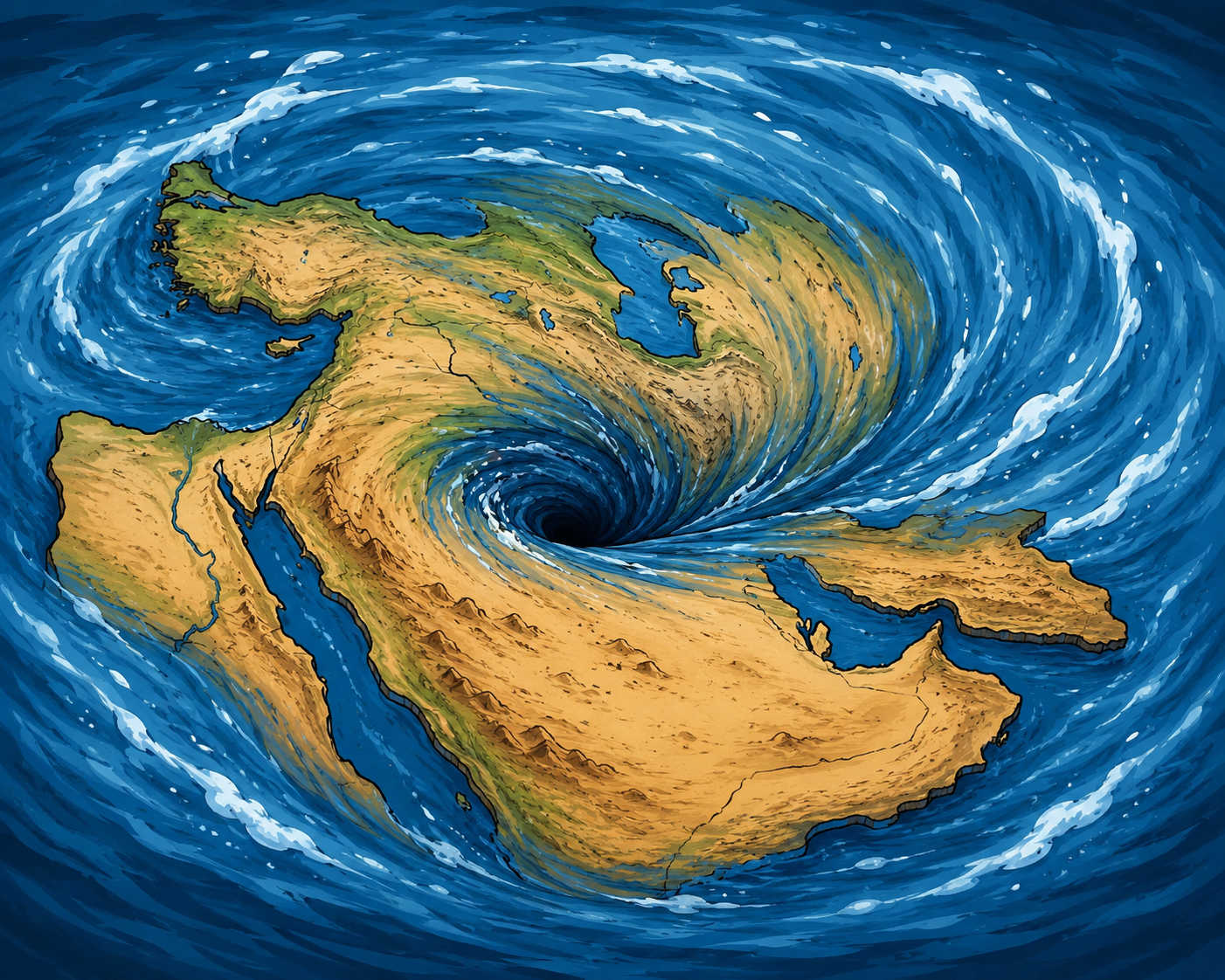
Remarkably, the war has not only changed military vocabulary, but has also redefined the very concept of place. The Strait of Hormuz, Bab el-Mandeb, and the Red Sea are names that, for many, were merely locations on a map. Now, they have become headline news, determining oil prices, shipping traffic, flight paths, and even market sentiment.

Years ago, anyone who spoke about ballistic missiles or air defenses was considered a military expert or a security analyst. Today, these terms have become part of the general culture, used by people with ease, as if they were words they’ve known for ages.

After I finished explaining the meaning of “ballistic” to my son, it occurred to me that every war has consequences that cannot be measured solely by the number of missiles or the extent of the destruction. There is another, less noisy, impact that lingers with us for a long time: Words.

Wars not only impose new realities on the ground, but they also add new vocabulary to our language. Some of these words disappear with the end of the fighting, while others remain for years, bearing witness to an entire era.

I hope that one day my son will ask me about the meaning of a new word, one unrelated to missiles or air defenses, but rather to travel, exploration, or peace.

The author originally wrote this piece in Arabic and published in Ad Dustour daily in Amman, Jordan  

Continue reading
Kingdom of Vice: Epstein and the Mossad… The Devil in Every Detail

Asia Al-Atrus

Five hundred lawyers are currently studying the documents released so far by the US Department of Justice regarding the Epstein case, in accordance with the Transparency Law. This indicates the seriousness and gravity of the case, which has dominated many media outlets to date.

In numerical terms, we are dealing with three million documents, 180,000 photos, and 2000 videos. This means that the information and names published about those involved in the official prostitution network are merely the tip of the iceberg, and we will have to wait for what the remaining files will reveal, should they occur, as the document review process progresses.

Similarly, talk of resignations within political parties, governments, or royal families is merely a prelude to what is to come. We know very well that prostitution rings, human trafficking gangs, and the exploitation of minors exist in the world of crime and corruption, and these networks are transnational. However, when it comes to the world’s decision-makers and experts in politics, finance, communication, and cinema—those who distribute the cards of virtue and good morals— they are tantamount to a collapse. The collapse of the values ​​and principles upon which the world has been built until now—values ​​and principles supposedly meant to provide protection from the inferno of chaos.

As the scandals of the empire of vice linked to Epstein continue to unfold, it remains certain that he was merely the front for the intelligence network and Mossad, who recruited him for this mission before eliminating him in the hope of burying the dark truth with him. It is crucial at this juncture to examine the initial reaction of the US president following the release of three million tons of documents by the US Department of Justice, nearly five years after the death of the influential owner of the Epstein Island, accused of child rape.

Some of those accused are now breaking their silence, exposing the role of a segment of the American elite, Hollywood elites, and others in this scandal, which will likely make the American public forget the Watergate scandal that brought down President Richard Nixon. While awaiting further revelations about the abhorrent scandals of Epstein Island and perhaps the motives behind the disappearance of the main perpetrator, who died in prison, it appears that many names from both the Democratic and Republican parties are implicated.

This is the crux of the matter: The decision-makers who circulate the game, control the fate of the world, and compete to spread democracy. Those who claim to uphold morality and universal values ​​are embroiled in scandals into which they have been swept, falling into a trap that even Hollywood studios seem incapable of imagining or matching. US President Donald Trump, whose name has repeatedly surfaced in the case files, appeared resolute, asserting that the published documents prove his innocence, contrary to the claims of his leftist adversaries.

This suggests that the US president is concerned with the implications and impact of this case on American public opinion at this particular time. We are not here to judge the US president’s statements in this most serious case circulating on social media, but rather to try to understand the repercussions of this case on the rapidly unfolding regional and international transformations. However, this understanding is not without considering the primary and influential force pulling the strings, manipulating or pacifying those involved through all available means after studying their personalities and weaknesses.

This involves luring them into compromising situations, filming or recording them to exert pressure, blackmail, and bargaining. Perhaps we are not exaggerating when we consider these tactics to be typical of intelligence networks, foremost among them the Israeli Mossad and which surpassed American intelligence. In his book, “By Way of Deception,” former Mossad agent Victor Ostrovsky reveals the inner workings of the Mossad and its deception of the world to carry out dirty work in various European and Arab countries. He describes how Mossad agents infiltrate these countries, luring and assassinating politicians, activists, and scientists thanks to their advanced technology and the listening posts they have established from the Mediterranean to the Red Sea.

In one chapter, Ostrovsky exposes a swimming pool where Mossad leaders meet with their male and female collaborators. This pool is no less sordid, deviant, vile, and despicable than what goes on on Epstein Island, which can be described as the Devil’s Salt Flat, a gathering place for the political, Hollywood, and intelligence elite to conduct their criminal activities and practices. They are obsessed with exploiting children for their pleasure and plotting to target anything that might stand in the way of their interests.

The book clearly illustrates the Mossad mentality, which has consistently employed every malicious practice to ensnare its targets: Politicians, businessmen, media figures, and artists, whom they use in the game of intelligence and its wars. The Hidden…

…Some names, including British politician Peter Mandelson, chose to resign from the Labour Party to avoid embarrassment for his party after new information was revealed about his friendship with Jeffrey Epstein…


In Slovakia, a high-ranking official also resigned after photos and emails revealed his meetings with Epstein in the years following his release from prison… Prince Andrew, brother of King Charles, was stripped of his titles and forced to apologize after photos of him with Epstein were published, and the same happened with the Crown Princess of Norway.

There is no doubt that Epstein kept a list of his close associates to exploit in blackmail operations, and it can be concluded that Epstein’s death in 2019 was not natural but rather part of a plan to get rid of him and bury his secrets and documents with him. However, it seems that the magic is turning against the magician, and perhaps the results of the investigations into three million documents will surprise many, including the American public, if the remaining documents are declassified and placed under scrutiny to expose the network of official profiteering from underage children, killing them, and shedding their blood to practice deviant satanic rituals. Its title is moral corruption and the exploitation of the dignity and humanity of underage children.

The Black Record, or Black Book, of Epstein has only revealed a fraction of it. Trump, and before him Bush Jr., and others, and their relationship with Epstein may not be the end of the story. Perhaps the coming days will hold more shocking surprises about the man of peace and his whims, but also about his plans, capabilities, and potential.

The Mossad’s intentions in infiltrating and penetrating are for purposes that cannot be discerned. The question remains: Why is all this dangerous information and these facts being leaked at this particular time? What are the Israeli Mossad’s calculations? And is there a link between the Epstein documents and the Israeli occupation entity’s insistence and pressure to target Iran and attempt to destabilize the Middle East region?

Asia Al Atrus is a Tunisian writer and journalist and this article appeared in the Arabic website Rai Al Youm.

Continue reading
Can ‘Realist’ Trump Pull Off Gaza Ceasefire?

By Michael Jansen

During his ongoing visits to Saudi Arabia, Qatar and the Emirates, US President Donald Trump seeks to focus on business opportunities and investment in the US rather than address the negative political realities to which he contributed during his first term (2017-2021).

At that time, he dismissed the two-state solution in favour of “The Deal of the Century” which would give Palestinians a degree of autonomy within Israel. He defunded UNRWA, recognised Jerusalem as Israel’s capital, moved the US embassy there, and said the US no longer considers Israeli settlements illegal overturning a 1978 policy. The fate of the refugees, Jerusalem, and settlers were meant to be negotiated under the two-state solution by the sides under the 1993 Oslo accord. He closed the US consulate in occupied East Jerusalem which served Palestinians and the PLO office in Washington. Trump recognized Israeli annexation of Syria’s occupied Golan.

Trump began his second term by calling for the expulsion of Palestinians from Gaza which would be redeveloped as a Middle East Riviera instead of exerting pressure on Israel to end the Gaza war and enable its reconstruction. Under Trump’s real estate venture Gazan Palestinians were supposed to settle in Egypt and Jordan, which along with all the Arabs flatly rejected this proposal. Egypt drew up a counterproposal to reconstruct devastated Gaza while its population stays put.

His resort scheme has angered the Arab public from the Gulf to the Atlantic. His call for Saudi Arabia to establish relations with Israel has been rejected as Riyadh has said it will normalise when there is a Palestinian state with its capital in Jerusalem.

Since Trump made Saudi Arabia his first foreign destination in 2017 during his first term, the region has changed significantly by pivoting to the East. Saudi Arabia and the Emirates have cultivated ties with Russia – Riyadh’s partner on oil production and pricing – and China which buys Gulf oil and exports billions of dollars in goods to the Gulf. The Emirates, Egypt and Iran joined BRICS (the grouping of Brazil, Russia, India, China, and South Africa) while Saudi Arabia applied but did not follow through. China mediated Saudi-Iranian reconciliation. This has ended Iran’s isolation in the region.

On the positive side, early in this term Trump opened talks with Iran over its nuclear programme to replace the 2015 deal from which he withdrew in 2018. A fifth round of talks is expected. Although Trump wants to be a peacemaker, he has threatened war if the talks fail.

As a peacemaker, Trump bombed Yemen heavily to force Yemen’s Houthis to end attacks on international commercial and naval vessels in the Gulf of Aden and the Red Sea. The Houthis and US agreed to end this confrontation. Trump has not, however, halted Houthi drone and ballistic missile attacks on Israel which the Houthis say will stop if Israel observes a ceasefire or ends the war on Gaza.

Trump has not planned to stop in Israel during this Gulf tour, indicating that there is some distance between him and Israeli Prime Minister Binyamin Netanyahu. He has not only refused to ceasefire in Gaza but also maintained a ten-week blockade of the strip. He could have done both to ease Trump’s swing around the Gulf where Gaza is high on the agendas of the rulers and public. Since Netanyahu has carried on with his Gaza war, Trump has ignored him when resuming talks with Iran on limiting its nuclear programme in exchange for lifting sanctions and agreeing to a ceasefire with Yemen’s Houthi. The ceasefire has been welcomed by Washington’s Arab allies, particularly Saudi Arabia which had been urging an end to US attacks on Yemen before Trump began his tour.

Without Israeli involvement, the US has also negotiated with Hamas over the release on Monday of US-Israeli hostage Edan Alexander. For Trump, this is a greatly desired success in the US. In Israel, families of hostages who are not US-Israel dual citizens fear their relatives will be forgotten by Netanyahu who is determined to not only continue with the war but also to expand it once Trump departs from the region. Hostage families are not alone in their suspicions. A majority (54 per cent) of Israelis said that the war was being driven by personal rather than security reasons. Only 21 per cent agreed with Netanyahu’s prioritisation of eliminating Hamas over rescuing the hostages. A March poll showed 70 per cent of Israelis wanted Netanyahu to resign.

He has adopted this stance for several reasons. First, right-wingers in his coalition have vowed to pull out if he ends the war. Second, once the war is over, Netanyahu will be called upon to account for lax Israeli security in the south where Hamas breached the fence on October 7th, 2023, killed 1,200 Israelis and visitors and abducted another 251. There was no excuse for laxity. Young female Israeli soldiers deployed as “watchers” along that part of the border with Gaza, warned repeatedly that Hamas was conducting drills and manoeuvres ahead of an attack. Their warnings were not taken serioiusly by senior Israeli officers. Some of these women were killed and some captured. Third, as long as the war is being waged, Netanyahu will not have to explain how lightly armed Hamas fighters have managed to carry on the fight while the mighty Israeli army and air force levelled Gaza and killed 53,000 Palestinians. Netanyahu has a lot of explaining to do.

Jansen is a columnist for the Jordan Times

Continue reading
Trump’s Twist With The Houthis

By Dr Khairi Janbek

During his meeting with the Canadian Prime Minister Mark Carney, US President Trump interrupted the proceedings and declared that the American bombing campaign against the Houthis has stopped. He said, they don’t want to fight us so we respect that.

Now, what does that translate to, is not really very clear. Does it mean that the Houthis will not attack US ships only, or will they cease their actions which threaten maritime movement in the Red Sea including Israeli ships? And will the fighting, for instance, end British bombardment and/or Israeli bombardment. I suppose it remains to be seen.

It is said by observers that the Trump decision was a surprise to the international community and even to some in his administration, though one would argue there are no more surprises with president Trump since his definition of the “America First” policy has come to mean either extracting himself out of the problems he makes as if nothing happened or alternatively stick his nose in already existing mess here and there, then extracting himself out of it without having either solved or achieved anything.

What went on and still goes on in the Red Sea area seems to be closely tied to the big red apple or the big prize, and that is the nuclear negotiations with Iran. Otherwise what would make the Houthis stop fighting, they have been bombed for such a long time without any tangible results?

On the one hand, one would assume that Iran is sending positive signals to the Americans by clearly restraining their proxies in Yemen, while at the same time the Saudis are urging both the Americans and the Iranians to reach an agreement over the issue, while in the mean time, in the background, Israel is lurking behind the scenes being restrained in the name of a successful nuclear agreement.

Indeed, the success of the nuclear agreement will mean that Iran can have a civilian nuclear program subject to periodic inspection, and that by itself, should bolden Saudi Arabia to have its own civilian nuclear program and enrich uranium on its own territory independent of the usual American demand that Saudia should sign first a peace agreement with Israel.

I suppose someone must give in, after all President Trump will be returning back from his coming trip to the Gulf with almost $3 trillion, and calling the Persian Gulf, the Arab Gulf in America; which would be just as meaningless as calling the Gulf of Mexico, the Gulf of America.

As for Israel, well the Houthis declare clearly that their soul stand with Gaza will not refrain from bombing the Zionist state?

Now, to what extent can Mr Netanyahu, the prime minister, whom till now has managed to disguise his political survival in the garment of a regional strategy, will be allowed to upset the American plans, especially, first of all, in counter bombing the Houthis, or even emboldened enough to bomb Iran as the sponsors of the Houthis.

If Israel is to be kept out of the Gulf currently, it will work on exacting a price somewhere else.

Dr Khairi Janbek is a Jordanian writer based in Paris, France.

Continue reading
Analysts: US Fails on Houthis After Six Weeks of Bombing

After nearly six weeks of intensive US airstrikes on different areas and cities of Yemen the Houthi Ansar Allah continues to assert that its military operations in the Red Sea and against Israeli targets will not stop until the ongoing Israeli war on the Gaza Strip ends.

Houthi military spokesman Yahya Saree, Saturday, announced the targeting of the Israeli Nevatim Air Base in the Negev with a ballistic missile, as well as two other sites in the Tel Aviv and Ashkelon areas and the targeting of warships on the US aircraft carrier SS Harry Truman in the northern Red Sea are just part of the continuing ongoing military strikes.

However in response to these attacks the US aircraft launched two airstrikes last Friday night on the Ras Isa oil port in the coastal province of Al Hudaydah, which Washington considers a major source of fuel used to finance the Ansar Allah group’s activities.

According to Dr Liqaa Makki, senior researcher at the Al Jazeera Center for Studies, the USA has failed miserably in its strikes against the Houthis because of its inability to move to the second phase. He said that as a result they are  discussing an alternative scenario for this military campaign against the Houthis.

Makki believes that US President Donald Trump has reached a dead end, and that the ceiling he set regarding the Houthis is proven unrealistic, pointing out the United States, despite its military strength, is failing in Yemen because it is fighting a group, not a state.

On the other hand, military and strategic expert Brigadier-General Elias Hanna, believes that both sides are losing, whilst the image of the United States is being damaged, given the scale of the US military campaign and Trump’s engagement with the Houthis, who previously declared that  “we [US] will withdraw from all the world’s wars.”

Reports estimate the cost of the airstrikes carried out by the US military on Houthi positions amounted to approximately $1 billion in the first three weeks of the military campaign alone.

The Associated Press reported the value of the seven downed American drones made by the Houthis exceed $200 million, and the continued loss of American drones makes it difficult for the US leadership to accurately determine the extent of the damage to the Houthis’ weapons stockpiles.

Brigadier-General Hanna said that Washington lacks a comprehensive strategy in its dealings with the Houthis, and that the political goal it announced—restoring deterrence and opening shipping lanes—has not been achieved.

He also pointed out the US military is targeting the centers of gravity within the Houthi military system to disrupt it, a strategy Israel has used with the Palestinian resistance but has failed to achieve.

Appeasing the Houthis

In light of Washington’s inability to achieve its goals against the Houthis, Brigadier-General Hanna believes the pressure being exerted on Israeli Prime Minister Benjamin Netanyahu regarding the entry of aid into the Gaza Strip is part of an effort to appease the Houthis so that they will halt their operations in the Red Sea and against Israeli targets.

Trump’s upcoming visit to the region also requires a de-escalation. According to the military and strategic expert, the US president cannot arrive while the Houthis are launching missiles.

In the same context, the senior Al Jazeera’s Makki expects  that a Gaza ceasefire will soon be reached before Trump’s visit, allowing the Houthis to halt their operations as they have initially linked the cessation of their operations to an end to the war on Gaza and to the cessation of US strikes against them.

American officials have previously revealed to CNN that the US military has struck more than 700 Houthi targets and carried out 300 airstrikes since the campaign began in mid-March, “forcing them underground and creating confusion and chaos within their ranks.”

Continue reading