Israel And Palestinian Heritage Destruction

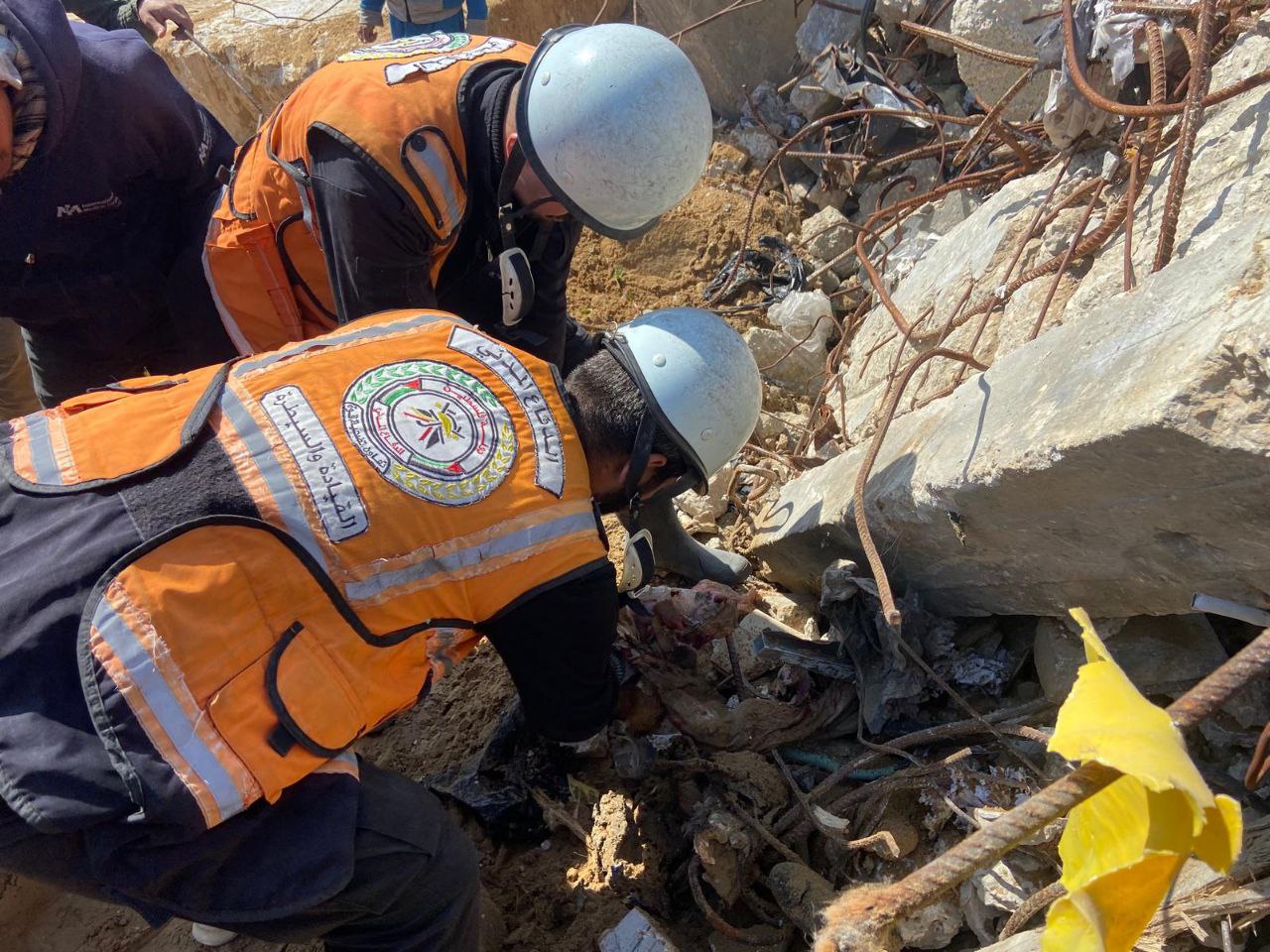
Last month, Palestinian Minister of Tourism and Antiquities Hani Al-Hayek warned that during its 2023-2025 war on Gaza Israel damaged or destroyed more than 316 archaeological sites in Gaza and the West Bank. While most were from the Mamluk and Ottoman eras, others were from the early Islamic centuries and the Byzantine period. He argued that Israel is conducting “systematic targeting” of Palestinian historical sites as part of its long-term strategy of colonising and annexing the West Bank.

While the current right-wing Israeli government flatly rejects withdrawal from Palestinian territories conquered 58 years ago, the Arab world and the international community argue that regional peace depends on the establishment of a Palestinian state in the West Bank, East Jerusalem and Gaza. This means that Palestinians should be in charge of archaeological remains in these territories.

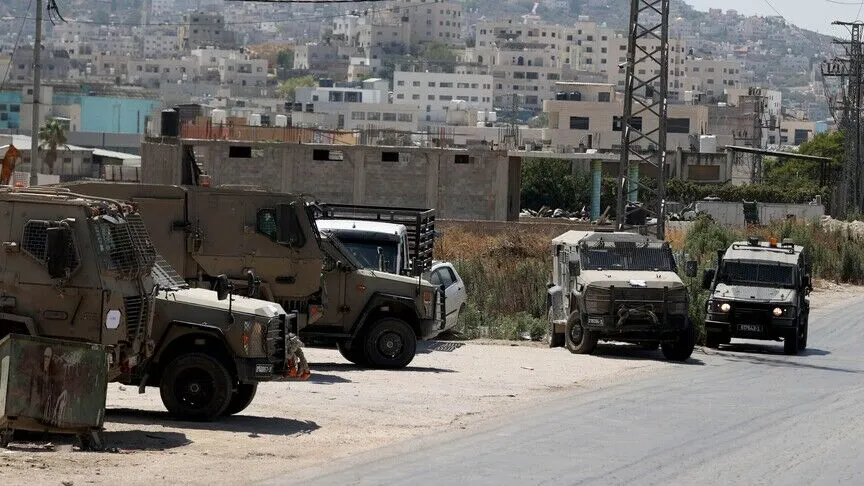
Hayek was prompted to speak out after archaeologists protected by Israeli troops raided a Byzantine era site near Ramallah and stole five columns. Israel claimed Palestinians had built a structure in the centre of the site, damaging the archaeological remains.

Both Israelis and Palestinians claim a second site, Sebastia, near Nablus in the northern West Bank belongs to their cultural heritage, although it has been ignored and unexcavated for decades. Israel holds the archaeological park, which is in Area C under full Israeli control, while the Palestinian town of Sebastia is in Area B, under joint Israeli and Palestinian Authority security control but Palestinian administration.

Israel has begun to expropriate 1,800 dunams of land for the “preservation and development” of Sebastia which has been settled from the Iron Age (1200-586 BC) through modern times. The site contains layers of history reaching back nearly 3en,000 years and contains Iron Age dwellings, walls, and a palace which exist alongside remnants from Roman times.

Sebastia was the capital of the northern Israeli Kingdom during the first half of the 10th century BC. Conquered by the Assyrians in 720 BC, Sebastia became an administrative centre under the Assyrians, Babylonians, Persians, and Romans, Muslim Arabs and Ottomans.

The site and the modern village of Sebastia – which has about 3,200 Palestinian inhabitants – have been declared a World Heritage Site by UNESCO as the town is the location of Roman royal tombs, a Roman amphitheatre, medieval buildings, and a historic mosque built within a Christian church.

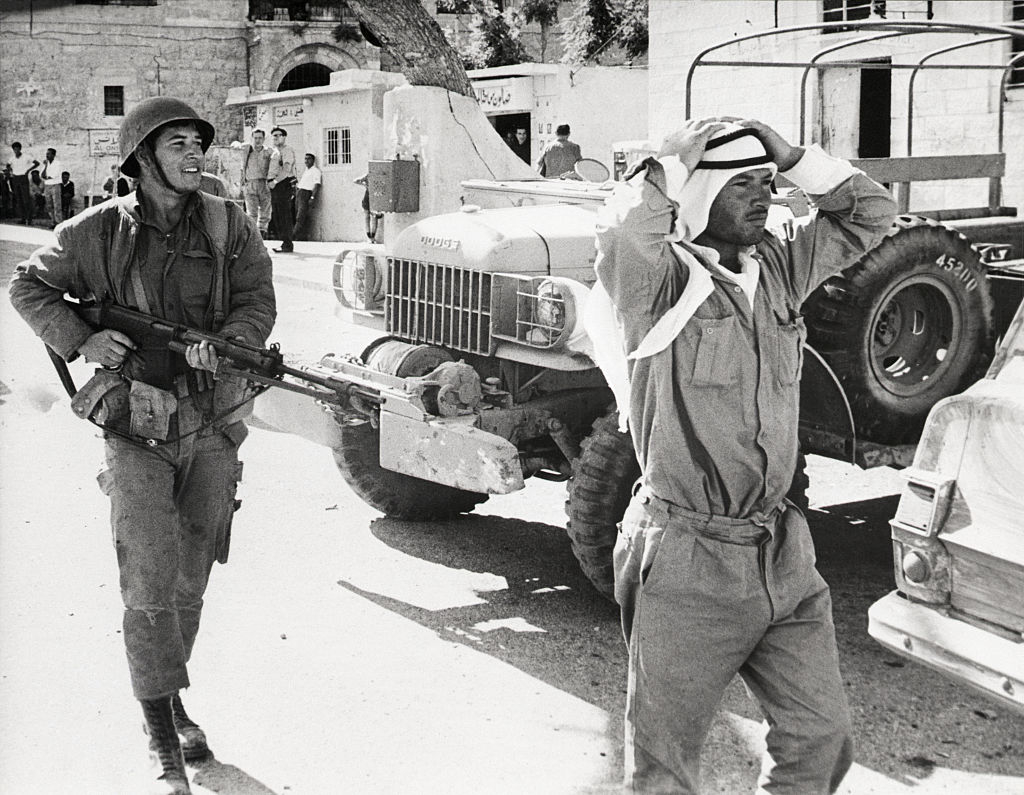
As the Israeli expropriation order covers the archaeological site and Palestinian olive plantations, Palestinian landowners were given two weeks to file legal objections to the seizure and their expulsion. This is the largest antiquities-related West Bank expropriation order issued by Israel since the 1967 occupation. While international law prohibits occupiers from carrying out excavations in areas they control, Israel has ignored this as well as most other laws governing occupations. In May 2023, Israel allocated $9.2 million for Sebastia.

The Israeli Peace Now movement declared: “Israel continues to harm Palestinian rights, expropriating thousands of dunams in violation of international law and settling the northern West Bank, an area with only a few thousand settlers compared with more than a million Palestinians.” The movement warned, “Israeli greed harms not only the landowners, but also the prospect of a peaceful solution that upholds the rights and heritage of both peoples.”

Emek Shaveh, an Israeli anti-occupation group founded by archaeologists, and Yesh Din, an Israel rights movement, issued a joint report in 2018 which stated, “Since 1967, Israel has endeavoured to appropriate the archaeological assets of the West Bank, based on the view that the Jewish heritage of places and antiquities testifies to a bond between the antiquities and the state of Israel, and constitutes a justification for deepening its control over ancient sites. This perception underlies every aspect of Israel’s archaeological practices in the West Bank.

“Israel’s control enables the physical exclusion of Palestinians from the sites and ancient finds through various means, ultimately weakening their connection to their heritage. It also enables Israel to shape the historical narrative of the sites by highlighting and glorifying their significance for the Jewish people and downplaying the role of other peoples and cultures who also had a part in the history of the region…

“Under the guise of concern for heritage, the government is investing tens of millions ..in turning heritage sites into weapons of dispossession and annexation.” The group added, “The intention to expropriate private land is anything but preservation; its purpose is to establish a tourism settlement that will detach Sebastia’s heritage from the [Palestinian] town and Judaize the area through the tourists who visit the site.”

Israel has weaponised archaeology to assert the legitimacy of its take-over of the land between the Mediterranean and the Jordan River. While striving to discover, develop and preserve Jewish archaeological remains in Palestine, Israel neglects or even harms non-Jewish or Palestinian heritage at the expense of Palestinians.

Meanwhile, Palestinian Archaeologists are trying to restore damaged sites. They have begun work on the Qasr al-Basha museum, a Mamluk-era palace located on a UNESCO heritage site dating back to 800 BC. After destroying 70 per cent of the museum by bombardment, Israeli troops occupying the site looted 20,000 ancient and medieval artifacts stored there.

UNESCO has reported damage to the Saint Hilarion Monastery, one of the oldest Christian heritage sites in the region, and the 7th century Omari Mosque, Gaza’s main place of Muslim worship. Due to the Israeli blockade on building material restorers have been compelled to scrabble in the ruins of these buildings for material for restoration.

In August, Israel appropriated 63 Palestinian West Bank archaeological sites, 59 in Nablus governate, three in Ramallah governorate, and one in Salfit governorate. Sixty-three were declared “Israeli historical and archaeological sites,” excluding Palestinian ownership. In total, Israel has taken over 2,400 out of the 6,000 Palestinian sites in the West Bank. This process can endanger the study of archaeology and history in this area if archaeologists involved are political motivated and preserve only what suits them while wiping out layers of remnants above and below layers, they explore. Meanwhile, Israeli archaeological organisations and personalities indulge in bitter competition with each other.

This article is written by Michael Jansen for the Jordan Times.

Continue reading
The Olive Tree Defies Israel

By Ali Osman Karaoglu  

A lesser-known dimension of Israel’s ongoing occupation of Palestine since 1967 is the systematic destruction of the Palestinian people’s economic resources and means of livelihood. One of the most important sources of income for Palestinians is olive cultivation – so much so that the olive tree is regarded as one of Palestine’s national symbols. Palestinian poet Mahmoud Darwish captured this symbolism in his famous words: “Here we remain, as long as thyme and olives remain.”

Beyond its symbolic value, the olive tree is the main source of income for nearly 80,000 Palestinian families. According to UN data, about 48% of the agricultural land in the West Bank and Gaza is covered with olive trees. Olive production contributes around 14% to the Palestinian economy. About 93% of harvested olives are used for olive oil production, while the remainder is used to make soap, table olives, and pickles.  

Usurpation of olive trees: Israel’s assault on nature and identity

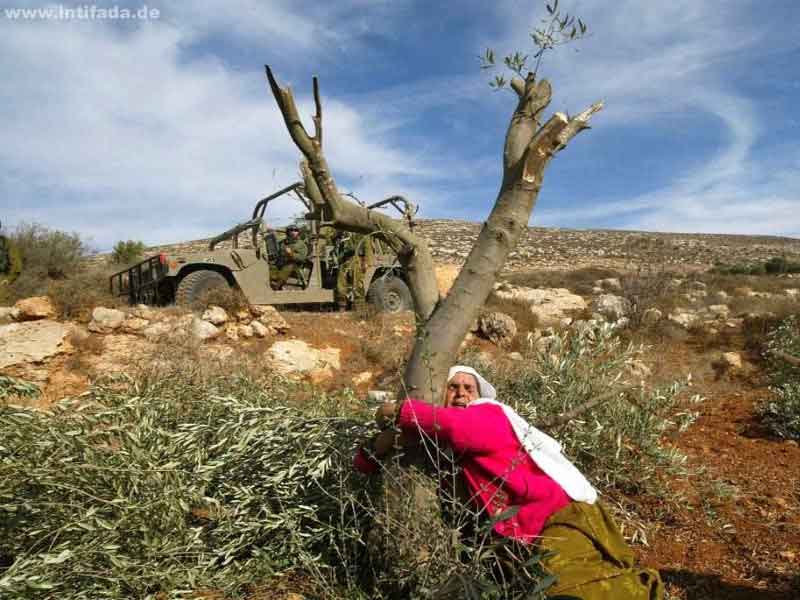
Recently, Israeli settlers in the West Bank prevented Palestinians from harvesting olives, an essential source of livelihood, and destroyed 13,000 olive trees. Such actions, either directly committed or condoned by Israeli authorities, are known and documented as systematic practices.   

According to various international reports, Israel has destroyed around 800,000 olive trees over the past 20 years, and more than 2.5 million trees since 1967.

Palestinians face great difficulty in harvesting and protecting their olive trees. Since the Oslo Accords, Israel has exercised full control over 60% of the West Bank and requires Palestinians entering these areas to obtain a “permit issued by Israeli authorities.”

Farmers are therefore forced to secure permission to access their own land, but this permit system is largely arbitrary. There are no clear criteria specifying what conditions Palestinian applicants must meet to obtain a permit.

Even when they provide ownership documents and pass “security” checks, permits are often issued only to the person named on the deed, excluding other family members from entering the land. The permits are typically short-term, and each time they expire, farmers must reapply without any guarantee of renewal.

According to UN data, nearly half of permit applications are rejected on arbitrary grounds, turning the system into a policy of harassment and attrition. The same restrictive policy applies to bringing in agricultural necessities such as tractors, equipment, and fertilizers.

Over time, many Palestinians who once cultivated other crops have converted their land into olive groves, since olive trees can survive even without intensive care.  

How Israel’s seizure of olive trees violates international law

The destruction of olive trees in the occupied Palestinian territories occurs almost every year. Thousands of trees are destroyed annually during Israeli military operations or through attacks by settlers. Such incidents are rarely taken seriously or investigated by police or other public authorities.

Israeli soldiers frequently fail to protect Palestinians from settler attacks and, in many cases, act against the Palestinians themselves when they try to defend their land and trees.

In fact, the destruction of Palestinian farmlands and olive trees violates international law. Even Israel’s own Supreme Court has recognized the illegality of arbitrary practices in the “Morar v. IDF Commander” case.

In that case, Palestinian farmers appealed to the Israeli Supreme Court after a military commander denied them access to their farmland. The commander claimed the closure was intended to “protect Palestinian farmers from settler harassment.” The plaintiffs argued, however, that Israeli settlers systematically harass, assault, and damage the property of Palestinian villagers, while the Israeli army fails to intervene to stop this violence or take necessary measures to protect Palestinians and their agricultural products.

The court ruled that the army must take steps to prevent settler violence, stating that the proper way to protect Palestinian farmers from harassment is for Israeli military authorities to implement necessary security measures and impose restrictions on the settlers responsible for unlawful actions. Nevertheless, Israeli authorities continue to disregard their own court’s ruling and persist with arbitrary practices.

Under international humanitarian law, causing environmental damage as a military tactic is prohibited. The law stipulates that “care shall be taken to protect the natural environment against widespread, long-term, and severe damage during armed conflict.” This protection includes prohibiting methods or means of warfare that are intended – or expected – to cause such damage, as these may endanger the health or survival of the population.

Palestinian territories have been under Israeli occupation since 1967. This ongoing occupation constitutes a “continuing act of aggression,” and under the provisions of the 1949 Fourth Geneva Convention, imposes obligations on the occupying power.

The occupying power is responsible for ensuring a secure environment that allows the local population to meet its daily needs, and must protect civilians against looting and destruction of property.

Moreover, the damages caused by Israel – an apartheid regime – to the environment and to olive trees are considered war crimes under Article 8 of the Rome Statute.

UN Security Council resolutions also emphasize that Israel must refrain from harming the environment and is obligated to prevent settler provocations. Israel has repeatedly violated these obligations and continues to act in breach of international law.

It is known that Israel’s policy of destroying olive trees aims both to make its occupation permanent and to clear land for the establishment of future settlements. Therefore, Israel’s environmental crimes should be added to the cases currently being pursued against it at the International Court of Justice (ICJ) and the International Criminal Court (ICC).  

The author who contributed this piece to Anadolu, is a faculty member in the Department of International Law at Yalova University’s Faculty of Law. 

Continue reading
If You Screw Up The Gaza Deal, Trump Will ‘Screw’ You, US Official Warns Bibi

A senior American official has issued a stark warning to Israeli Prime Minister Benjamin Netanyahu that if he allows the ceasefire deal between Israel and Hamas to collapse, he will face severe consequences from US President Donald Trump, Israel’s Channel 12 reported.

Speaking in Hebrew on Channel 12, Axios correspondent said the US official warned him that Netanyahu is “walking a very thin tightrope with President Trump. If he keeps this up, he’ll end up screwing up the deal, and if he screws up the deal, Donald Trump will screw him.”

The comments come amid rising tensions between Washington and Tel Aviv over moves by Israel’s parliament, the Knesset, to advance legislation tied to the annexation of parts of the occupied West Bank.

According to the report, US Vice President JD Vance, who concluded a diplomatic visit to Israel earlier on Thursday, was taken aback after learning that the Knesset had given preliminary approval to two non-binding annexation-related bills the previous day.

Speaking to reporters at Tel Aviv’s Ben Gurion Airport before his departure, Vance criticised the vote, saying: “If this was a political stunt, it’s a very foolish one. I personally take offence to it.”

Israeli move angered Trump

An Israeli official told Channel 12 that Netanyahu had been warned several days earlier about the strong backlash such a move would provoke but did nothing to stop the vote from going ahead.

The Israeli Knesset approved both annexation-related bills in a preliminary reading, with three more votes required before they can become law.

The legislation advanced despite open opposition from President Trump, who said last month that he “would not allow Israel to annex the West Bank.”

The vote also coincided with Vance’s visit to Israel, part of a wider US diplomatic effort to preserve the Gaza ceasefire that took effect on October 10 according to TRTWorld.

Continue reading
Palestinian State and The Poker Game

By Dr Khairi Janbek

Israeli Prime Minister Benjamin Netanyahu is a politician above all else. He is dogmatist in rejecting a Palestinian state, and a pragmatist when he talks about it, but all that depends on the position taken by the United States. 

Ever since one can remember from the days of the Oslo Agreements, a Palestinian state, as a term swung between two conceptions: A future project on the ground, and a slogan up-in-the-air to pander on, and as many from my generation remember the rather acerbic comment: Gaza-Jericho First of 1993 which came to be the first and the last.

The Israeli government of that time, believed that it would bring the Palestinians to independenance as interlocutors in determining the occupied West Bank of Jordan that came about by discussing the issue through a joint Jordanian-Palestinian delegation.

However, the little that was agreed upon started to be eroded by the first Netanyahu government, which at times implicitly and at times explicitly acted in the way so as to negate the Oslo agreements with impunity.

One would like to say that since then plenty of water has passed under the bridge, but when it comes to the Palestinian issue, it’s always the same water and the same bridge.

At this point one must say that everywhere in the media there are supposedly leaks and plans about the day after with regards to the Gaza Strip. However, the only consensus between the international community at large and officialdom of the Arab world, is that Hamas should surrender its weapons. But really what happens next?

Silence in the Arab world rules the scene which is in a way saying what cannot be said, which is in other words don’t involve us directly but we shall try to do what we can. This is habitually the Arab position in always being reactive rather than active.

And now on the international scene is the big drive to recognize a Palestinian state, which is for the time being affirming a point of principle, and towards which Israel is actually debating the annexation of the West Bank, as if to say, if the West Bank is reoccupied by Israel, where is this Palestine you want to recognize?

And adding insult to injury, the Washington administration has refused entry to Palestinian President Mahmoud Abbas and the PNA leadership to attend the UN General Assembly meetings. This indicates that it does not recognize that there is a leadership of the Palestinians.

However, and despite saying this, one wishes to be able to say that we might be jumping the proverbial gun, in the sense that, the issue is just a matter of tit-for-tat telling states: You recognize Palestine we take measures to counter that, but alas the Israeli annexation was contemplated long before the international recognition of a Palestinian state.

Now, what will it mean if Israel does go ahead and annexes the West Bank and cancels the Palestinian authority? Well, once again the international community, to the exclusion of the USA, will have to consider the West Bank as and Israeli occupied territory, and once again, the world will have to go back to the Security Council for an attempt to resolve the issue.

Dr Khairi Janbek is a Jordanian columnist living in Paris, France.

Continue reading
Gaza’s Lost Generation

The UN agency for Palestinian refugees (UNRWA) sounded the alarm on Saturday over the fate of education in Gaza, warning that more than 660,000 children have been deprived of schooling for a third consecutive year as Israel’s devastating war nears the two-year mark.

“The war in Gaza is a war on children and it must stop. Children must be protected at all times,” UNRWA said in a statement, cautioning that the enclave’s youth are at risk of becoming a “lost generation.”

While schools in the occupied West Bank are set to reopen on Sept. 1, Gaza’s classrooms remain shuttered.

The Palestinian Education Ministry said around 700,000 students in the enclave have seen their schooling suspended under bombardment, with more than 70,000 unable to take high school exams for two consecutive years according to Anadolu.

According to ministry data, Israeli attacks since October 2023 have killed at least 17,000 school students and more than 1,200 university students in Gaza, while injuring tens of thousands more.

In the occupied West Bank, dozens of students have also been killed, wounded or detained by Israeli forces during the same period.

The toll has extended to teachers and academic staff. Nearly 1,000 education workers have been killed in Gaza, and thousands more injured or detained across the Palestinian territories.

Israel has killed over 63,400 Palestinians in Gaza since October 2023. The military campaign has devastated the enclave, which is facing famine.

Last November, the International Criminal Court issued arrest warrants for Israeli Prime Minister Benjamin Netanyahu and his former Defense Minister Yoav Gallant for war crimes and crimes against humanity in Gaza.

Israel also faces a genocide case at the International Court of Justice for its war on the enclave.

Continue reading