Greater Israel – A Confused Concept

Dr Khairi Janbek

The question of Greater Israel had always been there, swinging between Jewish religion and Zionist politics. Essentially it is a vague concept and interpreted according to the inclination of different groups inside Israel.

When Theodore Herzl talked about the land of Israel he defined it as being between the brook of the Nile and the Euphrates, with the debate being at the time, whether and area between the two rivers or actually all the way to both rivers.

Even when the state of Israel was established, its borders were not defined. It was the 1967 war which ignited the Greater Israel concept among the various Jewish groups with Israel occupying the West Bank, Sinai and the Golan Heights.

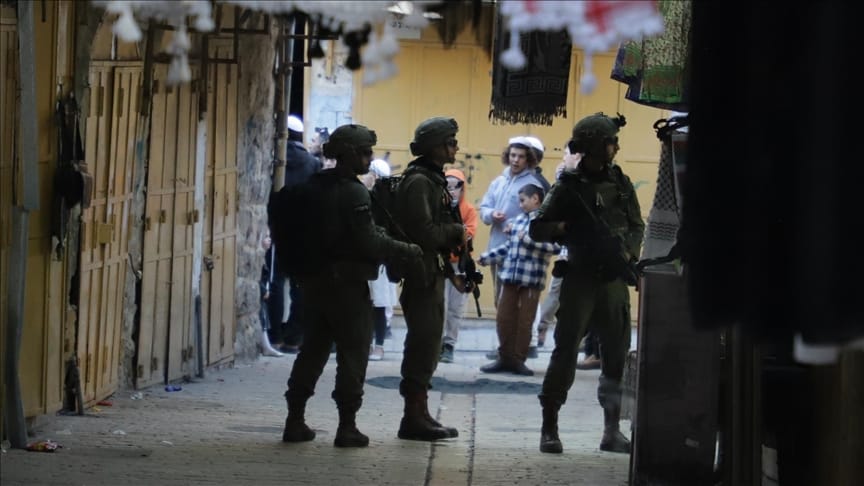
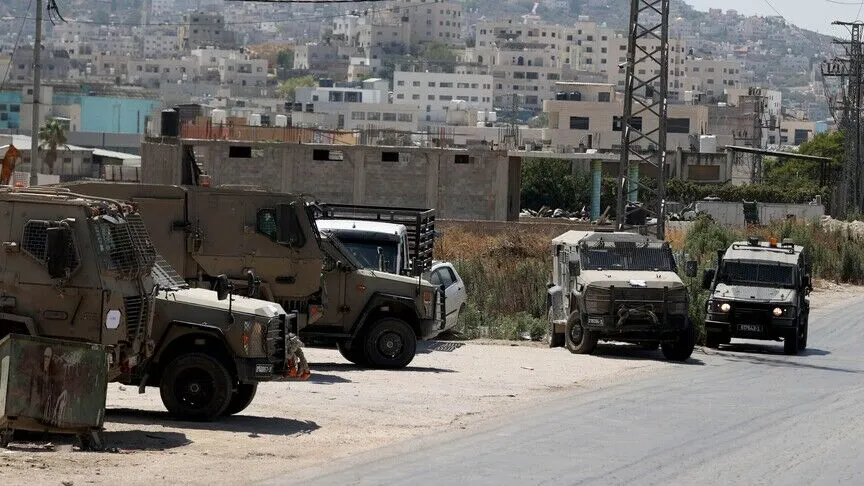
However, the recent pronouncements made by the Israeli government regarding this issue, started to ring bells of danger and awakened Arab fears especially, when the world sees Israeli military operations to retake Gaza, putting plans to annex the West Bank of Jordan and occupying territories in South Lebanon, annexing the Golan Heights and moving the Golan Heights and moving further into Syrian territories.

But where did the notion of Greater Israel originally came from, the idea which the father of Zionism Herzl defined? In fact it was taken from the book of Genesis in the Hebrew bible the Tanakh, where God grants Abraham and his descendants a vast expanse of land stretching from the brook of Egypt to the Euphrates. 

Some Israelis refer to a narrower vision mentioned in the Book of Deutronomy, where God instructs Moses to lead the Israelites in taking possession of Palestine, Lebanon, and parts of Egypt, Jordan and Syria.

Others invoke the Book of Samuel which describes lands secured by Kings Saul and David, including Palestine, Lebanon, and sections of Jordan and Syria. In fact those whom hold those beliefs, the pursuit of Greater Israel, is not merely political, it is the fulfillment of divine mandate, a reclamation of land they see as rightfully theirs.

At the same time, some Zionist currents have used the concept of Greater Israel to advocate for political territorial expansion of the state of Israel maintaining control over the West Bank, claim Gaza and the Golan Heights, parts of south Lebanon as being part of Israel and so on.

Essentially the term Greater Israel can refer to several different concepts depending on the ideological, religious or political context.

Dr Janbek is a Jordanian writer based in Paris, France

Continue reading
EU ‘Appalled’ at Israel…

The European Union has condemned Israel’s demolition earlier this month of a school in the occupied West Bank village of Aqqaba that was being built with EU and French funding.

The school, torn down by Israeli authorities on August 5, had been intended to serve hundreds of Palestinian children.

In a statement, an EU spokesperson said the bloc is “appalled” by the demolition and “expects its investments in support of the Palestinian people to be protected from damage and destruction by Israel, in accordance with international law”.

France also previously condemned the demolition, stating it is “holding the Israeli authorities to account for this action”.

Continue reading
Jordan’s PM: ‘Greater Israel’ Illusion

Jordanian Prime Minister Jafar Hassan on Tuesday called the so-called “Greater Israel” vision an “illusion,” stressing that Tel Aviv is “isolated” due to its “extremist” policies.

“We hear about visions and proposals that imply a perpetual war with no end, such as the illusion of Greater Israel entertained by extremist politicians in Israel,” Hassan said during a meeting in Amman with his Lebanese counterpart, Nawaf Salam, who arrived in the Jordanian capital early Tuesday for an unannounced visit.

He said Israel is “isolated and besieged because of its extremist policies.”

“The entire reality points to (Israeli) policies that deepen hatred and resentment as a result of ongoing massacres, and the peoples of the world and the region will not forgive them,” he added in his comments carried by the official Petra news agency.

On Monday, Jordanian government spokesman Mohammad al-Momani accused the far-right in Israel of “threatening the region and undermining prospects for a two-state solution.”

“Greater Israel” is a Biblical term used in Israeli politics to refer to the expansion of Israel’s territory to include the West Bank, Gaza, Syria’s Golan Heights, Egypt’s Sinai Peninsula, and parts of Jordan.

Last week, Israeli Prime Minister Benjamin Netanyahu told a news channel that he feels “very attached” to the vision of a Greater Israel. He said he considers himself “on a historic and spiritual mission” which “generations of Jews that dreamt of coming here and generations of Jews who will come after us,” according to Anadolu.

Israel has killed more than 62,000 Palestinians in Gaza since October 2023. The military campaign has devastated the enclave and brought it to the verge of famine.

Last November, the International Criminal Court issued arrest warrants for Netanyahu and his former Defense Minister Yoav Gallant for war crimes and crimes against humanity in Gaza.

Israel also faces a genocide case at the International Court of Justice for its war on the enclave.

Continue reading
Famine: Hundreds of Thousands Eat Every 2-3 Days in Gaza

Hundreds of thousands of Palestinians eat only one meal every two or three days amid a crippling Israeli blockade on the Gaza Strip, the UN agency for Palestinian refugees (UNRWA) said on Tuesday.

“More than 66,000 children in Gaza are suffering from severe malnutrition,” UNRWA spokesman Adnan Abu Hasna told Al-Ghad TV in an interview.

Since March 2, Israel has kept Gaza’s crossings closed to food, medical, and humanitarian aid, deepening an already humanitarian crisis in the enclave, according to government, human rights, and international reports.

Figures released by Gaza’s government media office showed that at least 57 Palestinians have died of starvation since October 2023.

Nearly 2.4 million people in Gaza live completely dependent on humanitarian aid, according to World Bank data.

“UNRWA will not be part of the new Israeli plan” for aid distribution in Gaza, as the plan “doesn’t adhere to UN standards at all,” Abu Hasna said.

On Sunday night, the Israeli Security Cabinet approved a plan to distribute aid in the blockaded enclave through private security contractors.

The plan, however, was rejected by the UN and dozens of international aid groups, saying it runs against humanitarian principles, is logistically unworkable, and could put Palestinian civilians and staffers in harm’s way.

The UN Humanitarian Country Team in Gaza said on Sunday night that it “can only support plans that respect the humanitarian principles of humanity, neutrality, independence, and impartiality,” according to Anadolu.

More than 52,500 Palestinians have been killed in Gaza in a brutal Israeli onslaught since October 2023, most of them women and children.

The International Criminal Court issued arrest warrants in November for Israeli Prime Minister Benjamin Netanyahu and his former Defense Minister Yoav Gallant for war crimes and crimes against humanity in Gaza.

Israel also faces a genocide case at the International Court of Justice for its war on the enclave.

Continue reading
Gaza Faces Public Health Crises

Amid sweltering heat, raw sewage and overflowing trash, displaced families in southern Gaza are facing an escalating public health crisis as aid remains blocked and medical supplies dwindle.

In the makeshift coastal encampments of Al Mawasi, families have no choice but to live in unsanitary conditions that are rapidly turning deadly, Louise Wateridge, Senior Emergency Officer at Palestine refugee agency, UNRWA, told UN News.

She described an increasingly dire situation: malnourished children and families, already worn down by months of war, battle unrelenting heat, unsanitary conditions, a lack of clean water and limited access to healthcare.

“The trash is just out of control. The sewage, the rodents, the pests, the rats, the mice – all of these animals are going between the structures that people are sheltering in,” she said.

As the days hot up, “disease is spreading. There is not enough medicine,” she added. UNRWA teams are conducting intensive clean up campaigns, but their resources are running out.

They’ve got about 10 days left of pesticides. Supplies are going to run out,” Ms. Wateridge warned.

Heavy equipment destroyed

The worsening conditions are being compounded by the destruction of Gaza’s public health infrastructure.

According to the UN humanitarian coordination office (OCHA), more than 30 vehicles essential for waste management, water supply and sewage maintenance were destroyed by Israeli airstrikes between 21 and 22 April.

In the past week alone, at least 23 reported strikes have hit tents sheltering internally displaced persons (IDPs), killing dozens of civilians – including women, children, and persons with disabilities.

Health system under strain

OCHA also noted that Gaza’s health system is continuing to collapse.

Over half of the remaining health facilities are located in zones under evacuation orders, posing serious access challenges for communities in urgent need. There are also widespread shortages of medicine, equipment and medical staff.

As of 15 April, an estimated 420,000 people have been displaced – many for the second or third time.

Shrinking humanitarian space

Humanitarian space continues to be shut down. Vital humanitarian aid has not entered Gaza for 52 consecutive days.

OCHA noted that between 15 and 21 April, nearly half of the planned humanitarian movements were denied or impeded.

It reported that out of 42 planned aid missions across the Gaza Strip that were coordinated with the Israeli authorities, 20 were denied, two faced impediments, 19 were facilitated and one was cancelled.

Meanwhile, UN agencies also have to contend with lack of funds to sustain their programmes.

As of 22 April, donors have disbursed about $569 million out of the $4.07 billion (about 14 per cent) required to meet the most critical humanitarian needs of three million people requiring assistance in Gaza and the West Bank, including East Jerusalem.

UN News

Continue reading