Haaretz Emigré: ‘Israel is a Broken Society’

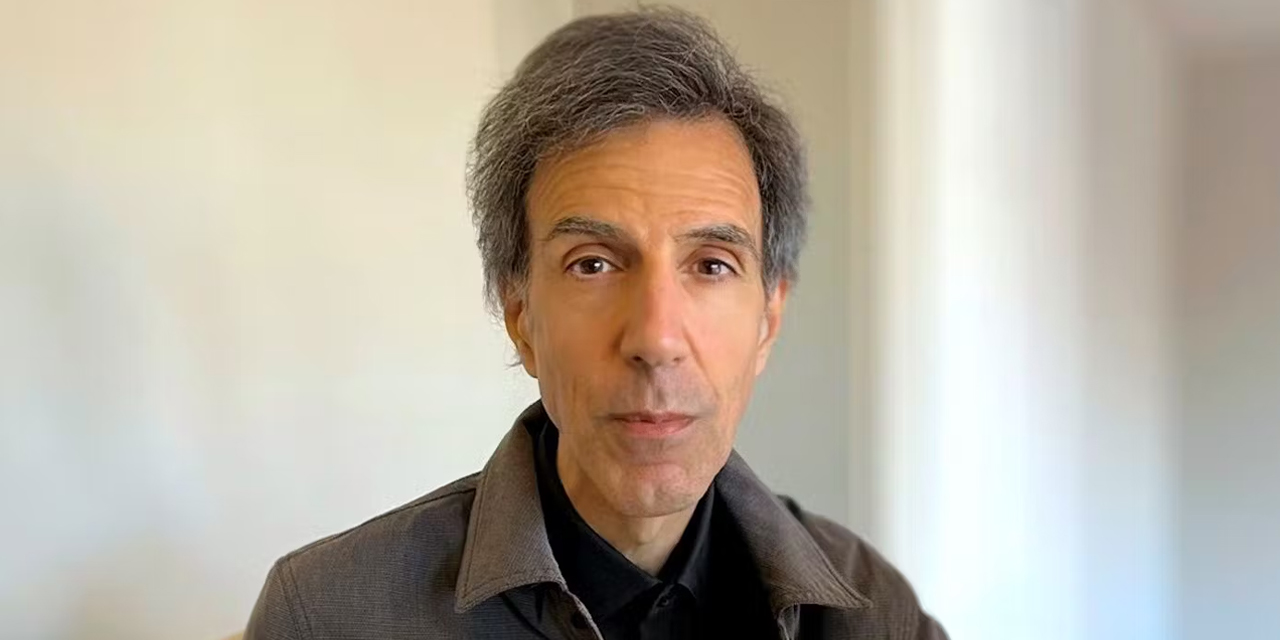
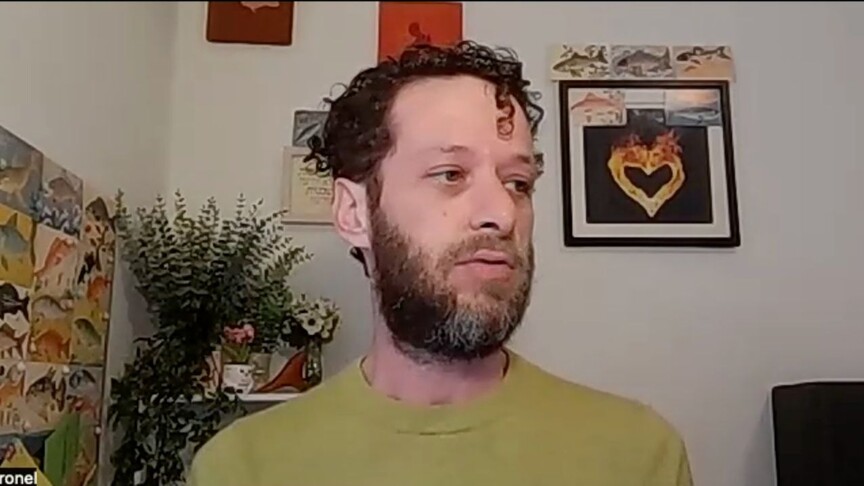
Tel Aviv’s escalation with Iran has made the risks of daily life in Israel more immediate and visible, according to an Israeli journalist who previously worked for Haaretz and left the country after Oct. 7, 2023.

“It was never safe,” Asaf Ronel told Anadolu in an interview. “But when you live inside it, you don’t notice.”

He said it was only after leaving Israel for Berlin that he became aware of the constant underlying stress.

“It took me months to understand why I’m so relaxed here,” he said. “I suddenly had hobbies. Because this layer of fear for your life is gone.”

But, he added, that sense of fear builds gradually over time.

“It accumulates. You keep denying it. You keep trying to maintain a facade of normalcy in your life,” he said. “Like everybody does until they’re broken.”

According to Ronel, the situation has deteriorated sharply in recent years.

He described the Oct. 7 attacks as a turning point that exposed deep vulnerabilities in Israel’s security system.

“The level of collapse of the military establishment on Oct. 7 was obvious,” he said.

At the same time, he argued that Israel’s military response has intensified insecurity.

“The more violence they’re using, it’s only creating more danger to them,” he said.

Ronel also criticized the role of the army more broadly, describing it as “functioning as a machine for oppression and violence against Palestinians and surrounding populations.”

Frequent trips to shelters have become routine, he added, though he stressed that Israeli civilians’ experience differs significantly from that of Palestinians.

“Israelis never dealt with anything similar to the daily life of Palestinians around us,” he said.

‘Israeli media is 99% propaganda’

From Feb. 28 until the current ceasefire, Iranian retaliatory strikes hit multiple locations across Israel, targeting military sites, energy infrastructure and other areas, exposing what analysts describe as mounting pressure on the country’s interception systems.

Strikes penetrated Israel’s multi-layered defenses in multiple districts, including Tel Aviv, Petah Tikva, Bnei Brak, Holon, Arad, Dimona, Nahariya and Haifa.

Ronel said the scale of these developments is not fully reflected in domestic media coverage.

“Maybe the media should tell them that … there’s also the other side that’s quite sophisticated and capable of hurting them directly,” he said.

According to Ronel, Israeli media has failed to convey these realities, focusing instead on military achievements.

“Israeli media is 99% propaganda, self-propaganda,” Ronel said.

“They’re not even aware that they’re doing it,” he added, describing what he called a “level of denial of reality” that has become institutionalized.

He pointed to reports of a growing shortage of the most sophisticated missile interception systems and the military adjusting its defense priorities accordingly.

“The media is not reporting it,” he said.

‘Broken state and society’

Ronel said the current crisis reflects deeper structural problems within Israel that predate the latest escalation.

“It was clear that the country is broken,” he said, pointing to widening gaps in public services, infrastructure and governance.

He also pointed to broader institutional failures, saying basic systems were no longer functioning effectively.

“It didn’t seem like there was anyone who knows how to fix it, at least not in charge,” he said.

He said the events following Oct. 7 reinforced that view.

“And then, a few days later, when the genocide started, it was clear that not only the state is broken, but the society,” he said.

While he said Prime Minister Benjamin Netanyahu should not be seen as the sole cause, he argued that both the government and wider society have moved in the same direction, turning what he described as the “constant state of emergency of the Zionist life” into a condition that has become “much, much more severe.”

Unsafe at home and abroad

Ronel said insecurity is not limited to Israel’s borders, arguing that perceptions of Israeli identity have also shifted internationally.

Saying he had never lived outside Israel for more than a month before Oct. 7, Ronel said he still does not feel safe abroad.

“Because I’m an Israeli, and Israeli identity carries meaning – this meaning now is the meaning of genocide and attempts to destabilize the world economy.”

He predicts that more Israelis will move abroad to “look for ways to live.”

According to recent research conducted by professors at Tel Aviv University, there has been a notable rise in emigration from Israel in recent years.

The research suggests that around 99,000 Israelis left the country in 2023 and 2024, while fewer than 20,000 returned in 2024. More than three-quarters of those who left were under 40.

For Ronel, too, the chances of his family returning are “getting lower and lower.”

Continue reading
Germany Backs Egypt’s Gaza Reconstruction Plan

Germany on Friday expressed strong support for the Arab League’s reconstruction plan for Gaza, which stands as an alternative to US President Donald Trump’s proposed US takeover of Gaza.

“The German government welcomes the Arab League’s plan for the reconstruction of the Gaza Strip,” Chancellor Olaf Scholz’s spokesman Steffen Hebestreit told a news conference in Berlin.

“The plan includes many valuable elements we can build upon. Constructive discussions should begin immediately,” he said, adding that Berlin maintains that Gaza must not pose any security threat to Israel in the future.

At the same news conference, German Foreign Ministry spokesman Sebastian Fischer stated that the plan contributes significantly to a sustainable solution by addressing political and security concerns in the Gaza Strip.

“We also believe that it is appropriate to rely on the Palestinian Authority as a key player in this process,” Fischer said. “The plan supports the long-term goal of a two-state solution and also a resumption of direct negotiations between the Israeli and Palestinian sides. We also support this,” he added.

When asked about Germany’s position on other plans and proposals, such as the relocation of Palestinians to neighboring countries, Fischer firmly stated that “forced relocations and expulsions are always contrary to international law.”

Continue reading
Arab-US Artist Fareed Armaly Declines German Top Award

Arab-American artist and curator Fareed Armaly rejected a prestigious award by the Academy of Arts in Berlin to protest censorship and cancel culture targeting pro-Palestinian voices in Germany.

The Academy of Arts in Berlin released a statement on Thursday, acknowledging “with respect and deep regret” Armaly’s decision to decline the prestigious Kaethe Kollwitz Award.

In a letter to the institution, Armaly, born in the US, explained his reasons for declining the award, criticizing what he called a “disturbing trend of censorship in Germany” and “intolerable interference” aimed at silencing pro-Palestinian voices.

“For several years now, there has been a highly politicized, reactionary shift in official cultural policies, aimed at silencing advocates for Palestinian rights under international law,” he said in his letter.

“In such a context of intimidation, liberal cultural institutions appear to adopt complacency and self-censorship. All this, consciously or unconsciously, structurally performs the ongoing dehumanization of Palestinians by obscuring and body_abstracting their agency and voice,” he added.

Germany has been a staunch ally of Israel, and government officials have repeatedly said the country bears special responsibility for Israel due to the country’s Nazi past.

In recent months, German authorities have intensified restrictions on pro-Palestinian activities—banning hundreds of protests, canceling cultural events, and imposing travel bans on prominent international figures invited to speak at pro-Palestinian events in the country.

Critics accuse Berlin of giving a blanket support to the Israeli Prime Minister Benjamin Netanyahu’s controversial policies, and turning a blind eye to war crimes committed by the Israeli military in Gaza according to Anadolu.

Armaly has exhibited extensively in international institutions and distinguished platforms, including Documenta 11.

Continue reading
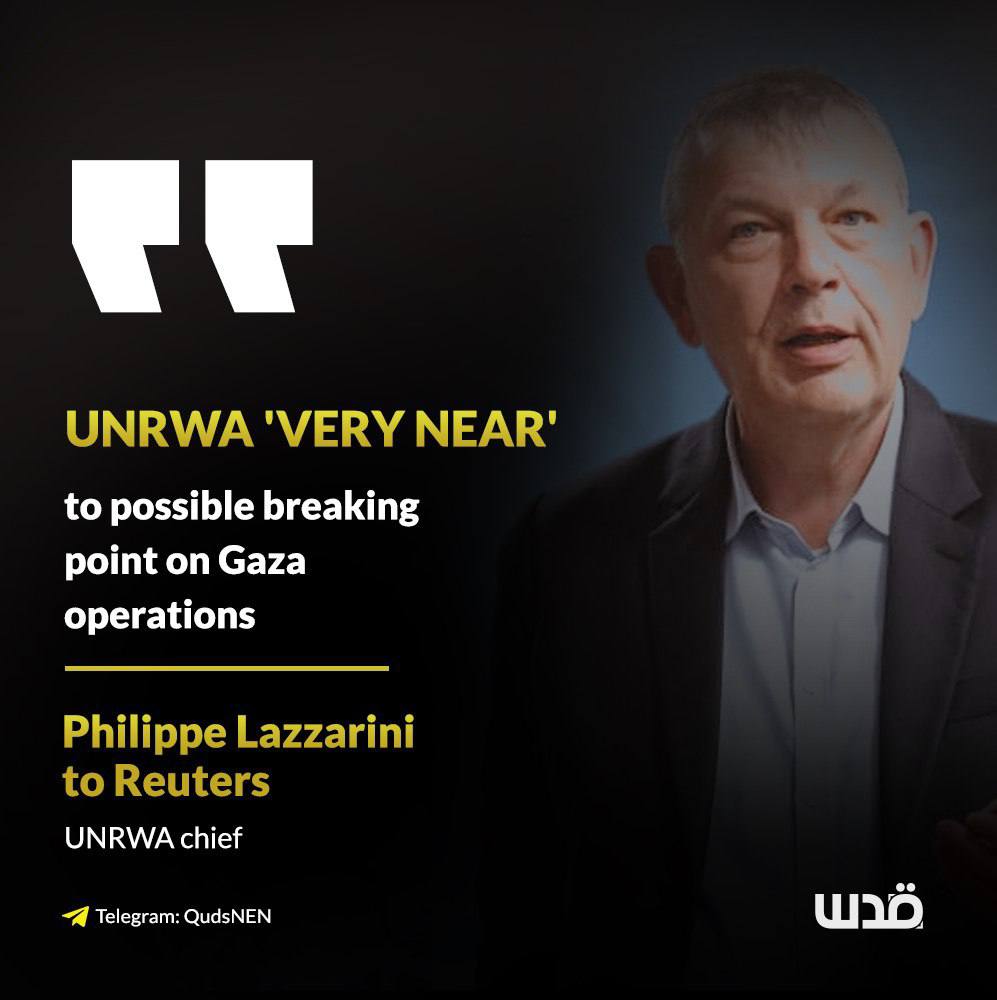
UNRWA – Breaking Point

Philippe Lazzarini, the head of the UN Palestinian refugee agency (UNRWA), stated that the agency is approaching a possible breaking point for its operations due to the ongoing attacks in the Gaza Strip.

Lazzarini added in a press conference in Berlin:

“I will not hide the fact that we might reach a point where we won’t be able to operate anymore.”

Continue reading
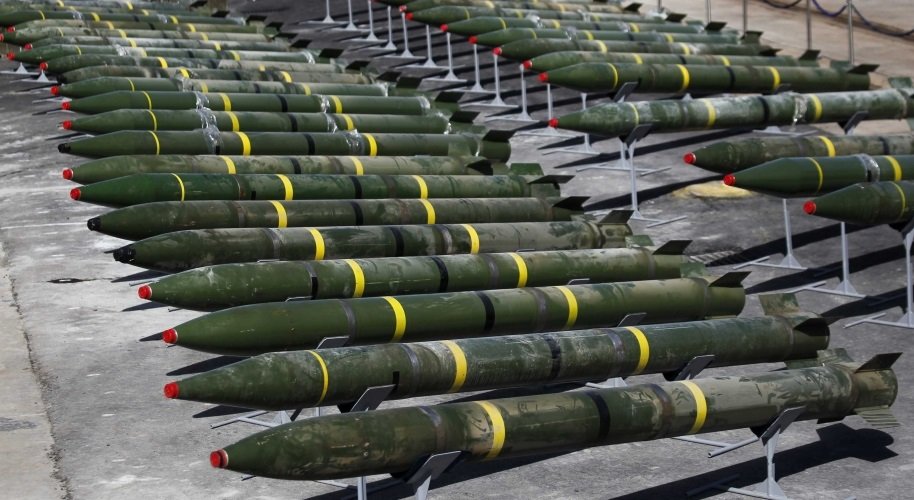
Germany Asks Israel For ‘Genocide Clause’ if it Wants Arms

Germany has asked Israel to sign a “genocide clause” if it wants the continuation of arms deliveries.

According to the German newspaper Bild, the “genocide clause” is a precondition. The newspaper added that no arms were delivered to Israel from Germany since March.

This piece of news is trending on the social media and is generating much interest from bloggers. The clause, apparently agreed to by the Israelis government and delivered in a form of a document to Berlin on 10 October commits Tel Aviv not to use German arms for its war genocide in Gaza.

Apparently the document was good enough as an assurance for German Chancellor Olaf Scholz who declared in parliament the following day that “We have supplied arms, and we will supply arms”.

The genocide clause insertion may have been pushed by the Economy Minister Robert Habeck and Foreign Minister Annalena Baerbock  of the Greens who initially sought a ban on arms shipment to Israel.

One blogger says that “Germany asking Israel to sign a ‘genocide clause’ is like an ostrich with its head in the sand.”

Another says “that won’t absolve anyone of wrongdoing” while a third adds “the clause is insignificant if meant to be a way of fulfilling Germany’s ‘obligation to prevent Genocide.’ Its much closer to an admission of guilt.”

Continue reading