By Saleem Ayoub Quna
CROSSFIREARABIA – In his younger years (in the late 70s and early 80s of last century), Trump, the rising and flamboyant businessman, when asked by reporters about his presidential aspirations, repeatedly said that he did not want to become a president!
Time has just proved that he was lying even at that early stage! But it was a lie that took a nap that lasted nearly four decades! The nap finally came to an end in 2016. Trump was the first person who could not
believe, his own eyes and ears, that he won the race to become the 45th President of the US!
Prior to that surprising outcome, the vast majority of polls, indications and analyses were in favor of his rival, the veteran Democratic nominee, Hillary Clinton.
Another interesting coincidence in Trump’s path to the White House, then and now was the fact that his two rivals in the two races were women! This last race in November, however, was unexpectedly different in that he won by a large and significant margin, one which the Americans label as a “landslide victory”!
Even during the shorter nap or forced absentia from real politics, when “sleepy” Joe Biden occupied the White House for four years, Trump was not never absent from the public eye and the thirsty and nagging American media. He frequently appeared in the media sitting in courtrooms, in different locations (States), frustrated yet polite, listening to more than 30 allegations, leveled against him by Attorney Generals, of breaking the rules of the land.
The question number one in the US and around the world today is this: Will Trump repeat himself, or should we expect a recycled Trump? Either way, someone around him will, definitely, remind him that the world has significantly changed since his interrupted presidency back in 2020!
This someone would also remind Trump that he was not the only one who must have learned his lesson. Others did that too, especially his country’s big so-called “adversaries” or rivals around the world, the likes of China, Russia, North Korea, Iran and others!
His country’s allies and friends, the likes of the European Union, the Ukraine, Japan, South Korea and Israel must have also done their homework, and were readying themselves for this expected day as Trump has re-merged from his forced absentia.
Whatever the case might be, Trump’s second term will be even more newsworthy and consequential! The issues at stake are huge and complicated, such as the illegal immigrants from South America, the Paris Agreement on climate change, the commercial war with China, NATO relations, the Ukraine-Russian war, the war in the Middle East and other problems.
If Trump and his new hand-picked team think they can handle all these issues in the span of four years, they must be either over optimistic or naïve. Remember when Trump back in the 2016 presidential race against Clinton, kept saying he will build a wall along the borders with Mexico to stop the flaw of immigrants and workers to the US and vowed that Mexico will pay the cost?
Has the new Trump’s team prepared an answer to that question? If I were part of that team, I would take a look at the US-Mexico borders and statistics today first. Trump may have the luxury of changing faces and hats of his team. But he cannot escape from his own instincts and mentality as a bossy powerful and cunning businessman as he faces a new dynamic world order, in which his country happens to be just the number one player!
The issues at stake today are much intimidating and bigger than Trump’s credentials, ambitions and instincts! Yes, he can tackle some pending socioeconomic problems at home, apply “anesthesia” techniques to address other international problems like the situation in the Middle East or the relations
with China or Iran or Russia, but he cannot ever put an end to any of the above, once for all in just four years!
This opinion was especially written for Crossfire Arabia by Saleem Ayoub Quna who is a Jordanian author writing on local, regional and international affairs and has two books published. He has a BA in English Literature from Jordan University, a diploma from Paris and an MA from Johns Hopkins University in Washington. He also has working knowledge of French and German.

 CrossFireArabia
 Dr Khairi Janbek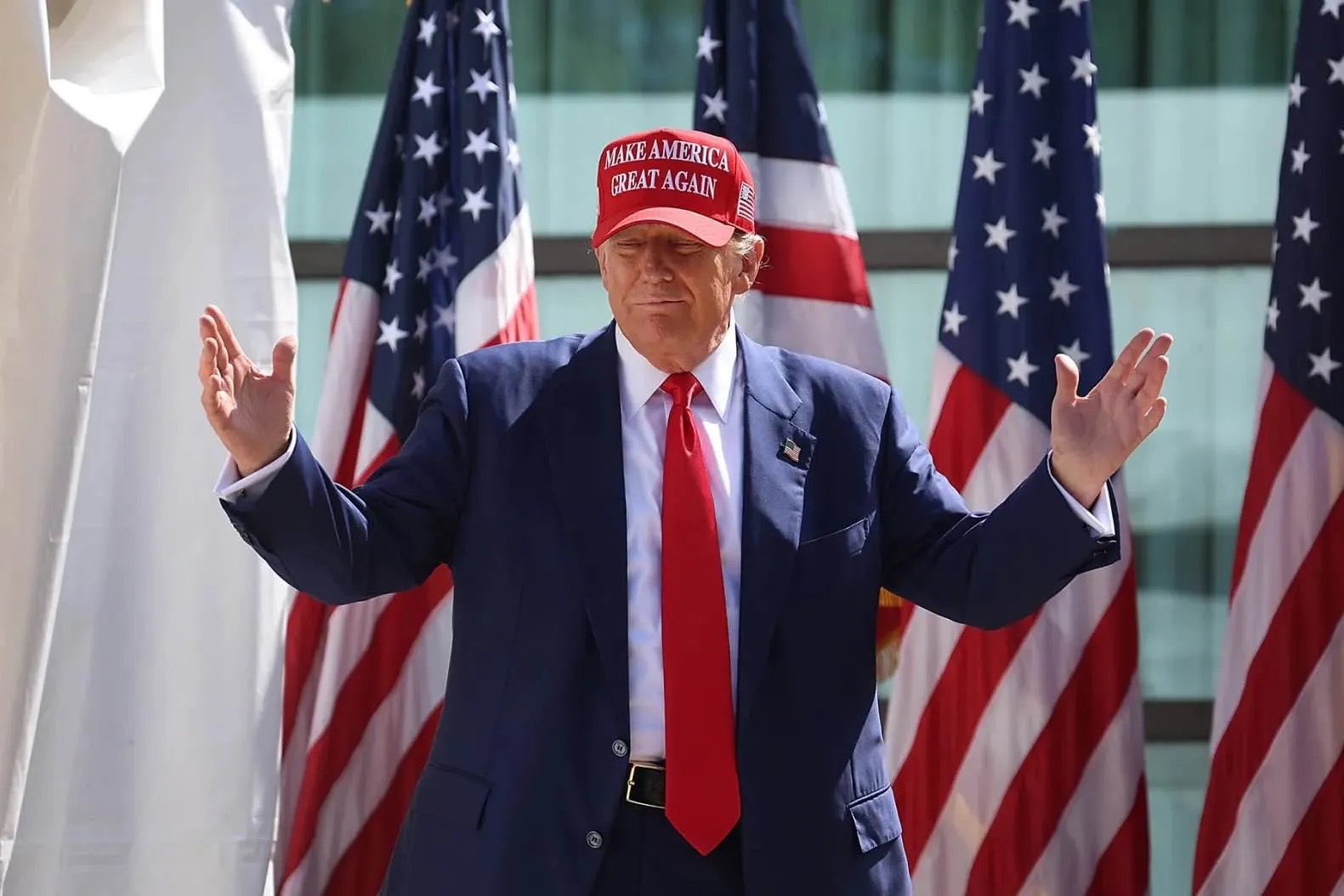
 Saleem Ayoub Quna