The legacy of the late President Jimmy Carter in the Middle East can at best be described as mixed, notable achievements and setbacks.
The Camp David Accords remain his greatest foreign policy achievement in the region, with Egypt and Israel continuing to honor the peace treaty till this day. However, the 1978 Iranian Revolution, the fall of the Shah, the US embassy hostage crisis and the rise of the Islamic Republic of Iran, underscored the limits of his idealistic foreign policy approach.
While Carter’s emphasis on human rights was a notable shift from the more pragmatic or rather, realpolitik approach of his predecessors, it often clashed with the realities of the US strategic interests in the region. His inability to stop or reverse the Iranian Revolution, combined with his perceived weakness in handling the hostage crisis, significantly damaged his standing both domestically and internationally.
Despite these challenges, Carter’ presidency laid the groundwork for future US policies in the Middle East in terms of emphasis on peace, diplomacy and the need for strategic engagement. In fact, he articulated in January 1980 the Carter Doctrine, which stated that the US will use military force if necessary to defend its interests in the Arabian Gulf against Soviet aggression, which marked a significant shift in US foreign policy asserting a more active and interventionist role in the region.
When it comes to the question of human rights, despite concerns for abuses in countries like Saudi Arabia and Iraq, Carter found it necessary to balance human rights with strategic and economic interests, and he did receive criticism internationally and nationally for tolerating autocratic regimes, not to mention of course in this context, his support for the Shah of Iran despite his repressive policies and human rights abuses.
Still, in the final analysis, with successes and failures, Carter’s approach to the Middle East was foundational in shaping US policy for the years that followed, particularly in the realms of contradictory policies of human rights, and the balance of power in the Gulf region.
Dr Khairi Janbek is a Jordanian commentator currently based in Paris.
What are the options Israel and America’s has to confront the continuing Yemeni drones and hypersonic missiles? Is it bombing Tehran and/or implementing the latest Syrian case in Sanaa? Why not rule both out?
The Israeli occupation, government and settlers, are today in a state of hysterical panic due to the never-ending hypersonic ballistic missile attacks and the advanced drones bombing the heart of Tel Aviv and causing serious human casualties and huge fires.
This state of hysteria is reflected in four distinguishing signs:
First: Threats by more than one Israeli official to launch a massive attack on Yemen similar to that on Gaza whilst carring out assassination campaigns targeting the political and military leaders of Ansar Allah, especially Abdul-Malik al-Houthi.
Second: More than two million Israeli settlers took refuge in shelters, and sirens sounded in more than 80 locations in occupied Palestine over the past four days.
Third: Closing the airspace of Ben Gurion Airport to air traffic, which created confusion, chaos, isolation, and moral collapse.
Fourth: Failure of Israeli celebrations of two major successes achieved according to Hebrew newspapers, namely: In Imposing a ceasefire in Lebanon, stopping attacks from the southern Lebanese border, and the second by toppling the Syrian regime, the jewel of the resistance axis as boasted by Netanyahu that it was he who played the biggest role in achieving this.
Israeli Minister of War Yisrael Katz broke with all established Israeli norms by officially acknowledging, for the first time, responsibility for the assassination of the Ismail Haniyeh in Tehran, Hassan Nasrallah in Lebanon, and Yahya Sinwar in Rafah.
Katz threatened the Houthis leaders that they would face the same fate, and that the destruction that occurred in Gaza and Beirut would be repeated in Sanaa and Hodeidah.
But what terrifies the Israelis most, and worries their leadership is the arrival of the incessant Yemeni missiles and drones to the heart of major Zionist cities, like Tel Aviv, Haifa, Ashkelon, and Eilat with millions of settlers descending into shelters.
Indeed, this points to the failure of Israel’s highly advanced air defense systems to intercept these missiles, prevent them from reaching their targets, and inability to provide security and protection for the settlers in these major cities.
Perhaps the threats of Israeli officials to launch attacks on Yemeni cities reflect the extent of the pain they are suffering as a result of these incoming deadly projectiles.
These, and before them the Israeli, American and British air strikes on Sana’a and Hodeidah, have not achieved the goals of deterring Yemeni missile attacks and stopping their bombing of the Israeli depth.
On the contrary, they gave completely opposite results with their continual launching of hypersonic missiles and drones, and more dangerously, the downing of the advanced US F-18 jet, and the damaging of American aircraft carrier Harry Truman in the Red Sea and its escape to the north to prepare to leave the region, like its predecessors, the Eisenhower, the Lincoln, and many other naval destroyers.
The Yemeni military statements by Brigadier-General Yahya Saree in the past three days confirmed the bombing of Tel Aviv, Ashdod and Ashkelon deep inside Israel will continue as long as the extermination war on Gaza continues.
These statements were backed by the launch of more hypersonic missiles and drones in quick and direct responses to the Israeli threats, which means Yemen is not afraid and is responding in kind, has patience, and is ready to sacrifice.
Yemen has become the spearhead of the axis of resistance, and main front after the situation in Lebanon calmed down following the ceasefire agreement, and the commitment of the Islamic resistance there despite the violations. It is not unlikely that the Israeli occupation state, with American support, and perhaps Arab support as well, will present two main military options in the coming few days:
First: Going to the head of the octopus, i.e. Iran, as described by the Israelis, by launching an expanded tripartite Israeli-American-British attack to destroy it, according to the recommendation of Mossad Chief David Barnea as targeting Sana’a and Hodeidah again will not stop the Yemeni attacks with missiles and drones from reaching the occupied Palestinian depth.
Second: Repeating the Syrian scenario in Sana’a, i.e. an attempt to undermine and exhaust the Houthis by supporting the other Yemeni military groups and movements hostile to it by supplying them with modern weapons, providing air cover for their attacking forces, and mobilizing regional support for this step.
Launching a large tripartite aggression on Yemen may fail and give adverse results, and the same can be said about the expected attack on Iran, and it will be the occupying state and its military bases that may be exposed to bombing with thousands of ballistic and supersonic missiles, because the loss of the resistance axis of its last, most powerful and effective arena (Yemen) means its end and its Iranian leadership, and the creation of a new Middle East led by a “Greater Israel”.
However great Yemen will not surrender, and will not be defeated, as history tells of its victory over all previous invaders. Its steadfastness for more than eight years in the US-backed Gulf War against it confirms it will withstand any new Israeli-American-British targeting it, as its internal incubator is strong and solid and difficult to break due to the rallying of people around its leadership, which is embodied in the massive million-person demonstrations every Friday now for several months in solidarity with our people in the Gaza Strip.
Events are rapidly unfolding before after the fall of the Syrian capital, Damascus, into the hands of the armed opposition forces that entered it without resistance because the Syrian army, under orders from its supreme commander, decided not to resort to bloody confrontations to prevent bloodshed and accept defeat in the face of a tripartite aggression well-planned in the dark rooms of Washington, Ankara and Tel Aviv.
The Russian authorities’ announcement, Sunday, of the arrival of Syrian President Bashar al-Assad and his family to Moscow and granting them political asylum, confirms that the sudden developments currently taking place may be the tip of the iceberg.
There may be many surprises to come on all levels, as Syria is a jungle of weapons, and it is unlikely that the sudden surrender is just a maneuver, just like what happened in Iraq after the collapse of the Iraqi army in the face of the American invasion, and the goal now is to reposition, bow to the storm, and prepare to resist the occupation.
The fall of Damascus is a fatal stab to Russia and its leadership, which the new authority in Syria has no affection for, and sees it as a strategic partner of the isolated Syrian regime. Its warplanes have not stopped bombing Idlib, Aleppo, Hama and Homs, and this Russian airstrike played a major role in the Syrian Arab Army regaining most of the cities and villages that were seized by the opposition forces supported by America, Europe and Turkey.
We do not know what President Bashar al-Assad’s plans are in the coming period. Will he resort to calm and withdraw from political work, in compliance with the conditions of political asylum, or will he make Moscow a base to manage a resistance that he will form and lead from his new exile.
News circulated in the past few days that countries supporting the deposed Syrian president, led by Russia, suggested he form a government in exile to confirm his non-recognition of the new government that may be formed in the coming few days to run the country, avoid a political vacuum, and prepare for holding general elections.
We do not know the extent of the accuracy of this news, and perhaps it is too early to try to extrapolate what events are coming in Syria, as only one day has passed since the fall of Damascus and President Assad’s flight to Moscow and his granting of political asylum.
However, what can be pointed out is that the picture seems blurry in Syria at the present time, as Damascus and the major Syrian cities have been exposed to a war led by armed Syrian opposition factions on behalf of America, Turkey and other Arab countries, unlike the direct American war in Iraq in 2003, in which more than 160,000 American soldiers participated, and Paul Bremer was installed as military governor of Iraq in a transitional phase.
Unfortunately, we can’t disagree with Benjamin Netanyahu when he said: “The fall of Damascus and the collapse of the ruling regime there is considered a historic day and a great victory for Israel.”
Damascus is the crown jewel of the axis of resistance, the main supporter of the Palestinian cause, and the stubborn opponent of normalization. The question remains: Will Netanyahu’s celebrations of this fall last long? We leave the answer to the coming days and months.
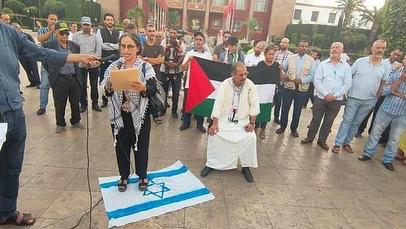
Moroccans protested in Rabat in front of the parliament building, Friday, to condemn the Israeli genocide on the Gaza Strip ongoing now for 14 months.
The “Working Group for Palestine”, a non-governmental group, organized the protest to condemn the Israeli genocide in Gaza and in which dozens of participants carried pictures of Al-Aqsa and the Palestinian flag.
Demonstrations were held in Morocco today in solidarity with Palestine, protesting the ongoing Israeli genocide in Gaza. pic.twitter.com/QBEdtQ4E2S
The protesters in front of the parliament building also condemned “Israel’s continued defiance of all international resolutions, including the International Criminal Court’s decision” regarding the arrest of the Israeli Prime Minister and his former Defense Minister Yoav Gallant,” according to Anadolu.
Israel continues its massacres, ignoring two arrest warrants issued by the International Criminal Court on 21 November against Netanyahu and ex-Defense Minister Galant, on charges of committing war crimes and crimes against humanity against Palestinians in Gaza.
The protesters chanted slogans praising the Palestinian resistance, and others criticizing the continued Western support for Tel Aviv despite the genocide that has been ongoing for more than a year.
Among these slogans were “Long live the resistance… long live Palestine”, “We are all ready to sacrifice for steadfast Palestine”, “From Rabat to Gaza… resistance and pride”, and “Loyalty… to the blood of the martyrs”.
The participants raised banners reading “the Moroccan people demand the dissolution and cancellation of the seductive Israeli parliamentary group”, and “Normalization is a crime and treason”.
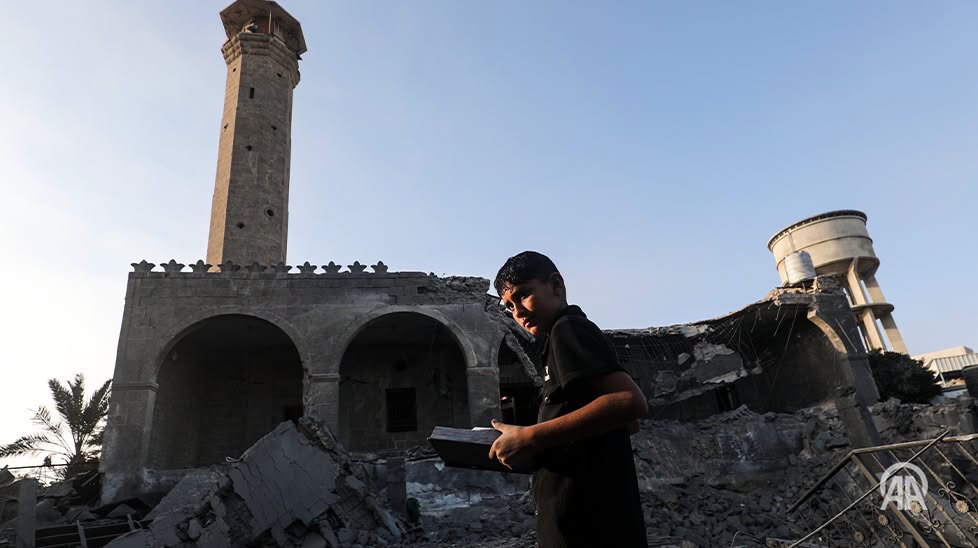
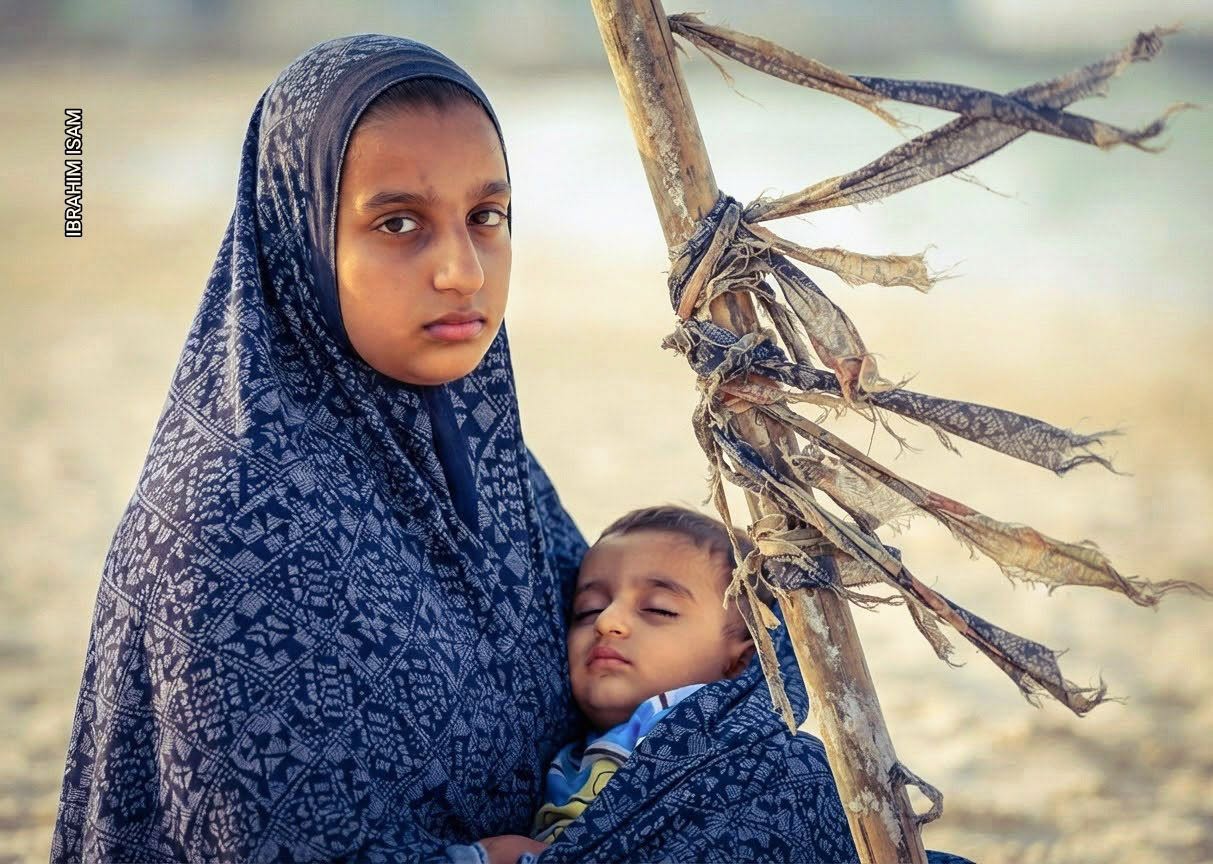
With American support, Israel has been committing genocide in Gaza since 7 October, 2023, leaving more than 150,000 Palestinians dead and wounded, most of them children and women, and more than 11,000 missing, amid massive destruction and famine that has killed dozens of children and elderly people, in one of the worst humanitarian disasters in the world.
Israel continues its massacres, ignoring the UN Security Council’s decision for their immediate end, and the International Court of Justice’s orders to take measures to prevent acts of genocide and improve the catastrophic humanitarian situation in Gaza.


 Dr Khairi Janbek
 CrossFireArabia