Israel Attacked Palestine’s Press 300 Times in 2026

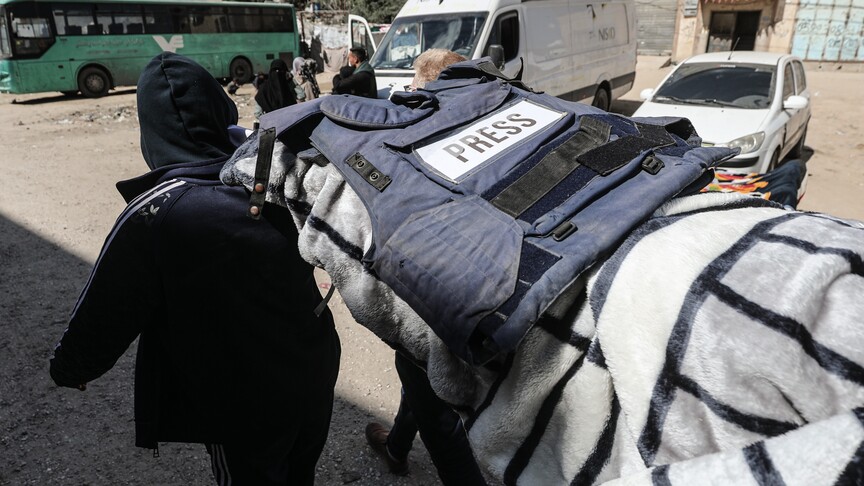
The Palestinian Journalists Syndicate said Sunday it had recorded about 300 violations and attacks against Palestinian journalists since the start of 2026, amid escalating targeting of media workers.

The announcement came during a rally organized by the syndicate outside its headquarters in the city of al-Bireh in the occupied West Bank, marking World Press Freedom Day and protesting continued attacks on journalists.

Participants raised banners demanding an end to the killing of media workers and accountability for Israel.

“Activities organized on World Press Freedom Day aim to highlight the exceptional and unprecedented conditions under which the Palestinian journalist operates,” Omar Nazzal, the deputy head of the syndicate, addressed the crowd.

Journalists are facing “the fiercest Israeli war machine,” he added, noting that more than 4,000 violations have been recorded against them since the start of the war on Gaza in October 2023.

“The number of journalists killed has reached 262 male and female journalists since that date, including 261 in the Gaza Strip, in addition to six journalists killed since the beginning of 2026,” said Mohammad al-Lahham, head of the syndicate’s freedoms committee.

He added that the current year has also seen 10 direct injuries, 22 arrests, 120 cases of detention or prevention from coverage, and 12 attacks carried out by Israeli occupiers.

Lahham said total violations since October 2023 reached 3,983, including 1,072 in 2023, 1,325 in 2024, 1,286 in 2025, and 300 in 2026.

These violations included 240 cases of direct gunfire at media crews and 352 cases involving tear gas and stun grenades, as well as beatings, confiscation of equipment, and travel bans, he added.

The syndicate said in a report read at the event that it had documented 188 arrests since October 2023, along with the destruction of 187 media institutions and offices and 140 homes belonging to journalists.

The syndicate reported the killing of 713 family members of journalists, indicating that the targeting extended beyond media workers to their social environment.

The syndicate said the targeting of journalists “is not individual behavior” but part of a “systematic policy” aimed at restricting journalism and silencing the Palestinian narrative, particularly amid field coverage of events.

It called on the UN and international organizations to provide urgent protection for Palestinian journalists, open independent investigations into violations, and ensure accountability.

The Israeli genocidal war on Gaza began on Oct. 8, 2023, and has killed more than 72,000 Palestinians and wounded over 172,000, according to Palestinian figures.

Despite a ceasefire in effect since October 2025, Israel continues daily strikes and a blockade that has killed hundreds more and worsened humanitarian conditions in the enclave, home to about 2.4 million Palestinians, including 1.5 million displaced.
Continue reading
‘Stop Killing Our Journalists’

The Palestinian Journalists Syndicate in the Gaza Strip held a protest Sunday calling for international protection for reporters and an end to Israel’s “genocide” against media workers amid the ongoing war since October 2023.

Coinciding with the World Press Freedom Day on May 3, the rally took place outside a solidarity tent run by the syndicate in the courtyard of the destroyed Rashad al-Shawa Cultural Center in western Gaza City.

Journalists, correspondents from local and international outlets, and representatives of media and rights organizations took part, according to an Anadolu correspondent.

Participants raised banners demanding protection for journalists, an end to direct targeting, and guarantees for press freedom under “extremely dangerous” security and humanitarian conditions.

The Israeli genocidal war on Gaza began on Oct. 8, 2023, and has killed more than 72,000 Palestinians and wounded over 172,000, including women and children.

Despite a ceasefire in effect since October 2025, Israel continues daily strikes and a blockade that has killed hundreds more and worsened humanitarian conditions in the enclave, home to about 2.4 million Palestinians, including 1.5 million displaced.

Systematic targeting

Tahseen al-Astal, deputy head of the journalists syndicate in Gaza, said Palestinian journalists continue to carry out their work despite a “policy of systematic targeting” by Israel.

“The Palestinian journalist will not abandon his identity, his narrative, or his mission and will remain committed to conveying the truth to the world,” he told participants.

Threats, killings, and attacks on journalists’ families and workplaces constitute a “flagrant violation of international humanitarian law,” Astal said.

He called on international institutions and the International Federation of Journalists to assume their legal and moral responsibilities to provide protection for reporters in Gaza.

He urged an end to “the genocide on civilians and journalists and accountability for those responsible,” warning that “impunity encourages further violations against media workers.”

Ahed Farawna, secretary of the syndicate, told Anadolu that targeting journalists in Gaza represents “one of the gravest crimes against journalism in modern history.”

He said more than 260 Palestinian journalists have been killed since the start of the war, alongside hundreds injured or detained and extensive destruction of media institutions.

Such targeting reflects a “systematic approach to silencing the Palestinian media voice,” Farawna added.

He stressed that the international community bears a moral and legal responsibility to act urgently to protect journalists and hold perpetrators accountable.

Calls for international action

Mohammad Abu Nammous, a correspondent for Al-Ghad TV, told Anadolu that more than 262 journalists have been killed by Israel since October 2023.

A number of journalists remain detained or in unclear conditions, while more than 420 have been injured during field coverage, he added.

“The (Israeli) occupation has destroyed most media offices, causing major paralysis in the media infrastructure inside the enclave,” he said.

“These figures reflect a policy targeting press freedom and restricting access to information,” he added, calling for translating international support for press freedom into concrete measures on the ground.

Nahed Abu Harbeed, a correspondent for Alkofiya TV, said journalists in Gaza continue to work “despite significant risks.”

“They operate under direct threat of bombardment and targeting,” she told Anadolu.

Many journalists have lost colleagues during the war, yet continue their work out of a commitment to conveying the truth and documenting violations, she added.

In addition to daily bombardment, Israel continues to block the entry of agreed-upon quantities of food, medicine, medical supplies, and shelter materials into Gaza, where about 2.4 million Palestinians—including 1.5 million displaced—face dire conditions.

Continue reading
Targeting Journalists Israeli Style

“After losing my leg in the war, I returned to photojournalism not just for work, but because I have loved photography since childhood,” said Palestinian reporter Sami Shahada.

Mr. Shahada lost his leg due to a severe injury he suffered in Nuseirat in central Gaza in April 2024, but he picked up his camera and returned to document the tragic events that have been unfolding in Gaza.

He will not let his disability stop him from working. “It is impossible for me to leave photojournalism, even if I face all these obstacles,” he said.

Ahead of World Press Freedom Day marked annually on 3 May which focuses on the role of media to highlight accountability, justice, equality, and human rights, our UN News correspondent in Gaza spoke with Palestinian journalists, documenting the risks and personal traumas they face reporting from the war-torn enclave.

War has devastated Gaza.

© UNICEF/Mohammed Nateel

War has devastated Gaza.

Since the war began following the 7 October 2023 attack by Hamas on Israel an increasing number of journalists have been killed or injured in Gaza as a humanitarian crisis has engulfed the enclave.

Bearing witness

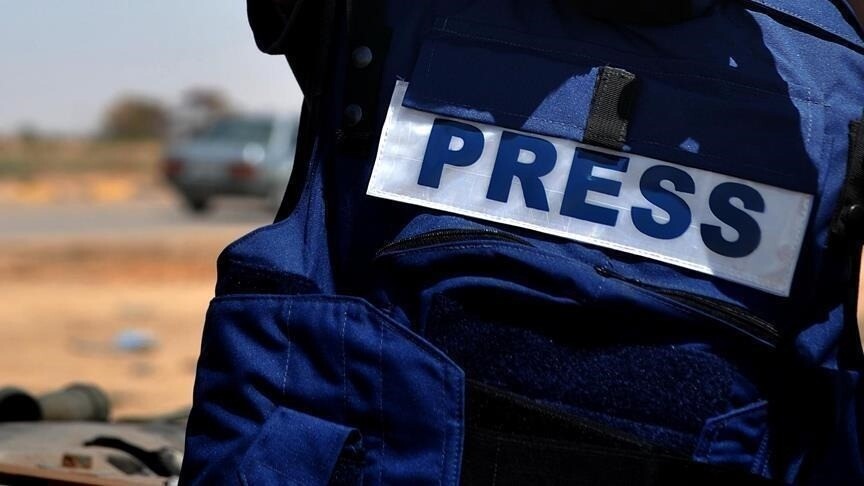
On one leg, leaning on crutches, Sami Shahada stands behind his camera, wearing his blue press jacket, working amongst the rubble of destruction with colleagues.

“I witnessed all the crimes that happened, and then the moment came when I was a witness to a crime that was perpetrated against me,” he told UN News.

Sami Shehadeh looks at a video of the moment he was injured in Gaza in April 2024.

UN News

Sami Shehadeh looks at a video of the moment he was injured in Gaza in April 2024.

“I was a field journalist, carrying a camera in an open area and wearing a helmet and a jacket which identified me as a journalist, yet I was directly targeted.”

That incident marked a turning point in his life. “I did not need help from anyone before, now I need help,” adding that “I have the determination and persistence to overcome this new reality. This is how we journalists must work in Gaza.”

Working the streets

Journalist Mohammed Abu Namous is another of these journalists.

Filming with one of his colleagues in the rubble of a destroyed building in Gaza City he said: “While the world celebrates World Press Freedom Day, Palestinian journalists remember their workplaces which were destroyed in the war.”

“The minimum we need to carry out our journalistic work is electricity and the internet, but many do not have this, so we resort to commercial shops that provide the internet. The streets are now our offices.”

Palestinian journalist Mohammed Abu Namous and his colleague cover the impact of the war in Gaza.

UN News

Palestinian journalist Mohammed Abu Namous and his colleague cover the impact of the war in Gaza.

He believes that Palestinian journalists have been targeted during the Israeli occupation of Gaza and said that media workers must be protected “whether they work in Palestine or elsewhere in the world.”

Voices not silenced by death of loved ones

Journalist Moamen Sharafi said he lost members of his family in an Israeli bombing in northern Gaza, but despite “the many negative impacts on a personal, social, and humanitarian level, professionally nothing has changed.”

He was determined to carry on working, he explained, as he was due to live broadcast from the streets of Gaza City.

Palestinian journalist, Moamen Sharafi (right,) lost several family members during the current war that started in October 2023.

UN News

Palestinian journalist, Moamen Sharafi (right,) lost several family members during the current war that started in October 2023.

“We have become more determined to continue our work and uphold our professional values and perform our mission with humanity to the world,” he continued, “in order to convey the reality of what is happening on the ground inside Gaza, specifically the humanitarian situation, and the impact on children, women and the elderly who suffer greatly.”

UN News

Continue reading