Eid Mubarak Gaza

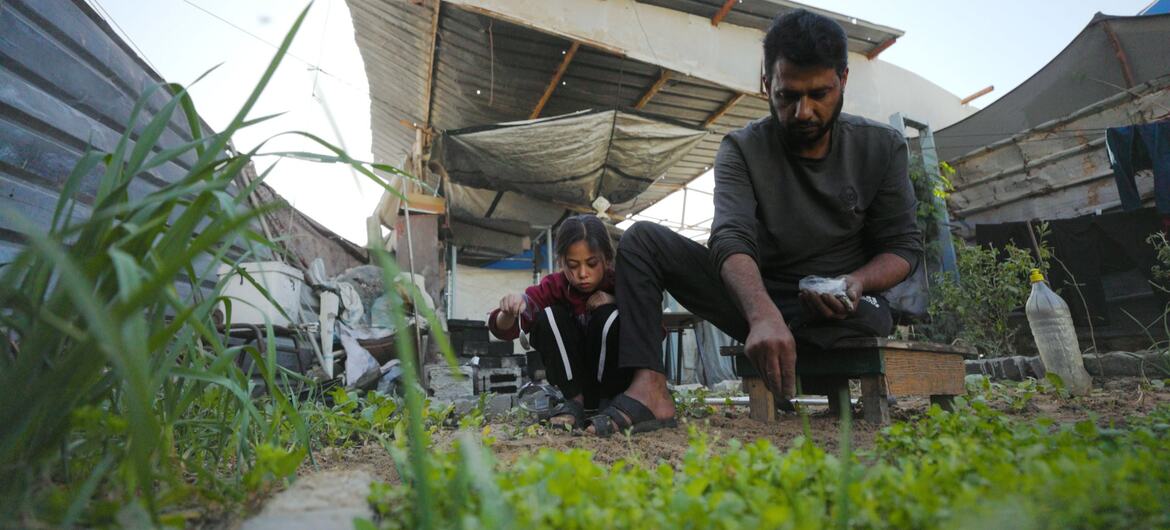
Palestinians in the Gaza Strip are marking the Muslim holiday of Eid al-Fitr, the first since the so-called ceasefire began, amid widespread suffering and destruction following two years of Israeli genocide.

Across the enclave, Palestinians performed Eid prayers amid the rubble, in a powerful act of steadfastness and resilience, and children tried to find moments of joy.

Continue reading
US-Israel Drags The World Into a Global Crisis

By Abdel Bari Atwan

By bombing Iran’s Pars gas field, the world’s largest with missiles, and with a green light from President Donald Trump, the Israeli occupation state and its right-wing ruling clique is revealing a major, diabolical plan. Its goal is to drag the world into a massive economic crisis on all levels, starting with an energy crisis that may be even more dangerous than the Arab oil embargo of 1973, in solidarity with Egypt and Syria, leading to a wider global conflict.

This Israeli bombing of Iran’s South Pars gas field, which came after the third week of the war and the failure of the US-Israeli alliance to topple the Iranian regime, constitutes the most significant breach of red lines and will have very serious and dangerous consequences in this war. Gas prices have already risen by 36 percent today, while the price of a barrel of oil has reached $118 so far. These figures may triple, if not more, if Iran retaliates by bombing energy facilities in the Gulf, especially in Saudi Arabia, the UAE, Qatar, and Kuwait. It is an option that is not out of the question, given the threats issued by the new leadership, which states that the “oil and gas sites in neighboring countries have become direct and legitimate targets after the bombing of the South Pars field.”

***

By taking this step—bombing the South Pars gas field facilities—the Israeli army has shifted the conflict from a realm of threatening maritime routes, primarily the Strait of Hormuz, to targeting production infrastructure. This is a very dangerous shift if it escalates and will lead to an expansion of the scope of this war and its objectives and reflects the despair and frustration Israel is experiencing due to its failure to achieve its objectives in waging this war, and rallying the western world behind Trump’s leadership whilst trapping it in the Iranian snare, and seeking to eliminate the existential threat to its survival, namely Iran and the resistance factions it supports.

Iran managed this war with unprecedented political and military acumen. The developments of the first three weeks demonstrated that it was well-prepared for all eventualities according to a well-devised plan. The most prominent evidence of this was its deception of the occupying state and its generals when it used older-generation missiles to absorb and deplete Israel’s air defenses. Then, it delivered the decisive blow by bombarding major occupied Palestinian cities with advanced, hypersonic cluster missiles, turning Tel Aviv, Haifa, Acre, and Safed into ghost towns.

***

The “decapitation” theory, which Israel used as a successful formula for regime change and collapse, exemplified by the assassination of Ayatollah Ali Khamenei, was thwarted by Iranian ingenuity, yielding the opposite results. The Iranian regime emerged stronger than before the assassination war, now led by a young figurehead, Ayatollah Mojtaba Khamenei, the new Supreme Leader. His first decree was to refuse negotiations with the US to halt the killings unless it fully submitted to Iranian demands, including surrender, a cessation of hostilities, and the payment of reparations.

The lack of response from NATO, and indeed from not a single country Trump appealed to for intervention and the deployment of warships to forcibly reopen the Strait of Hormuz—from China to Australia—underscores his and his Israeli allies’ early defeat in this war and signals the beginning of the countdown to his removal from power, and perhaps even his trial as a war criminal. Time will tell.

This op/ed by the the Chief Editor of Al Rai Al Youm was translated from Arabic and reprinted in crossfirearabia.com.

Continue reading
ESCWA: The War Costs $150 Billion in Losses

In an ESCWA report titled “Conflict and its shockwaves: escalation of a crisis in the Arab region” and released on 19 March, it points out if the US-Israel-Iran war continues for one month it would causes have losses for the Arab region amounting to nearly $150 billion, or 3.7% of regional GDP.

ESCWA, a major UN organization, warns that the conflict has causes much economic losses with preliminary estimates of about $63 billion in just two two weeks, pointing out the shock is being transmitted through energy markets, trade routes, aviation networks and financial systems.

It added shipping through the Strait of Hormuz has fallen by 97%, with disrupted cargo flows valued at about $2.4 billion a day and cumulative trade losses estimated at around $30 billion over two weeks. Between 28 February and 12 March, almost 19,000 flights were cancelled across nine major regional airports, generating an estimated $1.9 billion in airline revenue losses. 


“The findings show that the economic effects of the conflict are materialising quickly and across multiple channels at once,” said Mourad Wahba, Executive Secretary of ESCWA. “What begins as a security escalation is being transmitted into the regional economy through trade, energy, transport and finance, with direct consequences for growth, fiscal stability and humanitarian pressures.”
 
ESCWA said the region entered the crisis with limited room to absorb a prolonged shock. Even before the latest escalation, around 210 million people, or 43% of the region’s population, were living in conflict-affected settings, including 82 million people in need of humanitarian assistance. In 2025, GCC countries provided about $4.4 billion in humanitarian aid, accounting for roughly 43% of total aid received by conflict-affected countries in the region.
 
The burden is likely to fall particularly heavily on energy-importing economies. At an oil price of $100 a barrel, the additional annual import bill for Egypt, Lebanon and Tunisia would rise by about $6.8 billion compared with 2026 budget assumptions, adding to fiscal pressure in countries already facing constrained public finances.
 
Lebanon is facing some of the gravest immediate consequences. ESCWA notes that recent escalation that erupted on 2 March took violence by Israel at a new and more intense levels. If escalating strikes continue, economic losses could rise sharply as attacks increasingly disrupt infrastructure, trade and essential services. These shocks hit an economy that has already contracted by nearly 40% since 2019. The latest escalation has also caused severe humanitarian strain, with 634 people killed as of 11 March and nearly one million displaced.
 
“The concern is not only the scale of the immediate losses, but the way in which they interact with pre-existing structural vulnerabilities in the region,” Wahba added. “For countries with limited fiscal space, high import dependence or significant humanitarian pressures, a prolonged conflict could exceed their capacity to absorb further shocks, with serious implications for economic stability, social cohesion, and humanitarian condition.”
 
The ESCWA brief assesses the impact of the conflict through a scenario-based framework covering macroeconomic losses, energy markets, maritime trade, aviation disruptions, financial shocks and Lebanon’s direct exposure to the conflict.

About ESCWA: One of five United Nations regional commissions, ESCWA supports inclusive and sustainable economic and social development in Arab States and works on enhancing regional integration.

Continue reading
Pezeshkian: ‘Iran Will Not Surrender to Bullies’

Iranian President Masoud Pezeshkian said Monday that Iran did not start the current war with the US and Israel, defending his country’s right to respond to attacks by Washington and Tel Aviv against Tehran, as fighting between the warring rivals continues unabated.

In a statement on the US social media company X, Pezeshkian said he spoke over the phone with French President Emmanuel Macron.

“I emphasized that Iran did not begin this atrocious war. Defending against invasion is a natural right, in which we are good at,” he said.

“Using the American bases against Iran in the region, with the purpose of disturbing our relations with our neighbors, should be stopped.”

The Iranian president said regional peace and stability cannot be achieved while disregarding US-Israeli attacks on Iran.

“The Islamic Republic of Iran will not surrender to bullies,” Pezeshkian said.

“We expect the global community to condemn this invasion and convince invaders to respect international laws. Commencing a war in order to conquer, based on false information, is a medieval act in 21st century,” according to Anadolu.

Pezeshkian described calls for ending the war as “meaningless, until we ensure there will be no more attacks in our land in the future.”

Regional escalation has raged since the US and Israel launched a joint offensive on Iran since Feb. 28, killing so far around 1,200 people, including then-Supreme Leader Ali Khamenei.

Tehran has retaliated with drone and missile strikes targeting Israel, along with Jordan, Iraq, and Gulf countries, which it says are targeting “US military assets.” Some of these attacks have caused casualties and damage to civilian infrastructure, including airports, ports and buildings.

Continue reading