By Faten Al-Hmeidi
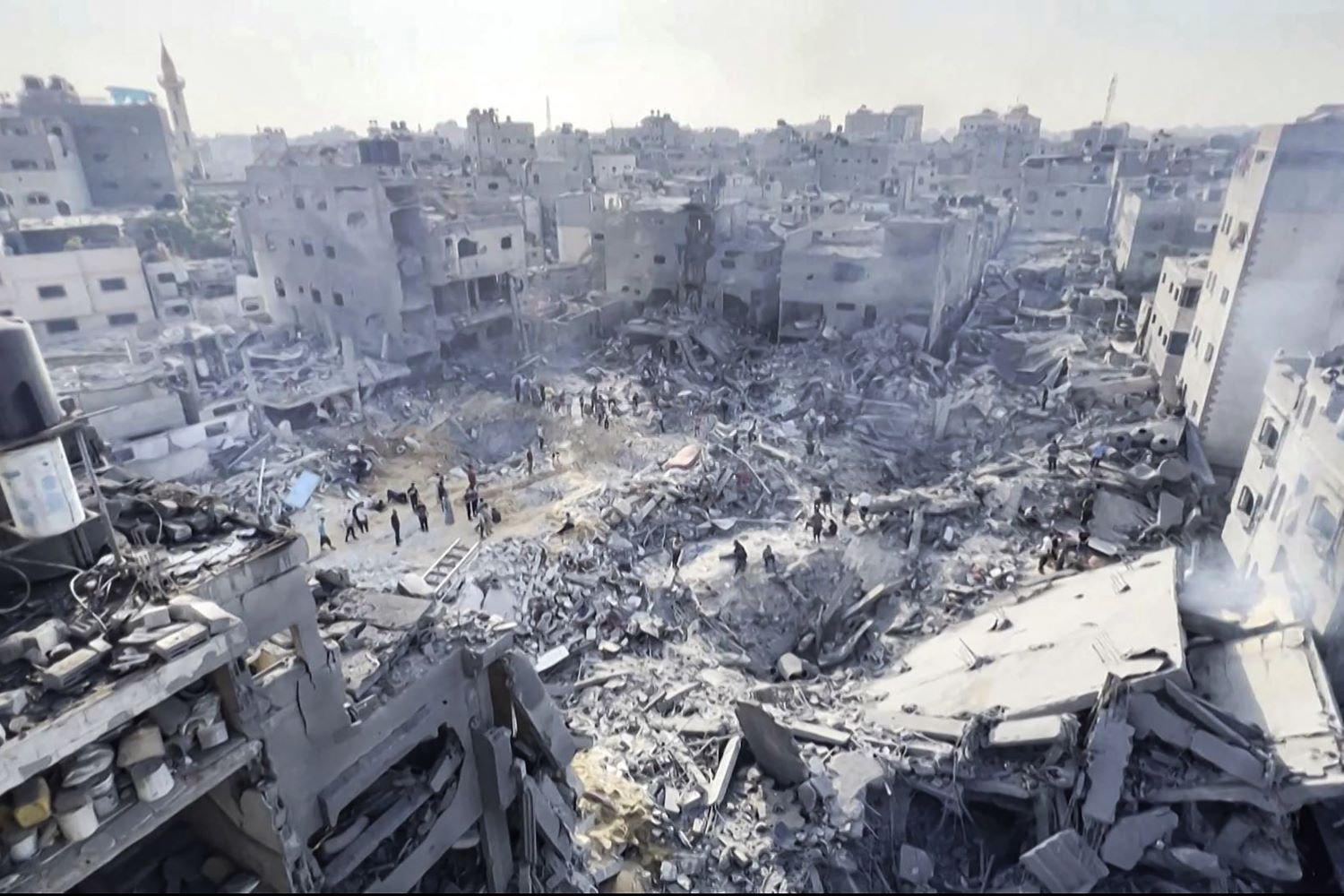
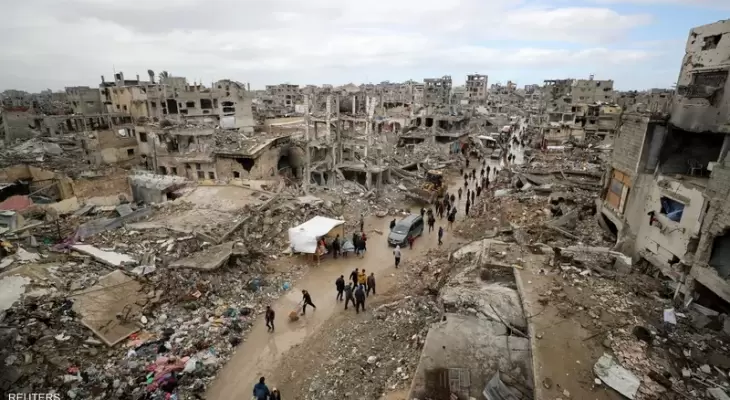
Gaza – Amidst the rubble of destroyed homes and piles of concrete that transformed the landscape of the residential neighborhoods of Gaza, the bodies of thousands of martyrs remain trapped under more than 60 million tons of debris. This has been the case now for over two and a half years, embodying one of the most brutal and protracted human tragedies today.
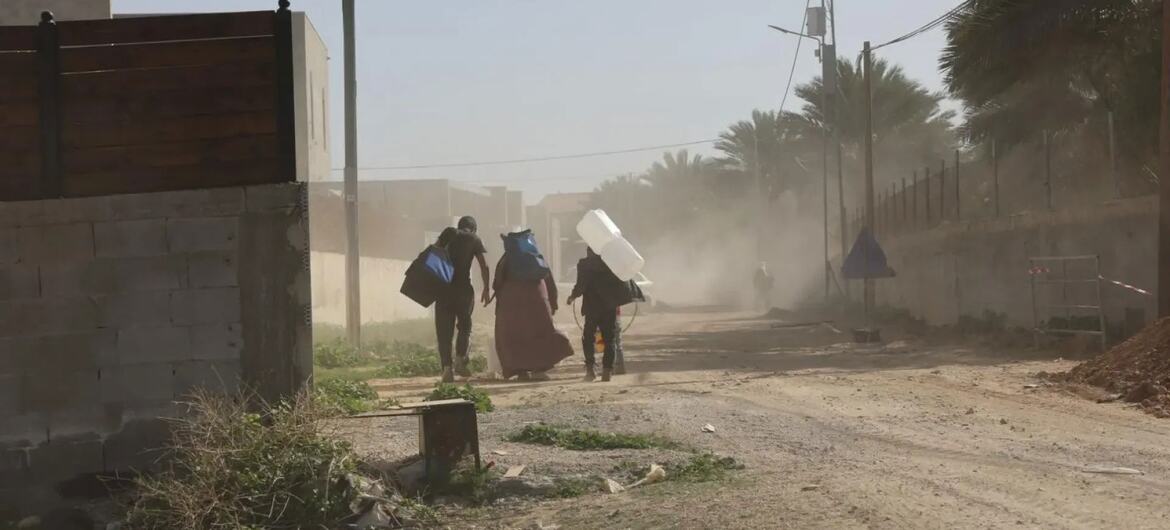
With a severe shortage of heavy equipment, machinery, and materials needed to remove the debris, and the Israeli occupation strictly preventing their entry, alarm bells are ringing about serious health and environmental consequences of the accumulating bodies. There are fears of water and soil contamination and the spread of epidemics and diseases, at a time when the Strip is already facing an unprecedented collapse of its health and service systems.
The anguish extends to families who are still waiting to find their loved ones. The bodies-under-the-rubble issue remains an open wound, adding to the series of crises that weigh heavily on the residents of Gaza.
“Terrifying nightmare”
“I’m living in a terrifying, unending nightmare. A normal death is difficult, but at least you bury your loved one and know where they are. But for my sister, Rawan, to be under the rubble since last September means that as I close my eyes every night, I’m gripped by real terror,” journalist Iman Shubeir began, speaking about her sister, whose body, along with that of her child, remains trapped under the rubble of their destroyed home since a year ago.
Shubeir told the Sanad News Agency that death, however cruel, sometimes leaves a final space for farewells, but what she is experiencing is completely different. The absence of the bodies has deprived the family of their most basic human rights: To know where their loved ones lie, to say goodbye, and to bury them with dignity.
She described the past year as one of “continuous agony,” as the loss hasn’t faded into a memory that can be lived with, but remains vividly present in all of its painful detail.
Every night the same images resurface: She imagines her sister and son buried under piles of rubble, in a place the family is not to reach or retrieve. “I imagine the darkness, the cold, the weight of the stones on her body,” she says. “I feel like I’m suffocating just thinking about it.”
Despite her attempts to live her daily life normally, Shabir insists that what appears to others doesn’t reflect what’s inside of her and what she’s going through. A part of her soul remains trapped beneath those ruins since that day, she said, adding that time hasn’t healed the wound because it never had the chance to heal in the first place.
With a lump in her throat, she continued, explaining her sister and her son’s presence under the rubble has kept the tragedy alive, as if the moment of loss is re-lived every day. Instead of grief being a painful pause followed by life’s journey, it has become a heavy, daily reality that accompanies her in every detail, making her feel that the disaster is far from over, that a part of her remains buried there, awaiting an end that has yet to come.
But what burns her heart most is the sight of her nephew, who, with the passage of time, seems to have become part of that rubble. Since the debris swallowed his mother, he has refused to leave the place, spending his days and nights on the ruins, clinging to a thin thread of hope, however cruel, that his mother might one day emerge from beneath the stones.
There, amidst the remains of the destroyed house, the child grows up with an endless wait, while the rubble becomes a silent witness to a whole year of sorrow, helplessness, and longing.
“We knocked on every door”
She said she and her family haven’t stopped searching for months, knocking on every possible door that might lead to the recovery of her sister’s body and her child.
“We contacted the Civil Defense teams repeatedly and tried every available means, but as a journalist, I know very well what we are experiencing in Gaza is far greater than a typical crisis that can be dealt with using the available resources,” she said.
She explained that her personal tragedy is just one of thousands of similar tragedies. Large numbers of victims remain trapped under the rubble in various areas, while limited resources are helpless to cope with the scale of the disaster.
She pointed out the lack of equipment and machinery, the ongoing dangers on the ground, and the accumulation of enormous quantities of debris have all made reaching the victims an extremely difficult task.
“I know that the civil defense teams are working beyond their capacity and doing everything they can under near-impossible conditions, so my sense of abandonment isn’t directed at them,” She continued.
“The real abandonment comes from a world that has been watching this ongoing tragedy for months, seeing thousands of families waiting to recover their loved ones from under their destroyed homes, without taking any action…”
Environmental Warnings…
Environmental expert Abdel Fattah Abd Rabbo said that leaving the bodies of the martyrs under the rubble for extended periods of time, like now, poses a great environmental and health challenge. It contributes to soil and potentially groundwater contamination due to tissue decomposition and the emission of odors and gases resulting from decomposition, as well as attracting flies, rodents, stray dogs, and other diseases.
Abd Rabbo emphasized the mixing of the decomposed bodies with the rubble, waste, and sewage exacerbates environmental pollution and hinders debris-removal and environmental recovery efforts.
He bases his argument on scientific evidence saying, in themselves, corpses are not a primary cause of disease outbreaks but points out that the greatest danger stems from the collapse of water and sanitation services, accumulation of waste, and overcrowding in displacement camps.
He added the decomposition of bodies in densely-populated residential areas negatively impacts the surrounding environment due to the release of decomposing fluids and organic matter that seep into the soil and affect its quality.
These pollutants can reach groundwater or nearby water sources, especially in areas where water and sanitation networks are severely damaged and therefore increase the environmental and health risks and the challenges faced by residents and relevant authorities in dealing with the ongoing devastation.
Extending Risks…
Furthermore, the decomposition process releases odors and gases. Urea, such as ammonia and hydrogen sulfide, exacerbates local air pollution and negatively impacts quality of life, according to the environmental expert.
Decomposing bodies, according to Abd Rabbo, attract flies, rodents, stray dogs, and other disease vectors, especially when mixed with solid waste and sewage.
These effects are compounded by inadequate sanitation and hygiene services, particularly in densely-populated areas and displacement camps, increase environmental and health risks, even though, according to scientific evidence, the bodies themselves are not a primary cause of disease outbreaks.
Abd Rabbo emphasized the risks stemming from the decomposing bodies vary depending on how long they remain under rubble. He explained in the first few weeks, the environmental impacts are more closely-linked to the decomposition process, odor emissions, and the attraction of flies, rodents, and scavengers.
As the period extends to months or years, the risks associated with the decomposition itself gradually decrease, but other risks emerge, including continued soil and environmental contamination, delays in debris-removal and rehabilitation of affected areas, and the presence of bodies mixed with rubble, waste, and war debris, stopping environmental and urban recovery efforts.
“In any case, scientific evidence indicates that the prolonged presence of bodies does not, in itself, lead to outbreaks of disease. Rather, the greater health risks stem from the deterioration of water and sanitation services, waste accumulation, overcrowding, and the spread of disease vectors in affected environments,” he continued.
Environmental Deterioration Indicators
Abd Rabbo pointed to several indicators that may point to environmental deterioration in areas where bodies remain under rubble for extended periods. These include the persistent emission of foul odors, an increase in the number of flies, rodents, and stray dogs, changes in soil properties or nearby water sources, and a worsening problem of waste and sewage accumulation.
He believes these indicators necessitate monitoring and follow-up by the relevant authorities, as they reflect a decline in general environmental and health conditions.
According to Abd Rabbo, these signs alone do not constitute conclusive evidence of pollution caused by corpses. However, identifying the sources of pollution require specialized environmental and laboratory tests and analyses which may be lacking because of the scale of devastation Gaza has gone through.
He pointed out that environmental degradation in the Gaza Strip is linked to a range of interconnected factors, including war debris, widespread destruction of infrastructure, disruption of water and sewage networks, and the accumulation of waste. These factors collectively contribute to exacerbating environmental and health risks in the affected areas.
He outlined several environmental and health steps to be taken when removing rubble, including conducting a field-risk assessment (corpses, hazardous materials, unexploded ordnance) and safely recovering bodies.
In addition to sorting out the rubble, recycling the usable parts, and safely disposing of the contaminated material, dust must be minimized during operations, and any waste or contaminated liquids must be managed hygienically, with continuous monitoring of soil, water, and air quality. Workers and residents must be protected with personal protective equipment and isolation measures, and environmental rehabilitation of the site must be carried out upon completion.
60 Million Tons of Rubble…
The amount of rubble and debris accumulated in the Gaza Strip up to the first half of 2026 is estimated at approximately 60 million tons (other UN estimates indicate 68 million tons), following the complete or partial destruction of more than 80% of buildings and infrastructure.
Official statistics issued by the Government Media Office in Gaza indicate more than 80% of buildings in the Gaza Strip were destroyed and/or damaged, while the areas are covered with rubble amounting to about between 60 and 70 million tons.
Official and human rights estimates that between 8,500 and more than 11,000 people remain missing as of the first half of 2026. It is widely believed the majority of these individuals were killed and their bodies remain trapped under the rubble of destroyed buildings.
Removing the rubble in the Gaza Strip poses a significant challenge to the reconstruction process. The latest UN estimates indicate there are 60 million tons of rubble in the Strip, equivalent to the cargo of 3,000 container ships.
This means every person in the Strip is trapped by 30 tons of rubble, and removing this enormous volume will require at least seven years.
UN statistics show the destruction rate in the Strip reached 84%, and 92% for Gaza City. The cost of reconstruction is estimated at $70 billion, according to the United Nations.
This feature was written by Fatten Al Hmeidi for the Arabic news website, Sanad News Agency, and reappears on crossfirearabia.com in translation with editing by Dr Marwan Asmar

 CrossFireArabia