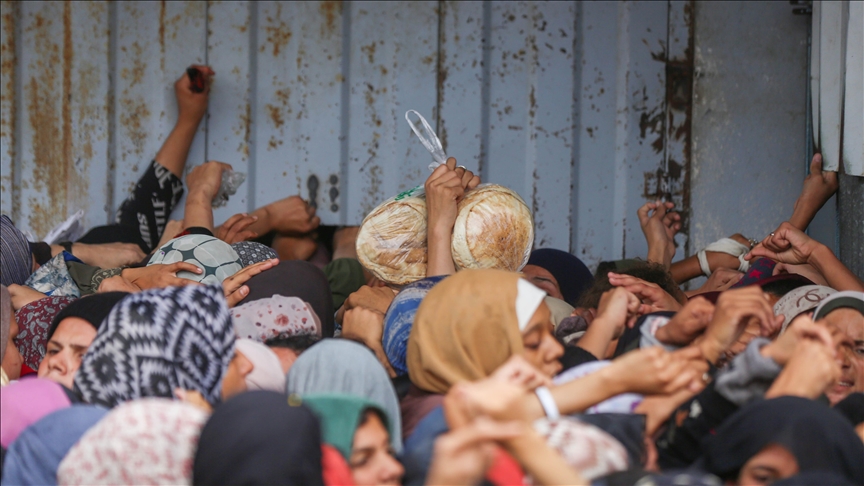
Yemen: Ruining Lives Through War

Yemen is facing a nutrition emergency of catastrophic proportions, with three districts plunged into severe crisis and four more teetering on the edge of famine. This escalating disaster demands immediate global action and unwavering humanitarian support to avert further tragedy and safeguard countless lives.

While many countries face food insecurity and shortages, famine is only declared by the United Nations when certain conditions are met, using a scale known as the Integrated Food Security Phase Classification (IPC). A famine classification is the highest on the IPC scale, and is declared in an area where at least 20% of the population faces extreme food shortages, acute malnutrition rates exceed 30%, and two out of 1,000 people die from starvation on a daily basis. 

Sever crisis

For the first time, this level has been reported in Yemen by UN experts in three districts. A report published by the UN’s Integrated Food Security Phase Classification (IPC) Technical Group in Yemen, covering only areas under government control, found that two districts in Hodeidah Southern lowland and one in Taiz lowland (Makha) falls within Phase 5, which is considered the worst phase of the IPC, and four other districts—Mawza and Al Makha in Taiz lowland, and Hays and Al Khawkhah in Hodeidah lowland—are expected to follow by October 2024.

Yemen’s food crisis is a man-made result of the war there, with the most critical cases emerging along the war-torn country’s Red Sea coast. The protracted and devastating conflict that began in March 2015 continues to destroy Yemen, already one of the poorest countries in the Arabian Peninsula and the Middle East and North Africa (MENA) region. 

War ruins lives, uproots communities, and wrecks food systems, making it the primary cause of hunger in Yemen. In almost a decade, the conflict and its proxy war have killed more than 150,000 people there, caused economic collapse, and produced one of the world’s worst humanitarian crises.

Today, 21.6 million Yemenis—two-thirds of Yemen’s population—don’t know where their next meal is coming from, and more than 80% of Yemenis live below the poverty line.

War Ruins Lives

As per the IPC report, malnutrition rates in Yemen have significantly worsened due to a combination of drivers, including a lack of drinking water, a shortage of nutritious food, the spread of diseases such as cholera and measles, and broader economic downturn.

The number of acutely malnourished children in the country has increased by 34% compared with last year, including more than 18,500 children under the age of five who are projected to be severely malnourished within the coming months.

Women and girls suffer disproportionately from food insecurity and malnutrition, and coping mechanisms are becoming increasingly desperate. Women eat last and least, giving priority to children and other relatives or using money for other household needs. Around 223,000 pregnant and lactating women are expected to be malnourished by the end of this year. In addition, early marriage has increased since the escalation of the conflict, and girls as young as eight years old are being married off to reduce the number of family members to feed, or as a source of income in order to feed the rest of the family and pay off debts.

Beyond the four districts projected to slip into famine, according to the IPC report, all 117 districts in government-controlled areas are expected to suffer from “serious” levels of acute malnutrition by October 2024.

About half of the country’s population—or 18.2 million people—is in need of humanitarian aid this year, even those hundreds of miles from the front line, because Yemen is critically dependent on imports, humanitarian funding, and incomes that have been knowingly undermined by parties to the conflict.

Euro-Med Human Rights Monitor emphasises the urgent need for the international community to work towards securing an end to this crisis and an inclusive peace in Yemen, stressing the crucial importance of increased humanitarian support and intervention to mitigate the impacts of the famine and acute malnutrition, especially on the lives of vulnerable individuals like pregnant women and children. Euro-Med Monitor also calls on the parties to the conflict to address the health and nutrition emergencies in Yemen and ensure access to sufficient nutritious food and safe drinking water; and notes that this will require the international community to unlock financial commitments and implement political solutions to safeguard the country’s food security and the overall future of Yemen’s population, revitalize the shrinking economy, and pave the way for peace.

Continue reading
Arabs Livid Over Ben-Gvir Synagogue View in Al Aqsa

In a dangerous provocation to Muslims in the West Bank, Gaza and the Arab and Muslim worlds, Israeli National Security Minister Itamar Ben-Gvir announced that he intends to build a Jewish synagogue within the Al-Aqsa Mosque compound. This is a site that is revered by Muslims worldwide.

The Ben-Gvir statement was reported by Israel’s Army Radio, where he claimed that Israeli law grants equal rights to Muslims and Jews to conduct prayers at the holy mosque as reported in the Quds News Network.

Meanwhile Jordan condemned such a statement. Jordan’s Foreign Ministry called it as “a violation of international law and an unacceptable provocation that requires a clear-cut international position condemning it.”

It stated Ben-Gvir’s statement “fuels extremism and endeavors to change the historical and legal status quo in Jerusalem and its holy sites through imposing new facts and practices driven by a bigoted exclusionary narrative.”

It stressed that the entire Al-Aqsa Mosque site is an exclusive place of worship for Muslims, and the Jordan-run Jerusalem Waqf Department is the legal entity supervising Al-Aqsa Mosque affairs.

As well, Egypt, Monday, denounced Ben-Gvir’s call to build a synagogue inside Al-Aqsa Mosque in occupied East Jerusalem, stating what he says heightens tension in the occupied Palestinian territories.

The country’s Foreign Ministry said Israel is legally responsible for adhering to the status quo at the Al-Aqsa Mosque and preserving Islamic and Christian sanctities.

It also demanded Israel comply with its obligations as an occupying power, and “stop such provocative statements aimed at further escalation and tension in the region.”

The ministry added that Ben-Gvir’s statement against Al-Aqsa Mosque further complicates and aggravates the situation across the Palestinian territories, and hinders efforts to reach a cease-fire in the Gaza Strip.

Meanwhile Israeli Prime Minister Benjamin Netanyahu tried to distance himself from Ben-Gvir. However all he said is that the status quo on the Al Aqsa Mosque remains unchanged.

Continue reading
Israeli Army Loses Deterrence, Decisiveness – Expert

Military expert Dr Nidal Abu Zeid said the success of the Qassam Brigades in launching an M90 missile towards Tel Aviv after 324 days of war and coinciding with Hezbollah’s bombing of the Glilot intelligence base, confirms the Israeli occupation is now missing the two most prominent features of the Israeli combat doctrine: Deterrence and decisiveness.

Abu Zeid added to Jordan24 that the resistance in Gaza has begun to impose the form of the combat equation, raise and lower the intensity of the fighting as it wishes and impose time and place on the enemy.

He said this means its is succeeding in stripping the occupation of its initiative element.

The strategic expert explained the resistance is still focusing on what is termed as the geographical triangle extending from Tel al-Hawa to Khan Yunis and Yula to Tel al-Sultan in Rafah, and is confining the Israeli military operations to this area.

This, he says has greatly exhausted the occupation forces, especially in light of the combat methods followed by the Palestinian resistance groups.

In this situation, Abu Zeid pointed out this type of fighting means the Israeli army can do two things:

The first is to accept the decision at the political level to continue fighting and this will inevitably leads to the collapse of their offensive posture in Gaza as a result of their losses and the shattering of their military units organizational structure, including its 162nd Armored Division and the 98th Paratroopers Division, now fighting for 224 days nonstop. The second is for the Israeli army to stop fighting and withdraw from the Gaza Strip under the weight of losses.

Continue reading
UN: Israel Destroys 800,000 WFP Fuel Liters in Yemen

A report issued Sunday by the UN World Food Program (WFP) revealed that Israeli airstrikes on Yemen’s Al-Hudaydah Port on July 20 destroyed around 800,000 liters of fuel belonging to the organization.

“Close to 800,000 liters of WFP-owned fuel for its on-demand services was destroyed by airstrikes on Al Hodeidah Port on 20 July,” the report on the humanitarian situation in Yemen said, using an alternate spelling for the port.

Courtesy: Anadolu

The airstrikes on the port, which is under the control of the Houthi group, caused numerous casualties and material losses estimated at $20 million.

The strikes followed a Houthi drone attack on the city of Tel Aviv a day earlier which killed one Israeli and injured nine others in response to Israel’s genocide in Gaza.

Yemeni officials initially reported six deaths and dozens of injuries.

Following the attack, the bodies of nine workers were recovered from the port and fuel depots according to Anadolu.

Continue reading
Who Has the Upper Hand in Gaza?

Strategic expert Dr. Nidal Abu Zeid said the ongoing operations in the Gaza Strip indicate two opposing scenes: The first to manage the defensive battle of the resistance and the second the offensive battle of the occupation army.

But he added the first scene can be described as escalating and the second as descending.

Abu Zeid added to Jordan24 the resistance has succeeded in managing an escalating defensive battle in a more professional manner and contributed to increasing the daily losses on the part of the occupation forces.

He explained that the resistance’s ability to adapt to the geography of the region has been great as witnessed in the battles of Tal al-Hawa and al-Zeitoun neighborhood. He noted that the mercurial movements of the resistance has confused the occupation forces after inflicting heavy losses on them.

Abu Zeid pointed out that the occupation is conducting an offensive battle in which there is a kind of confusion and hesitation, as the occupation army is unable to determine the directions of the attack and is unable to resolve the war despite the passage of 324 days of fighting.

He said this is due to the state of clear exhaustion in the Israeli combat units, as the 98th Paratroopers Division which has been fighting since the beginning of the military operation without stopping, and the 162nd Armored Division fighting in Rafah and has also fought in the north without stopping.

Continue reading