‘This War is Not Hours’

By Dr Hasan Al Dajah

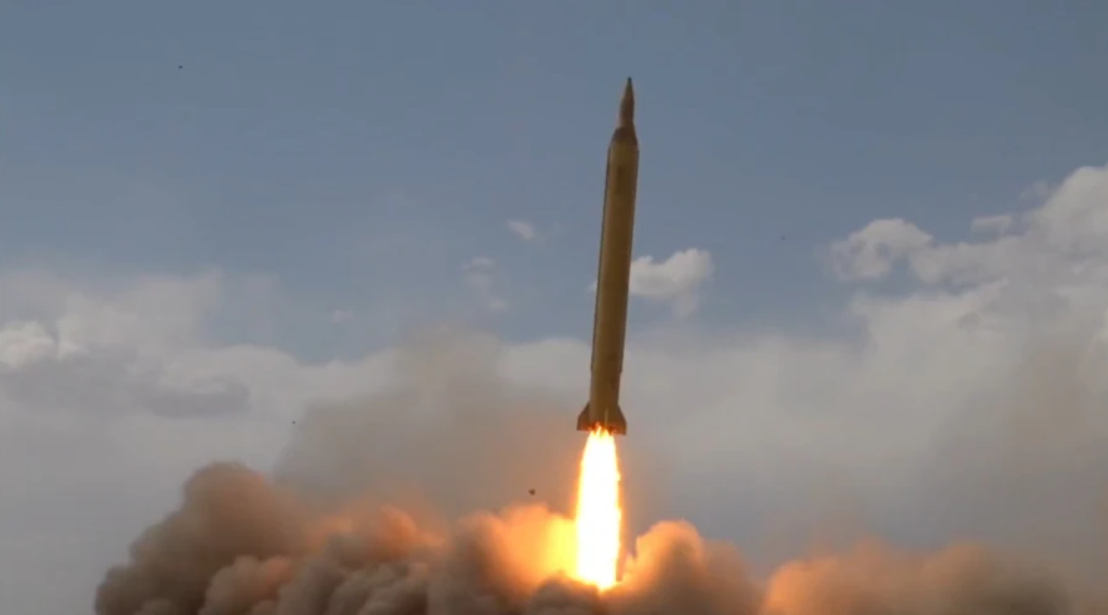
Events in the Middle East are accelerating, foreshadowing a comprehensive regional explosion. However, a deeper reading of the situation transcends the traditional narrative that attempts to portray the conflict as an “Arab-Iranian” or sectarian one that transcends borders. The reality emerging today from the rubble of burning military bases and oil facilities is clear: this war is not ours; it is a major strategic war led by Washington with direct Israeli planning, aimed at reshaping the region to serve absolute Western hegemony, even if the price is turning Arab capitals into arenas of destruction and settling scores in which we have no stake.

For years, the United States promoted the concept of “deterrence” and providing protection to allied countries in exchange for billions of dollars in arms deals and a massive military presence. However, Operation “True Promise 5” and the subsequent precise Iranian strikes have stripped away the fig leaf from these claims. Field reports indicate that US bases, once described as “impregnable fortresses,” have become vulnerable targets themselves, requiring protection. At Al Udeid Air Base in Qatar, damage to the AN/FPS-132 early warning radar and the AN/TPY-2 facility resulted in a near-total paralysis of surveillance capabilities.

In Bahrain, home to the Fifth Fleet, the destruction of satellite communications stations led to a loss of centralized control over naval vessels. In Kuwait and the UAE, the casualties and the destruction of F-15 fighter jets revealed that advanced US technology was incapable of countering waves of drones and missiles that disrupted even civilian air traffic and struck vital facilities at Jebel Ali Port, reducing military installations and oil depots to ashes.

This resounding failure raises a fundamental question about the viability of relying on a “security umbrella” that has failed to protect its own perimeter and has become a security burden, attracting attacks rather than repelling them. This is no longer mere political analysis; it has become a public admission emanating from the corridors of Washington. What Senator Lindsey Graham recently revealed represents the pinnacle of terrifying candor. He confirmed that the true agenda is not about spreading “democracy” or protecting allies, but rather about embroiling the Gulf States as the military front and human cannon fodder in a direct confrontation with Iran. This is a prelude to seizing oil wells and managing the region’s wealth for Washington’s benefit, thus paying the price for the American presence, while simultaneously imposing full normalization and strangling China’s energy lifeline.

The United States’ recent attempt to seek refuge in French bases in the UAE, such as Al Dhafra Air Base and Camp de la Paix, is nothing more than a desperate effort to spread losses and hide behind the European umbrella after the deterioration of the original American bases. However, even these shared bases have not been immune to attack.

The strikes have proven that any facility supporting Western operations is a legitimate target in this zero-sum confrontation. The effects of this war extend beyond the military arena, striking at the very heart of daily life. The threat to the Strait of Hormuz has triggered seismic repercussions in global markets. The price of a barrel of oil jumped to around $116, an increase of more than $38, while gas prices in Europe rose by more than €25, and oil shipping costs soared by over 90 per cent, foreshadowing an uncontrollable wave of global inflation.

The United States, which today expresses its “displeasure” at Israel exceeding expectations in striking Iranian fuel depots, is not acting out of a desire for peace, but rather out of fear that the economic game will backfire on it and on oil markets, which cannot withstand the loss of Gulf supplies, especially given the 11 per cent increase in gasoline prices in America and the 70 per cent increase in jet fuel prices. What is happening in Jebel Ali, Manama, Doha, and Kuwait is not a struggle to defend Arab sovereignty, but rather a settling of scores between major powers that want to use Arab land as a chessboard.

The American bases that are groaning today under the weight of the strikes have proven to be a “paper tiger” when it comes to protecting allies, and that their presence is nothing but a magnet for crises that drains Arab capabilities for the benefit of foreign agendas that do not take into account Arab national security.

Arab capitals must realize, before it’s too late, that the “illusion of protection” has completely evaporated under the weight of missiles and drones. To be drawn into Israel’s desire to destroy the region, and to accommodate American ambitions to seize energy resources to finance its expansionist policies, is strategic suicide by any measure.

This raging war is not our war, and staying out of the inferno of this manufactured conflict is the only way to ensure that our wealth and the future of our generations do not become fuel for the schemes of Netanyahu, Trump, and the war profiteers behind them.

The time has come to seriously seek a self-reliant regional security system, one that originates from within the continent and is based on the shared interests of the region’s countries, far removed from foreign bases that today lack even the most basic military effectiveness and have become a strategic burden that itself needs protection after its defensive vulnerabilities have been exposed.

False American promises only increase our subservience and dependence on a modern colonial project that sees Arabs as nothing more than insignificant figures on its debt list, or mere cheap tools in its proxy wars. The true protection of homelands begins today with disengaging from these destructive agendas, and with the explicit acknowledgment that bases that have failed to protect their own walls and platforms will never be a shield for others.

Hasan Al-Dajah, a Professor of Strategic Studies at Al-Hussein Bin Talal University, is a columnist in the Jordan Times.

Continue reading
Cairo Confirms 4 March For Gaza Rebuild Summit

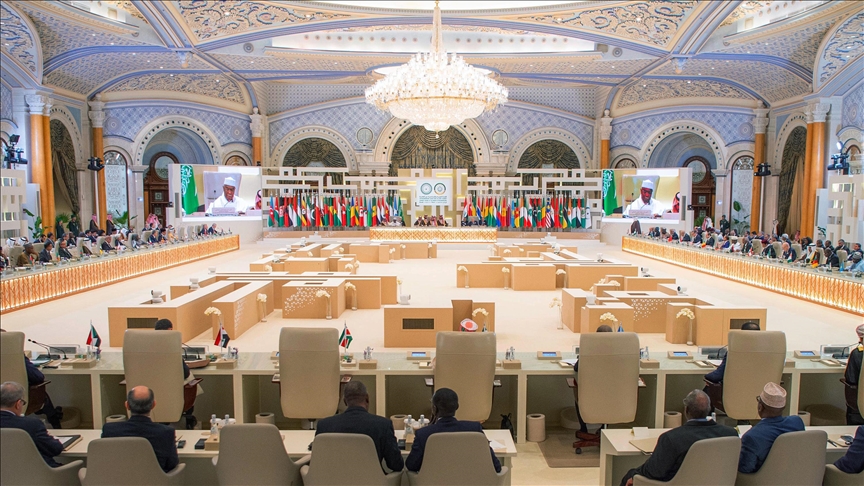
Egypt confirmed on Tuesday that it will host an emergency Arab summit on March 4 to discuss plans to rebuild the Gaza Strip without displacing its Palestinian inhabitants.

The summit was originally scheduled to be held on Feb. 27, but was postponed to March 4 “to complete logistical preparations,” the Egyptian Foreign Ministry said in a statement.

The ministry said the new date was set in coordination with Bahrain, the current chair of the Arab League, and in consultation with Arab countries according to Anadolu.

The summit follows a proposal by US President Donald Trump to take over Gaza and resettle its Palestinian inhabitants to develop it into what he called “the Riviera of the Middle East.”

On Sunday, Egyptian President Abdel Fattah al-Sisi confirmed that his country is preparing a “comprehensive” plan to rebuild Gaza without displacing Palestinians.

Trump’s plan for Palestinian resettlement has been rejected by the Arab world and many other nations, who say it amounts to ethnic cleansing.

The controversial idea came amid the ceasefire agreement that took effect in Gaza on Jan. 19, halting Israel’s genocidal war, which has killed nearly 48,300 Palestinians, most of them women and children, and left the enclave in ruins.

Continue reading
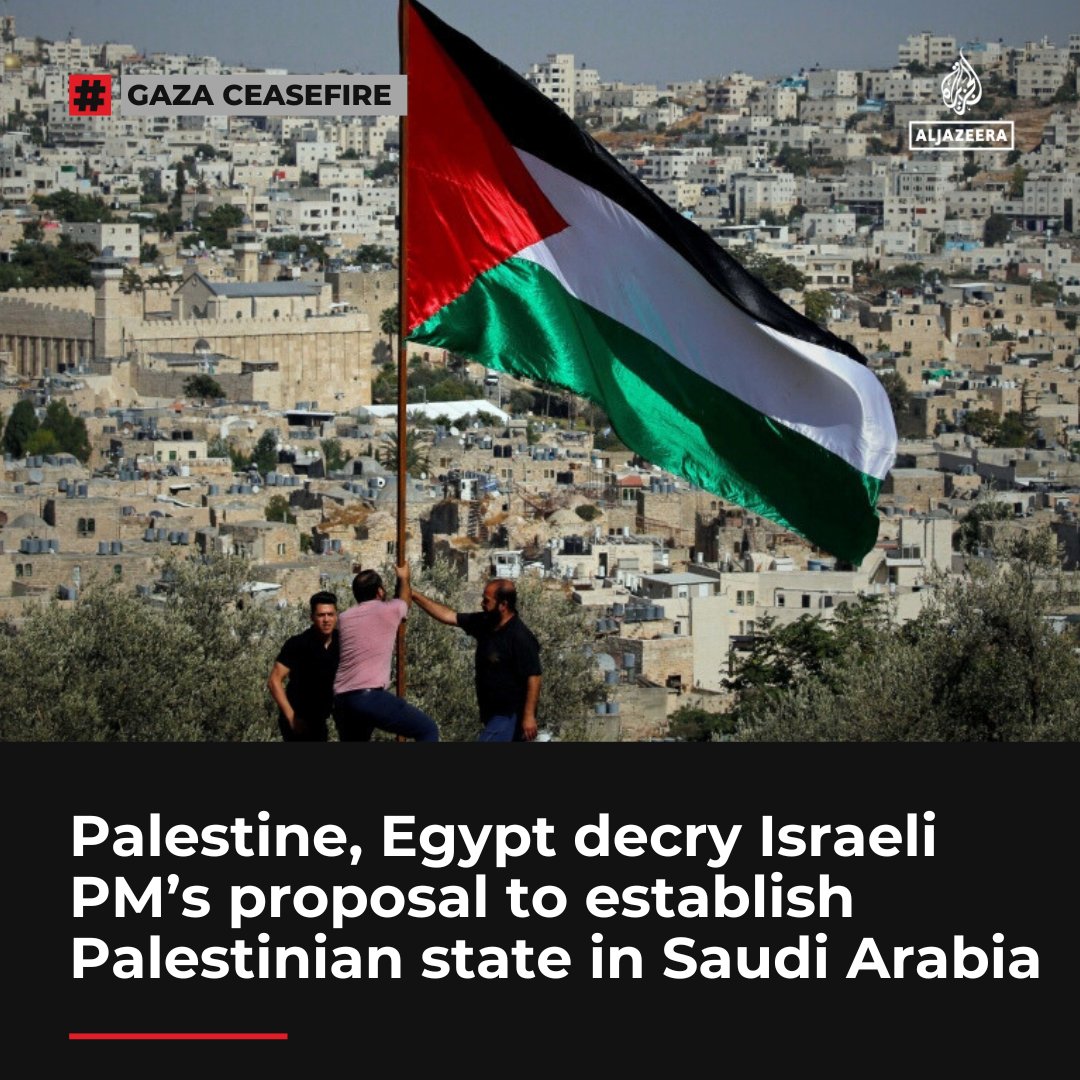
Arabs Condemn Netanyahu’s Call For Palestinian State in Saudi Arabia

Arab countries strongly condemned Israeli Prime Minister Benjamin Netanyahu’s statements suggesting the establishment of a Palestinian state in Saudi Arabia.

In an official statement, the Saudi Foreign Ministry reaffirmed its “categorical rejection” of such rhetoric, emphasizing that “the Palestinian people have a right to their land, and they are not intruders or immigrants to it who can be expelled whenever the brutal Israeli occupation wishes.”

The statement said, “This extremist, occupying mentality does not understand what the Palestinian land means to the brotherly people of Palestine,” asserting that Israel “does not think that the Palestinian people deserve to live in the first place.”

The Qatari Foreign Ministry said in a statement that Netanyahu’s statements are “a flagrant violation of international law and a blatant infringement of the United Nations Charter.”

The ministry affirmed Qatar’s full solidarity with Saudi Arabia and reiterated its “categorical rejection of calls for the forced displacement of the brotherly Palestinian people.”

In a statement, Jordan’s Foreign Ministry spokesman Sufian al-Qudah said, “The Israeli government continues its provocative policies and statements that undermine the sovereignty of nations and the principles of international law.”

He stressed Jordan’s “absolute rejection of these provocative statements, which reflect an exclusionary and inciting ideology hostile to peace and contribute to further escalation in the region.”

The Foreign Ministry in Muscat, in a statement, reaffirmed “Oman’s firm stance in support of the establishment of an independent Palestinian state on its full sovereign territory in Palestine, with East Jerusalem as its capital, based on the 1967 borders.”

The Bahraini Foreign Ministry, in a statement, expressed the kingdom’s “strong condemnation and denunciation of the irresponsible Israeli statements regarding the establishment of a Palestinian state on Saudi territory,” considering them a “blatant violation of international law and the UN Charter.”

The ministry reaffirmed “Bahrain’s full solidarity with Saudi Arabia and its unwavering support for its security, stability, and sovereignty.”

The Iraqi Foreign Ministry issued a statement expressing its “firm rejection of these remarks, which constitute a blatant violation of Saudi Arabia’s sovereignty and an attack on the legitimate rights of the Palestinian people, in addition to contradicting international law and the UN Charter.”

The ministry emphasized “Iraq’s full solidarity with Saudi Arabia and its unwavering stance in supporting the security, stability, and sovereignty of nations.”

The Yemeni government, in a statement issued by the Foreign Ministry, condemned Israel’s arrogant and provocative remarks against Saudi Arabia, describing them as “a dangerous escalation that threatens the stability of the entire region.”

The ministry warned that “Israel’s arrogant statements not only target Saudi Arabia but also represent a serious escalation that endangers regional stability as a whole.”

https://twitter.com/PressTV/status/1888667745274724703

The Mauritanian Foreign Ministry, in a statement, described the Israeli prime minister’s remarks as “irresponsible,” adding that they “constitute an unacceptable violation of international norms and laws and a provocation that threatens the security and stability of the region.”

Arab League Secretary-General Ahmed Aboul Gheit firmly denounced “in the strongest terms” the Israeli prime minister’s remarks about relocating Palestinians to Saudi Arabia. He emphasized that “the logic behind these statements is completely unacceptable and reflects a total disconnect from reality.”

Gulf Cooperation Council (GCC) Secretary-General Jassem Al-Budaiwi stated that “these dangerous and irresponsible statements confirm the approach of the Israeli occupation forces in their lack of respect for international laws and treaties, as well as the sovereignty of nations.”

Palestinian resistance movement Hamas strongly described Netanyahu’s remarks as “hostile toward Saudi Arabia and the Palestinian people, reflecting an arrogant approach and a colonial mindset that disregards the historical rights of the rightful owners of the land.”

On Thursday, Netanyahu suggested that Palestinians should establish their state in Saudi Arabia rather than in their own homeland, dismissing any notion of Palestinian sovereignty.

“The Saudis can create a Palestinian state in Saudi Arabia; they have a lot of land over there,” he said.

Earlier, on Feb. 4, US President Donald Trump said Washington would “take over” Gaza and resettle Palestinians elsewhere under an extraordinary redevelopment plan that he claimed could turn the enclave into “the Riviera of the Middle East.”

His proposal was met with wide condemnations from the Palestinians, Arab countries, and many other nations across the world, including Canada, France, Germany, and the UK as reported in Anadolu.

Continue reading
Netanyahu: Ideologue, Pragmatist or a Proxy?

Dr Khairi Janbek

PARIS – When talking about the Israeli prime minister Netanyahu, we must not miss the point that in effect he is a politician, thus, he is both an ideologue and a pragmatist. He is an ideologue when he feels he can go all the way with brinkmanship and get away with it, and he is a pragmatist, when realizes that he should stop and talk. However, by and large that usually depends on the position of the USA primarily, and on the regional situation in the second degree.

He was a pragmatist, when he originally gave his implicit support to Hamas as a guardian of peace in Gaza, and the guarantor of border security with Israel, and he was an ideologue when he demanded that the PNA accepts that Israel is a Jewish state, and accept moreover, that any form of a Palestinian state ought to be demilitarized and just a guardian of the border with Israel.

https://twitter.com/LegitTargets/status/1847287962024747060

He was an ideologue when avenging the 7 October events and a pragmatist in letting the hostage crisis drag on. He chose to head a government in which he can present himself as the only one whom the world can talk to when compared to his extremist colleagues, through his masque of pragmatism, rather than go into a government with partners whom will make him look as the only ideologue among pragmatists.

Again, this Netanyahu dualism, be that the ideologue who has the freedom to do as he sees fit, or the pragmatist who gets to know his boundaries one cannot say is clear, at least for the moment. For all intents and purposes, the red apple of the so-called Abrahamic Accord, Saudi Arabia, remains illusive, as the Saudis have indicted in no uncertain terms, that any prospects of normalization are conditional on at least, reviving the two-state solution. But at the same time, Netanyahu still has working relationships with the UAE and Bahrain in the Gulf as well as Qatar.

As for the older cold peace partners, Jordan and Egypt, Netanyahu is content that at least the situation is stable as it could be.

Now, will Netanyahu be able to pull a rabbit out of the hat when it comes to Trump, or does he really feel that he can take Trump for granted? The current thought in the Middle East fluctuates between those two guesses. But in reality with a paradigm shift, perhaps we can see things clearer. For a start, we are currently living in the age of separation of economics and business from the world of politics, also the separation of interests from principled positions. This age is not created by either Netanyahu or Trump but it certainly suits their relationship fine.

One thing for certain, Netanyahu can rely on Trump’s support as an intransigent ideologue, for Israel is undoubtedly the advanced military post of the USA, but also as a pragmatist, he has to understand to what extent he can be a tool of US foreign interests especially that Trump is very much fond of the concept of proxies and does not like infringements on his business deals.

Dr Khairi Janbek is a Jordanian historian based in Paris and the above opinion is written exclusively for crossfirearabia.com. 

Continue reading