Hormuz: Mines, Strategy or Business?

By Ismail Al Sharif

The US thought that assassinating senior Iranian leaders would bring down the regime, but this did not happen.

Iran’s inability to match American military and technological superiority led it to adopt a number of strategies, most notably what is known in the military literature as the Mosaic Defense Doctrine. This doctrine is based on dismantling its military central command into small, independent units, each operating autonomously and making its own decisions without consulting the higher command.

From Day 1 of the war, Iran adopted this approach. However, the lack of coordination and the disintegration of the military hierarchy led to chaos and confusion which affected the management of its operations. The situation became contradictory; the politicians were declaring one thing and military commanders acting in a completely different manner and direction.

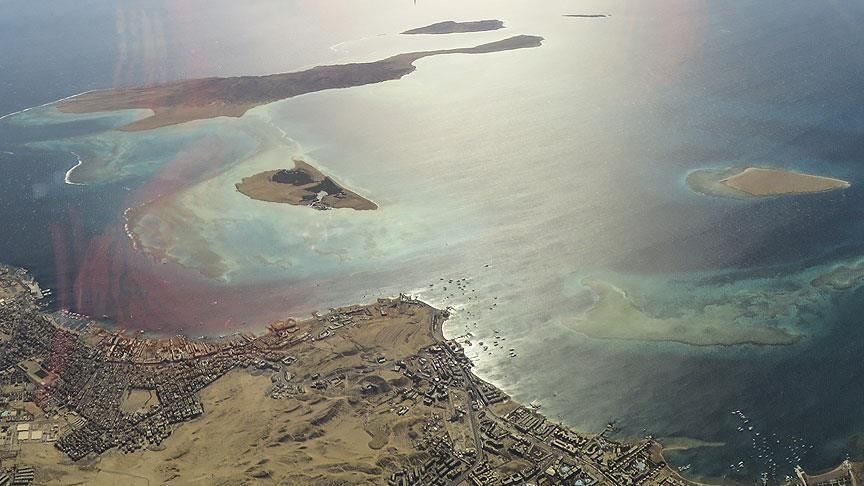
This was reflected on the ground through extremely dangerous behavior. Military units, using small boats, indiscriminately laid naval mines to deter enemy ships. However, the lack of coordination here backfired resulting in the Iranian navy officers losing their ability to pinpoint the coordinates of the mines they planted in the Hormuz Strait with no accurate maps or reliable records. Some of these mines may have been completely displaced by the currents of the sea. This was further complicated by the fact that these mines were not primitive but far from it; they were sophisticated and able to detect sound and pressure, and thus able to track the passage of large ships and submarines, and detonate automatically upon approach.

However, mine removal is not easy task, as history shows. Even today, news reports continue to surface of mines in various parts of the Kingdom, half a century after the last war. Indeed, mines from World War II are still being discovered on land and at sea.

Even with Britain’s pledge to remove mines after the war, and despite possessing the latest specialized technologies in this field, the task remains arduous, protracted, and uncertain. The specter of a sudden explosion looms, reminding us that the danger of mines is not easily eliminated.

But the decisive factor in weakening navigation in the Hormuz Strait is not primarily military, but rather material. Commercial ships are massive investments, with some vessels valued at around $150 million and their cargoes potentially worth hundreds of millions of dollars. Therefore, a single mine explosion can cause catastrophic losses to both the ship and its cargo. Consequently, no ship sails without insurance; ports, banks, and shipping companies refuse to deal with uninsured vessels, and without insurance, global shipping grinds to a halt.

Herein lies the real surprise: the fate of the Strait is no longer dependent on Iran’s pronouncements regarding its opening or closure, but has effectively fallen into the hands of insurance companies. With the escalating risks, insurance costs have skyrocketed; “war risk” premiums have jumped from approximately 0.25% of the ship’s value to nearly 1% or more, exceeding a massive $1 million per voyage. And it doesnt stop there; seven major insurance companies announced their complete withdrawal, issuing notices of coverage cancellation just within just 72 hours.

And here comes the decisive turning point: Once the insurance coverage is lost, maritime traffic ground to a halt. During this 39-war, ships have effectively ceased sailing with the number of vessels transiting the Strait plummeting by more than 80%. Around 150 oil tankers remain anchored offshore, and major shipping companies suspended their operations, as if this vital artery of global trade had been frozen by a financial, rather than a military decision.

The US government attempted to provide alternative insurance coverage, but this effort failed and US President Trump’s pronouncements regarding mine removal were inconsistent with the reality.

The issue of reopening the Strait has once again become a prominent topic, but the deeper truth is that its fate is no longer determined by political statements or military actions, but rather by the decisions of insurance experts. Even if the war were to end immediately, ships would not resume sailing right away. Insurance companies need time to reassess the level of risk, and they base their decisions not on political logic, but on cold, hard numbers and rigorous data.

This article was originally published in Arabic in Addustour daily newspaper and republished in English in crossfirearabia.com.

Continue reading
World States Say ‘No’ to Occupation

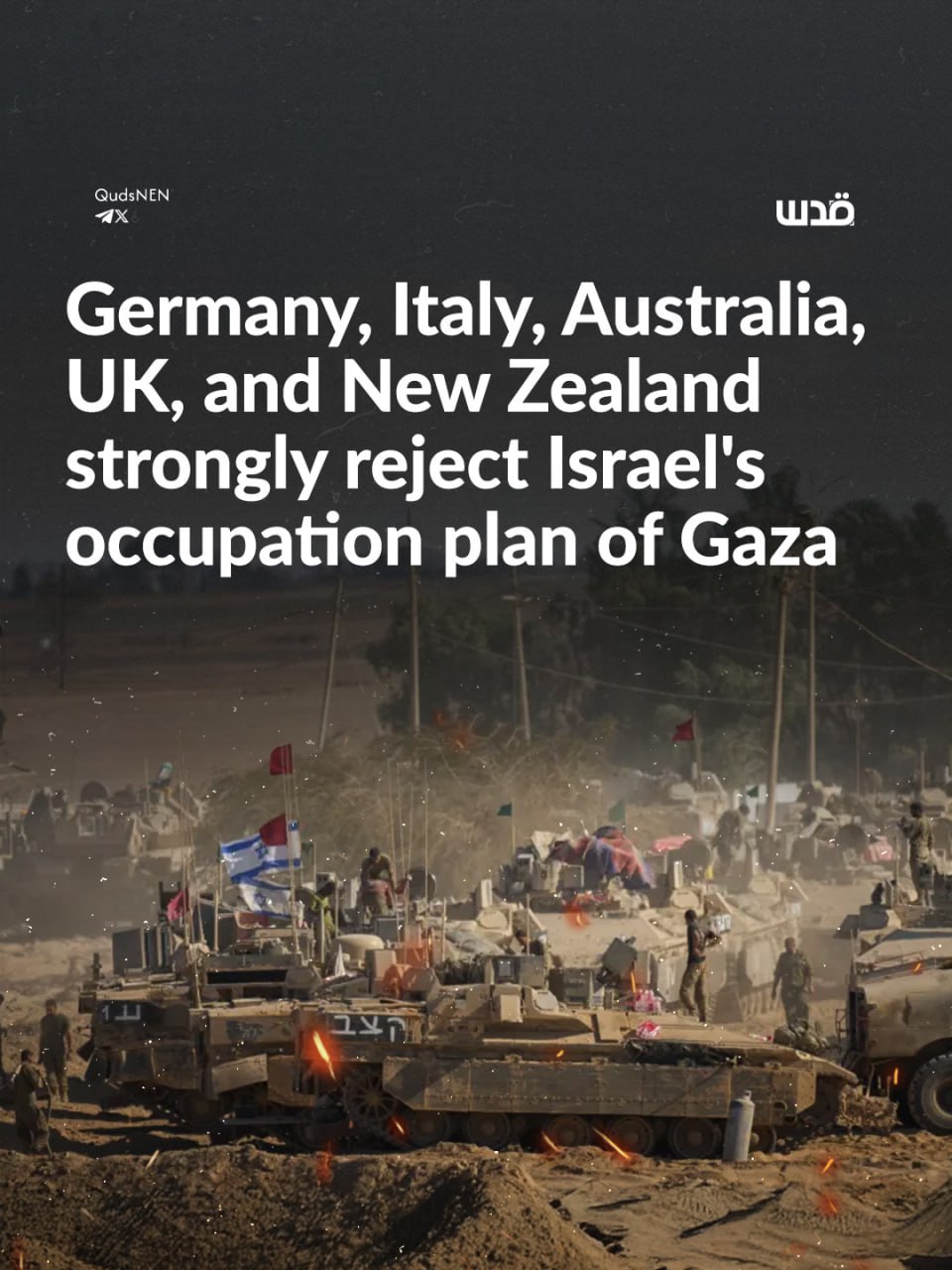
In a joint statement, the foreign ministers of Australia, Germany, Italy, New Zealand, and the United Kingdom strongly condemned Israel’s decision to occupy the Gaza City.

They warned that the move would exacerbate the already dire humanitarian crisis, endanger the lives of hostages, and increase the risk of mass civilian displacement.

The statement emphasized that any attempts at annexation or settlement expansion would constitute a violation of international law.


The ministers called for the immediate release of all captives by Hamas and urged Israel to take concrete steps to facilitate the delivery of humanitarian aid to those in need.

Continue reading
Britain Hires US Jet to Spy Over Gaza

The British military has secretly hired a US private company to conduct aerial surveillance over Gaza in search of Israeli soldier prisoners, according to The Times.

Due to a shortage of available RAF reconnaissance planes, the Ministry of Defence (MoD) turned to a Nevada-based firm, Straight Flight Nevada Commercial Leasing LLC. The company is a subsidiary of Sierra Nevada Corporation, one of the largest US military contractors.

The aircraft used, a Boeing Beech King Air 350i registered as N6147U, flew over southern Gaza on July 28. Its flight path was unintentionally revealed after the crew failed to switch off the transponder. This mistake exposed the plane’s presence over Khan Yunis, raising questions about Britain’s role in supporting Israeli operations.

Two UK defence sources confirmed to The Times that the government is paying for the aircraft and its missions. The plane is contractor-owned and operated, meaning British pilots are not flying it. The MoD has declined to disclose the cost or duration of the contract.

Sources say the MoD’s own fleet of Shadow R1 aircraft, which previously flew over Gaza, is either undergoing maintenance or assigned to other missions. One source described the outsourcing as a “privatization” of military intelligence and called it “shocking.”

“This is about supporting Israel,” a senior British military official told The Times. “Instead of sending a message that we’re pulling back, we’re hiring American contractors to do the job.”

Between December 2023 and July 2025, the RAF’s Shadow fleet reportedly carried out over 600 surveillance flights over Gaza. Intelligence gathered during those missions was shared with Israel to allegely help locate israeli soldier prisoners according to the Quds News Network.

Continue reading
Trump, Witkoff Need To Stop The Netanyahu Tune

By Michael Jansen

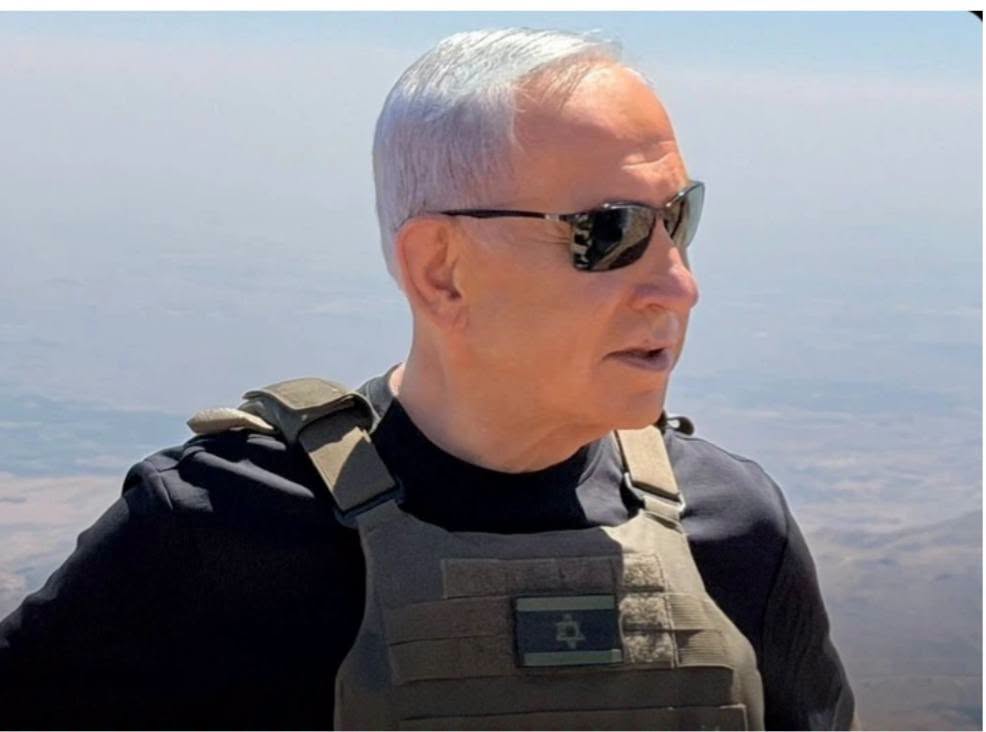
Israeli Prime Minister Benyamin Netanyahu has said, “There is no policy of starvation in Gaza, and there is no starvation in Gaza.” Israel has enabled “humanitarian aid throughout the duration of the war to enter Gaza – otherwise, there would be no Gazans.”

However, Gaza’s government media office told Al-Jazeera that only 674 aid trucks have entered Gaza since Israel eased restrictions on July 27, averaging just 84 laden trucks per day. This is only 14 per cent of needs as humanitarian organisations say at least 600 trucks of water, food, medicine and fuel are required at a minimum.

Echoing Netanyahu, US regional envoy Steve Wikoff proclaimed there is “no starvation” in Gaza after a brief visit to one of the aid delivery hubs in the Strip. “There is hardship but no starvation,” he said. His assessment appeared to contradict his boss Donald Trump who had said there is “real starvation.”

“Once we refute this Hamas claim, we can continue new actions to end the war and bring back all the hostages” held by Hamas, Witkoff said. He added that Trump believes piecemeal deals do not work and so a new arrangement is needed that would free the hostages all at once.

However, Witkoff argued that only Hamas “total surrender” and disarmament would be accepted. Writing in Haaretz daily on 2 August, Amir Tibon decries Netanyahu’s decision to carry on with the war, despite opposition from most Israelis and Israel’s foreign friends. “Israel’s military leadership admits today that the last five months have been a wasted effort, and that it would have been preferable for Israel to continue the January 2025 ceasefire, get the rest of the hostages out of Gaza in an agreement, and conclude the war.”

He is sharply critical of the Trump administration which “gave Netanyahu total backing for this disastrous policy, including his decision to block all aid from coming into Gaza, which caused the humanitarian crisis there. “Consequently, Witkoff’s latest visit has been met with popular Israeli “disappointment over the Trump administration’s failure to rein in Netanyahu and bring the Gaza war to an end.”

This means that there will be no quick fix under pressure from starvation even though Israelis held captive by Hamas are suffering the same lack of nourishment as their captors. The International Committee of the Red Cross has been asked to provide food for the captives but not the 2.3 million hungry Palestinians in Gaza.

Witkoff has been contradicted by the UN-supported Integrated Food Security Phase Classification” (IPC) which has warned that “the worse-case scenario of famine” is unfolding as 60,000 Palestinians died from bombs and bullets and an untold toll, especially among children, is being gripped by hunger and malnourishment. IPC called for a ceasefire to avert further “catastrophic human suffering.” The total number of people who have died from hunger-related causes since the start of the war in October 2023 has risen to more than 181, including 94 children. This does not include the 1,400 who have been killed by Israeli army fire when trying to secure aid at the highly controversial US-Israel Gaza Humanitarian Foundation which has not alleviated starvation but given a false image of US and Israeli efforts to deliver food.

UN Secretary-General Antonio Guterres said the IPC alert “confirms what we have heard. The facts are in and they are undeniable. Palestinians in Gaza are enduring a humanitarian catastrophe of epic proportions. This is not a warning. It is a reality unfolding before our eyes.”

Australian Prime Minister Anthony Albanese declared it was “beyond comprehension” for Israel to claim starvation was not an issue in Gaza and accused Israel of breaching international law by blocking aid.

Netanyahu is personally responsible for torpedoing January’s ceasefire agreement which would have led to the release of Israeli captives in exchange for Palestinian prisoners, Israel military withdrawal from Gaza, and an end to the war. Instead on 2 March, he imposed the blockade and on 18 March, he resumed the war. Tibon summed up, “Netanyahu, for political reasons, chose to blow up the deal, restart the war, and bring us to where we are today: Our hostages are being starved and tortured, our soldiers are dying, and the entire world is turning against us due to the broader humanitarian catastrophe in Gaza.”

As the 15 August 20th anniversary approaches of the beginning of Israel’s withdrawal of settlers and soldiers from Gaza, 600 retired Israeli security officials have written to Trump to ask him to pressure Netanyahu to end the war. This group included former Mossad chief Tamir Pardo, former Shin Bet chief Ami Ayalon, former Prime Minister Ehud Barak, and former Defence Minister Moshe Yaalon.

Ayalon argued: “At first this war was a just war, a defensive war, but when we achieved all military objectives, this war ceased to be a just war…It is our professional judgement that Hamas no longer poses a strategic threat to Israel,” the officials stated. “Your credibility with the vast majority of Israelis augments your ability to steer [Netanyahu] and his government in the right direction: End the war, return the hostages, stop the suffering.”

On the political front, this policy has contributed to decisions by Britain, France, Canada and half a dozen other countries to recognize the state of Palestine during next month’s opening of the 80th UN General Assembly session. Although recognized by 147 of the 193 UN members, many Western countries have delayed recognition. The addition of Britain and France will mean four of the five permanent members of the UN Security Council (which includes China and Russia) will recognize Palestine while the US will remain the outlier as it is on any effort to criticize or rein in Israel.

Michael Jansen is a columnist for The Jordan Times

Continue reading
How Britain Funded The Israeli Genocide

Britain’s support for Israel’s genocidal conduct in Gaza, through weapons, intelligence sharing, and diplomatic cover, is in the spotlight again after this week’s court ruling on a legal challenge to the UK’s continuing arms exports to Tel Aviv.

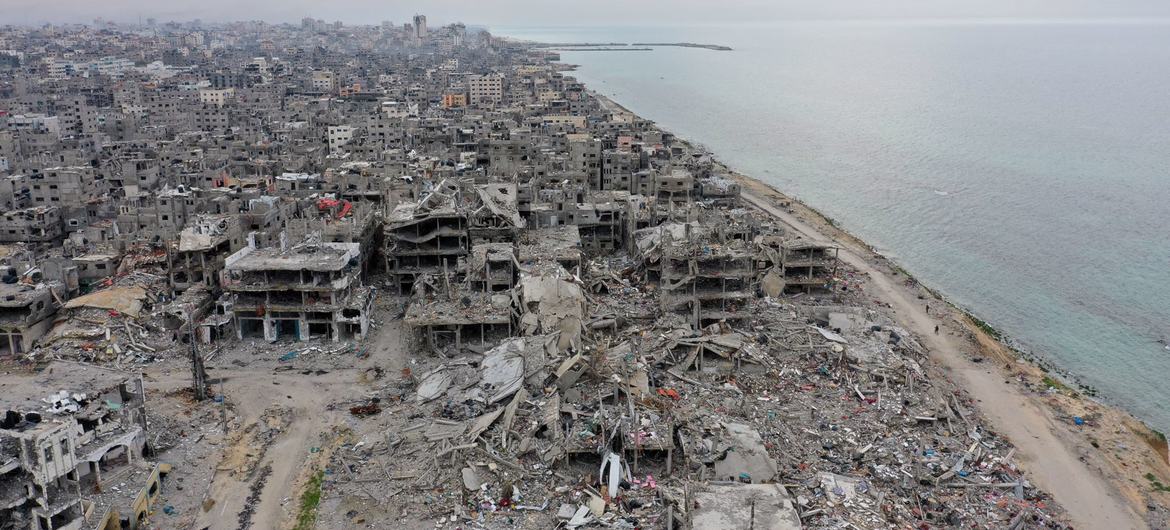
Critics, ranging from top human rights groups to legal experts and members of Parliament, say the UK has become complicit in the devastation Israel is inflicting on Gaza, where its forces have killed more than 57,000 Palestinians and wounded over 134,000 since Oct. 7, 2023.

The UK High Court on Monday dismissed a judicial review brought by Palestinian human rights group Al-Haq and London-based Global Legal Action Network (GLAN), supported by Amnesty International UK, Human Rights Watch, and Oxfam.

The case centered on Britain’s decision to exempt F-35 parts when suspending some arms export licenses for Israel last year, citing the UK’s legal obligations under international humanitarian law, including the Geneva Conventions, the Arms Trade Treaty, and the Genocide Convention.

Despite acknowledging these concerns, judges Stephen Males and Karen Steyn ruled that the so-called “F-35 carve-out” policy was lawful and beyond the jurisdiction of the courts. The decision drew widespread condemnation from the rights groups, who have vowed to keep up their efforts to force the British government to halt all arms exports to Israel.

According to a detailed investigation by London-based watchdog Action on Armed Violence (AOAV), the UK has supplied thousands of munitions, continued shipments of components for the F-35 fighter jet used in Israeli airstrikes, and conducted over 570 surveillance flights over Gaza since December 2023.

Arms and material

Britain has continued to arm Israel despite mounting civilian casualties in Gaza. “Since October 2023 there have been at least 14 shipments of military goods from the UK to Israel,” Labour lawmaker Kim Johnson said in Parliament last month.

“Those include over 8,500 munitions, bombs, grenades, missiles, and 146 armored vehicle parts. In October 2023 alone, the UK exported 150,000 bullets.”

In September 2024, under growing pressure, the Labour government announced it was suspending around 30 of 350 active export licenses for Israel, citing a “clear risk” that British-made weapons could be used in serious violations of international humanitarian law.

However, the move fell far short of a full embargo, with AOAV noting that “the vast majority of licenses remained valid.”

Critically, the UK exempted components for the F-35 fighter jet program from suspension. BAE Systems, a key British arms manufacturer, contributes to the jets used in Israeli airstrikes.

AOAV reports that F-35s have played “a critical role in the Israeli bombing campaign,” including an attack in March 2025 that killed more than 400 Palestinians.

While the UK insists that all exports are rigorously assessed, Parliament has heard warnings that Britain cannot ensure its arms are not used in Gaza.

“It is completely conceivable that those weapons have been used to kill and maim children in Gaza,” Labour MP Warinder Juss said in a Parliament session.

Surveillance and intelligence

Starting in December 2023, the Royal Air Force began flying near-daily surveillance missions over Gaza and southern Israel from the RAF Akrotiri base in the Greek Cypriot Administration.

According to AOAV data, Britain has flown over 570 such sorties, with more than 200 under the current Labour government.

The primary aircraft used is the Shadow R1, operated by the RAF’s 14 Squadron, equipped with high-resolution cameras and signals intelligence tools. The RAF also deployed RC-135 Rivet Joint planes to collect electronic intelligence.

The UK government claims these flights are “solely” for hostage rescue purposes. However, AOAV raised serious concerns about how the intelligence is used, warning that “British spy aircraft may have given Israel additional eyes and ears over Gaza’s battlefields.”

Britain’s membership in the Five Eyes intelligence alliance complicates matters further. As AOAV explains, the UK has long held responsibility for Middle East monitoring within the alliance, and signals intelligence shared with the US may have ultimately supported Israeli military operations.

Legal challenges and ethical concerns

Despite the September 2024 suspension of some export licenses, arms shipments from the UK to Israel appear to have continued. Human rights groups have sharply criticized what AOAV calls a “blind alliance.”

In early June, former Labour leader Jeremy Corbyn called for an independent public inquiry into the UK’s involvement in Israeli military operations in Gaza, urging the government to end arms sales to Israel and accusing ministers of complicity in what he described as “mass murder.”

Most recently, on June 30, the UK High Court dismissed the judicial review brought by Al-Haq and GLAN, saying that decisions on whether to continue UK’s involvement in the F-35 program were for the government and Parliament according to Anadolu.

Continue reading