Poll: 47% Believe Trump ‘Take Over’ of Gaza is ‘Bad Idea’

Nearly half of Americans rejected US President Donald Trump’s proposal to “take over” the Gaza Strip and relocate Palestinians to neighboring countries, calling it a “bad idea,” as did several major Arab, European, and other countries around the world.

According to a CBS News/YouGov poll conducted between Feb. 5 and 7, in which 2,175 US adults were polled and released on Sunday, 47% of Americans believe the US proposal to “take over” Gaza is a “bad idea,” with only 13% supporting it and 40% unsure or saying “it depends.”

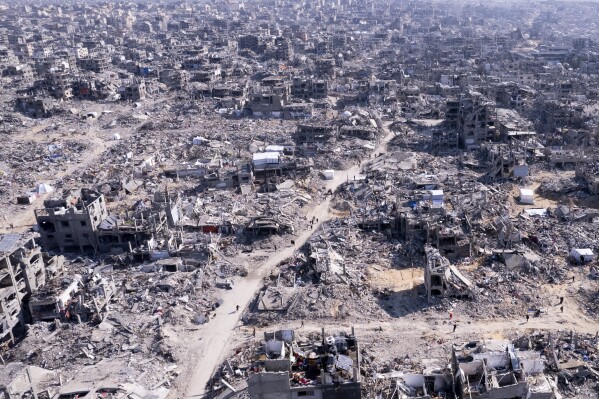
The poll also found that 34% of respondents had little or no knowledge of the proposal to relocate Palestinians from Gaza, which has been nearly completely destroyed by brutal Israeli forces since Oct. 7, 2023, killing nearly 48,200 people, the majority of whom are women and children.

On Feb. 4, Trump said Washington would “take over” Gaza and resettle Palestinians elsewhere under an extraordinary redevelopment plan that he claimed could turn the enclave into “the Riviera of the Middle East.”

His proposal was met with wide condemnations from the Palestinians, Arab countries, and many other nations across the world, including Canada, France, Germany, and the UK.

During the survey, 46% disapproved of Trump’s handling of the Israel-Hamas conflict, while the rest approved, “driven largely by Republican support.”

Regarding Trump’s goal in proposing the Gaza plan, 22% believe it is to have the US take over Gaza, 28% believe it is to begin negotiations with Middle Eastern countries, and 29% believe it is both.

The poll also found that Trump has a 53% approval rating, with 70% saying he is keeping campaign promises.

Continue reading
Al-Duwairi: Israel’s Netzarim Withdrawal is a Retreat, a Strategic Shift

Military strategic expert Major General Fayez Al-Duwairi said the withdrawal of the Israeli occupation army from the Netzarim axis represents a strategic shift in battle with its plan to divide and control the Gaza Strip from its north failing.

Al-Duwairi explained the Israeli occupation army tried to establish a permanent presence in the area but was forced to retreat under the pressure of battles and political agreements.

Speaking on Al Jazeera, Al-Duwairi added the occupation expanded the Netzarim axis to reach a width of 80 kilometers and a depth of between 6.5 and 7 kilometers, and established four main sites supported by four other supporting sites.

He pointed out although the occupation army began to establish infrastructure to enhance the sustainability of its presence, most of its facilities were dismantled, reflecting its awareness of the possibility of withdrawal at any moment.

He explained the recent agreement imposes on it to withdraw from Netzarim permanently. As well the military expert stressed that Israel will neither be able to remain in the Philadelphi Corridor or the buffer zone later.

A different reality


He pointed out that the Israeli plan was initially aimed at controlling the northern areas of Gaza but the resistance made sure this didn’t happen and imposed a different reality which forced the Zionist army to recalculate.

Al-Duwairi indicated that the occupation may try to procrastinate or delay the implementation of the withdrawal, but in the end it is obliged to evacuate the site on the 22nd day of the deal.

Regarding the withdrawal, he explained this move will facilitate the movement of citizens, especially in light of the siege imposed by the occupation’s control of the corridor.

However, he stressed the most important thing is to restore sovereignty – even partially – to the Palestinians, indicating the current scene is radically different from the calculations of the occupation, which wanted to impose a new political reality.

He considered the withdrawal is not just a military step, but carries political and strategic dimensions, as it reflects the failure of the Israeli vision for Gaza and confirms the will of the resistance and negotiation to impose new equations on the ground.

The ceasefire and prisoner exchange agreement in Gaza went into effect on 19 January and includes three stages, each lasting 42 days. During the first, negotiations will be held to start a second stage, then a third, with the mediation of Qatar, Egypt, and the United States according to Jo24.

Continue reading
Riyadh Outraged at Netanyahu’s Creating ‘Palestine’ on Saudi Lands

The Saudi Foreign Ministry announced, Sunday, its rejection of Israeli Prime Minister Benjamin Netanyahu’s statements about establishing a Palestinian state on the Kingdom’s lands. It stated that these comments are “aimed to divert attention from the crimes committed by the Israeli occupation against the Palestinians in Gaza, including the ethnic cleansing they are subjected to.”

The ministry stressed, in a statement, that “the Palestinian people have a right to their land, and are not intruders or immigrants who can be expelled whenever the brutal Israeli occupation wants.”

In response to Netanyahu, it added: “This extremist occupation mentality does not understand what the Palestinian land means to the brotherly Palestinian people and their emotional, historical and legal connection to it, and does not consider that the Palestinian people deserve life in the first place.”

https://twitter.com/sultanalnefaie/status/1888457964081537242

It continued that “this extremist occupation mentality completely destroyed Gaza and killed and injured 160,000 Palestinians, most of whom were children and women, without the slightest human feeling or moral responsibility.”

With American support, Israel committed genocide in Gaza between 7 October, 2023 and January 19, 2025, leaving more than 159,000 Palestinians dead and wounded, most of them children and women, and more than 14,000 missing.

The Saudi ministry pointed out that “the owners of these extremist ideas are the ones who prevented Israel from accepting peace, by rejecting peaceful coexistence, rejecting peace initiatives adopted by Arab countries, and practicing systematic injustice against the Palestinian people for more than 75 years.”

It stressed that “the extremist occupation mentality does not care about right, justice, law, and the values ​​​​established in the United Nations Charter, including the right of a person to live in dignity on his land.”

The Kingdom also appreciated “what sister countries announced in terms of condemnation, disapproval, and complete rejection of what Netanyahu stated regarding the displacement of the Palestinian people from their land,” according to the same statement.

It explained that “these positions, which reject the establishment of a Palestinian state on the lands of the Kingdom, confirm the centrality of the Palestinian cause to Arab and Islamic countries.”

The Saudi Foreign Ministry concluded by saying that “the right of the brotherly Palestinian people will remain steadfast, and no one will be able to take it away from them no matter how long it takes, and lasting peace will not be achieved except by returning to the logic of reason and accepting the principle of peaceful coexistence through the two-state solution.”

In response to its firm position adhering to the establishment of a Palestinian state, Netanyahu said on Friday that “Saudi Arabia has vast areas and can establish a Palestinian state on them,” in response to a question from the Hebrew Channel 14 broadcaster regarding Riyadh’s insistence on establishing a Palestinian state as a condition to normalize relations with Tel Aviv.

Netanyahu claimed that “Riyadh does not stipulate the establishment of a Palestinian state for normalization with Israel.”

On more than one occasion, Saudi Arabia has stipulated the Israeli government’s approval of the establishment of a Palestinian state on the 1967 borders in exchange for normalizing relations.

Netanyahu’s statements come days after US President Donald Trump spoke about his country’s intention to seize the Gaza Strip and displace the Palestinians from it, and that Saudi Arabia no longer stipulates the establishment of a Palestinian state for normalization with Israel, which sparked widespread regional and international rejection.

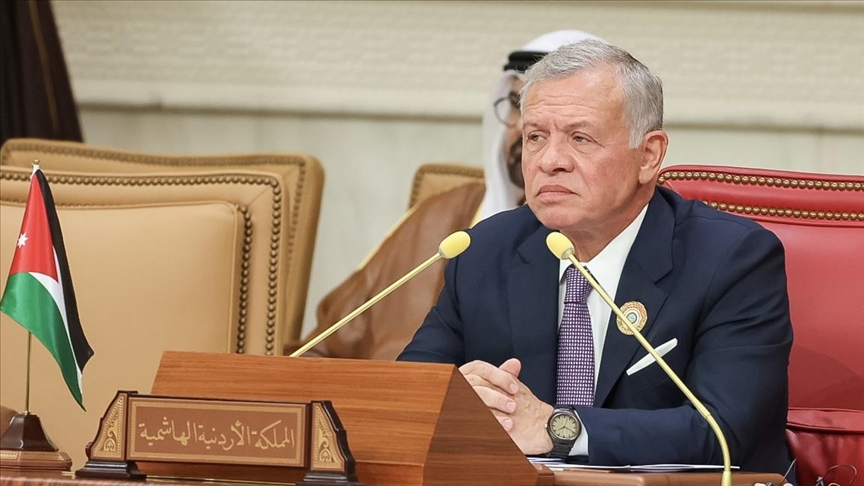
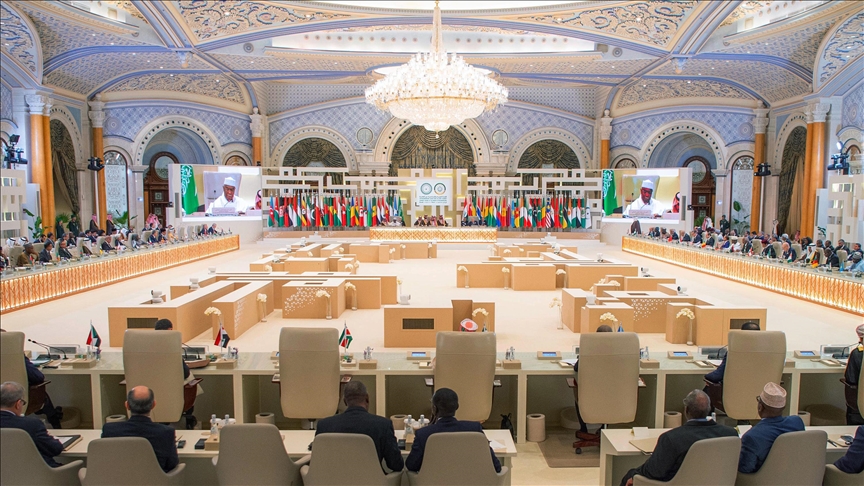
Since 25 January, Trump has been promoting a plan to displace Palestinians from Gaza to neighboring countries such as Egypt and Jordan, which was rejected by both countries, and was joined by other Arab countries and regional and international organizations as reported by Anadolu news.

Continue reading
Israeli Army Withdraws From Netzarim

Israel has withdrawn its forces from the Nitzarim axis in central Gaza as reported by different media sources. This is part of the ceasefire agreement and comes after over a year of Israeli occupation of the of the Gaza Strip and its three-month occupation of the axis.

Full Withdrawal…

Under the deal, Israel must evacuate its last military outposts along the axis, which has been a key Israeli military stronghold in Gaza. The withdrawal marks a significant shift, as settlers had hoped to establish a permanent presence in the area. Israeli forces will now remain only in the buffer zone and along the Philadelphi Corridor Quds News Network reported.

The area lies to the east of the Salah Al-Din Road. Once Israeli forces withdraw, no troops will remain in northern Gaza except for the 162nd Division, which has repositioned in the buffer zone near the border.

The Nitzarim axis has long been a symbol of Israeli assaults and settler ambitions in Gaza. Settlers held public rallies at its entrance, viewing it as a gateway for their colonization of the strip.

Two weeks ago, Israel partially withdrew from sections of Nitzarim to allow displaced Palestinians to return north under the ceasefire agreement. Over 500,000 have since made their way back to their wrecked homes in the north of the strip.

The withdrawal from Nitzarim highlights Israel’s failure to maintain long-term occupation of Gaza. The army had expanded the axis to 80 kilometers in length and up to 7 kilometers in depth through wiping out several neighbourhoods, establishing multiple fortified positions. However, intense resistance and political pressure forced an Israeli army retreat.

This marks Israel’s third withdrawal from Nitzarim in 20 years. In 2005, then-Prime Minister Ariel Sharon pulled Israeli forces out of Gaza. In 2009, Israel withdrew again after a three-week invasion. Now, after months of military assaults and infrastructure development, another retreat is imminent.

Ceasefire Agreement at Risk

However, a senior Hamas official warned, Saturday, Israel’s failure to fully implement the ceasefire agreement threatens its collapse. Basem Naim, a member of Hamas’s political bureau, said the deal remains fragile because of the Israeli foot-dragging in the negotiations for the second phase of the ceasefire agreement.

“The delays and violations we are seeing could derail the agreement,” Naim said, adding that Hamas wants to avoid a return to war.

Saturday marked the exchange of a fifth group of prisoners, halfway through the first phase of the ceasefire deal. The agreement, brokered by Qatar, Egypt, and the US, is divided into three phases, each lasting 42 days. Talks on the second phase maybe starting but at a snail’s pace..

Nitzarim ‘s ‘Line of Corpses’

Haaretz previously reported that Israeli officers stationed along the Nitzarim axis admitted to systematically shooting any Palestinian who approached the area. Soldiers targeted civilians, including children and unarmed people, leaving their bodies exposed.

An officer told Haaretz that the army treated every person as a potential threat. “Every woman is a scout, or a man in disguise,” he said, adding that soldiers killed cyclists under the pretext of them being collaborators.

The investigation revealed that Israeli forces enforced an unmarked boundary near Nitzarim with standing orders to shoot anyone who approached. “This line appears on no map and exists in no official military order, but in Gaza, it is brutally real,” the report stated.

Continue reading