Trashing….

CEOSSFIREARABIA – At first France said it would adhere to the decision of the International Criminal Court and arrest Israeli Prime Minister Benjamin Netanyahu if he landed in Paris because he is wanted as a war criminal.

This angered Netanyahu. In a private telephone call with President Emmanuel Macron, the two leaders had a terse conversation on the international legality of the ICC decision. Netanyahu questioned its validity in the strongest manner.

While this was going on, France was interested in reaching a ceasefire deal on Lebanon and Hezbollah. Israel started another battle on its northern borders come mid-September and was busily attacking south Lebanon up to Beirut’s south district, seen as a Hezbollah stronghold.

The French government soon started its diplomacy and started to push for a ceasefire. Thus the context became that if France waived the Netanyahu arrest and that of his ex-Defense Minister Yoav Gallant, should they travel to France, a deal can be reached on Lebanon.

And thus a 60-day ceasefire was finally reached; this was a ceasefire that could be extended.

Meanwhile France needed to provide its pretext for “arresting/not arresting Netanyahu” if he landed in France. Excuses had to be made: Israel wasn’t privy to ICC decisions because it was not a signatory to the world body as well it was felt that that Netanyahu couldn’t be arrested because he was a sitting prime minister.

This meant that the whole issue was becoming very confusing. But the ICC decision was binding on all 124 of its members in the world that includes France which is bound to follow the decisions of the international court with no excuses!

This political diplomacy maybe water on a duck’s back because Netanyahu is still promising that he will go after Hezbollah soon ant that means an Israeli war on Lebanon is likely to start again in the near future.

But is this likely as well, since the north of Israel is clearly devastated and neither the Israelis nor their army would prefer to see war re-starts again. For the time being however, its touch and go.

Continue reading
Naim Qassem: ‘Hezbollah Achieved a Great Victory…’

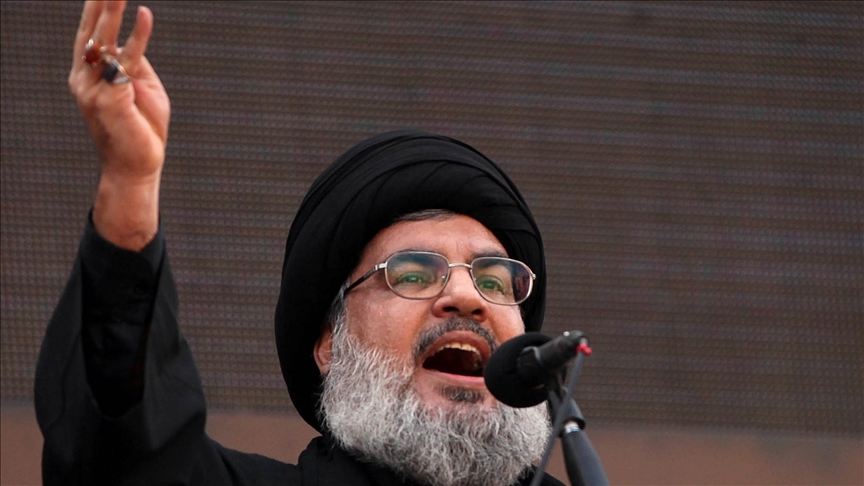
Hezbollah’s Secretary-General Naim Qassem confirmed that the party achieved a great victory over the Israeli occupation, and stressed the continuation of support for Palestine in various forms, and presented five pledges for the post-war period, including assistance in reconstruction, and completing the contract of constitutional institutions, most notably the election of a president for the republic.

On the third and fourth pledges, Qassem said; Our national work will be in cooperation with all forces that believe that the homeland belongs to all its sons, and we will also cooperate and dialogue with all forces that want to build a unified Lebanon on the basis of the Taif Agreement.

In his first speech after the ceasefire in Lebanon he said: “I decided to announce as a result, officially and clearly, we’ve one a great victory that exceeds the victory of  July 2006.”

Qassem added: “We won because we prevented the enemy from destroying Hezbollah, we won because we prevented it from ending the resistance and/or weakening it…”

Qassem also attributed the victory to the long duration of the Israeli aggression, the ferocity of the battle, and the sacrifices made by the Lebanese, in addition to the American and Western support provided to Israel.

Sheikh Qassem also pointed out that Israel suffered heavy losses in its battle with Lebanon, as a result of the strikes directed at it by Hezbollah, and hundreds of thousands were displaced from northern Israel, and because of the resistance’s steadfastness, Israel’s horizon was blocked.

Hezbollah’s Secretary-General added in his speech that in light of what he called the defeat surrounding Israel, the ceasefire agreement came, which he said was “not a treaty or a new agreement that requires the signature of countries, but rather a program of procedures related to the implementation of Resolution 1701.”

He said that the agreement confirms the withdrawal of the Israeli army from all the places it occupied and the deployment of the Lebanese army in the south of the Litani River to assume its responsibility for security and for expelling the enemy from the region.” He also confirmed that Hezbollah will coordinate with the Lebanese army.

Sheikh Qassem also noted in his speech that “the agreement was made under the umbrella of Lebanese sovereignty, and we agreed to it with our heads held high in our right to defend ourselves.”

On 27 November, 2024, a ceasefire agreement between Hezbollah and the Israeli army came into effect after months of mutual military operations between the two parties due to Hezbollah’s support for the Gaza front after Operation Flood of Al-Aqsa.

On the other hand, he stressed the continuation of the Lebanese resistance’s support for Palestine, and said: “Our support for Palestine will not stop and be in different forms.” In the same context, he recalled when Hezbollah began supporting the resistance in the Gaza Strip, it repeated it did not want war, but confirmed that it was ready if it was imposed on it.

Next stage

Sheikh Qassem spoke about the next stage, and made five pledges for the post-war stage, including assistance in reconstruction, and completing the constitutional institutions, most notably the election of a president for the republic, expressing his hope to achieve this on the scheduled date of 9 January, and said that the party’s presence in political and social life will be effective and influential in keeping with the country’s circumstances.

Regarding the third and fourth pledges, Qassem said: “Our national work will be in cooperation with all forces that believe that the homeland belongs to all its sons, and we will cooperate and speak with all forces that want to build a unified Lebanon on the basis of the Taif Agreement,” adding that “to those who bet on weakening the party, we regret that their bets failed.”

In his speech, the Secretary-General of Hezbollah also thanked Iran, Yemen and Iraq, according to Al Jazeera.

Continue reading
Can Lebanon’s Ceasefire Lead to a Gaza Let up?

The cease-fire between Israel and Lebanon is raising questions about whether a similar truce could bring an end to the ongoing Israeli genocide in Gaza.

Statements from around the world have given rise to cautious hope, such as the US saying it aims to use the Lebanon truce “as a catalyst for a potential Gaza cease-fire,” but prospects of something actually materializing remain uncertain.

Palestinian academic Sami Al-Arian believes Israel does not want a cease-fire in Gaza, at least “for the time being.”

“Knowing that (Israeli Prime Minister Benjamin) Netanyahu will be facing prison once the war ends in Gaza, it doesn’t seem like he’s interested in either getting the hostages out or ending this genocidal war,” he told Anadolu.

Israel, he said, has been trying to “annihilate the (Palestinian) resistance” but failed to do so, or “free their captives with military means.”

“They have been trying for 14 months and they have failed miserably,” he said, adding that going for a cease-fire in such conditions would not fit in with Israel’s goals.

Israeli expert Ori Goldberg also finds chances of a truce in Gaza difficult, pointing to Netanyahu’s own statement rejecting that specific possibility.

He said the Israeli premier, now a man wanted by the International Criminal Court (ICC) for war crimes and crimes against humanity, is unlikely to agree to cease-fire terms that risk his political standing.

“Various countries have already stated a renewed commitment to a hostage deal, but a cease-fire in Gaza will have to include a detailed schedule for Israeli withdrawal,” Goldberg said.

“I have trouble seeing Netanyahu agreeing to that in Gaza … If he agrees to it in Gaza, he will seem weaker.”

Another factor, he added, is how much “the Israeli public supports the presence of the Israeli military in Gaza, much more than it does in Lebanon.”

Why did Israel agree to Lebanon cease-fire?

Experts say Israel’s main reason for agreeing to the Lebanon truce was because it failed to achieve its military goals against Hezbollah.

“They wanted to push Hezbollah to the north of the Litani River but that failed. They wanted to disarm Hezbollah, and that failed,” said Al-Arian, adding that Israel opted for a cessation of hostilities because its forces were suffering.

“They wanted to impinge on Lebanese sovereignty and be able to fly over the airspace of Lebanon and control the border. That failed.”

Other goals of returning illegal Israeli settlers to Lebanese lands or creating a buffer zone also failed, he added.

Al-Arian emphasized that the current agreement is “not a cease-fire” but a truce for 60 days, reiterating that Israel’s only reason for agreeing was that “they were not able to bring Hezbollah to its knees and surrender.”

Ali Rizk, a Lebanese security analyst, presented a slightly different view, saying that both Israel and Hezbollah needed the truce.

“Hezbollah needed a cease-fire because it had suffered some heavy blows,” he told Anadolu.

Hezbollah’s supporters, particularly among the Shia community, were targeted by Israel, with many of them being displaced, and there was “immense human suffering with the onset of the winter season,” he added.

For Israel, Rizk believes they “initially had the momentum in their favor, especially after the assassination of Hezbollah’s former leader Syed Hassan Nasrallah, but gradually that momentum appeared to fade away.”

“They encountered some heavy resistance in the south. A lot of their soldiers lost their lives in the south. Hezbollah missile and rocket attacks continued,” he said.

In his own statement, while Netanyahu “didn’t say it, but he was implying that the Israeli military was suffering from some kind of a fatigue,” Rizk pointed out.

The US was another factor, he said, as it never wanted – since October 2023 – the “situation to erupt, to explode in Lebanon.”

“They (US) welcomed any steps and they took the opportunity when they found that these circumstances were appropriate and they sent Amos Hochstein,” said Rizk, referring to Biden’s special envoy.

“There were several factors – Hezbollah’s interests, Israeli interests and US interests – and I think they all converge in the same direction.”

Israeli analyst Goldberg also believes Netanyahu agreed to a truce because his forces were not accomplishing their goals in Lebanon.

“He wants to keep the Israeli military in Gaza. There’s no victory there, so he wanted something that would be a feather in his cap … He agreed to it in Lebanon because these are two sovereign states,” he said.

Will Lebanon cease-fire hold and what comes next?

On the durability of the Lebanon truce, Rizk struck an optimistic tone.

“If you look at what happened in 2006, Resolution 1701, that ended that conflict and it spoke about a cessation of hostilities,” he said, adding that the situation remained calm from 2006 till 2023.

“It’s quite possible that … we could have a long-term calm again … because it’s clear that neither the Israelis nor the Americans have an interest in the situation exploding.”

With Trump coming to power soon, having made clear his aversion to any war or military adventures, it would be fair to say “there is a good chance that this agreement is going to hold,” he added.

Goldberg, however, was more cautious in his outlook.

“I think the cease-fire will hold, even though there are provisions … that suggest that Israel can open fire and use violence whenever it likes. We will see how this happens,” he said.

“I think Netanyahu has an interest in the cease-fire holding because that gives him carte blanche in Gaza.”

Rizk, meanwhile, also believes that a formula could be reached to end the Gaza genocide and go ahead with a hostage deal.

“In July, according to reports, (US President-elect Donald) Trump told Netanyahu that he wants the situation done, and he wants the war to come to an end,” he said.

“If you look at Trump’s appointments and his mandate, it seems that he doesn’t want anything to do with a new conflict in the Middle East. He’s even given indications that he wants to deal with Iran, so that leads me to conclude that his foreign policy priorities are going to be elsewhere, which requires calm in this part of the world.”

Continue reading
Israel Breaks Ceasefire

The Israeli occupation breaches the ceasefire agreement and carries out several attacks on southern villages in Lebanon:

Three people were injured in a strike by Israeli drones on a car in the town of Markaba.

Israeli artillery targets the town of Al-Taybeh.

Three shells were fired at the town of Rmeish (Kharbet Kora), damaging a house and a supermarket, while Israeli aircraft flew at low altitude over Mount Lebanon and the south.

Gunfire was directed at civilians attempting to return to their homes in the city of Bint Jbeil.

An Israeli tank targeted the outskirts of Kfarshouba with two shells.

Continue reading
The A, B, C to a Ceasefire

A cease-fire agreement between Lebanon and Israel went into force early Wednesday to end over 14 months of fighting between the Israeli army and Hezbollah group.

In a 13-item document obtained from a government meeting on Wednesday, the Lebanese Cabinet reaffirmed its commitment to implementing UN Security Council Resolution 1701 in its entirety.

Resolution 1701, adopted on Aug. 11, 2006, calls for a complete halt to hostilities between Hezbollah and Israel and the establishment of a weapons-free zone between the Blue Line and the Litani River in southern Lebanon, with exceptions for the Lebanese army and the UN peacekeeping mission (UNIFIL).

The cease-fire deal took effect hours after US President Joe Biden said a proposal to end the conflict had been reached, amid hopes it would stop Israeli airstrikes on Lebanese towns and cities and end the year-long cross-border fighting.

Over 3,800 people have been killed in Israeli attacks in Lebanon and over 1 million displaced since last October, according to Lebanese health authorities.

The document seen by Anadolu includes 13 items as follows:

1- Israel and Lebanon will implement a cessation of hostilities beginning at 04:00 hours (IST/EET) on November 27, 2024, in accordance with the commitments detailed below.

2- From 04:00 hours (IST/EET) on November 27, 2024, forward, the Government of Lebanon will prevent Hezbollah and all other armed groups in its territory from carrying out any operations against Israel. In return, Israel will not conduct any offensive military operations against Lebanese targets, including civilian, military, or other state targets, by land, air, or sea.

3- Israel and Lebanon recognize the importance of UNSCR 1701 in achieving lasting peace and security and commit to taking steps towards its full implementation without violations.

4- These commitments do not preclude either Israel or Lebanon from exercising their inherent right to self-defense, consistent with international law.

5- Without prejudice to the United Nations Interim Force in Lebanon (UNIFIL) and its responsibilities, or to commitments in UNSCR 1701 and its predecessor resolutions, Lebanon’s official military and security forces, infrastructure, and weaponry will be the only armed groups, arms, and related materiel deployed in the southern Litani area, as shown in the attached LAF Deployment Plan (hereinafter “the Southern Litani Area”).

6- Consistent with UNSCR 1701 and its predecessor resolutions, and to prevent the reestablishment and rearmament of non-state armed groups in Lebanon, any sales or supply of arms and related materiel into Lebanon will be regulated and controlled by the Government of Lebanon. Additionally, all production of arms and related materiel within Lebanon will be regulated and controlled by the Government of Lebanon.

7- Upon the commencement of the cessation of hostilities (as per paragraph 1), the Government of Lebanon will provide all necessary authorities, including freedom of movement, to Lebanon’s official military and security forces. It will instruct them, consistent with UNSCR 1701 and its predecessor resolutions, to:

a. Monitor and enforce against any unauthorized entry of arms and related materiel into and throughout Lebanon, including through all border crossings, and against the unauthorized production of arms and materiel within Lebanon.

b. Dismantle all unauthorized facilities involved in the production of arms and related materiel in the Southern Litani Area and prevent the establishment of such facilities in the future.

c. Confiscate all unauthorized arms and dismantle unauthorized infrastructure and military positions in the Southern Litani Area.

8- The United States and France intend to work within the Military Technical Committee for Lebanon (MTC4L) to enable and achieve the deployment of 10,000 LAF soldiers to southern Lebanon as soon as possible. They also intend to work with the international community to support the LAF’s capabilities.

9- Upon the cessation of hostilities, and in coordination with UNIFIL, Israel and Lebanon will reformulate and enhance the tripartite mechanism (hereinafter “the Mechanism”), which will be hosted by UNIFIL, chaired by the United States, and include France. The Mechanism will:

a. Monitor, verify, and assist in ensuring enforcement of these commitments.

b. Strengthen the LAF’s capacity to inspect and dismantle unauthorized sites, confiscate weapons, and prevent the presence of unauthorized armed groups.

10- Israel and Lebanon will report any alleged violations to the Mechanism and UNIFIL, without prejudice to their rights to communicate directly with the UN Security Council.

11- Upon cessation of hostilities, Lebanon will deploy its official military and security forces to all borders and regulate all land, air, and sea crossings.

12- Israel will withdraw its forces south of the Blue Line in a phased manner while the LAF deploys in the Southern Litani Area, as detailed in the attached Deployment Plan. This process will be completed within 60 days.

13- Israel and Lebanon request that the United States, in partnership with the United Nations, facilitate indirect negotiations to resolve remaining disputed points along the Blue Line, consistent with UNSCR 1701.

These commitments aim to enable civilians on both sides of the Blue Line to return safely to their homes and lands. The United States and France further intend to lead international efforts to support capacity-building and economic development throughout Lebanon to promote stability and prosperity in the region.”

Continue reading