This bright morning, filled with hope, I stood before my ruined house and shouted with all my heart: I swear to you, we will rebuild it stronger than ever. I swear to you, our homeland will bloom again. I swear to you, the sun of freedom is on its way.
While the ceasefire in Gaza, Palestine, was implemented on 19 January, after 15 months of all-out war on the people trapped there, all components of society have been destroyed making it almost uninhabitable. Médecins Sans Frontières (MSF) teams are now able to reach the north of the Strip – which was previously besieged by Israeli forces – to assess the medical and humanitarian needs. The situation is appalling; there is nothing left.
Our colleagues no longer recognise their own neighbourhoods, hospitals have been razed, and people are settling in the rubble of their homes with no other shelter to face the winter conditions. Caroline Seguin, MSF’s emergency coordinator, shares insights and photos from the ground.
1. What is the situation in north Gaza?
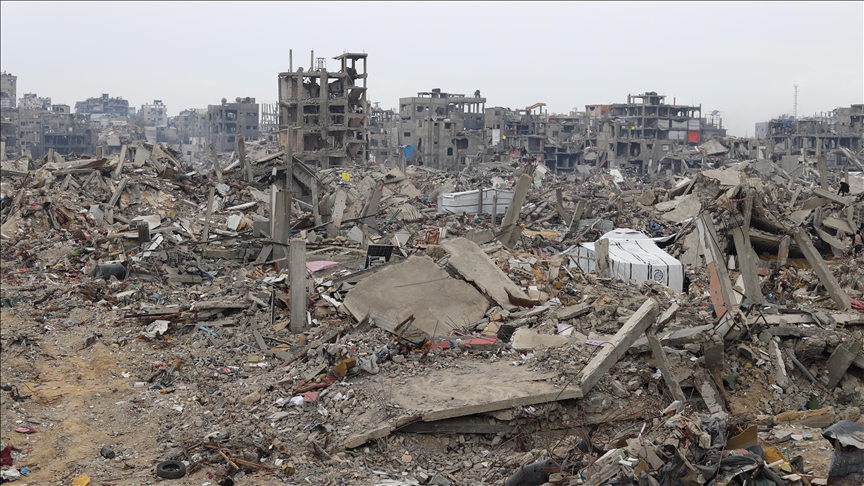
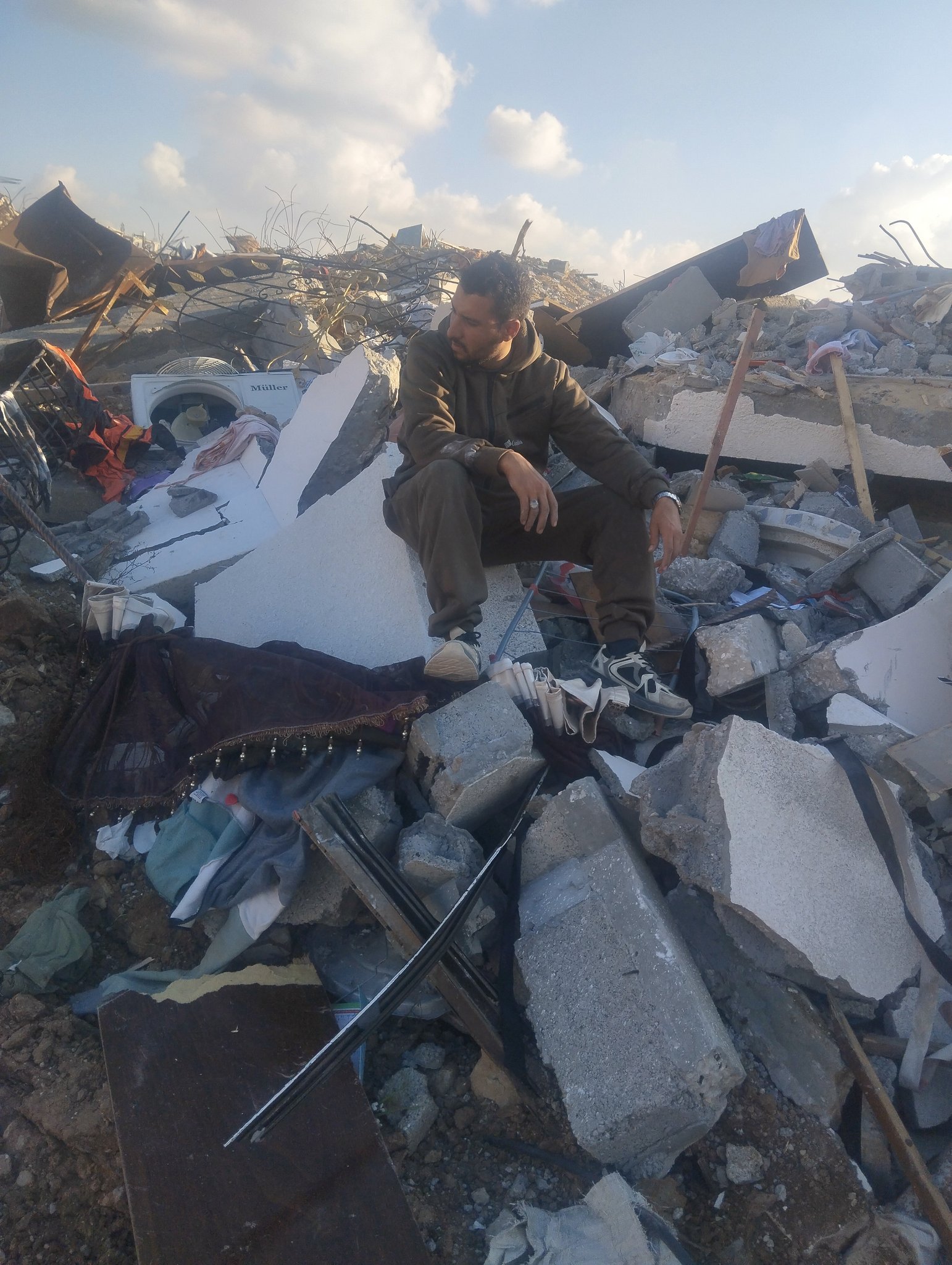
In the North Governorate, the level of destruction is total, it’s a flat land. I’ve never seen anything like it in my life. Our Palestinian colleagues are no longer able to recognise their own neighbourhoods, some were in shock, others literally collapsed.
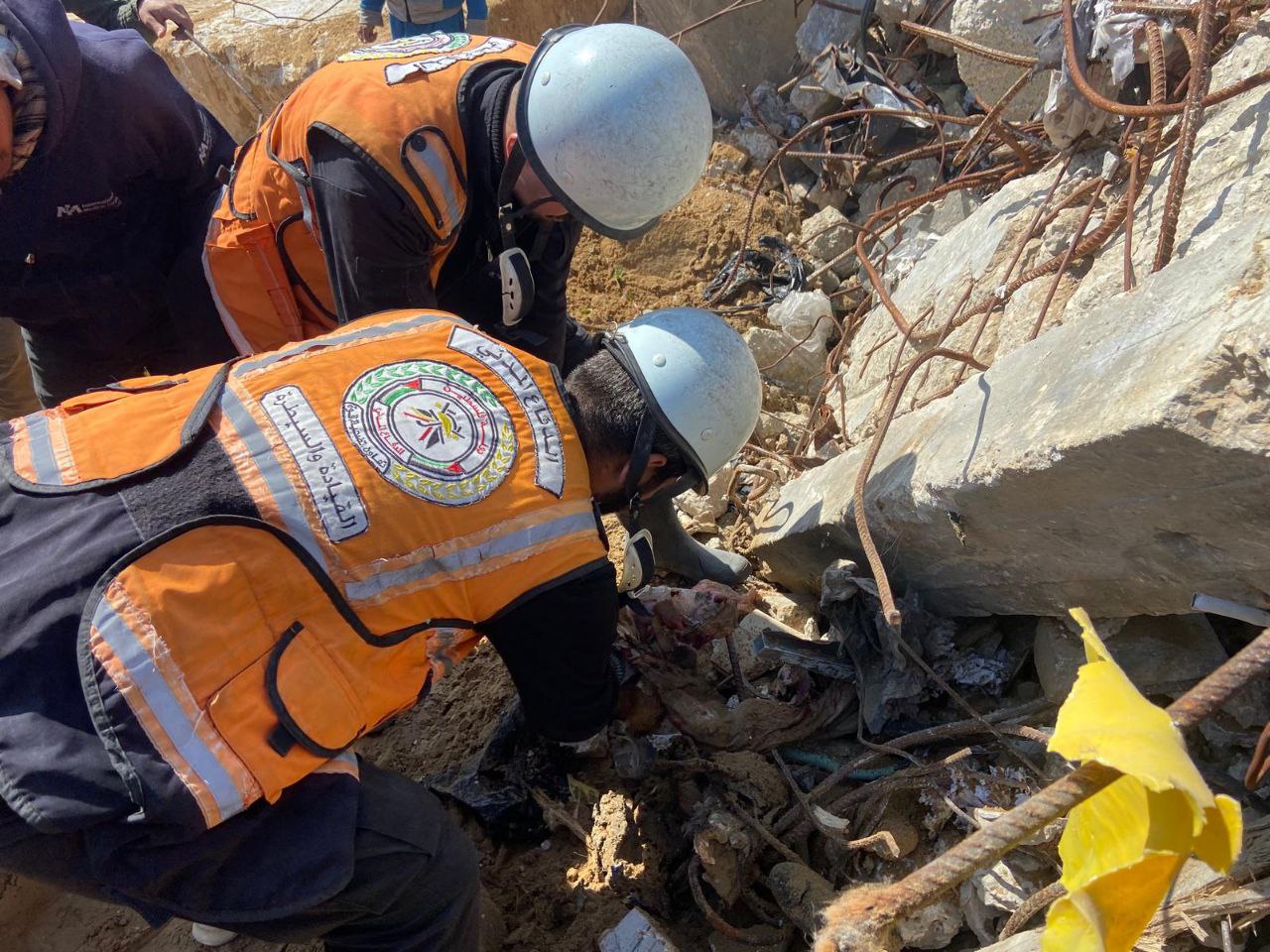
In Gaza City we were already shocked by the level of destruction, but then we went north to Jabalia, we couldn’t say a word. There is nothing there anymore. Only ruins and the smell of death everywhere because of the dead bodies still trapped under the rubble.
2. What is the state of the health system?
There is no health system anymore in the northern part of the Strip. Kamal Adwan hospital has been razed, while Al Shifa, Al Awda and Indonesian hospitals are seriously damaged and only partially functioning. We were utterly shocked to observe that in Indonesian hospital every medical machine seemed to have been deliberately destroyed; they were smashed to pieces, one by one, to make sure no medical care could be provided anymore. You have to ask, what is the motivation of such action? These machines are made to save people’s lives, mothers, fathers, children. It’s devastating to see the state of these hospitals.
The provision of medical care is largely insufficient compared to the needs of the hundreds of thousands of people living in the area. For example, between North Governorate and Gaza city, there are only six paediatric intensive care beds compared to 150 before the war and the number of patient hospital beds has plummeted from 2,000 to 350.
3. Are supplies reaching north Gaza?
The flow of vital supplies has improved since the ceasefire, but the level of needs is so high that people are still lacking basic items. The need for food, water, tents and shelter materials in this area remains critical. Water shortages are a real challenge given the high level of damage to water facilities and because they are in inaccessible locations in the buffer zones.
Our teams have started water trucking activities in Jabalia and Beit Hanoun and they repair damaged boreholes, but this is a temporary solution and is not sufficient for the massive needs. The problem is that because of the war we have located our activities in the south and it now takes time to redeploy them to the north.
After four weeks since the implementation of the ceasefire, we are still not seeing the massive scale up of humanitarian aid needed in northern Gaza. The humanitarian community is failing to provide vital services to a population in dire need of humanitarian and medical support. Both Israel and international actors need to urgently ensure the delivery of vital supplies such as shelter and food and to increase the capacities for its distribution.
4. What is the reality for people in northern Gaza today?
People are living in dire conditions. They try to settle as best they can on the ruins of their houses but it’s extremely difficult. The winter weather means people have to face very cold temperatures, heavy rains and strong winds, and they don’t even have walls around them to protect themselves. They don’t have access to healthcare, decent housing or water.
However, the conditions they had to face during the 15 months of war, being displaced and living in tents were even worse. After this hardship, people need to reunite with their loved ones and want to stay and rebuild their lives. Many of them have no intention of leaving. It is essential to ensure consistent, safe, and secure delivery of humanitarian assistance to people who have suffered unimaginable trauma.
As Israel shuts down UNRWA in Gaza and the occupied West Bank, the move serves a strategic purpose: Undermining Palestinian national liberation and the right of return.
By Sara Troian
This week, Israel’s ban on the United Nations Relief and Works Agency (UNRWA) takes effect, cutting off its services in its two main areas of operation in Palestine; namely, Gaza and, the occupied West Bank, including east Jerusalem.
Established in 1949 in response to the Nakba, UNRWA was meant to provide humanitarian aid and protect Palestinian rights until a just resolution to the refugee crisis was achieved. Central to this is the Palestinians’ inalienable right of return, which Israel has consistently denied.
Beyond the 5.4 million UNRWA-registered refugees, at least five million more Palestinians have been forcibly displaced by Zionist colonisation. The right of return belongs to them all.
Calculated attack on Palestine
In October, the Israeli parliament passed two bills targeting UNRWA. The first prohibits the agency from operating within the 1948 borders. The second bars Israeli officials from engaging with UNRWA in any capacity.
These laws are designed to remove Palestinian rights to a homeland and further weaken the agency that serves them. They also mark the culmination of decades of attacks by Israel and its allies seeking to dismantle UNRWA as part of the broader Zionist settler-colonial project.
For the 2.1 million Palestinians in Gaza, this will cripple efforts to rebuild the warmth of their homes and the safety of life-sustaining infrastructure vaporised by Israel’s annihilatory violence. This will further obstruct the restoration of life and the healing from nights spent beneath skies ablaze with fire and days suspended between slow and quick death in dwindling food rations.
In the West Bank and east Jerusalem, 49,000 students will be forced out of UNRWA schools, and will be left either without education or, in Jerusalem, to the whims of Israeli curricula that distort, dehumanise and erase their history and culture.
Nearly a million Palestinians will be denied medical care. The loss of thousands of jobs will further drive Palestinians into economic precarity, deepening the cycle of engineered de-development.
Political goals and neoimperial strategies
The dismantling of UNRWA is not just a humanitarian crisis; it is a political manoeuvre. Zionism has slated Palestine for erasure as part of a broader regional strategy. In this imperialist framework, the US and EU finance oppression, Israel enforces it, the local bourgeoisie complies, and the UN provides a thin veil of legitimacy.
The timing of the ban aligns with Israel’s shifting tactics. While the intensity of genocide in Gaza has momentarily slowed, violence in the West Bank—particularly in Jenin and Tulkarem refugee camps—has escalated. Zionist forces use airstrikes to destroy life-sustaining infrastructure, obstruct healthcare, and drive mass evacuations, all while continuing the daily expansion of settlements and mass arrests.
Palestinians today face the same oppressive forces as during the 1936-39 revolt: self-serving leadership, Arab regime complicity, and Zionist-imperialist domination.
At the core of these dynamics is Palestinian refugeehood—a fundamental consequence of Zionist colonisation. Since 1948, Israel has displaced over 10 million Palestinians, most, descendants from the Nakba, severing them from their homeland.
The right of return threatens Zionism’s foundation because it challenges Israel’s colonial reality, built on destruction and displacement.
Israel's dismantling of UNRWA isn’t just about aid—it’s a calculated war on Palestinian return
The Zionist-Western axis‘ attacks on UNRWA aim to depoliticise its mandate, while crystallising Palestinian refugeehood into a permanent humanitarian crisis to be managed.
While the status of Palestinian refugees and their right of return cannot be solely determined by UNRWA or any international agency–as it is a condition that stems from the implementation of Zionist settler-colonialism– these attacks weaken the agency’s ability to advance Palestinian political claims within the UN.
Moreover, heavy reliance on donor-driven funding has transformed the agency into a semi-corporate entity, dependent on fluctuating foreign funding, further undermining its capacity to support Palestinian political aspirations. This, however, is a symptom of the neoliberal exploitation that, disguised as humanitarianism, treats Palestinians as disposable and expendable subjects to Western imperial expansion.
Palestinians are therefore held hostage by a global structure designed to rob them of their autonomy. This is reflected, for example, in the fact that all senior UNRWA officials are non-Palestinian, making decisions for 5.4 million refugees, yet often against their quest for national liberation.
Integration?
Meanwhile, US imperialism has dealt another blow by freezing all USAID projects–except for those in Israel and Egypt– and halting military aid to all countries except Israel, Egypt and Jordan.
The suspension of USAID serves as a coercive tool to absorb the thousands of Palestinians whom Israel’s brutal campaign aims to expel in the coming months. For example, in Jordan, where USAID plays a critical role in supporting public services like healthcare, justice, and water supply, the freeze pressures the Kingdom to participate in this plan, which has been in the works for years, but only recently the US has openly encouraged Egypt and Jordan to endorse a new wave of forced Palestinian exile.
In recent years, experts and international bodies have proposed integration into host countries or resettlement in third countries as pathways to securing a modicum of rights and emancipation for Palestinians who have been forcefully encamped for over seven decades.
While access to civil and political rights in places of exile is crucial, these proposals must not be weaponised to suppress the central struggle for return. At this moment, such narratives risk legitimising forced expulsions, under the guise of legal solutions, erasing Palestinian claims from the global agenda.
Access to rights must never serve as a strategy to downplay or marginalise the central struggle for return and efforts to secure it. At this moment, it is crucial to recognise how such narratives and solutions can be exploited—either to hinder Palestinian survival amid genocide or to suppress resistance against forced displacement.
Many Palestinians in the West Bank already hold Jordanian citizenship—remnants of the Nakba and Oslo. If Palestinians will be forced to relocate to Jordan or third states under the pretense of naturalisation and resettlement, this strategy, framed as a legal solution, will ultimately legitimise further forced expulsions and erase their right of return from the international agenda.
This will facilitate the elimination of 10 million Palestinians as a political force challenging Western imperial expansion.
The time for return
A just solution cannot emerge from the very institutions and structures that have perpetuated Palestinians’ plight and the plundering of their land for decades. Such alternatives merely rebrand subjugation of the people.
The answer lies in the steadfastness of Palestinians themselves. Over the past 16 months, in defiance of over a century of disenfranchisement and exile, including 480 days of settler-colonial erasure, Palestinians alone have transformed return from a distant dream, into a tangible reality.
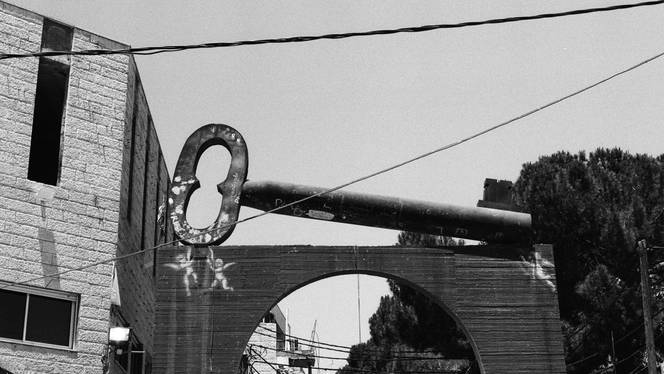
As displaced Palestinian in Gaza flood back towards their destroyed homes in Gaza City, Beit Lahiya, Jabaliya, and Beit Hanoun, this marks only the beginning of their Great March of Return. Eighty percent of Gaza’s population descends from those expelled from 247 villages in central-southern Palestine through waves of Zionist massacres.
This must be the guiding principle for any just and lasting solution—one that restores Palestinians to their homes, land, and dignity from which they have been forcibly expelled for far too long.
Sara Troian is a Hume PhD Scholar in the Department of Law and Criminology at Maynooth University. Her PhD research examines the tension between international law and settler-colonialism in Palestine.
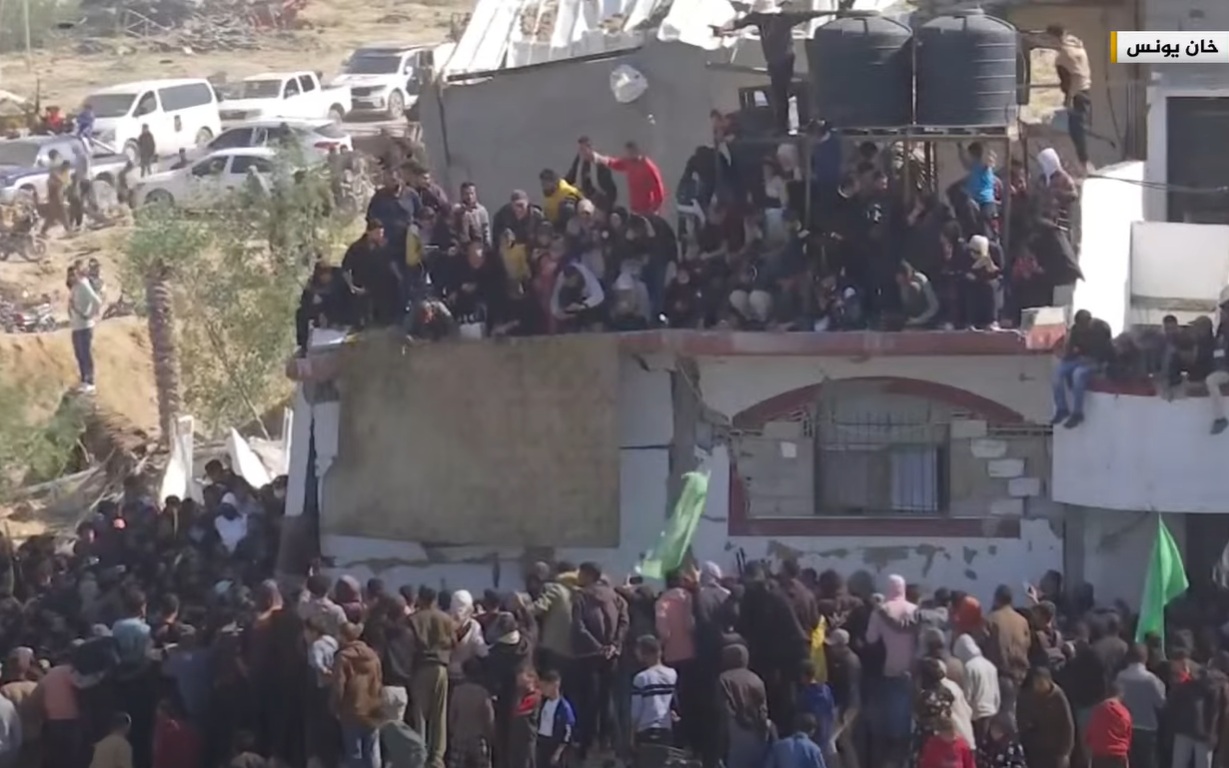
The Qassam Brigades handed over to the Red Cross, Thursday, the captive soldier Agam Berger, from the rubble of Jabalia camp in the northern Gaza Strip, as part of the third batch of prisoner exchange according to the ceasefire agreement. Meanwhile, the Al-Quds Brigades handed over the two prisoners it is holding, Arbel Yehud and Gadi Moses, to the Red Cross with their handover from in front of destroyed house of the late Yahya Sinwar’s in Khan Yunis.
The Qassam Brigades released the captive soldier Berger from Al-Razan Square in Jabalia camp, which witnessed major Israeli bombing and destruction as part of the bloody military operation launched by the occupation army, during which a large number of Israeli soldiers were killed and wounded.
The Israeli army announced it received soldier Agam Berger, saying she had arrived at the initial reception point in the so-called Gaza envelope and met with her family members.
The Al-Quds Brigades fighters were deployed in Khan Yunis, south of the Gaza Strip, where the ceremony for the release of Yehud and Moses took place, while the Israeli occupation army radio said the Jihad movement was trying to “exploit the release of the two prisoners to show its strength in Khan Yunis.”
Hamas confirmed that “the large gathering of the masses of our Palestinian people in the two prisoner handover operations in the city of Khan Yunis and the Jabalia camp, amidst the rubble left by the Zionist fascism in the two areas, is a message of determination, strength and defiance that it raises in the face of this barbaric occupier, meaning that our people will remain on their land, and are determined to achieve their project of liberation, return and self-determination.”
The movement said in a press statement received by Quds Press, Thursday: “The Qassam Brigades and the Palestinian resistance prove once again their high ability to control the scene through organized handover operations that have dazzled the world, and after humiliating the criminal enemy army in the sands of Gaza.”
It pointed out “what happened today confirms the unity of the Qassam Brigades, the Al-Quds Brigades and the resistance forces in the field and in managing the exchange operation that took place in front of the house of the martyr leader Abu Ibrahim.”
It stressed “the diversity of the implementation of the release operations of Israeli prisoners from different areas of the Strip, in the steadfast Jabalia, in Khan Yunis and in front of the house of the martyr leader Yahya Sinwar, is a message to the world that our people will remain on their land, will continue the resistance, and are determined to liberate and return.”
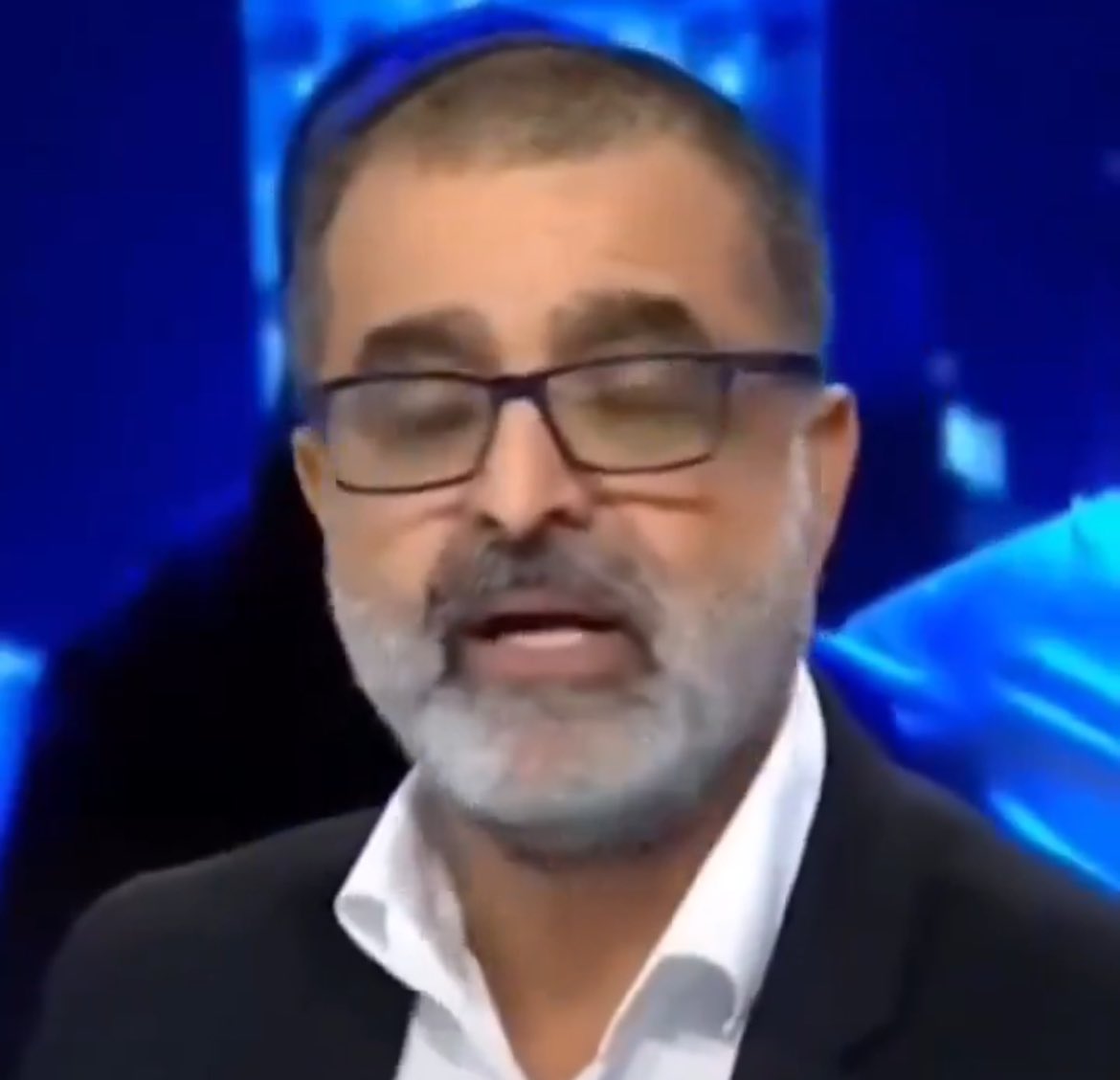
An Israeli soldier who is a bulldozer operator, was interviewed on Hebrew Kan and said:
“I told the officer that I perform a symphony with a D9 bulldozer, demolishing 50 buildings a week by myself,” said Rabbi Avraham Zarbib who served in the Israel army for the whole duration of the war on Gaza.
“A two-story house means nothing to us. We completely destroyed Jabalia and Rafah, and we were on our way to destroying Beit Hanoun and Beit Lahia, but the [ceasefire] agreement didn’t give us enough time, so we settled for destroying half of them,” he added.

 CrossFireArabia