US Vice-President Cancels Visit to Israel

US Vice President JD Vance was expected to travel to Israel on Tuesday, but decided against it due to Israel’s expansion of its military operation in the Gaza Strip, according to an Axios report.

The report cited a senior US official as saying that Vance made the decision “because he didn’t want his trip to suggest the Trump administration endorsed the Israeli decision to launch a massive operation at a time when the U.S. is pushing for a ceasefire and hostage deal.”

Vance officially cited “logical” reasons for his decision, the report added.

According to Israeli officials, Axios said, the Trump administration had informed the Israeli government on Saturday that Vance was “considering stopping in Israel” after attending the pope’s inauguration.

Discussions had also taken place on Sunday between US and Israeli officials regarding preparations for his visit. Soon thereafter, Axios said, Israeli media reported on Vance’s expected arrival on Tuesday.

Reports Denied

Several hours later, the report added, a White House official denied the reports.

In a statement to reporters traveling with the VP, the official reportedly said. “While the Secret Service has engaged in contingency planning for the addition of several potential countries, no additional visits were at any point decided upon, and logistical constraints have precluded an extension of his travel beyond Rome.”

“He will return to Washington on Monday,” the statement added.

https://www.palestinechronicle.com/israel-greenlights-gaza-aid-amid-american-pressure-cabinet-dissent/embed/#?secret=4bl8Jhe4Zw#?secret=UxS9CRr0Ds

A US official, however, told Axios that logistics were not the issue and that “concerns were raised that a trip to Israel at this time would be perceived by Israel and countries in the region as validation for Israel’s expanded operation.”

“At that point, Vance decided not to go,” Axios said.

Vance’s decision, the report noted, sheds light on how the US administration’s views on the current Israeli policy in Gaza amid the administration’s attempts to cut a deal to halt Tel Aviv’s ongoing operation in the enclave.

Mass Displacement

Since March 2, Israel has shut Gaza’s border crossings, preventing all humanitarian aid, including water, food, and medical supplies, into the enclave, exacerbating an already severe humanitarian crisis in the enclave.

On Sunday, the Israeli army began a broad ground offensive dubbed ‘Gideon’s Chariot’ in the besieged territory aimed at displacing two million Palestinians in Gaza to the south and destroying most of the territory.

Under pressure from the US administration and European allies, the Israeli security cabinet decided late on Sunday to allow some aid into the enclave.

Axios said that US envoy Steve Witkoff had given both Hamas and Israel “an updated proposal” for a ceasefire last week “and is pressing the parties to accept it.”

Over 53,000 Killed

Since Israel’s reneging on the ceasefire on March 18, it has killed and wounded thousands of Palestinians throughout the Gaza Strip through a bloody and ongoing aerial bombardment.

On October 7, 2023, following a Palestinian Resistance operation in southern Israel, the Israeli military launched a genocidal war against the Palestinians, killing over 53,000, wounding more than 118,000, with over 14,000 still missing.

Despite habitual condemnation by many countries around the world of the Israeli genocide, little has been done to hold Israel accountable.

Israel is currently under investigation for the crime of genocide by the International Court of Justice, while accused war criminals — including Prime Minister Benjamin Netanyahu — are now officially wanted by the International Criminal Court.

The Israeli genocide has been largely defended, supported, and financed by Washington and a few other Western powers according to The Palestine Chronicle.

Continue reading
Doha Signs Deals of $1.2 Trillion With Washington

“Landmark” deals signed by Qatar during US President Donald Trump’s visit signify a “historic” economic commitment worth at least $1.2 trillion, the White House said Wednesday.

“The landmark deals celebrated today will drive innovation and prosperity for generations, bolster American manufacturing and technological leadership, and put America on the path to a new Golden Age,” a White House statement said.

Among the deals it mentioned were a previously announced agreement with Boeing to supply Qatar Airways with 787 Dreamliner and 777X aircraft powered by GE Aerospace engines in what the White House said marks Boeing’s “largest-ever widebody order and largest-ever 787 order.”

The White House said the deal is worth $96 billion, and includes up to 210 American-made Boeing 787 Dreamliner and 777X aircraft powered by GE Aerospace engines. Trump earlier said the agreement was worth over $200 billion and included 160 aircraft.

The discrepancies were not immediately reconcilable. The White House did not immediately respond to a request for comment.

The statement also pointed to an energy development agreement with American firm Parsons, and a commitment from Qatari firm Al Rabban Capital to invest $1 billion in “state-of-the-art quantum technologies and workforce development in the United States.”

On the defense side, the White House said Raytheon inked a $1 billion deal to supply Qatar with counter-drone capabilities, making Qatar “the first international customer for Raytheon’s Fixed Site – Low, Slow, Small Unmanned Aerial System Integrated Defeat System (FS-LIDS) designed to counter unmanned aircraft.” General Atomics separately signed a $2 billion agreement to sell Qatar MQ-9B SkyGuardian surveillance drones.

A statement of intent signed between the US and Qatar further outlines more than $38 billion in what the White House called “potential investments including support for burden-sharing at Al Udeid Air Base and future defense capabilities related to air defense and maritime security.”

The facility, located just southwest of Doha, is the US’ largest military base in the Middle East.

“These new agreements and instruments aim to drive the growth of the U.S.-Qatar bilateral commercial relationship, create thousands of well-paying jobs, and open new trade and investment opportunities for both countries over the coming decade and beyond,” the White House said according to Anadolu.

Continue reading
Netanyahu Has Irked Trump. Why?

What should one make of the recent White House meeting between US President Donald Trump and Israeli Prime Minister Benjamin Netanyahu?

Well, this time Netanyahu was almost summoned to the White House to be told few home truths. This meeting was not like the first time when Netanyahu came to the White House in early February when it was all glow to be unexpectedly told that Trump wants the USA to take over Gaza.

This time around, the meeting was more subdued, almost in a rush, like an after-thought on the part of Trump who keeps chopping and changing as he figures out how he wants to conduct America’s foreign policy in his second “robust” administration.

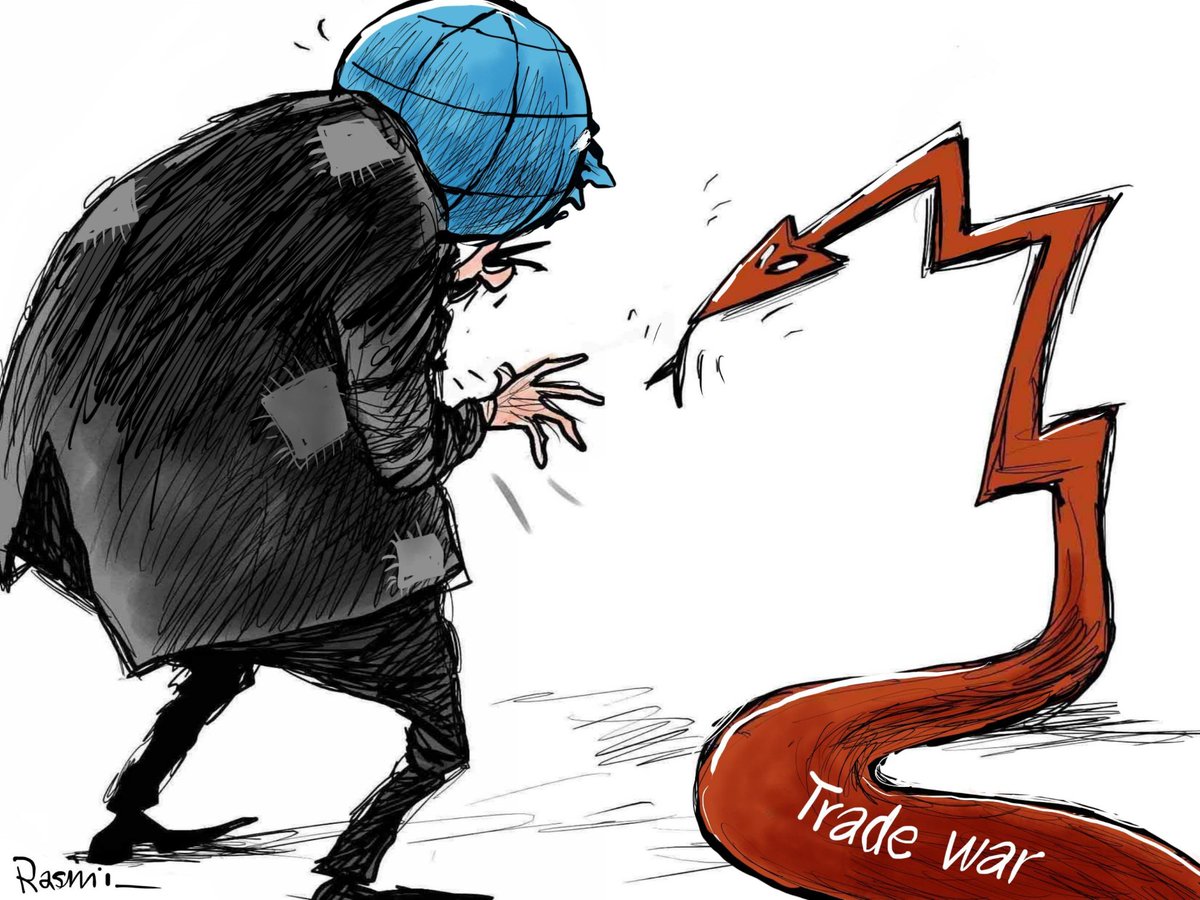
This time around, although Trump displayed the usual friendliness to Netanyahu, he was somewhat distant because of the tariffs the White House is set upon to start imposing on the rest of the world including best-friend Israel. Its leaders, businessmen are still in shock because Washington has slammed a 17 percent tariff on its products entering the United States.

Israeli industrialists continue to be up-in-arms. It was they who appealed to Netanyahu to seek Washington clarification because they argued that the new tariffs will cost them up to $3 billion in losses, reduce Israeli exports by 26 percent and increase unemployment by 26,000. They are already in a bad situation because of the war on Gaza but this latest step will surely cripple them.

At the White House meeting last Monday, with a chitchat in front of the cameras that looked as if it was a rehearsed meeting with Trump dominating the conversation and everyone taking their que to speak only when they are told, he pointed out to Netanyahu that he “may not” consider reversing tariffs on Israeli exports because “we give Israel $4 billion a year. That’s a lot.” He really sounded like lecturing to the Israelis.  

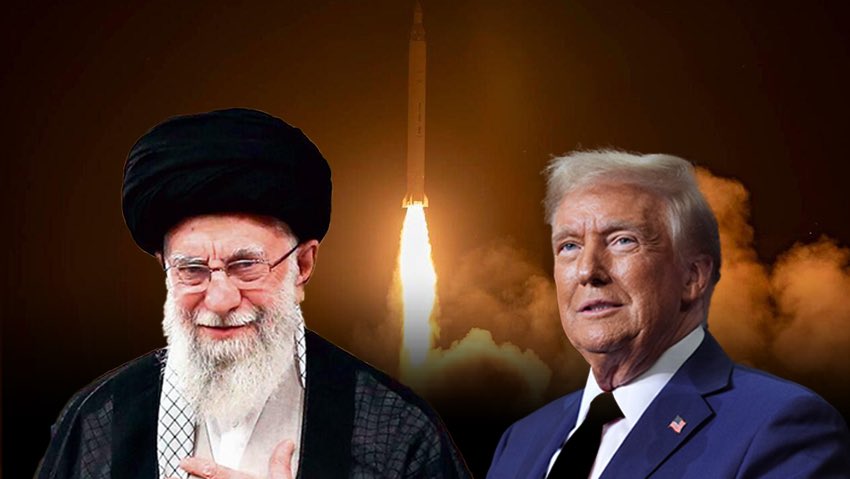
For a man considered to be greatly influenced by the Israeli lobby that seemed to be tough talking for in the immediate conversation Trump told Netanyahu that there would be and for the first time direct face-to-face talking with Iranians about their nuclear file.  

This seemed to be another unsuspecting blow. If there was a “shock” on his face, Netanyahu didn’t show it as he just nodded; the Israeli Prime Minister was looking for a tough military stance on Iran, possibly going to war and striking the country’s nuclear facilities. It was he, who persuaded Trump in 2018 to exit from the 2015 nuclear deal brokered by the UN with other world powers of Britain, France, Russia, China and Germany at the behest of the Barack Obama administration.

Now with Trump in the driving seat, and wanting a “tainted-Donald” deal, Netanyahu couldn’t but agree with an alluring American president. If he had any misgivings, he kept them to himself except to say Tel Aviv and Washington had an objective not to let Iran have nuclear weapons, but Tehran constantly said and throughout the past years that their nuclear program was for peaceful purposes unlike the clandestine extensive Israeli nuclear program.

Although he may not have outwardly shown it, Trump may have been a little irritated by Netanyahu in other ways. Take Gaza for example when Israel restarted its war on the enclave on 19 March exactly two months after a ceasefire took effect ending a 15-month genocide and which was brokered by Trump and his team lead Steve Witkoff.

The recent talks in the White House, and shown in front of the cameras suggest Trump would have like more time for the Doha negotiations to take hold between Hamas and Israel to see the release of the 59 remaining hostages – which include one American who is still deemed to be alive – hidden in the Gaza enclave.

The relaunching of the war, and so quickly, and with the breaking of the 19 January ceasefire is adding to the tension between Washington and Tel Aviv and is sending signals that Netanyahu wants to continue the war in Gaza and doesn’t particularly care about the remaining hostages, and whether they come out of their nightmare dead or alive.

Trump, and as shown by the White House meeting, is showing a diversion from thoughts projected by Netanyahu. As well as Iran, he has told Netanyahu, he favors Turkish President Recep Tayyip Erdogan and that he has a ‘very, very good relationship with Turkey and with their leader…”, adding that “I happen to like him, and we never had a problem” and he offered to mediate between Israel on any problem between the two countries.

Such words may have suddenly added to the glum mood of the Israeli PM who fears that Turkish influence in Syria despite the fact it is Israel that is today bombarding different Syrian cities and occupying parts of their territory, a situation that increased after the toppling of the Bashar Al Assad regime on 9 December, 2024 by a new government in Damascus, and which is seen as a threat to Israeli security by Tel Aviv.

What is worrying Netanyahu is the fact Trump recognizes Turkish influence and Syria and Ankara’s relationship with the new government in Damascus, and apparenty the man in the White House, is “ok” with it.

With all this going on, Netanyahu is not sure anymore of the way the White House is going despite the fact that Washington continues to be the main supplier of weapons to Tel Aviv. But with Trump as “fickle-minded” as he is, all cards are on the table for a new and changing relationship between the USA and the rest of the world with the strong possibility of including Israel in the new international set of thinking.

This comment is written by Dr Marwan Asmar, chief editor of the crossfirearabia.com website. 

Continue reading
Can Arab States Stop The Israeli Genocide?

Neither the Israeli war nor the ethnic cleansing of Gaza will ever stop if there is no forceful, determined intervention from the outside. 

And primarily this intervention has to come from the Arab countries and the pan-Arab nation as a whole: If these states – so-called Arab brethren and Islamic affiliates bound by common language and culture – don’t stand up and say ‘no’ to Netanyahu’s bloody war on Gaza, now in its 15th month, the ethnic cleansing, devastation, destruction and possibly the near and future displacement of the Palestinian people will continue to be hummed.

No bland utterances

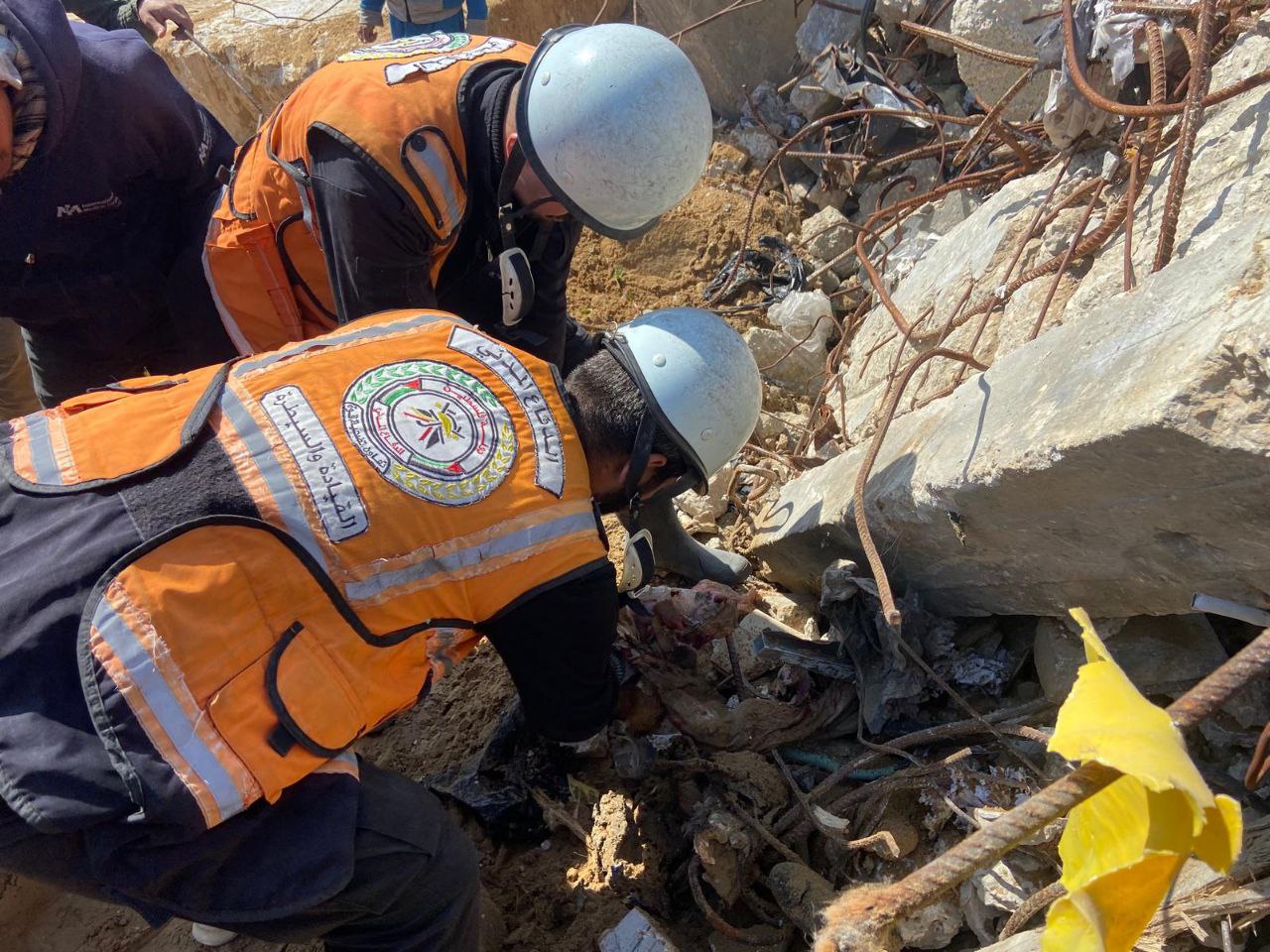
Arab countries, from the far-west to the center and all the way to the east must move beyond bland utterances and condemnations of the mindless bloody Israeli military actions on Gaza that has so far resulted in the killing of more than 50,000 people, internally displaced more than 2 million of the population with 14,000 dead yet to be recovered from under the millions-of-tons of rubble that needs years to clear out.

As well, and further stated by Palestinian activist Dr Mustafa Al Barghouti, Arab states have to now develop at least a two-pronged strategy to drive the message across that they will not stand ideally by and watch the Palestinian people of Gaza being massacred and driven to smithereens.

Arab countries, and incidentally this should have been done a long time ago, which have normalized with Israel must freeze their diplomatic relations with the Zionist entity. Their leaders must say to Prime Minister Benjamin Netanyahu that relations will remain cut and frozen and that no further relations will take place, until he ends the Israeli war on Gaza and from now on, its back to the “bad old days” of a black Cold War between the Arab countries and Israel. 

The message needs to be loud and made crystal clear by Arab leaders for Netanyahu and his extremist government and military men to stop the carnage, killing and mayhem that is being created in Gaza and its people.

Determined Arabs

It is only through such a determined approach that will force the Israeli government, its leaders and ministers to sit, think and possibly review their slaughter of the Gaza enclave. At the very least, they would be forced to put the “brakes on” to their “happy attitude” of committing their atrocious massacres carried out almost daily since 7 October, 2023.

What is needed is a credible deterrence with those in power moving beyond their pedestals and high chairs and plush stages and put words and action together for the Arab world is nowhere as helpless on this issue as it is being projected.

All of the 22 Arab countries have now a real opportunity to stop the Gaza massacres through the new American president at the White House Donald Trump. He forced Netanyahu’s hand for a temporary ceasefire starting 19th January, 2025 which continued for almost two months and he can do it again if he wanted to and/or forced to. At the moment there is no political will.

Effective tool

Despite the present-relaunching of the war on 19 March, basically through an American green-light, Arab countries can have an effective and meaningful role if they choose to. After all, Trump soon backed down when he first suggested that the USA take over Gaza and turn it a Middle East Riviera whilst displacing its people to neighboring countries such as Jordan and Egypt.

He soon retreated from pursuing such an idea especially when Arab capitals such as Cairo, Amman, Riyadh, Algiers, Beirut, Kuwait, Doha, Muscat and Abu Dhabi condemned such a move with Netanyahu even having the audacity to say  Palestinians can have their state in Saudi Arabia. Trump’s Riviera idea soon became bogged down but Israel shortly after, restarted its war on Gaza, again with the blessing of the US administration.

But here again, and today the Arab countries, can make their move. The USA has vital, strategic, economic and political interests in the world and these can be used in different ways to persuade Washington to pressure Tel Aviv to back down on Gaza, other than promising to continue its bloody onslaught on ordinary Palestinians in Gaza with the hope of getting rid of Hamas and which according to their calculations they can’t beat until 2027 and/or whenever.

Netanyahu must be made to stop! He is not doing so because of the ongoing military supplies and backing from the United States and from the muted Arab response which have to go beyond condemnation and denunciations. Arab states have the tools at their disposal, it is time for these to be uses effectively otherwise the Israeli genocide will continue and expand.

This comment is written by Dr Marwan Asmar, chief editor of the crossfirearabia.com website.

Continue reading