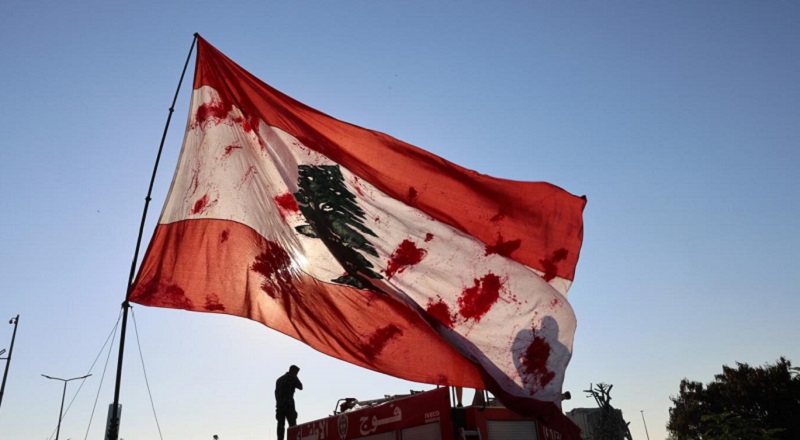
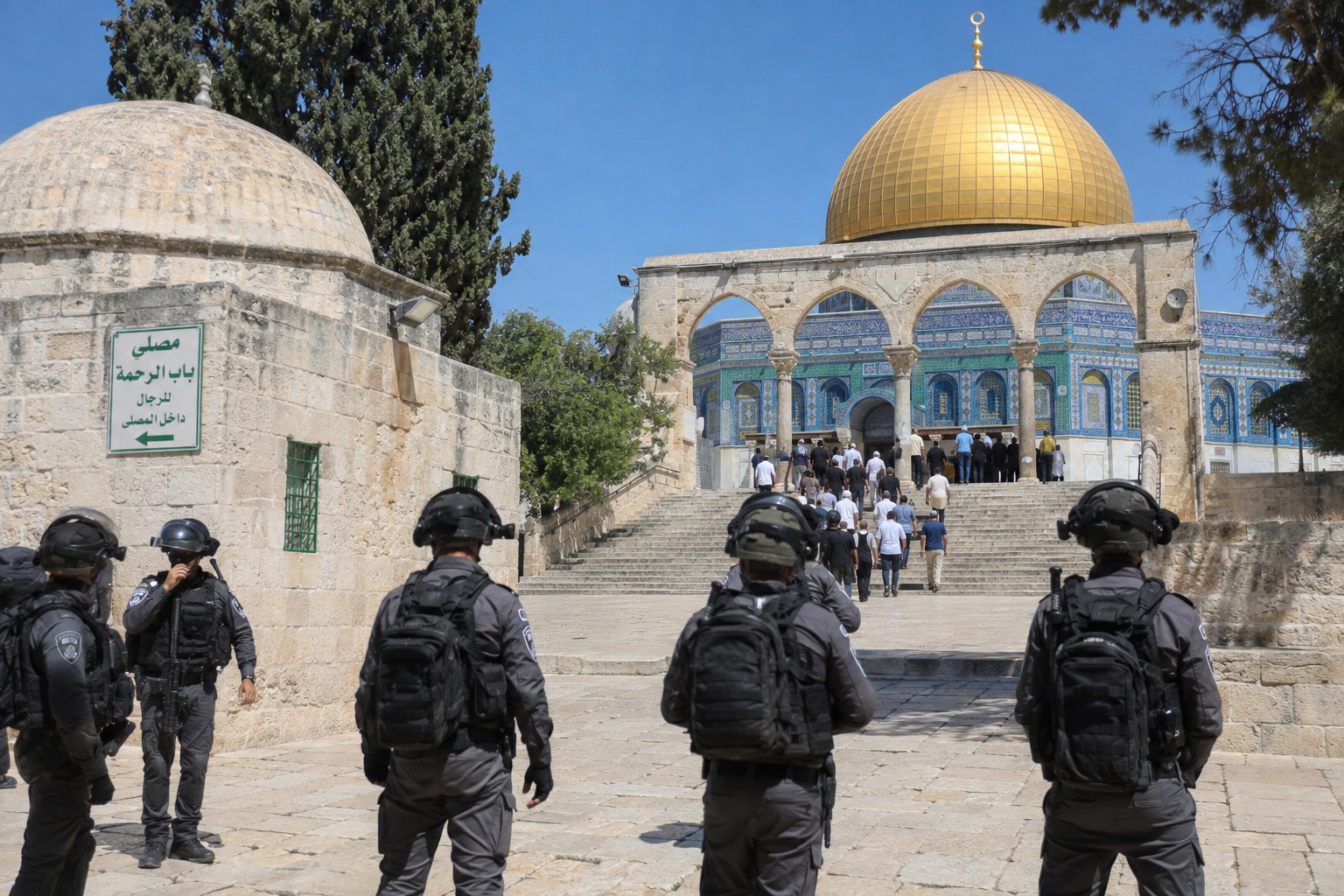
Analysis: Why Did Hezbollah Enter This War?

Hezbollah’s entry into the war reflects strategic calculations shaped by Israeli escalation, regional alliances, and Lebanon’s fractured politics.

Key Takeaways

  • Israel has repeatedly violated the ceasefire in Lebanon through airstrikes, raids, and surveillance operations.
  • Hezbollah’s response has so far remained limited compared to Israel’s sustained military actions.
  • Lebanon’s political leadership has failed to present a unified response to Israeli attacks on Lebanese territory.
  • Hezbollah’s intervention reflects strategic concerns about Israel’s long-term plans in Lebanon and the broader war against Iran.
  • The coordination between Iran, Hezbollah, Ansarallah, and Iraqi factions suggests the Axis of Resistance continues to operate collectively.

A Regional War Expands

Hezbollah’s decision to enter the ongoing regional confrontation did not occur in isolation. The latest escalation began when the United States and Israel launched major strikes against Iran, triggering waves of Iranian retaliation across the region.

The conflict quickly expanded beyond Iran itself. Iranian retaliatory strikes targeted US military assets and positions across the Gulf. The war rapidly assumed the character of a wider regional confrontation involving multiple actors aligned along competing geopolitical blocs.

Within this context, attention turned to Lebanon, where Hezbollah—one of the most powerful non-state actors in the Middle East—began limited military operations against Israeli positions along the border.

The central question quickly emerged: Why did Hezbollah enter the war?

The answer lies in a combination of military, political, and strategic considerations that go far beyond the immediate battlefield.

Did Hezbollah Violate the Ceasefire?

A central claim advanced by Israel and some Western governments – and even anti-Hezbollah factions in Lebanon itself – is that Hezbollah’s actions represent a violation of the ceasefire arrangements that followed previous rounds of conflict along the Lebanese border.

However, the reality on the ground presents a far more complex picture.

For months, Israel has carried out continuous violations of Lebanese sovereignty through airstrikes, drone surveillance, artillery fire, and cross-border incursions.

According to Lebanese government figures and reports by the United Nations Interim Force in Lebanon (UNIFIL), Israel has committed thousands of violations of Lebanese airspace and territory since the ceasefire arrangements took effect.

Lebanese officials have repeatedly documented Israeli overflights, drone operations, and missile strikes inside the country. UNIFIL has also confirmed frequent violations of Lebanese airspace by Israeli aircraft.

These actions have not been merely symbolic. Israeli strikes have caused civilian casualties and extensive destruction of homes and infrastructure in southern Lebanon.

Villages near the border have experienced repeated bombardments, forcing families to flee and damaging agricultural land and civilian property.

At the same time, Israeli officials have openly signaled that they have no intention of withdrawing fully from Lebanese territory or halting military operations.

Several Israeli leaders have stated publicly that Israel intends to maintain military pressure on Hezbollah and potentially establish a longer-term security presence along the border.

In this context, Hezbollah’s response—limited strikes against Israeli military positions—cannot easily be framed as the violation of a functioning ceasefire.

Rather, Hezbollah and its allies argue that no real ceasefire existed, given the scale and persistence of Israeli violations.

Did Hezbollah Violate Lebanese Consensus?

Another argument advanced by critics inside Lebanon is that Hezbollah’s intervention undermines national consensus and drags the country into a war it cannot afford.

Lebanon’s government, which maintains close ties with Western governments and the United States, has repeatedly blamed Hezbollah for escalating tensions.

However, the government has struggled to provide a convincing explanation of how it interprets Israel’s continued attacks on Lebanese territory.

While condemning Hezbollah’s actions, Lebanese authorities have largely failed to respond militarily—or even diplomatically in an effective way—to Israeli strikes.

The Lebanese state has not fired a single bullet at Israeli forces despite repeated attacks inside its territory. This has deepened the political divide within Lebanese society.

Lebanon has long been fractured along sectarian, ideological, and geopolitical lines. Some factions align closely with Western and Gulf states, while others view themselves as part of the Axis of Resistance, which includes Iran, Hezbollah, Ansarallah in Yemen, Palestinian resistance factons and several Iraqi factions.

Within this divided political landscape, there has never been a unified national consensus regarding confrontation with Israel.

For many Lebanese—particularly in communities that have historically borne the brunt of Israeli attacks—Hezbollah’s military posture is viewed as a form of deterrence rather than escalation.

So Why Did Hezbollah Enter the War?

Hezbollah’s decision to join the conflict appears to reflect a broader strategic calculation.

From Hezbollah’s perspective, the Israeli war was likely to expand regardless of its immediate actions.

Israeli leaders have repeatedly declared their intention to reshape the regional balance of power and weaken Iran and its allies.

For Hezbollah, the prospect of Iran being significantly weakened carries profound implications.

If Iran’s position in the region were severely damaged, Hezbollah could find itself facing Israel largely alone—while simultaneously confronting pressure from the United States, Western governments, and regional Arab powers aligned with Washington.

In such a scenario, Hezbollah could be isolated militarily and politically.

Entering the war now, while Iran remains actively engaged and regional allies are mobilized, allows Hezbollah to operate within a broader coalition rather than as an isolated actor.

It also ensures that Hezbollah retains influence over the eventual diplomatic outcome of the conflict.

Wars in the Middle East often conclude not with decisive military victories but through negotiated exits once the architects of war decide to pursue a political strategy.

By participating in the conflict, Hezbollah guarantees that it will have a seat at the negotiating table when such an exit strategy eventually emerges.

Does This Mean the Axis of Resistance Has Been Reborn?

Some analysts have framed the current coordination between Iran, Hezbollah, Ansarallah, and Iraqi factions as the “rebirth” of the Axis of Resistance.

But the reality may be more nuanced.

The Axis of Resistance was never destroyed. Instead, each actor within it has often had to adapt to its own domestic political realities.

Hezbollah operates within Lebanon’s complex sectarian political system. Iraqi factions must navigate Baghdad’s fragile state institutions. Ansarallah governs large parts of Yemen under conditions of war and blockade. Hamas remains focused on defeating the Israeli-US scheme aimed at disarming resistance and ethnically cleansing Palestinians from Gaza,

These differing political contexts often limit how openly each actor can coordinate with the others. Yet recent developments suggest that the axis is functioning in a coordinated manner.

Iranian strikes across the region, Ansarallah’s operations in the Red Sea, and Hezbollah’s engagement along the Lebanese border indicate a level of strategic alignment.

The current conflict has therefore revealed not the rebirth of the axis but its continued operational existence.

Our Strategic Analysis

Hezbollah’s intervention reflects a calculated strategic move rather than an impulsive escalation.

Israel’s continued military pressure on Lebanon, combined with the wider war against Iran, created conditions in which Hezbollah perceived long-term risks in remaining passive.

By entering the conflict in a limited but coordinated manner, Hezbollah seeks to shape the strategic environment before the war reaches a stage where diplomatic negotiations become inevitable.

In doing so, Hezbollah is signaling that the future of Lebanon—and the broader regional balance of power—cannot be determined without its participation.

Palestine Chronicle

Continue reading
‘…We Are Waiting For Them,’ Araghchi Says in Reference to a Ground Invasion

Foreign Minister Abbas Araghchi said Iran is prepared to confront a potential ground invasion by the US, NBC News reported Thursday.

“No, we are waiting for them,” Araghchi said in a video interview when asked if he was afraid of a possible US ground invasion.

“Because we are confident that we can confront them, and that would be a big disaster for them,” he said, according to Anadolu.

His remarks came after US-Israel strikes against Iran began Feb. 28, killing Supreme Leader Ayatollah Ali Khamenei and top security officials.

Despite US and Israeli strikes across the country, Araghchi said Iran has not asked for a ceasefire.

“We didn’t ask for a ceasefire even last time. In previous time, it was Israel who asked for a ceasefire. They asked for an unconditional ceasefire after 12 days that we resisted against their aggression,” he said, referring to the 12-day war last June when the Israeli and US militaries targeted Iranian nuclear facilities.

When asked about an attack on an elementary school in the city of Minab, Araghchi said 171 school girls were killed, and he put the responsibility on the American and Israeli militaries.

“This is what our military said. So, it is either the US or Israel. What is the difference?”

On Wednesday, US Defense Secretary Pete Hegseth said the US is “investigating” the attack, while Israel denied involvement.

“We, of course, never target civilian targets, but we’re taking a look and investigating that,” Hegseth told reporters.

White House spokeswoman Karoline Leavitt on Wednesday dismissed the idea that the US was responsible for the strike.

“Not that we know of,” Leavitt told reporters when asked whether the US carried out the strike.

“The United States of America does not target civilians, unlike the rogue Iranian regime that targets civilians, that kills children … and uses propaganda quite effectively,” she added.

Araghci said he had no communication with President Donald Trump’s envoy Steve Witkoff and son-in-law Jared Kushner since last week.

“The fact is that we don’t have any positive experience of negotiating with the United States. You know, especially with this administration. We negotiated twice last year and this year, and then in the middle of negotiations, they attacked us,” Araghchi told NBC News.

“So, we see no reason why we should engage once again with those who have, who are not honest in negotiation, and they don’t and do not enter into negotiation in good faith.”

Despite his defiant tone about Iran’s military readiness, Araghchi said the broader conflict is unlikely to produce a clear victor.

“There is no winner in this war,” he said. “Our win is to be able to resist against, you know, the illegal, you know, goals, and this is what we have done so far.”

Continue reading
War and The Blame Game

By Khairi Janbek

Undoubtedly, the blame game is not a concept limited to the Middle East, neither the notion of who started the conflict nor who will end it.

However in this context, one wishes to talk about the current conflict which is becoming a chaos beyond the Middle East and specifically about Iran and its contribution to this chaos. Going back, and from the onset of the Iranian Revolution of 1979, chaos has always been part and parcel of its revolutionary ideology, reviving the old Shia-Sunni conflict, attempting to be the representative of the Shia of the world; most importantly, the concept of export of the revolution whenever the opportunity comes around.

But this phase ended with the end of the war with Iraq, but saying ended may well be too deterministic, because chaos under Iranian sponsorship emerged again after the fall of the Saddam Hussein regime in the form of what became known as the Iran-dominated Shiite Crescent. However with the set backs of last year, the chaos sponsorship of Iran to a back step, to relaunch again with projectiles all around creating a chaos in the region and beyond.

Essentially at this juncture, all the affected countries seem to have left the conflict to Israel and the US to deal with, maybe to the possibility that those parties do not believe that this conflict will be conclusive, or a feeling that whether they participate in the conflict or not, they will neither be seen in good favour by the United States and/or Israel.

But also having said that, there is also plenty of scepticism in the region, because each time there is a conflict involving the USA, there is always a big possibility that the US stops in the middle and allows its adversaries to recover and pick up, which means putting themselves in an adversarial position vis a vis recovered forces which they may have to face.

In fact whether by fluke or by good thinking, not to declare the war aims in this conflict may turn out to be a wise move, as this war may indeed end as one is writing these words, with the declaration by everyone that the war aims have been achieved. But as a final word, one feels Iranian induced chaos must be met with a world response.

Dr Janbek is a Jordanian columnist based in Paris, France.

Continue reading
Qatar Evacuates Residents Near US Embassy

Qatar’s Interior Ministry said Thursday that authorities have temporarily evacuated residents living near the US Embassy as a precautionary measure.

The ministry said in a statement posted on the US social media company X’s platform that the evacuation was being carried out by relevant authorities as a preventive step.

“Suitable accommodation has been provided for them as part of necessary preventive measures,” it said.

Officials did not provide further details about the reason for the evacuation or how many residents were affected.

The ministry urged the public to rely on official channels for accurate information according to Anadolu.

Continue reading