Jenin: ‘We Will Only Raise The Palestinian Flag Here’

The Israeli occupation forces have continued their onslaught on Jenin and its camp for the eighth consecutive day.

The onslaught resulted in the killing of 19 people, the injury and arrest of dozens with widespread destruction of citizens’ properties and infrastructure, including water and electricity networks, according to Wafa.

On Tuesday, 16-year-od Lujain Abdul Raouf was killed, and four journalists injured, including WAFA photojournalists Muhammad Mansour and Ayman Noubani, in an Israeli army siege of a house in the village of Kafr Dan, west of Jenin.

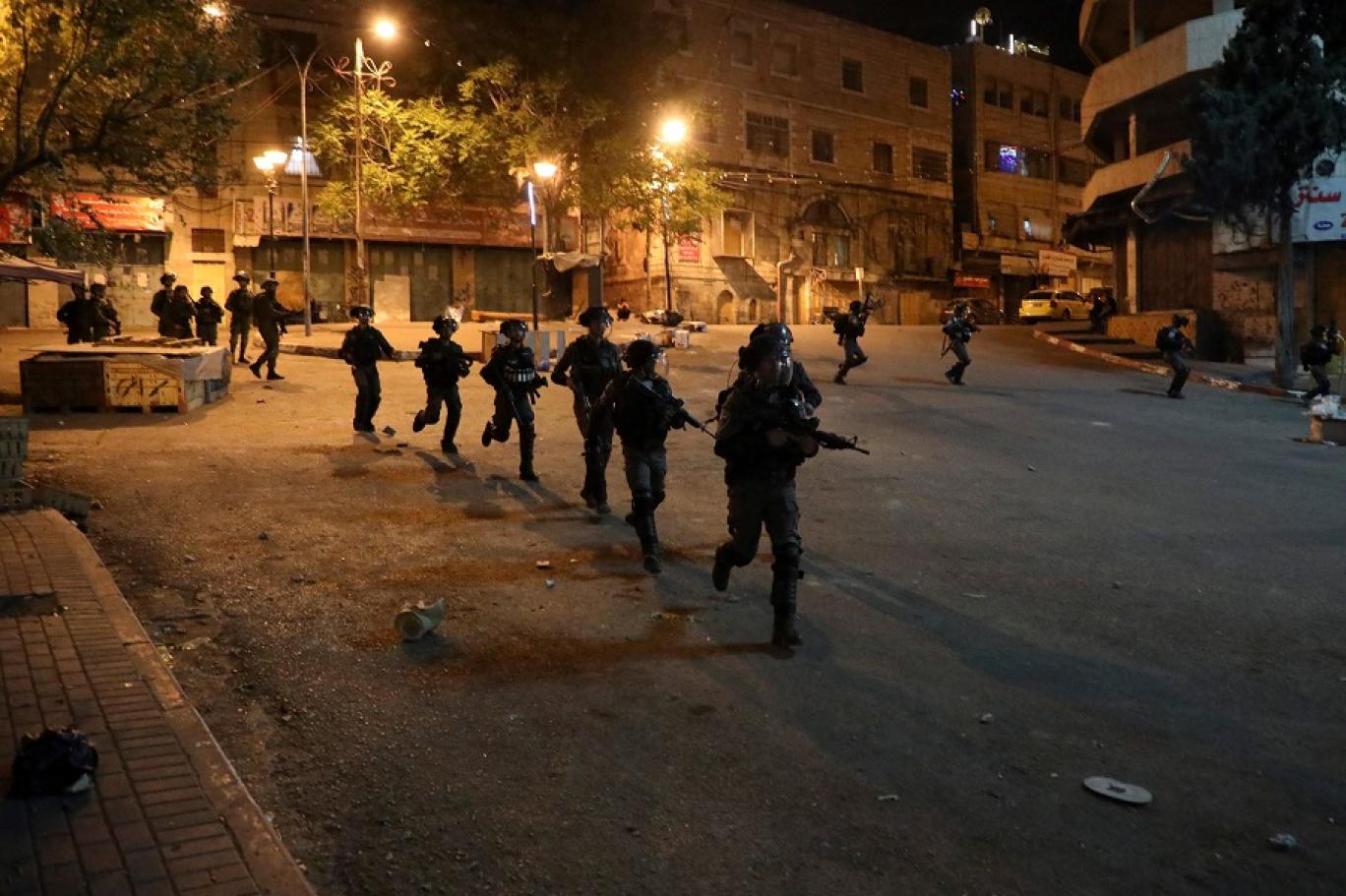
The occupation forces also raided several houses in the Al-Hadaf neighborhood on the outskirts of Jenin camp, tampered with their contents and destroyed their furniture.

The occupation forces stormed the Al-Zahraa neighborhood in the city and bulldozed the infrastructure and streets, while water continues to be cut off from most of the city’s neighborhoods and the camp.

Destroying streets

The occupation forces continue to destroy the center of Jenin city, as the occupation bulldozers razed Cinema Street and large parts of Hospitals Street to the vicinity of Al-Shifa Hospital, and destroyed shops in the Cinema Roundabout area and re-razed the Post Street.

The occupation bulldozers attacked a group of journalists while they were covering the destruction of the Cinema Roundabout and the surrounding shops, and opened fire directly at them, which resulted in their injury.

In Al-Jabariyat neighborhood, the occupation forces stormed the house of the detainee Zakaria Al-Zubaidi and detained his brother Yahya after vandalizing and destroying the contents of the house.

The occupation forces also continued their large-scale detention campaigns of young men in the Jenin camp and the villages of Al-Silah Al-Harithiya, Al-Yamoun and Kafr Dan west of Jenin.

They stormed the town of Qabatiya fired at citizens’ houses, Tuesday night, and resulted in the shooting of a young man in the chest while he was inside his home.

The Israeli army also detained an ambulance crew while transporting an emergency medical case to the Khalil Suleiman Governmental Hospital in Jenin and assaulted a number of them.

The Israeli occupation forces stormed the village of Muthalath Al-Shuhada, south of Jenin, deployed snipers on the roofs of several houses, raided six houses, detained a number of citizens before withdrawing from the town according to the Palestinian news agency.

Continue reading
Colombia Uni: First Protest Against Gaza Genocide

A large group of Columbia University students gathered at the university gates on the first day of the academic semester, reigniting protests that began last year in opposition to the ongoing genocide in Gaza. The students called for an academic and economic boycott of Israel and urged their peers to boycott the first day of classes in response to the destruction of universities in Gaza according to the Quds News Network.

Continue reading
Israeli Army: No Deal Puts Hostages’ Lives in Great Danger

The Israeli army warned the Benjamin Netanyahu government that without reaching an agreement with Hamas, any large-scale military operation in Gaza would endanger the lives of the Israeli hostages, Hebrew media reported, Tuesday.

Israel holds at least 9,500 Palestinian prisoners in its jails whilest it is estimated 101 Israeli hostages are being held in Gaza. The Palestinian group Hamas announced that dozens of these hostages have been killed due to indiscriminate Israeli air strikes all over the Gaza Strip.

“The IDF (army) made it clear to the political echelons [government] that without a deal [with Hamas], it must be understood that any extensive ground operation in the Gaza Strip has a meaning — risking the lives of abductees,” Yedioth Ahronoth reported according to Anadolu.

The Israeli newspaper cited an unnamed senior military official who said “the cabinet will have to decide whether it takes responsibility for the lives of the abductees.”

6 Israeli hostages

The report added the military has intensified its warnings to the government since discovering the bodies of six Israeli hostages in a tunnel in the city of Rafah in southern Gaza last Saturday.

The Netanyahu government is accusing Hamas for the killing of these hostages, while the movement maintain they were killed in an Israeli airstrike as part of the Israeli ongoing war in Gaza that literally decimated the enclave as 50,000 bombs were dropped on the territory according to Haaretz.

The deaths of the hostages have sparked a new wave of anger in Israel against Netanyahu, with daily protests taking place holding him personally responsible for their deaths and demanding that he makes a deal with Hamas to exchange the remaining hostages originally at 250.

For months, the US, Qatar and Egypt have tried to reach an accord between Israel and Hamas to ensure a prisoner exchange and a ceasefire and allow humanitarian aid to enter Gaza.

But mediation efforts failed with Netanyahu frustrating every effort by the Israeli delegates to reach a deal with Hamas over the past 11 months or so. He monitored his team – who frequently travelled to Doha and Cairo to hitch a deal – to the minutest details and the delegates have not been allowed any leeway in the negotiations without returning to him first.

A key sticking point in the hostages/ceasfire talks is Netanyahu’s insistence on maintaining the Israeli military’s presence in the Philadelphi Corridor, a demilitarized zone along the Gaza-Egypt border.

Hamas on the other hand demands a complete withdrawal from the Palestinian territory and says no meaningful negotiations can take place if the Israeli military wants to stay there.

Philadelphi Corridor

Israeli Defense Minister Yoav Gallant agrees there should be a withdrawal for the sake of the hostages. He recently stated that Israel’s withdrawal from the Philadelphi Corridor during the first phase of a deal would not pose a security threat to his country.

But not so for Netanyahu. In a press conference Monday, he said that achieving the war goals that he set “requires maintaining the Philadelphi Corridor.” He emphasized Israel will never withdraw from the corridor.

Israel has continued its brutal offensive on Gaza following an attack on 7 October, 2023 by Hamas, despite a UN Security Council resolution calling for an immediate ceasefire.

The onslaught resulted in more than 40,800 Palestinian deaths, mostly women and children, and nearly 94,300 injuries, according to local health authorities in Gaza.

An ongoing blockade of Gaza has led to severe shortages of food, clean water and medicine, leaving much of the region in ruins.

Israel faces accusations of genocide at the International Court of Justice, which has ordered a halt to military operations in Rafah, where more than 1 million Palestinians had sought refuge before the area was invaded on May 6.

Continue reading
Sniper’s Rifle Remains Axiom on Gaza’s Battlefield

Military expert Colonel Hatem Al-Falahi believes the axes of Al-Zeitoun neighborhood (southeast of Gaza City) and Tal Al-Hawa (southwest of Gaza City) are continually active with Palestinian groups putting up stiff resistance there and explains why the Israelis are faltering in their military operations in those areas.

Colonel Al-Falahi of Al Jazeera Satellite Channel made this observation as he commented on the joint operation between Al Jihad’s Saraya Al Quds and the Hamas Al-Qassam Brigades which led to the sniping of an Israeli soldier in the Al-Zeitoun neighborhood.

As per Saraya Al-Quds video, it showed because the Israeli army is fighting from inside buildings, none of its soldiers are able to stick their heads out of the window and/or show their bodies completely.

In contrast, Colonel Al-Falahi says in an analysis of the military scene – the resistance groups are fighting from areas very close to the occupation army.

He said the recent  military operations carried out by the resistance show that the cooperation between the Palestinian factions have become great, especially between the two Islamists groups: Qassam Brigades and Saraya Al-Quds; adding this means they are work together as one unit and there is a joint operations room that coordinates the different military activities.

Sniper operations

Al-Falahi believes sniper operations have a very large impact, in terms of subject and psychology, on the occupation forces. He pointed out these are precise operations carried out against Israeli officers at high levels.

Colonel Al-Falahi recalled a previous report by the Hebrew daily Yedioth Ahronoth, which revealed that the Israeli army monitored the work of Palestinian snipers for 70 hours in the past and concluded a sniper in the Qassam Brigades and the rest of the factions take two or three days to monitor the target.

The daily stated these snipers have the capability to monitor their targets accurately, also concluding that snipers do not carry weapons during their movements, but rather, there are specific points where these are located in.

He pointed out snipers had a very large role in inflicting heavy losses on the occupation army in its war on the Gaza Strip, and added that at least 100 sniper operations have been carried out so far by Palestinian resistance fighters in the Gaza Strip.

The military and strategic expert confirmed that the resistance operations are still ongoing in Gaza, and the “sniper’s rifle” will remain operational for a long time, and the occupation army will not be able to remain in these areas no matter how much capabilities it has.

Resistance factions are fighting fierce battles with the Israeli occupation forces in different areas of Gaza. They have managed to kill Israeli soldiers in ambushes and clashed with them in the  combat axes in the Zeitoun neighborhood in Gaza City, the center and southern part of the Strip according to the Palestine Information Center.

Continue reading
Displaced Palestinians Settle in Gaza Graveyards

Among the graves of the dead the Abu Samak family sleeps on the ground in the Al-Sawarha cemetery in the town of Al-Zawaida in the central Gaza Strip. They forcibly came here following the Israeli army’s decision to evict them from their homes east of Deir al-Balah, a few days ago according to the Palestinian Information Center.

Where to go?

Adham, head of the family, said “the decision to forcibly evict us fell like a thunderbolt, and the first thing that came our minds was where do we go?”

“All of the areas west of Deir al-Balah, which the Israeli occupation army asked us them to go to, were completely full, leaving us with few options, thus we settled here, sleeping on the ground between the graves of the dead,” Abu Samak added.

“We are dead while we are alive, the Israeli army continues to kill us – it’s been nearly a year now – and the world is watching us and does not care.

What happened to humanity, what law, or custom states that our children should sleep in the open and in fear among the graves of the dead,” he wounders.

On 24-25 August, the Israeli occupation forces issued evacuation orders to residents of many neighborhoods in Deir al-Balah, telling them to head to the so-called humanitarian zone they keep establishing but last Thursday, they asked some of them to return to their neighborhoods once again.

Most difficult war

Ibtisam Abu Amra’s situation is no better than that of Abu Samak: She was forced to flee from the Abu Areef area east of Deir al-Balah to the cemetery in the city center.

“This war is the most difficult, the army tells us to go to safe areas, then it bombs and targets civilians in them. Where is the security and safety the Israeli army claims to be providing,” she asked.

 “We were displaced to the cemeteries, which are not safe, the army has already invaded them, bulldozing them and wreaking havoc and destruction in them, neither the living nor the dead are safe.”

“Displacement is torment, asking you to collect what is left of your belongings, your children and even the elderly in your home to the unknown, is persecution,” She explained. “We found nothing but the cemetery, so here we are living among the dead.”

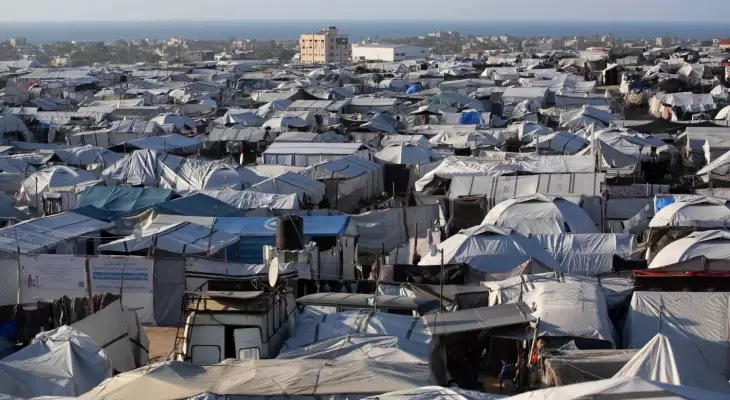
According to international reports, more than two million Palestinians are crowded into what is called the humanitarian zone, which is less than 11% of the entire Gaza Strip, in extremely harsh and tragic conditions.

Out of every 10 Palestinians, 9 have been forced to leave their homes and be displaced once or several times, according to reports from international organizations.

Hundreds of thousands of displaced people are patiently and hopefully waiting for the moment when the bloody war will stop so that their repeated displacement will stop and they can return, even to the ruins of their destroyed homes.

Continue reading