By Nour Dawood
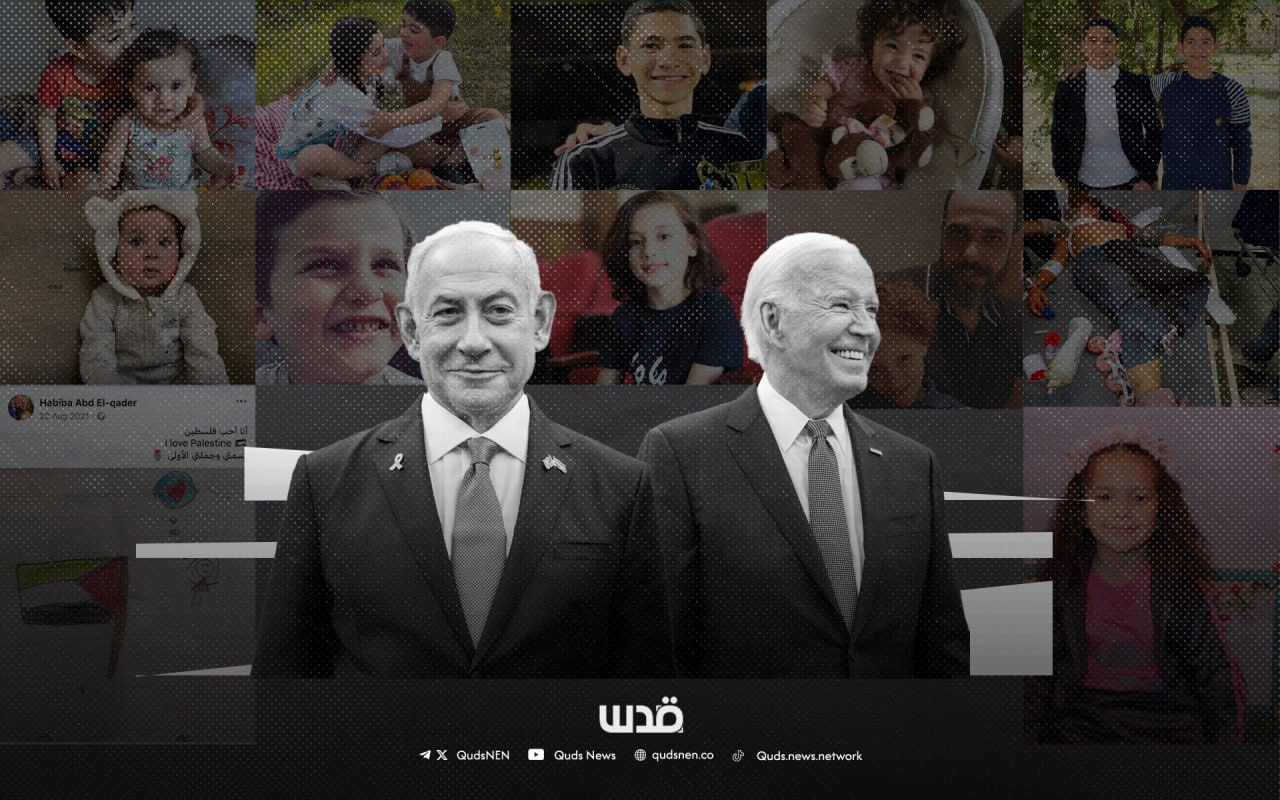
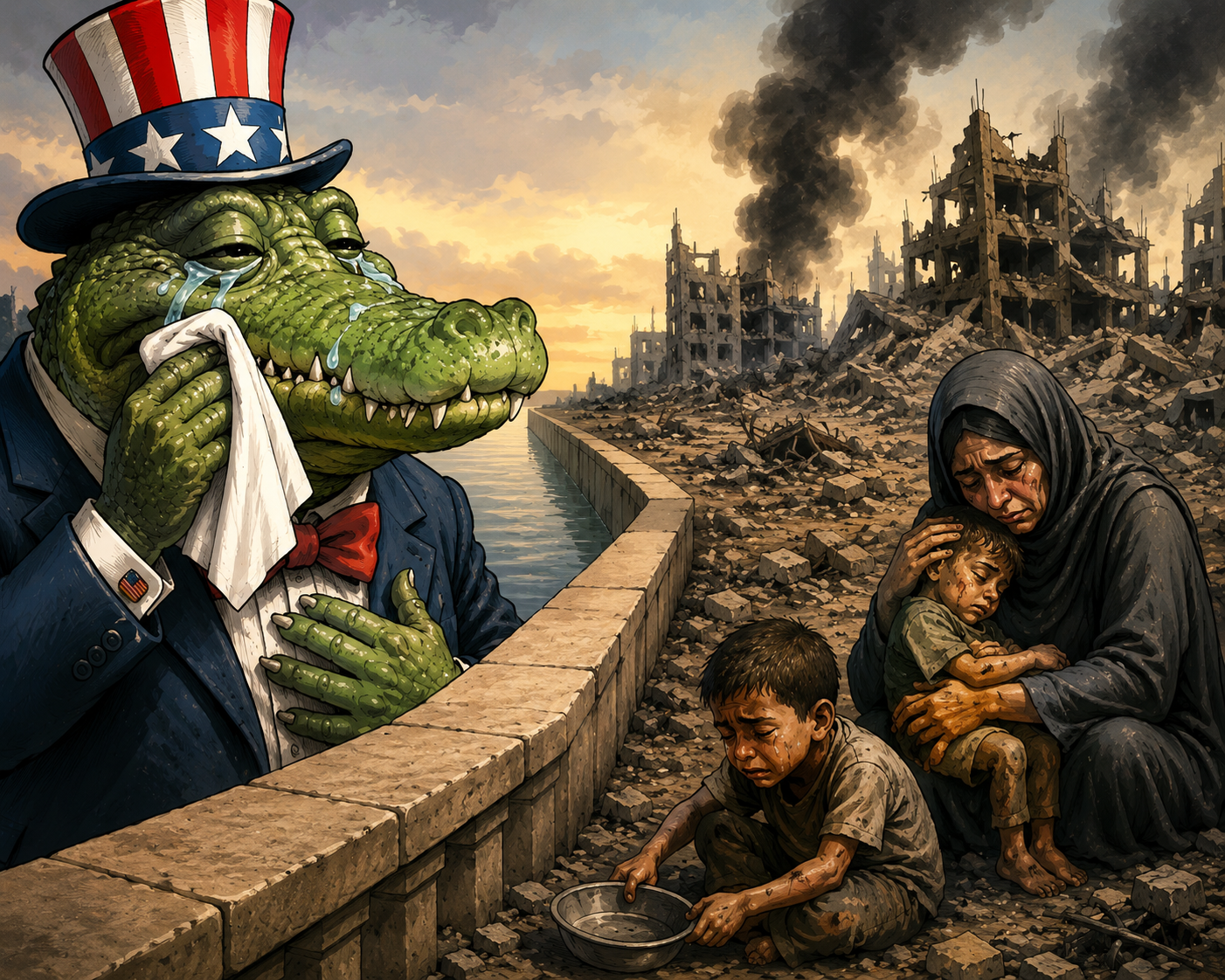
Since October 2023, when Israel launched its genocidal war in Gaza, over 16,800 children have been killed. Behind each staggering statistic lies a name, a face, a story. These children had dreams, hopes, families who loved them, and futures that will never unfold. Israel may claim military objectives, but the reality on the ground reveals children at the heart of its devastation.
Here, we honor the stories of 20 children whose lives were brutally cut short. Their stories have been pieced together through interviews with their families, social media posts, and news reports. These are not just numbers. They are names, stories, and tragedies that must not be forgotten.
Aya and Aboud Abu Oun (6 and 5 years old)
Siblings Aya and Aboud Abu Oun were killed on October 17. Their mother, Asmaa Mughari, shared their memory with heartbreaking tributes on social media. Aboud, her youngest, had picked out a jacket he was excited to wear but never got the chance. His love for drawing was so strong that the family kept searching the rubble of their home, hoping to find any of his sketches. “I keep asking them if they found anything,” Asmaa shared.
In another post, Asmaa celebrated Aya’s first graduation certificate. “It was your first achievement in school, and I’m so proud of you—both in life and in death,” she wrote, expressing the unbearable pride and loss every parent hopes never to experience.
Hind Rajab (6 years old)
On January 29, six-year-old Hind Rajab was killed when an Israeli tank fired at her family’s car in Tal Al-Hawa. According to the UN’s Office of the High Commissioner for Human Rights (OHCHR), forensic evidence confirmed that the shots came from close range. Hind was trapped among the bodies of her family members for hours, crying for help over the phone in her final moments.
Her mother, Wissam Hamadah, shared the agony of not being able to save her. “My sweetheart, I couldn’t reach you. Forgive me,” she tearfully recounted. Hind’s body was recovered days later, along with two paramedics who had been killed while trying to rescue her.
Juman Fahem Husnin (13 years old)
Juman was a bright, ambitious 13-year-old who excelled in school and Islamic studies, even memorizing the Quran. She had dreams, especially of peace, hoping for a day when her family would be reunited without the fear of war. On her birthday, December 1, she expressed this wish, but just six days later, an Israeli missile struck her home, killing her, her two sisters, Yaman and Bisan, and wiping out most of her family.
Her aunt shared a deeply emotional tribute: “The missile erased them from our civil registry, but not from our hearts. Juman’s smile, her kind eyes, remain untouched, even by war.”
Mohammed and Zeina Hijazi (4 and 2 years old)
Mohammed and Zeina Hijazi were displaced from their home in northern Gaza to Deir Al-Balah, seeking refuge from relentless bombings. But even in displacement, they found no safety. On December 23, Israeli airstrikes killed both children. Their father remembered Mohammed’s love for simple joys—cake on his birthday, mulukhiyah, and shawarma. “He was so excited to start kindergarten, but instead, he joined the kindergarten of paradise.”
Zeina, only two years old, adored her older brother. She would often tease him by pulling his hair, but they were inseparable. “When Zeina took her first steps, Mohammed was the one who excitedly shared the news with our family,” their father recalled. “Now, they walk together in paradise.”
Laya Naim (3 years old)
Laya was a lively three-year-old with a love for staying up late, dancing, and playing in the water. On January 6, she was killed in Gaza City by an Israeli airstrike. Her mother, Asma Naim, shared her grief through poignant words: “You loved everything about life—parties, swimming, strawberries. I can’t grasp that you’re gone.”
The memory of Laya’s blue dress, her messy hair, and her infectious joy lives on in her mother’s heart. “You loved your father so much, and you looked just like him,” Asma shared, her pain reflected in every word.
Yousef Abu Mousa (7 years old)
Known for his big heart and his habit of initiating family group hugs, Yousef was a joyful presence in his home. His father remembers how Yousef would always ask about his work hours and excitedly greet him when he came home. “Every time I went to work, he’d run to me, hug me, and kiss me. He was always the first one there,” his father shared.
On October 15, an Israeli airstrike hit their family home, taking Yousef’s young life. His father’s pain is immeasurable: “I lost everything, but the biggest loss was my son Yousef.”
Habiba Abd El-Qader (9 years old)
Habiba, a talented young girl, excelled at school and loved painting. She had dreams of becoming a doctor, but those dreams were destroyed when an Israeli airstrike hit her home on October 25. Her mother, Feda’a Murjan, begged for an end to the bloodshed. “Please stop all of this. My Habiba is gone, and I don’t want more mothers to go through this pain.”
Abdullah and Mahmoud Abu Salima (15 years old)
Twins Abdullah and Mahmoud were avid soccer players with dreams of representing Palestine on the national team. Abdullah hoped to become a defender, while Mahmoud aspired to be a goalkeeper. Their connection was more than just brotherly love—they shared the same passion, the same goals. Mahmoud would often proudly declare that he was “seconds” older than his brother.
On October 23, their dreams were shattered when an airstrike killed both boys, their mother, and several other family members.
Reem Nabhan (3 years old)
Reem was the apple of her grandfather Khaled’s eye. He lovingly called her “the soul of the soul” and, even during the war, would bike long distances just to get her favorite foods like ketchup. “Reem was a part of my life,” Khaled told Anadolu Agency, his voice breaking as he recounted how an Israeli airstrike struck their home.
“I found myself buried under the rubble,” he said. “I suffered bruises, and my daughter was injured, but worst of all, we lost Reem and Tariq, my beloved grandchildren. My other son and daughter were also wounded.”
His dreams of seeing Reem grow up, go to university, and turn to him for advice on her future were shattered. “She was my light,” he added.
Salma Jaber (4 years old)
Salma was the spirited middle child between her older sister, Sarah, and her younger brother, Omar. On December 5, as their family tried to flee northern Gaza for safety, Salma ran towards her father, a photographer working for UNRWA, when she was shot and killed. “My three-year-old son, Omar, still asks me where Salma is,” Hussein Jaber told Al Jazeera. “He doesn’t understand how she could have been walking beside him, and now she’s just gone.”
Her absence haunts the family as they struggle to explain the incomprehensible to a child who can only remember her as a constant, loving presence.
Mahmoud Al-Dahdouh (15 years old)
Affectionately called “Little Wael” after his father, veteran Al Jazeera correspondent Wael Al-Dahdouh, Mahmoud was determined to follow in his father’s footsteps. During the war, he and his sister Kholoud posted videos documenting Gaza’s suffering, pleading for help. “There is no safe place in Gaza. This is the fiercest war we’ve ever known,” they said in one video.
On October 25, Mahmoud’s life was cut short along with his mother, his seven-year-old sister, Sham, and his infant nephew, Adam, in an Israeli airstrike on Nuseirat refugee camp. Twenty-one others perished with them.
Mahmoud’s dream of becoming a journalist and sharing Gaza’s story with the world died that day, but his voice lives on through the videos he courageously shared.
Lauren Al-Koumi (2 years old)
Lauren was the “long-awaited joy” of her family. Her uncle, Akram Hassan, mourned the niece he adored before ever holding her. “For the first and last time, I became an uncle. Lauren’s laughter stole our hearts. She was the family’s fruit, as her grandfather lovingly called her.”
Lauren’s potential was limitless. “She might have grown up to be an engineer like her father, or a teacher like her mother. She could have been a beauty icon, but the oppressive machinery of the occupier stole her from us.”
Akram’s heartache pours through his words as he reflects on all the moments he’ll never share with his beloved niece.
Yousef Shahada (5 years old)
Yousef, known for his striking green eyes, was just starting kindergarten when his life was cut short. He was killed along with his mother Du’aa and his only brother Musab, and their father followed them as a martyr ten months later.
Yousef’s mother, devastated by her loss, spoke through tears. “He’s not a number. My son has a name. People must know the names of our martyrs.”
Tala Abu Ajwa (10 years old)
Tala was just a child, joyfully playing outside in her pink roller skates when tragedy struck. Her father, Hussam, recounted the devastating moment: “At 5 p.m., Tala finally convinced her mother to let her go outside. A few minutes later, two massive explosions rocked our building. I rushed downstairs, and the first thing I saw was her pink roller skate, barely visible under the rubble.”
Tala was covered in blood, struggling for her last breath. The pink roller skate, once a symbol of her innocent joy, became a haunting reminder of what the war had taken from her family.
Khaled Al-Shawa (17 years old)
Khaled was riding his bike when he was killed in a targeted attack meant for Al Jazeera journalist Ismail al-Ghoul and cameraman Rami al-Rifi. His mother’s voice cracked as she spoke to Al Jazeera: “He’s not a number. My son has a name, and everyone must know it.”
Khaled wasn’t just a victim of war; he was a boy who cared for his family and neighbors. Every day, he carried food in his backpack to deliver to an elderly neighbor and his injured son, a small act of kindness that now carries the weight of an unimaginable loss.
Ziad Sidam (3 years old)
Ziad was just 3 years old when an Israeli airstrike tore through his family home in the Nuseirat refugee camp. His father, consumed by grief, shared his heart-wrenching final moments. “I tried to protect you, son, but I couldn’t. I did everything I could, but it wasn’t enough.”
As Ziad’s father rushed him to the hospital, he realized his son was dying in the car. “Tell God how scared you were when the bombs fell, Ziad. Tell Him everything, my love. You used to talk about everything.”
These stories are just a fraction of the thousands of children whose lives have been stolen. These children are not numbers. They are stories, memories, and bright futures that Israel has erased. We will continue to say their names, share their stories, and never allow their humanity to be lost in the statistics.
This article is reprinted from the Quds News Network

 CrossFireArabia