Trump Goes Rogue

Donald Trump has gone rogue during the first days of his second residence in the White House. His executive decrees have upset US global relations and threaten US short, medium and long-term interests.

Trumps’ actions have unsettled this already tense region. His call 2.3 million Palestinians to be expelled from Gaza to Egypt and Jordan and for the US to take-over and develop the Strip as a tourist destination has been rejected by Gazans, Hamas which rules Gaza, the West Bank-based Palestinian Authority, Egypt, Jordan, Saudi Arabia, Qatar, the United Arab Emirates and the Arab League. They have rejected any attempt to displace Palestinians from their land and called on Trump to support “a just and comprehensive peace in the Middle East based on the two-state solution.” This is, of course, rejected by Israel which has colonised the West Bank and annexed East Jerusalem to pre-empt the emergence of a Palestinian state in this territory illegally occupied by Israel since 1967.

Trump’s administration has backed Israel’s January 30th ban on UNRWA, the UN agency caring for Palestinian refugees, which is meant to end its operations in East Jerusalem, the West Bank and Gaza. The UN Palestinian Rights Committee condemned the ban as a “direct violation of the General Assembly mandate [resolution 302 of December 1949] and the resolution [supporting UNRWA’s mandate] recently adopted by the General Assembly by an overwhelming majority.” The ban has also been condemned by Britain, Belgium, Ireland, Luxembourg, Malta, Norway, Slovenia and Spain. Belgium’s foreign ministry said the Israeli action “sets a disastrous precedent that deeply undermines the multilateral system and the United Nations itself.”

As soon as he took office, Trump ordered a 90-day halt to US foreign and military aid except for Israel (of course) and Egypt. Secretary of State Marco Rubio subsequently issued a waver allowing for “life-saving humanitarian assistance” programmes.

The US gives Israel $3.8 billion a year in military aid and Israel has received an additional $17.9 billion during its genocidal and devastating war on Gaza, according to Brown University’s Costs of War Report. The US has given Egypt $1.2 billion in military aid since the 1978 negotiations which led to the 1979 peace treaty with Israel.

His ignorant and destructive decree has frozen $95 million allocated mainly for Lebanon’s military as the country’s troops deploy in the south to secure Israel’s withdrawal under the fragile ceasefire between Hizbollah and Israel. This sum had previously been earmarked for Israel and Egypt, the Associated Press reported.

The non-governmental organisation managing Syria’s Al-Hol camp has said it will have to end operations without US funding. Controlled by US-sponsored Syrian Democratic Forces. Al-Hol houses more than 40,000 wives and children of Daesh fighters.

The freeze could negatively impact Jordan ($770 million in 2023) and Yemen ($35.9 million) which receive economic aid through the $95 million provided by the US Agency for International Development. The lion’s share of $14.4 billion has been allocated for Ukraine which is fighting the US-led Western war against Russia.

UN and other humanitarian agencies promptly responded to the freeze by ordering reductions in programmes to cut spending. UN Secretary General Antonio Guterres called for exemptions to “ensure the continued delivery of critical development and humanitarian activities for the most vulnerable communities around the world.” Committed to his “America First” policy, Trump cares little for such communities.

Trump has paused for 30-day his imposition of 25 per cent tariffs on imports from Canada and Mexico which have threatened to launch a North American trade war. Canadian Prime Minister Justin Trudeau said he would impose tariffs on $106.6 billion worth of US imports to his country. These include beer, wine, fresh fruits and vegetables, processed food, seafood, vehicles, dairy, and spare parts, crude and refined petroleum.

Trump justified his tariffs on Mexico by accusing government of being in league with drug cartels which smuggle drugs into the US, an allegation hotly denied by President Claudia Sheinbaum. She charged the Trump administration of “slander” and told the US to cut the illegal southward flow of guns arming the cartels. She asked her trade minister to respond with 25 per cent tariffs and non-tariff measures. the main goods Mexico exports to the US are computers, cars and vehicles, spare parts and accessories.

Trump justified announced tariffs by saying, “This was done through the International Emergency Economic Powers Act because of the major threat of illegal aliens [crossing into the US] and deadly drugs killing our citizens, including [the addictive drug] fentanyl.” 

During the pause, Trump can be expected to use tariff leverage to compel Canada and Mexico to capitulate to his demands on border security and other issues.

Beijing said it would lodge a complaint with the World Trade Organisation as Trump levied a blanket 10 per cent tariff on Chinese goods. Combined, China, Mexico and Canada accounted for more than 40 per cent of imports into the US last year.

He has also threatened tariffs on the European Union which he claims is taking advantage of the US. Trump stated, “They don’t take our cars, they don’t take our farm Products, they take almost nothing, everything from them.”

The Washington Post reported Trump’s tariffs could cost every US household $1,200 which could be ignored by the wealth and absorbed by the middle class while stressing the working class and driving the poor into debt.

Trump has not forgotten his determination to transform Canada into the 51st US state despite overwhelming Canadian rejection and to buy or occupy Greenland which belongs to Denmark. In Panama on his first trip abroad Secretary of State Marco Rubio said the US could take action to reassert control over the waterway if the Panamanian government does not exclude Chinese presence around the canal which connects the Caribbean Sea with the Pacific Ocean. The US considers the operations of canal, built by the US between 1904-1914 but ceded to Panama in 1999, a national security issue.

Trump’s ill considered transactional pronouncements and policies have rattled close allies and created global concern over the stability and reliability of the US as the world’s hyperpower.

Michael Jansen is a columnist in the Jordan Times.

Continue reading
Trump, Delusion Man and Gaza

By Ahmet Yusuf Ozdemir

US President Donald Trump has made an astonishing and deeply troubling proposal: the United States should take control of Palestine’s Gaza and transform it into a ‘Riviera of the Middle East’. He even claimed, “Everybody I’ve spoken to loves the idea of the US owning that piece of land.” The question is: who exactly is this “everybody”?

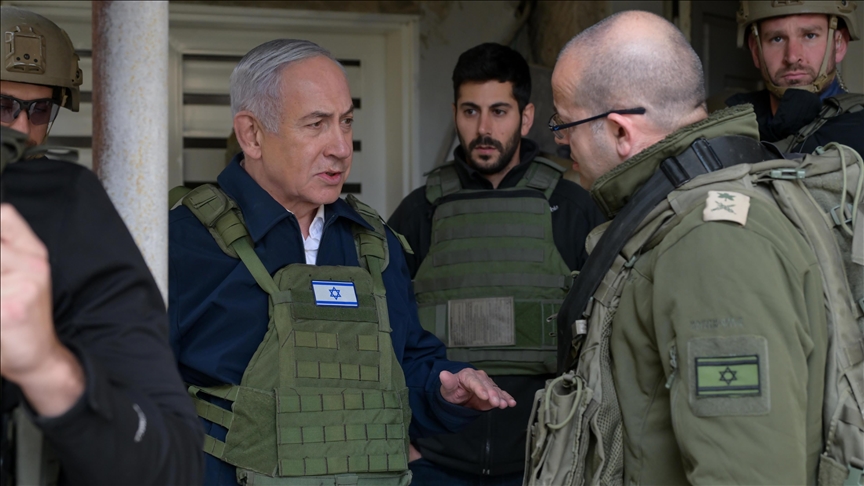
The answer seems clear when you consider that Trump made this announcement standing beside none other than Israeli Prime Minister Benjamin Netanyahu, the architect of the ongoing devastation in Gaza.

To further amplify the absurdity, Marco Rubio, Trump’s Secretary of State, took to social media to gleefully tweet: “Make Gaza Beautiful Again.” This is a vision that sees Gaza not as a place of human struggle, resilience, and history, but as an empty plot of land—waiting to be “beautified” by foreign intervention, with little regard for the millions of lives it holds.

Gaza has been on the news headlines again after October 7, 2023. Israel, Egypt, and the Mediterranean Sea surround it. Movement into and out of it is heavily controlled, as Israel has enforced a nearly complete land, sea, and air blockade of the area since 2007.

This small pocket of land has attracted the world’s attention every one or two years for the last one and a half decades but is also sometimes forgotten. If you are someone who is reading about Gaza for the first time in your life with this article, you may think the author is talking of a deserted island, uninhabitable place, or “a land without a people.”

In fact, Gaza is 365 square kilometres of land, and it inhabits 2,351,000 people, which makes it one of the densest areas in the world, with 6441 people per square km. One should also avoid the statisticalisation trap where people who are living in Gaza are human beings with stories and memories. They are faces rather than mere numbers. However, it becomes clear that political language in the United States with the new Donald Trump administration will be based on the dehumanisation of Gaza.

The implications of his words at the press conference on February 5, are staggering. Trump’s proposal is a glaring reminder that in the eyes of many world leaders, the people of Gaza—Palestinians—are reduced to little more than background noise in a geopolitical game.

This isn’t just about land or politics; it’s about the systematic erasure of a people, their history, and their struggle for self-determination. To Trump, Gaza isn’t a place of suffering and resistance—it’s an opportunity for rebranding. It’s a strip of land to be “fixed,” a place to be renovated into a “tourist destination,” regardless of who lives there or the decades of hardship they’ve endured under a brutal occupation and blockade.

Colonialism rebranded

What Trump’s rhetoric reveals is a deeply troubling mindset—a belief that Palestinians in Gaza have no voice, no agency, and no right to self-determination or votes.

Their homes, their land, their very existence, are reduced to a resource for someone else to exploit, more valuable than the people living on it. This may come as a surprise to some observers, but this is a modern-day manifestation of colonialism, echoing the Manifest Destiny doctrine in the United States—a belief that one nation has a divine right to control another’s land, regardless of the people who have lived there for generations. It’s the kind of thinking that has long fuelled the oppression of indigenous peoples, and it is alive and well in Trump’s vision for Gaza.

The legal context around this proposal only deepens its gravity. The International Criminal Court (ICC) has issued arrest warrants for Israeli officials, including Netanyahu and former Defence Minister Yoav Gallant, for crimes against humanity and war crimes. The International Court of Justice (ICJ) has condemned Israel’s actions in Gaza as genocide.

And yet, Trump’s words seem to offer a dangerous legitimisation of the very actions that have brought Gaza to the brink of collapse. Netanyahu’s rhetoric only adds fuel to the fire. In a speech soon after October 7 where he infamously referred to Palestinians as “animals” and invoked the biblical story of the Amalekites, justifying violence with religious fervour. “You must remember what Amalek has done to you,” he said.

This was not an ordinary reference, but put in the context of war, it could be interpreted as “genocidal intent.” Netanyahu was referring to the following passage; “‘I will punish the Amalekites for what they did to Israel when they waylaid them as they came up from Egypt. Now go, attack the Amalekites and totally destroy all that belongs to them. Do not spare them; put to death men and women, children and infants, cattle and sheep, camels and donkeys.’”

This is not just inflammatory speech—it’s the rhetoric of destruction, one that seeks to dehumanise and erase an entire population.

Trump’s chilling comments about the people of Gaza add to this. When asked whether Palestinians would ever be able to return to their homes if Gaza were to fall under US control, Trump responded bluntly: “I don’t think people should be going back to Gaza. I think that Gaza has been very unlucky for them. They’ve lived like hell…the only reason they want to go back is because they have no alternative.”

Notice how he frames it: Gaza isn’t a homeland—it’s a prison. Palestinians, in his view, are not people with rights, dreams, or a history—they are mere sufferers, trapped in a place they should leave behind. The use of “they” is telling: Trump doesn’t even use the word “Palestinian” when he talks about Gaza. It’s as though the very identity of the people who live there has been erased.

Resilience

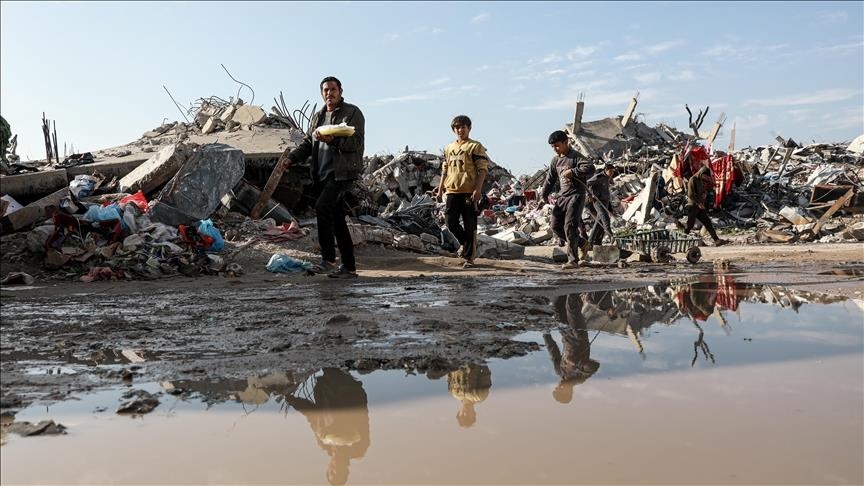
But despite the relentless violence and oppression, the spirit of the people of Gaza remains unbroken. After the ceasefire between Palestinian resistance forces and Israel, which came after weeks of unimaginable destruction, Gaza’s resilience was on full display. Thousands of Palestinians returned to their homes in the northern part of Gaza, even though Israel has tried to make it uninhabitable.

This wasn’t just a physical return—it was a powerful statement of defiance, a refusal to be erased. During the release of Israeli hostages, Palestinians expressed solidarity with the resistance in a show of strength: smiling, cheering, even taking photos with fighters from the Qassam Brigades. This is a people who refuse to submit to occupation. Their will is unshaken.

So, while Trump’s words might make headlines, they also expose the lengths to which certain powers will go to suppress Palestinian resistance, to break their spirit, and to erase their struggle for justice. If this vision is allowed to continue, the Middle East could be facing a future marked by further instability, deepened injustice, and a growing humanitarian crisis.

But as Gaza has shown time and time again, the Palestinian struggle will not be easily silenced. No matter the attempts to erase them from the map, the people of Gaza will remain, with their history, their identity, and their fight for freedom.

TRT World


Ahmet Yusuf Ozdemir

Ahmet Yusuf Ozdemir

Ahmet Yusuf Ozdemir is an Assistant Professor of Political Science and International Relations Department at Ibn Haldun University.

Continue reading
A World Without America?

By Dr Khairi Janbek

Away from the condom politics which seems to be just an obsession of a Washington administration suffering from erectile dysfunction, on thought it would be intriguing to imagine a world without America, which means deep cultural, economic as well as political implications. It’s a thought experiment which forces one to imagine how the world would look like without the specific influence, history and power dynamics that the USA has shaped.

On the geopolitical and global power level, other nations would have to step in into the void, vying for influence. Europe, China, Russia and India would probably play a central role on global politics, in addition, the Security Council of the UN will start looking very different, Europe would become the dominant force strengthening its collective military and political capabilities.

In terms of culture and society, American has played a central role in shaping global pop culture, Hollywood, music, fashion and hi-tech, indeed other nations would have come in, in Asia South Korea, Japan and India would take a central role in shaping global culture, with Europe asserting itself in the arts and literature.

In technology and innovation, the US has produced Silicon Valley and leading corporations in software, hardware and AI, however without, China and Europe would fill the hitech leadership role which probably would accelerate their breakthroughs.

As for the economy, without America, the world economy would be real different, the US dollar would not be the world reserve currency, with the Euro and the Yuan, being the global standard. Trade dynamics would be rearranged and institutions like the World Bank and the IMF would have other substitutes.

Regarding military and defense, American power is unmatched , without it global security dynamics would shift drastically, NATO might not exist, while regions powers like Russia, China and India, would become more aggressive in asserting their influence.

In terms of the environment and social movements, the US has been at the forefront of global debates on climate change, social Justice and human rights; taking note of course, with mixed results, but without it, certainly others would take the lead, for a start, Europe has been a leader in pushing for climate action , and in social action, countries like Brazil, South Africa, would fill in the gap with most probably leading to different outcomes. But , the USA has been a major donor for global and humanitarian aid, and their contribution would have to be substituted by other coalitions, which one assumes would be limited only to crisis.

Essentially, a world system without America, the international system would be less centered around one dominant great power, as power would be more diffuse with multiple centers of influence and more regional power struggles, but at the end of the day, the purpose for the use of condoms would be much clearer.

Dr Janbek is an opinion writer based in Paris

Continue reading
Jordan’s Ex-deputy PM Responds to Trump’s Gaza Statements  

“The US aid to Jordan is not free, but linked to America benefiting from its military bases on the land of the Kingdom,” Jordan’s ex-Deputy Prime Minister Dr. Mamdouh Al-Abadi responded to the statement made by United States President Donald Trump’s about the possibility of transferring Gaza residents to Jordan according to the assawsana Arabic website.

“If the US wanted to pay only the rent for the land, it would have needed to pay a much larger amount than the amount of aid provided to Jordan,” he added in a press statement.

“The United States of America wants to use aid to pressure governments and countries to accept its dictates.” He stressed Jordan’s position, which King Abdullah II has repeatedly announced, is clear and explicit in rejecting any attempts to displace the Palestinian people.

Al-Abadi stressed the US president will not continue to pressure Jordan but back down from his demands and statements, as happened in the decision to withdraw from the World Health Organization. He expected that the decision to stop aid will not last for more than three months.

He stressed that Trump’s statements will not change the reality on the ground at all for the people of Gaza remain steadfast on their land and the Palestinian people will not submit to any dictates or pressures to displace, and the interviews on television screens with the people of Gaza are the greatest response to the occupation and to what Trump said.

Al Abadi stressed the scenes of people returning to their towns in north Gaza, Monday, are the greatest response to the Trump utterings and that of the occupation government regarding the displacement of the Palestinian people. He described the scenes of people returning as a historic event that expresses the legendary steadfastness of such great people and the victory over the enemy.

He added the message of the Gazan is reaching the whole world as clinging to their land and no Israeli army, American, or any other force in the world can expel them, as their slogan has become either ‘death or land,’ and do not accept any alternative to their homeland, neither to Jordan nor Egypt.

Continue reading
‘Not Displacement But a Two-State Solution’

By Khaled Shaqran

Jordan’s posture on the Palestinian question has always been firm and clear: Jordan is not, and will never be, an alternative homeland for Palestinians.

This position is not merely a political statement but a historical commitment rooted in the principle of justice and the legitimate rights of the Palestinian people. Jordan rejects any attempt to liquidate the Palestinian cause or deny the rights of Palestinians under whatsoever pretext.

In reality, Jordan, which has historically served as a safe haven for those fleeing wars and persecution, is already under immense pressure on its resources and infrastructure due to the accumulated influx of refugees from successive waves of migration. It cannot bear the burden of accommodating more refugees or the multifaceted challenges their presence would bring.

The Palestinian people cannot abandon their homeland, no matter the pressures or threats they face. For Palestinians, their land is not merely territory but identity, history, and shared destiny. They will continue to hold onto it until their legitimate rights are realized. Palestinians will not relinquish an inch of their land, neither through enticement nor intimidation, and will persist in their struggle to achieve their dream of freedom and justice.

No short-term solutions would resolve the issue and end the long-running conflict, as some believe.

While the United States, as a global power, can propose initiatives and exert political pressure, it can never erase an entire people and their just cause. Despite the systematic killing, repression, destruction, and unprecedented exclusionary practices supported by some influential international powers, the Palestinian people have never stopped and will never stop fighting for their legitimate rights, paramount of which is the end of the occupation and the establishment of an independent state of their own.

It is also crucial for the international community to understand that the Palestinian issue is not merely a regional conflict that can be resolved through short-lived settlements. It is a human rights issue tied to the lives of an entire people and their ongoing struggle for freedom and independence. Therefore, any solution that does not rest on the foundation of comprehensive justice will fail and will not bring lasting peace. The only solution to this conflict is a just and comprehensive peace that guarantees the establishment of an independent Palestinian state.

The two-state solution is the only viable formula that enjoys international consensus and reflects the will of the region’s peoples for coexistence in peace and security. Palestine, as both land and cause, is not negotiable or to be ever terminated, and Palestinian rights are historical and legitimate, beyond the power of any force to erase or deny.

It is historically inevitable all occupations eventually end, and it is time for the international community to recognize that this conflict cannot be resolved through displacement, killing, or destruction, but by achieving justice for the Palestinian people. Any solution that does not rely on the two-state framework will remain unattainable. The Palestinian cause will persist as a struggle for rights and freedom, and the region will not enjoy security, stability, or peace until the Palestinian people obtain their legitimate rights and establish their independent state with East Jerusalem as its capital.

Khaled Shaqran is a columnist in the Jordan Times

Continue reading