 Pezeshkian: ‘Iran Will Not Surrender to Bullies’
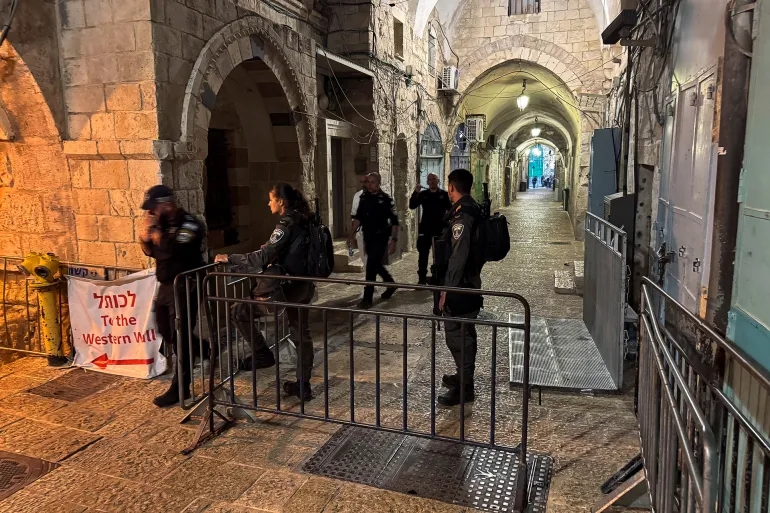 Israeli Soldiers Enforce Closure of Al Aqsa
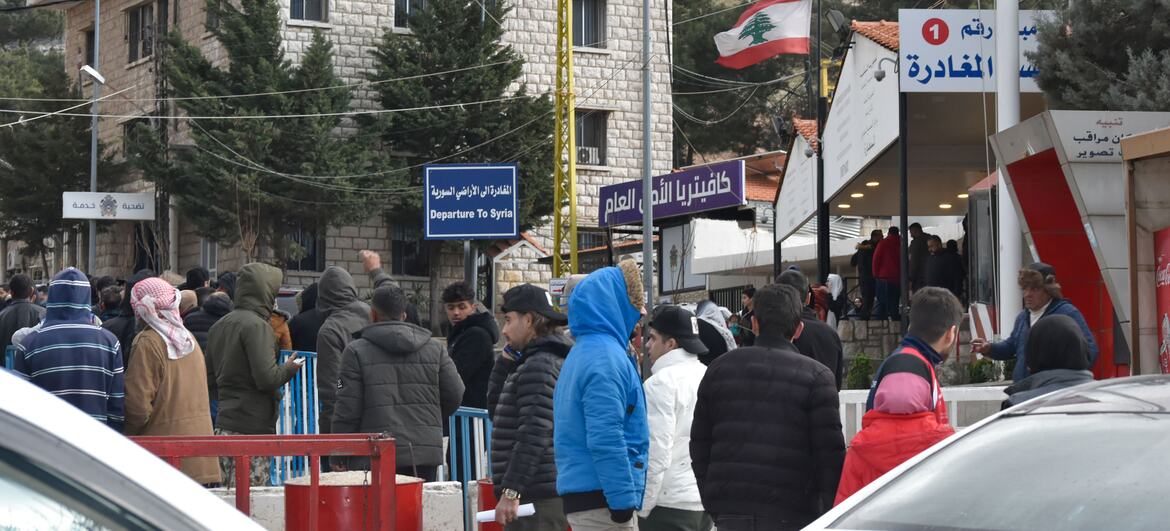
 1 in 7 Displaced in Lebanon – NRC
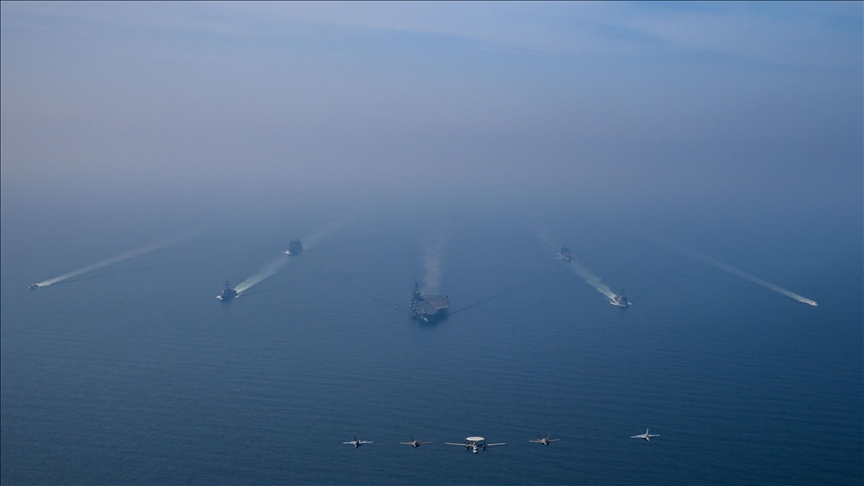 Hormuz: End of an Era of Martime Dominance
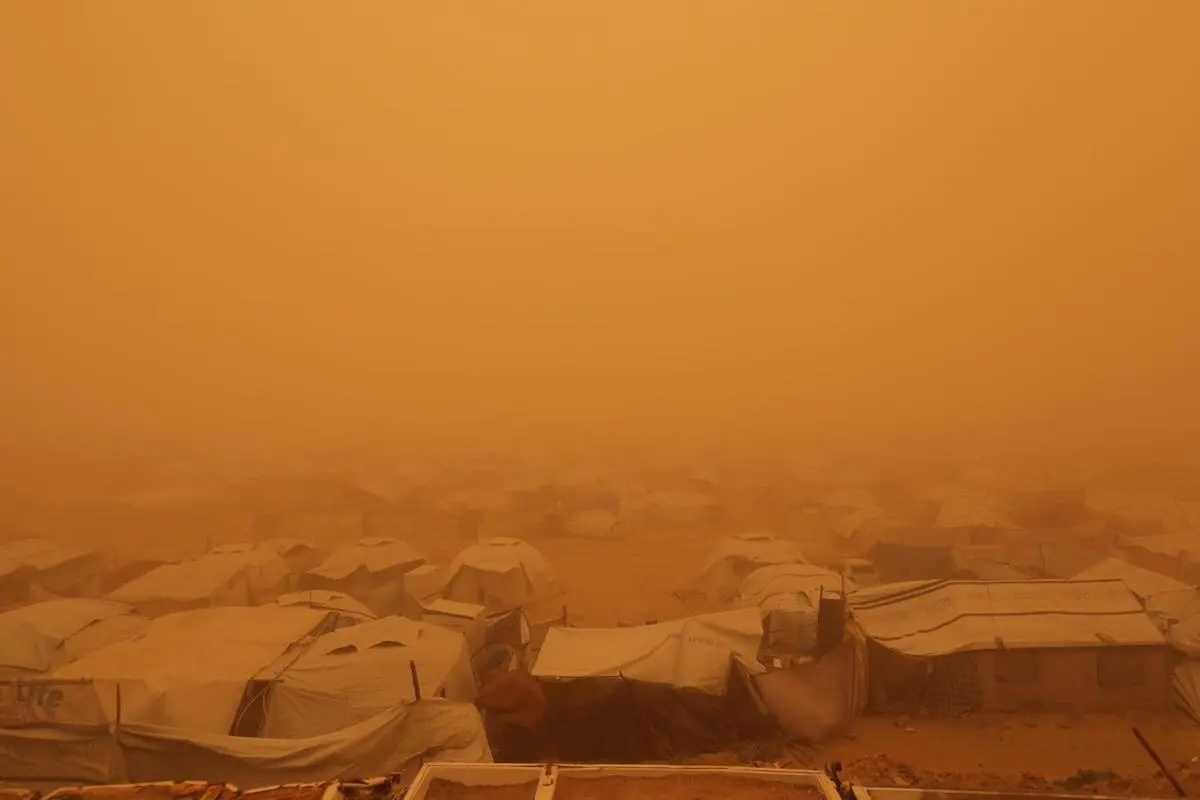 Gaza Faces Massive Dust Storm



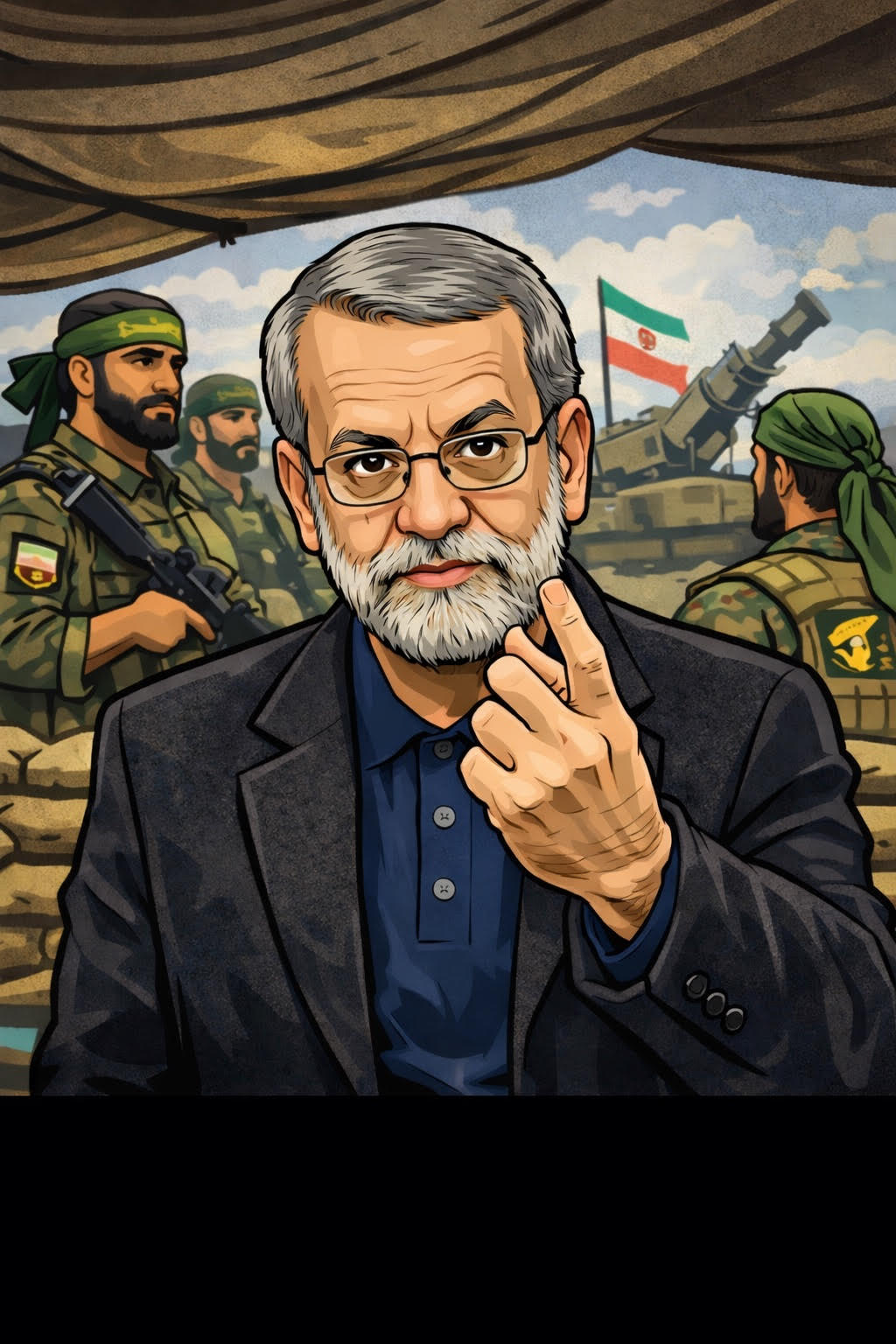
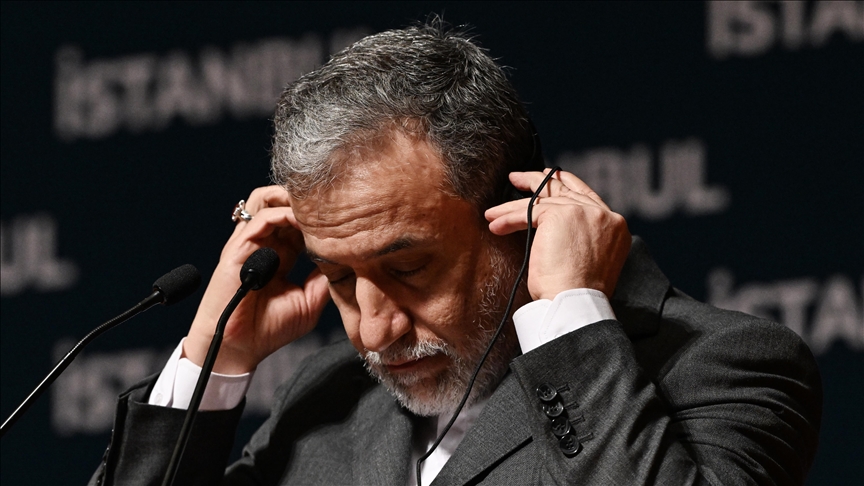
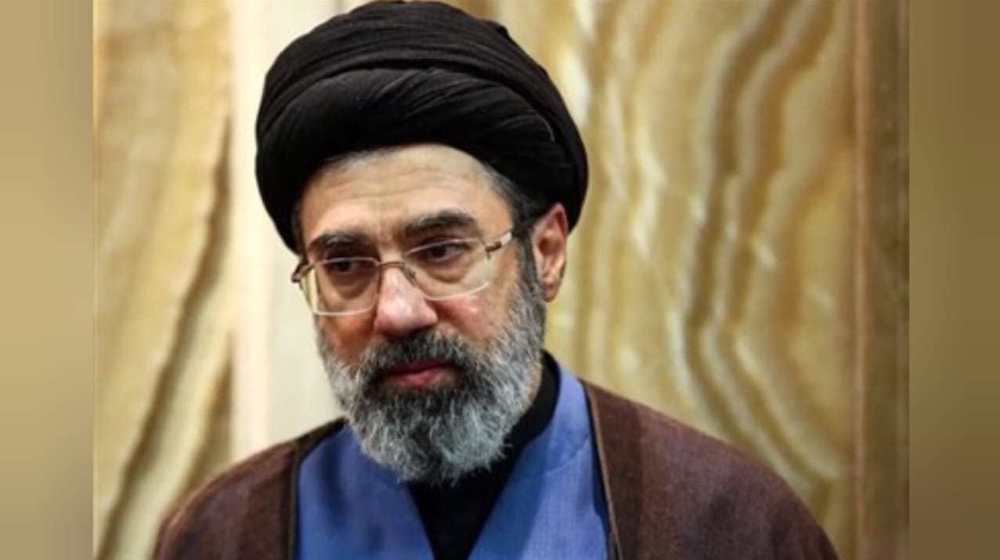
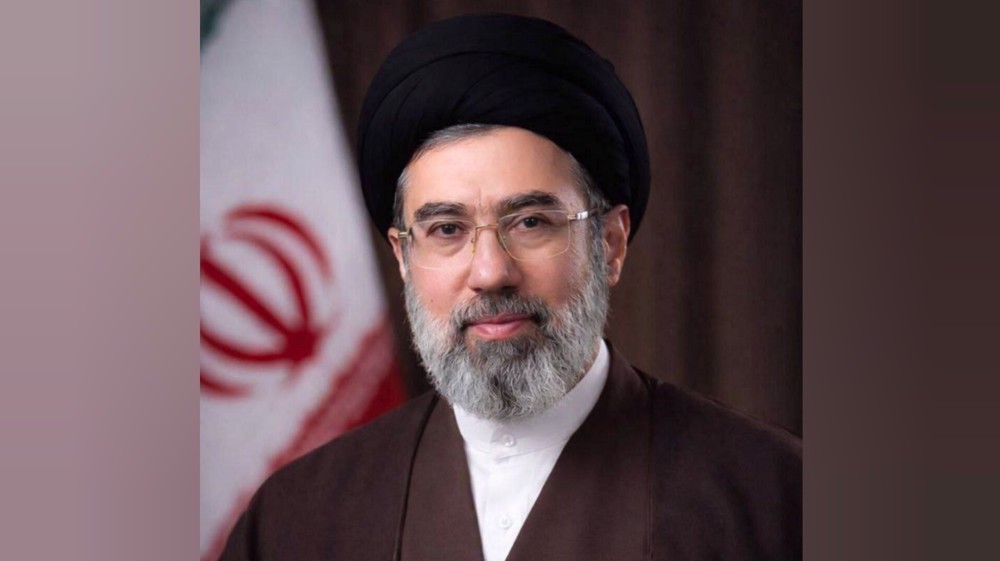
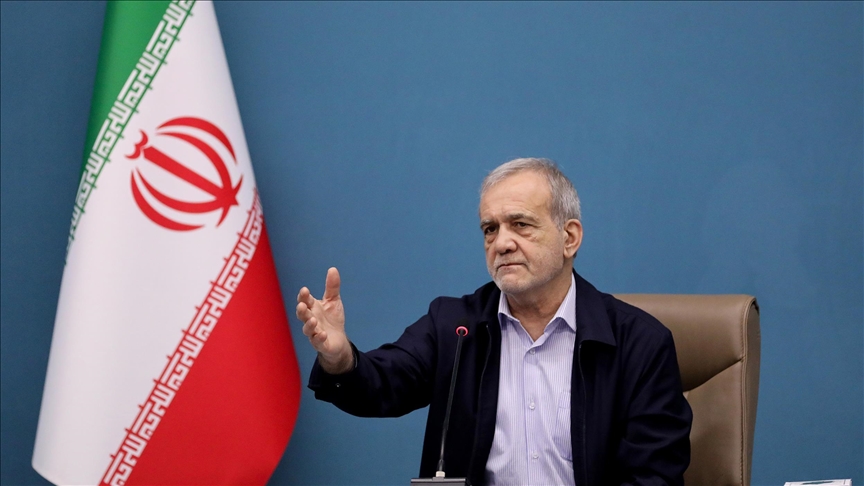
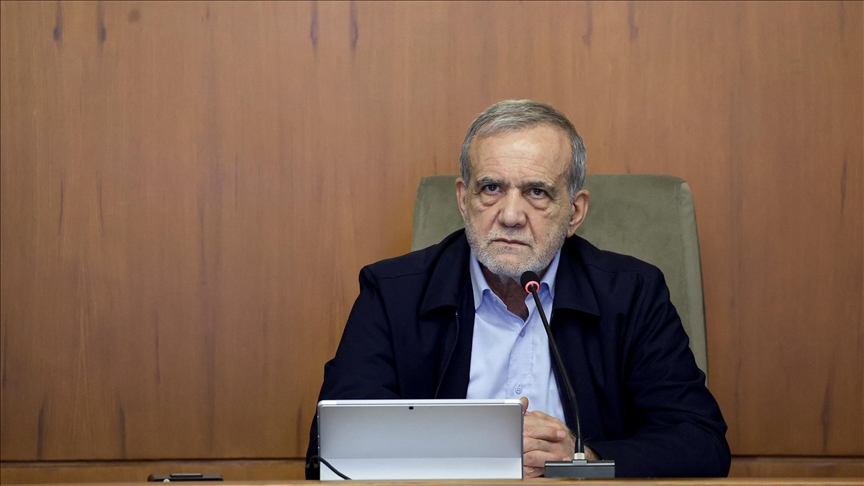
Pezeshkian: ‘Iran Will Not Surrender to Bullies’
 CrossFireArabia
- March 16, 2026
 CrossFireArabiaCrossFireArabiaCrossFireArabiaCrossFireArabiaCrossFireArabiaCrossFireArabiaCrossFireArabiaCrossFireArabiaCrossFireArabiaCrossFireArabiaCrossFireArabiaCrossFireArabiaCrossFireArabiaCrossFireArabiaCrossFireArabiaCrossFireArabiaCrossFireArabiaCrossFireArabiaCrossFireArabiaCrossFireArabiaCrossFireArabiaCrossFireArabiaCrossFireArabiaCrossFireArabiaCrossFireArabiaCrossFireArabiaCrossFireArabiaCrossFireArabiaCrossFireArabiaCrossFireArabiaCrossFireArabia
 Saleem Ayoub QunaCrossFireArabiaCrossFireArabiaCrossFireArabiaCrossFireArabiaCrossFireArabiaCrossFireArabiaCrossFireArabiaCrossFireArabiaCrossFireArabiaCrossFireArabiaCrossFireArabiaCrossFireArabiaCrossFireArabiaCrossFireArabiaCrossFireArabiaCrossFireArabiaCrossFireArabiaCrossFireArabiaCrossFireArabia
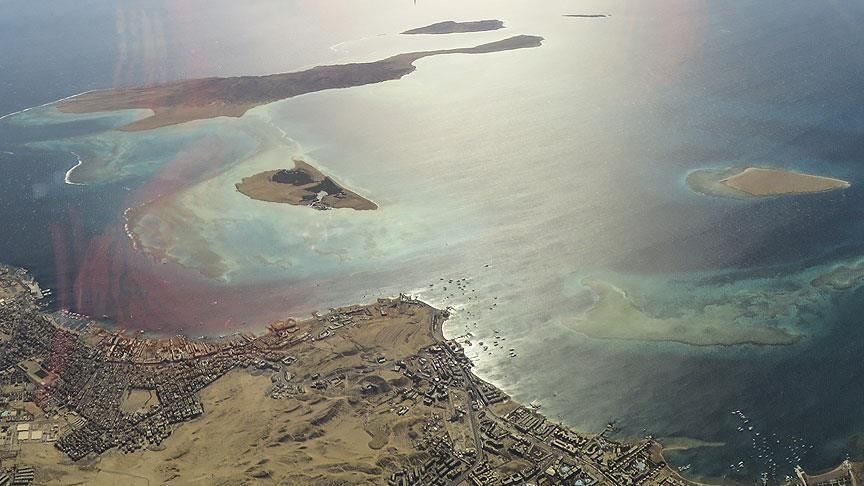
Iran strongly condemned on Saturday Israel’s recognition of the breakaway region of Somaliland as a “flagrant violation of Somalia’s sovereignty and territorial integrity.”
Criticizing the Israeli move as “malicious,” Foreign Ministry spokesperson Esmail Baghaei emphasized the importance of “preserving the national sovereignty, unity, and territorial integrity” of Somalia.
Baghaei asserted that the recognition aligns with Israel’s broader policy “to destabilize countries in the region and exacerbate insecurity in the Red Sea and the Horn of Africa.”
Expressing support for the firm condemnation by the Organization of Islamic Cooperation (OIC) and the African Union (AU), Baghaei called on the international community to take “decisive action” to “neutralize this expansionist and threat-creating move by the occupying regime.”
On Friday, Israel became the first country to officially recognize Somaliland, with Prime Minister Benjamin Netanyahu announcing that the two sides had signed a joint declaration establishing full diplomatic relations “in the spirit of the Abraham Accords.”
In response, Somalia’s government denounced the move as an “attack” on its sovereignty and an “unlawful action,” reaffirming Somaliland as an “inseparable” part of its territory.
The Israeli move has been widely condemned by several countries, including Türkiye, Saudi Arabia, Egypt, and Qatar according to Anadolu.
Notably, Somalia was among the countries that severed diplomatic ties with Iran in January 2016 following a mob attack on the Saudi embassy in Tehran.
In March 2024, a year after Iran and Saudi Arabia restored diplomatic relations through a China-brokered deal, Somalia announced its readiness to mend ties with Iran.
In August of the same year, the top diplomats of Somalia and Iran met on the sidelines of the OIC summit in Jeddah and agreed to revive and deepen diplomatic relations.
CrossFireArabia
More than half a million Palestinians have lost their source of livelihood in the West Bank and Gaza since the start of the Israeli war in October 2023, a trade union said Saturday.
In a statement, the Palestinian General Federation of Trade Unions said that workers face systematic blockade, closure, and daily raids by the Israeli army.
The Israeli policies “constitute a compounded crime” against Palestinian workers and undermine their natural right to work and live in dignity, it added.
“Israeli occupation policies over more than two years of continuous aggression have led to more than 500,000 Palestinian workers losing their livelihood, with unemployment rates rising to unprecedented levels exceeding 50% in the West Bank and more than 84% in the Gaza Strip,” the statement said.
It explained that Palestinian workers incurred losses of over $9 billion due to being prevented from reaching their workplaces, in addition to the destruction of local productive sectors, primarily agriculture, construction, and services according to Anadolu.
According to the statement, 44 workers have been killed, hundreds injured, and over 34,000 others detained by the Israeli army since October 2023.
The federation held the Israeli government “fully responsible for these massive financial losses and for the killing of dozens of Palestinian workers at military checkpoints or due to settler attacks while they were trying to secure a livelihood for their families, in a blatant violation of international labor conventions and the Geneva Conventions.”
The Israeli army has killed more than 70,700 Palestinians and injured over 170,000 others in Gaza since October 2023. Attacks by the Israeli army and illegal settlers have also killed at least 1,097 Palestinians and injured nearly 11,000 others in the occupied West Bank during the same period.
CrossFireArabia
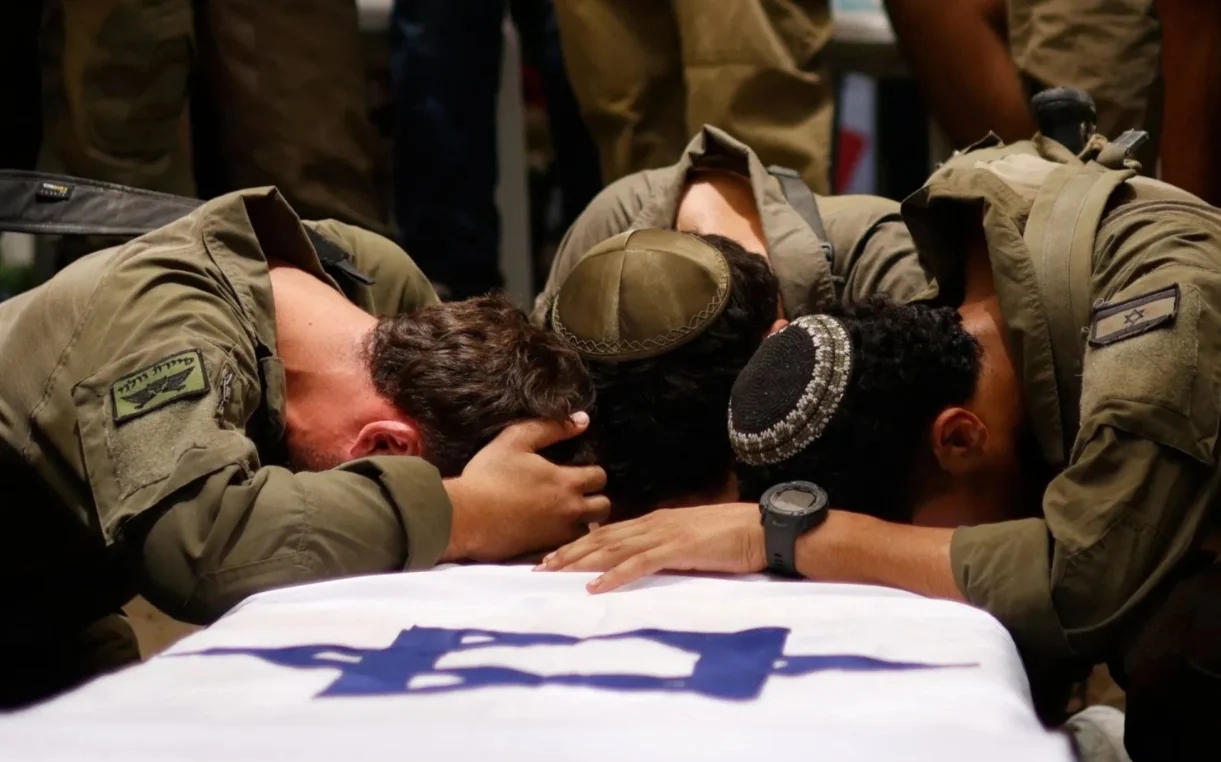
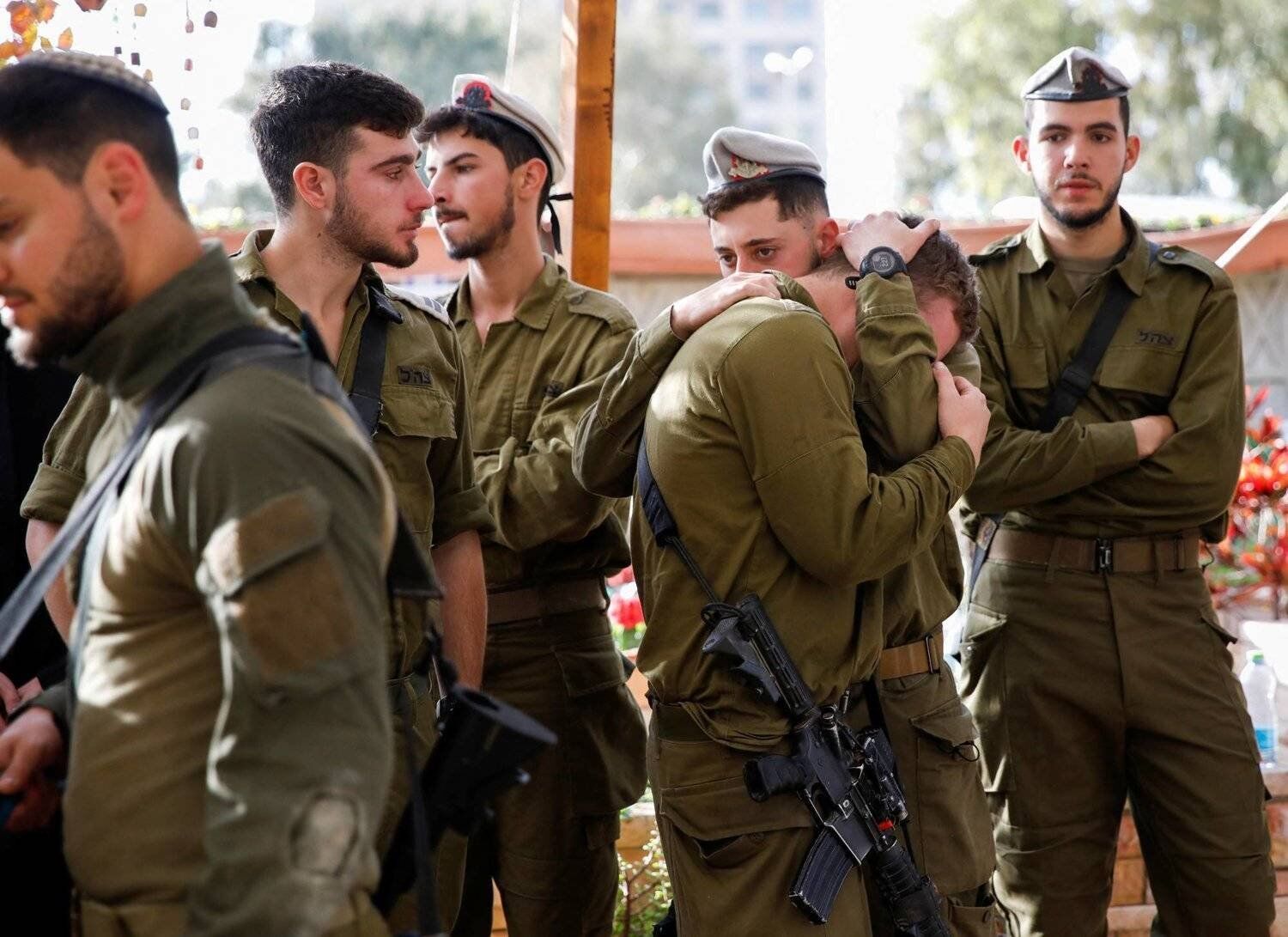
More Israeli soldiers are committing suicide than ever before. Today, the number of soldiers who have taken away their lives stands at 61 since the Israeli war on Gaza that began on 7 October, 2023.
These are official figures put out by the Israeli army with the figure likely to be much higher than that. As proof, the number of those soldiers who attempted suicide but failed is put at 279.
Israeli soldiers, long actively serving in the excecution of the Gaza genocide, have resorted to desperate and extreme measures. So far, 20 soldiers took their lives in 2025 because of the atrocities they seen and committed in Gaza.
The trend has been raising since October 2023 when at least seven soldiers committed suicide in the last three months of that year and with the total number standing at 17. In 2024, and at the heights of the Israeli war and when at least 43,000 Palestinians were killed, including 17,000 children, the suicide figure amongst Israeli soldiers stood to at least 21.
The trend has become increasingly disturbing for the Israeli authorities because in previous years the suicide rates were 14 in 2022, 11 in 2021, 9 in 2020, 12 in 2019, 9 in 2018 and 16 soldiers took their lives in 2017. These numbers were considered ‘normal’ in an Israel army that had a manpower force of around 170,000 but increased by 350,000 soon after the war started.
However, the disturbing suicidal trends become more glaring during the Israeli genocidal war on Gaza. The situation was becoming so bad that the Knesset Research and Information Committee (KRIC) produced a full report on 28 October, 2025. It focused on the period between January 2024 till July 2025 and found that one in seven of those who attempted suicide succeeded in killing themselves.
The KRIC, mainly a data collection committee, found that combat ground soldiers serving in the different areas of Gaza accounted for 78 percent of all suicides in 2024 and which is about 45 percent more of the suicidals from 2017 till 2022.
The committee also found that only 17 percent of those that committed suicide had met with a mental health officer in the previous two months. Because of the extent of violence, horror of the Israeli war, and probably the extent of the stiff resistance to the Israeli soldiers which resulted in their death and injuries, many had required psychiatric treatment.
Since October 2023 up till today 85,000 required psychological treatment in the rehabilitation unit of the Israeli Ministry of Defense. Today, over 10,000 soldiers are undergoing intensive medical health treatment that include mental health problems.
One of the major health mental problems suffered by Israeli soldiers in Gaza is Post-Traumatic Stress Disorder (PTSD) which includes flashbacks of reliving violent events, nightmares, feeling on edge, avoidance of places, constant fear, detachment, emotional numbness, memory problems and constant stress.
Most of these soldiers were in places in Gaza were mass bombs we’re being dropped, houses decimated, blood everywhere. As UN statistics show Gaza was being razed to the ground with more than 60 millions tons of debris and rubble and in many cases soldiers going through these with the constant fear of Palestinian fighters watching them, shooting at them or booby-trapping their tanks that was a major characteristic of this war.
Why Did They Commit Suicide?
Official figures estimate there are under 4000 who are diagnosed with PTSD and another 9000 who are yet to be diagnosed with the mental disease that is ripping Israeli society apart with soldiers taking their lives in different locations at military bases, in parks, near a beach, in their homes, and in one case, outside a Jewish settlement in Safad where a soldier, named Daniel Edri, sat in his car and set fire to it and burning himself alive.
His previous job was to carry the bodies of dead Israeli soldiers killed in Gaza. In a note to his mother, he wrote he continued to be haunted by the “smell and vision” of corpses he carried after being killed in combat with Palestinian resistance fighters.
And then in many cases there was the issue of deep guilt and which psychologists prefer to call “moral injury” carried by Israeli soldiers. There was the case of Eliran Mizrahi, a 40-year-old engineer who committed suicide on 7 June 2024, two days before he was called up to go back to Rafah, the southern-most city in the Gaza Strip. He was a D9 armored bulldozer operator and had previously spent 186 days in Gaza.
His co-operator Guy Zaken later told the Knesset committee that they were ordered on many occasions “to run over terrorists, dead or alive in the hundreds.” Zaken used a graphic description to describe what he was doing, saying ‘everything squirts out” in reference to the crushed bodies under his bulldozer.
He told the committee he can no longer eat meat because the sight and smell of it reminded him of what he did on the battlefield field of Gaza, scars which will likely haunt him for the rest of his life.
And then there was the case of Lithuanian Jew Tomas Adzgauskas who killed himself in a public park outside northern Gaza on 4 December, 2025. He was a reserve officer and a sniper in the Givati Brigade.
Although he was discharged from the Israeli army in April, 2024, the psycholgical stress eventually led him to suicide.
In a final note on Facebook, he wrote “…I am ruin and devastation…I did things that can’t be forgiven, and I can’t live with it anymore…there is a demon inside me that has been chasing me since 7.11…”
These were just two names among the many like Norwegian-born Dan Phillipson and Roi Wasserstein. The last took a gun to his head after 300 days of active duty in war-devastated Gaza while Ariel Meir Taman was found dead in his home in July 2025.
They died because of what they saw and did in Gaza, couldn’t believe their eyes and eventually decided to end their lives because of the scale of devastation and killing as 200,000 tons of explosives were dropped on the 364-kilometer Gaza Strip that is equivalent to 13 or 14 Hiroshima atomic bombs.
CrossFireArabia
By Ismail Al Sharif
Two months after the signing of the ceasefire, that remains merely ink on paper, the region is yet to witness a fundamental shift to the second phase: A transition from a strategy of destruction to a withdrawal mechanism, and from the logic of military operations to a framework of international administration, paving the way for a political process to ultimately lead to the establishment of a sovereign Palestinian state.
However, the realities on the ground today proves this path is nothing more than a theoretical assumption quickly crumbling in the face of a complex reality.
Two months after the supposed ceasefire, a completely different truth emerges; Israel continues its ethnic cleansing of the Gaza Strip. Palestinian civilians are dying from the bitter cold, just as they previously perished from the bombardment, while unilateral decisions are being made whilst deepening the chasm of mistrust between the parties supposedly partnering in ending this humanitarian tragedy and implementing the Donald Trump plan, who claims to have ended a three-thousand-year-old war.
What was supposed to be a temporary withdrawal line for the Israeli army has, according to its generals, become a new de facto border called the “Yellow Line,” swallowing up more than half of the Gaza Strip.
Early this month, the army’s chief of staff Eyal Zamir addressed his troops, asserting Israel “now exercises effective control over vast areas of the Strip” and its military units “will maintain their positions on these defensive lines.” He explicitly declared “the Yellow Line represents a new border of an advanced line of defense to protect Israeli society, and serves as a framework for the ongoing military operational activity.”
From these comments it can be understood the ceasefire line is no longer a temporary, transitional measure, but has effectively become a forcibly-imposed border, a permanent defensive zone, and a legal framework that legitimizes a long-term Israeli military presence within territories that, until recently, were an integral part of the Palestinian territories.
These pronouncements are not merely political rhetoric. The “Yellow Line” is now embodied on the ground by massive, yellow-painted concrete blocks that bisect the Gaza Strip to a depth of between 1.5 and 6.5 kilometers. Before the recent escalation, the Strip extended about 41 kilometers in length and between 6 and 12 kilometers in width. As it stands however, Israel has tightened its grip on more than half of this area in one of the world’s most densely-populated regions. This has exacerbated overcrowding, drastically reduced usable land, and devastated the agricultural sector, thus intensifying the humanitarian catastrophe, entrenching mass forced displacement, deepening the destruction, and contributing to the complete collapse of the institutional infrastructure.
The Zamir statements cannot be separated from the context of the pronouncements of war criminal Benjamin Netanyahu, who, from northern occupied Palestine, spoke of the expansion of his northern and northeastern borders by establishing a demilitarized buffer zone from the Syrian capital, Damascus, to the occupied Golan Heights. This is being made with the advance of his military forces into the UN-monitored buffer zone and the occupation of the Syrian side of Mount Hermon (Jabal al-Sheikh). Also, Israel is presently establishing establishing a “buffer zone” in the territory of southern Lebanon, destroying border villages and/or leaving them completely depopulated and deploying military reinforcements at strategic border points to impose a new security and geopolitical reality by force.
According to the Trump’s plan the second phase was supposed to begin after Hamas fulfilled its commitment to release all Israeli captives, both alive and deceased, and after Netanyahu announced his readiness to move to this phase.
However, this transition was contingent on two fundamental conditions: The deployment of international peacekeeping forces and the complete disarmament of Hamas. Herein lies the complexity of the issue; Netanyahu has publicly expressed skepticism about the ability of any international force to carry out the disarmament mission and has categorically stated that Hamas’s disarmament will be achieved through coercive military means and under the direct supervision of Israeli forces.
In contrast, Hamas maintains its categorical refusal to disarm except within a comprehensive framework that includes the formation of a unified Palestinian ‘technocratic” government and a complete withdrawal of Israeli occupation forces. At a minimum, Hamas has expressed its willingness to store its weapons within an agreed-upon mechanism as part of a comprehensive political process, as confirmed by Bassem Naim, a member of the movement’s political bureau, in recent statements.
The current situation reveals that Israel is treating the existing circumstances as a strategic opportunity to expand its geographical borders and exert maximum pressure on the Palestinian people, paving the way for what it calls “voluntary displacement” under a humanitarian pretext—a pretext it itself created.
Simultaneously, it is deliberately and systematically obstructing the transition to the second phase of the Trump agreement by continuing its policies of occupation, killing, and destruction under the guise of a ceasefire.
It is clear this arrangement serves its strategic interests and intersects with broader Western interests, with the ultimate result being the aborting of any chance of establishing a sovereign Palestinian state, and keeping the Gaza Strip – as it has always been – a besieged enclave, which Israel exploits to achieve its political agenda and strengthen its internal cohesion, and turning it into a field laboratory in which various military weapons, biological tools and advanced technological techniques are tested, but with a reduction in the population, which allows it to continue what is strategically known as “managing the conflict” in the long term.
This article by Ismail Al Sharif was originally written in Arabic for the Addustour daily and published in Crossfirearabia.com.
CrossFireArabia
Artist Maher Naji remembers Palestine in his own way.