 Pezeshkian: ‘Iran Will Not Surrender to Bullies’
 Israeli Soldiers Enforce Closure of Al Aqsa
 1 in 7 Displaced in Lebanon – NRC
 Hormuz: End of an Era of Martime Dominance
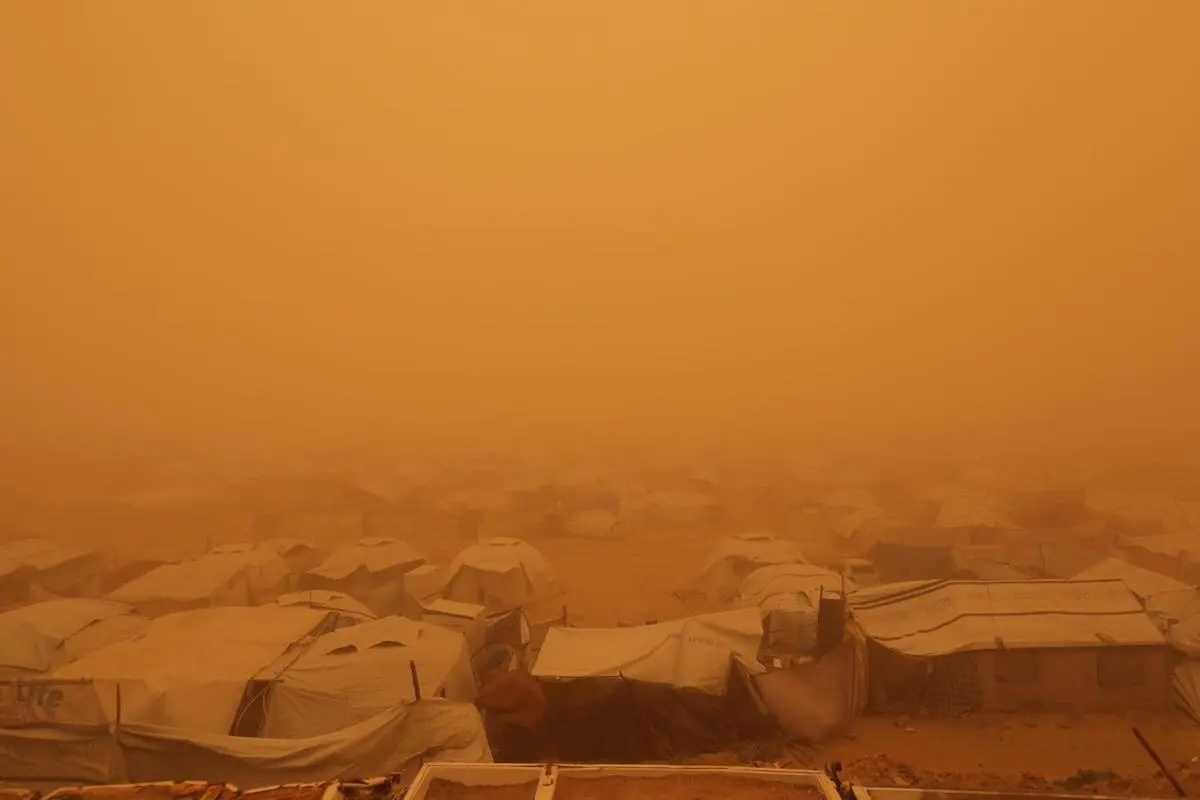 Gaza Faces Massive Dust Storm

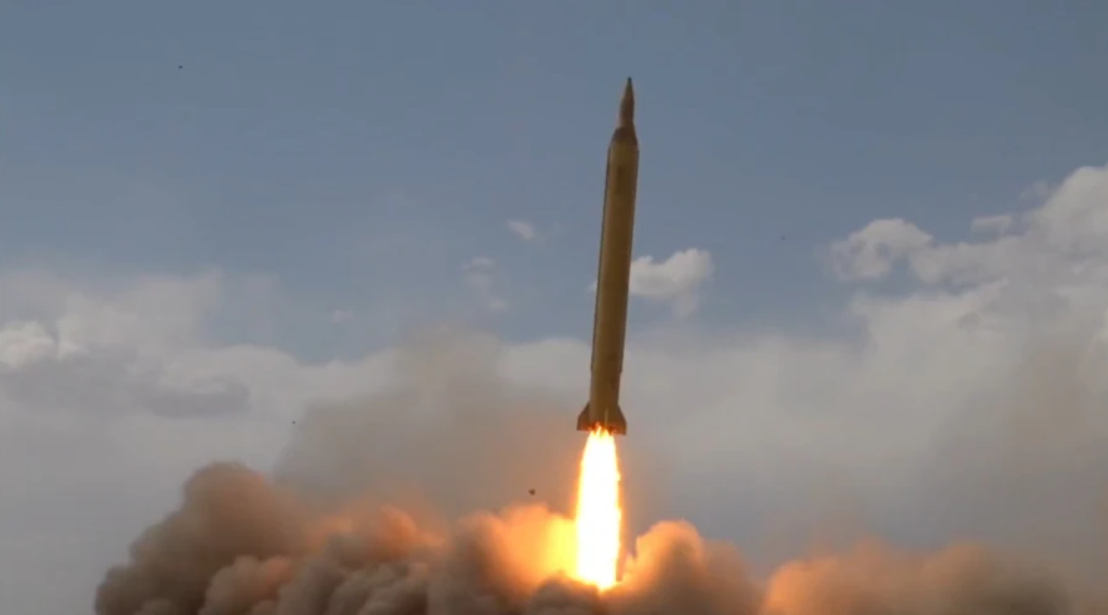
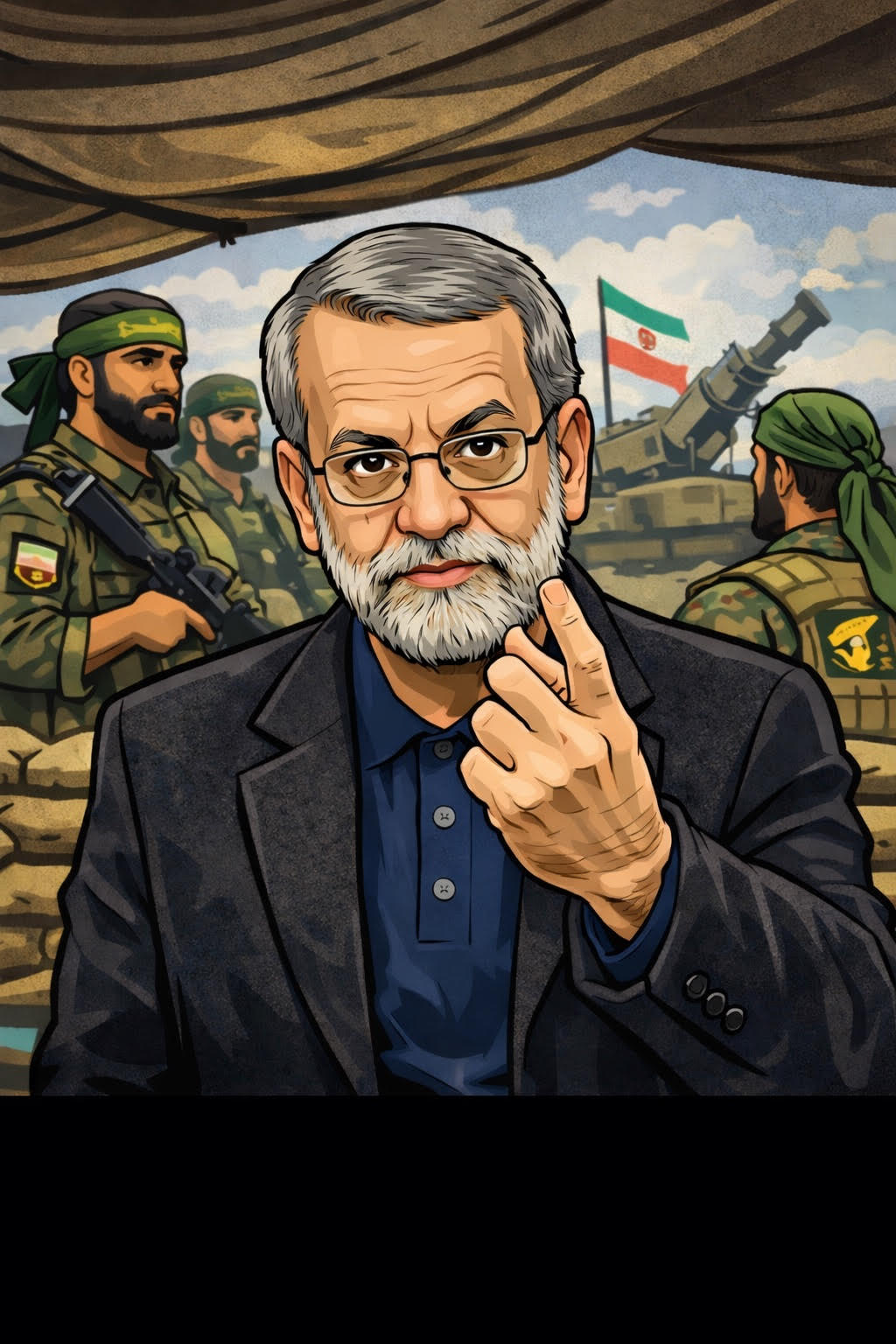
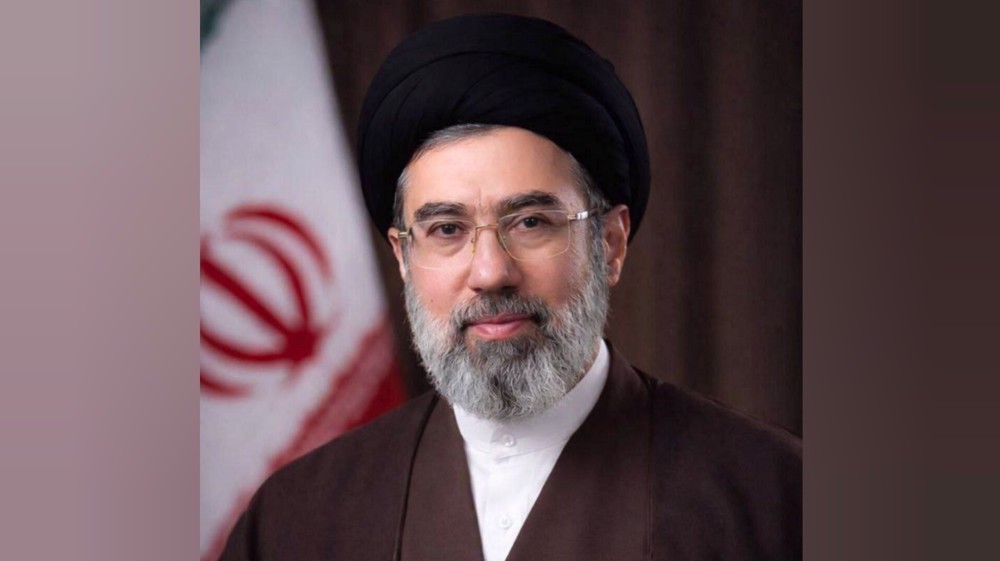
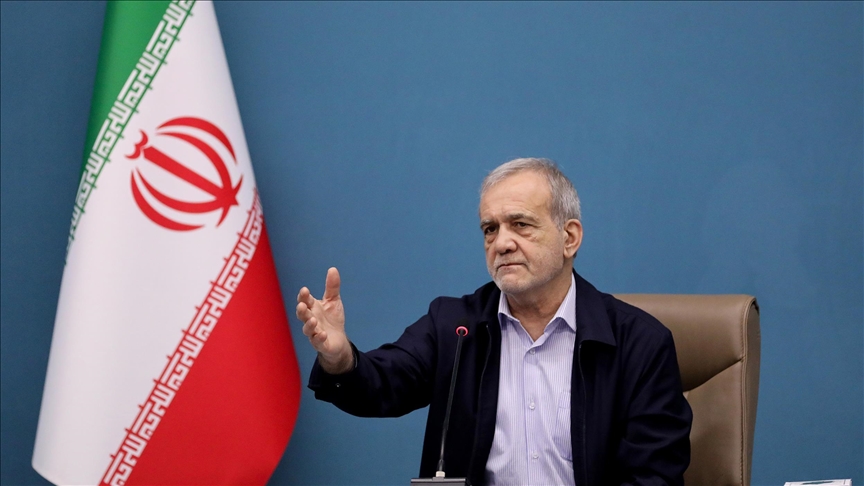
Pezeshkian: ‘Iran Will Not Surrender to Bullies’
 CrossFireArabia
- March 16, 2026
 CrossFireArabiaCrossFireArabiaCrossFireArabiaCrossFireArabiaCrossFireArabiaCrossFireArabiaCrossFireArabiaCrossFireArabiaCrossFireArabiaCrossFireArabiaCrossFireArabiaCrossFireArabiaCrossFireArabiaCrossFireArabiaCrossFireArabiaCrossFireArabiaCrossFireArabiaCrossFireArabiaCrossFireArabiaCrossFireArabiaCrossFireArabiaCrossFireArabiaCrossFireArabiaCrossFireArabiaCrossFireArabiaCrossFireArabiaCrossFireArabiaCrossFireArabiaCrossFireArabiaCrossFireArabiaCrossFireArabia
 Saleem Ayoub QunaCrossFireArabiaCrossFireArabiaCrossFireArabiaCrossFireArabiaCrossFireArabiaCrossFireArabiaCrossFireArabiaCrossFireArabiaCrossFireArabiaCrossFireArabiaCrossFireArabiaCrossFireArabiaCrossFireArabiaCrossFireArabiaCrossFireArabiaCrossFireArabiaCrossFireArabiaCrossFireArabiaCrossFireArabia
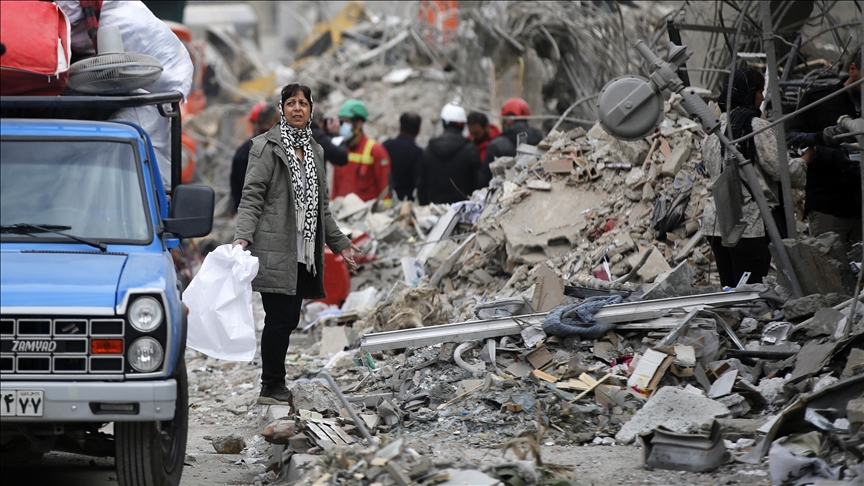
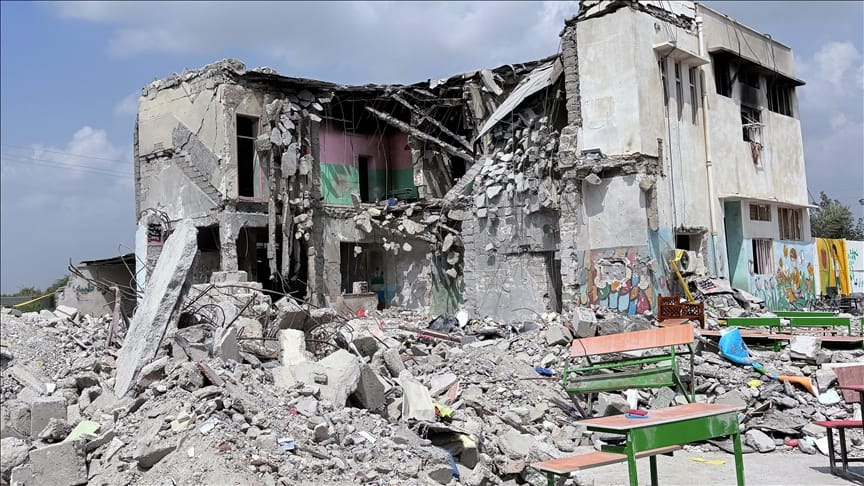
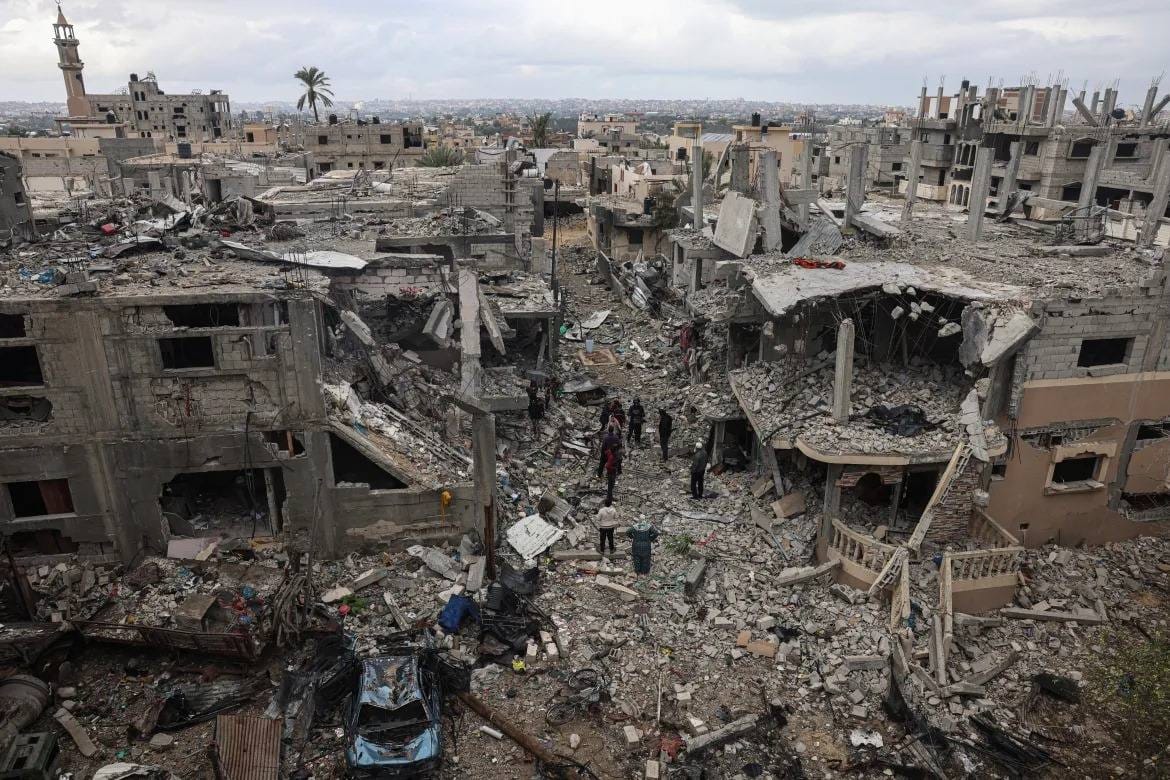
Hundreds of thousands of displaced Palestinians continue to return to Gaza City and other areas, amidst the rubble and destruction left behind by the two-year Israeli military offensive on the Gaza Strip.
Families are walking along Rashid and Salah al-Din streets, carrying their children and their few belongings. Many have no homes to return to.
Palestinians were also able to return to the center of Khan Yunis, in the southern Gaza Strip, after Israeli military vehicles withdrew from the city center following the ceasefire announcement.
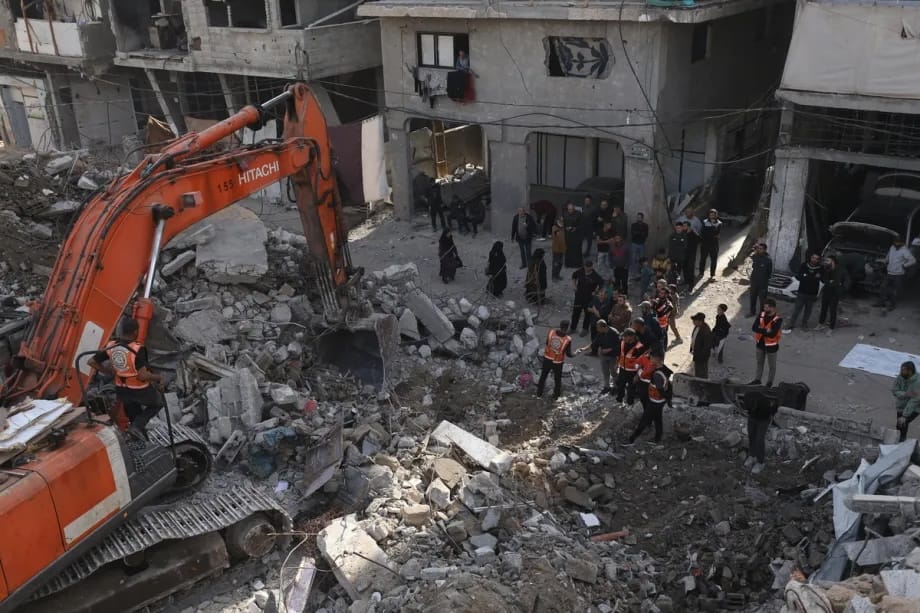
The mayor of Khan Yunis said that 85% of the Khan Yunis governorate was destroyed, adding that 400,000 tons of rubble must be removed from the city’s streets.
He added that 300 kilometers of the city’s water network have been destroyed, and 75% of the city’s sewage network has been destroyed.
He also explained: “We have to deal with more than 350,000 tons of waste in the city,” noting the need for modern mechanisms to deal with the rubble.
Holding on to the land
The military operation that lasted more than five months in Khan Yunis left unprecedented destruction to its buildings, commercial, health, and educational facilities.
Returnees stress their commitment to remaining on their land and not leaving it, despite the difficult and complex reality created by the Israeli war machine.
The Ministry of Interior in Gaza stated that police and security forces were deployed in the areas from which the occupation forces withdrew to restore order and address the chaos that the occupation sought to spread.
The Ministry of Interior called on citizens to preserve public and private property and to cooperate and adhere to the directives and instructions issued by the relevant authorities.
Yahya al-Sarraj, the mayor of Gaza, said that the current priority is to prepare to receive returnees from the southern Gaza Strip. He explained that the capabilities to prepare the roads are almost nonexistent, stressing that the municipality is communicating with several parties to provide the necessary equipment as soon as possible.
Major Challenges
Local authorities in Gaza City have begun to open roads in the city, with images showing bulldozers removing rubble and debris from one street.
Such operations are expected to continue due to the extent of the destruction inflicted by Israeli forces on infrastructure and housing throughout the Gaza Strip.
In this context, the Gaza government stated that it had completed more than 5,000 field, service, and humanitarian missions within 24 hours as part of an emergency plan to gradually restore life to the Strip.
A spokesperson for the Gaza Municipality stated that the current priority is securing water, opening streets, collecting waste, and addressing sewage problems.
The return of displaced persons to areas from which the army had withdrawn in various areas of the Strip began on Friday, as the ceasefire came into effect.
Some of the displaced expressed cautious joy at this agreement, expressing hope that it would contribute to a permanent end to the war. Meanwhile, hundreds of displaced persons who arrived in their residential areas on Friday were forced to set up tents in the rubble of their homes after they were destroyed by Israeli forces.
Ceasefire
The first phase of the ceasefire agreement between Hamas and Israel went into effect at 12:00 noon on Friday, Jerusalem time (09:00 GMT), after the Israeli government approved the agreement at dawn.
The Israeli military withdrawals included Gaza City (north), with the exception of the Shuja’iyya neighborhood and parts of the Tuffah and Zeitoun neighborhoods.
In Khan Yunis (south), the army withdrew from the central areas and parts of the east, while preventing Palestinians from entering the towns of Beit Hanoun and Beit Lahia (north), Rafah (south), and the Gaza Strip Sea.
The agreement is based on a plan proposed by US President Donald Trump, which calls for a ceasefire, a gradual withdrawal of the Israeli army, a mutual release of prisoners, the immediate entry of aid into the Gaza Strip, and the disarmament of Hamas.
The approval of the first phase came after four days of indirect negotiations between the two sides in the Sharm el-Sheikh resort, with the participation of Turkey, Egypt, and Qatar, and under US supervision.
With American support, Israel has been committing genocide in Gaza for two years since October 8, 2023, leaving at least 67,211 martyrs and 169,961 wounded, most of them children and women, and causing a famine that claimed the lives of 460 Palestinians, including 154 children.
CrossFireArabia
By Ali Bakir
For decades, Arab public opinion has held a negative view of both Israel and Iran, widely regarding them as the primary sources of regional threat and instability. This perception has been rooted in the belief that both powers, in their pursuit of expanded influence, indirectly served each other’s agendas by fueling conflict in the Arab world. In contrast, Arab governments, including the Gulf Cooperation Council (GCC) states, traditionally prioritized their survival, focusing their threat assessments on geographically proximate dangers such as Iran, terrorism, and regional instability. However, a significant transformation is underway, with a US-backed Israel increasingly becoming the central figure in a more complex and broadened threat perception.
This shift is driven by Israel’s unrestricted regional military actions, which are perceived as fanatic and religiously motivated, coupled with what the Gulf states view as unreliable security guarantees from the United States. In this sense, the Israeli airstrike on Doha, Qatar in September 2025, marked a watershed moment, profoundly reshaping the threat perception for the GCC states.
Traditionally, some GCC nations viewed Israel through a dual strategic lens; as a key to stronger relations with the United States, or as a potential tacit partner against the threat posed by Iran. Israel consistently leveraged these perceptions to advance its political interests in the Gulf and the wider Arab region. However, as the Arab Gulf countries have solidified their political influence in the US and Iran has weakened, the strategic necessity of a partnership with Israel has waned, rendering even tacit partnership with Tel Aviv unfavorable.
This evolving dynamic has been further amplified by Israel’s aggressive and expansionist agenda, which appears intent on reshaping the Middle East and establishing Israeli hegemony over the Arab nations. In this context, the attack on Qatar – the first direct Israeli assault on a GCC member state, resulting in the killing of a GCC citizen by Israel within the Gulf – constituted a paradigm shift. The fact that Qatar, a key US ally and host to the largest American military installation in the Middle East, was the target, has altered the GCC’s threat calculus. This has challenged the long-held focus on Iran as the principal existential threat, not from a newfound trust in Tehran, but from a pragmatic reassessment of Israel’s increasingly unrestrained military actions that threaten to throw the entire region into chaos.
Emergence of Israel as a direct threat
In the words of Majed al-Ansari, spokesperson for Qatar’s Foreign Ministry and adviser to the prime minister, the attack on Qatar “has changed the region forever. Our region post September 9 is not the same region as it was before.” This sentiment reflects a significant change in the GCC’s threat perception, moving from a traditional, state-centric focus on Iran and non-state actors to a broader and multi-layered understanding of regional security. Israel’s actions have introduced a dangerous new variable, shifting the primary concern from a potential nuclear-armed Iran to an increasingly assertive and militarily dominant Israel willing to violate the sovereignty of neighboring states with impunity. This new threat perception is characterized by several key elements.
First, there is a growing apprehension among the GCC states regarding Israel’s hegemonic ambitions. Its military operations in Gaza, Lebanon, Syria, and now the Gulf, are seen as part of a broader strategy to establish itself as the undisputed regional power, compelling Arab nations to submit to its radical, religiously driven expansionist agenda. This directly challenges the sovereignty, strategic autonomy, and governing legitimacy of the GCC states. After decades of being urged by the West to embrace moderation, these nations now find themselves confronting a US-backed, religiously motivated Israel.
Second, the war on Gaza and the ongoing genocide against Palestinian civilians have inflamed global public opinion. While public sentiment may not directly influence governance in the Gulf, it remains a crucial factor in maintaining the legitimacy and stability of the ruling families. Israel’s crossing of all red lines – destabilizing even the governments of countries with normalized relations like Egypt and Jordan, and now targeting GCC members – has created fertile ground for internal unrest, pressuring these governments.
Third, Israel’s aggressive regional posture poses a direct threat to the GCC’s ambitious economic diversification plans. The long-term stability essential for attracting foreign investment and fostering thriving tourism and service sectors is fundamentally undermined by the constant threat of regional conflict. Israel’s actions have drawn the GCC countries into regional chaos, forcing them to bear the financial burden of its hegemonic ambitions. This has fundamentally altered their perception of Israel, which is now seen as a direct threat to their governments, economies, and regional interests.
Reassessing US security umbrella
The Doha strike has brought the reliability and credibility of the US security umbrella – long considered the cornerstone of Gulf security – into sharp question again. The United States’ unwillingness to prevent an attack on a key ally has instilled a profound sense of vulnerability, urging a reassessment of the value of its security guarantees.
This has led to a growing consensus among the GCC states that they can no longer solely depend on the United States for their security. For some time, these nations have been diversifying their defense and security partnerships, engaging with other regional and international actors, and exploring ways to create a more independent regional security architecture. This does not signal a complete rupture with the US, but rather a strategic pivot towards a more multi-aligned foreign policy.
This evolving threat perception is expected to have a significant impact on the GCC’s defense spending priorities and foreign policy alignments. The Gulf states are likely to adopt more assertive and independent foreign policies, ones less beholden to US interests. This will involve hedging, strengthening regional alliances, engaging in more direct diplomacy with Iran, and taking a more proactive role in shaping the regional security agenda. The primary objective is to deter Israel from normalizing attacks on GCC countries or dragging them into a wider regional conflict.
Reports indicate that GCC states have already increased their military spending in the wake of the Qatar strikes. This trend is expected to continue, with a focus on acquiring advanced air defense systems, counter-drone technologies, cyber capabilities, and other tools to deter and defend against potential Israeli aggression. In parallel, the GCC states are moving away from their near-total reliance on US military hardware and are actively seeking to diversify their defense and security partnerships. While China and Russia have been suggested as key players in the diversification, recent data indicates that countries like Türkiye are emerging as significant partners in the GCC’s diversification strategies.
While the path forward is fraught with challenges, one thing is certain: The old paradigms of Gulf security are no longer tenable. Israel has emerged as a dominant and disruptive actor in the new threat perception of the GCC states.
The author is an assistant professor of international affairs, security, and defense at Qatar University and a non-resident senior fellow at the Atlantic Council in Washington.
CrossFireArabia
Tens of thousands of Palestinians set off toward areas vacated by Israeli forces after a ceasefire took effect on Friday, according to an Anadolu correspondent.
Thousands of displaced civilians departed from southern Gaza to their homes northward, the majority on foot. Some made the hours-long journey using the few vehicles still running amid fuel shortages, along with animal-drawn carts, bicycles, and motorcycles.
Simultaneously, thousands returned to their homes in the central Gaza Strip and some eastern parts of Khan Younis in the south, following the withdrawal of Israeli forces.
The transfers from the south to the north were carried out via the coastal Al-Rashid Street in the west and Salah al-Din Road in the east.
Hundreds of displaced civilians had to set up tents on the rubble of their homes upon returning.
A gradual withdrawal of Israeli forces toward the yellow line was completed on Friday in accordance with US President Donald Trump’s plan.
The army forces withdrew from Gaza City in the north, excluding the Shejaiya neighborhood and some parts of the Al-Tuffah and Zeitoun neighborhoods; and the central and eastern parts of Khan Younis in the south. Palestinians were prevented from entering Beit Hanoun and Beit Lahia in northern Gaza.
The Gaza Government Media Office said on Saturday that more than 5,000 missions, including humanitarian, health, rescue, and relief operations, were carried out in the past 24 hours across Gaza governorates.
Trump announced Wednesday that Israel and Hamas agreed to the first phase of a 20-point plan he laid out on Sept. 29 to bring a ceasefire to Gaza, release all Israeli captives being held there in exchange for around 2,000 Palestinian prisoners, and a gradual withdrawal of Israeli forces from the entire Gaza Strip.
The first phase of the deal came into force at 12 noon local time Friday (0900 GMT).
A second phase of the plan calls for the establishment of a new governing mechanism in Gaza without Hamas’ participation, the formation of a security force comprising Palestinians and troops from Arab and Islamic countries, and the disarmament of Hamas.
Since October 2023, Israeli attacks have killed nearly 67,200 Palestinians in the enclave, most of them women and children, and rendered it uninhabitable according to Anadolu.
CrossFireArabia
Abeer Fouzaldin Boussomi writes: Gaza without war after 733 days of bombs being dropped on it by the Israeli war machine
CrossFireArabia
Palestinian refugee in Jordan, chemist Omar Yaghi won the 2025 Nobel Prize in Chemistry for his work on metal–organic frameworks (MOFs). He shares the award with Richard Robson of the University of Melbourne and Susumu Kitagawa of Kyoto University.
The Royal Swedish Academy of Sciences praised the trio for “creating molecular constructions with large spaces through which gases and other chemicals can flow.” MOFs can store, filter, and transform molecules, with applications in clean energy, carbon capture, and water harvesting.
Yaghi, originally from Al-Masmiyya al-Kabira Village, which was depopulated by zionist militias in 1948, was born in Amman in 1965 to a family of Palestinian refugees. He spent his childhood in modest conditions and later moved to the United States to pursue his education. He studied at Hudson Valley Community College and earned a BSc in Chemistry cum laude in 1985. He completed his PhD at the University of Illinois at Urbana-Champaign in 1990 according to the Quds News Network.

Yaghi held postdoctoral and faculty positions at Harvard, Arizona State University, University of Michigan, and UCLA before joining UC Berkeley in 2012. He leads research programs that promote global scientific collaboration, including the Berkeley Global Science Institute, which has research centers in Asia, the Middle East, and Latin America.
In his first remarks after receiving the Nobel Prize, Yaghi described science as an “equalising force” that allows anyone, anywhere, to contribute to humanity. “Science levels the playing field,” he said.
His work on MOFs has helped develop materials that can capture carbon dioxide, store hydrogen and methane, and extract drinking water from arid air. Yaghi’s research bridges organic and inorganic chemistry and has influenced clean energy and sustainability efforts worldwide.
Yaghi is a member of multiple scientific academies, including the US National Academy of Sciences and the German National Academy of Sciences Leopoldina. He has received numerous awards, such as the 2024 Tang Prize in Sustainable Development, the 2018 Wolf Prize in Chemistry, and the 2025 Von Hippel Award.