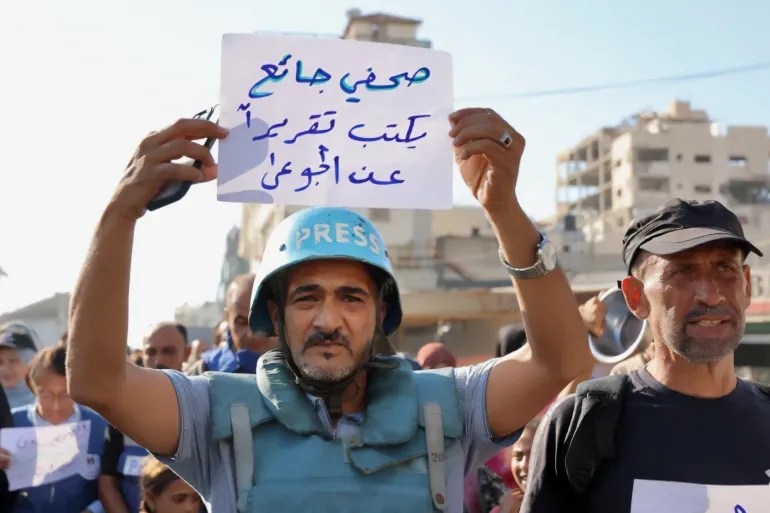
AFP Sounds Alarm Bells About Starving Journalists

Agence France-Presse (AFP) expressed fear its correspondents in the Gaza Strip may starve to death amid the catastrophic conditions of suffering Palestinians in the Strip amidst the Israeli war.

The agency said in a statement on its X platform: “We have been working with a freelance copywriter, three photographers, and six freelance videographers in the Gaza Strip since the departure of its permanent journalists in early 2024.”

The agency, founded in 1944, added: “Today, they, along with a few others, are the only ones still covering what is happening inside the Gaza Strip, after international media outlets were banned from entering the territory for nearly two years.”

The French news agency explained Bashar, who worked with the agency since 2010, “started as a field assistant, then as a freelance photographer, and since 2024 has become the main photographer.” The agency added on Saturday, July 19, he managed to post a message on Facebook saying: “I no longer have the strength to work in the media. My body is thin and I can’t work anymore.”

Bashar, 30, works in conditions similar to those of all Gazans, moving from one refugee camp to another depending on the Israeli bombardment.

“For more than a year, he has been living in abject poverty and continues his work amid grave risks.” AFP added “hygiene has become a major problem for him. He suffers from severe diarrheal illnesses, and since February, he has been living in the ruins of his home in Gaza City with his mother, his four brothers and sisters, and the family of one of his brothers.”

The Agency continued: “His house is devoid of furniture, electricity, and water, and he lives on what some of his relatives provide. On Sunday, he reported that his older brother had fallen due to… Hunger.”

Although these journalists receive a monthly salary from the French agency, it barely covers, or does not cover, the skyrocketing market prices. The banking system is broken, and the intermediary who transfers funds from foreign accounts to the Gaza Strip takes a commission of nearly 40%.

The agency explains that it “cannot provide its team with equipment or even enough fuel to travel to do their work,” noting that “traveling by car is tantamount to risking becoming a target for Israeli airstrikes.” Therefore, its correspondents travel “on foot or on donkey carts.”

Ahlam, for her part, confirms that “the biggest problem she faces is the lack of food and water.” The journalist, who lives in the southern Gaza Strip, adds: “Every time I leave the tent to cover an event, conduct an interview, or document an incident, I don’t know if I’ll return alive.”

We see them collapsing.

The agency says: “They are young and their strength is fading, and most of them no longer have the physical ability to move within the Gaza Strip to do their work. Their calls for help, torn apart, have become daily.”

She adds: “A few days ago, we realized from their text messages that their strength was no longer sufficient, that they were no longer even able to deliver news to us, so let them tell you the truth from there.”

Bashar is quoted as writing, Sunday: “For the first time, I feel defeated. More than three years of hell, and we no longer find the words to explain to the world that we live daily between death and hunger. I hope that Mr. Macron will help me escape this hell.”

His colleague Ahlam says: “I am trying to continue my work, to give a voice to the people, to document the truth despite all attempts to silence it.” Resistance is not an option, but a necessity.

More than 225 journalists have been martyred in Gaza since the beginning of the Israeli aggression on October 7, 2023, as part of the Israeli occupation’s plans, using all means at its disposal, to obscure the truth, change the image, and prevent foreign journalists from entering Gaza.

Since its founding in 1944, Agence France-Presse, despite its permanent presence in conflict zones, has not witnessed the death of any of its employees from starvation.

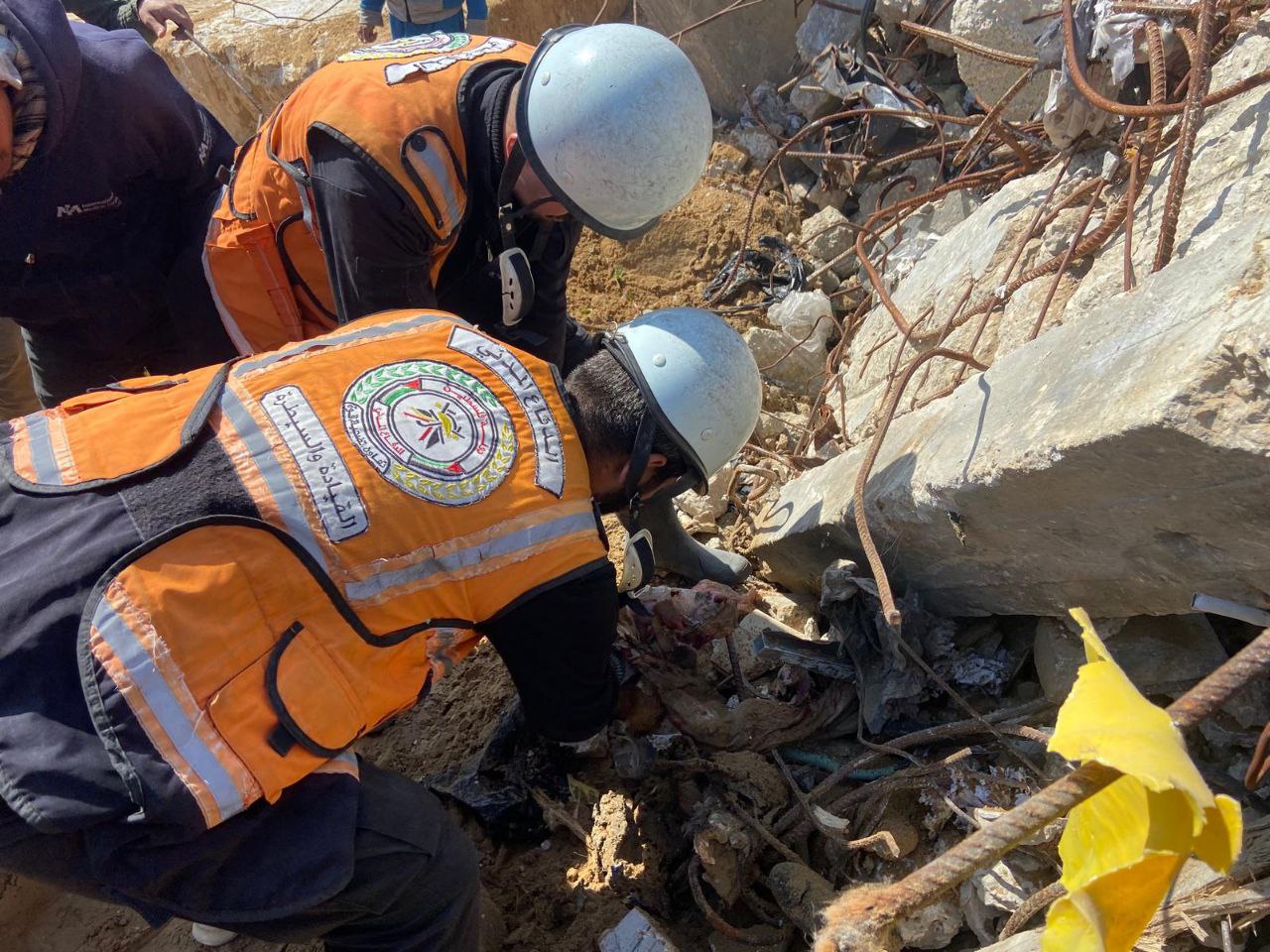
The Ministry of Health in Gaza confirmed that the Israeli starvation policy has led to the deaths of more than 900 Palestinians—including 71 children—due to hunger and malnutrition, in addition to 6,000 wounded among those seeking a livelihood since the beginning of the Israeli war of extermination on the Gaza Strip.

Palestinian and international organizations have warned that the Gaza Strip is currently experiencing the worst stages of famine as a result of the Israeli starvation policy as reported in Jo24.

Continue reading
Mad President and Street Brawl

By Dr Khairi Janbek

People from my generation remember a pop group which used to sing a song called the lunatics have taken over the asylum. Now, they were not themselves lunatics but merely performing for their audience and their fans, in the same manner. Neither Trump nor his band wagon are necessarily a bunch of thugs, but they are merely performing for their fans and audience.

However one cannot find any reason for world leaders to go to the Oval Office in order to provide US president Donald Trump with the material to entertain his fans and audience.

He ambushed King Abdullah of Jordan with the entry of journalists when that was not supposed to happen in order to market his absurd Gaza plan, president Emmanuel Macron of France provided him with the opportunity of posturing as an antagonist to the EU, prime minister Keir Starmer provided him with the opportunity of showing what Britain was groveling for – a free trade agreement and a role of being a bridge between the US and EU.

Ironically however, the worst of the Trump performance was left for Volodymr Zelensky, though his trip was the only one that made sense.

Zelensky for all intents and purposes, went to sign an agreement to hand the resources of Ukraine to America, but suddenly the situation deteriorated to almost a street brawl. Why? The whole thing was agreed upon by both sides from the start.

Of course, Zelensky expected a protection commitment from the USA in exchange for the mineral resources, but in fairness, without an explicit US commitment protection would have been implicitly there since supposedly, American companies and workers would be working in Ukraine, so what has actually happened to derail the whole agreement?

Of course, any such agreement with potential implicit US protection of Ukraine, is totally against Russian interests, especially according to some speculation, Putin has the intention to occupy the whole of Ukraine, therefore the talk in the corridors, is that Putin has offered Trump the exploitation of Ukrainian resources in the occupied territories of Russia, which in effect sabotaged the minerals agreement between US and Ukraine, and rescued Trump from having to give security guarantees; albeit implicit to Ukraine.

Now, at the peril of repeating the usual cliche of the EU facing a crossroad on its path, something which had happened frequently, this time it’s in fact different. The truth is that the US has been distancing itself from the EU at least from the days of president Obama, but the difference now is that the EU is being attacked by both the US and Russia, and finds itself as the large leviathan with clay feet unable to move.

The dilemma of differences within the EU are prominent, with full support for Ukraine, with some having lukewarm support, while some with no support at all, moreover the NATO future is hanging in the balance, to keep or not to keep that is the question, but what is the alternative? A European army which is yet to crystallize as an idea, or just drop all the effort?

What it boils down to now, is the idea of leadership of the “Free World”, certainly this notion has always been a nebulous idea, still, the US stood by it and projected its image accordingly, but now, it seems the US is not interested in world affairs except in what it can exploit and use and abuse for its own interests, which means, who will be the new leader of the Free World?

In fact, is there a need for a leader of the free world assuming that there is such a world? If the EU has any such pretensions, then big changes are necessary within its membership as it must be realized the road is very long for such an objective. But in the mean time, we have to settle for the theory of the mad president, ie. Trump would do anything, and peace by force with an oxymoron.

Dr Janbek is a Jordanian writer based in Paris.

Continue reading
Is America Abandoning Europe?

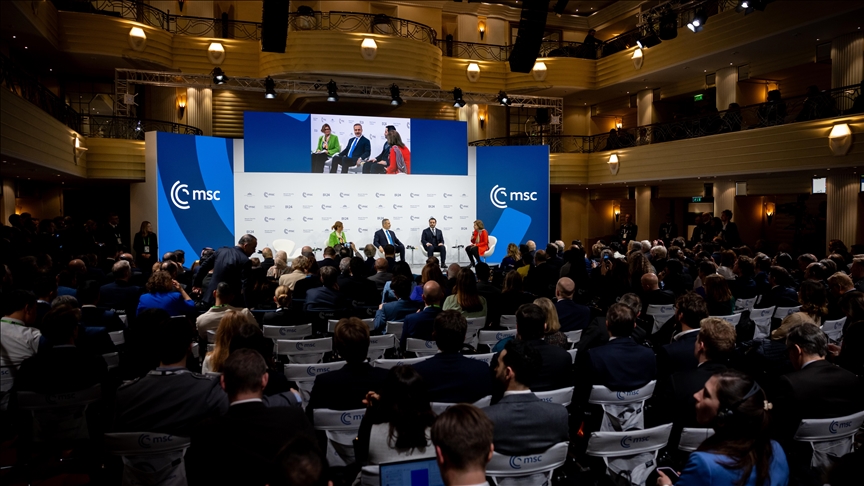
In 2007, Russia’s President Putin gave a now-infamous speech at the Munich Security Conference (MSC), announcing Russia’s new posture of hostility towards the US and Europe. In 2022, when Russia invaded Ukraine, many looked back at Putin’s 2007 Munich speech as a revealing moment of his intentions.

This year’s MSC could be a similar watershed. This time, the warning bells ring from across the Atlantic. US Vice President JD Vance delivered one of the most hostile speeches by a US official to Europe in decades. Rather than addressing the Russian or Chinese threats, Vance argued that Europe faced a “threat from within,” accusing the EU and national governments of censorship and ignoring popular demands on issues like illegal migration.

Meanwhile, away from Munich, US President Donald Trump held a phone call with Putin, setting the stage for negotiations between the US and Russia for a peace agreement in Ukraine – without involving European counterparts in the discussions. The day before, Defence Secretary Pete Hegseth announced some of the US expectations from this deal: Ukraine should drop its NATO membership bid, European countries would need to provide the forces to enforce the agreement, and these forces would not be covered by NATO’s Article 5 guarantees.

The transatlantic picture in which the MSC took place was even bleaker. Since Trump’s inauguration one month ago, the new president had promised (and now imposed) tariffs against countries across the world, including Europe. He has threatened to annex the territory of allies like Canada and Denmark.

Normally, the MSC is an opportunity for the United States to reaffirm its commitment to Europe and the Atlantic alliance. This year, it could be remembered as the time when the US started the process of abandoning Europe – or even going aggressively after it.   

An attack on Europe

Vance’s speech and the reactions to it have dominated the discussions at the MSC. Although the conference theme was “multilateralization”, the real topic on everyone’s mind was: how would Trump’s second administration approach Europe?

As the pre-conference report argued: “Donald Trump’s presidential victory has buried the US post–Cold War foreign policy consensus that a grand strategy of liberal internationalism would best serve US interests.” That this consensus was gone was clearly visible in the conference. Despite perfunctory references to shared values, Vance’s speech did not talk about the alliance between Europe and North America, nor about the common threats and how to face them.

And he has voiced support for anti-EU parties. Vance pronounced his speech in Germany, just weeks before federal elections, and argued that there should not be “firewalls” in government – a clear reference to the far-right Alternative für Deutschland (AfD) which has so far been kept out of governing coalitions. After the speech, Vance met with the AfD leader.

Additionally, Vance criticized Romania for canceling its 2024 elections and accused the EU of censoring free speech. But Vance failed to acknowledge that the very election that brought Trump and him to power in November was the subject of major foreign interference by Russia, China, and Iran. Rather than sitting idly by, US agencies took active measures to counter these malign actions and prevent disruptions – like raising awareness, coordinating with the media, and keeping politics out of the fight. With his speech, Vance seems to be arguing for the exact opposite approach.

All these issues did not touch on security and defense, the core of the MSC’s discussions. But they did lure in the background of Vance’s speech. A few months ago, Vance argued that the EU should not regulate tech companies owned by Elon Musk. If the Europeans did so, he argued, the US should reduce its security commitments to NATO. Hence, American assurances could become bargaining chips to resolve other issues.   

How will the EU respond?

Vance’s Munich speech marks a new era in US relations with Europe. While the themes are not new – Trump has never been a fan of NATO, and enjoys courting Europe’s far-right – the extent of the rhetorical change cannot be understated. Ukraine’s President Zelensky, speaking in Munich the day after Vance, spelled out the challenge in clear terms: “We can’t rule out the possibility that America might say ‘no’ to Europe on issues that threaten it.”

The reaction from European leaders has been strong so far. EU Commission President Von der Leyen called for an emergency clause in the EU treaties to allow member states to boost defense spending [8]. French President Macron called for a summit of European leaders in Paris on Monday, February 17 – to sketch out a common position on the upcoming negotiations over Ukraine, and on making up for US security guarantees from Europe.

The greatest challenge, however, will be transforming outrage into meaningful action. Europeans have long ignored calls to take charge of their own security. Domestic constraints over spending, divisions and the continued belief that Uncle Sam will have their back have stood in the way of ambitious choices. Will this time be different?  

This opinion was written by Giuseppe Spatafora for the Anadolu news website.

Continue reading
Macron Says No to Gaza Expulsions

French President Emmanuel Macron has called for “respect” for Palestinians, rejecting US President Donald Trump’s reported plans for the mass deportation of Gazans.

Speaking to CNN on Tuesday, Macron said: “You cannot say to 2 million people, ‘okay, now guess what? You will move’,” emphasizing that this is not a matter of “real estate” but a “political operation.”

Macron also said any “efficient” response to rebuilding Gaza “doesn’t mean automatically that you should lack respect to people or countries,” highlighting the wishes of Palestinians to remain in their homelands and the unwillingness of both Jordan and Egypt to accept large numbers of Gazan refugees according to Anadolu.

France has voiced support for “Israel’s right to defend itself” following Oct. 7, 2023, while Macron criticize Israeli operations and policies on multiple occasions.

“I always reiterated my disagreement with (Israeli) Prime Minister Netanyahu,” Macron said. “I don’t believe, once again, that such a massive operation targeting sometimes civilian people is the right answer.”

France suspended arms exports to the Israel Defense Forces in October 2024, calling on other nations to follow suit.

On Feb. 4, Trump announced at a news conference with Israeli Prime Minister Benjamin Netanyahu that the US intended to seize Gaza and relocate its Palestinian population to neighboring countries, including Egypt and Jordan.

Trump’s plan has faced widespread rejection from Palestinians, Arabs, and the international community while receiving significant political support within Israel across various factions.

The Israeli attacks have killed over 48,200 Palestinians and devastated Gaza since the war on the enclave began on Oct. 7, 2023.

Continue reading
Trashing….

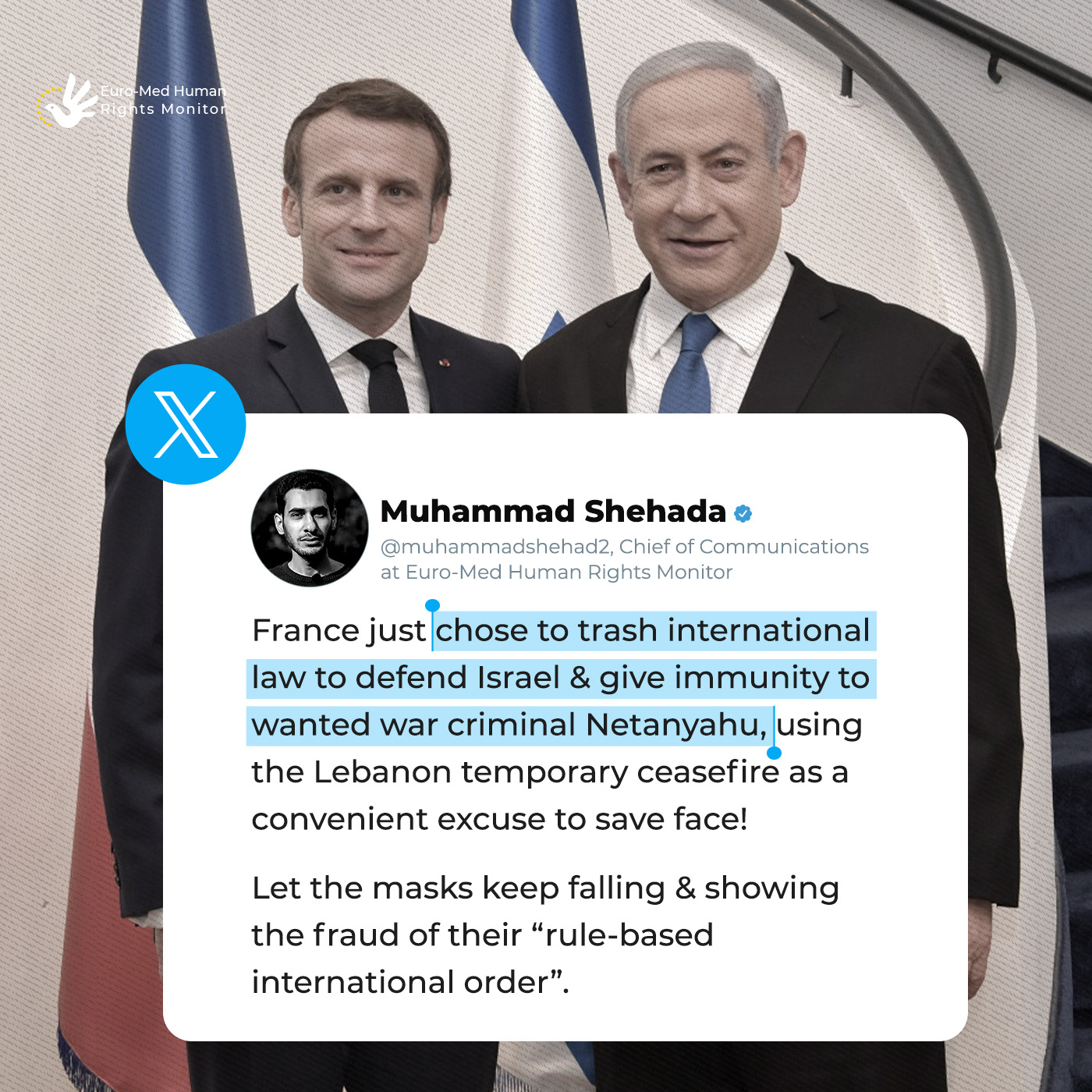
CEOSSFIREARABIA – At first France said it would adhere to the decision of the International Criminal Court and arrest Israeli Prime Minister Benjamin Netanyahu if he landed in Paris because he is wanted as a war criminal.

This angered Netanyahu. In a private telephone call with President Emmanuel Macron, the two leaders had a terse conversation on the international legality of the ICC decision. Netanyahu questioned its validity in the strongest manner.

While this was going on, France was interested in reaching a ceasefire deal on Lebanon and Hezbollah. Israel started another battle on its northern borders come mid-September and was busily attacking south Lebanon up to Beirut’s south district, seen as a Hezbollah stronghold.

The French government soon started its diplomacy and started to push for a ceasefire. Thus the context became that if France waived the Netanyahu arrest and that of his ex-Defense Minister Yoav Gallant, should they travel to France, a deal can be reached on Lebanon.

And thus a 60-day ceasefire was finally reached; this was a ceasefire that could be extended.

Meanwhile France needed to provide its pretext for “arresting/not arresting Netanyahu” if he landed in France. Excuses had to be made: Israel wasn’t privy to ICC decisions because it was not a signatory to the world body as well it was felt that that Netanyahu couldn’t be arrested because he was a sitting prime minister.

This meant that the whole issue was becoming very confusing. But the ICC decision was binding on all 124 of its members in the world that includes France which is bound to follow the decisions of the international court with no excuses!

This political diplomacy maybe water on a duck’s back because Netanyahu is still promising that he will go after Hezbollah soon ant that means an Israeli war on Lebanon is likely to start again in the near future.

But is this likely as well, since the north of Israel is clearly devastated and neither the Israelis nor their army would prefer to see war re-starts again. For the time being however, its touch and go.

Continue reading