Killing Gaza Slowly

By Tarek Bae  

OPINION - Slaughter dressed up as humanitarian aid: So-called Gaza Humanitarian FoundationFile Photo

“Gaza is on the verge of economic and humanitarian collapse. People live day to day, always at risk from hunger and disease,” notes a UN report. Yet these words were written not in 2025, but by the Independent UN Commission of Inquiry on Gaza in 2019.

Israel has enforced a blockade on the Gaza Strip since 2007. No one and nothing enters or leaves without Israeli permission, including at the crossing to Egypt. Every import and every exit requires an application to Israeli authorities. Human Rights Watch has repeatedly called Gaza the world’s largest open-air prison. Between 2017 and 2021, Israel blocked materials needed to maintain the water system. In 2017, the UN stated that 97% of Gaza’s water was undrinkable. Oxfam concluded the same year that Gaza was the most water-scarce place on earth.

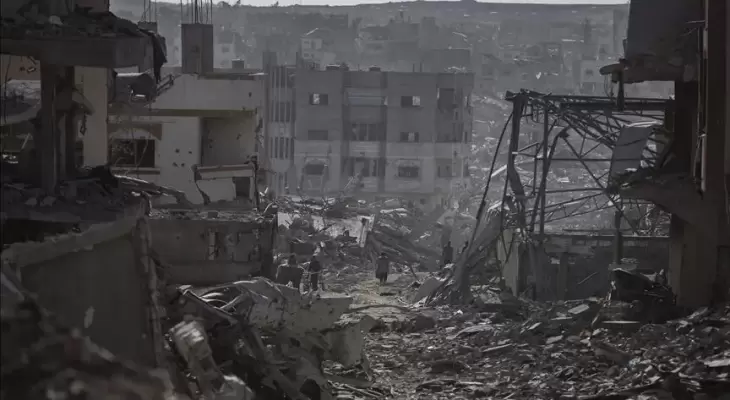
From 2023 onward, Gaza became the target of genocide. From the first days, the blockade on essentials was radically expanded. On Oct. 8, 2023, then-Israeli Defense Minister Yoav Gallant announced there would be “no electricity, no food, no fuel,” because Israel was fighting “human animals.” The total blockade, combined with unprecedented bombardment, turned Gaza into the greatest humanitarian crisis of the 21st century.

During this genocide, international agencies, especially the UN, struggled to keep civilians alive. More than 400 distribution points tried to provide the bare minimum. Political pressure was needed again and again. There were 11 UN resolutions in all, 4 by the Security Council, 5 by the General Assembly and 2 by the Human Rights Council, calling on Israel to enable sufficient humanitarian aid. Israel dismantled every channel through which aid could be delivered. More than 900 humanitarian workers have been killed in Gaza since the genocide began. Never before in any war has the toll on aid workers been so high.

Netanyahu’s starvation strategy

By March 2025, the total blockade hardened into an open starvation strategy. “We have decided to stop all deliveries into Gaza, including food, water and aid,” Prime Minister Benjamin Netanyahu declared on March 2, 2025.

Barely two months later, in May, Israel and the US rolled out the so-called Gaza Humanitarian Foundation (GHF). This, Israeli officials said, would be the new and only route for humanitarian aid. Rumors of a new distribution mechanism had circulated since February, a design Israel was planning with US partners. Coverage of those plans was overshadowed by Donald Trump’s “Gaza Plan.” In a joint press conference with Prime Minister Netanyahu in Washington on Feb. 4, 2025, Trump publicly declared the intention of the US to “take over” the Gaza Strip. That the GHF sits inside this vision follows from statements by GHF officials. In June 2025, Executive Chairman Johnnie Moore Jr. said: “The United States will take full responsibility for the future of Gaza.”

It is not a purely American venture. Logistical coordination at the GHF is led by Israeli Brigadier General Yaakov Baruch. Despite its name, the GHF is not a foundation; it is a political-military organization. Alongside the Israeli military, mercenaries from the US are involved. According to The Times of Israel, Jared Kushner, son-in-law of Trump, is the chief architect of the idea. The US initially put €30 million ($35 million) into the project, with further pledges. In July 2025, Trump complained that no one had expressed gratitude. But what exactly should anyone thank the GHF, Israel, or the US for? GHF spokesperson Shahar Segal offers an answer. “It is frustrating to see people constantly blaming Israel, when in reality it is Israeli logistics that ensure humanitarian food reaches those who desperately need it. The GHF model is saving lives.”

Is that true? No. Among the familiar set of claims used to relativize the genocide is the allegation that allowing international aid only helps Hamas. Again and again, the line is that aid never reaches civilians. Another claim is that Hamas steals humanitarian supplies. The conclusion is clear: this is propaganda. Videos of armed guards on trucks or of lootings by armed gangs have been presented by Israel, in a misleading fashion, as Hamas seizures.

A review by the United States Agency for International Development examined 156 incidents of loss or theft of US-funded aid between October 2023 and May 2025. It found not a single piece of evidence that any of those incidents could be attributed to Hamas. In 44 cases, there were links to Israeli military activity. Reuters reported that Israeli military offices had produced no evidence of systematic theft by Hamas. The New York Times cited sources inside Israel’s government who acknowledged they had none either.

From 400 aid points to 4 militarized sites

Is the GHF more effective at distributing aid? Not at all. Instead of the 400 international distribution points that once existed, Israel’s blockade and the imposition of the GHF have left only 4 highly militarized sites, with just 1 in the densely populated north. The UN calculates that Gaza’s basic humanitarian need amounts to around 600 truckloads a day. By its own account, the GHF moves at most 26 truckloads daily, roughly 4% of what is required. In a territory facing acute hunger, such an amount is not small—it is nothing.

According to the IPC Famine Review Committee, the whole of Gaza has been in IPC Phase 5 since July, the highest alert, a catastrophic food emergency. People in this phase are at immediate risk of starvation. More than 700,000 people have gone days without any food. The UN special rapporteur on the right to food, Michael Fakhri, was blunt: “Israel has made clear its intention to starve everyone in Gaza.”

What Israel and the US call a distribution mechanism and a foundation is, in the words of Doctors Without Borders, “slaughter dressed up as humanitarian aid.” Starving civilians are forced to walk up to 40 kilometers (25 miles) under the burning sun to reach GHF sites. Arrival does not guarantee help. More than 1,881 starving civilians have been killed at or near GHF distribution sites. The Israeli army regularly fires indiscriminately into the waiting crowd.

Philippe Lazzarini, Commissioner-General of UNRWA, calls the GHF “an alibi for the systematic starvation of Gaza.” For him, the logic is clear. Israel destroyed the humanitarian infrastructure in order to replace it with a facade organization under military control. OCHA spokesperson Jens Laerke sees in the GHF a “distraction.”

What does it distract from? Netanyahu has said the plan out loud. On May 11, according to the Israeli outlet Maariv, he tied aid to permanent expulsion. Those who receive aid at a given place should never see that place again and must evacuate. “The residents of Gaza whom we are expelling will not return. They will no longer be there. We will control the place. There is no other war aim. All other goals are mere eyewash.”

By the Israeli government’s own account, the GHF is a means to drive Palestinians out of Gaza or to let them die, by deliberately starving them, denying supplies, and cutting off humanitarian aid.

*The author is the editor-in-chief of the German journal itidal.de. The opinions expressed in this article are the author’s own and do not necessarily reflect Anadolu.

Continue reading
Israel Kills 540 Kids Every Month – UN

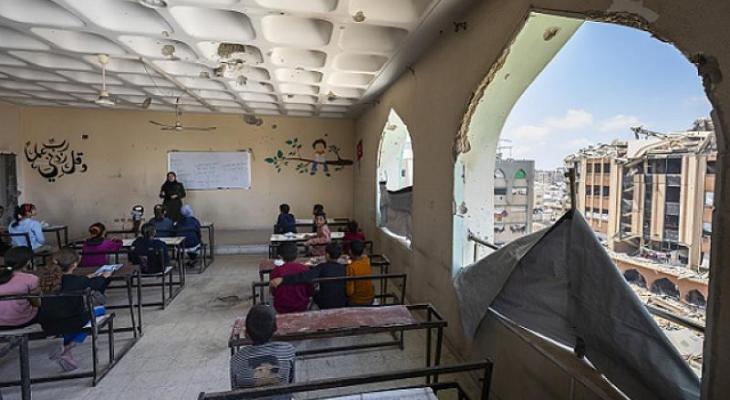
An average of over 540 children have been killed every month in Gaza since the resumption of Israeli attacks on the enclave in March, the UN Children’s Fund (UNICEF) said Tuesday, as the UN agency for Palestinian refugees (UNRWA) warned that its shelters have become “places of death” for civilians.

“In Gaza, UNRWA schools have become shelters for hundreds of thousands of people,” UNRWA said in a statement on the US social media company X according to Anadolu.

“People sought protection under the UN flag only for these shelters to become a place for death, including for too many children.”

“No place is safe for children in Gaza,” the statement added, calling for an immediate ceasefire.

UN agencies have warned of the devastating impact of Israel’s ongoing military campaign on Gaza’s children, as schools, hospitals, and homes are being relentlessly targeted.

According to Gaza’s Health Ministry, famine has killed at least 266 Palestinians, including 112 children, since October 2023, amid a worsening blockade and severe aid shortages.

Israel has killed more than 62,000 Palestinians in Gaza since October 2023. The military campaign has devastated the enclave, which is facing famine.

Last November, the International Criminal Court issued arrest warrants for Israeli Prime Minister Benjamin Netanyahu and his former Defense Minister Yoav Gallant for war crimes and crimes against humanity in Gaza.
Israel also faces a genocide case at the International Court of Justice for its war on the enclave.

Continue reading
Jordan’s PM: ‘Greater Israel’ Illusion

Jordanian Prime Minister Jafar Hassan on Tuesday called the so-called “Greater Israel” vision an “illusion,” stressing that Tel Aviv is “isolated” due to its “extremist” policies.

“We hear about visions and proposals that imply a perpetual war with no end, such as the illusion of Greater Israel entertained by extremist politicians in Israel,” Hassan said during a meeting in Amman with his Lebanese counterpart, Nawaf Salam, who arrived in the Jordanian capital early Tuesday for an unannounced visit.

He said Israel is “isolated and besieged because of its extremist policies.”

“The entire reality points to (Israeli) policies that deepen hatred and resentment as a result of ongoing massacres, and the peoples of the world and the region will not forgive them,” he added in his comments carried by the official Petra news agency.

On Monday, Jordanian government spokesman Mohammad al-Momani accused the far-right in Israel of “threatening the region and undermining prospects for a two-state solution.”

“Greater Israel” is a Biblical term used in Israeli politics to refer to the expansion of Israel’s territory to include the West Bank, Gaza, Syria’s Golan Heights, Egypt’s Sinai Peninsula, and parts of Jordan.

Last week, Israeli Prime Minister Benjamin Netanyahu told a news channel that he feels “very attached” to the vision of a Greater Israel. He said he considers himself “on a historic and spiritual mission” which “generations of Jews that dreamt of coming here and generations of Jews who will come after us,” according to Anadolu.

Israel has killed more than 62,000 Palestinians in Gaza since October 2023. The military campaign has devastated the enclave and brought it to the verge of famine.

Last November, the International Criminal Court issued arrest warrants for Netanyahu and his former Defense Minister Yoav Gallant for war crimes and crimes against humanity in Gaza.

Israel also faces a genocide case at the International Court of Justice for its war on the enclave.

Continue reading
Amnesty: Israel is Starving Gaza Deliberately

Amnesty International on Monday said that Israel is carrying out a “deliberate campaign of starvation” in Gaza after it published new testimonies of starved civilians.

“Israel is carrying out a deliberate campaign of starvation in the occupied Gaza Strip, systematically destroying the health, well-being and social fabric of Palestinian life,” Amnesty International said in a statement as it published chilling new testimonies of starved displaced civilians.

It noted that the ongoing hunger and disease in Gaza is not an “unfortunate byproduct” of Israel’s military operations but rather an “intended outcome of plans and policies” that Israel has designed and implemented according to Anadolu.

“As Israeli authorities threaten to launch a full-scale ground invasion of Gaza City, the testimonies we have collected are far more than accounts of suffering, they are a searing indictment of an international system that has granted Israel a license to torment Palestinians with near-total impunity for decades,” said Erika Guevara-Rosas, senior director for Research, Advocacy, Policy and Campaigns at Amnesty International.

Pointing to the “catastrophic” consequences of Israel’s blockade and genocide for civilians, she noted that its impacts “cannot be undone” by increasing the number of aid trucks or “restoring performative, ineffective and dangerous airdrops of aid.”

“Palestinian children are being left to waste away, forcing families into an impossible choice: helplessly hearing the cries of their emaciated children pleading for food, or risking death or injury in a desperate search for aid,” Guevara-Rosas added, underlining that Israel’s deliberate and systematic campaign of starvation continues to inflict “unbearable suffering” on an entire population.

She stressed that most families in Gaza are “beyond breaking point,” warning that an “already catastrophic situation” could descend into even “deeper horror” if Israel proceeds with its plan of a full-scale ground invasion of Gaza City.

“The world cannot continue to pat Israel on the shoulder for trickling in aid and viewing these cosmetic measures as a sufficient response to its calculated destruction of the life of Palestinians in Gaza,” Guevara-Rosas further said.

She also urged the international community to uphold their moral and legal obligations to bring an end to Israel’s ongoing genocide.

“States must urgently suspend all arms transfers, adopt targeted sanctions and terminate any engagement with Israeli entities when this contributes to Israel’s genocide against Palestinians in Gaza,” Guevara-Rosas added.

Israel has killed more than 61,900 Palestinians in Gaza since October 2023. The military campaign has devastated the enclave, which is facing famine.

Last November, the International Criminal Court issued arrest warrants for Israeli Prime Minister Benjamin Netanyahu and his former Defense Minister Yoav Gallant for war crimes and crimes against humanity in Gaza.

Israel also faces a genocide case at the International Court of Justice for its war on the enclave.

Continue reading
‘When Israel Stole My Eyes…’

By Fatina Abu Mustafa

Blood covered my face. My hair was burning. The fire in my hair was the only light I could see,” Tasneem whispered, recalling the night her world collapsed.

I can’t imagine an end to this war. I can’t even define the peace of imagining what it would look like, because war has stolen everything from Gazans, even the light in their eyes.

Just months earlier, 19-year-old Tasneem was preparing for her tawjihi, Palestine’s crucial high school exams that decide a student’s future. Like thousands of other students in Gaza, she dreamed of scholarships, university, and a life beyond the blockade. Instead, she was fighting to keep her eyesight, grieving her sister and father, and carrying her schoolbooks through displacement camps.

Her story is one among thousands. According to Gaza’s Ministry of Education, 15,553 school students and 1,111 university students have been killed since the genocide began. Another 23,411 schoolchildren and 2,317 university students were injured, many left permanently disabled. For Gaza’s youth, war has not only destroyed classrooms but also their bodies and futures.

The Night That Changed Everything

It was October 10, 2023, at 2:30 a.m. in Bani Suhaila. Tasneem and her sister Hadeel stood at the window when shelling lit up the street near the Asfour station.

“Suddenly, smoke, dust, and fire blinded me,” Tasneem said. “Blood covered my face. My hair caught fire. I couldn’t see. I couldn’t breathe. My hair burning was the only light around me.”

When she looked back, she saw Hadeel lying on the floor in flames. “That moment is the hardest I’ve ever lived through,” she said through tears.

Tasneem stumbled down the stairs as flames consumed the upper floor. Shattered glass cut deep into her feet. Her leg broke when she slipped. Outside, the sky glowed red and the streets burned.

“I sat on the street with my hands on my head,” she recalled. “I just wanted this nightmare to end.”

Tasneem, after her last surgery in Gaza — blind in one eye, barely seeing with the other.

Loss Upon Loss

Tasneem thought her entire family had died. Whispering the shahada, she braced for death. But her parents were alive, and in the chaos her mother tried to comfort her. “Mama, my face is all distorted. I can’t see, only blood,” Tasneem cried. Moments later, they discovered the unbearable truth: Hadeel had been martyred.

Her injuries were severe; a burst eyeball, retinal detachment, and deep cuts that required stitches. Gaza’s hospitals, overwhelmed and starved of resources, made her wait hours before doctors could treat her.

Just three days later, tragedy struck again. Her father, Adli Baraka, was killed in another Israeli strike. “I felt like I lost all my vision and hope,” she said.

The Fight for Sight

On October 11, a private doctor warned her family that her condition was critical. Without immediate surgery, she would go blind. With Gaza’s health system collapsing, the operation was performed without anaesthesia, crude stitches to hold her eye together.

The Ministry of Health in Gaza reports that around 1,500 people have already lost their eyesight during this genocide, while another 4,000 are at risk due to shortages of medicine and equipment. UNRWA has warned of catastrophic consequences as Israel continues to block vital aid, including supplies for eye surgeries.

For Tasneem, the pain was relentless. Doctors warned her not to cry, not to stress, not to strain her eye. But how could she obey, when she had just buried her sister and father, and was living under bombardment?

Dreams Against the Rubble

On November 3, 2023, after weeks of delays, Tasneem was finally evacuated to Egypt for emergency surgery. By the time she arrived, her right eye was blind. Surgeons injected silicone oil in hopes of saving her remaining sight.

Despite advice to stay in Egypt and continue treatment, Tasneem returned to Gaza. Her younger siblings were still there, and after her father’s death, she couldn’t abandon her mother. She gave up comfort and medical care to be with her family.

Tasnim Baraka after undergoing surgery on her eye in Egypt, November 2023. Her mother took this photo as they hoped for a chance at healing after weeks of devastation.

Now she lives in a tent, suffering headaches, worsening pain, and the weakening of her other eye. And yet, she studies. Every time she fled — from Bani Suhaila, then Rafah, then Deir al-Balah — she carried her schoolbooks with her.

“The doctors told me reading could make my eyes worse,” she admitted. “But I still took my books. They are my last hope.”

Her books are not just paper and ink; they are her defiance. In a genocide that has stripped her of almost everything, they are the one dream she refuses to surrender.

The Unseen Wounds of War

The physical injuries are only part of Tasneem’s struggle. Shame keeps her indoors. “When I wear the eye patch outside, I feel so ashamed,” she said. “I’m a young girl who wants to live like other young ladies.”

Her mother, Ghada, reminds her daily that she is beautiful, no matter the scars. But emotional healing is nearly impossible in a place with no safe spaces, no medical aid, and no support for trauma survivors. Every step of Tasneem’s recovery has come not from international organizations, but from her family’s sacrifice.

A Message to the World

When I asked Tasneem what she wants now, her answer was simple:

“I wish the war would end. I want the suffering to stop. I want proper medical care for my eye and to continue my education like other girls. I don’t want to lose my eyes — I need them as a child needs something with all of its heart.”

Tasneem’s story is one of tens of thousands. Gaza’s children are not just casualties of bombs; they are being starved, blinded, and denied the chance to learn. Her voice is a reminder that these are not numbers — they are young lives, interrupted but still fighting.

“Put yourselves in our place,” Tasneem said, her one good eye filling with tears. “You couldn’t live one minute as we do.”

Quds News Network

Continue reading