Deflecting Netanyahu’s Problems
 CrossFireArabia
- June 20, 2025
By Jonathan Fenton-Harvey
Just a day before launching airstrikes on Iran, Israeli Prime Minister Benjamin Netanyahu, facing bribery and fraud charges, narrowly survived a Knesset vote that could have collapsed his government. Alongside the legal charges, Netanyahu’s domestic popularity has plummeted over corruption, economic woes and failures to return Israeli hostages from Gaza. But for Netanyahu, the war offered more than military momentum: It has given him a temporary reprieve.
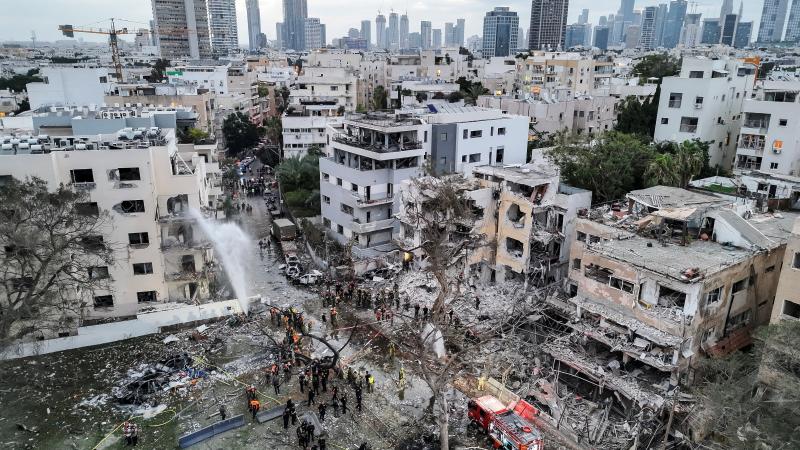
Within days, Israeli airstrikes reportedly weakened Iranian nuclear and military infrastructure, eliminated senior military figures, and killed hundreds of civilians. On X, Israeli Defense Minister Israel Katz claimed “civilians in Tehran will pay a collective price,” signaling a destructive intent. As Iran has hit back, firing missiles at Israeli infrastructure and cities, diplomacy over Iran’s nuclear program has all but collapsed.
Even if a ceasefire occurs, Israeli-Iranian tensions have escalated to near irreversibility as long as both the current Israeli and Iranian governments remain in power. Israel presents the assault on Iran as a necessary move to neutralize its nuclear ambitions, a claim repeated over the years, despite the lack of convincing evidence that Tehran was close to building a nuclear bomb. In reality, the war is driven more by Netanyahu’s personal survival than just Israel’s.
As with Israel’s prolonged onslaught on Gaza, this conflict appears designed to consolidate domestic support – attempting to rally the population around the image of an existential enemy – just as it did with Hamas and the Palestinians in Gaza. That same logic extended into Lebanon, where Israel’s assault weakened Tehran’s ally Hezbollah and coincided with a jump in public approval for Netanyahu’s Likud party. But with neither Gaza nor Lebanon yielding lasting political dividends, Iran has become the next catalyst in Netanyahu’s survival strategy.
A fragile government
For Netanyahu, projecting external threats has not only been a means of consolidating power, but also unity. His government, already fragile, is also caught between deeply divergent factions – secular versus ultra-Orthodox, nationalist versus technocratic. This internal fragmentation of Israeli civil society raised the specter of a looming civil war, warned of even before the Gaza war. But Israel’s wars and the projection of external enemies aim to unify Israeli society, at least for now.
There is also the international dimension. Netanyahu and other officials are wanted by the International Criminal Court over war crimes in Gaza, while Western backers face domestic pressure to end arms sales to Israel. The Israeli initiated Iran conflict has provided Netanyahu with yet another political lifeline as Western governments have clearly aligned with Israel. The G7 and the EU have expressed support for Israel, while the US, UK, Germany and France had pledged to uphold Israel’s security.
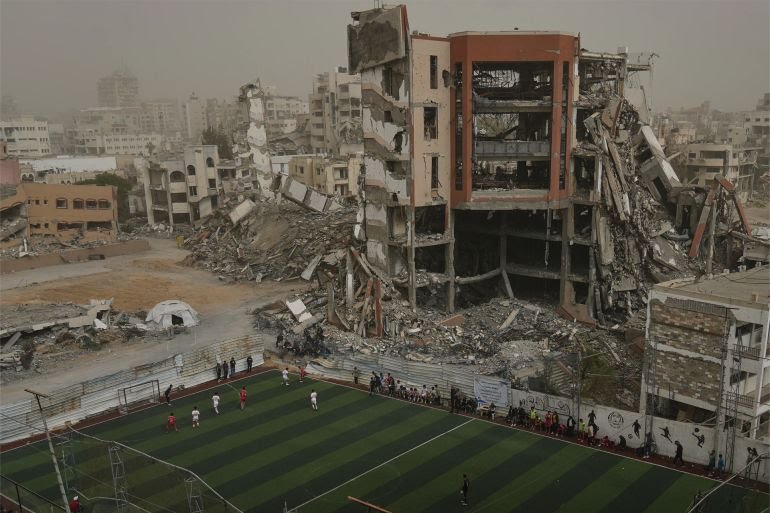
Even though Western public opinion on Israel has shifted recently – including legal cases and political pressure – arms sales are still expected to continue, or even increase. Moreover, the focus on Iran has also taken away spotlight from Israel’s actions in Gaza, which continues to endure Israeli airstrikes and blockade-induced starvation.
Shielded internationally
Before the escalation, US President Donald Trump, however, had taken an unexpected turn. His truce with Yemen’s Houthis and openness to renewed nuclear talks with Iran suggest a willingness to pursue diplomacy – even if it angers Israel. Trump appears caught between appeasing his pro-Israel support base and his America First-driven MAGA base – the latter of which prompted him to override Israeli objections in favor of US interests, namely economic engagement with Iran. Netanyahu is certainly banking on Trump siding with Israel in the event of a deeper escalation with Iran. Trump’s own “urging” of Iranians to leave Tehran signals an alignment with Tel Aviv, even if he may seek to continue keeping the door open for future diplomacy with Iran. Ultimately, the cost of Netanyahu’s bid to maintain his own grip on power is regional instability.
The war has bought Netanyahu time. Less ideologically hardline voices have resigned from his coalition government over failures in Gaza, allowing him to consolidate power around extremist figures like Bezalel Smotrich, Itamar Ben Gvir and Israel Katz. Yet this hardline government, which Netanyahu has fostered to maintain his own position, is further contributing to Israel’s diplomatic and economic isolation. That’ll undoubtedly add to the economic costs of the war on Gaza, which has cost around 10% of its GDP and scared foreign investors off, creating future fiscal instability in Israel.
However, the Netanyahu-led multi-front offensives in Syria, Lebanon, Yemen and now Iran also reflect a notable historic pattern: regimes tend to lash out when they feel increasingly threatened or cornered. Netanyahu’s calculus, partly driven by a sense that Israel is facing compounding global scrutiny for its military operations, may further harm its global image – even if Western governments continue to support Israel’s actions for the time being.
For his own political survival, Netanyahu will resist efforts to halt the violence, unless sustained international pressure forces Israel to halt its operations. Because he knows that, if he ends the wars, he’ll almost certainly face renewed calls for his indictment in Israel, or be unseated in the next Israeli elections, due by October 2026. As such, he has every incentive to prolong the violence unless international pressure forces a change in course. If Trump or other key powers push for de-escalation and accountability, it could shift the trajectory toward regional stability, especially as Iran weighs withdrawing from the Nuclear Non-Proliferation Treaty. Otherwise, Netanyahu’s own instincts risk plunging the region – and inadvertently Israel – into deeper regional instability that could ultimately harm Israel itself.
The author is a researcher and journalist focusing on conflict and geopolitics in the Middle East and North Africa, primarily related to the Gulf region. He has contributed this article to Anadolu