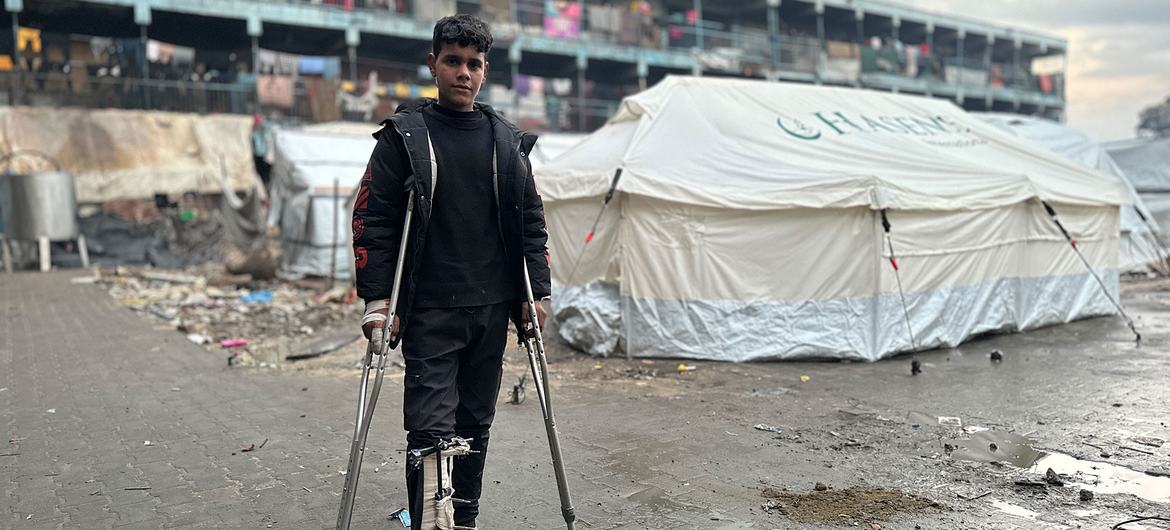
Israel’s decision to block aid to over two million Palestinians in the Gaza Strip as Ramadan begins is a reckless act of collective punishment, explicitly prohibited under international humanitarian law and as Oxfam stated.
Humanitarian aid is not a bargaining chip for applying pressure on parties, but a fundamental right of civilians experiencing urgent need in challenging and life-threatening circumstances.
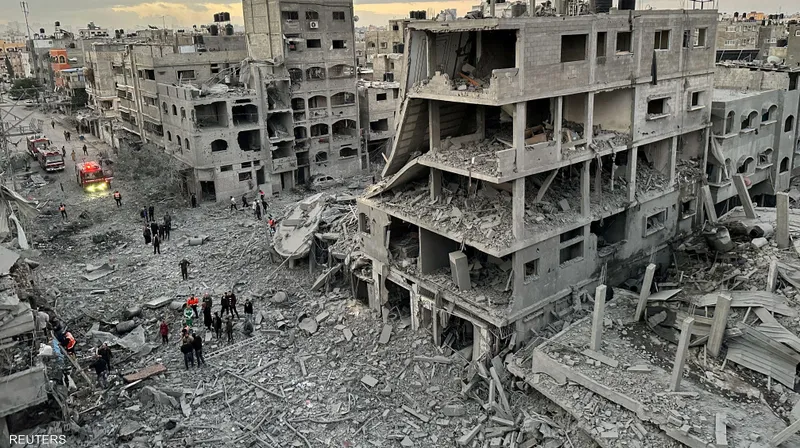
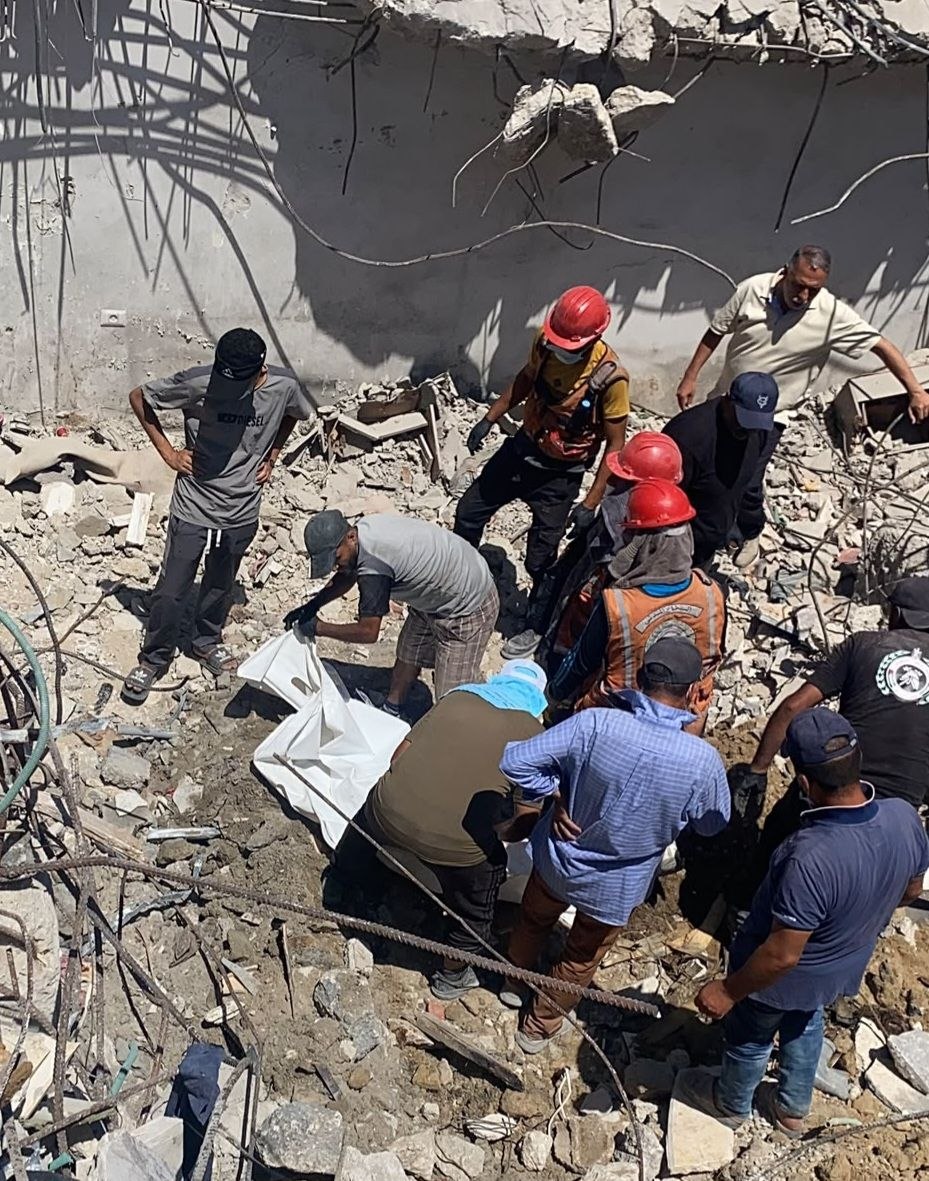
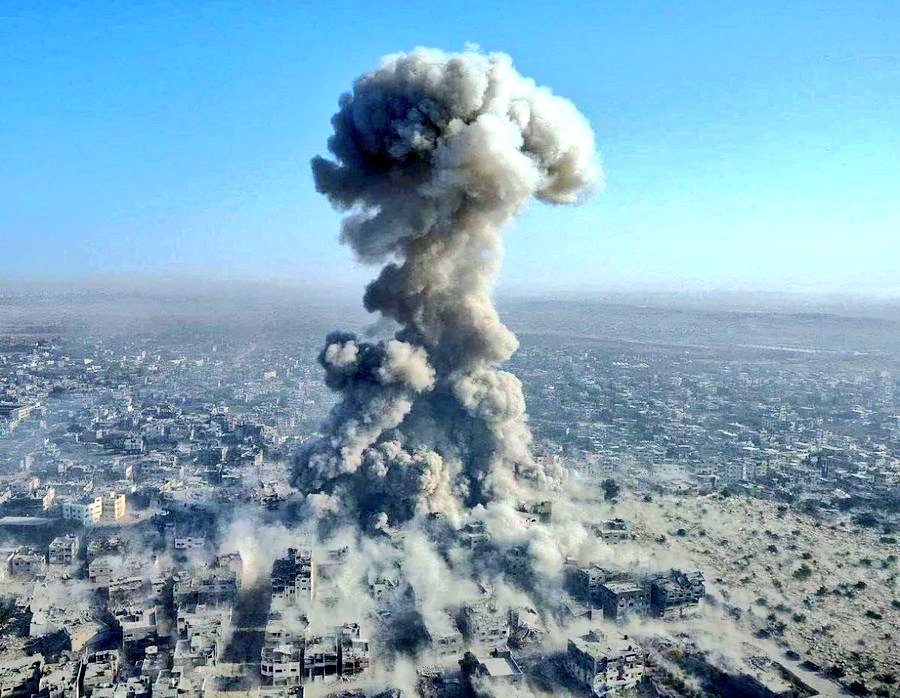
When our teams assessed the conditions in Gaza in the wake of the January 19th announcement of a temporary ceasefire, they encountered apocalyptic scenes of complete destruction and famine-like conditions.
People in Gaza need everything: lifesaving water, food, sanitation and other necessities, as well as equipment critical for the restoration of water and electricity. The goods that were able to enter during the weeks of ceasefire have brought some relief, but remain a drop in the ocean.
The international community must apply immediate pressure on Israel to ensure vital aid urgently gets into Gaza. The International Court of Justice has ordered Israel to ensure aid deliveries at scale throughout Gaza.
Al-Azhar, Egypt’s prestigious Islamic institution, denounced Israel on Monday for barring humanitarian aid from entering Gaza, labeling the move a “crime of starving innocent children, women and men” that disregards the sanctity of the Muslim fasting month of Ramadan.
The statement, posted on X, condemned Israel’s “cowardly decision” to halt aid convoys as a flagrant violation of human values.
The statement emphasized that Israel, in perpetrating this act, “deprives innocent civilians of food, showing a complete disregard for mercy and human values,” particularly during Ramadan according to Anadolu.
"It cannot be accepted to use aid as a weapon for collective punishment and starvation. This is completely unacceptable and represents a blatant and flagrant violation of international humanitarian law"
The institution called on Islamic governments to utilize their diplomatic and political tools to break the oppressive siege on Gaza’s hungry population during the holy month.
It warned that the blockade is intended to force Palestinians to choose between dying of hunger or fleeing Gaza, giving up their land to the occupying entity.
Al-Azhar urged Islamic countries and the international community to demand the immediate opening of border crossings, facilitate the entry of aid convoys and hold Israel accountable for its crimes.
The statement called for war criminals responsible for some of the most horrific acts in modern history to face trial and justice.
The Israeli government halted the entry of humanitarian aid into Gaza on Sunday as Prime Minister Benjamin Netanyahu refused to start negotiations on the second phase of a ceasefire deal between Israel and the Palestinian group Hamas.
The agreement has halted Israel’s genocidal war on Gaza, which has killed nearly 48,400 people, mostly women and children, and left the enclave in ruins.
Israel has threatened to resume its genocide war in Gaza, setting a deadline of 10 days for Hamas to release the remaining captives, a move that violates the ceasefire agreement.
Israel’s Channel 12, citing an Israeli official, said on Monday that the occupation government has set a deadline 10 days from now for Hamas to release the remaining captives in Gaza before a return to war.
“We are currently at a dead end regarding the deal negotiations,” the official told Channel 12.
At the parliament on Monday, Israeli Prime Minister Benjamin Netanyahu threatened, “I tell Hamas: If you do not release our hostages, there will be consequences that you cannot imagine.”
Defence Minister Israel Katz later said if Hamas did not free the captives, “the gates of Gaza will be locked, and the gates of hell will open”.
“We will return to fighting, and they will face the (army) with forces and methods they have never encountered—until a decisive victory,” he said in a statement.
Israel Violates Ceasefire
Israel has imposed a block on all aid entering Gaza following the end of the first phase of the ceasefire deal. Netanyahu’s office issued a statement on Sunday morning confirming the decision.
The move, which coincides with the holy month of Ramadan, came after Hamas refused to accept the extension of the first phase of the ceasefire deal.
Israel said that it had accepted a last-minute proposal put on the table by the US president’s special envoy for the Middle East, Steve Witkoff, for a temporary ceasefire over Ramadan and Passover.
According to Israel, the proposal also outlined the release of all captives still in Gaza in two stages, with the second stage contingent on negotiating a permanent ceasefire.
“With the end of phase one of the hostage deal, and in light of Hamas’ refusal to accept the [US envoy Steve] Witkoff outline for continuing the talks – to which Israel agreed, Prime Minister Netanyahu has decided that starting this morning all entry of goods and supplies into the Gaza Strip will cease,” the statement said.
“Israel will not allow a ceasefire without the release of our hostages. If Hamas continues its refusal, there will be further consequences.”
Hamas refused to extend it, noting it will only release captives in phases, per the ceasefire agreement, which Israel is now refusing to continue.
It said it would only accept moving to the second stage, which was supposed to guarantee the definitive end of the assault, an Israeli withdrawal from Gaza, and the release of remaining captives.
Hamas also slammed Israel’s decision to block the entry of aid and adopt the US proposal. In a statement, the movement said this “is a blatant attempt to renege on the agreement and evade negotiations for its second phase.”
“Netanyahu’s decision to block the entry of all humanitarian aid into Gaza is a cheap blackmail and a war crime in an appalling violation of the ceasefire deal. Mediators and the international community must act to place pressure on the occupation and put an end to its punitive and immoral measures against more than two million people in the Gaza Strip.”
Hamas stated that Israel has continued to violate the ceasefire since it took effect, which has resulted in the killing of over 100 people in Gaza and the disruption of the humanitarian protocol. This includes blocking the entry of sheltering and relief aid, further aggravating the humanitarian catastrophe in Gaza. According to Gaza’s Government Media Office, Israel has committed around 962 violations of the ceasefire agreement according to the Quds News Network.
Through the lens of a dedicated Gazan photojournalist, each frame tells a story—stories of resilience, struggle, and hope that are often hidden behind the walls of Gaza. These images, steeped in the silent testimony of daily life amidst conflict, capture moments that the world has yet to fully recognise.
“In this series, every photograph is not just a visual record; it’s a portal into the untold experiences of life under siege. It invites us to explore the profound realities woven into the fabric of an ongoing struggle,” said Gazan photojournalist Mustafa Hassona in an interview with The Jordan Times during the Xposrue exhibition in Sharjah.
Featured in both local and international media, Hassona’s photography offers a vital chronicle of the Gazan community’s enduring spirit. His work shines a light on stories of loss, perseverance, and the relentless pursuit of a better future.
Hassona’s achievements include being named The Guardian’s Best Photographer in 2015 and 2018, as well as winning the POYi 73 prize.
Endurance of a Child
Discussing his photos, Hassona revealed the subtle emotions captured in the faces of everyday Gazans. One of his most iconic images depicts a young child, clutching a plastic chair amidst the wreckage of war—his only shield against the brutality that surrounds him.
“When missiles tore through homes and lives, this flimsy piece of furniture became the child’s last line of defence in a world that had already abandoned him,” Hassona recalled, his voice filled with both sorrow and admiration for the child’s enduring strength.
Amidst the Rubble: The Indomitable Spirit of Gaza’s Female Doctor
One poignant story Hassona captured revolves around a Palestinian doctor who, after spending much of her life in Belgium, returned to Gaza following her daughter’s marriage in the enclave. Liquidating all her assets abroad, she purchased an apartment in the Al Zahra Building Complex, a sprawling development of 70 high-rise buildings. For her, this wasn’t just a property purchase—it was a powerful act of reclaiming her identity.
Amid the ruins of her once-thriving community, she grieved the loss of a vibrant neighbourhood and the warmth of family gatherings, now buried beneath the rubble. “With only a single bag containing her certificates as a tangible link to her past, her story reflects the ongoing struggle of Gazans—a narrative marked by sacrifice, loss, and an unyielding hope to rebuild what has been shattered,” said Hassona.
“Her story is one of unyielding courage and resilience, a testament to the strength of Gaza’s people in the face of insurmountable adversity.”
The physical and mental health conditions of the Palestinian detainees and prisoners released during the seventh round of the ceasefire exchange agreement between Israel and Hamas in the Gaza Strip are shocking.
Israel’s release of hundreds of Palestinian prisoners and detainees, who arrived in the Gaza Strip recently in exceptionally poor health, illustrates its ongoing use of torture to terrorise and persecute prisoners and detainees and break their will until the very end of their detention. The effects of torture were clearly evident, with the emaciated bodies of the released individuals reflecting the severity of systematic crimes and inhumane treatment that exceed all legal and moral bounds.
The repeated release of such visibly unhealthy individuals from Israeli prisons reveals that the heinous torture and willful medical neglect they endure have escalated to appalling levels. Euro-Med Monitor notes that the atrocities occurring in these prisons are among the worst violations recorded by human rights organisations worldwide.
In a blatant violation of the mandatory rules of international law—which forbid torture in all its forms and under all circumstances, without exception, and consider its commission an international crime that does not expire by statute of limitations—hundreds of released prisoners and detainees arrived in the Gaza Strip after midnight in exceptionally poor health. It became evident after their transfer to the Gaza European Hospital in the southern section of the Strip that dozens of them required urgent medical care because their bodies showed signs of torture and inhumane treatment, including deprivation of necessary medical care and treatment.
Along with severe weakness and exhaustion, the Euro-Med Monitor field team documented severe injuries among detainees and prisoners, including limb amputations and severe swelling brought on by torture. Some appeared incapable of walking without the assistance of friends, and others required immediate medical attention because their health was rapidly deteriorating.
Even though the majority of detainees were not charged with any specific crimes, many of them claimed that they were beaten, mistreated, and threatened right up until the very last minute before their release. Since being kidnapped from the Gaza Strip at various points following 7 October 2023, they were arrested or detained, tortured, and subjected to degrading treatment as part of a systematic policy designed to cause them severe physical and psychological harm. This policy is a part of Israel’s crime of genocide, which aims to destroy the Palestinian people in the Strip, either entirely or partially, by weakening the foundations of their survival and leading them to submission or extinction.
Furthermore, the Euro-Med Monitor team documented Israel’s ongoing use of psychological torture and humiliation against recently released prisoners through the enforcement of laws that directly incite violence and genocide. This official systematic incitement is a fundamental tool of Israel’s policies against Palestinians, particularly those in the Gaza Strip. One example of these measures is the prison authorities’ requirement that newly released inmates and detainees wear vests with official Israeli Prison Service slogans and threatening phrases in Hebrew, including religious quotations that express the principle of revenge and pursuit until liquidation. Additionally, they are forced to wear plastic wristbands with derogatory words printed on them to psychologically degrade them and highlight the fact that they are still being singled out despite being “free”.
The phrase “I will pursue my enemies and overtake them; I will not return until I have destroyed them” is printed on the vests of Palestinian detainees and prisoners who have been released, and is taken from a biblical passage (Psalm 18:37) that expressly calls for killing and genocide. This is a form of direct and public incitement to genocide, which is forbidden by Article 3 of the Convention on the Prevention and Punishment of the Crime of Genocide.
By depriving the Palestinians of their humanity and treating them as a legitimate target for killing and targeting, Israel’s actions go beyond psychological warfare and constitute a dangerous extension of institutional hate speech and a consolidation of the intention to commit genocide.
The violations which Palestinian prisoners and detainees are subjected to by Israel, whether while these individuals are being held or being released, gravely violate international law and represent a blatant disregard for its mandatory regulations that forbid torture and cruel or inhuman treatment without exception. The Third and Fourth Geneva Conventions provide complete protection for prisoners and detainees, and forbid torture, humiliation, or retaliation, making these crimes punishable by international law.
The death of detainee Raafat Adnan Abdul Aziz Abu Fanouneh (34), who was tortured and abused following his arrest in the Gaza Strip in October 2023, was announced yesterday (Wednesday) in Israel’s Shamir Medical Centre (formerly Assaf Harofeh). A minimum of 60 prisoners and detainees—as these are the only victims whose identities are known—have perished in Israeli occupation prisons since the beginning of the genocide, including at least 39 individuals from the Gaza Strip. This is the highest number ever.
Israel continues to commit the crime of enforced disappearance against hundreds of Palestinian prisoners and detainees, failing to disclose their whereabouts or medical conditions to their loved ones, which raises serious concerns about the safety and lives of the people being held. Israel also continues to conceal any information about them from the press, despite credible evidence that dozens of additional prisoners and detainees have been killed inside Israeli prisons and detention facilities.
In addition to being crimes against humanity and full-fledged war crimes, the crimes committed by the Israeli occupation army and other Israeli security forces against Palestinian prisoners and detainees from the Gaza Strip also amount to acts of genocide against the Palestinian people in the Strip, because they are carried out in a systematic and brutal manner. These acts include the killing of Palestinians and the infliction of severe physical and psychological harm, including torture, other forms of ill-treatment, and sexual violence, including rape, and are carried out with the goal of eradicating the Palestinian people as a whole.
All countries and pertinent international organisations must take swift and decisive action to end Israel’s widespread and systematic crimes of killing, torture, and other serious violations against Palestinian prisoners and detainees. Detainees who have been arbitrarily arrested must be released without conditions, right away. Additionally, local and international organisations must be given immediate permission to visit detainees, who must be allowed the opportunity to choose their own lawyer.
Israel’s notorious arbitrary detention practices, such as administrative detention and detention under the “Unlawful Combatants Law”, must be stopped. These practices are a blatant violation of international law and are employed as a systematic, repressive tool to weaken the Palestinian will, tear apart the social fabric that holds them together, and deny Palestinians their fundamental legal rights.
To ensure justice for Palestinian victims and that the Israeli occupation is held responsible for its violations, human rights and media organisations must step up their efforts to pressure Israel’s government to stop its ongoing crimes. In addition, these groups must work to highlight the suffering of Palestinian prisoners and detainees and to share these individuals’ testimonies about the horrific crimes they face.
The International Criminal Court must investigate the crimes, submit specialised reports regarding the crimes committed against Palestinian prisoners and detainees in Israeli prisons and detention facilities, particularly after 7 October 2023, and issue arrest warrants for all perpetrators. All concerned nations must make sure the perpetrators of these crimes are prosecuted and brought before the Court to stand trial.
Israel must immediately cease its crime of enforced disappearance against Palestinian prisoners and detainees from the Gaza Strip; reveal all secret detention camps; reveal the names, whereabouts, and fates of all Palestinians it is holding from the Strip; and take full responsibility for the safety and well-being of these individuals. These demands must come from the international community.