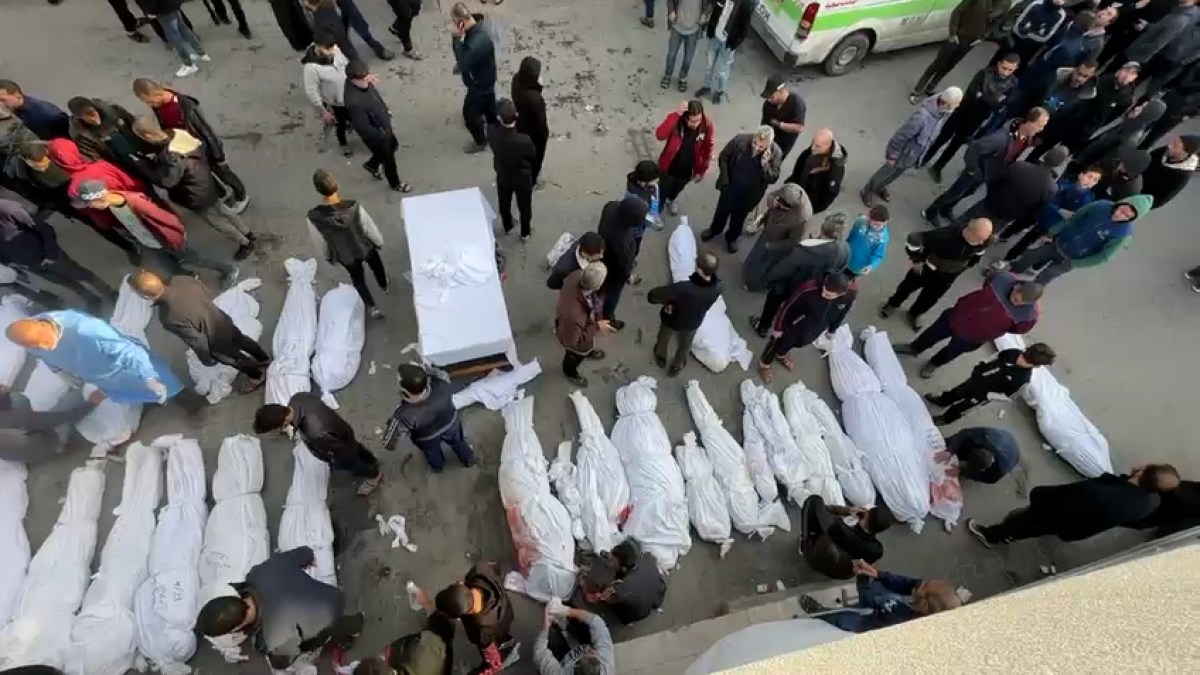
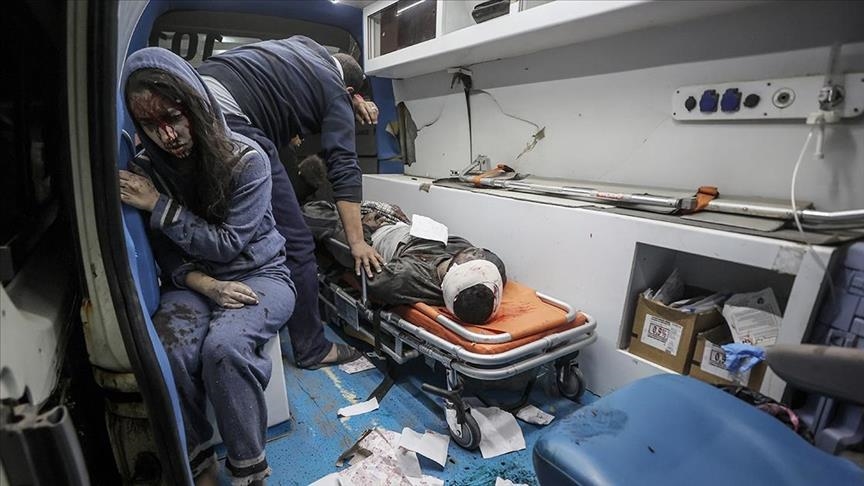
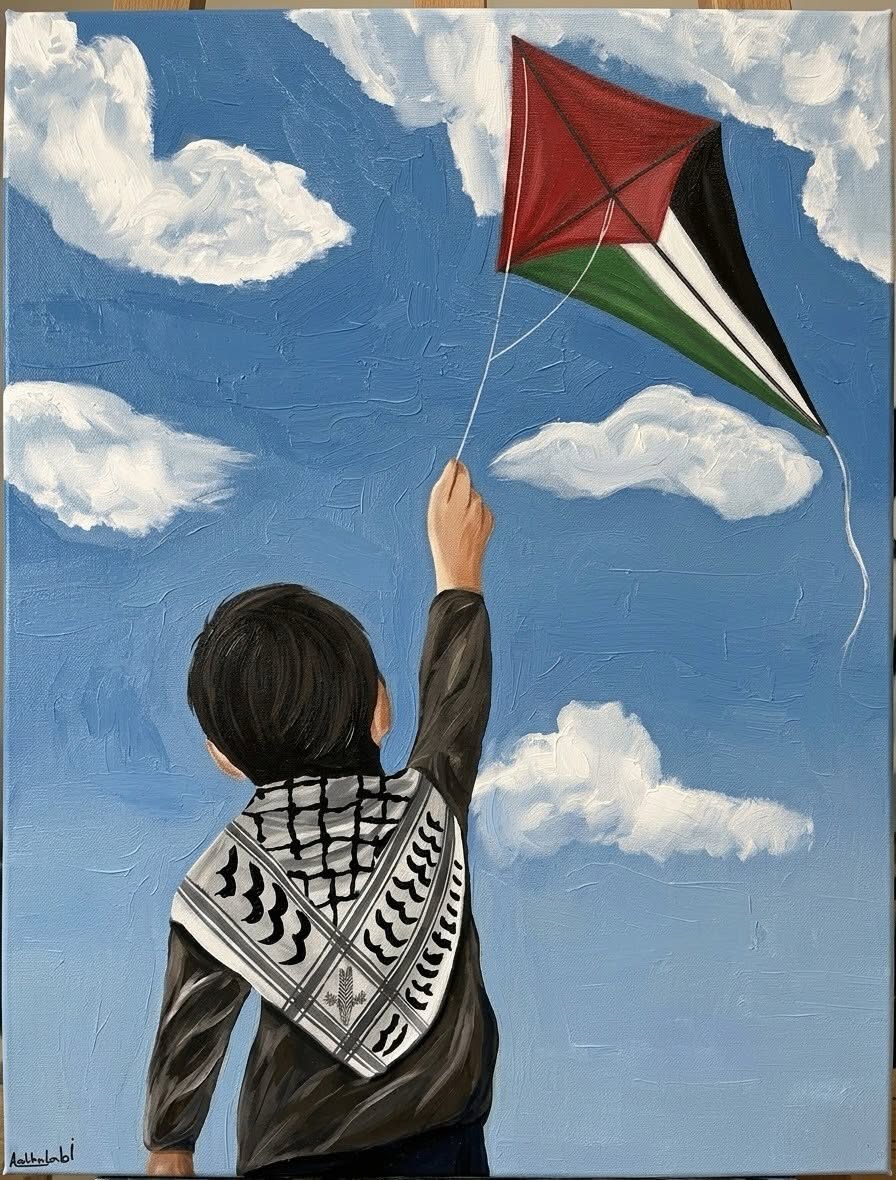
Five Infants Die in Gaza Because of The Freeze

“Nine infants were hospitalized in the past two weeks due to health complications caused by severe cold,” Saeed Salah, Director of the Patient’s Friends Benevolent Society Hospital in Gaza, told Anadolu.

“Of the nine cases, five infants aged between one day and two weeks died,” he added.

Salah said one baby is still on a ventilator due to his serious health condition, however, three others were discharged from hospital.

He said the nine new born were transferred to the hospital from northern Gaza because the region there has been completely destroyed and where most of the population has been displaced and are living in tents following Israel’s destructive war on the enclave.

Salah appealed to the international community to intervene to allow the entry of mobile homes, tents, and fuel into Gaza to provide shelter to thousands of Palestinians.

Hamas blamed Israel’s “criminal policies” for the death of the babies in Gaza news of which are trending on the social media.

https://twitter.com/MustafaBarghou1/status/1894328481514750222

In a statement, the group called for immediate intervention “to stop Israel’s violations of the ceasefire agreement and allow the entry of urgent shelter, heating, and medical aid supplies into Gaza to the children there.”

According to Gaza’s government media office, nearly 1.5 million Palestinians have been left without home or shelter after Israel waged its deadly war on the enclave.

A ceasefire and prisoner exchange agreement has been in place in Gaza since last month, pausing the Israeli war that has killed at least 48,350 people, mostly women and children, and left the enclave in ruins.

Last November, the International Criminal Court issued arrest warrants for Israeli Prime Minister Benjamin Netanyahu and his former Defense Minister Yoav Gallant for war crimes and crimes against humanity in Gaza.

Israel also faces a genocide case at the International Court of Justice for its war on the enclave.

Continue reading
Who is Going to Rebuild Gaza?

No official announcement was made following the Riyadh Summit, which was considered fraternal, friendly, and consultative rather than formal. The summit, held a few days ago, was attended by the Gulf states, along with Jordan and Egypt, in anticipation of the Cairo Summit scheduled for March 4. The Cairo Summit is expected to approve and announce a new Arab plan for rebuilding Gaza as an alternative to Trump’s plan. However, more importantly, the Arab plan presents a comprehensive political approach linking the Gaza issue to the establishment of a Palestinian state and a peaceful resolution in the region. This approach counters Israel’s new policies, which are based on political hegemony—not only in Palestine by eliminating the two-state solution but also by expanding Israel’s security boundaries to include parts of Syria and Lebanon and inciting the U.S. into a confrontation with Iran.

The Egyptian-Arab approach is still in its final stages of preparation. It takes into account a combination of financial, technical, political, and security aspects concerning Gaza. Palestinian Prime Minister Mohammad Mustafa has proposed modifications to the plan originally put forward by the World Bank, the United Nations, and the European Union, which estimated the cost of rebuilding Gaza at over $50 billion in a rapid and preliminary needs and damage assessment report (IRDNA). Instead, Mustafa proposed a more realistic and feasible plan costing no more than $20 billion, to be implemented in three phases. The Egyptians have incorporated this into their reconstruction plan, which includes dividing Gaza into three safe zones, using temporary housing (caravans) and tents, and developing a technical vision for redesigning the sector’s infrastructure through specialized Egyptian companies.

The Arab approach links the reconstruction plan to several key elements. The first is the technical, logistical, and financial aspect of rebuilding. The second is reforming the Palestinian Authority (PA) to counter Israeli claims of its incompetence, with reform measures covering political and security aspects. The third element concerns the administration of Gaza in the post-occupation phase. A significant development has occurred with the Palestinians agreeing on a temporary administrative committee responsible for technocratic affairs. Hamas has accepted this arrangement, and President Mahmoud Abbas has reluctantly agreed to it, as it implicitly means that the PA will not return to Gaza.

The most challenging aspect of the Arab plan lies in the security arrangements during the reconstruction phase. Arab states refuse to deploy security forces or enter Gaza without a clear vision for ending the Israeli occupation and establishing a Palestinian state. As Arab diplomats emphasize, what is needed is not just a roadmap for resolving the Palestinian issue, but rather an agreement on final-status issues and recognition of a Palestinian state—followed by a roadmap for implementation, not the other way around.

The most contentious issue in the Arab approach is Hamas’s weapons. Israel, along with the United States, will not accept Hamas retaining its weapons in Gaza. Israel has made it clear that it links the second phase of the process to this condition, and the U.S. has accepted this demand. On the other hand, the Arab side ties the issue of disarming non-state actors to the establishment of a Palestinian state that would have the exclusive right to possess weapons. The key question remains: Who would disarm Hamas? The only legitimate entity that could do so is a recognized Palestinian state, which remains the missing piece in U.S. policies that align with Benjamin Netanyahu’s vision.

The Arabs hope that this approach will establish a new framework for relations with the United States and offer alternative strategic options. They even believe it could persuade President Donald Trump to secure several achievements—perhaps even earning him a Nobel Peace Prize in the end.

This is undoubtedly a highly optimistic approach, but it represents a new Arab attempt to present a united position and alternative strategic options. However, the biggest challenge this vision overlooks lies in the details. As the saying goes, “the devil is in the details.” What kind of Palestinian state is actually possible under the current circumstances? What was previously proposed by Trump himself? Is there a single Palestinian—any Palestinian—who could accept a state comprising only 30% of the West Bank, without East Jerusalem, and without control over borders? How could Hamas and its supporters—or even the majority of Palestinian refugees—be convinced of such a proposal, even if there were Israeli and American acceptance of the new Arab approach?

Mohammad Abu Rumman is a columnist in The Jordan Times.

Continue reading
Jordan’s Fight Against Displacement

By Dr Amer Al Sabaileh

With the conclusion of the first meeting between President Donald Trump and His Majesty King Abdullah, Jordan finds itself facing a real political test. The strategy of buying time with an administration that has been in office for only a few weeks may not offer much room for maneuvering, making it increasingly difficult to navigate the direction of US policy. Jordan has sought to carve out a space for itself by engaging with the American president and promoting an alternative that has broader Arab support. However, this approach requires swift action and the presentation of practical alternatives that could gradually shape Trump’s perspective.

Jordan now needs to build strong alliances to manage the next phase and counter the looming threat of forced displacement of Gaza’s population—a proposal that Trump has openly suggested as the only solution. Regionally, Jordan finds itself alongside Egypt as both countries face direct pressure from the US displacement plan. This shared challenge has reinforced their cooperation on various regional issues over the years, yet expanding the Arab alliance has now become an urgent necessity. The multiple forms of US pressure on Egypt make it crucial to establish a stronger, more resilient Arab coalition, with Saudi Arabia playing a central role.

Trump views Saudi Arabia as a gateway to regional peace and a key economic partner, not only for the United States, but also for a major strategic project aimed at linking India to Europe through the Arabian Peninsula, the Mediterranean, and Italy. This highlights the importance of Saudi Arabia’s role in Trump’s vision. At the same time, Jordan’s southern geography is closely tied to Saudi Arabia within this ambitious economic corridor, which strengthens shared economic interests between the two countries. This growing economic partnership could lay the groundwork for deeper political coordination, including a potential Jordanian-Saudi understanding regarding the proposed displacement policy.

On the international level, Jordan can work to rally support for its political stance, which enjoys broad consensus among key global actors. However, at this stage, prioritising Arab alliances and maintaining effective communication channels with the US administration is far more critical than merely seeking international backing.

Domestically, Jordan’s internal front remains the most crucial. The current climate presents an opportunity for the state to reinforce national unity, as growing regional instability has heightened public awareness of external threats. This requires decisive steps to foster genuine political participation and address long-standing grievances of exclusion and marginalization. A shift in political discourse, engagement strategies, and governance methods is necessary to strengthen national cohesion. Uniting Jordanians under an inclusive and representative state framework will be vital in shaping a new phase in the country’s history.

What remains striking is how Jordan was suddenly thrust into the equation of resolving the Gaza crisis. From the outset of the war, discussions primarily centered around Egypt due to its direct geographical connection to Gaza. However, Trump’s unexpected move to involve Jordan has now exposed the country to two major risks: the potential displacement of Gaza’s population and, more alarmingly, the forced displacement of West Bank residents. The push to make Jordan part of the US plan for Gaza raises concerns that this could lead to an imposed reality in which Jordan is expected to absorb West Bank residents as well.

Categorically rejecting forced displacement must be Jordan’s top priority. However, achieving this requires a high level of political agility and the ability to engage in direct negotiations with all relevant stakeholders. This approach would strengthen Jordan’s regional role at a time when further Israeli escalation across multiple fronts, including Gaza and the West Bank, seems increasingly likely. Such an escalation could be used by the Israeli government to block political maneuvering and impose new realities on the ground. A military confrontation could shift the issue of displacement from a political debate to an unavoidable reality, forcing all parties to confront its consequences.

The author is an academic writing for The Jordan Times.

Continue reading