Iran’s FM to Israel: ‘Don’t Test Our Resolve’

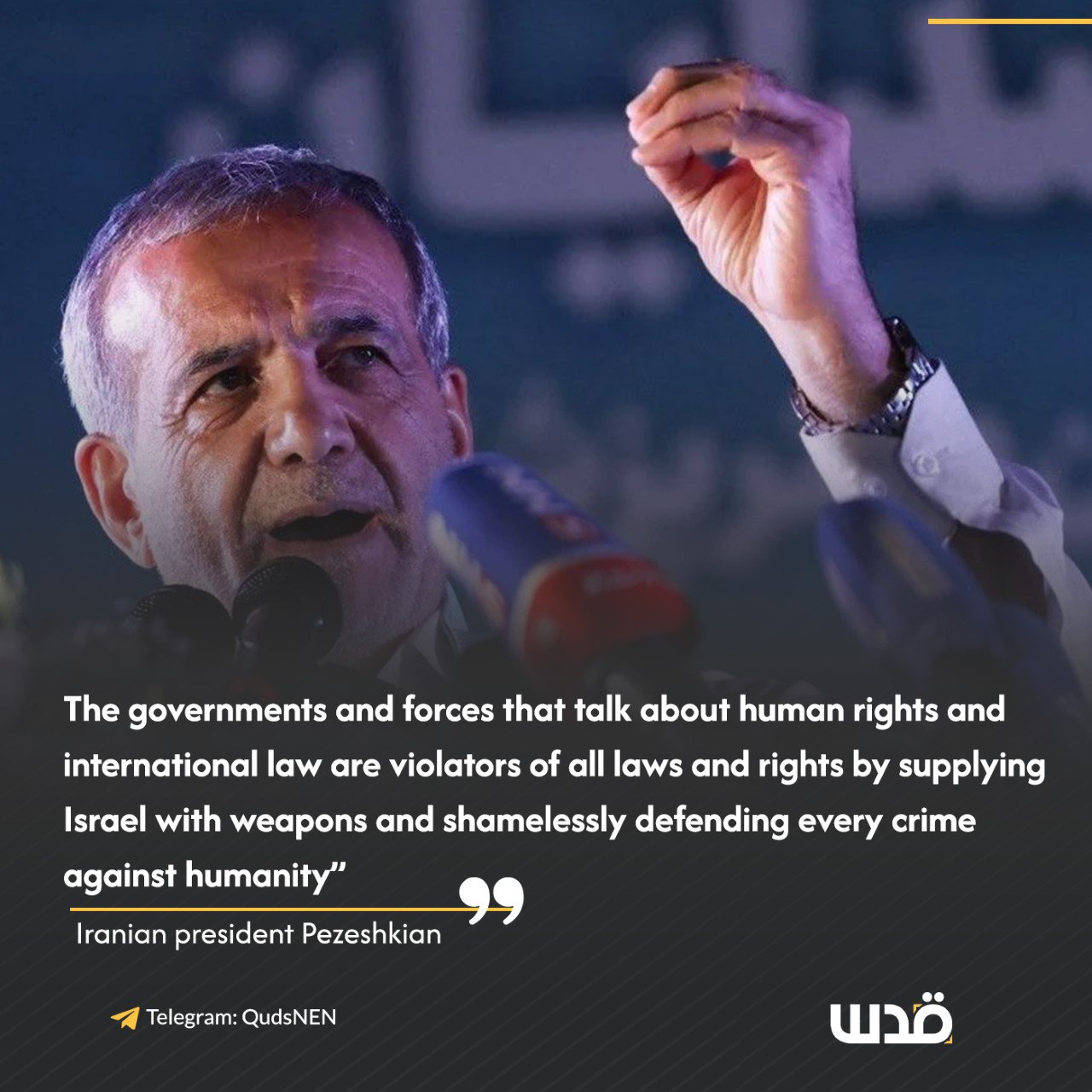
Iranian Foreign Minister Abbas Araghchi has warned Israel “not to test” Tehran’s resolve amid reports of possible military strikes in response to the barrage of missiles Iran launched last week in retaliation to Israel’s assassinations of senior Hezbollah, Hamas and Iranian officials.

“Our missiles can reach all their targets. We will respond to any attack on our institutions or infrastructure,” Araghchi said during a conference discussing the impact of Hamas’s October 7 operation on Israel on the first anniversary according to the Quds News Network.

“We recommend the Zionist regime not to test the resolve of the Islamic Republic. If any attack against our country takes place, our response will be more powerful,” Araghchi said.

He added Iran will continue to support the Palestinian cause to establish their own state. Addressing the Israeli strike that killed Hezbollah leader Hassan Nasrallah, Araghchi said the “resistance” to Israel is not based on a person.

Continue reading
An Eye For an Eye

CROSSFIREARABIA – Israelis will not rest if the Palestinians don’t get their independent homeland and statehood to live free just as was the case before 1948 when Israel was forcibly created.

This present Israeli war on Gaza has shown that clearly.

While the Israeli war machine may have destroyed, nay, obliterated the whole of the enclave, the strip continues to be filled with resistance fighters who move above and below grounds with their weapons fighting their enemies.

Israel, its leaders, politicians and military, long propped up by American weapons have long known that but they continue to destroy rather than own up to Palestinian aspirations and the fact that the incessant conflict will not end otherwise.

In this war, slaughter, genocide – going into its second year now and shows no signs of stopping but on the contrary moving northwards to Lebanon – there developed a sense of equilibrium and proportionality although on a much smaller scale judging from the vast different of the protagonists.

Israel used massive bombs on civilians and sent them into a whirl of displacements, while Hamas continually fired rockets and missiles on the settlements and military bases surrounding Gaza and further beyond.

The immediate effect of that was the mass evacuation of the Israeli population from all these settlements, in effect as soon as the Israeli big guns started to ‘hammer’ the cities, town, villages and hamlets of northern Gaza soon after 7 October, 2023.

Displacement

Today, the Jewish settlements, more likely big towns and cities with high tech infrastructure stand empty; their populations have long been moved to hotels and guest houses by the extremist government of Benjamin Netanyahu, for their safety.

They still wait their return but there is no end in sight as to when will this happen. The late Hassan Nasrallah of Hezbollah, just before he was killed by Israel, said the occupation entity will not rest in peace, neither will the Jews return to their homes, until the bombs on Gaza stop.

Hezbollah had taken up the fight with Israel soon after 7 October as a support to Gaza through rocketing its northern parts with missiles. This process also set off a mass drove of Israelis to leave their homes, like their counterparts in the south, to be housed in a hotel accommodation away from the bombs and raging fires.

As the war genocide on Gaza continued in the following months, the return of these settler Israelis to their homes continued to be foggy, unknown. Many of these settlements and conurbations like Kiryat Shmona and Maalot today stand empty like ghost towns.

In Gaza around 2 million people out of a population of 2.2 million were forced into internal displacement, continually moving between areas from the north of Gaza to its southern border.

Likewise, the number of Israelis that were displaced was, initially estimated at 400,000 people with an extra 60,000 forced to leave when Hezbollah increased their missiles on the north after June 2024.

While they have been living in hotel accommodation many Israelis have been trying to get out of the country over the past months with the figures ranging from 500,000 up to a million.

Further to that about a quarter of Israelis polled by the Kan official channel, say they are truly thinking of leaving the country and 14 percent of them are supporters of Likud and the extremist rightwing parties. Indeed, soon after 7 October, the Ben Gurion Airport became filled with travelers as Hamas rockets started to land on Tel Aviv.

The airport is filled again today with travelers because of incoming missiles from Hezbollah from the north and the occasional ballistic missiles coming all the way from Yemen by the Houthis and/or the fright Israelis got from the recent incoming 200 missiles they saw in their skies from Iran.

There is no doubt that ordinary Israelis are under a lot of strain with sirens going off and on, all the time signaling for them, to go into the underground shelters. Video clips see them running asunder to the shelters, and who wouldn’t be scarred?

After all, the people of Gaza and now Lebanon are experiencing it all the time. For them however, there are no sirens, no warnings of 2000-pound bombs being dropped on their heads with no questions asked; their slaughter appear to be “manageable” foe western states who sell weapons to Israel.

The war can stop anytime. Hostages, around 110 from the original 250, can be returned anytime if there is a ceasefire but the Israeli prime minister is stuck on bringing them home by force, or so he says.

 Meanwhile Israelis are literally running. One videoclip in a Tel Aviv mall show people moving hastily to ahead, no doubt, to the underground shelters as the sirens blast all over.

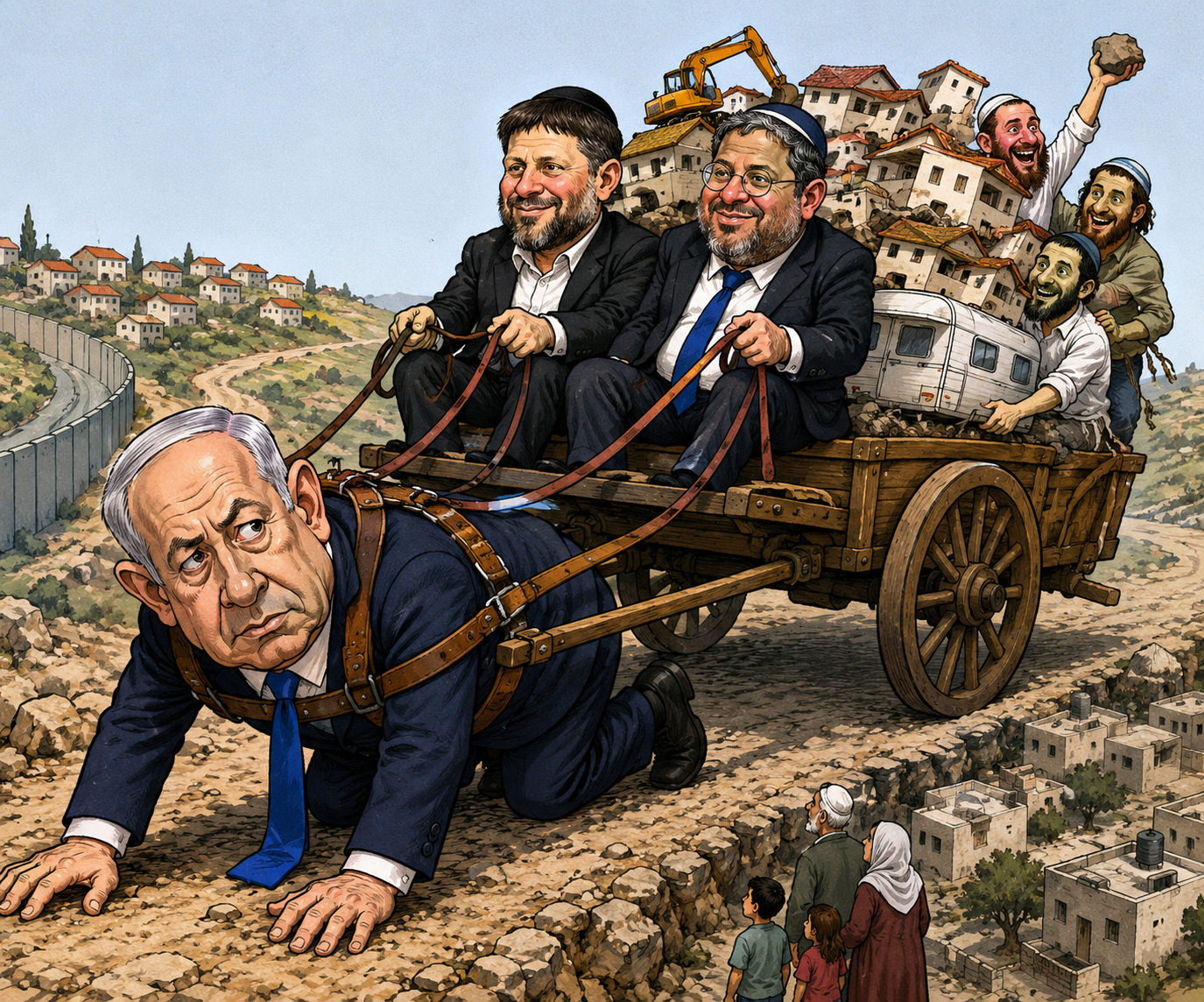
Thus, there is a military equation that is being played out here: ‘You bomb us we will bomb you’. The Israeli army must realize that this is what is happening, and the stakes of the war game just keep getting higher and higher with Israel headed by Netanyahu, Yoav Gallant, Chief of Staff Herzi Halevi, Bezalel Smotrich and Itamar Ben Gvir, being lead to the abyss.  

Continue reading
Israel Army Deploys For Lebanese Invasion

The Israeli army deployed a fourth division, Tuesday, for its ongoing ground invasion of southern Lebanon.

A military statement said the army’s 146th Reserve Division began ground operations in the western sector of southern Lebanon according to Anadolu.

Three other divisions – the 98th, 36th, and 91st – are already operating in the central and eastern sectors of southern Lebanon.

Israel has mounted massive airstrikes across Lebanon against what it claims Hezbollah targets since 23 September, killing more than 1,250 people, injuring 3,618 others, and displacing more than 1.2 million people.

The aerial campaign was an escalation in a year-long cross-border warfare between Israel and Hezbollah since the start of Tel Aviv’s brutal offensive on the Gaza Strip that has killed nearly 42,000 people, mostly women and children, since a Hamas attack last year.

Despite international warnings that the Middle East region was on the brink of a regional war amid Israel’s relentless attacks on Gaza and Lebanon, Tel Aviv expanded the conflict by launching on Oct. 1 a ground invasion into southern Lebanon.

Continue reading
Is an Israel-Iran War Coming?

By Dr Khairi Janbek

In the late 1990s, the grandiose talk of a new order for the Middle East emerged which turned out to be nothing more than a euphemism for Disney Land Arab countries, poverty and conflict-stricken regional reality, with a mixture bordering on more than buffer zones.

Now we have a less ambitious notion and that is a new balance of power in the Middle East, another euphemism for Israel calling the shots and all its neighbors being called on to abide.

But how does this new notion translate in practical terms? Well basically, to all concerned and less concerned waking up every morning asking the question: Will Israel strike Iran or will it not? 

Of course, this is a horrific question if indeed Israel does hit Iran as it carries with it many important existential perils for the whole region and beyond.

One believes whatever is on Benjamin Netanyahu’s mind to achieve advantageous results must be carried out before the date of the US elections this November because no matter what he has been told by the US prospective candidates, at the end of the day, a sitting president doesn’t act like a president-elect.

Now what would a direct confrontation and open warfare between Israel and Iran entail? Well primarily, direct confrontation takes precedence over war by proxies, which means Israel will have to go directly into destroying the military capabilities of Iran in a hugely destructive war.

This would ultimately open the possibilities for its own destruction which means dragging the US and western powers into the conflict, no matter how reluctantly they maybe to defend it, and/or basically go into a slippery-slope open warfare reaching Syria and Iraq and Iran and whatever is on its plate regarding Gaza and Lebanon.

The current wisdom dictates a large scale war does not seem to be likely on the agenda, but that does not exclude a cycle of tit-for-tat strikes between Israel and Iran.  Clearly Israel knows that for the economy of the west which is seriously preoccupied with prices and inflation, to target the Iranian oil facilities is a red line.

Moreover, to target the Iranian nuclear facilities would open the door for Tehran to retaliate against the Israeli nuclear facilities which will have dire consequences for the whole region and the world.

Therefore, if Israel is seriously thinking of dealing a blow to Iran, it will either resort to targeting personalities from the hierarchy of the country, and/or will be a just a face saving act with superfluous consequences.

Dr Khairi Janbek is a Jordanian writer based in Paris and the above opinion is that of the author and doesn’t reflect crossfirearabia.com.

Continue reading
Gaza: A Year of Horror


By Van Esveld

A bedrock principle of the laws of war is that all warring parties, whether national armed forces or armed groups, must do everything they can to minimize harm to civilians. Deliberate attacks on civilians, but also attacks that don’t distinguish between civilians and combatants, are prohibited. International law seeks to limit civilian suffering and destruction.

Yet in Israel and Palestine, the last year has been defined by unlawful attacks on civilians, causing suffering on a horrifying scale.

Achiad Milba, 29, was on Zikim Beach when Palestinian fighters, including from Hamas’ armed wing, landed in boats and killed at least 19 people there, among 815 civilians killed in southern Israel on October 7, 2023. “When people run for their lives, they fall, and they are screaming. And it’s an awful feeling I can’t describe.” About 251 people were taken hostage that day.

Mu’min al-Khalidi, 21, was sheltering with his family in northern Gaza City on December 21, when Israeli soldiers threw grenades and fired into the room, killing seven people. He regained consciousness under their bodies. “There are no words to describe what I felt. All I want to know is why? Why did I have to live through such a massacre? Why did I lose all these people? What did we do to deserve all this?”

https://twitter.com/QudsNen/status/1842991017332765148

Hostages in Gaza have been shot dead by their captors and subjected to inhumane treatment. Palestinians in Israeli detention facilities have been tortured, abused, held in incommunicado detention, and subjected to sexual violence.

The International Court of Justice in the Hague has ordered Israel three times to prevent genocide against Palestinians and let necessary aid enter Gaza. Yet the Israeli military has maintained its unlawful siege and repeatedly attacked hospitals and humanitarian workers.

As of September 2024, nearly 42,000 Palestinians had been killed in Gaza according to the Gaza Ministry of Health, the majority women and children. The number of those under the rubble and others who have died from starvation, illness, infection, and disease may be higher.

Almost all civilians in Gaza are displaced, with most crammed into an area that consists of just 3 percent of Gaza’s territory. Nearly all suffer from hungerChildren have no schools and face trauma. The majority of buildings are damaged or destroyed. Entire neighborhoods have been razed to the ground.

Ghazal, a 15-year-old girl with cerebral palsy, said she lost her assistive devices in an attack on her home in Gaza City on October 11 and begged her parents to leave her behind when they had to evacuate two days later following the Israeli military’s evacuation order: “I was a burden on them [my family], an extra load alongside their belongings. I couldn’t find any means of transportation. I gave up and sat on the ground in the middle of the road, crying. I told them to go on without me.”

Victims of rights abuses in Israel and Palestine have faced a wall of impunity for decades. Israel’s policies of apartheid and persecution against Palestinians are worsening, including land grabs and deadly violence in the West Bank.

The International Criminal Court is now considering arrest warrants for several Israeli and Hamas leaders.

Some foreign governments say they are trying to end the abuses yet pour fuel on the fire, sending arms to warring parties that are committing widespread abuses. Foreign officials, including in the United States, who knowingly send weapons to an abusive force risk complicity in international crimes.

The recent escalation of hostilities across the Middle East is putting more civilians at risk. All civilians—in Israel, Palestine, and Lebanon—are entitled to protection, dignity, and justice.


Bill Van Esveld Associate Director, MENA, Children’s Rights Division at Human Rights Watch

Continue reading