‘Zero Hour’ For Invasion of South Lebanon Starts

The Israeli war cabinet has approved the invasion of southern Lebanon according to different media sources.

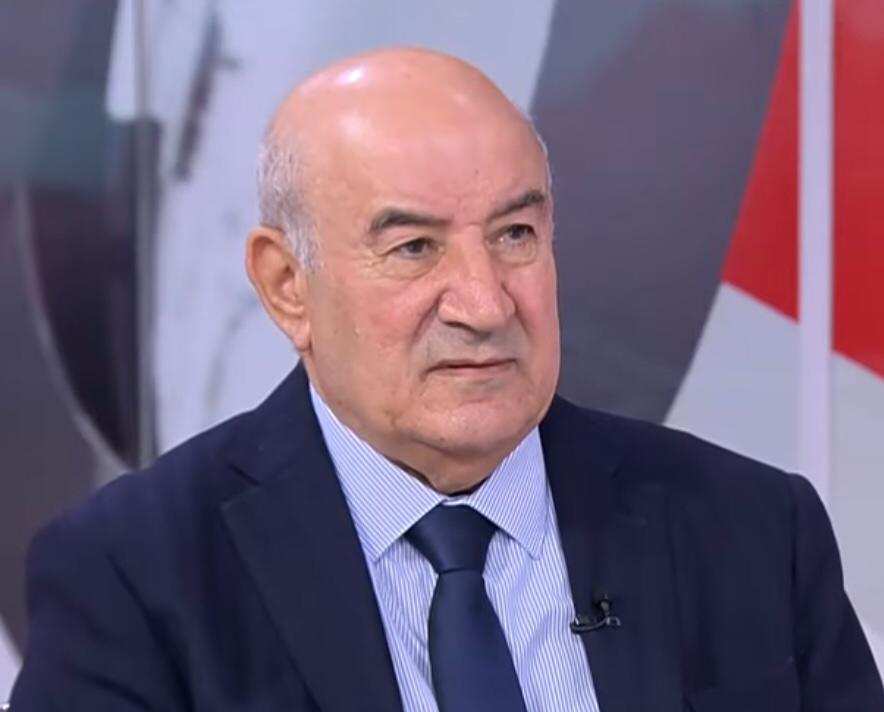
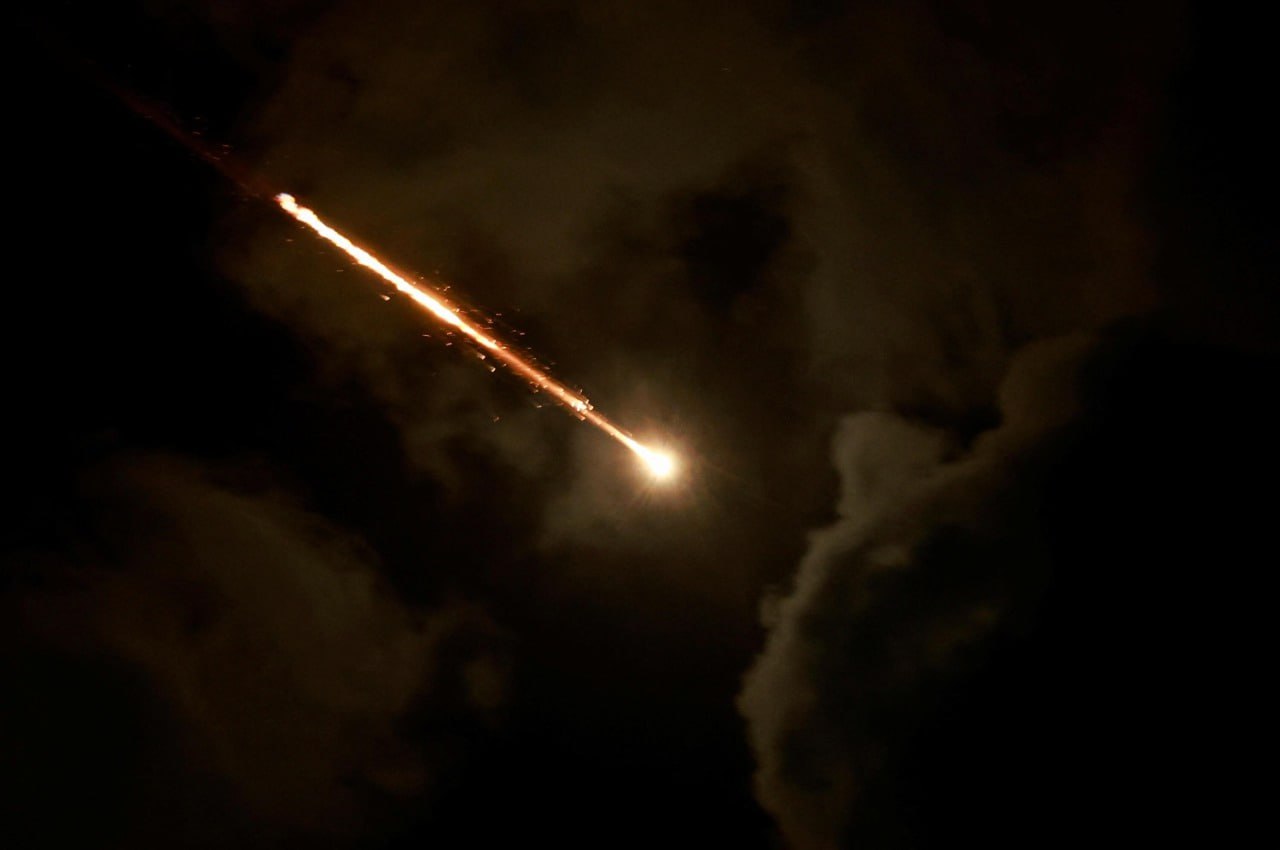
Military expert Major-General Fayez al-Duwairi said Israel’s talk about its forces opening up to a ground operation in Lebanon means that the incursion is imminent, noting the matter currently depends on determining zero hour, which will necessarily be preceded by preliminary shelling he said on Al Jazeera.

Duwairi added that declaring a closed military zone in northern Israel confirms the need for space for the forces that will carry out the operation.

The Israeli government declared the area of ​​Metula, Misgav Am and Kfar Giladi a closed military zone. Al-Duwairi said that expanding or reducing this area depends on the size of the forces that will be present in it.

“These indicators mean that we are about to begin the ground incursion,” noting that the occupation army always prefers to launch its ground attacks at night so that it can cross the starting line, which is the Blue Line, which is supposed to witness a direct clash, as pointed out in Jo24.

Continue reading
Nasrallah killed in ‘mad’ 85 Ton Bombs on Beirut  

Hassan Nasrallah and his colleagues were killed Friday evening, after 85 bunker-busting bombs, each weighing a ton of explosives, dropped on the southern districts of Beirut.

Hezbollah officials confirmed the killing of its Secretary-General in the raids that targeted the party’s central command headquarters.

A party statement said, “His Eminence Sayyed Hassan Nasrallah, Secretary-General of Hezbollah, joined his great and immortal martyred comrades, whose path he led for nearly 30 years.”

His name and murder soon started to trend on the social media former Lebanese Prime Minister and leader of the “Future” Movement Saad Hariri saying the assassination of Sayyed Hassan Nasrallah is a cowardly act condemned in its entirety by us, and it has led Lebanon and the region into a new phase of violence.

In its statement Hezbollah honored Nasrallah as a brave, wise, and courageous martyr, recognizing his lifelong dedication to the resistance movement.

Over the past three decades Nasrallah’s leadership was unique represented by his role in Hezbollah’s victories, from the liberation of Lebanon in 2000 to the 2006 war with Israel with the party praizing his unwavering support for Palestine and Gaza.

He led the resistance since 1992 building on the legacy of Sayyid Abbas al-Musawi the previous secretary-general and who was also assassinated by Israel on 16 February of that year.

Continue reading
Domination Space For Common Space

By Dr Khairi Janbek

When we think of contemporary Iran, one always believes that the Arab Middle East had always been dominated by the three Non-Arab American allies; Iran under of the Shah, Turkey and Israel.

One thinks that those “neighborhood police stations’ were the guarantors of stability through their convergence, and at times contradictions, in the age of Cold War and oil. However, the Shah of Iran was deposed and the Anti-communist Cold War ended, but that didn’t mean that oil stopped becoming important nor that Russia and China were no longer threats.

One would say, that the rehabilitation of Iran and possibly turning it into a negotiations partner aims at keeping the third angle of the police stations triangle going, because non of the Arab countries, no matter how much they tried, could never replace Iran, because no Arab police station is permitted to emerge as a third angle.

Having said that, it would be beyond naive to think that the expansion of Iran’s power and influence happened by stealth or escaped the notice of the US and NATO.

After after all Iran grew to become a Red Sea country through its influence on the Houthis in Yemen, a Mediterranean country through its influence in Syria as well Lebanon through Hezbullah and the major Gulf country through its supporters in Iraq. 

In fact this Iranian domination of space is what has created a common space between all its long-arm organisations in the region.

Essentially, if we compare Iran to an octopus, all those various groups are its tentacles, and they all serve the purpose of Iran’s strategic interests, albeit not through a push-button approach, but through not taking any action which would not please their Persian master.  

Of course, this puts Iran in a strong position to be a major player in the region and an inescapable negotiations partner for the US, which is also convenient for the Americans, in order to remind their Arab allies who is their protector in a region policed by Turkey, Israel and Iran.

Of course this takes us to the point of saying that, for all intents and purposes, for the Americans a trusted adversary is more important than distrusted friends, and that it would be absurd to think that all those long arms of Iran in the Arab world can be amputated by military means; they certainly can be weakened, but without the consent of Iran and without the right price, so long as it remains behind them, nothing much can change.

At this point, from what one can only see, is that no one in their right mind or otherwise, will permit a war to emerge in which Israel is pitted against Iran and the US as well as NATO putting all their weight behind Israel and forcing the Arabs to choose their camp.  

That would be the scenario of the end of the world as we know it, or with major civil wars in the Arab countries controlled by the tentacles of Iran, and which no one wants.

Dr Khairi Janbek is a Jordanian writer based in ParisFrance

Continue reading
Duwairi: Hezbollah Able to Manage The Battle

Military expert Retired Major General Fayez al-Duwairi said Hezbollah is still able to manage the defensive battle effectively and powerfully despite the Israeli onslaught which have not undermined its combat capabilities.

Duwairi explained Hezbollah, Thursday, launched five large missile barrages despite the intensive Israeli air campaign and assassinations that targeted prominent military leaders, including Fouad Shukr and Ibrahim Aqil, and the bombing of pagers and walkie-talkies.

According to the strategic expert, the combat organizations that are fighting an asymmetric war with a regular Israeli army that has great capabilities “have in their calculations, to be exposed to painful strikes that may abort their combat power if they move to the traditional approach.”

Accordingly, there are fixed instructions for the fighters that at some point communications may be lost and the chain of command may be struck through concentrated assassinations, “but this does not mean the collapse of the combat power, as planning is centralized but implementation is decentralized,” he added on Al Jazeera.

The military expert touched on the combat capabilities possessed by Hezbollah, most notably its missile capabilities and their impact on Israel, in addition to artillery, drones, and field forces deployed in the south, central Bekaa, and Hermel, and the the Radwan Force, designed to carry out operations inside occupied Palestine.

Hezbollah’s missile force ranges between 100,000 and 200,000 missiles, 80% of which are unguided, according to Al-Duwairi who said that the party has not yet deployed medium- and long-range missiles.

Israeli Prime Minister Benjamin Netanyahu considers what Israel achieved, so far, in terms of preemptive strikes, intensive assassinations, and bombings of communications and wireless devices are “military achievements that may disappear if he enters a ground war,” Al-Duwairi pointed out.

The military expert added that Hezbollah – 18 years after the 2006 war – has a large presence in southern Lebanon, and succeeded in harnessing the geographical turrain of the area to serve its defensive plan, noting it focuses on controlling combat nodes and target bank.

He concluded the entry of the Israeli occupation army into southern Lebanon “will not be a summer outing,” noting Israel’s strikes have targeted Hezbollah’s capabilities and its incubating environment, so far, “so the party is walking a tightrope between maintaining deterrence and not being dragged into a ground war.”

Continue reading
Duwairi: Israel Not in Position For ‘Ground War’

Military expert Major-General Fayez Al-Duwairi said the Lebanese Hezbollah’s bombing of the Mossad headquarters in Tel Aviv is a qualitative but a disciplined shift so that things do not develop into a large-scale ground battle both sides are trying to avoid so far.

Earlier Wednesday, Hezbollah announced targeting the Mossad headquarters in the suburbs of Tel Aviv with a “Qader I” ballistic missile, in a precedent move since the beginning of the Israeli war on the Gaza Strip about a year ago.

The party stated it targeted Mossad headquarters because it “is responsible for assassinating leaders and blowing up communication devices.”

According to Al-Duwairi, the party did not target Tel Aviv directly but rather targeted a military headquarters responsible for blowing up the pagers, which means it is an operation similar to the assassinations carried out by Israel in the Beirut suburb.

Therefore, he believes that the targetting does not mean bringing Tel Aviv into the unfolding battle, saying current Israel’s operations in Lebanon do not aim to destroy the suburb randomly. He added this reflects the keenness of both parties not to escalate in a way that leads to an open ground war, even if the comprehensive war is already underway.

No ground war yet

He explained the ground operation is the missing part of the comprehensive war between the two sides, suggesting Israel will continue to maintain this situation for another period in the hope of breaking Hezbollah’s will and subjecting it to its dictates.

He said Israel is using the Gaza Strip approach in Lebanon, but warned that the military solution will not be achieved and that Hezbollah will not retreat beyond the Litani River as Israel wants.

Al-Duwairi described Hezbollah’s operations as a war of pressure on the Israeli economy and society and not a war of attrition, noting the latter is based on targeting the civilian and military dimensions and that will only be completed through a ground confrontation.

He expected that a ground war would only break out if Netanyahu felt that the current pressure would not force Hezbollah to retreat. However, he pointed out that Israel previously remained in the Litani area for 20 years and was forced to leave due to the Lebanese resistance.

Hezbollah must rely on itself

He said the situation in southern Lebanon is completely different from Gaza, noting that Hezbollah will not deploy its forces on every square meter but will rely on the combat contracts that will grant it the desired victory in the end, because a ground confrontation means great losses for the occupation army.

Regarding Hezbollah’s strengths in a ground war, Al-Duwairi said they are represented in its ability to manage the battle and activate the unity of the arenas in Yemen and Iraq in an effective manner and not symbolically as is the case now according to Al Jazeera.

Continue reading