Duwairi: Israel Not in Position For ‘Ground War’

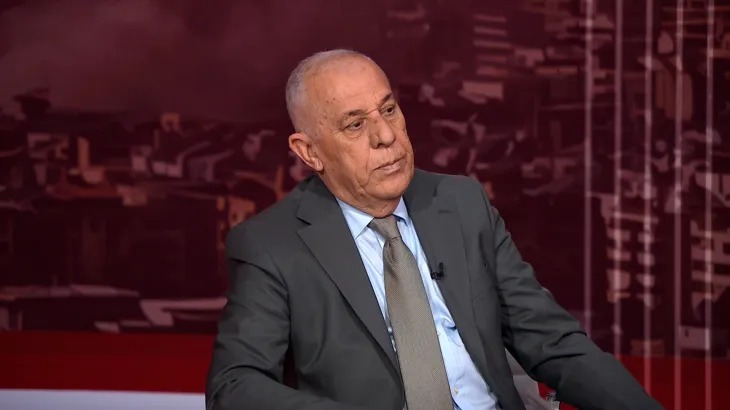
Military expert Major-General Fayez Al-Duwairi said the Lebanese Hezbollah’s bombing of the Mossad headquarters in Tel Aviv is a qualitative but a disciplined shift so that things do not develop into a large-scale ground battle both sides are trying to avoid so far.

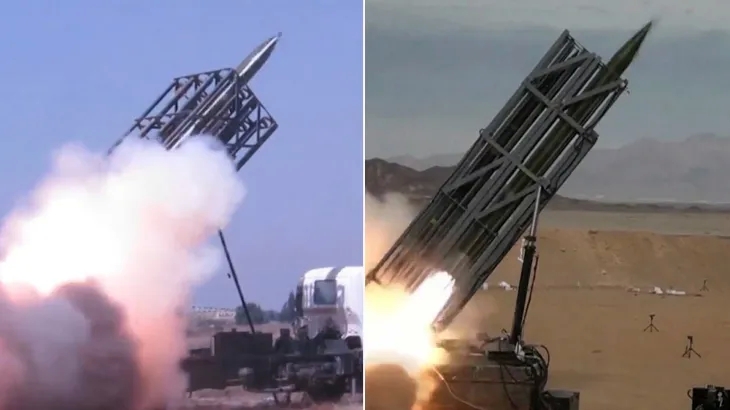
Earlier Wednesday, Hezbollah announced targeting the Mossad headquarters in the suburbs of Tel Aviv with a “Qader I” ballistic missile, in a precedent move since the beginning of the Israeli war on the Gaza Strip about a year ago.

The party stated it targeted Mossad headquarters because it “is responsible for assassinating leaders and blowing up communication devices.”

According to Al-Duwairi, the party did not target Tel Aviv directly but rather targeted a military headquarters responsible for blowing up the pagers, which means it is an operation similar to the assassinations carried out by Israel in the Beirut suburb.

Therefore, he believes that the targetting does not mean bringing Tel Aviv into the unfolding battle, saying current Israel’s operations in Lebanon do not aim to destroy the suburb randomly. He added this reflects the keenness of both parties not to escalate in a way that leads to an open ground war, even if the comprehensive war is already underway.

No ground war yet

He explained the ground operation is the missing part of the comprehensive war between the two sides, suggesting Israel will continue to maintain this situation for another period in the hope of breaking Hezbollah’s will and subjecting it to its dictates.

He said Israel is using the Gaza Strip approach in Lebanon, but warned that the military solution will not be achieved and that Hezbollah will not retreat beyond the Litani River as Israel wants.

Al-Duwairi described Hezbollah’s operations as a war of pressure on the Israeli economy and society and not a war of attrition, noting the latter is based on targeting the civilian and military dimensions and that will only be completed through a ground confrontation.

He expected that a ground war would only break out if Netanyahu felt that the current pressure would not force Hezbollah to retreat. However, he pointed out that Israel previously remained in the Litani area for 20 years and was forced to leave due to the Lebanese resistance.

Hezbollah must rely on itself

He said the situation in southern Lebanon is completely different from Gaza, noting that Hezbollah will not deploy its forces on every square meter but will rely on the combat contracts that will grant it the desired victory in the end, because a ground confrontation means great losses for the occupation army.

Regarding Hezbollah’s strengths in a ground war, Al-Duwairi said they are represented in its ability to manage the battle and activate the unity of the arenas in Yemen and Iraq in an effective manner and not symbolically as is the case now according to Al Jazeera.

Continue reading
Israeli Troops Prepare to Invade Lebanon

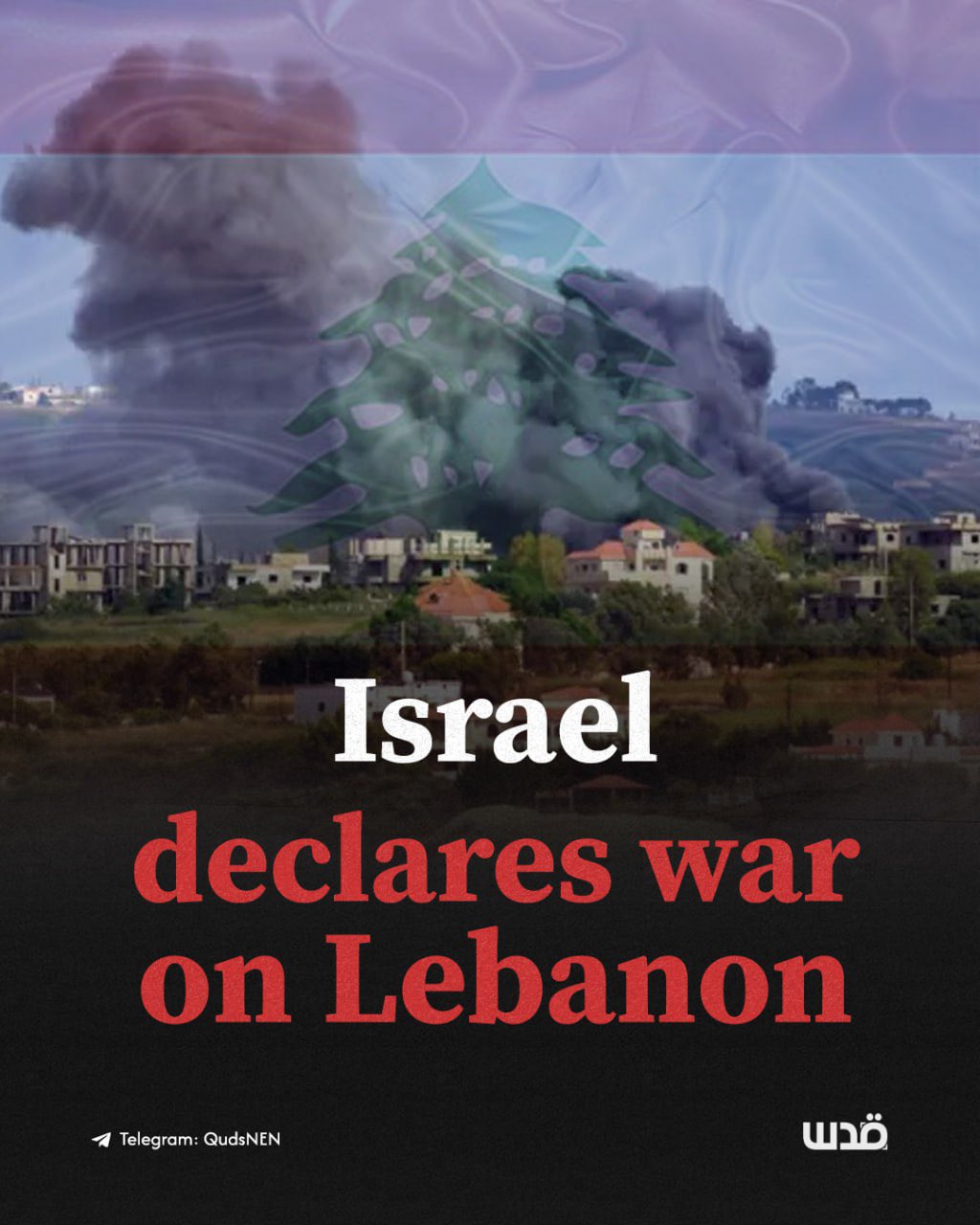
The Israeli army stated, Wednesday, it is preparing for a ground operation in Lebanon as airstrikes continue to pound the country. 

“We are not stopping, the fighter jets have been striking all day [in Lebanon], and we are preparing for the maneuver,” Israeli Chief of Staff Gen. Herzi Halevi said during an exercise in the north, according to a military statement.

He visited the 7th Brigade at the northern border, along with the commanding officer of the Northern Command, the commanding officer of the 98th Division, the commanding officer of the Ground Forces Training Center, and the commanding officer of the 7th Brigade, the statement added according to the Anadolu news agency.

“You hear the jets overhead; we have been striking all day. This is both to prepare the ground for your possible entry and to continue degrading Hezbollah,” Halevi told soldiers.

“Today, Hezbollah expanded its range of fire, and later today, they will receive a very strong response. Prepare yourselves,” he said.

Erlier, the army said that it struck over 280 Hezbollah-linked targets in Lebanon since Wednesday morning.

The army called up two reserve brigades to the northern border with Lebanon early Wednesday amid its ongoing attacks on the country.

The mobilization of reserve forces signals potential preparations for ground operations.

Israel has launched waves of deadly airstrikes on Lebanon since Monday morning, killing nearly 610 people and injuring over 2,000 others, according to Lebanese health authorities.

Hezbollah and Israel have been engaged in cross-border warfare since the start of the Israeli war on Gaza, which has killed over 41,400 people, mostly women and children, following a cross-border attack by Hamas last Oct. 7.

The international community has warned against the strikes on Lebanon, as they raise the specter of spreading the Gaza conflict regionally.

Continue reading
A Middle East Powder Keg

By Dr Khairi Janbek

Like Dorian Grey in Oscar Wild’s novel, we hated the face of Arab political realism in the 20th century when we saw it, and hated it more in the 21st century when we stopped seeing it.

Without much ado, the current ongoing war, or perhaps more accurately wars, in the Middle East, started by opportunists for opportunistic goals that converged.  Hamas with its 7th October attacks knowing only too well that Israel has the most right-wing and racist government in its history, and must have known that the its retaliation would be most severe.

It stands the reason to think the more severe the better, because this is likely to involve what is called as the axis of resistance in Lebanon, Syria, Iraq, Yemen, and as a bonus Iran as well. But closer to home, Israel by making Gaza uninhabitable to the people is expected to cause an exodus towards Egypt thus bringing it into the conflict, and the inevitable thought of Israel moving into the West Bank, and the likely push out of the Palestinians towards Jordan will bring the country into the conflict as well.

For Israel, with its most extremist right wing and racist government, the attacks couldn’t have come at a more opportune time. The situation presented them with the opportunity of attempting to put what were merely theoretical ideas in their minds, into practical policies.  Of course the root of what became a policy, is the rejection of an independent Palestinian state and the death of the two-state solution, by starting with breaking the Hamas grip in Gaza and transforming the area into a buffer zone with possible rebuilding of colonies/settlements on the area.

This is while the Gazans can be completely dependent on the good will of Israel for their survival, however, if the Arabs want to rebuild Gaza then by all means, but let them this time protect their investments by keeping actively the peace, and if Egypt can be persuaded to voluntarily taken in some Gazan refugees all the better!

Of course all eyes are also on the West Bank. Here Israel’s aim, one would say, is to turn the area into a “bantustan” totally dependent on Israel,  with the trimmings of municipal power to the PNA to manage internal affairs while real control of the economic, political domains remain in Israel’s hands.  

The Palestinians here would also be dependent on the Israeli economy, and relations between the West Bank and Jordan would be only possible with Israeli consent.  If of course, Jordan would accept taking displaced Palestinians from the West Bank voluntarily, all the better as well.

Having said all that, where do we stand now after so much recent death and destruction? A total war? Whatever does that actually mean when Jordan has already its own war against drugs, Egypt and its problems with Ethiopia, Somalia, Syria between the hammer of Israel and the anvil of Iran, Iraq a soup for Americans, Iranian partisans and a non-descript government, Yemen teetering on the brink of losing the existential battle, while Iran obsessed with its nuclear programme. One would hazard a guess that total war means, the killing of Israeli civilians by Hezbollah.

Dr Janbek is a Jordanian writer based in Paris, France

Continue reading