Story of The Paramedic Killed by Israel

Israeli forces targeted and killed a health care worker who was en route to assist wounded Palestinians in northern Gaza, an area under tight siege and heavy bombardment where evacuations have not been allowed.

Due to the severe blockade imposed by Israel, rescue teams in northern Gaza struggle to reach devastated areas, leaving the injured unable to be evacuated.

On Oct. 15, Israeli warplanes bombed the home of the Al-Sayyid family in the Bi’r al-Naja neighborhood west of Jabalia in northern Gaza.

Ambulances and civil defense teams could not reach the family’s home due to Israeli attacks and obstructions. On that day, Ahmed al-Najjar, a 33-year-old Palestinian paramedic who was known for his bravery and dedication, set out to rescue the wounded. But before he could arrive, he was killed in a targeted drone strike in the Al-Faluja neighborhood of Jabalia.

Aiding those in need

Al-Najjar’s relatives and friends said that he refused to heed Israeli evacuation warnings, continuing his duties under intense bombardment and repeatedly risking his life to help the wounded. His friend Ghazi al-Majdalani told Anadolu that al-Najjar was known for his courage and dedication, working tirelessly to assist the injured until the very end.

“Ahmed was a truly good person and a role model. He never listened to Israel’s calls to evacuate the north, feeling a deep responsibility toward the injured and sick,” al-Majdalani said.

Al-Najjar not only provided medical care but also documented Israeli attacks. He shared photos and videos with journalists to highlight the atrocities and make them known to a broader audience.

Hero until the last moment

Ahmed’s brother, Khalil al-Najjar, described him as a compassionate and exemplary individual who loved helping those in need. Even when his wife and children moved south due to intensified air and ground assaults, Ahmed chose to stay in the north to assist the wounded.

Khalil emphasized that his brother worked tirelessly to prevent infections among the injured since the beginning of the attacks, saying Ahmed risked his life until the very last moment to save others.

Ahmed was well-loved by the community in the Jabalia refugee camp, and his death was described as a significant loss for everyone there. Before his death, he had shared his phone number on social media, urging those trapped in the north to contact him if they needed emergency medical help, as Israeli forces often blocked rescue teams from reaching disaster sites.

Ahmed al-Kahlout, the director of civil defense in northern Gaza, expressed his condolences on social media.

“May God have mercy on you, kind-hearted Ahmed. You had no fear of death as you saved people from between tanks and danger. May your efforts be accepted and your good deeds fill the scales in your favor,” he said.

Gaza Civil Defense spokesman Mahmoud Basal also confirmed that Israeli forces blocked access to areas where the injured needed evacuation. Additionally, Inas Hamdan, acting director of the Gaza Media Office of the UN agency for Palestinian refugees (UNRWA), said that Israel denied requests to pull people from under the rubble in northern Gaza.

“We have warned over the past two weeks about the worsening siege in northern Gaza and the Jabalia refugee camp. The situation is becoming increasingly dire. Israel’s ongoing military operations in northern Gaza put tens of thousands of civilians at immense risk,” Hamdan said.
Continue reading
‘We Must Not Let Northern Gaza Fall’

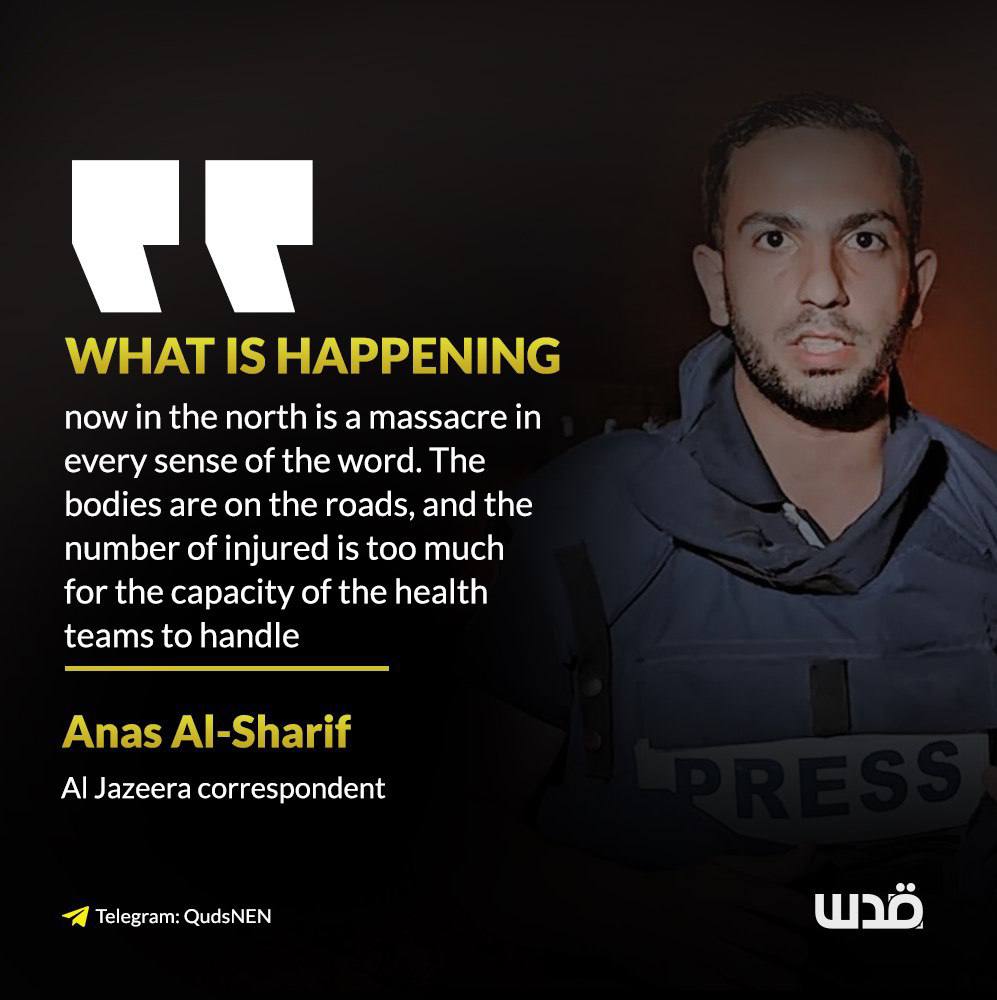
The Israeli army intensified airstrikes, artillery shelling, and gunfire in northern Gaza, Monday, amid a strict blockade that has halted the entry of food, water, fuel, and medicine, witnesses reported.

Witnesses said Israeli air raids and shelling continued for the 17th consecutive day, focusing on northern Gaza, particularly the Jabalia refugee camp, under an ongoing siege.

Israeli warplanes launched multiple airstrikes on the Saftawi area, Jabalia camp, and Beit Lahia in the northern Gaza Strip, according to the witnesses.

Israeli military vehicles were reported to be stationed near the Indonesian Hospital, the telecommunications area, and the Tawam roundabout, where intermittent gunfire was heard, the witnesses added.

In a statement, Gaza Civil Defense spokesperson Mahmoud Basal said: “The occupation (forces) continue to kill everything living in northern Gaza, destroying and demolishing residential homes.” He added that the Israeli forces were using siege and starvation tactics in Jabalia camp, preventing emergency teams from reaching the camp and other northern areas to evacuate the wounded.

A medical source told Anadolu that two Palestinians were killed and others injured in artillery shelling that targeted homes in the Saftawi area.

The Israeli army also continued demolishing and burning residential buildings in western Jabalia camp and Beit Lahia, witnesses said.

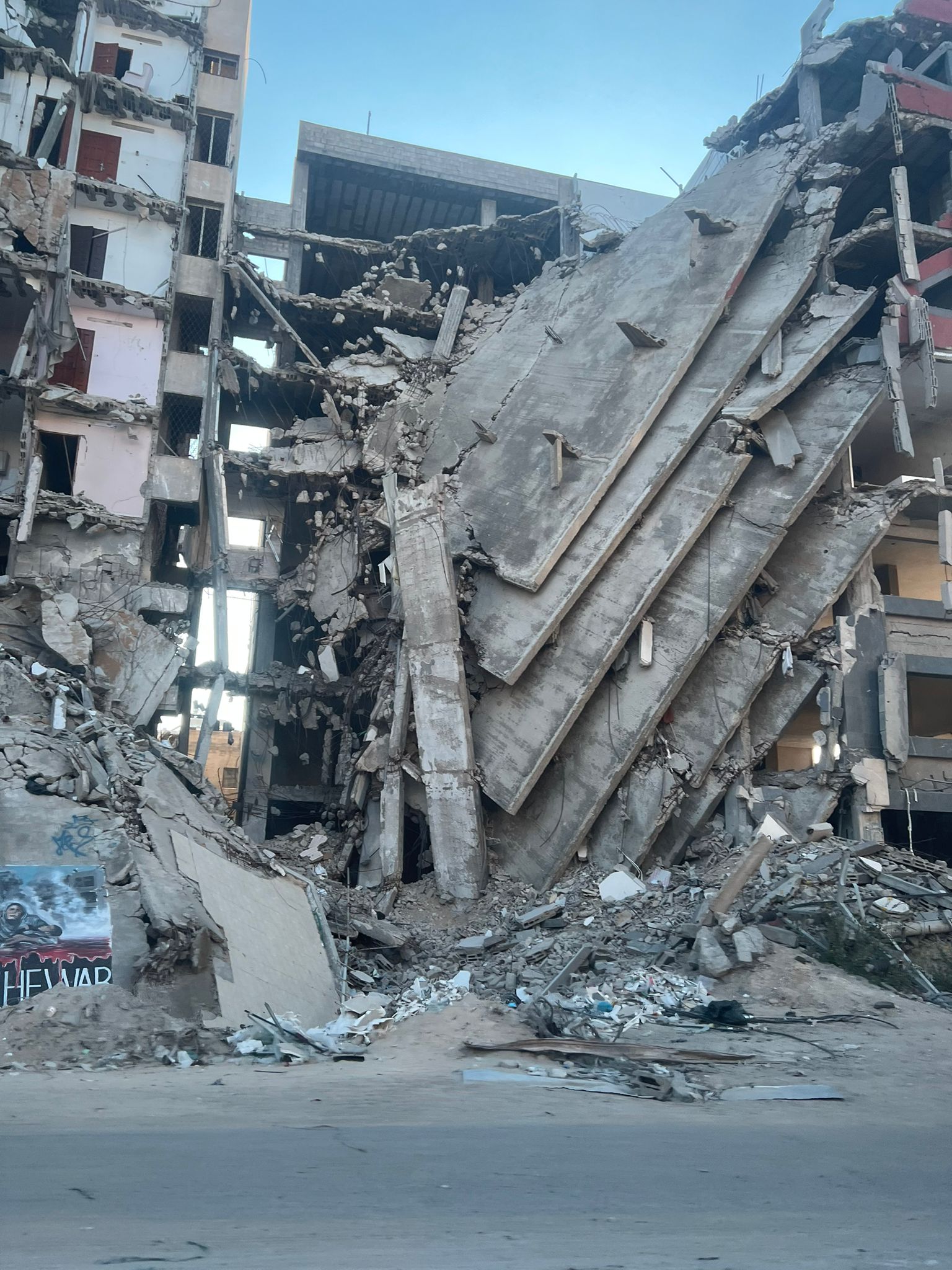
They added that the army destroyed an entire residential block near the electricity company close to Sheikh Zayed roundabout in northern Beit Lahia.

The situation has led to a severe food and water crisis in northern Gaza, as the Israeli military blocks the entry of trucks carrying food or aid, according to multiple sources and trapped residents.

On Oct, 6, the Israeli army attacked northern Gaza, claiming it was to “prevent Hamas from regaining strength in the area.” However, Palestinians say Israel seeks to occupy the area and forcibly displace its residents.

In Gaza City, two more Palestinians were killed by Israeli artillery shelling of Ahmed Yassin Street in the western part of the city, according to Palestinian paramedics.

Israeli warplanes and artillery launched intense strikes on the Sudaniya area, the Shati refugee camp in northwest Gaza City, and the Zaytoun neighborhood in the southeast, according to witnesses.

In central Gaza province, Israeli forces carried out artillery shelling and heavy gunfire north of Bureij camp and west of Nuseirat camp, though no injuries were reported.

Explosions were heard as residential buildings were demolished in northern Bureij and Nuseirat camps, according to a Palestinian Civil Defense source.

The eastern parts of Khan Younis in southern Gaza also witnessed heavy artillery shelling, with the strikes concentrated on the outskirts of Abasan al-Jadida town, accompanied by intense gunfire.

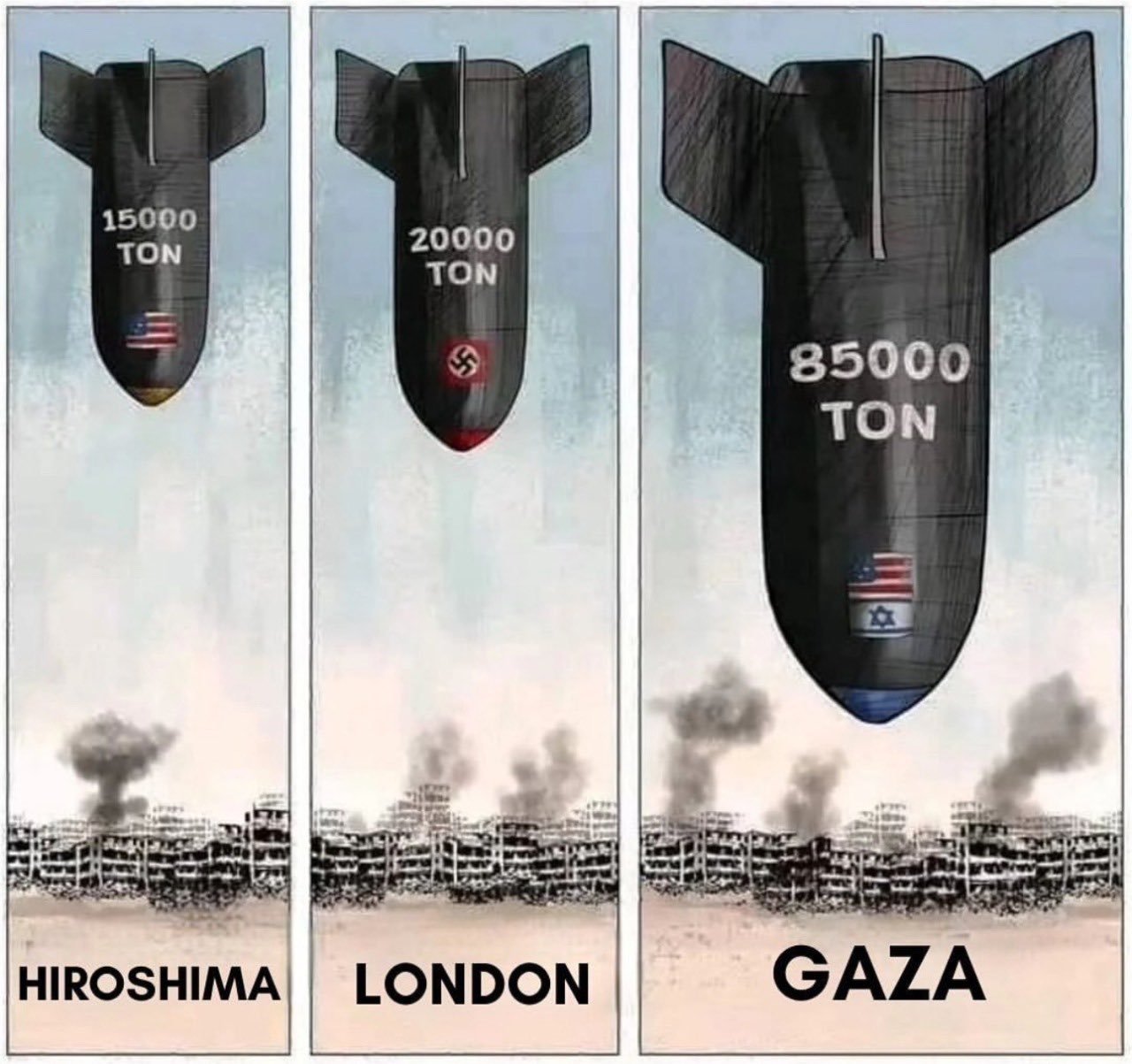
Israel has continued a brutal offensive on Gaza following a cross-border attack by the Palestinian group Hamas last year, despite a UN Security Council resolution calling for an immediate cease-fire.

More than 42,600 people have since been killed, mostly women and children, and nearly 99,800 injured, according to local health authorities.

The Israeli onslaught has displaced almost the entire population of Gaza amid an ongoing blockade that has led to severe shortages of food, clean water, and medicine.

Continue reading
Gaza Journalist: World ‘Blind’, ‘Deaf’ to Jabalia’s Genocide

A Gazan journalist calls the world ‘blind, deaf’ due to the international community’s failure to bring about an end to the ongoing bloodbath in Gaza.

Continue reading
‘I am Mahasen from Gaza and I am trying to stay alive’

Words that didn’t last for long because of the pounding Israeli warplanes that seeks to end anything called Gaza, Palestine and Palestinians.

The young woman always tried to stay cheery and alive. But her death was always to be expected as she was killed by an Israeli missile that pulverized her home.

She finally become a martyr with her family in indiscriminate Israeli military strikes on the Jabalia Camp, northern Gaza on 18 October, 2024. The camp has been under constant bombardment for the last two week. This is the third time the Israelis tried to enter the camp in a year-long onslaught.

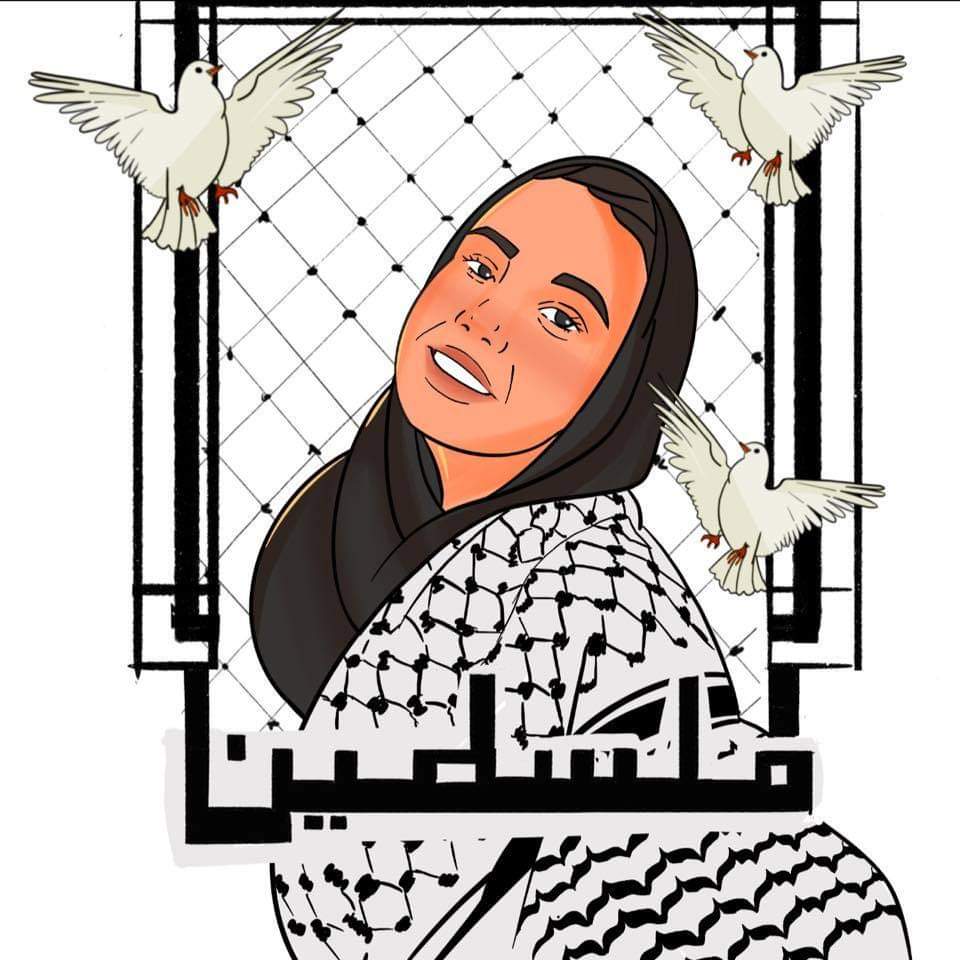
Artist and painter Mahasen Al Khatib life was cut too short by a merciless, blinded Israeli war on defenseless civilians while world leaders look on with hands tied behind their backs.

Today she stands as the owner of the “famous chicken” videoclip in which she documented the happiness of her brother when they managed to get a chicken after months of eating leaves on a starvation diet.

She watches her brother playing with the dead naked, meat, laughs and asks:

“How are we going to cook it…?”

“Magloba…[Arabic dish with rice and vegetables,” comes the reply.

“How about roasting yet,” she interjects.

“Yes, that would be great too.”

Oh, I know, how about boiling it,” she wounders as if this is a great festive occasion.

“Yes, that too would be nice,” with the eyes of her little brother lighting up.  

‘Or, what about cutting it, or even stuffing it?”

She made the videoclip on 9 August, 2024. Little did she know would be at the end of an Israeli two months later.

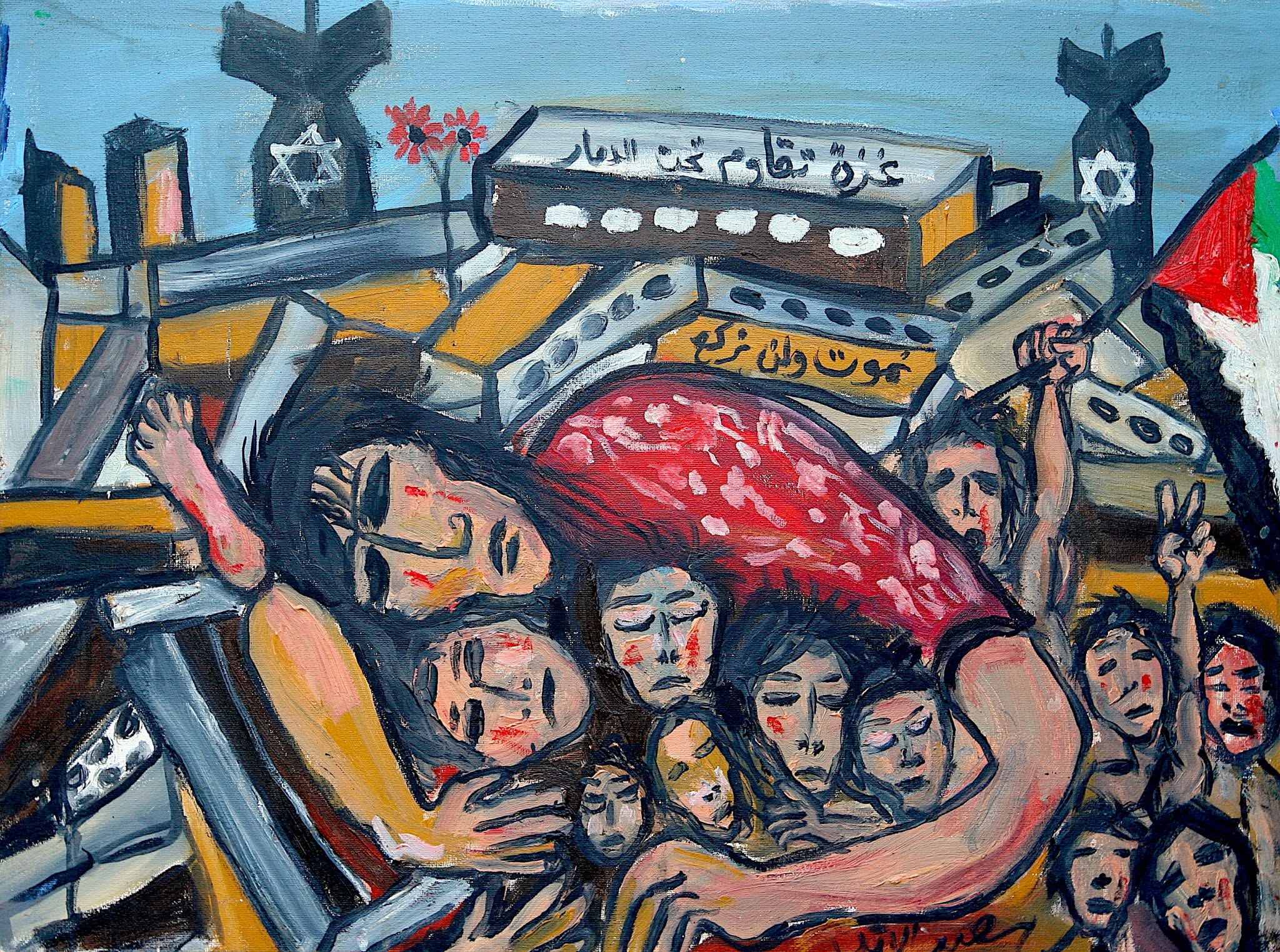
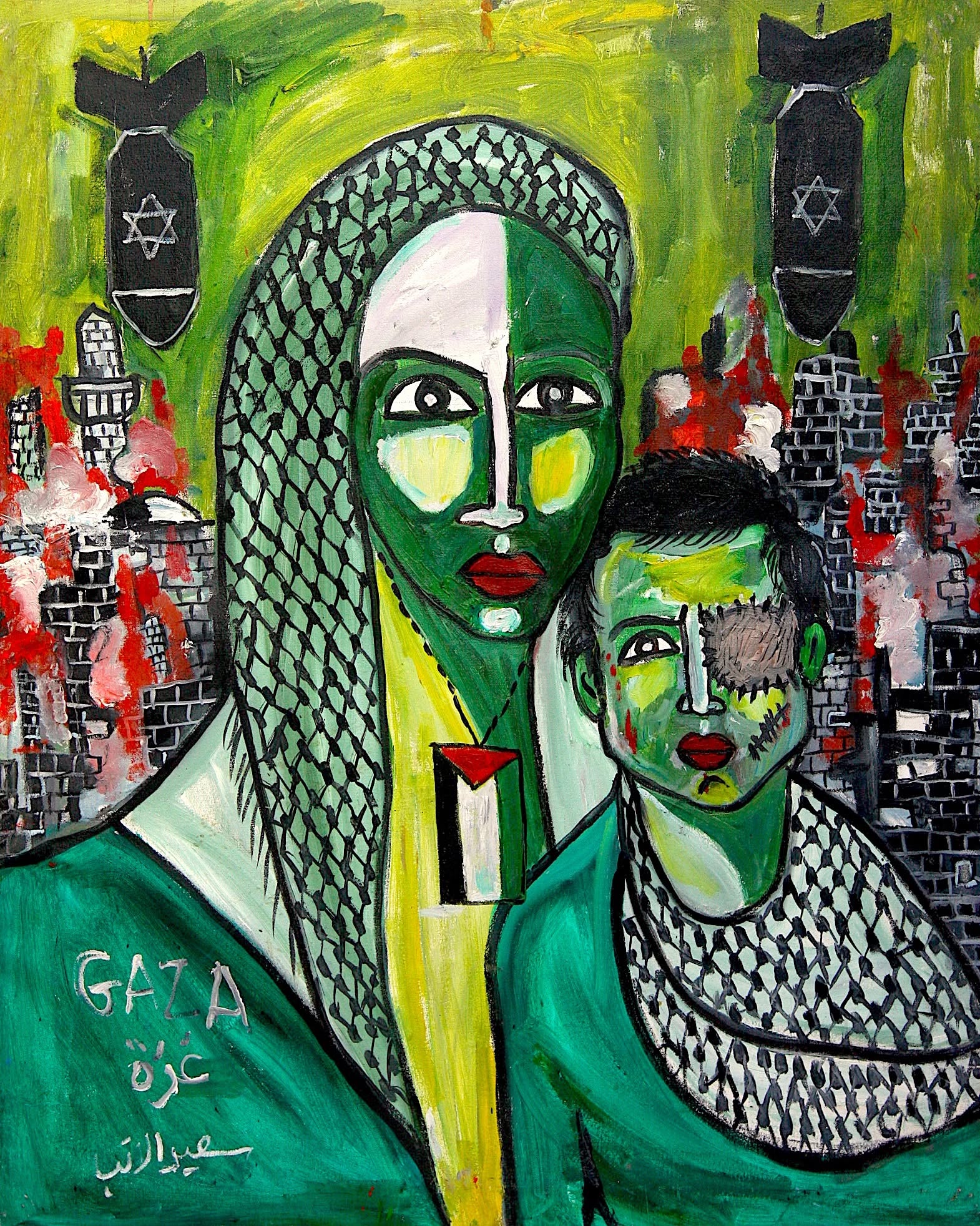
Mahsen drew with her pencils the heinous  conditions of the people of Gaza that have been unrelenting in an Israeli genocide of death and destruction.

Her last post was on Facebook of a youth being burnt alive. His name was Shabaan Al Dalo.

He was burnt alive in a tent outside the Al Aqsa Martyrs Hospital on 14 October, 2024.

“How do feel when you see any person burned alive,” she wryly commented a few days later.

Mahasen Al Khatib established Rawasi Palestine Foundation for Culture, Art and Media.

Palestine and Gaza lost a creative personality. She sought to communicate the merciless, ungodly heartache of the people whose lives have long been turned upside down. She wanted to send a message to the world in a clever way about the tragedies of Gazans through her artistic works.

Mahasen left us with a creative, national heritage that sought to fight ethnic cleansing and presented us with immense digital works that expressed our wounds, devastation and hopes for an end to the massacres and killing.

The artist was firm against people leaving their homes. She and her family stood against displacement and fought it tirelessly through her works that depicted the harsh realities in a caricaturist, funny manner which she published on her social media accounts.

“God sends us a chicken after long months…thanks be to God, she says….It was a chicken for eight people and I ate a part of it,” she emphasized.

The social media became alert when news of her martyrdom was announced.

Mohammad Saeed wrote: “The martyr Mahasen Al Khatib documented for us the moment the flour arrived at their home after months of hunger and eating tree leaves. She also documented the arrival of the first chicken for her entire family after many months of absence. She stood firm in Jabalia and didn’t move. Mahasen was martyred tonight in a violent shelling in Jabalia camp. Remember her in your prayers…”

In another post that included a video of the fire, Mahasen wrote, “We saw people burning, we saw people with no one helping, we saw people dying in front of our eyes… May God have mercy on us.”

From Joy to Martyrdom

Over the past years, Mahasen Al-Khatib has spread joy through her artwork. Even in the darkest moments, she would draw a smile by publishing her family’s daily life under the bombing and harsh conditions of war. However, the last thing the Palestinian artist published before her martyrdom carried a lot of pain, which she described as “difficult nights,” according to Al Jazeera.

Continue reading