EU ‘Appalled’ at Israel…

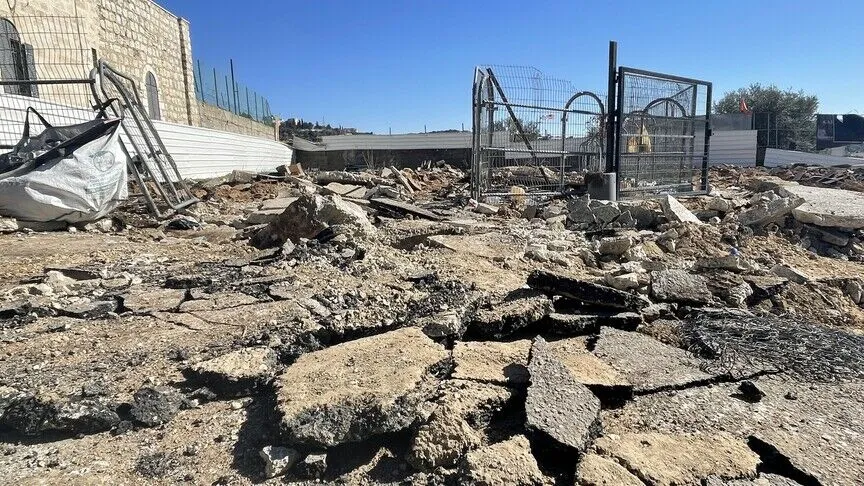
The European Union has condemned Israel’s demolition earlier this month of a school in the occupied West Bank village of Aqqaba that was being built with EU and French funding.

The school, torn down by Israeli authorities on August 5, had been intended to serve hundreds of Palestinian children.

In a statement, an EU spokesperson said the bloc is “appalled” by the demolition and “expects its investments in support of the Palestinian people to be protected from damage and destruction by Israel, in accordance with international law”.

France also previously condemned the demolition, stating it is “holding the Israeli authorities to account for this action”.

Continue reading
Jordan’s PM: ‘Greater Israel’ Illusion

Jordanian Prime Minister Jafar Hassan on Tuesday called the so-called “Greater Israel” vision an “illusion,” stressing that Tel Aviv is “isolated” due to its “extremist” policies.

“We hear about visions and proposals that imply a perpetual war with no end, such as the illusion of Greater Israel entertained by extremist politicians in Israel,” Hassan said during a meeting in Amman with his Lebanese counterpart, Nawaf Salam, who arrived in the Jordanian capital early Tuesday for an unannounced visit.

He said Israel is “isolated and besieged because of its extremist policies.”

“The entire reality points to (Israeli) policies that deepen hatred and resentment as a result of ongoing massacres, and the peoples of the world and the region will not forgive them,” he added in his comments carried by the official Petra news agency.

On Monday, Jordanian government spokesman Mohammad al-Momani accused the far-right in Israel of “threatening the region and undermining prospects for a two-state solution.”

“Greater Israel” is a Biblical term used in Israeli politics to refer to the expansion of Israel’s territory to include the West Bank, Gaza, Syria’s Golan Heights, Egypt’s Sinai Peninsula, and parts of Jordan.

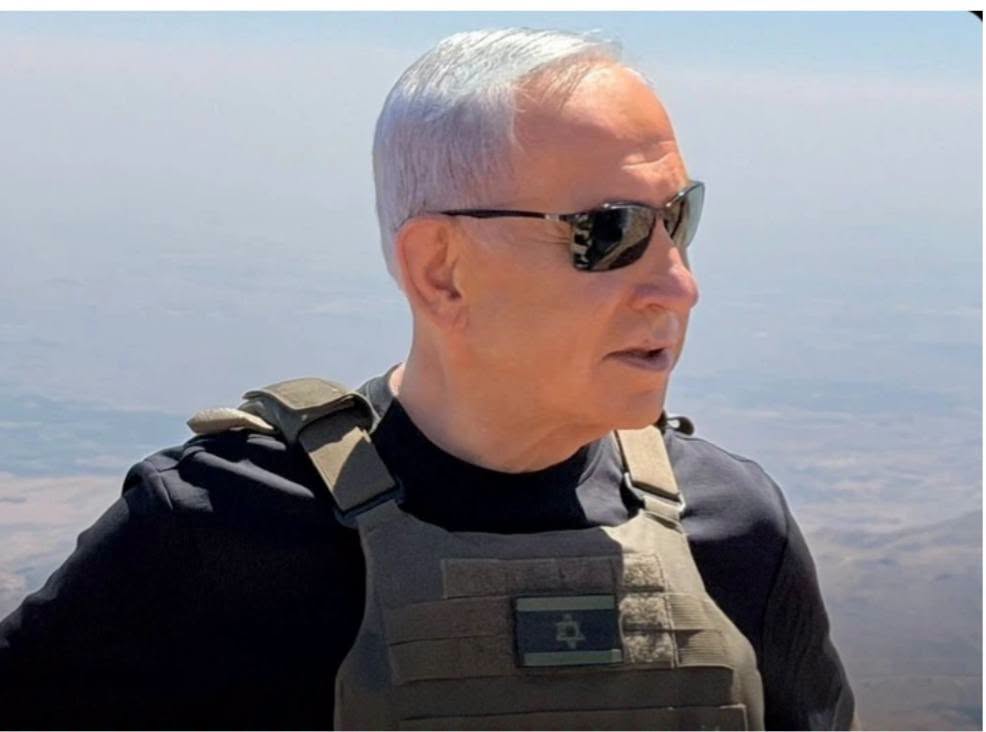
Last week, Israeli Prime Minister Benjamin Netanyahu told a news channel that he feels “very attached” to the vision of a Greater Israel. He said he considers himself “on a historic and spiritual mission” which “generations of Jews that dreamt of coming here and generations of Jews who will come after us,” according to Anadolu.

Israel has killed more than 62,000 Palestinians in Gaza since October 2023. The military campaign has devastated the enclave and brought it to the verge of famine.

Last November, the International Criminal Court issued arrest warrants for Netanyahu and his former Defense Minister Yoav Gallant for war crimes and crimes against humanity in Gaza.

Israel also faces a genocide case at the International Court of Justice for its war on the enclave.

Continue reading
Famine: Hundreds of Thousands Eat Every 2-3 Days in Gaza

Hundreds of thousands of Palestinians eat only one meal every two or three days amid a crippling Israeli blockade on the Gaza Strip, the UN agency for Palestinian refugees (UNRWA) said on Tuesday.

“More than 66,000 children in Gaza are suffering from severe malnutrition,” UNRWA spokesman Adnan Abu Hasna told Al-Ghad TV in an interview.

Since March 2, Israel has kept Gaza’s crossings closed to food, medical, and humanitarian aid, deepening an already humanitarian crisis in the enclave, according to government, human rights, and international reports.

Figures released by Gaza’s government media office showed that at least 57 Palestinians have died of starvation since October 2023.

Nearly 2.4 million people in Gaza live completely dependent on humanitarian aid, according to World Bank data.

“UNRWA will not be part of the new Israeli plan” for aid distribution in Gaza, as the plan “doesn’t adhere to UN standards at all,” Abu Hasna said.

On Sunday night, the Israeli Security Cabinet approved a plan to distribute aid in the blockaded enclave through private security contractors.

The plan, however, was rejected by the UN and dozens of international aid groups, saying it runs against humanitarian principles, is logistically unworkable, and could put Palestinian civilians and staffers in harm’s way.

The UN Humanitarian Country Team in Gaza said on Sunday night that it “can only support plans that respect the humanitarian principles of humanity, neutrality, independence, and impartiality,” according to Anadolu.

More than 52,500 Palestinians have been killed in Gaza in a brutal Israeli onslaught since October 2023, most of them women and children.

The International Criminal Court issued arrest warrants in November for Israeli Prime Minister Benjamin Netanyahu and his former Defense Minister Yoav Gallant for war crimes and crimes against humanity in Gaza.

Israel also faces a genocide case at the International Court of Justice for its war on the enclave.

Continue reading
Gaza Faces Public Health Crises

Amid sweltering heat, raw sewage and overflowing trash, displaced families in southern Gaza are facing an escalating public health crisis as aid remains blocked and medical supplies dwindle.

In the makeshift coastal encampments of Al Mawasi, families have no choice but to live in unsanitary conditions that are rapidly turning deadly, Louise Wateridge, Senior Emergency Officer at Palestine refugee agency, UNRWA, told UN News.

She described an increasingly dire situation: malnourished children and families, already worn down by months of war, battle unrelenting heat, unsanitary conditions, a lack of clean water and limited access to healthcare.

“The trash is just out of control. The sewage, the rodents, the pests, the rats, the mice – all of these animals are going between the structures that people are sheltering in,” she said.

As the days hot up, “disease is spreading. There is not enough medicine,” she added. UNRWA teams are conducting intensive clean up campaigns, but their resources are running out.

They’ve got about 10 days left of pesticides. Supplies are going to run out,” Ms. Wateridge warned.

Heavy equipment destroyed

The worsening conditions are being compounded by the destruction of Gaza’s public health infrastructure.

According to the UN humanitarian coordination office (OCHA), more than 30 vehicles essential for waste management, water supply and sewage maintenance were destroyed by Israeli airstrikes between 21 and 22 April.

In the past week alone, at least 23 reported strikes have hit tents sheltering internally displaced persons (IDPs), killing dozens of civilians – including women, children, and persons with disabilities.

Health system under strain

OCHA also noted that Gaza’s health system is continuing to collapse.

Over half of the remaining health facilities are located in zones under evacuation orders, posing serious access challenges for communities in urgent need. There are also widespread shortages of medicine, equipment and medical staff.

As of 15 April, an estimated 420,000 people have been displaced – many for the second or third time.

Shrinking humanitarian space

Humanitarian space continues to be shut down. Vital humanitarian aid has not entered Gaza for 52 consecutive days.

OCHA noted that between 15 and 21 April, nearly half of the planned humanitarian movements were denied or impeded.

It reported that out of 42 planned aid missions across the Gaza Strip that were coordinated with the Israeli authorities, 20 were denied, two faced impediments, 19 were facilitated and one was cancelled.

Meanwhile, UN agencies also have to contend with lack of funds to sustain their programmes.

As of 22 April, donors have disbursed about $569 million out of the $4.07 billion (about 14 per cent) required to meet the most critical humanitarian needs of three million people requiring assistance in Gaza and the West Bank, including East Jerusalem.

UN News

Continue reading
Can Israel Change The Middle East?

By Mohammad Abu Rumman

In the short term, Israel is no longer in a hurry to normalise relations with Saudi Arabia, which it considers the grand prize in the Islamic world. Although its leaders view normalization as necessary, indeed inevitable, over the long run, what Netanyahu and his team currently see is an unprecedented historical opportunity that has not occurred since the founding of the State of Israel. They are thus pushing to implement sweeping and profound changes to the Palestinian situation, through displacement, expulsion, settlement expansion, annexation, and the Judaization of Jerusalem, from Gaza to Jerusalem and the West Bank. For the Israeli right, these policies take precedence over any other strategic interests.

It is not only about the Palestinians. The Israeli right’s ambitions today extend to constructing new and unprecedented spheres of regional influence and redefining Israeli security. This includes striking at any source of potential future threats and establishing Israel as the dominant regional power.

There are three key variables that must be taken into account when analyzing the current geopolitical shifts and the repercussions of Israel’s war on Gaza, not only in terms of the Palestinian issue, but also on a regional and global scale.

The first variable can be described as “Political Netanyahuism.” Today’s Israel is no longer the Israel of the past—this marks the era of Benjamin Netanyahu, especially post-Operation “Al-Aqsa Flood.” This era has unleashed the historical project of the Israeli right-wing in full force, with no intention of reversing course. The key features of this project include, first, a complete abandonment of the peace process, a rejection of the Oslo Accords and their consequences, and the annexation of large parts of the West Bank—effectively nullifying the Palestinian Authority’s political relevance and perhaps returning to a system of disconnected “cantons.” Additionally, this entails the Judaiztion of Jerusalem. Second, Netanyahuism is reflected in a complete structural shift of Israel toward the right, with the near-total erosion of the secular-leftist stream in Israeli politics. Third, it involves the deep penetration of religious ideology into Israel’s security and military institutions, leading to their full domination by religious-nationalist elements.

Even if Netanyahu were to exit the political scene, this would not alter the course of these policies or shift current events. Israel post-Netanyahuism will not be the same as it was before. The historical Zionist dream persists—ideologically, strategically, and religiously—even if tactical approaches differ. This new political reality is not merely shaped by individuals like Itamar Ben Gvir and Bezalel Smotrich; rather, they are products of a broader environment and not anomalies within it.

The second variable is the major Arab strategic collapse—a process that began decades ago but reached a far more dangerous stage in the past 15 years, especially after so called “the Arab Spring”. The resulting transformations led to the fragmentation and collapse of numerous Arab states and the weakening of the entire Arab geopolitical map—in Syria, Iraq, Yemen, Sudan, and Libya. It now seems as though the Arab geopolitical landscape, shaped after World War I, is disintegrating. This has created a strategic opportunity for Israel to expand, particularly following the recent decline in Iran’s regional influence over the past year in the wake of the war on Gaza.

The third variable is the return of Donald Trump to the White House—this time accompanied by a team that is more Zionist and ideologically aligned with the Israeli right than ever before. The unprecedented genocide unfolding in Gaza, the (implicit) green light granted to settlers and Netanyahu’s government in the West Bank and Jerusalem, and the statements made by Trump’s team concerning Palestine, Iran, Lebanon, and Syria all suggest an unprecedented alliance—perhaps even an organic one—between a hardline right-wing American administration and an extremist Israeli right. Although US policies have historically been biased in favor of Israel, the situation has never reached this level of alignment and support.

These three variables together shape a new political landscape, they significantly impact Jordan’s strategic perspective on national interests and security and necessitate a reevaluation by political elites who previously believed that there were multiple factions within Israel with whom one could engage, or that American influence could constrain the Israeli right, or that an effective Arab strategic space could be mobilized to counter such dangerous transformations.

The writer is a columnist in the Jordan Times

Continue reading