This is my third post highlighting remarkable Christian Arabs whose lives and achievements have made a lasting impact.
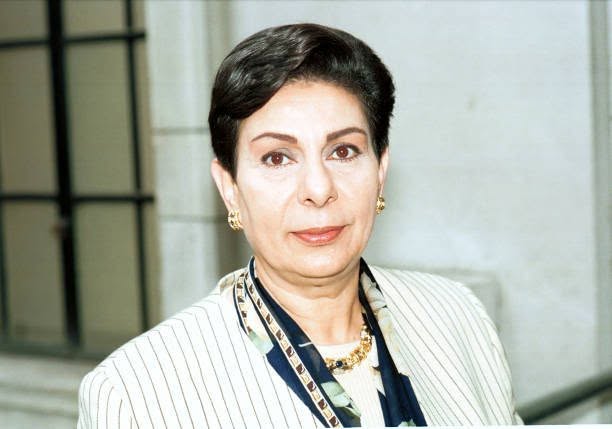
Today, I’d like to recognize Dr. Hanan Ashrawi, a Palestinian Christian woman whose voice has been heard around the world.
Born Hanan Daoud Mikhael in Nablus, Palestine, in 1946, she grew up in a Christian family and spent much of her childhood in Ramallah—the town where I was born!
Dr. Ashrawi is an educator, scholar, political leader, diplomat, human-rights advocate, and mother. She earned degrees from the American University of Beirut and a Ph.D. from the University of Virginia.
She taught at Birzeit University, where she became chair of the English Department and later Dean of the Faculty of Arts.
Dr. Ashrawi is also an author. She has written about Palestinian politics, culture, literature, occupation, and the peace process. Her memoir, This Side of Peace: A Personal Account, recounts her political involvement and her experiences representing Palestinians during an important period in their history.
Dr. Ashrawi became internationally known during the 1991 Madrid Peace Conference, where she served as a spokesperson for the Palestinian delegation. She helped bring Palestinian history, rights, and the desire for self-determination directly to an international audience.
Dr. Ashrawi also helped establish MIFTAH, an organization that promotes human rights, democracy, good government, and the participation of women and young people in Palestinian society. Interestingly, miftah means “key” in Arabic, which is an important symbol because it represents the homes and villages lost during the Nakba in 1948. When hundreds of thousands of Palestinians fled or were expelled during the war, many families took their house keys with them, believing they would soon return. In many cases, they were never allowed to go back. So, the key or miftah came to symbolize home, memory, displacement, and hope, and a claimed right of return.
What makes her story especially meaningful to me is that she is a Palestinian Christian woman from the land where Christianity began. Palestinian Christians have very deep roots in the Holy Land and have contributed to its faith, history, culture, education, and public life since the earliest days of Christianity, when Jesus walked this earth.
For decades, Hanan Ashrawi has used education, diplomacy, public service, writing, and advocacy to share the Palestinian story with the world. She will turn 80 on October 8, 2026, and continues to speak and write about Palestinian rights, peace, and political reform.
She broke barriers for Palestinian women and became one of the most recognizable Palestinian voices on the international stage.
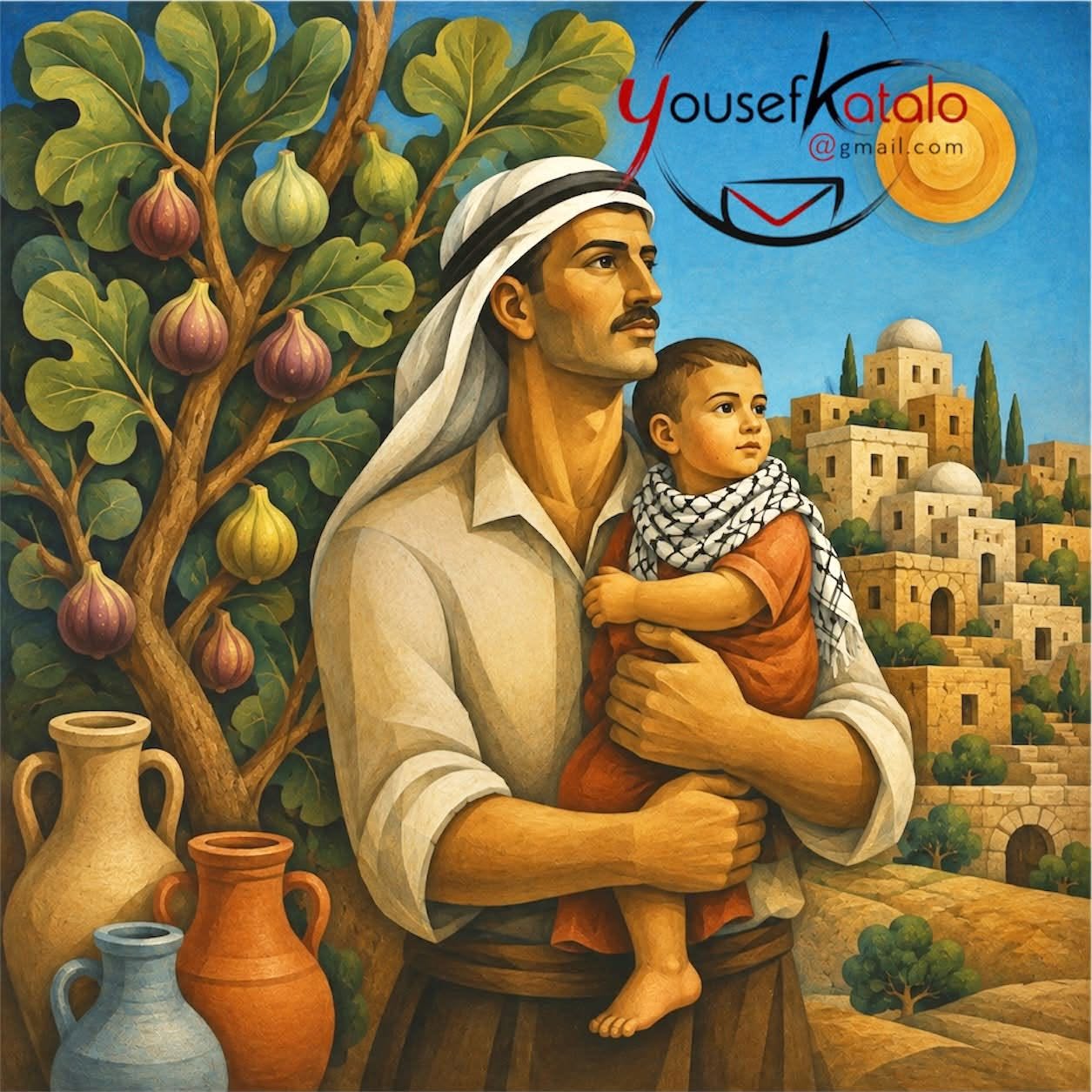
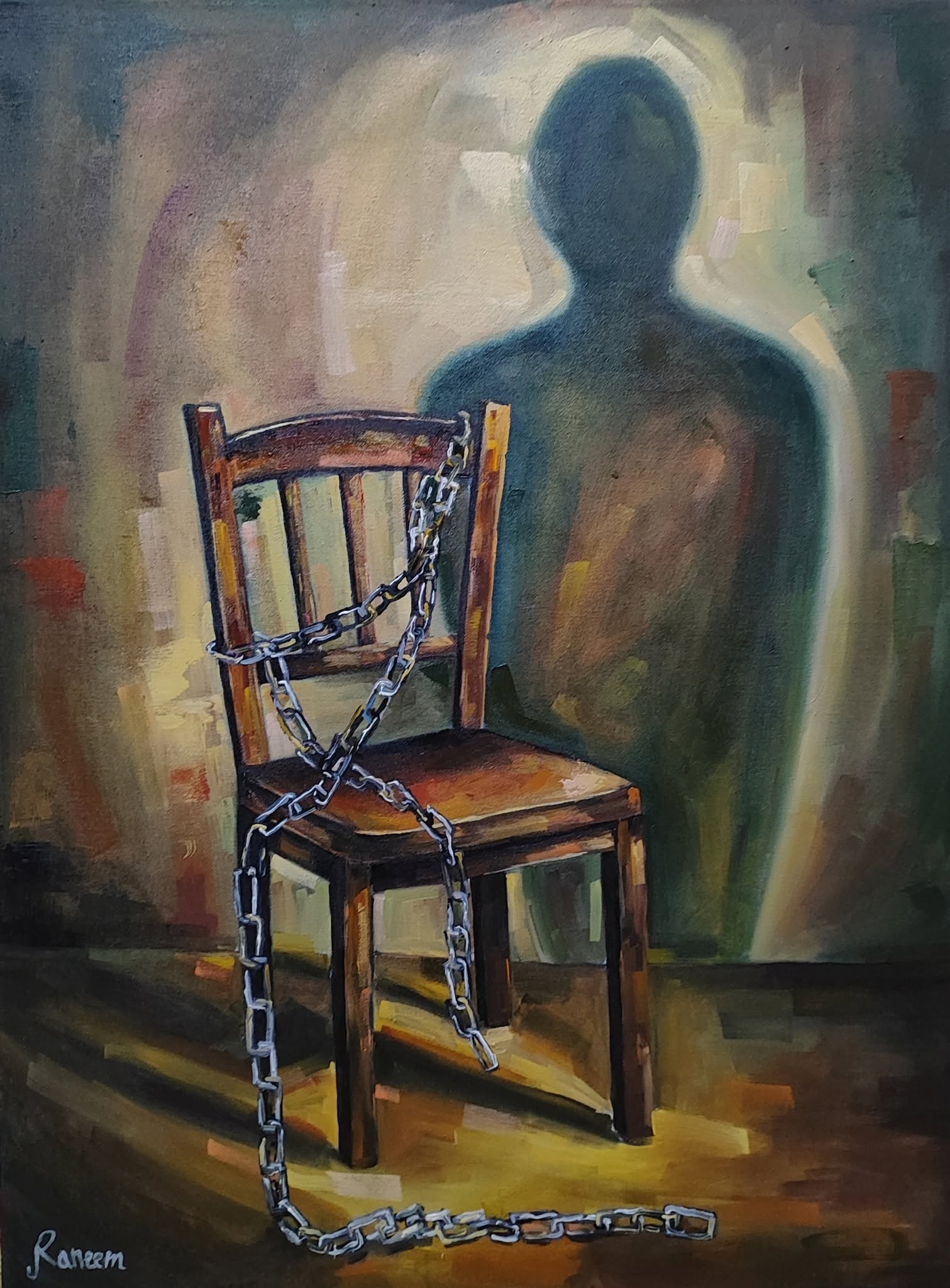
Painting made by Raneem Salah, an art student at the Najah National University in Nablus. She is studying there at the School of Fine Arts and lives in Tulkarem.
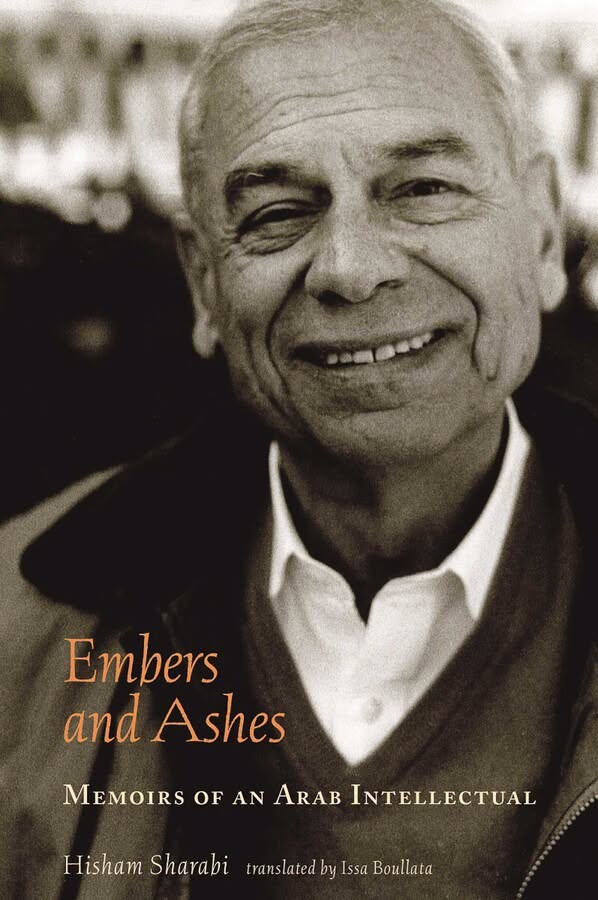
I first encountered the term “the opportunist” over 40 years ago, when I was a student in Jerusalem reading the books of the late Hisham Sharabi.
Including this book: “Embers and Ashes.”
In fact, I began reading Hisham’s books in Arabic long before I started reading his works in English or meeting him in person.
It’s likely that Hisham himself didn’t coin the term, but rather was influenced by its usage in our Arab popular culture and in the works of Hassan Hanafi and Sadiq Jalal al-Azm.
This term refers to students who consider themselves exceptionally intelligent and believe they can succeed in exams and in life without much effort.
Hisham (one of the most prominent modern Palestinian academics and thinkers) was right; there are no easy or quick ways to achieve true success, to produce great works of art, or to achieve groundbreaking scientific accomplishments.
It’s all about hard work, perseverance, and self-reliance.
And by the way, what applies to individuals also applies to the collective, and to our collective Palestinian national efforts.
EDITOR’S NOTE: This is the story of Jabal Al-Weibdeh generated by AI. Its detailed, historical, imaginative, exciting and well-read, done in no more than few minutes. Bang goes the days when writers and journalists would hark on pencil and paper and computer for hours and tomorrows while screaming and pulling off their hairs to make sure they got their thought in the right order. Here is a perfectly good story with references. Below is the original headline generated by AI.
Jabal Al-Weibdeh: Where Amman Remembers Itself
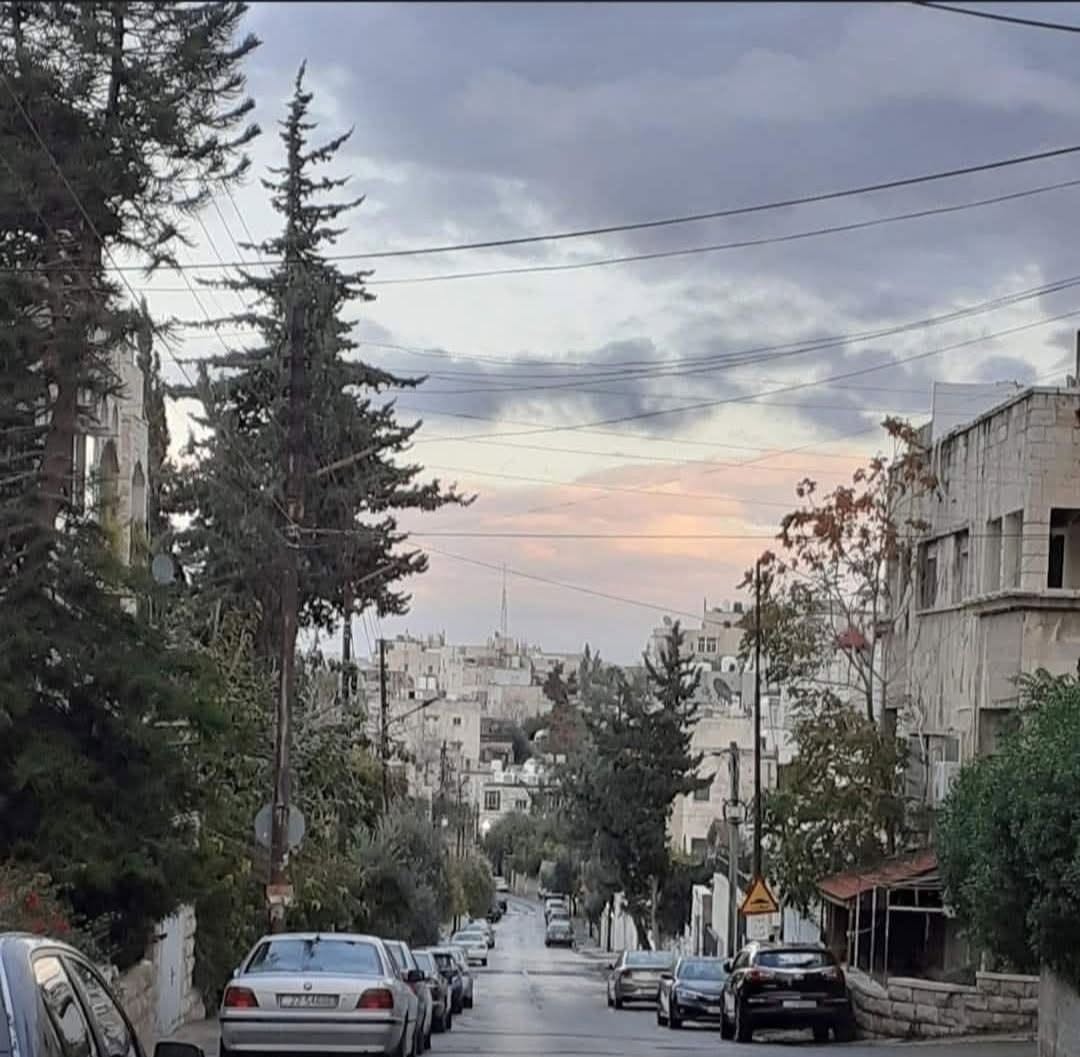
There are neighborhoods one visits for their monuments, and others one remembers for their atmosphere. Jabal Al-Weibdeh belongs firmly to the latter. Its story is not contained in a single building or museum. It is scattered among stone houses and garden walls, old staircases descending toward downtown, galleries hidden behind gates, balconies shaded by trees, and streets bearing the names of poets.
Perhaps the best way to understand Al-Weibdeh is simply to walk through it. And there is no better place to begin than at its eastern edge, at Darat al Funun – The Khalid Shoman Foundation.
Where Art Meets the Ancient City
Darat al Funun seems almost to grow out of the hillside. Below it lies the dense fabric of downtown Amman; above it, Al-Weibdeh begins its gradual climb.
The setting itself tells several chapters of Amman’s history at once. The art house occupies six historic buildings and warehouses, while archaeological remains in its gardens reach much further back into the city’s past. The main house was built around 1918, beside the remains of a sixth-century Byzantine church built over an earlier Roman site. (Darat al Funun)
Today, contemporary Arab art inhabits these old rooms. Paintings hang where families once gathered; artists and researchers work in buildings that were originally homes. Architecture, archaeology and contemporary art coexist rather than compete.
That combination makes Darat al Funun an appropriate doorway into Al-Weibdeh, because the neighborhood itself works in much the same way. It does not erase one period to make room for another. It accumulates them.
From the terraces of the Darat, downtown appears almost within touching distance. This geographical relationship matters. Al-Weibdeh was part of the moment when Amman began climbing out of its central valley in the early 20th century. As the commercial town below expanded, residential neighborhoods spread onto the surrounding hills, including Jabal Amman and Jabal Al-Weibdeh. (Darat al Funun)
Walking uphill from Darat al Funun is therefore, and in a sense, walking through the story of Amman’s expansion.
The Houses as Portraits
The architecture soon becomes part of the walk.
Look beyond the apartment buildings and shopfronts, Al-Weibdeh reveals an extraordinary collection of early Ammani houses: Pale limestone façades, arched openings, columned porches, high ceilings and gardens where jasmine, citrus and old trees soften the stone.
Some of the houses constructed here in the 1920s drew on architectural traditions then fashionable in eastern Mediterranean cities such as Beirut, Haifa and Jaffa. The early houses associated with Darat al Funun, for example, show Venetian influences and typically use a central-hall plan with rooms arranged symmetrically on either side. Darat al Funun’s architectural history notes that at least 30 houses of this period and style were built in Al-Weibdeh alone. (Darat al Funun)
This helps explain why walking through the hill sometimes feels less like moving through a planned district than through an architectural album.
Each house has a personality.
One of the neighborhood’s remarkable surviving residences is the Abdel Badi’ Yash House, remembered particularly for its richly worked stone and architectural detailing. Another is associated with former prime minister Suleiman Al-Nabulsi. Historical accounts of the neighborhood also identify houses connected with poet and statesman Fouad Al-Khatib, while one of the historic buildings incorporated into Darat al Funun became known as the Blue House. (Thaqafat)
These names matter, but not simply because prominent people lived here. They point toward something larger: Al-Weibdeh was once a residential meeting ground for political figures, writers and artists. This helps explain why walking through Al-Weibdeh sometimes feels less like moving through a planned district than through an architectural album.
The cultural identity that the neighborhood possesses today did not suddenly arrive when galleries opened. In many ways, the galleries inherited a landscape that was already cultural.
An Open-Air Gallery
Continue upward and art begins to appear almost casually. A gallery may occupy an old villa. A studio sits behind an ordinary door. A framed artwork appears in a window. The distinction between residential and cultural space becomes pleasantly uncertain.
Among the important institutions associated with the neighborhood is Dar Al-Anda Art Gallery, itself housed in a heritage building dating to the 1930s and overlooking old Amman. (Dar Al-Anda Art Gallery)
There is also Wadi Finan Art Gallery, alongside smaller contemporary spaces and studios such as the Overlooking Al Weibdeh Gallery. The neighborhood has long hosted artists’ studios, cultural associations and institutions connected with writers, visual artists and performers. (Hagzi)
This concentration has gradually turned Al-Weibdeh into something larger than a district containing galleries.
The neighborhood itself has become a gallery.
Its architecture supplies the walls; its gardens provide the installations; its staircases create unexpected perspectives; and the city below becomes the backdrop.
Paris Square: The Neighborhood’s Living Room
Eventually the streets lead toward Paris Square, still remembered by many older Ammanis by its earlier name, Hawooz Circle after the water reservoir once associated with the site. (Alghad).
If Darat al Funun represents Al-Weibdeh’s contemplative side, Paris Square represents its social one.
Here the neighborhood opens up.
People sit outside cafés. Residents cross paths with students, artists, expatriates and visitors. Small shops survive alongside newer restaurants and creative businesses. Conversations spill from tables onto pavements.
Paris Square does not overwhelm which is it precise attraction.
Unlike the monumental squares of grand capitals, it operates at the scale of a neighborhood. It feels closer to a living room than a civic plaza.
And around it remains the stone houses that prevent the area from becoming simply another fashionable café district. They remind the visitor that the life visible today is taking place inside a much older urban framework.
That tension is central to contemporary Al-Weibdeh.
It is fashionable, but old.
Cosmopolitan, yet unmistakably Ammani.
Residential, yet cultural.
Quiet in one alley and intensely social around the next corner.
Streets Named for Poets
Even the street signs participate in Al-Weibdeh’s cultural character.
Throughout the neighborhood appear the names of poets, writers and thinkers: Ahmad Shawqi, Hafez Ibrahim, Ibrahim Touqan, Al-Akhtal and others. Accounts of Al-Weibdeh have remarked on this unusual concentration of literary names. (Al Arabi)
There is something wonderfully appropriate about it. In a neighborhood populated by galleries, writers, painters and old houses, one navigates geographically through literature.
A poet becomes an address.
A writer becomes a corner.
Culture becomes part of the map.
Toward the National Gallery
From Paris Square, continue westward through the quieter streets toward Muntazah Park and the final cultural landmark of the walk: the Jordan National Gallery of Fine Arts.
The transition is subtle. The tightly woven residential streets begin opening toward green space until art reappears, this time not inside a converted private home but as a national institution.
The Gallery’s buildings house its permanent collection as well as visiting and local exhibitions, with a specialized library devoted to art, design and architecture. (nationalgallery.org)
There is something fitting about ending here.
The journey began with contemporary Arab art inhabiting historic houses overlooking downtown and ends with a national collection surrounded by the everyday life of Al-Weibdeh.
Between the two lies the neighborhood itself. And perhaps that is Al-Weibdeh’s greatest artwork.
A Balcony Over Downtown
To understand the importance of Jabal Al-Weibdeh, however, one must finally look beyond Al-Weibdeh.
Look downhill. Downtown Amman is never far away.
Staircases and steep streets physically connect the neighborhood with the old commercial center below. Historically, this proximity was fundamental: Al-Weibdeh emerged as Amman expanded beyond the valley and climbed onto its surrounding hills. (Darat al Funun)
So Al-Weibdeh occupies a fascinating position in the geography of the capital.
Below it lies the older commercial Amman of markets, mosques, churches, cinemas, cafés and crowded streets. Beyond it lies the Amman that continued expanding westward—larger roads, newer neighborhoods, towers and commercial developments.
Al-Weibdeh sits between these worlds.
It is close enough to downtown to remain part of old Amman’s memory, yet elevated enough to have developed a quieter residential identity of its own.
That makes preserving it important for reasons that go beyond nostalgia.
Cities need places where their different historical periods remain visible at the same time. Without them, urban history becomes something encountered only inside museums.
In Al-Weibdeh, history remains inhabited.
People still drink coffee beneath balconies built generations ago. Children pass houses that belonged to politicians and poets. Contemporary artists exhibit inside old villas. Galleries preserve buildings by giving them new lives. Elderly residents remember the Hawooz Circle while younger generations meet their friends at Paris Square.
And at the edges of the neighborhood, the stairways still descend toward downtown.
Perhaps this is why Al-Weibdeh occupies such a particular place in Amman’s imagination.
It is neither a frozen heritage quarter nor simply a fashionable arts district. It is one of the places where Amman can still see the different versions of itself existing together.
Start at Darat al Funun, climb slowly toward Paris Square, wander among the galleries and old houses, and finish beside the National Gallery.
Then turn around.
Look back toward the limestone city spreading across the hills.
The walk has not merely taken you through Al-Weibdeh. It has taken you through the story of Amman itself.

marwan
 CrossFireArabia