The legacy of the late President Jimmy Carter in the Middle East can at best be described as mixed, notable achievements and setbacks.
The Camp David Accords remain his greatest foreign policy achievement in the region, with Egypt and Israel continuing to honor the peace treaty till this day. However, the 1978 Iranian Revolution, the fall of the Shah, the US embassy hostage crisis and the rise of the Islamic Republic of Iran, underscored the limits of his idealistic foreign policy approach.
While Carter’s emphasis on human rights was a notable shift from the more pragmatic or rather, realpolitik approach of his predecessors, it often clashed with the realities of the US strategic interests in the region. His inability to stop or reverse the Iranian Revolution, combined with his perceived weakness in handling the hostage crisis, significantly damaged his standing both domestically and internationally.
Despite these challenges, Carter’ presidency laid the groundwork for future US policies in the Middle East in terms of emphasis on peace, diplomacy and the need for strategic engagement. In fact, he articulated in January 1980 the Carter Doctrine, which stated that the US will use military force if necessary to defend its interests in the Arabian Gulf against Soviet aggression, which marked a significant shift in US foreign policy asserting a more active and interventionist role in the region.
When it comes to the question of human rights, despite concerns for abuses in countries like Saudi Arabia and Iraq, Carter found it necessary to balance human rights with strategic and economic interests, and he did receive criticism internationally and nationally for tolerating autocratic regimes, not to mention of course in this context, his support for the Shah of Iran despite his repressive policies and human rights abuses.
Still, in the final analysis, with successes and failures, Carter’s approach to the Middle East was foundational in shaping US policy for the years that followed, particularly in the realms of contradictory policies of human rights, and the balance of power in the Gulf region.
Dr Khairi Janbek is a Jordanian commentator currently based in Paris.
Syria has just turned a gloomy chapter of its long turbulent history that lasted for at least half-a-century. The question now is: Will this new era bring better or worse news for this beleaguered country and its people?
The new local stake holders on the ground and outside players are showing different and often conflicting signals of what lies ahead. A month ago, the totalitarian Assad dynasty regime collapsed, its dictator fled the country, his strong men melted into the caves, his father’s imposing statues downed and his foreign supporters’ influence, Iran and Russia, evaporated. From this underdog dark side, the game was over!
But it was not so on the other rising side of the game, where you have the local opposition of multiple groups and their new de facto foreign partners and friends, celebrating the defeat of the bygone oppressive regime.
All they see is a helpless, desperate and a lone prey for the cut! In real terms the country, so far, is being divided into different de facto regional enclaves or mini-states. Each is controlled by its own local leaders. Members of each community share either the same faith, or speak the same language, or adhere to a host of old norms and traditions inherited from their ancestors.
Both leaders and their followers of each faction are finding themselves at a crucial turning point. Do they want to repeat what their previous leaders did when they, willy-nilly, allowed the central government under the Assad regime, run their daily life affaires, and then when it was too late, discovered that they were either deceived or coerced by the now defunct regime’s agents? Or are they saying no more of this stuff this time, and accordingly acting more independently to preserve their special identity and immune their rights?
The idea of partitioning Syria as we know it since its independence in 1946 is not new! It can be traced back to its pre-independence original format, conceived then by the French mandatory power in the early 1900s, when the Ottoman’s four centuries rule, of the whole of Arabia and North Africa, came to an end.
At that time, France, sanctioned by League of Nations, suggested to divide the country into five main enclaves or mini-states: An Alawite enclave on the eastern coast of the Mediterranean with Latakia as its capital, an Aleppo enclave in the north, a Jabal Druze enclave in the south, bordering Jordan, Alexandretta enclave which was taken by Turkey and renamed as the Hatay province, and finally the dominated Sunni region in the center with its capital Damascus.
Today, the US, with the consent of other good wishers, are openly pushing, by deeds and words, to create an additional enclave in the autonomous Kurdish oil-rich region in the north-eastern part of Syria. On the Golan Heights, the new strong players are turning a blind eye to the serious Israeli military encroachments inside proper Syrian territories, previously recognized by the world community and UN resolutions. At the same time, the emerging clashes in the east and west of the country and other places in the center, between rivaling armed groups, leave little room for optimism.
The most important step Syrians need today is a constitution that can stand at the same distance from all components of the society. But surprisingly, the last statement attributed to the new top man in Damascus saying such a constitution might take four to five years to come to life, can only send discouraging and negative signals to all the components of Syrian society and others!
A final question that must be asked: Is Syria nearing to lose its last chance to avoid falling back in the pre-independence fragmentation trap?
This opinion was especially written for Crossfire Arabia by Saleem Ayoub Quna who is a Jordanian author writing on local, regional and international affairs and has two books published. He has a BA in English Literature from Jordan University, a diploma from Paris and an MA from Johns Hopkins University in Washington. He also has working knowledge of French and German.
In 2024, there were a host of startling developments occurring in the Middle East and the wider world that impacted Palestine, most of them unforeseen 12 months ago: the continuation of the unrelenting Israeli genocide in Gaza, the battlefield defeat of Hezbollah and the devastation in Lebanon, the overthrow of Bashar Assad in Syria, the isolation of Iran, the election of Donald Trump, and a series of seminal rulings by the International Court of Justice (ICJ) and the International Criminal Court (ICC).
All of these seismic events make the assignment of imagining what Palestine’s future will be in 2025 a precarious task. Yet, with caution thrown to the wind, we can make some educated guesses on six leading features.
Leading scenarios for Palestine’s future
Donald Trump’s return to the US presidency will certainly encourage Israel’s accelerating subjugation of the Palestinians. His major appointments on the Middle East – including his secretary of state, his ambassador to Israel, and his two regional envoys – are all diplomatic gifts to Israel’s far-right nationalist government. His political instincts are all about respecting the strong and disparaging the weak. The only restraint that Trump may impose on Israel would result from his quest for a substantive deal with Saudi Arabia, which is publicly demanding a credible path to Palestinian statehood.
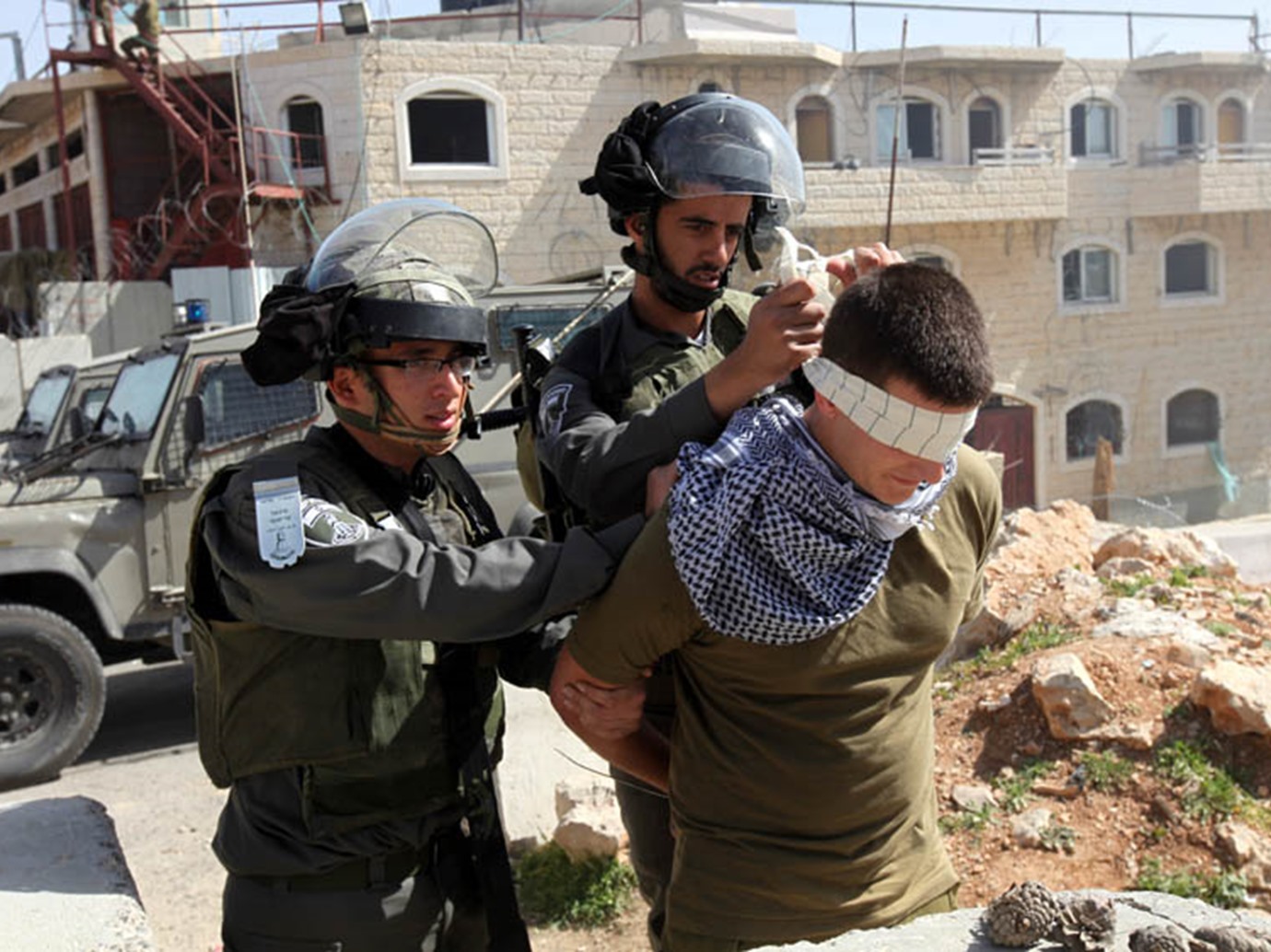
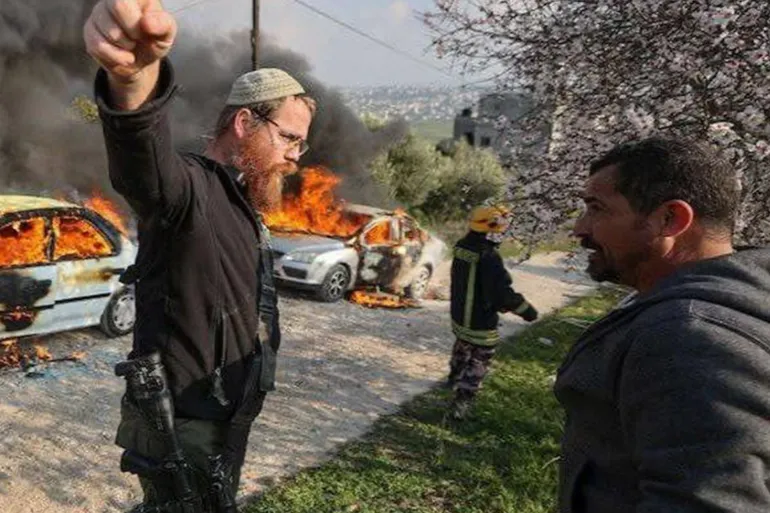
A genuine Palestinian state is further away than ever. In 2025, more Palestinian land will be confiscated, more illegal Israeli settlements will be built, and settler violence, already at record levels, will only intensify. While Trump might restrict Israeli Prime Minister Benjamin Netanyahu from formally annexing parts of the West Bank, de facto Israeli annexation will continue unabated. The ability of the Palestinian Authority to shape events in its favor will likely shrink even further. As for the comatose peace process, the Palestinians long ago arrived at a traffic intersection, and the red light never changed. It remains red today, its only color.
Israeli Finance Minister Bezalel Smotrich declares 2025 the 'year of sovereignty' with full annexation plans for the West Bank already underway. Meanwhile, the U.S. stands by, ignoring both the land grab and the ongoing genocide in Gaza. As bulldozers crush Palestinian homes in… pic.twitter.com/splFORkSyg
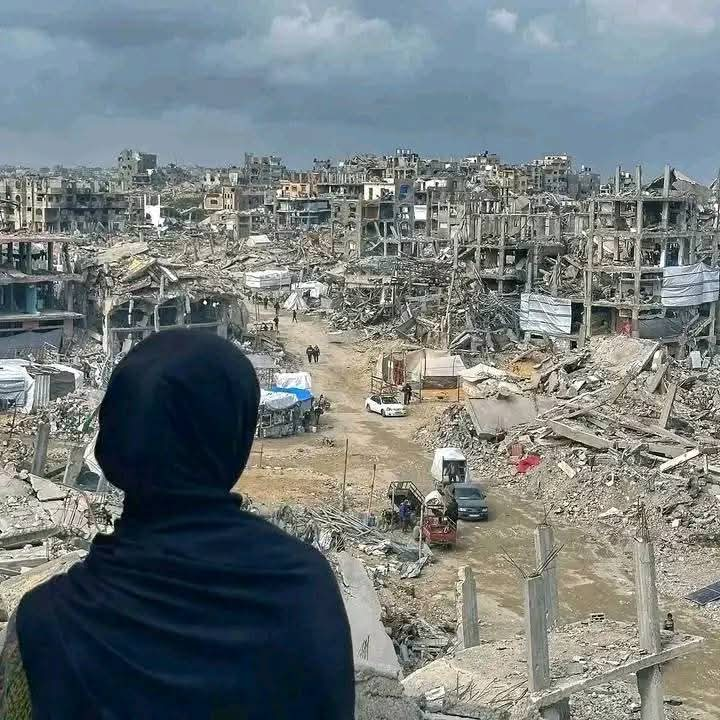
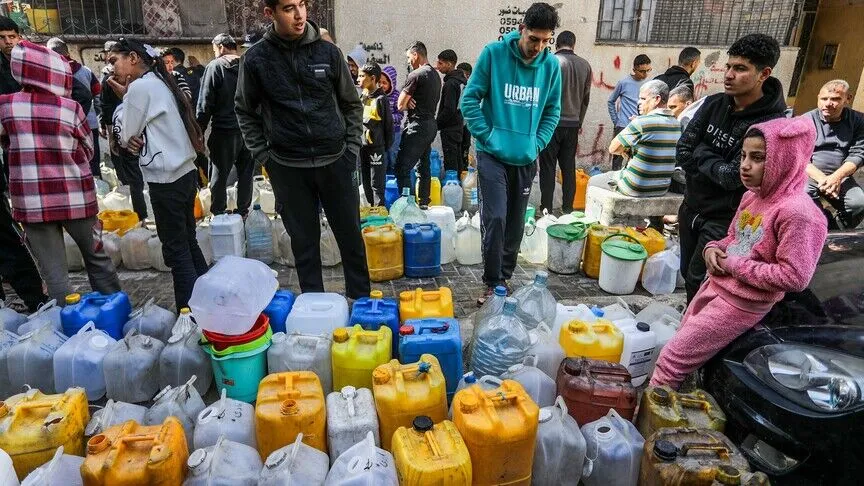
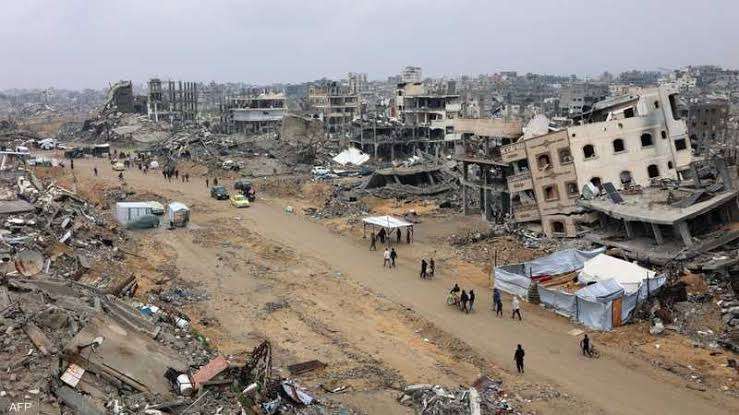
The genocidal war on Gaza will finally end with a formal ceasefire, the release of Israeli hostages, and some Palestinian detainees. However, the unimaginable toll of deaths and suffering among the Palestinian civilians in Gaza will continue, as starvation, infectious diseases, a decimated economy, and a devastated landscape afflict the population. Hamas won’t be completely defeated, but it has suffered a grievous blow in the short run. Israel will push hard to build settlements in the north and for clan warlords to run the rest of Gaza, which Trump might allow. Another great test will be the raising of the $40-60 billion needed for the reconstruction of Gaza; this will create tension between Trump and his Gulf states allies, who will resist paying the lion’s share of the consequences of a war they opposed.
Will the international community face the Palestine issue in 2025?
Respecting Palestine, the United Nations will face some of its most perilous challenges in 2025. The one-year deadline set by the General Assembly for Israel to completely end its occupation of Palestine arrives next September, with Israel and the US committed to defying the obligation. In addition, Israel – with Trump’s backing – is seeking to dismantle UNRWA, the UN agency that delivers education, health, and social services to Palestinian refugees in the Levant. The challenge for Europe and the Arab world will be whether they will defend the UN, its core commitment to successfully resolving the oldest item on its political agenda (Palestine), and the preservation of its largest agency.
Israel’s diplomatic isolation will continue, even as its relationship with its superpower patron will deepen. Its outlier status at the United Nations – particularly at the General Assembly and the Human Rights Council – will see even more lopsided votes against its 57-year-old occupation, its denial of Palestinian self-determination, and its abuse of international law. The arrest warrant issued by the International Criminal Court against Benjamin Netanyahu and his former Defense Minister Yoav Gallant will make him politically radioactive, with heads of state and government that have signed the 1998 Rome Statute refusing to meet him. Pressure will grow within Europe to rethink various trade and cooperation agreements with Israel as a reaction to the war and its horrendous humanitarian consequences.
Role of international law more important for Palestine than ever
The role of international law in pronouncing on the question of Palestine will become even more momentous in 2025. After the signature rulings by the ICJ and the ICC in 2024, we are likely to see a growing movement to insist upon a rights-based approach to peacemaking in Palestine, replacing the discredited (but still very much alive) realpolitik approach of the Oslo process.
The momentum created by the recent genocide reports by Amnesty International and Human Rights Watch will continue to echo through UN corridors and foreign ministries. But there are also headwinds: Republicans in the US Senate are determined to sanction the ICC for issuing the arrest warrant against Netanyahu, meaning that the viability of the court will require a stout defense by the 124 members of the Rome Statute, particularly from Europe.
As we learned from the past year, there will almost certainly be unexpected surprises in 2025. And while there will continue to be dark times for the Palestinians in the year ahead, the war in Gaza has also sparked a global movement of solidarity – particularly among the young – that will continue to inspire courageous thinking and bold acts. Its lasting impact should never be underestimated.
Michael Lynk he author is a professor emeritus of law at Western University, London, Ontario, Canada. He served as the 7th United Nations special rapporteur for human rights in the occupied Palestinian territory between 2016 and 2022. Opinions expressed in this article are the author’s own and do not necessarily reflect Anadolu’s editorial policy.
What are the options Israel and America’s has to confront the continuing Yemeni drones and hypersonic missiles? Is it bombing Tehran and/or implementing the latest Syrian case in Sanaa? Why not rule both out?
The Israeli occupation, government and settlers, are today in a state of hysterical panic due to the never-ending hypersonic ballistic missile attacks and the advanced drones bombing the heart of Tel Aviv and causing serious human casualties and huge fires.
This state of hysteria is reflected in four distinguishing signs:
First: Threats by more than one Israeli official to launch a massive attack on Yemen similar to that on Gaza whilst carring out assassination campaigns targeting the political and military leaders of Ansar Allah, especially Abdul-Malik al-Houthi.
Second: More than two million Israeli settlers took refuge in shelters, and sirens sounded in more than 80 locations in occupied Palestine over the past four days.
Third: Closing the airspace of Ben Gurion Airport to air traffic, which created confusion, chaos, isolation, and moral collapse.
Fourth: Failure of Israeli celebrations of two major successes achieved according to Hebrew newspapers, namely: In Imposing a ceasefire in Lebanon, stopping attacks from the southern Lebanese border, and the second by toppling the Syrian regime, the jewel of the resistance axis as boasted by Netanyahu that it was he who played the biggest role in achieving this.
Israeli Minister of War Yisrael Katz broke with all established Israeli norms by officially acknowledging, for the first time, responsibility for the assassination of the Ismail Haniyeh in Tehran, Hassan Nasrallah in Lebanon, and Yahya Sinwar in Rafah.
Katz threatened the Houthis leaders that they would face the same fate, and that the destruction that occurred in Gaza and Beirut would be repeated in Sanaa and Hodeidah.
But what terrifies the Israelis most, and worries their leadership is the arrival of the incessant Yemeni missiles and drones to the heart of major Zionist cities, like Tel Aviv, Haifa, Ashkelon, and Eilat with millions of settlers descending into shelters.
Indeed, this points to the failure of Israel’s highly advanced air defense systems to intercept these missiles, prevent them from reaching their targets, and inability to provide security and protection for the settlers in these major cities.
Perhaps the threats of Israeli officials to launch attacks on Yemeni cities reflect the extent of the pain they are suffering as a result of these incoming deadly projectiles.
These, and before them the Israeli, American and British air strikes on Sana’a and Hodeidah, have not achieved the goals of deterring Yemeni missile attacks and stopping their bombing of the Israeli depth.
On the contrary, they gave completely opposite results with their continual launching of hypersonic missiles and drones, and more dangerously, the downing of the advanced US F-18 jet, and the damaging of American aircraft carrier Harry Truman in the Red Sea and its escape to the north to prepare to leave the region, like its predecessors, the Eisenhower, the Lincoln, and many other naval destroyers.
The Yemeni military statements by Brigadier-General Yahya Saree in the past three days confirmed the bombing of Tel Aviv, Ashdod and Ashkelon deep inside Israel will continue as long as the extermination war on Gaza continues.
These statements were backed by the launch of more hypersonic missiles and drones in quick and direct responses to the Israeli threats, which means Yemen is not afraid and is responding in kind, has patience, and is ready to sacrifice.
Yemen has become the spearhead of the axis of resistance, and main front after the situation in Lebanon calmed down following the ceasefire agreement, and the commitment of the Islamic resistance there despite the violations. It is not unlikely that the Israeli occupation state, with American support, and perhaps Arab support as well, will present two main military options in the coming few days:
First: Going to the head of the octopus, i.e. Iran, as described by the Israelis, by launching an expanded tripartite Israeli-American-British attack to destroy it, according to the recommendation of Mossad Chief David Barnea as targeting Sana’a and Hodeidah again will not stop the Yemeni attacks with missiles and drones from reaching the occupied Palestinian depth.
Second: Repeating the Syrian scenario in Sana’a, i.e. an attempt to undermine and exhaust the Houthis by supporting the other Yemeni military groups and movements hostile to it by supplying them with modern weapons, providing air cover for their attacking forces, and mobilizing regional support for this step.
Launching a large tripartite aggression on Yemen may fail and give adverse results, and the same can be said about the expected attack on Iran, and it will be the occupying state and its military bases that may be exposed to bombing with thousands of ballistic and supersonic missiles, because the loss of the resistance axis of its last, most powerful and effective arena (Yemen) means its end and its Iranian leadership, and the creation of a new Middle East led by a “Greater Israel”.
However great Yemen will not surrender, and will not be defeated, as history tells of its victory over all previous invaders. Its steadfastness for more than eight years in the US-backed Gulf War against it confirms it will withstand any new Israeli-American-British targeting it, as its internal incubator is strong and solid and difficult to break due to the rallying of people around its leadership, which is embodied in the massive million-person demonstrations every Friday now for several months in solidarity with our people in the Gaza Strip.