 Pezeshkian: ‘Iran Will Not Surrender to Bullies’
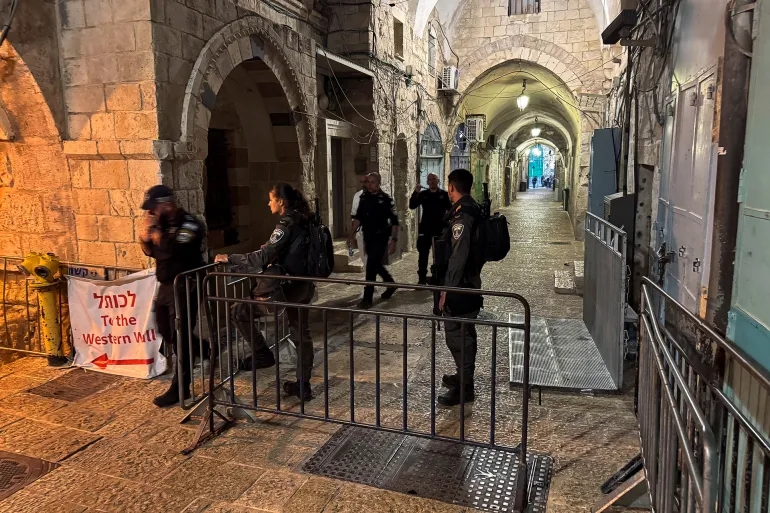 Israeli Soldiers Enforce Closure of Al Aqsa
 1 in 7 Displaced in Lebanon – NRC
 Hormuz: End of an Era of Martime Dominance
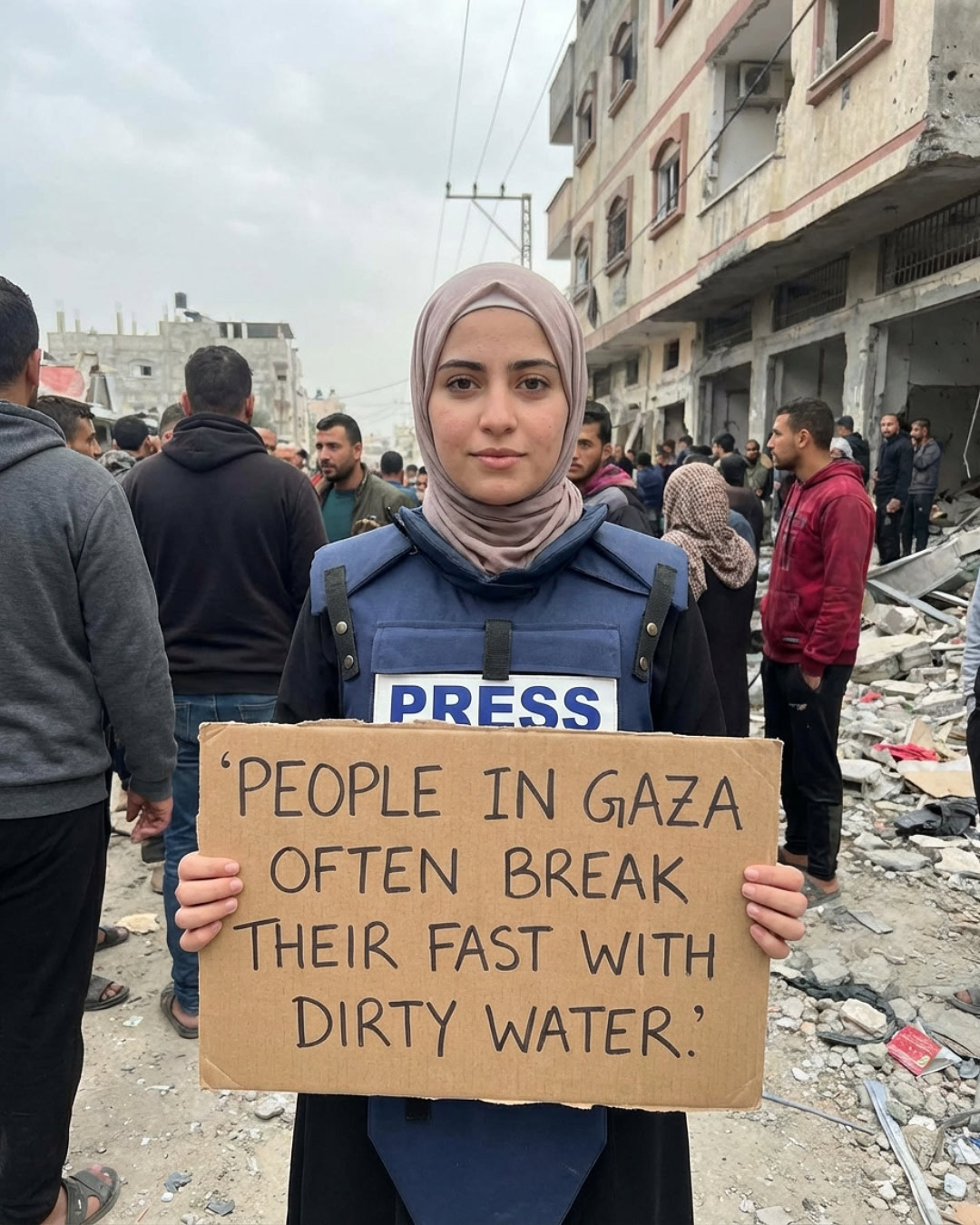
 Gaza Faces Massive Dust Storm


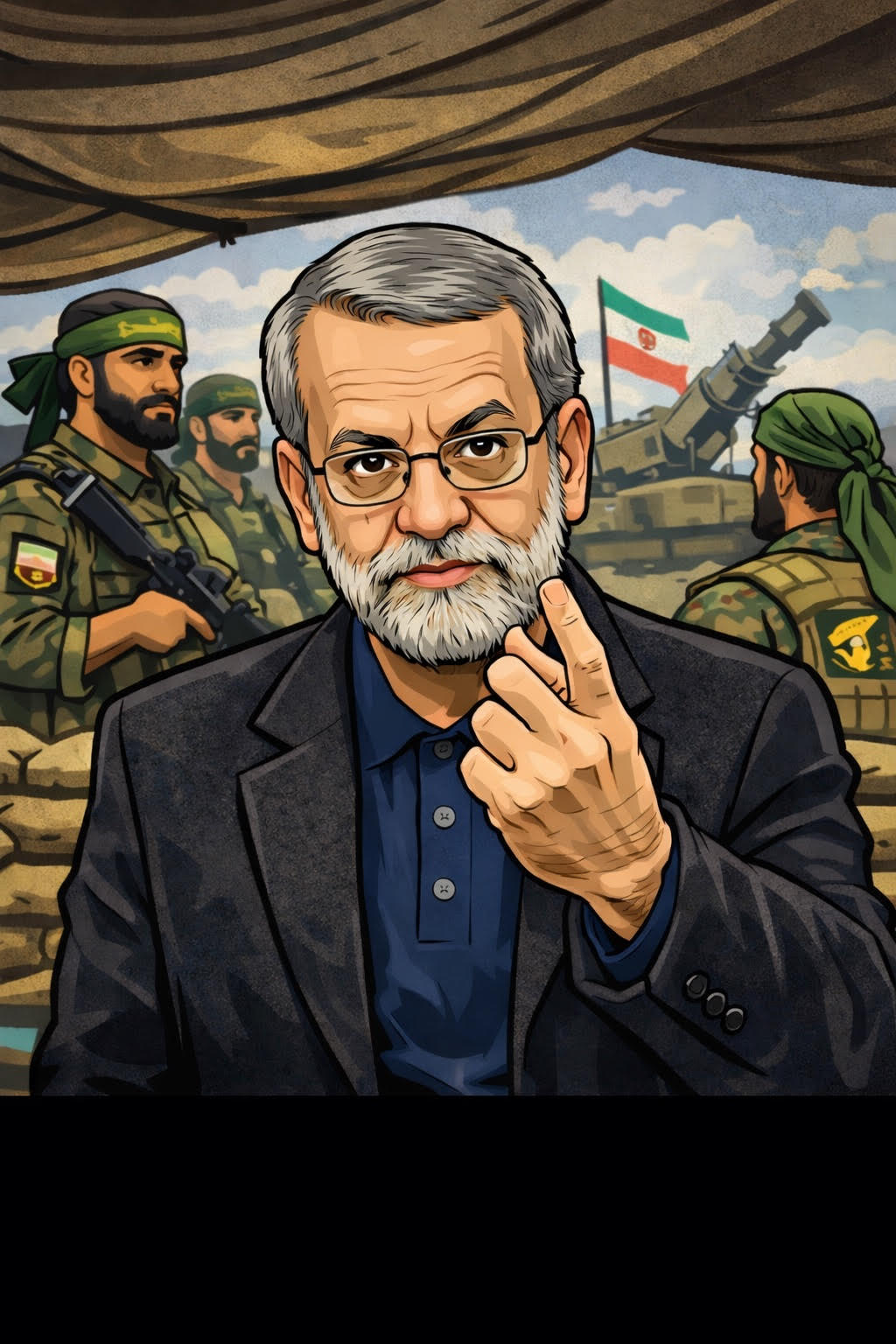
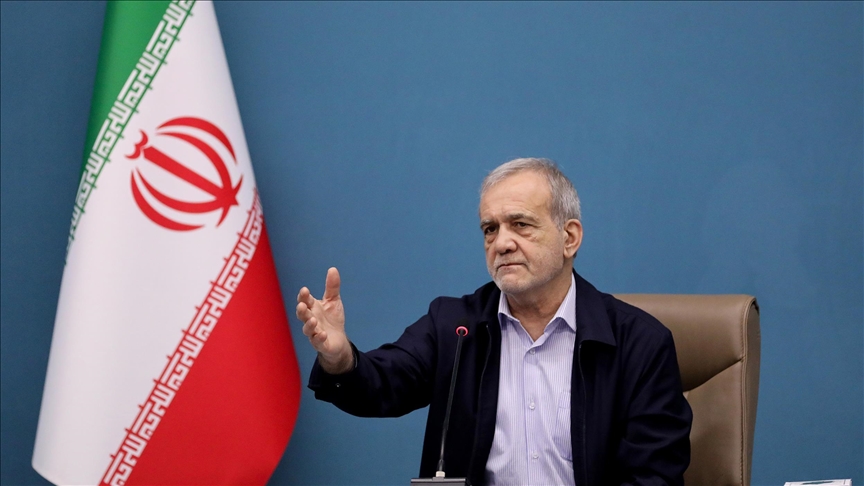
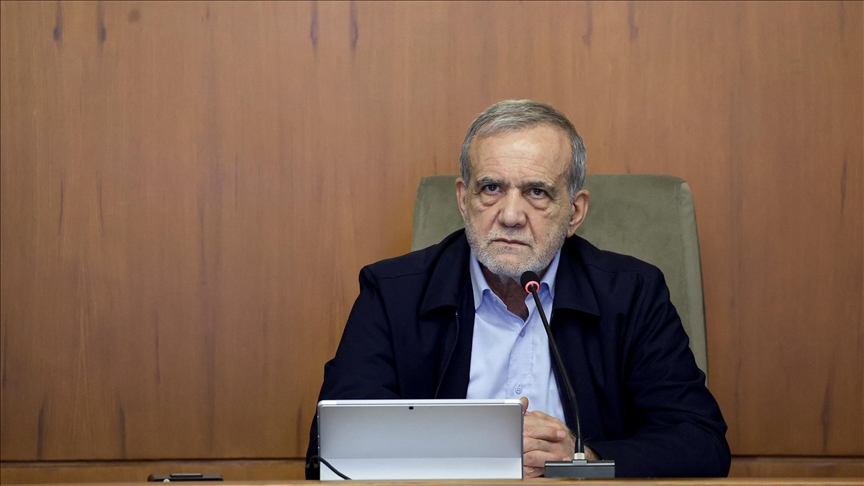
Pezeshkian: ‘Iran Will Not Surrender to Bullies’
 CrossFireArabia
- March 16, 2026
 CrossFireArabiaCrossFireArabiaCrossFireArabiaCrossFireArabiaCrossFireArabiaCrossFireArabiaCrossFireArabiaCrossFireArabiaCrossFireArabiaCrossFireArabiaCrossFireArabiaCrossFireArabiaCrossFireArabiaCrossFireArabiaCrossFireArabiaCrossFireArabiaCrossFireArabiaCrossFireArabiaCrossFireArabiaCrossFireArabiaCrossFireArabiaCrossFireArabiaCrossFireArabiaCrossFireArabiaCrossFireArabiaCrossFireArabiaCrossFireArabiaCrossFireArabiaCrossFireArabiaCrossFireArabiaCrossFireArabia
 Saleem Ayoub QunaCrossFireArabiaCrossFireArabiaCrossFireArabiaCrossFireArabiaCrossFireArabiaCrossFireArabiaCrossFireArabiaCrossFireArabiaCrossFireArabiaCrossFireArabiaCrossFireArabiaCrossFireArabiaCrossFireArabiaCrossFireArabiaCrossFireArabiaCrossFireArabiaCrossFireArabiaCrossFireArabiaCrossFireArabia
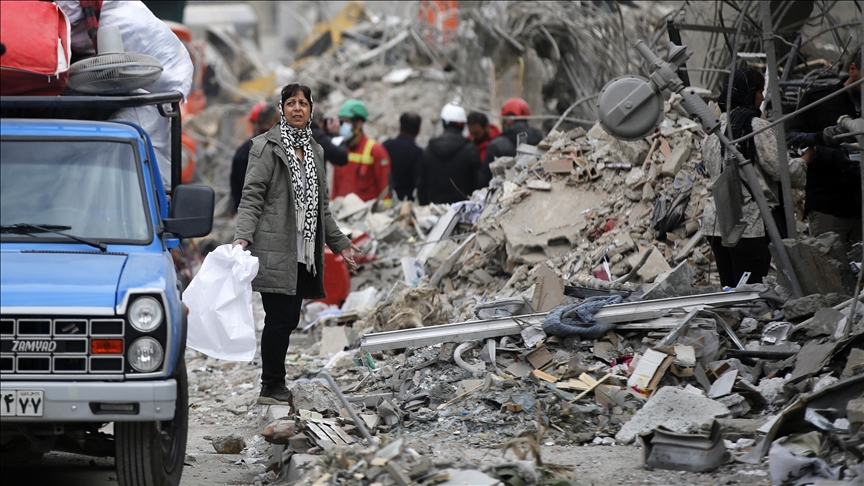
Hundreds of tents sheltering displaced Palestinians across the Gaza Strip were flooded for the second consecutive day on Thursday after heavy overnight rainfall linked to a new winter storm.
The tents were inundated after rain fell continuously from the early hours of dawn through the night, worsening the conditions of families already displaced by Israel’s two-year genocide, according to an Anadolu correspondent.
Gaza’s Civil Defense said in a statement Thursday that it evacuated dozens of tents in Rafah, in the south, after they were completely submerged.
The agency’s spokesman, Mahmoud Basal, warned Wednesday that more than 250,000 families in displacement camps across the enclave are vulnerable to cold weather and rainwater in their worn-out tents.
The agency warned that humanitarian conditions could deteriorate further if the storm system persists, especially with no temporary shelters available for displaced families.
On Tuesday, the Gaza Government Media Office warned that a polar low-pressure system would affect the enclave starting Wednesday and lasting until Friday evening, threatening hundreds of thousands of displaced families.
Since Wednesday, thousands of tents housing survivors of Israel’s war have turned into pools of water, soaking bedding, clothing, and food supplies, and leaving hundreds of Palestinian families exposed to the cold without warmth or shelter.
According to prior data from the media office, Gaza needs around 300,000 tents and prefabricated housing units to meet the most basic shelter needs of Palestinians after Israel destroyed infrastructure over two years of war.
The UN estimates the cost of reconstructing Gaza at about $70 billion as a result of the Israeli war, which has killed more than 70,000 Palestinians and wounded over 171,000. The assault came to a halt under a ceasefire deal that took effect on Oct. 10 according to Anadolu.
CrossFireArabia
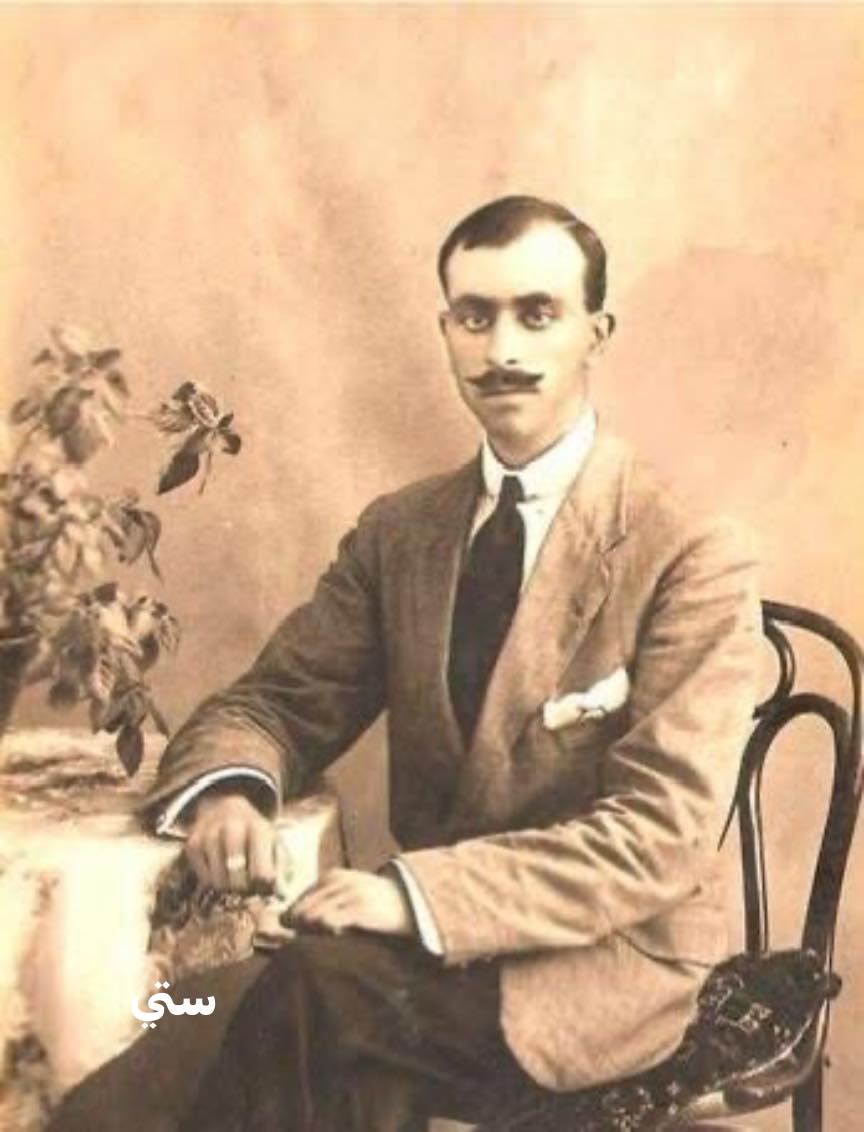
Palestinian women strolling Jerusalem in 1900.
CrossFireArabia
Last month, Palestinian Minister of Tourism and Antiquities Hani Al-Hayek warned that during its 2023-2025 war on Gaza Israel damaged or destroyed more than 316 archaeological sites in Gaza and the West Bank. While most were from the Mamluk and Ottoman eras, others were from the early Islamic centuries and the Byzantine period. He argued that Israel is conducting “systematic targeting” of Palestinian historical sites as part of its long-term strategy of colonising and annexing the West Bank.
While the current right-wing Israeli government flatly rejects withdrawal from Palestinian territories conquered 58 years ago, the Arab world and the international community argue that regional peace depends on the establishment of a Palestinian state in the West Bank, East Jerusalem and Gaza. This means that Palestinians should be in charge of archaeological remains in these territories.
Hayek was prompted to speak out after archaeologists protected by Israeli troops raided a Byzantine era site near Ramallah and stole five columns. Israel claimed Palestinians had built a structure in the centre of the site, damaging the archaeological remains.
Both Israelis and Palestinians claim a second site, Sebastia, near Nablus in the northern West Bank belongs to their cultural heritage, although it has been ignored and unexcavated for decades. Israel holds the archaeological park, which is in Area C under full Israeli control, while the Palestinian town of Sebastia is in Area B, under joint Israeli and Palestinian Authority security control but Palestinian administration.
Israel has begun to expropriate 1,800 dunams of land for the “preservation and development” of Sebastia which has been settled from the Iron Age (1200-586 BC) through modern times. The site contains layers of history reaching back nearly 3en,000 years and contains Iron Age dwellings, walls, and a palace which exist alongside remnants from Roman times.
Sebastia was the capital of the northern Israeli Kingdom during the first half of the 10th century BC. Conquered by the Assyrians in 720 BC, Sebastia became an administrative centre under the Assyrians, Babylonians, Persians, and Romans, Muslim Arabs and Ottomans.
The site and the modern village of Sebastia – which has about 3,200 Palestinian inhabitants – have been declared a World Heritage Site by UNESCO as the town is the location of Roman royal tombs, a Roman amphitheatre, medieval buildings, and a historic mosque built within a Christian church.
As the Israeli expropriation order covers the archaeological site and Palestinian olive plantations, Palestinian landowners were given two weeks to file legal objections to the seizure and their expulsion. This is the largest antiquities-related West Bank expropriation order issued by Israel since the 1967 occupation. While international law prohibits occupiers from carrying out excavations in areas they control, Israel has ignored this as well as most other laws governing occupations. In May 2023, Israel allocated $9.2 million for Sebastia.
The Israeli Peace Now movement declared: “Israel continues to harm Palestinian rights, expropriating thousands of dunams in violation of international law and settling the northern West Bank, an area with only a few thousand settlers compared with more than a million Palestinians.” The movement warned, “Israeli greed harms not only the landowners, but also the prospect of a peaceful solution that upholds the rights and heritage of both peoples.”
Emek Shaveh, an Israeli anti-occupation group founded by archaeologists, and Yesh Din, an Israel rights movement, issued a joint report in 2018 which stated, “Since 1967, Israel has endeavoured to appropriate the archaeological assets of the West Bank, based on the view that the Jewish heritage of places and antiquities testifies to a bond between the antiquities and the state of Israel, and constitutes a justification for deepening its control over ancient sites. This perception underlies every aspect of Israel’s archaeological practices in the West Bank.
“Israel’s control enables the physical exclusion of Palestinians from the sites and ancient finds through various means, ultimately weakening their connection to their heritage. It also enables Israel to shape the historical narrative of the sites by highlighting and glorifying their significance for the Jewish people and downplaying the role of other peoples and cultures who also had a part in the history of the region…
“Under the guise of concern for heritage, the government is investing tens of millions ..in turning heritage sites into weapons of dispossession and annexation.” The group added, “The intention to expropriate private land is anything but preservation; its purpose is to establish a tourism settlement that will detach Sebastia’s heritage from the [Palestinian] town and Judaize the area through the tourists who visit the site.”
Israel has weaponised archaeology to assert the legitimacy of its take-over of the land between the Mediterranean and the Jordan River. While striving to discover, develop and preserve Jewish archaeological remains in Palestine, Israel neglects or even harms non-Jewish or Palestinian heritage at the expense of Palestinians.
Meanwhile, Palestinian Archaeologists are trying to restore damaged sites. They have begun work on the Qasr al-Basha museum, a Mamluk-era palace located on a UNESCO heritage site dating back to 800 BC. After destroying 70 per cent of the museum by bombardment, Israeli troops occupying the site looted 20,000 ancient and medieval artifacts stored there.
UNESCO has reported damage to the Saint Hilarion Monastery, one of the oldest Christian heritage sites in the region, and the 7th century Omari Mosque, Gaza’s main place of Muslim worship. Due to the Israeli blockade on building material restorers have been compelled to scrabble in the ruins of these buildings for material for restoration.
In August, Israel appropriated 63 Palestinian West Bank archaeological sites, 59 in Nablus governate, three in Ramallah governorate, and one in Salfit governorate. Sixty-three were declared “Israeli historical and archaeological sites,” excluding Palestinian ownership. In total, Israel has taken over 2,400 out of the 6,000 Palestinian sites in the West Bank. This process can endanger the study of archaeology and history in this area if archaeologists involved are political motivated and preserve only what suits them while wiping out layers of remnants above and below layers, they explore. Meanwhile, Israeli archaeological organisations and personalities indulge in bitter competition with each other.
This article is written by Michael Jansen for the Jordan Times.
CrossFireArabia
During over two years of ongoing genocide in Gaza, the Israeli army has pursued a systematic policy of burying Palestinian bodies in unmarked graves, including near aid distribution centres in central and southern Gaza, under conditions that obstruct identification, conceal burial sites, and prevent families from learning the fate of their loved ones.
The investigation published by CNN, “Bulldozed corpses and unmarked graves,” reinforces the data obtained by Euro-Med Monitor through documented testimonies and underscores the need for an independent international investigation to identify the victims, locate burial sites, and ensure accountability for these practices.
These practices were documented by Euro-Med Monitor through a systematic programme that included extensive field investigations across northern and southern Gaza, interviews with survivors, eyewitnesses, and families of the missing, the collection of data from medical teams and local authorities, and the analysis and cross-checking of available visual material. This documentation reveals a systematic and widespread pattern of burial operations reflecting an Israeli army policy that cannot be treated as isolated incidents.
The worst thing I have ever experienced, after the shooting of civilians who were trying to get aid, was the order to clean up the area. The shooting was very intense, body parts everywhere, and the smell was awful
Euro-Med Monitor’s field documentation shows that Israeli forces repeatedly buried Palestinian bodies in public squares, open land, and areas near vital facilities, including aid distribution centres, hospitals, and schools, after sealing these locations militarily and blocking access by medical teams, families, and residents. This practice destroys potential evidence of unlawful killings, obstructs effective investigation, and deprives families of the right to know the fate and burial place of their relatives, in further violation of human dignity and international law.
Many Palestinian families discovered the bodies of their relatives buried in shallow pits left behind by Israeli forces after their withdrawal. This pattern was particularly evident near aid distribution centres and along forced displacement corridors, amid military operations marked by siege, starvation, and mass displacement of the civilian population.
Findings revealed by CNN on the Israeli army’s burial of Palestinians near aid distribution points are consistent with what Euro-Med Monitor has documented in recent months. Field testimonies show that Israeli forces prevented civilians and medical teams from accessing bodies for hours or days, then carried out rapid burials that concealed victims’ identities and destroyed potential evidence of unlawful killings.
Euro-Med Monitor verified the testimony of a contractor who worked with a humanitarian organisation in Gaza by reviewing available data and cross-checking it with independent sources. The witness stated that he saw Israeli forces fire on Palestinian civilians seeking humanitarian aid, killing several of them, after which he was instructed to clear the area, including bulldozing bodies and human remains.
The contractor stated, “The worst thing I have ever experienced, after the shooting of civilians who were trying to get aid, was the order to clean up the area. There were body parts. The shooting was very intense, body parts everywhere, and the smell was awful.”
“I complained to the Israeli army officer, but he replied, ‘That’s none of your business.’ I had to load body parts onto the back of the truck to dump them,” he added. “When I was ordered to carry out the task, I was not warned about the true situation. I find it difficult to talk about it. I feel my heart pounding and like I am going to collapse.”
At least 45 people have gone missing in the vicinity of aid distribution centres in the Gaza Strip, and their fate remains unknown, whether they were detained and subjected to enforced disappearance in Israeli prisons or killed and buried in unmarked sandy locations near those centres.
In March 2024, Euro-Med Monitor verified a widely circulated video showing, from a distance, two men walking separately along the Gaza beach, waving white flags in apparent surrender as they cautiously approached a group of Israeli soldiers on Al Rashid Street, near the barrier separating northern Gaza from the central and southern areas.
One of the men advanced towards the soldiers with his hands raised before disappearing behind a pile of sand and concrete, while the other attempted to flee but was pursued by an Israeli military vehicle and then suddenly fell to the sand, apparently after being shot. An Israeli military bulldozer subsequently appeared and buried both bodies beneath sand and debris.
The incident reflects a recurring pattern of deliberate dehumanisation and the use of terror to break the Palestinian population and force submission and displacement. It constitutes further evidence of the specific intent required for genocide under international law, while also being liable to classification as crimes against humanity and full-fledged war crimes.
An independent and comprehensive international investigation must be launched into the Israeli army’s burial practices near densely populated areas, aid distribution centres, and forced displacement corridors, including incidents involving the shooting of civilians seeking aid. The investigation must have full authority to collect and analyse evidence and to determine individual criminal responsibility for potential war crimes, crimes against humanity, and genocide.
The Israeli army must immediately disclose the locations of all mass and individual grave sites established during its military operations in Gaza. Urgent measures are required to protect these sites as potential scenes of international crimes, prevent the transfer or destruction of bodies and any tampering with evidence, allow independent forensic teams to enter Gaza, and lift restrictions on the entry of DNA testing equipment, or establish a secure mechanism for transferring samples to specialised laboratories abroad to enable victim identification and proper documentation of crimes.
Pressure must be exerted on Israel to disclose the identities of those killed, detained, or missing under its control during military operations, and to reveal burial or detention locations, to end families’ uncertainty and enable serious efforts to uncover the truth and secure redress. Israel must immediately disclose the fate of all persons it has arrested and continues to subject to enforced disappearance, cease this unlawful practice, allow detainees to communicate with their families and lawyers, and release all those held without a clear and specific legal basis, in accordance with international law.
Families and relevant Palestinian authorities must be enabled to retrieve the victims’ bodies and bury them in accordance with religious, humanitarian, and legal standards, ensure relatives’ participation in identification procedures, provide full disclosure regarding their fate, and deliver the necessary support.
States Parties to the Geneva Conventions and all other concerned states must ensure accountability for these crimes by opening national and international investigations, applying universal jurisdiction where necessary, and taking effective measures to prevent their recurrence. Euro-Med Monitor
CrossFireArabia
Anadolu’s Gaza Trilogy, which documents Israel’s war crimes in Gaza with definitive proof, has been completed with the publication of the series’ final book, The Perpetrator, following The Evidence and The Witness.
The Perpetrator focuses primarily on Israeli Prime Minister Benjamin Netanyahu and his administration, who bear direct responsibility for the violence and destruction in Gaza.
The book exposed in detail the dark mindset of the administration, which is made up of fanatical figures, some of whom are criminals even under Israeli law, who regard the killing of children, the destruction of civilian homes, and even the burning of trees as achievements and victories.
It documented, with a sense of determination and hope that one day they will be held accountable, all circles that are directly or indirectly connected to the genocide, from politics and business to academia and the cultural world, who keep the Netanyahu government’s killing machine running through the military and political support they provide.

The book consists of 3 sections
The Perpetrator is divided into three sections: Architects and Perpetrators of the Genocide, Global Partners in Genocide: Weapons, Capital, and Diplomatic Shield, and The Cultural Front of Genocide: The Silence of Academia, Media, and the Arts.
The first section examined the decision-makers and enforcers behind Israel’s genocide in Gaza.
This section also provides a detailed profile of the current Israeli government, which represents the latest link in a 75-year history of criminality.
It documented each official’s individual responsibility and decision-making roles in Netanyahu’s Cabinet, as well as the systematic violence and legal dimensions of illegal Israeli settler colonialism.
Analyses supported by infographics, timelines, and comprehensive crime maps revealed the planned and systematic nature of the genocide.

Weapons and financial support to Israel
The second section illustrates that the genocide in Gaza is not an act Israel could carry out alone.
The role of global partners is examined under two main headings. The first presented a detailed analysis of the weapons and financial support provided to Israel. It explained the scale of military and economic aid supplied by Western countries, especially the US, as well as the role of corporations and financial mechanisms.
The second part focuses on the diplomatic dimension of this support. It exposed the political shield behind the genocide, covering a wide spectrum from the influence of lobbies like the American Israel Public Affairs Committee (AIPAC) in US politics to the pro-Israel stance of the Western world and the obstruction mechanisms within international organizations.

Role of those who remained silent
The book’s third and final section discusses the roles of both those who actively supported the genocide and those who remained silent.
Examining how silence and inaction in three key fields amount to complicity, the section first addresses pressure and resistance within academia, exploring how Palestinian solidarity on university campuses has been suppressed and the limits of academic freedom.
It also analyzes the pro-Israel editorial policies of mainstream media, their disinformation strategies, and mechanisms of censorship.
Finally, it explores silence, support, and divisions within cultural and artistic communities and evaluates the art world’s stance in the face of this human tragedy.
Prologue by Martin Shaw
The prologue to The Perpetrator is written by Martin Shaw, a sociologist known for his work on war, genocide, and global politics. The introductory essay is by Richard Falk, former UN special rapporteur on human rights in the occupied Palestinian territories.
Former UN Special Rapporteurs Michael Lynk and John Dugard, as well as Abdurrahman Erol of Erasmus University, Shahd Hammouri of Kent University, Walter Hixson of the US University of Akron, Cemil Aydin of the University of North Carolina, and Selman Aksunger of Maastricht University, also contributed to the book.
Having played a significant role in bringing global attention to the genocide in Gaza, the Gaza Trilogy books will soon be published digitally on the website gazatrilogy.com.