Bomb Food Warehouses, Starve Them Says Extremist Israeli Minister

Israeli Heritage Minister Amichai Eliyahu late on Monday called for the bombing of Gaza food warehouses and for starving Palestinians in Gaza, in the latest Israeli inflammatory statements against Gaza which endures ongoing Israeli genocide.

“There is no problem in bombing Hamas’ food reserves,” the extremist minister told the Israeli Channel 7 during an interview.

“They need to starve. If there are civilians who fear for their lives, they should go through the emigration plan,” he also said.

“The moment it becomes hard for them, it will also be hard for Hamas. There is no problem bombing Hamas’s fuel and food reserves,” Eliyahu added, who belongs to the extremist Jewish Strength (Otzma Yehudit) party of hardline National Security Minister Itamar Ben-Gvir.

Eliyahu went on to say that entering aid into Gaza has no connection with “the Jewish ethics,” claiming that they must not “feed those who fight us.”

“When life becomes difficult for civilians, it will be too for Hamas,” he also said.

In November 2023, Eliyahu, who has extremist rhetoric against Palestinians, said dropping a “nuclear bomb” on the Gaza Strip is “an option.”

On Monday, Ben-Gvir reaffirmed his insistence on starving Palestinians in Gaza as part of the ongoing genocidal war.

According to Israel’s Channel 14, Ben-Gvir said “the only aid that should enter Gaza is for the purpose of voluntary migration,” a clear expression of a deportation agenda aimed at emptying the enclave of its indigenous population under the cover of the genocidal war.

US President Donald Trump has repeatedly called to “take over” Gaza and resettle its population to develop it into a tourist destination. His plan was rejected by the Arab world and many other nations, who say it amounts to ethnic cleansing.

Israeli estimates suggest that 59 captives remain in Gaza, with 24 believed alive. In contrast, more than 9,500 Palestinians remain imprisoned in Israel under harsh conditions, including reports of torture, starvation and medical neglect, according to Palestinian and Israeli rights organizations.

More than 52,500 Palestinians have been killed in Gaza in a brutal Israeli onslaught since October 2023, most of them women and children.

The International Criminal Court issued arrest warrants in November for Netanyahu and his former Defense Minister Yoav Gallant for war crimes and crimes against humanity in Gaza.​​​​​​​

Israel also faces a genocide case at the International Court of Justice for its war on the enclave according to Anadolu.

Continue reading
The Gaza Death Trap

While everyone waits for the full-blast war on Gaza which Israel promises to continue, Tel Aviv must know this will not be an easy matter not least of all by the Benjamin Netanyahu government whose ministers are split over allowing the army to resume its “fighting” position in Gaza.

Not everyone holds the view of extremist Finance Minister Bezalel Smotrich. He wants to resume, or continue, a large scale offensive on Gaza and reoccupy the enclave forever! For these opposing ministers as well as a large number of army soldiers and officers are not in favor of going back to fighting in Gaza because (a) of the bloody situation and danger soldiers were subjected to since 7 October, 2023, and because they want the rest of the remaining hostages – 59 and about 24 still thought to be alive – to be returned.

They fear – and reflecting major sections of society who have been demonstrating daily in Tel Aviv and other major Israeli cities under the of banner “bring them home,” – that increasing the wheels of war on Gaza would be signing the death warrants of the remaining hostages, originally marked at 250 and over 40 of them killed by indiscriminate Israeli bombing of the different areas of enclave over the past 17 months or so of fighting.

In the eyes of Smotrich, and he doesn’t mince his words, the return of the hostages is now secondary and what is crucial is to destroy Hamas and end its presence in the Gaza Strip.

But this is not happening. Since the resumption of the Israeli war on Gaza on 19 March, 2025 the resistance led by the Islamic organization and the other Palestinian factions have also resumed their fighting. While it is true, Hamas was slow in getting back to the war, preferring to give the ceasefire and peace talks a chance, and which led many to say the resistance are finished, this was far further from the truth.

Fighting again

Exactly one month later after 19 March, the Palestinian resistance led by Hamas and Islamic Jihad, re-started their fight against the Israeli army and the targeting of its soldiers; the Zionist army had maintained an active presence in the different areas of the Gaza Strip since the ceasefire took effect on 19 January, 2025 when the newly-elected US president was installed in the White House.

After much waiting and the gradual realization that Israel was no longer interested in the ceasefire nor in ongoing talks in Doha and Cairo, Hamas and Islamic Jihad reignited their war tactics on the Gaza battlefield. They realized Netanyahu, as prime minister of an extreme right-wing government, was no longer interested in maintaining a ceasefire.

Analysts maintained that Netanyahu was encouraged by Trump’s conflicting and dangerous stance on Gaza on top of which was the dramatic and subsequently abhorred idea of expelling the 2.1 million population of Gaza to build the Strip as the newly-plushed Middle East Riviera.

Although he quickly backed down due to Palestinian, Arab and even world pressure, Netanyahu interpreted this hugely-wrongful idea as greenlight to continue to hammer Gaza from the air and reimpose the starvation policy of its population.

Although the people got the backend of the Israeli willful mad firepower while shutting down the curtain on aid entering the 364-kilometer enclave, Hamas and the other Palestinian groups begun to regroup and re-started its military operations against the Israeli army in Biet Hanoon in the northern Gaza Strip to Gaza City in the center, Shujaiyia to the west, Khan Younis lower down and Refah, further south on the border with Egypt.

Like before, since 7 October, 2023, the resistance has now embarked on the increasing use of ambushes and booby-trap operations of luring Israeli soldiers and targeting Israeli tanks, armored vehicles and bulldozers while firing at them through locally-made, cheap but effective and deadly missiles that resulted in many of these soldiers being killed and badly-injured – numbers in the thousands – while many of the tanks and bulldozers either blown up and/or put out of action.

Towards the end of April onwards, this strategy was reactivated at full length and on different days sniping Israeli soldiers and targeting armoury would rise in multiple and different operations through the Gaza Strip. What is today of major worry to the Israeli army is that these geographical areas which were supposed to be “cleaned up” from Palestinian operatives are becoming active once again which means that for the Israeli army its back to square one.

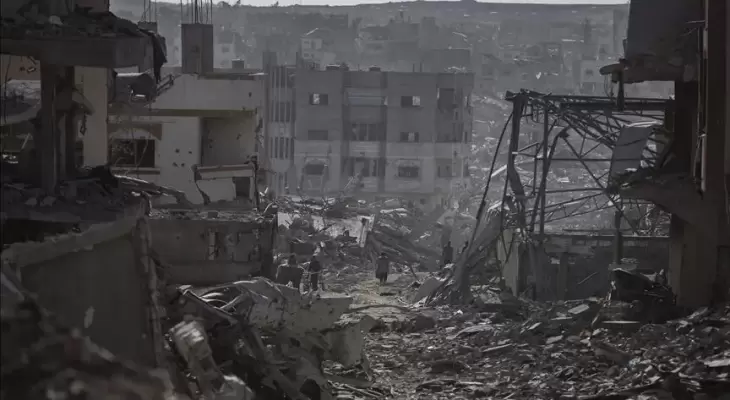
The Israeli army had literally destroyed many of the major cities, towns, neighborhoods, villages of Gaza not once but many times. They entered places like Khan Younis, Jabalia, Shujaiyia, Nuseirat, Rafah and many more multiple times and declared them free from Palestinian resistance groups but these fighters just continue to emerge as seen recently and to the chagrin and frustration of the Israeli army.

Such frustration has led Israeli politicians like Netanyhu, and arch anti-Palestinian politicians like Itamar Ben-Gvir, Minister of National Security and hated by some Israelis for his extreme rightwing views to call for the re-occupation of Gaza, something that Netanyahu is actively contemplating. The prevailing view that once the army gets into Gaza once again, and on a mass scale, they can never leave! There are many in the army who have long rejected such an idea because they know of the “bloody situation” their soldiers would face.

However, the Israeli government and its army continues to operate under a set of illusions it is refusing to budge away from simply because Hamas and the Palestinian resistance presence is still operating in Gaza and in a robust mode to fight and kill Israeli soldiers and destroy their tanks and military hardware.

This is in addition to the fact the Israel and its army is getting nowhere near to freeing the rest of the hostages and who are likely to die if Israel embarks on a bigger war on Gaza and which Netanyahu and his extremist government are determined to do despite the warnings of the Israeli army which admits the rest of the hostages could die in any bigger military offensive.

Trump in region

Throughout this war there was always one external factor that played a permanent role in fuelling the Israeli genocide of Gaza and that was the United States through its provision of military support to Tel Aviv first under the Joe Biden administration and now under Trump.

If he could be persuaded to stop the supply of weapons to Israel, Netanyahu will finally stop the war on Gaza. Trump is on record, especially when he was running for the White House he would stop the war in Ukraine and Gaza. But will he? First of all, the Israeli lobby is entrenched in the US government.

However, there is one important factor that can pressure the Trump administration and that is the Arab countries. Trump is soon visiting Saudi Arabia and the Gulf countries including Qatar and the United Arab Emirates. If enough pressure can be applied from these quarters then surely the US president can move on the Gaza issue and halt any plans that Netanyahu is concocting for the enclave.

The Trump visit is being made in mid-May and its already played as a “bilateral” tour between the United States and these states whilest focusing on investment. And this is where their influence can be made with investment, economics and politics moving on one pedestal.

So the ball at the present time is in the hands of the Arab Gulf countries!

This comment is written by Dr Marwan Asmar, chief editor of the crossfirearabia.com website. 

Continue reading
Trump’s War in The Red Sea

Dr Khairi Janbek

The US foreign policy in the Red Sea today is characterized by a robust military response to Houthi threats, aiming to protect critical maritime trade routes and assert influence in a geopolitical strategic area. While these military operations garnered international support, the ongoing conflict underscores the complexities and challenges of Middle East interventions.

The US military’s increased involvement in the Red Sea, including the deployment of two aircraft carriers, signals a commitment to ensuring freedom of navigation and countering the Iranians in the region. However, the present ongoing escalation also risks entangling the US in a prolonged conflict.

This is reminiscent of past Middle East engagements which the Americans should be well-aware of, and may put additional strain on the US military resources amid other pressing global priorities if faces.

That said, the present military strikes on Yemen are not just about the Houthis. They are also widely seen as demonstration of US strength towards the group’s main backer: Iran.

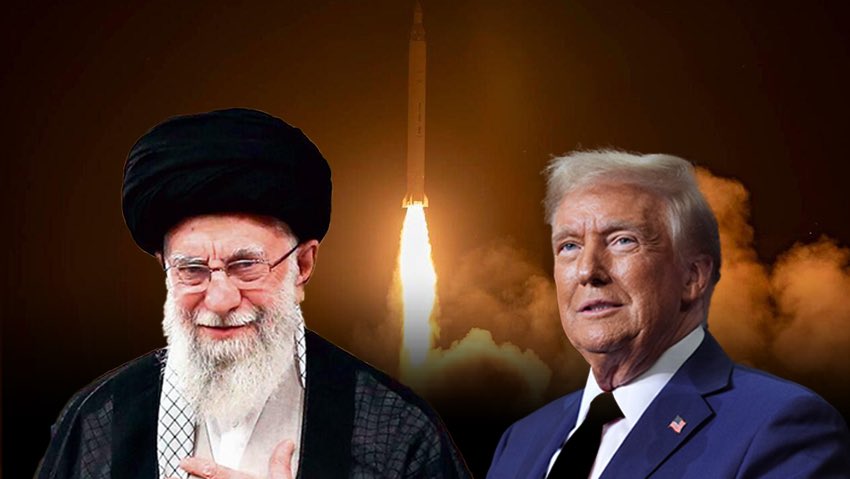
The Washington administration is currently locked in a series of negotiations regarding Iran’s nuclear programme and Trump has not ruled out military action if those talks fail, yet, it is possible still, that the US, and judging by recent history, the Americans may change their mind and everything is put on hold yet again.

But we need to wait and see! The US has already moved its patriot and THAAD missiles from Asia to the Middle East, and only in the first month of the preparedness campaign, $200 million of ammunition has been used and this is making military officials greatly concerned about the impact on stocks the US Navy might use in the event of a Chinese attack on Taiwan.

At the same time, there are various Yemeni groups opposed to the Houthis with regional backing, and dare one say with some international backing, reportedly considering taking advantage of the situation to launch a ground campaign to oust the Houthis once and for all, but Washington is yet to make a decision on whether to back such operations or not.

Most analysts and officials say that, American troops participating in any ground operations in Yemen is highly unlikely, moreover, even more limited support for ground operations would still be another case of the US backing armed groups in a messy middle Eastern war; exactly the sort of situation Trump blasted previous administrations for falling into.

Dr Janbek is a Jordanian analyst based in Paris, France.

Continue reading
Analysts: US Fails on Houthis After Six Weeks of Bombing

After nearly six weeks of intensive US airstrikes on different areas and cities of Yemen the Houthi Ansar Allah continues to assert that its military operations in the Red Sea and against Israeli targets will not stop until the ongoing Israeli war on the Gaza Strip ends.

Houthi military spokesman Yahya Saree, Saturday, announced the targeting of the Israeli Nevatim Air Base in the Negev with a ballistic missile, as well as two other sites in the Tel Aviv and Ashkelon areas and the targeting of warships on the US aircraft carrier SS Harry Truman in the northern Red Sea are just part of the continuing ongoing military strikes.

However in response to these attacks the US aircraft launched two airstrikes last Friday night on the Ras Isa oil port in the coastal province of Al Hudaydah, which Washington considers a major source of fuel used to finance the Ansar Allah group’s activities.

According to Dr Liqaa Makki, senior researcher at the Al Jazeera Center for Studies, the USA has failed miserably in its strikes against the Houthis because of its inability to move to the second phase. He said that as a result they are  discussing an alternative scenario for this military campaign against the Houthis.

Makki believes that US President Donald Trump has reached a dead end, and that the ceiling he set regarding the Houthis is proven unrealistic, pointing out the United States, despite its military strength, is failing in Yemen because it is fighting a group, not a state.

On the other hand, military and strategic expert Brigadier-General Elias Hanna, believes that both sides are losing, whilst the image of the United States is being damaged, given the scale of the US military campaign and Trump’s engagement with the Houthis, who previously declared that  “we [US] will withdraw from all the world’s wars.”

Reports estimate the cost of the airstrikes carried out by the US military on Houthi positions amounted to approximately $1 billion in the first three weeks of the military campaign alone.

The Associated Press reported the value of the seven downed American drones made by the Houthis exceed $200 million, and the continued loss of American drones makes it difficult for the US leadership to accurately determine the extent of the damage to the Houthis’ weapons stockpiles.

Brigadier-General Hanna said that Washington lacks a comprehensive strategy in its dealings with the Houthis, and that the political goal it announced—restoring deterrence and opening shipping lanes—has not been achieved.

He also pointed out the US military is targeting the centers of gravity within the Houthi military system to disrupt it, a strategy Israel has used with the Palestinian resistance but has failed to achieve.

Appeasing the Houthis

In light of Washington’s inability to achieve its goals against the Houthis, Brigadier-General Hanna believes the pressure being exerted on Israeli Prime Minister Benjamin Netanyahu regarding the entry of aid into the Gaza Strip is part of an effort to appease the Houthis so that they will halt their operations in the Red Sea and against Israeli targets.

Trump’s upcoming visit to the region also requires a de-escalation. According to the military and strategic expert, the US president cannot arrive while the Houthis are launching missiles.

In the same context, the senior Al Jazeera’s Makki expects  that a Gaza ceasefire will soon be reached before Trump’s visit, allowing the Houthis to halt their operations as they have initially linked the cessation of their operations to an end to the war on Gaza and to the cessation of US strikes against them.

American officials have previously revealed to CNN that the US military has struck more than 700 Houthi targets and carried out 300 airstrikes since the campaign began in mid-March, “forcing them underground and creating confusion and chaos within their ranks.”

Continue reading
Israel Starts Forced Displacement Under World Silence

The Israeli project in the Gaza Strip has reached its most revealing and dangerous stage yet. Israel is no longer concealing its intention to forcibly displace Palestinians from their homeland—it now announces this plan more openly than ever before, through official rhetoric at the highest levels. Through actions on the ground and institutional measures designed to reframe the crime as “voluntary migration”, Israel has attempted to implement its displacement campaign by exploiting the international community’s near-total silence, which has enabled the continuation of the crime and Israeli impunity despite the unprecedented nature of humanity’s first livestreamed genocide.

Israel is now attempting to carry out the final phase of its crime, and its original goal: the mass expulsion of Palestinians from Palestine, specifically from the Gaza Strip. For a year and a half, Israel has carried out acts of genocide, killing and injuring hundreds of thousands of people, erasing entire cities, dismantling the Strip’s infrastructure, and systematically displacing its population within the enclave. These actions aim to eliminate the Palestinian people as a community and as a collective presence.

The current plans for forced displacement are a direct extension of Israel’s long-standing settler-colonial project, aimed at erasing Palestinian existence and seizing land. What distinguishes this stage is its unprecedented scale and brutality—Israel is targeting over two million people who have endured a full-scale genocide and have been stripped of even the most basic human rights, under coercive, inhumane conditions that make living any sort of a normal life impossible. Israel’s deliberate objective is to pressure Palestinians into leaving by making it their only means of survival.

Having succeeded in revealing the weak principles of international law, such as protections for civilians based on their perceived racial superiority or lack thereof, Israel is now reshaping the narrative once again. Armed with overwhelming force and emboldened by the international community’s abandonment of legal and moral responsibilities, Israel seeks to portray the mass expulsion of Palestinians as “voluntary migration”. This is a blatant attempt to rebrand ethnic cleansing and forced displacement using dishonest language—like “humanitarian considerations” and “individual choice”—and is a direct contradiction of legal facts and the reality on the ground.

Euro-Med Monitor emphasises that forced displacement is a standalone crime under international law. It involves the removal of individuals from areas where they legally reside, using force, threats, or other forms of coercion, without valid legal justification. Coercion, in the context of Israel’s genocide in the Gaza Strip, goes beyond military force. It includes the creation of unbearable conditions that render remaining in one’s home practically impossible or life-threatening. A coercive environment includes fear of violence, persecution, arrest, intimidation, starvation, or other forms of hardship that strip individuals of free will and force them to flee.

“Israel has already committed the crime of forced displacement against Gaza’s population,” stated Lima Bustami, Director of Euro-Med Monitor’s Legal Department, “having driven them into internal displacement without legal grounds and in conditions that violate international legal exceptions, which only permit evacuation temporarily and under imperative military necessity, while ensuring safe areas with minimum standards of human dignity. None of these standards have been met. In fact, Israel has used this widespread and repeated pattern of displacement as a tool of genocide—aimed at destroying and subjecting the population to deadly living conditions.”

She added: “Although the legal elements of the crime are already fulfilled, Israel is further escalating it to a more lethal level against the Palestinian people—manifesting its settler-colonial vision of expulsion and replacement. Now it is attempting to market the second phase of forced displacement, i.e. beyond Gaza’s borders, as ‘voluntary migration’: a transparent deception that only a complicit international community—one that chooses silence over accountability—would accept.”

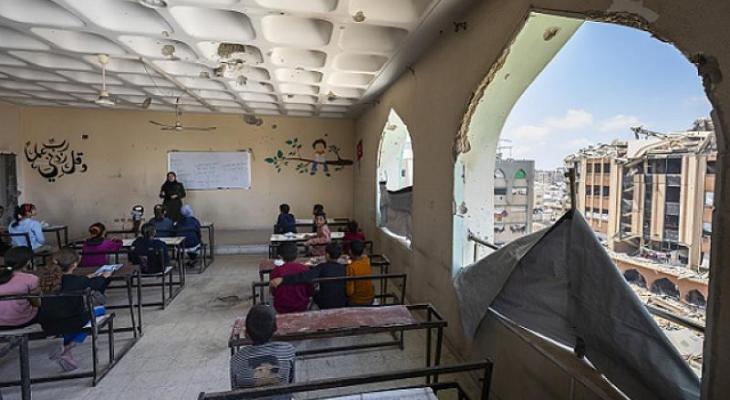
Today, the people of the Gaza Strip endure catastrophic conditions that are unprecedented in recent history. Israel has obliterated all forms of normal life; there is no electricity or infrastructure, and there are no homes, no essential services, no functioning healthcare or education systems, and no clean water services. Around 2.3 million Palestinians are confined to less than 34% of the Strip’s 365 square kilometres. Approximately 66% of the territory has been turned into so-called “buffer zones”, or areas that are completely off-limits to Palestinians and/or that have been forcibly depopulated through Israeli bombings and displacement orders.

Most of the population is now living in tattered tents amid the spread of famine, disease, and epidemics and an accumulation of waste—conditions symptomatic of the near-complete collapse of the humanitarian system. Israel continues to systematically block the entry of food, medicine, and fuel; destroy all remaining means of survival; and obstruct any efforts aimed at reconstruction or restoring even the minimum conditions for a healthy life.

These conditions in place are not the result of a natural disaster; rather, they have been deliberately engineered by Israel as a coercive tool to pressure the population into leaving the Gaza Strip. The absence of any genuine, voluntary alternative for Palestinians in the enclave renders this situation a textbook case of forcible transfer, as defined under international law and affirmed by relevant jurisprudence.

“While population transfers may be permitted in certain humanitarian contexts under international law, any such justification collapses if the humanitarian crisis is the direct consequence of unlawful acts committed by the same party enforcing the transfer,” according to Bustami. “It is impermissible to use forced displacement as a response to a disaster one has created—a principle clearly upheld by international tribunals, particularly the International Criminal Tribunal for the former Yugoslavia.”

Framing this imposed reality as a “voluntary” migration and an option not only constitutes a gross distortion of truth, but undermines the legal foundations of the international system, erodes the principle of accountability, and transforms impunity from a failure of justice into a deliberate mechanism for perpetuating grave crimes and entrenching the outcomes of such crimes.

Repeated public statements from the highest levels of Israel’s political and security leadership have escalated in intensity over the past year and a half, and expose a clear, coordinated intent to displace the population of the Gaza Strip. In a blatant bid to enforce a demographic transformation serving Israel’s colonial-settler agenda, senior Israeli officials—including Prime Minister Benjamin Netanyahu, former Defence Minister Yoav Gallant, Finance Minister Bezalel Smotrich, and National Security Minister Itamar Ben-Gvir—have publicly called for the expulsion of Palestinians from the Strip and for the settlement of Jewish Israelis in their place.

Netanyahu expressed full support in February 2025 for United States President Donald Trump’s plan to resettle Palestinians outside of the Gaza Strip, describing it as “the only viable solution for enabling a different future” for the region. Likewise, Smotrich announced in March that the Israeli government would back the establishment of a new “migration authority” to coordinate what he termed a “massive logistical operation” to remove Palestinians from the Strip. Ben-Gvir, meanwhile, has openly advocated for the encouragement of “voluntary migration” coupled with calls to resettle Jewish Israelis in the territory.

The 23 March decision of the Israeli Security Cabinet to establish a dedicated directorate within the Ministry of Defence, to manage what it calls the “voluntary relocation” of the Gaza Strip’s residents to third countries, is evidence that this displacement is not a by-product of destruction or political rhetoric, but an official policy. This policy is being implemented through institutional mechanisms, directed from within Israel’s own security apparatus, with full operational powers, executive structures, and strategic goals.

Current Defence Minister Israel Katz’s statement on the new directorate confirmed that it would “prepare for and enable safe and controlled passage of Gaza residents for their voluntary departure to third countries, including securing movement, establishing movement routes, checking pedestrians at designated crossings in the Gaza Strip, as well as coordinating the provision of infrastructure that will enable passage by land, sea and air to the destination countries”.

The true danger of establishing such a directorate lies not only in its institutionalisation of forced transfer, but in the new legal and political reality it seeks to impose. It rebrands displacement as an “optional” administrative service while stripping civilians of their ability to make free, informed decisions, therefore cloaking a war crime in a veneer of bureaucratic legitimacy.

Any departure from the Gaza Strip under current circumstances cannot be considered “voluntary”, but rather constitutes, in legal terms, forcible transfer, which is strictly prohibited under international law. All individuals compelled to leave the Strip retain their inalienable right to return to their land and property immediately and unconditionally. They also have the full right to seek compensation for all damages and losses incurred as a result of Israeli crimes and rights violations, including the destruction of homes and property, physical and psychological harm, the assault on human dignity, and the denial of livelihood and basic rights.

Under its obligations as an occupying power responsible for the protection of the civilian population, Israel is prohibited from forcibly transferring Palestinians and bears full legal responsibility to ensure their protection from this crime. The rules of international law, particularly customary international law and the Geneva Conventions, require all states not to recognise any situation arising from the crime of forcible transfer and to treat it as null and void. States are also obligated to withhold all material, political, and diplomatic support that would contribute to the entrenchment of such a situation.

International responsibility goes beyond mere non-recognition. It includes a legal duty for states to take urgent effective steps to halt the crime, hold perpetrators accountable, and provide redress to victims. This includes ensuring the safe, voluntary return of all displaced persons from the Gaza Strip, and providing full reparations for the harm and violations they have suffered. Any failure to act in this regard constitutes a direct breach of international law and complicity that could subject states to legal accountability.

The international community must move beyond deafening silence and abandon paltry rhetorical condemnations, which have come to represent the maximum response it dares to make in the face of the livestreamed genocide unfolding before its eyes. It must act swiftly and effectively to halt Israel’s ongoing project of mass displacement in the Gaza Strip and prevent it from becoming an entrenched reality. This action must be based on international legal norms, a commitment to justice and accountability, and an honest reckoning with the root structural cause of the crimes: Israel’s unlawful presence in the Occupied Palestinian Territory since 1967.

Endorsing or remaining silent about Israeli plans to forcibly transfer Palestinians out of the Gaza Strip not only exonerates Israel but rewards it for its illegal conduct by granting it gains secured through mass killing, destruction, blockade, and starvation. This is not just a series of war crimes or crimes against humanity—it embodies the legal definition of genocide, as established by the 1948 Genocide Convention and the Rome Statute of the International Criminal Court.

All states, individually and collectively, must uphold their legal obligations and take all necessary measures to halt Israel’s genocide in the Gaza Strip. This includes taking immediate, effective steps to protect Palestinian civilians and to prevent the implementation of the US-Israeli crime of forcible transfer that is openly threatening the Strip’s population.

The international community must impose economic, diplomatic, and military sanctions on Israel for its systematic and grave violations of international law. This includes halting arms imports and exports; ending all forms of political, financial, and military support; freezing the financial assets of officials involved in crimes against Palestinians; imposing travel bans; and suspending trade privileges and bilateral agreements that offer Israel economic advantages that sustain its capacity to commit further crimes.

States must also hold complicit governments accountable—chief among them the United States—for their role in enabling Israeli crimes through various forms of support, including military and intelligence cooperation, financial aid, and political or legal backing.

The ethnic cleansing and genocide taking place right now in the Gaza Strip would not be possible without Israel’s decades-long unlawful colonial presence in the Occupied Palestinian Territory. This is the root structural cause of the violence, oppression, and destruction in the besieged enclave. Any meaningful response to the escalating crisis in the Strip must begin with dismantling this colonial reality, recognising the Palestinian people’s right to self-determination, and securing their freedom and sovereignty over their national territory. As Israel and its allies must be compelled to abide by the law, international intervention is the only path to ending the genocide, halting all forms of individual and collective forcible transfer, dismantling the apartheid regime, and establishing a credible framework for justice, accountability, and the preservation of human dignity.

EuroMed Human Rights Monitor

Continue reading