Libya Denies Its Willing to Resettle Palestinians

Libya’s Government of National Unity on Monday denied a report by Western media claiming Tripoli is willing to accept Palestinian refugees, reiterating its stance for the right of the Palestinian people to live on their land with dignity.

A statement by the media office of the prime minister said it “categorically denies” the report on the website of American Thinker, an online news portal, on “Libya’s readiness to receive numbers of Palestinian refugees,” reports Anadolu.

“These allegations are completely fabricated and never been issued by any official Libyan body,” the statement added.

It said that the report’s writer, Jerome Corsi, is not a “professional journalist and has a record of publishing misleading information that has no credible sources.”

The statement reiterated Libya’s firm stance in supporting the Palestinian cause and the right of the Palestinian people to live with dignity on their land.”

On March 2, the American Thinker published the report, Libya Offers to Welcome Palestinian Refugees, claiming that the Tripoli-based Libyan government “has told the US government that Libya will take 100,000 to 200,000 refugees from Gaza.”

US President Donald Trump has repeatedly called for “taking over” Gaza and resettling its population to redevelop the enclave into what he called “the Riviera of the Middle East.” The idea has been vehemently rejected by the Arab world and many other nations, who say it amounts to ethnic cleansing.

Continue reading
Mad President and Street Brawl

By Dr Khairi Janbek

People from my generation remember a pop group which used to sing a song called the lunatics have taken over the asylum. Now, they were not themselves lunatics but merely performing for their audience and their fans, in the same manner. Neither Trump nor his band wagon are necessarily a bunch of thugs, but they are merely performing for their fans and audience.

However one cannot find any reason for world leaders to go to the Oval Office in order to provide US president Donald Trump with the material to entertain his fans and audience.

He ambushed King Abdullah of Jordan with the entry of journalists when that was not supposed to happen in order to market his absurd Gaza plan, president Emmanuel Macron of France provided him with the opportunity of posturing as an antagonist to the EU, prime minister Keir Starmer provided him with the opportunity of showing what Britain was groveling for – a free trade agreement and a role of being a bridge between the US and EU.

Ironically however, the worst of the Trump performance was left for Volodymr Zelensky, though his trip was the only one that made sense.

Zelensky for all intents and purposes, went to sign an agreement to hand the resources of Ukraine to America, but suddenly the situation deteriorated to almost a street brawl. Why? The whole thing was agreed upon by both sides from the start.

Of course, Zelensky expected a protection commitment from the USA in exchange for the mineral resources, but in fairness, without an explicit US commitment protection would have been implicitly there since supposedly, American companies and workers would be working in Ukraine, so what has actually happened to derail the whole agreement?

Of course, any such agreement with potential implicit US protection of Ukraine, is totally against Russian interests, especially according to some speculation, Putin has the intention to occupy the whole of Ukraine, therefore the talk in the corridors, is that Putin has offered Trump the exploitation of Ukrainian resources in the occupied territories of Russia, which in effect sabotaged the minerals agreement between US and Ukraine, and rescued Trump from having to give security guarantees; albeit implicit to Ukraine.

Now, at the peril of repeating the usual cliche of the EU facing a crossroad on its path, something which had happened frequently, this time it’s in fact different. The truth is that the US has been distancing itself from the EU at least from the days of president Obama, but the difference now is that the EU is being attacked by both the US and Russia, and finds itself as the large leviathan with clay feet unable to move.

The dilemma of differences within the EU are prominent, with full support for Ukraine, with some having lukewarm support, while some with no support at all, moreover the NATO future is hanging in the balance, to keep or not to keep that is the question, but what is the alternative? A European army which is yet to crystallize as an idea, or just drop all the effort?

What it boils down to now, is the idea of leadership of the “Free World”, certainly this notion has always been a nebulous idea, still, the US stood by it and projected its image accordingly, but now, it seems the US is not interested in world affairs except in what it can exploit and use and abuse for its own interests, which means, who will be the new leader of the Free World?

In fact, is there a need for a leader of the free world assuming that there is such a world? If the EU has any such pretensions, then big changes are necessary within its membership as it must be realized the road is very long for such an objective. But in the mean time, we have to settle for the theory of the mad president, ie. Trump would do anything, and peace by force with an oxymoron.

Dr Janbek is a Jordanian writer based in Paris.

Continue reading
In Washington: Trump, Zelenskyy, Vance Locked in Verbal Fight

READ the Full transcript of heated exchange at the Oval Office in the White House.

Ukrainian President Volodymyr Zelenskyy on Friday got in a heated war of words with US President Donald Trump and Vice President JD Vance Friday during a critical meeting at the White House.

The public spat was over Zelenksyy’s doubts that Trump’s efforts to broker a deal to end the three-year-long war with Russia may not yield lasting peace.

Zelenskyy departed the White House following the argument, and a planned signing ceremony for a deal on critical minerals and press conference were canceled. ​​​​​​  

Here is the full transcript of the heated exchange at the White House:

Reporter: Poland was under Russian control for decades after the Second World War. When I was a kid, I looked at the United States not only as a most powerful country, richest country in the world, the country that has great music, great movies, great muscle cars, but also as a force for good. And now I’m talking with my friends in Poland, and they are worried that you align yourself too much with Putin. What’s your message for them?

Trump: Well, if I didn’t align myself with both of them, you’d never have a deal. You want me to say really terrible things about Putin and then say, hi, Vladimir. How are we doing on the deal? It doesn’t work that way. I’m not aligned with anybody. I’m aligned with the United States of America, and for the good of the world, I’m aligned with the world, and I want to get this thing over with. You see, the hatred he’s got for Putin that’s very tough for me to make a deal with that kind of hate. He’s got tremendous hatred, and I understand that, but I can’t tell you the other side is exactly in love with you know him, either. So it’s not a question of alignment. I have to I’m in line with the world. I want to get the thing said. I’m aligned with Europe. I want to see if we can get this thing done. You want me to be tough? I could be tougher than any human being you’ve ever seen. I’d be so tough, but you’re never going to get it done that way. So that’s the way it goes. One more question.

Vance: I will respond to this. So look, for four years, the United States of America, we had a president who stood up the press conferences and talked tough about Vladimir Putin, and then Putin invaded Ukraine and destroyed a significant chunk of the country. The path to peace and the path to prosperity is maybe engaging in diplomacy. We tried the pathway of Joe Biden of thumbing our chest and pretending that the President of the United States’ words mattered more than the President of the United States’ actions. What makes America a good country is America engaging in diplomacy. That’s what President Trump’s doing.

Zelenskyy: Can I ask you?

Vance: Sure? Yeah.

Zelenskyy: He (Putin) occupied our parts, big parts of Ukraine, part of East and Crimea. So he occupied in 2014. so during a lot of years. So I not speaking about just President Obama, then President Trump, then President Obama, now President Trump, God bless now President Trump will stop him. But during 2015 nobody stopped him. He just occupied and took. He killed people.

Trump: I was not here.

Zelenskyy: Yes. But during 2014 till 2022. The situation the same that people are been dying on the contact line. Nobody stopped him. You know that we have conversations with him, a lot of conversation, many bilateral conversation, and we signed with him.. In 2019 I signed with him, the deal, I signed with him, Macron and Merkel, we signed ceasefire. Ceasefire. All of them told me that he will never go. We signed him, gas contract. Gas contract, yes, but after that, he broke the ceasefire. He killed our people and he didn’t exchange prisoners. We signed the exchange of prisoners, but he didn’t do it. What kind of diplomacy JD you are speaking about? What do you mean?

Vance: I’m talking about the kind of diplomacy that’s going to end the destruction of your country, Mr. President, Mr. President, with respect. I think it’s disrespectful for you to come to the Oval Office to try to litigate this in front of the American media. Right now, you guys are going around and forcing conscripts to the front lines because you have manpower problems, you should be thanking the president for trying to bring it into this.

Zelenskyy: Have you ever been to Ukraine that you see what problems we have?

Vance: I have been to.

Zelenskyy: Come once.

Vance: I’ve actually, I’ve actually watched and seen the stories, and I know what happens is you bring people. You bring them on a propaganda tour, Mr. President. Do you disagree that you’ve had problems bringing people in your military? and do you think that it’s respectful to come to the Oval Office of the United States of America and attack the administration is trying to prevent the destruction of your country?

Zelenskyy: A lot of questions. Let’s start from the beginning. First of all, during the war, everybody has problems, even you, but you have a nice ocean and but don’t feel now, but you will feel it in the future.

Trump: You don’t know that.

Zelenskyy: God bless, you will not have a war…

Trump: Don’t tell us what we’re going to feel. We’re trying to solve a problem. Don’t tell us what we’re going to feel, because you’re in no position to dictate that exactly.

Zelenskyy: I am not telling you.. (inaudible) I am answering… question…

Trump: You’re in no position to dictate what we’re going to feel. We’re going to feel very good.

Zelenskyy: You will feel influence…

Trump: You’re right now not in a very good position. You’ve allowed to be in a very bad position, and it happens to be….

Zelenskyy: From the very beginning of the war.. (inaudible)…

Trump: You’re not in a good position. You don’t have the cards right now. with us, you start having problems right now.

Zelenskyy: I’m not playing cards…

Trump: You are playing cards. You’re gambling with the lives of millions of people.

Zelenskyy: I am the president of.. (inaudible)

Trump: You’re gambling with World War II. You’re gambling with World War III, and what you’re doing is very disrespectful to the country, this country, that’s back to you far more than a lot of people say they should..

Vance: Have you said thank you?

Zelenskyy: A lot of times…

Vance: No, in this entire meeting?

Zelenskyy: Even today…

Vance: You went to Pennsylvania and campaigned for the opposition in October, offer some words of appreciation for the United States of America and the president who’s trying to save your country.

Zelenskyy: Please, you think that, if you will speak very loudly about the war…

Trump: He is not speaking loudly, your country is in big trouble.

Zelenskyy: Can I answer?

Trump: No, no, you’ve done a lot of talking. Your country is in big trouble.

Zelenskyy: I know…

Trump: You’re not winning. You’re not winning this. You have a damn good chance of coming out okay, because of us.

Zelenskyy: We are staying in our country, staying strong, from the very beginning of the war, we’ve been alone, and we are thankful. I said, thanks…

Trump: You haven’t been alone…

Zelenskyy: I said thank you…

Trump: We gave you, through this stupid president, $350 billion we gave you military equipment…. if you didn’t have our military equipment, if you didn’t have our military equipment, this war would have been over in two weeks…

Zelenskyy: In three days. I heard it from Putin in three days. This is something…

Trump: Maybe less…

Zelenskyy: in two weeks.. of course.

Trump: It’s going to be a very hard thing to do business like this.

Vance: You said thank you.

Zelenskyy: I said… (inaudible)…

Vance: Except that there are disagreements, and let’s go litigate those disagreements, rather than trying to fight it out of the American media, when you’re wrong, we know that you’re wrong.

Trump: You see, I think it’s good for the American people to see what’s going on. I think it’s very important. That’s why I kept this going so long. You have to be thankful you don’t have the cards. You don’t have the cards..

Zelenskyy: I am thankful…

Trump: You’re buried there.

Zelenskyy: I can tell you again…

Trump: People are dying. You’re running low on soldiers.

Zelenskyy: Listen…

Trump: You’re running low on soldiers. It would be a damn good thing. Then you tell us, I don’t want to ceasefire. I don’t want to ceasefire. I want to go and I want this… Look, if you could get a ceasefire right now, I tell you, you take it so the bullets stop flying and your men stop being killed…

Zelenskyy: Of course, we want to start the war, but I …

Trump: You are saying you don’t want to ceasefire. I want a ceasefire because you get a ceasefire faster than…

Zelenskyy: Ask our people about ceasefire. What they think… (inaudible)…

Trump: That wasn’t with me, that was with a guy named Biden who was not a smart person.

Zelenskyy: It was your president…

Trump: That was with Obama who gave you sheets and I gave you javelins. Yes, I gave you the javelins to take out all those tanks. Obama gave you sheets. In fact, the statement is Obama gave sheets and Trump gave javelins, you got to be more thankful, because, let me tell you, you don’t have the cards. With us, you have the cards, but without us, you don’t have any cards.

Anadolu

Continue reading
Trump’s Gaza Video: A Fake For Billionaires

Local authorities on Thursday denounced as “colonialist” a video posted by US President Donald Trump on his social media account promoting his plan for Palestinian displacement from the enclave. 

The 33-second video, which Trump shared on his social media platform Truth Social, opens with a scene of Gaza in ruins, displaying the inscription “Gaza 2025” in green, followed by “What’s next?” in red, white, and blue. 

https://twitter.com/mohammedakunjee/status/1894742614672338995

The video then showcases towering skyscrapers and children gazing upward as dollar bills fall from the sky. 

“This video and its degrading content reflect a colonialist mindset that distorts reality and seeks to justify Israeli occupation crimes by portraying Gaza as if it were a land without people,” Ismail al-Thawabta, who heads Gaza’s government media office, told Anadolu

He called Trump’s actions “a desperate attempt to legitimize the ethnic cleansing carried out by the Israeli occupation with clear US support.” 

“We strongly condemn this disgraceful video, which promotes rejected colonialist schemes targeting Gaza after the crime of forced displacement against our people – an act that constitutes a crime against humanity,” he added.   

Colonialist illusion 

Thawabta called on the international community to act immediately “to curb Trump’s rhetoric and hold Israel accountable for forced displacement and ongoing violations against Palestinian civilians.” 

He also urged “free nations worldwide to stand against these schemes, which are an extension of colonialist projects that have no place in our Palestinian homeland.” 

“Gaza has always been and will remain an integral part of Palestine,” he stressed. “Any attempt to turn it into a distorted entity disconnected from our deep-rooted history, culture, and values is a colonialist illusion that will not succeed.”  

In Trump’s video, tech billionaire Elon Musk is seen enjoying hummus on a beach in the newly-developed tourist destination, and a young boy is seen holding a golden balloon featuring Trump’s face. 

https://twitter.com/MintPressNews/status/1894877131173192114

The video also features Trump dancing in a nightclub, while the entrance to a skyscraper prominently displays the inscription “Trump Gaza.” A massive golden statue of Trump is also showcased. 

Israeli Prime Minister Benjamin Netanyahu appears lounging on a deck chair beside Trump, both sipping beverages near a swimming pool, with “Trump Gaza” visible in the background. 

In the background, a song can be heard playing with lyrics, “Donald’s coming to set you free, bringing the light for all to see, no more tunnels, no more fear, Trump Gaza is finally here, Trump Gaza’s shining bright, golden future, a brand-new light, feast and dance, the deal is done, Trump Gaza number one.” 

The US president has repeatedly called for the US to “take over” Gaza, destroyed by Israel’s relentless bombardment, and resettle its population to redevelop the enclave into “the Riviera of the Middle East.” 

The idea has been vehemently rejected by the Arab world and other nations, who say it amounts to ethnic cleansing. 

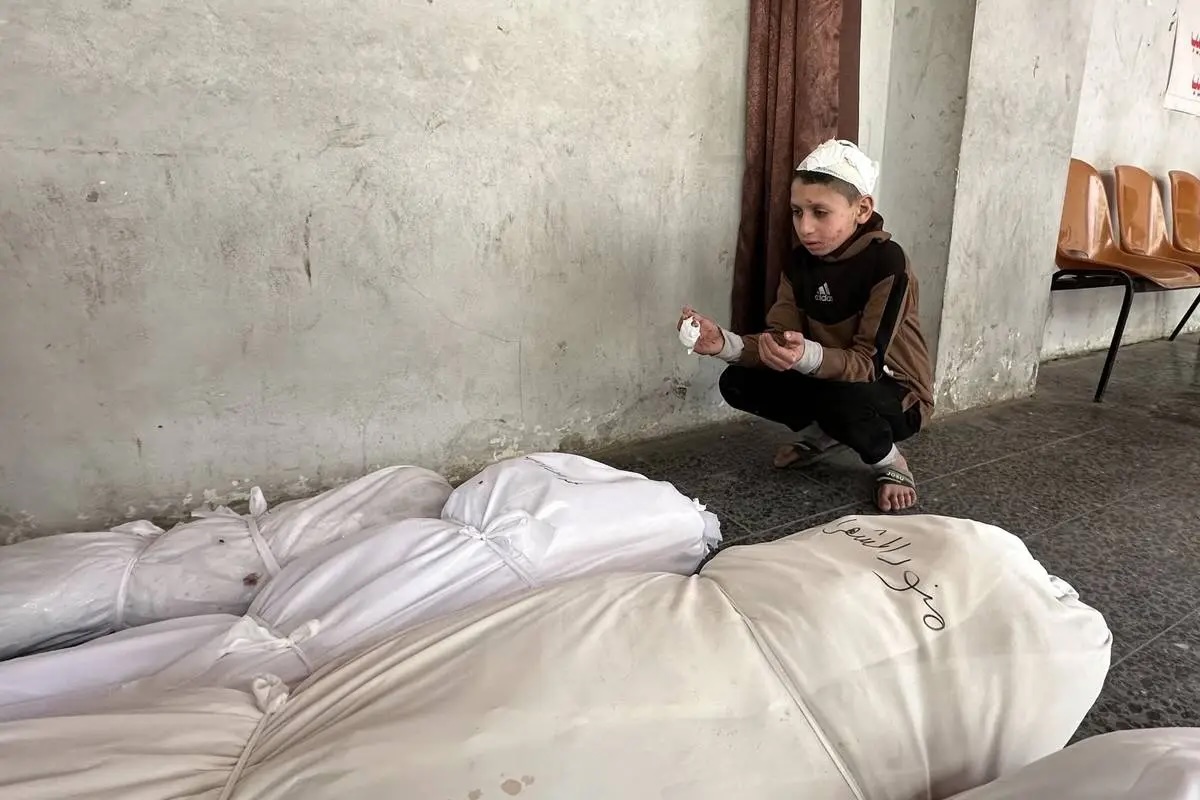
A ceasefire and prisoner exchange agreement has been in place since last month, pausing Israel’s destructive war on Gaza that has killed more than 48,360 people, mostly women and children, and left the enclave in ruins. 

Last November, the International Criminal Court issued arrest warrants for Netanyahu and his former Defense Minister Yoav Gallant for war crimes and crimes against humanity in Gaza. 

Israel also faces a genocide case at the International Court of Justice for its war on the enclave.

Continue reading
Who is Going to Rebuild Gaza?

No official announcement was made following the Riyadh Summit, which was considered fraternal, friendly, and consultative rather than formal. The summit, held a few days ago, was attended by the Gulf states, along with Jordan and Egypt, in anticipation of the Cairo Summit scheduled for March 4. The Cairo Summit is expected to approve and announce a new Arab plan for rebuilding Gaza as an alternative to Trump’s plan. However, more importantly, the Arab plan presents a comprehensive political approach linking the Gaza issue to the establishment of a Palestinian state and a peaceful resolution in the region. This approach counters Israel’s new policies, which are based on political hegemony—not only in Palestine by eliminating the two-state solution but also by expanding Israel’s security boundaries to include parts of Syria and Lebanon and inciting the U.S. into a confrontation with Iran.

The Egyptian-Arab approach is still in its final stages of preparation. It takes into account a combination of financial, technical, political, and security aspects concerning Gaza. Palestinian Prime Minister Mohammad Mustafa has proposed modifications to the plan originally put forward by the World Bank, the United Nations, and the European Union, which estimated the cost of rebuilding Gaza at over $50 billion in a rapid and preliminary needs and damage assessment report (IRDNA). Instead, Mustafa proposed a more realistic and feasible plan costing no more than $20 billion, to be implemented in three phases. The Egyptians have incorporated this into their reconstruction plan, which includes dividing Gaza into three safe zones, using temporary housing (caravans) and tents, and developing a technical vision for redesigning the sector’s infrastructure through specialized Egyptian companies.

The Arab approach links the reconstruction plan to several key elements. The first is the technical, logistical, and financial aspect of rebuilding. The second is reforming the Palestinian Authority (PA) to counter Israeli claims of its incompetence, with reform measures covering political and security aspects. The third element concerns the administration of Gaza in the post-occupation phase. A significant development has occurred with the Palestinians agreeing on a temporary administrative committee responsible for technocratic affairs. Hamas has accepted this arrangement, and President Mahmoud Abbas has reluctantly agreed to it, as it implicitly means that the PA will not return to Gaza.

The most challenging aspect of the Arab plan lies in the security arrangements during the reconstruction phase. Arab states refuse to deploy security forces or enter Gaza without a clear vision for ending the Israeli occupation and establishing a Palestinian state. As Arab diplomats emphasize, what is needed is not just a roadmap for resolving the Palestinian issue, but rather an agreement on final-status issues and recognition of a Palestinian state—followed by a roadmap for implementation, not the other way around.

The most contentious issue in the Arab approach is Hamas’s weapons. Israel, along with the United States, will not accept Hamas retaining its weapons in Gaza. Israel has made it clear that it links the second phase of the process to this condition, and the U.S. has accepted this demand. On the other hand, the Arab side ties the issue of disarming non-state actors to the establishment of a Palestinian state that would have the exclusive right to possess weapons. The key question remains: Who would disarm Hamas? The only legitimate entity that could do so is a recognized Palestinian state, which remains the missing piece in U.S. policies that align with Benjamin Netanyahu’s vision.

The Arabs hope that this approach will establish a new framework for relations with the United States and offer alternative strategic options. They even believe it could persuade President Donald Trump to secure several achievements—perhaps even earning him a Nobel Peace Prize in the end.

This is undoubtedly a highly optimistic approach, but it represents a new Arab attempt to present a united position and alternative strategic options. However, the biggest challenge this vision overlooks lies in the details. As the saying goes, “the devil is in the details.” What kind of Palestinian state is actually possible under the current circumstances? What was previously proposed by Trump himself? Is there a single Palestinian—any Palestinian—who could accept a state comprising only 30% of the West Bank, without East Jerusalem, and without control over borders? How could Hamas and its supporters—or even the majority of Palestinian refugees—be convinced of such a proposal, even if there were Israeli and American acceptance of the new Arab approach?

Mohammad Abu Rumman is a columnist in The Jordan Times.

Continue reading