“I’ll say it frankly: We should have exerted more pressure on Israel to adopt a different approach in Gaza” – Jake Sullivan, National Security Advisor to ex-President Joe Biden.
A striking phenomenon is recurring in American politics: Some presidents, cabinet members, and senior officials become more outspoken in their stances toward the Israeli occupation entity after leaving office, expressing regret for decisions that contributed to the injustice inflicted upon the Palestinian people.
This may be due to their liberation from diplomatic and partisan constraints, the pressures of Zionist lobbies, and the influence of tainted money, or perhaps their consciences awaken belatedly as they feel closer to death, realizing the enormity of the injustice they participated in or condoned.
Examples of this are numerous. Among the most prominent is former US President Jimmy Carter, who, after leaving office, shifted from a traditional pro-Zionist rhetoric to criticizing the Israeli occupation and its policies. Then there is Chuck Hagel, former US Secretary of Defense, who held the United States responsible for the Zionists’ continued aggression and described their practices as terrorism— but only after his retirement, of course.
Robert Gates, the former Secretary of Defense, also criticized war criminal Benjamin Netanyahu, calling him ungrateful.
More recently, Jake Sullivan, former National Security Advisor, and Antony Blinken, Biden’s lackluster Secretary of State, joined the ranks of those who have expressed regret. Both men have blood on their hands from the blood of Palestinian children and played a shameful role in supporting the Israeli entity during one of the greatest acts of genocide in modern history.
This was revealed in a lengthy investigation published in The New Yorker magazine last 20th July, titled “How Biden Enabled Israel’s Aggression Against Gaza – and Iran,” with the subtitle: “Top officials from the previous Administration now express regret over their failure to rein in Netanyahu.”
However, this regret will not absolve them for they knew full well that the Zionists were committing genocide in Gaza. On 5 March, 2024, five months after the start of the genocide, Mirjana Spoljarić, president of the International Committee of the Red Cross (ICRC), sent a confidential letter to President Biden. The ICRC, in addition to its humanitarian mission, is obligated under the Geneva Conventions to provide states with information and advice to help them avoid committing war crimes.
In her letter, Spoljarić reminded President Biden that the organization had condemned the “horrific” massacre perpetrated by Hamas against Israelis on 7 October 2023 and that it had continued to press the movement “tirelessly” for the release of the “hostages” it was holding.
However, this time she appealed to Biden with “grave concern,” warning that Israel, which had continued to bombard Gaza with heavy munitions since that October, was ignoring the ICRC in an unprecedented manner.
In her letter, she wrote: “The way Israel conducts hostilities is inconsistent with the laws of armed conflict, particularly the obligations to protect civilians, to distinguish between military objectives on the one hand and civilians and civilian infrastructure on the other, to ensure the humane treatment of detainees and the dead, to protect medical facilities and personnel, and to provide and facilitate the delivery of humanitarian aid.”
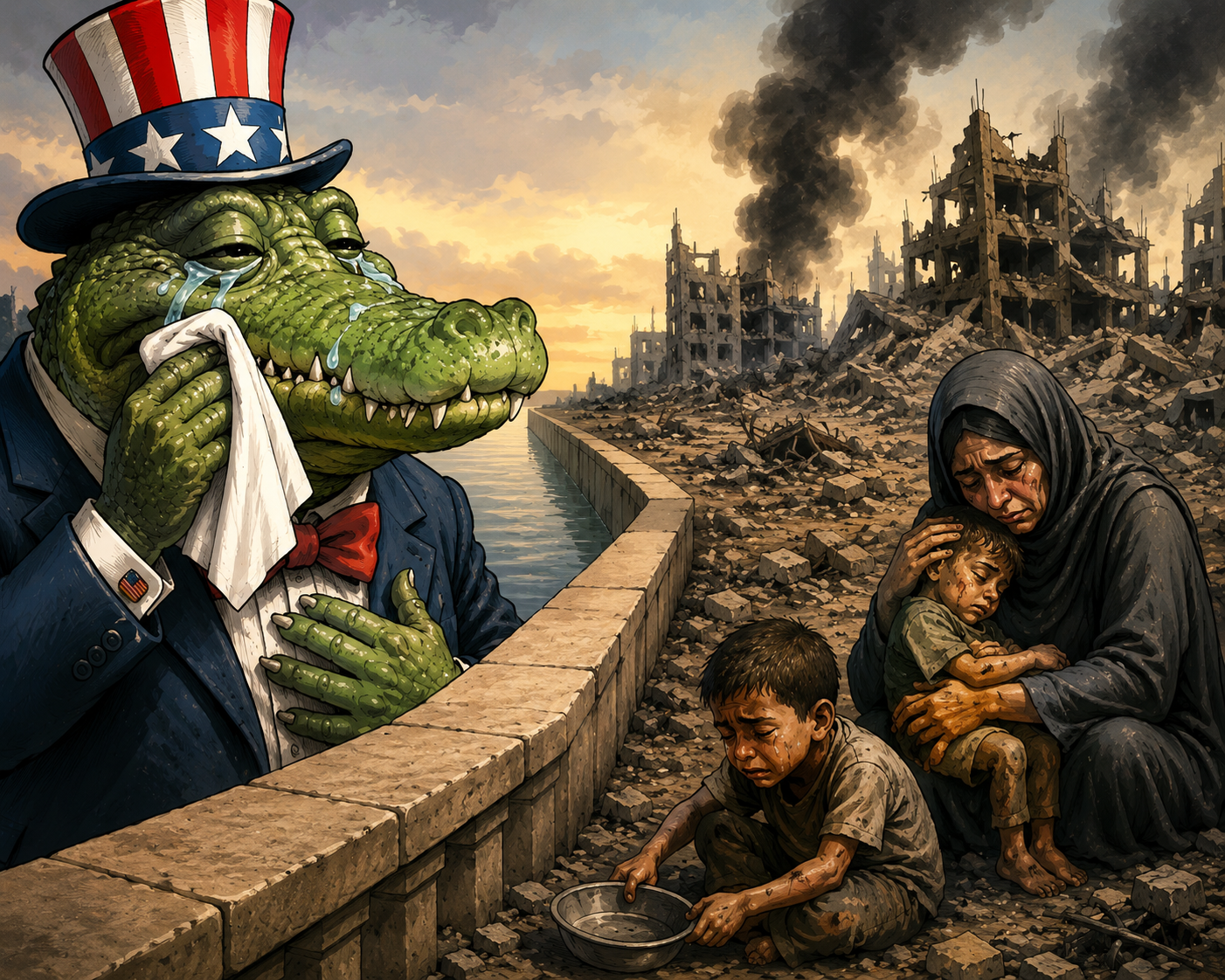
Despite these clear warnings, the United States remained a key partner in the genocide, providing weapons, money, and political and international cover to Israel. And now some of its officials come to shed crocodile tears for the children of Gaza!
I say to them: You have no right to repent now, after all these martyrs, after all these tragedies, to say: “We are sorry, we made a mistake.” You knew, and you had the power to pressure and prevent, but you chose to support, arm, and cover up. You bear the burden of what happened, and the blood of the children of Gaza will haunt you and pursue your names to the dustbin of history.
This piece by Ismail Al Sharif was originally published in the Arabic Addustour daily and reprinted in English in Crossfirearabia.com.
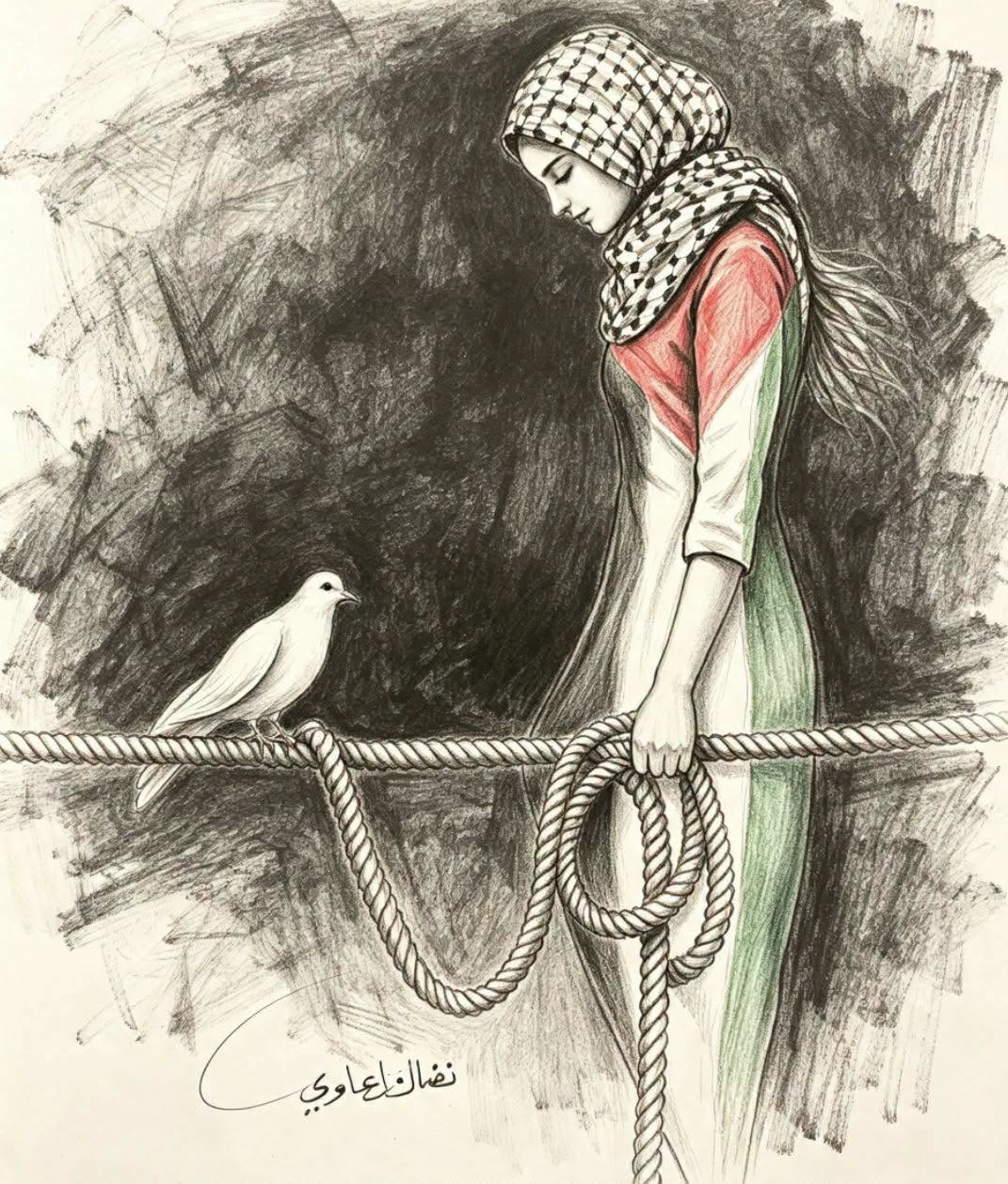
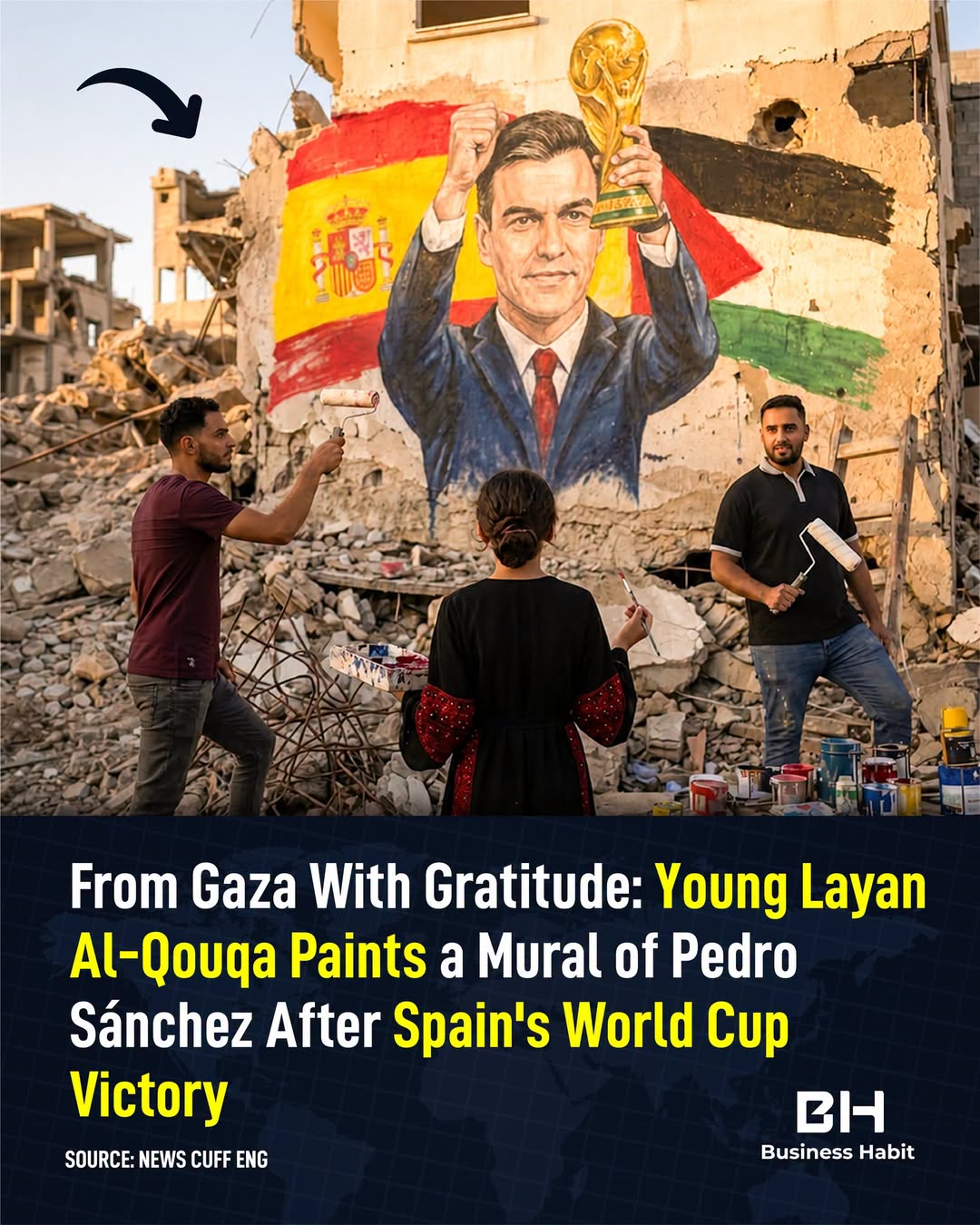
From Business Habit: Young Palestinian girl Layan Al-Qouqa, together with local artists, painted a large mural of Spanish Prime Minister Pedro Sánchez on the wall of a damaged building. According to publicly reported accounts, the artwork was created as a gesture of appreciation for Spain and its people.
In a video message, Layan said the mural was made with love and gratitude. Pedro Sánchez later responded by thanking Layan and the artists for what he called a “beautiful gesture,” saying that the people of Spain hear, see, and care about the children and families of Gaza, while expressing hope that they can one day live, create, and dream in peace.
Beyond politics, the story highlights the enduring power of “art, compassion, and human connection—showing how creativity can carry hope even in the most difficult circumstances.
*Disclaimer: This (facebook) post is shared for informational and news-reporting purposes only. It summarizes publicly reported events and statements from media reports and publicly available sources. It does not express or imply endorsement of any individual, government, or political position.*
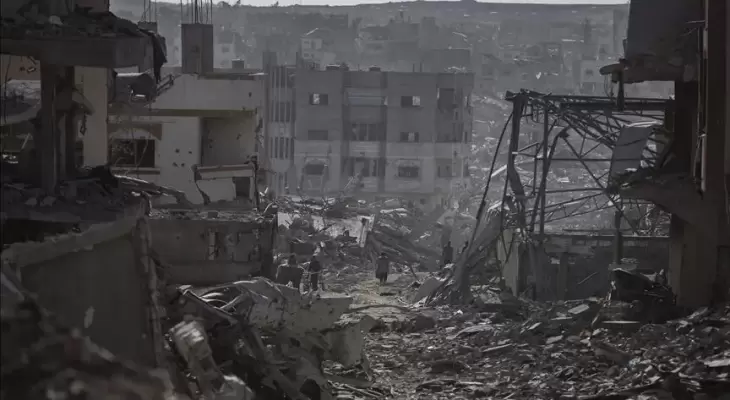
The images coming out of Gaza have been seen by billions of people in real time. Satellite footage. Videos from journalists. Testimonies from doctors. Aid workers. Families searching through rubble. Children pulled from collapsed buildings. Entire neighborhoods reduced to dust.
Never before has a modern war been documented so extensively while remaining so fiercely contested in the court of global opinion.
Many human rights organizations, legal experts, and governments have raised grave allegations about Israel’s conduct in Gaza, while Israel strongly rejects accusations of genocide and says it is acting in self-defense against Hamas.
But whatever legal judgment history ultimately reaches, one reality cannot be erased. The destruction is real. The civilian suffering is real. The graves are real.
Governments may debate definitions. Politicians may argue over terminology. Courts may take years to deliver verdicts.History, however, will remember what the world witnessed.
And future generations will ask not only what happened in Gaza, but who chose to look away
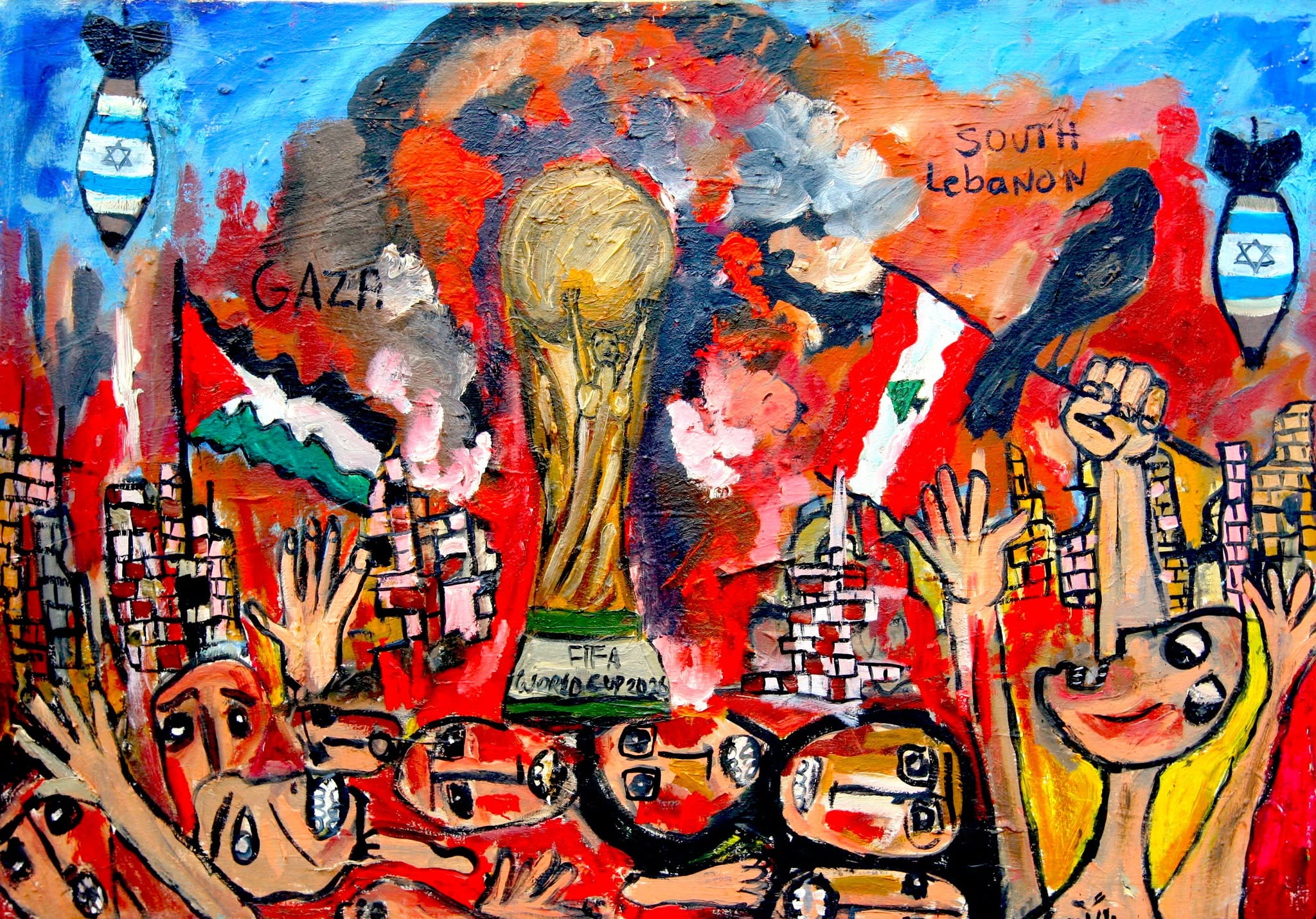
The Art of Tragedy. Said Elatab calls his latest painting ‘FIFA WORLD CUP 2026’: He writes:
Despite the death of Lebanese and Palestinians, the world chose not realize that the war on the Gaza Strip and Lebanon – a genocide – is still going on and killing of people in these places, continues. He adds, God save the Lebanese and Palestinians from this evil war.
For 1000 days, Gaza existed between life and death. Our endurance is no longer breaking news; it has become a painful question confronting the world.
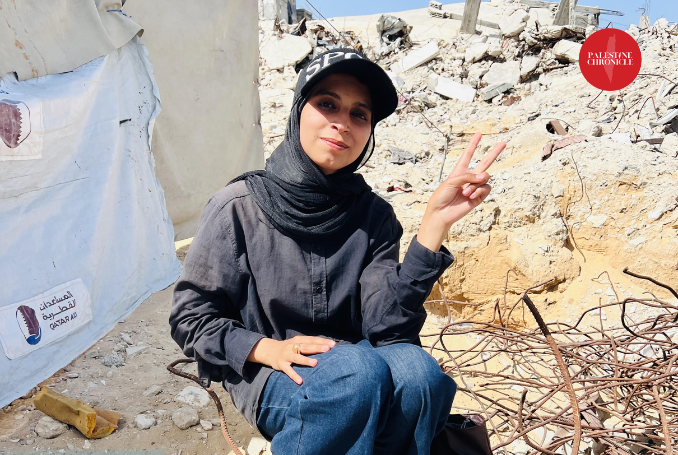
As a journalist from the Gaza Strip, I have lived through the genocide since its very first day. I am still trying to remain strong, not for my own sake, but for the mission I believe I was born in Gaza to fulfill. It is a mission that goes beyond personal pain, becoming a testimony to an entire era in which human beings are being erased before the eyes of the world.
What has happened in Gaza since October 7 cannot be reduced to statistics, news headlines, or even thousands of journalistic reports. It is an entire chapter in the history of humanity unfolding before the world’s eyes. It is a story that must be documented, preserved, and taught to future generations, not only as a record of destruction, but as a testament to what human beings can endure when every essential means of survival is stripped away.
For 1000 days, Gaza has existed between life and death. Our endurance is no longer breaking news; it has become a painful question confronting the world: How much suffering can a human being endure? And how many tragedies can the world witness before deciding that what has happened has crossed every possible line?
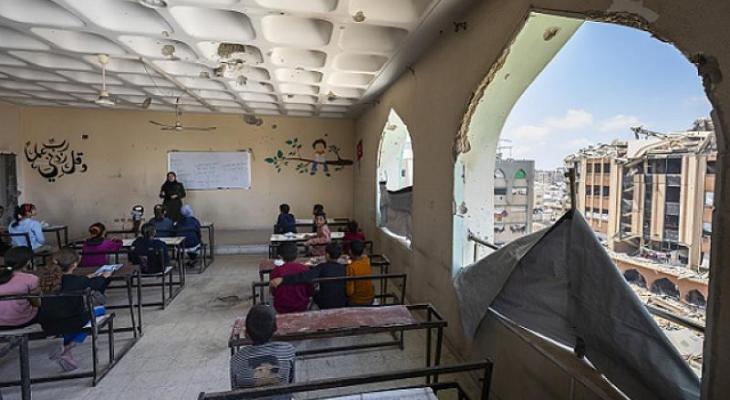
This war has touched every family in Gaza. There is not a single home that has been spared grief, fear, displacement, or loss. Families who once believed their homes were the safest places on earth found themselves sleeping in tents, schools, hospitals, or out in the streets. Parents carried their children through the ruins, while children learned the sound of bombs before they ever learned what safety felt like.
We moved from one place to another, not because we wanted to leave, but because survival demanded it. Every time we were told there was a “safer place,” we gathered what little we had left and made our way there, hoping to find temporary shelter. But fear followed us wherever we went. Areas described as humanitarian zones became places of death, and safety became a word that appeared more often in official statements than in reality.
For many people around the world, home is associated with comfort, memories, and a sense of belonging. For Palestinians in Gaza, home has become a memory of what was lost. Entire neighborhoods have disappeared, and streets once filled with families have been reduced to fields of rubble. The places that once held our childhood memories now remind us only of those who are gone.
Yet despite everything, people in Gaza wake up every morning searching for a reason to keep going.
They search for water, struggle to find bread, and try to obtain medicine. They hold their children close throughout the night when the sound of explosions returns, and they rebuild small pieces of their lives again and again, knowing they may lose them once more.
This is what the world must understand: Gaza’s resilience is not a romantic story, nor is it an easy choice. It is the result of people being forced to fight for the most basic of human rights: the right to exist.
What Israel has done to Gaza, in full view of the international community, has forced us to question the very meaning of the principles the world claims to uphold. What does justice mean if those who suffer are left without protection? And what value do international laws have if civilians, hospitals, journalists, and children remain in danger despite the protections those laws are supposed to provide?
In Gaza, these are no longer abstract political or legal questions. They are questions asked every day under bombardment, while standing in line for bread, searching for clean water, and living inside fragile tents that offer protection from neither the weather nor the war.
We are not only searching for an explanation for what is happening to us. We are searching for an explanation for the world itself.
The people of Gaza have learned that no one is outside the circle of danger. Journalists, doctors, paramedics, civil defense crews, children, women, older people, and people with disabilities have all come face to face with the same reality: A life that can be endangered anywhere, at any moment.
Journalists did not simply document the destruction; they lived through it themselves. Many lost their homes, their families, and their colleagues, yet they continued carrying their cameras and documenting what was happening around them. They paid an immense price simply for preserving the memory of a place the world might otherwise have chosen to forget.
On a personal level, I lost 54 members of my family during the genocide. They were all killed, and entire branches of my family were erased from the civil registry. We grieved, we suffered, and we cried out under the weight of such immense loss, but we never abandoned our mission. I continued writing, documenting, and telling the world the truth because I know that every story left untold is another loss, and that bearing witness to what has happened has become a duty no less important than survival itself.
Doctors and healthcare workers faced a similar reality. Hospitals, which should be the safest places during war, became places of fear and destruction. Medical staff continued their work under impossible conditions, treating the wounded with extremely limited resources while facing the same danger that threatened the very patients they were trying to save.
What kind of world turns hospitals into battlefields? What kind of world arrests or targets doctors while they are carrying out their humanitarian duty? And what kind of world kills journalists in their homes, alongside their families, simply because they carried a camera instead of a weapon?
These are not isolated incidents. They are part of a much broader reality in which every line that was supposed to protect civilians has been crossed.
Among the most painful chapters of this war has been hunger.
Before this war, it was rare to hear of children dying from hunger in the modern world. In Gaza, however, hunger became a daily reality. It was no longer simply the absence of food; it became a condition that shaped every aspect of life. It first appeared on the faces of children before it appeared in official reports. It was visible in their frail bodies, in the exhaustion of parents, and in the despair of families searching for something as simple as bread.
We walked through streets where people were too weak from hunger to remain standing. Children cried throughout the night because their bodies could no longer understand why food had disappeared from their lives. Families shared the few crumbs they had, dividing tiny portions among many people and trying to convince themselves that tomorrow might be different.
But tomorrow usually brought the same reality.
We followed evacuation orders and went to areas described as “humanitarian zones.” We believed they might offer us some protection from the violence. Yet even there, people were killed, tents were burned, and families were destroyed.
The very idea of shelter became fragile, and safety became a word repeated in official statements but rarely experienced by those living through the war.
Many people remember the image of the little girl, Warda Jalal al-Sheikh, standing amid flames, smoke, and devastation after her family’s tent was struck and caught fire. Several members of her family were killed as she struggled to stay alive. Her image became a heartbreaking symbol of what it means to be born into a reality where fire surrounds you before you have even had the chance to understand the world.
Many also remember our colleague, journalist Ayman al-Jadi, who was waiting for his wife as she gave birth to their child. It should have been a moment of new beginnings, a moment to welcome new life. Instead, he was killed while waiting to meet his baby.
How can the world comprehend a reality in which death reaches even the moments meant to embody hope?
These stories are not exceptions. They are scenes repeated over and over in a place where simply staying alive has become extraordinary.
Even after the ceasefire was announced, the suffering did not simply disappear.
Across Gaza, a new reality began to take shape with the continued expansion of what has come to be known as the “Yellow Line.” Marked by yellow concrete blocks and military boundaries, these zones have redrawn the map of the Gaza Strip, cutting off access to vast areas of land.
The Yellow Line has continued to consume more territory, approaching nearly 70 percent of Gaza’s total area and separating communities from their homes, farmland, and neighborhoods. For many Palestinians, these yellow concrete barriers are not merely physical obstacles; they represent the continuation of displacement by other means.
Despite the ceasefire announcement, violations continued in full view of international mediators and the world. The nature of the war may have changed, but people’s sense of insecurity has not. The sound of bombardment may have faded in some areas, yet the fear of losing what remains has never left people’s hearts.
The expansion of these boundaries raises a painful question: Can there truly be a ceasefire while the map of Gaza continues to shrink?
For Palestinians, the yellow barriers have become a symbol of an even deeper fear: That the temporary measures imposed during the war will become a permanent reality, reshaping the future of an entire people.
After one thousand days of genocide, Gaza cannot be understood solely through the numbers of those killed, wounded, displaced, or left homeless. Statistics matter because they reveal the scale of the devastation, but behind every number is a human story, a family, a dream, a memory, and a life cut short.
The true story of Gaza is not only a story of destruction. It is also the story of people who refused to disappear.
It is the story of mothers who continued caring for their children despite their grief; fathers who searched for food under impossible circumstances; doctors who kept working despite exhaustion; journalists who continued writing despite the danger; and ordinary people who rebuilt small pieces of their lives even when everything around them had collapsed.
This resilience must not be mistaken for an acceptance of suffering. The ability of Palestinians in Gaza to survive does not make their suffering acceptable, nor does it absolve those who allowed this reality to continue of their responsibility. Survival is not proof that people are well. It is proof of the immense burden they have been forced to endure.
The world should not see Gaza’s resilience as a reason to move on and forget what has happened. It should see it as a reason to ask more difficult questions about justice, accountability, and the value the world places on human life.
One thousand days of genocide are not merely the passage of time. They are the living memory of an entire generation being written in real time. They are children growing up with images of destruction instead of ordinary childhood memories, and families learning how to mourn their loved ones while still struggling to survive.
What has happened in Gaza must not become another chapter that the world reads and then closes. It must remain an open testimony, a reminder of what happens when international principles are ignored and human suffering becomes something people watch from a distance.
Gaza’s resilience after one thousand days cannot be captured in a news report or a headline. It deserves to be written into the history books, not only as a record of pain, but as evidence of a people who continued to live despite every attempt to break them.
Because the story of Gaza is not only about what was done to it. It is also about what remains after everything else has been taken away.
Homes may have been destroyed, streets transformed, and familiar landmarks erased, but the people remain, carrying their memories, their names, their stories, and their determination to be seen and heard.
As a journalist from Gaza, I know there are countless stories that have yet to be told. Behind every destroyed building lies the history of a family. Behind every empty chair is someone we still mourn. Behind every survivor is a story of resilience that deserves to be heard.
In the end, we are still here.
We are still writing.
We are still documenting.
We are still bearing witness.
Because what remains untold about Gaza is far greater than anything the world has heard so far.
– Shaimaa Eid is a Gaza-based writer. She contributed this article to the Palestine Chronicle.

Heba
 CrossFireArabia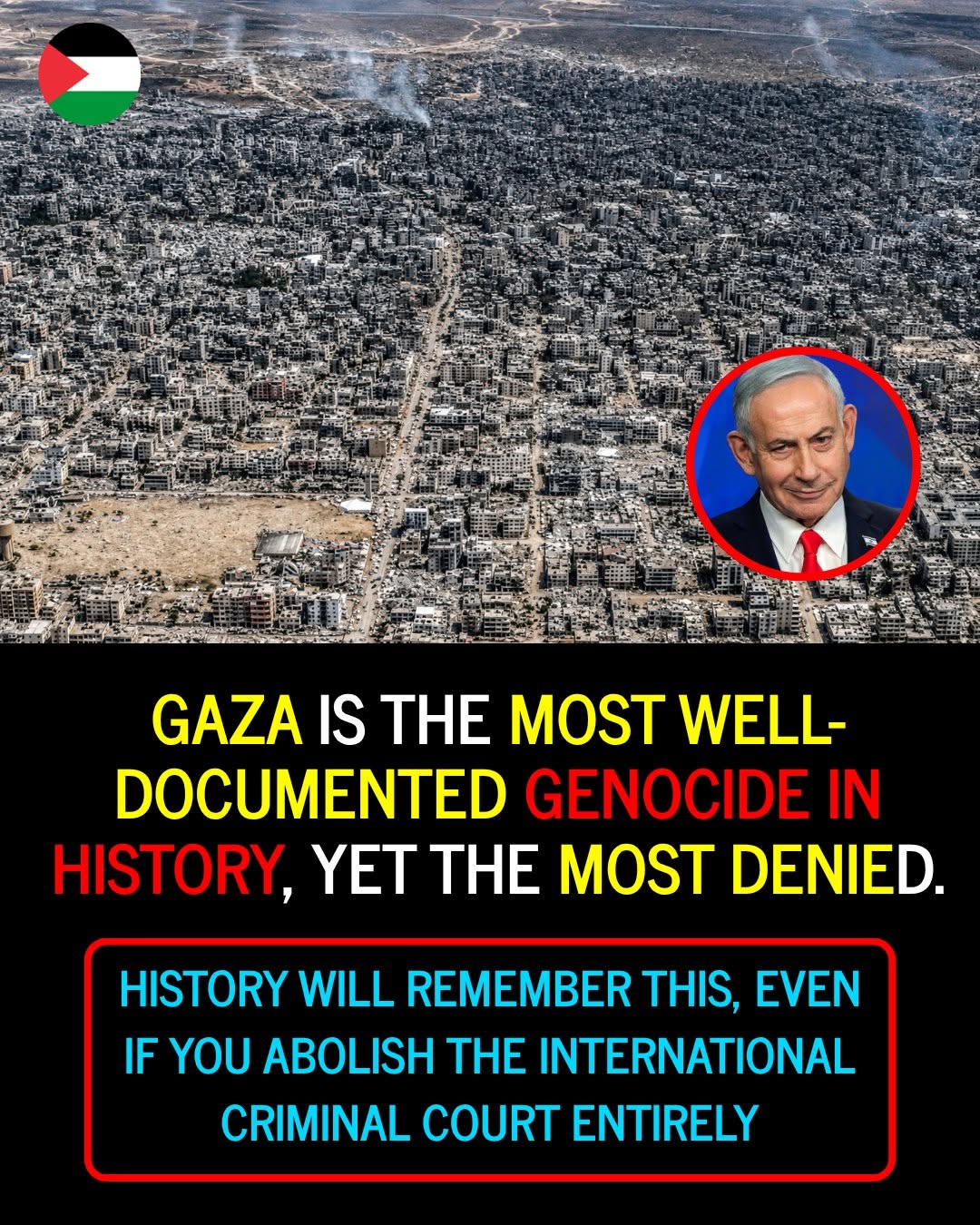
 marwan