Israeli Media: We Are Waging a ‘War of Brains’ With Hezbollah

Israeli media revealed new details about the circumstances of the attack that targeted a military building in the Binyamina area south of Haifa. Israeli military analysts and experts said the incident casts doubt on the ability to intercept Hezbollah drones, and that the army is waging a war of brains with Hezbollah.

Military affairs correspondent Itai Blumenthal of Channel 11 said that the two drones that targeted the building in the base arrived via the northern maritime zone, where one of them was intercepted near the city of Nahariya, while the other disappeared from the field of view of Israeli fighters and helicopters just before hitting the building.

Blumenthal confirmed that the drone did not fire missiles, noting that this type of drone is known to the Israeli army and is manufactured in Iran and is available to Hezbollah, which raises further questions about the army’s ability to effectively detect these drones in the current war.

In the same context Nir Dvori, military analyst for Channel 12 said that this incident caused great disappointment, especially since the recent period witnessed some progress in the army’s ability to intercept drones. He added this incident completely turned the picture upside down, and revealed the gaps in the Israeli defense system.

A war of brains

Dvori explained this war of brains is witnessing a continuous development of capabilities on both sides. He added the Israeli army is working to improve its interception capabilities, while Hezbollah continues to develop the low-flying and high-speed techniques of its drones, which makes it more difficult to detect and shoot them down.

For his part Eitan Ben Eliyahu, former commander of the Israeli Air Force, confirmed that there is a war of minds taking place in real time between Hezbollah drone operators and soldiers operating Israeli detection and interception systems.

He described this battle as similar to a computer game, with each side trying to outdo the other in real time.

Yossi Yehoshua, a military affairs analyst for Channel 24 and Yedioth Ahronoth, pointed out that last deadly incident added to a series of injuries sustained by Israeli soldiers in the past two weeks since the start of the ground operations in Lebanon.

He said hundreds of soldiers were injured as a result of the use of anti-tank missiles, mortar shells, and drones by Hezbollah.

A surprise attack on the Golani Brigade training camp, located about 80 kilometers deep in southern Lebanon, Sunday, resulted in the killing of four soldiers and the wounding of 67, including eight in critical condition. The Israeli Army Radio described this attack as the deadliest incident against the army since the start of the current war.

Israeli media reported at the time that the drone fired a missile at the training camp, before crashing into the dining hall inside the camp, where soldiers were eating according to Al Jazeera.

Continue reading
Hamas Derails ‘Generals’ Plan’ in North Gaza

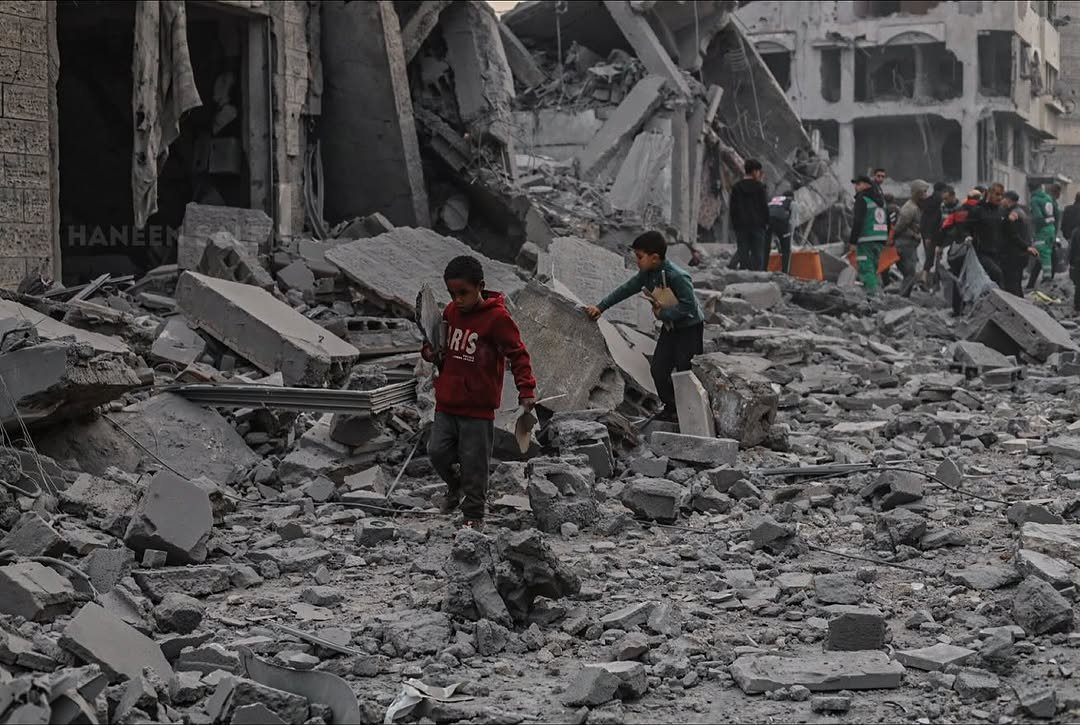
Military expert Dr. Nidal Abu Zeid has confirmed that despite separating the northern Gaza Strip from Gaza City, the Israeli army has not succeeded in implementing the so-called “generals’ plan” so far.

He added that what is happening on the ground can only be classified as “tactical success but strategic failure in light of the heavy losses suffered by the Israeli army in northern Gaza.

Abu Zeid added to Jordan24 that the resistance is still operating in pockets close to the separation line established by the occupation, while it seems that the Netzarim axis model is being repeated in northern Gaza, which puts the occupation in a fragile position and vulnerable to the strikes of the resistance, which has exchanged geography for losses, meaning that it has given land to the occupation but inflicts losses in wide areas of deployment.

Failure with Hezbollah

Regarding what is happening in southern Lebanon, Abu Zeid said the equation of proportionality and gradualism is still prevailing in military with Haifa has become opposite equation to the southern suburb and Tel Aviv to Beirut in targetting and bombing.

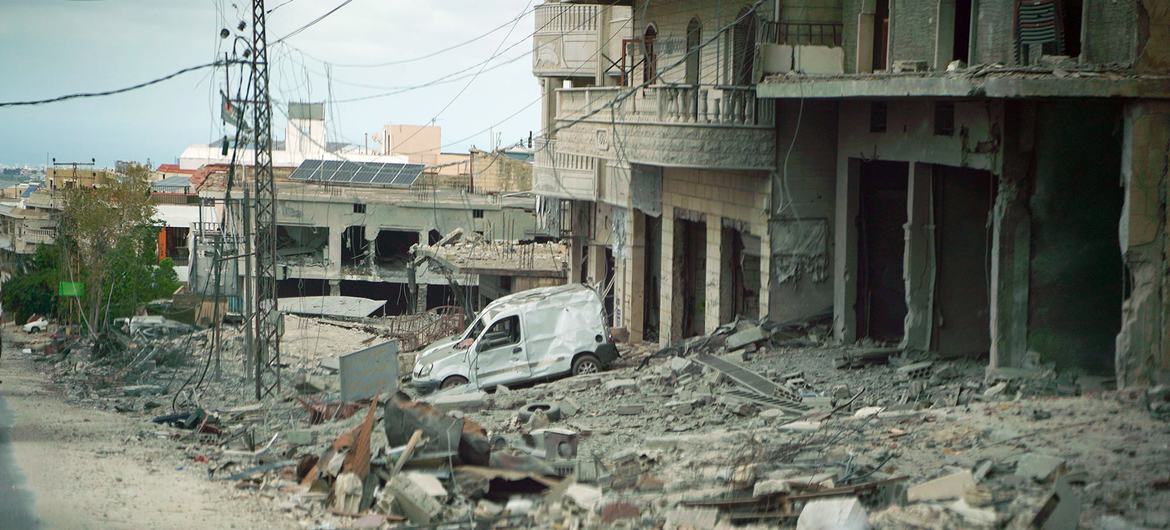
He added that this is while the occupation forces have yet failed after 13 days of ground fighting to achieve any significant progress, and everything the Israeli army is doing falls within the framework of reconnaissance operations by force in an attempt to determine the weak points of Hezbollah, which is defending in an unconventional manner on the front edge of the battle zone.

Iran Stop!

Abu Zeid pointed out that events are accelerating, as indicators of the Israeli response to the Iranian response have begun to increase and its features have begun to become clear, which will change the equation of the conflict in light of an American desire not to expand the circle of conflict as much as it is a desire to clip Iran’s nails in the region.

Continue reading
Maariv: Cabinet Must “Think” Before Israel Falls in Regional Mud

A year after the Israeli aggression in the Gaza Strip and the war’s spread to Lebanon, Israeli politicians must now be involved in a real soul-searching process and study the course of this war on all fronts so may may see whether Israel succeeds in changing the strategic reality in the region or is begining the process of drowning in the mud on all fronts.

According to the Maariv newspaper, Israel is not built for  long wars and/or wars of attrition. The Israeli economy relies on human capital and therefore long wars could lead to the collapse of the economy.

To this day, the newspaper says, “three army divisions are conducting maneuvers in the Strip. But so far no combat goal has been achieved in Gaza.

“The Southern Command has not presented an exit plan, the Israeli army has not yet achieved most of the war’s goals: It has not released the 101 remaining hostages, it has not eliminated Yahya Sinwar, and has not been able to dissolve Hamas. It seems that day-after-day we will drown in the Gaza mud,” it said.

The Israeli army is relying on evacuating border villages. In general, the army has taken control of most of the line north of the border fence, but plans for the future are unclear.

For its part, Hezbollah has announced that it intends to operate in a guerrilla style to: Take advantage of the fact that Israel is not interested in a war of attrition.

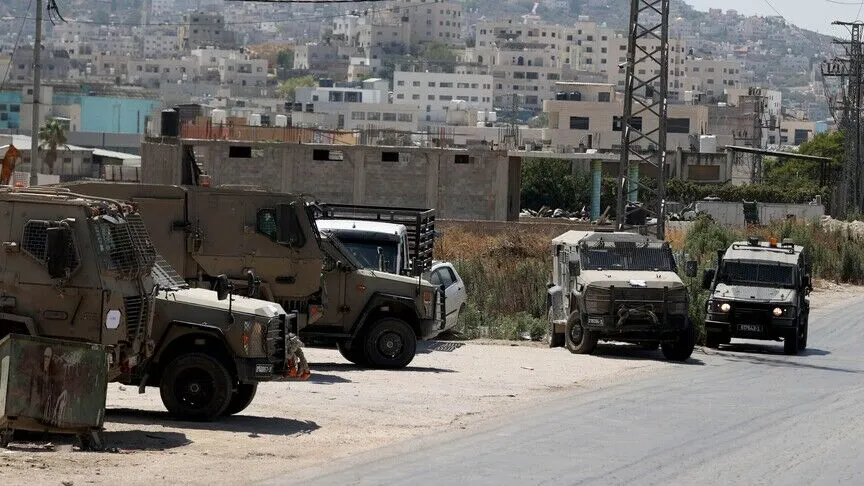
In the West Bank, the newspaper says, the army is operating in Nablus, Jenin and Tulkarm. It is trying, in cooperation with the Shin Bet, to maintain a level of attack and operations in a way that does not turn the West Bank into another strong front.

In Iran, the Israeli government has not decided what it wants to do. Israel is obligated to attack forcefully after the Iranian attack two weeks ago, but the Iranian issue is complicated.

This is also due to the international community led by the United States, and countries in the Middle East warning of the repercussions of any Israeli response on the economy and oil and gas prices, the expected damage from Iran to the assets of the United States or moderate countries, and its impact on the elections in the USA.

All of these are part of the considerations that the Israeli government must make in order to evaluate what is happening on all fronts, because the future has become unanswerable.

Continue reading
Iran’s FM to Israel: ‘Don’t Test Our Resolve’

Iranian Foreign Minister Abbas Araghchi has warned Israel “not to test” Tehran’s resolve amid reports of possible military strikes in response to the barrage of missiles Iran launched last week in retaliation to Israel’s assassinations of senior Hezbollah, Hamas and Iranian officials.

“Our missiles can reach all their targets. We will respond to any attack on our institutions or infrastructure,” Araghchi said during a conference discussing the impact of Hamas’s October 7 operation on Israel on the first anniversary according to the Quds News Network.

“We recommend the Zionist regime not to test the resolve of the Islamic Republic. If any attack against our country takes place, our response will be more powerful,” Araghchi said.

He added Iran will continue to support the Palestinian cause to establish their own state. Addressing the Israeli strike that killed Hezbollah leader Hassan Nasrallah, Araghchi said the “resistance” to Israel is not based on a person.

Continue reading
Is an Israel-Iran War Coming?

By Dr Khairi Janbek

In the late 1990s, the grandiose talk of a new order for the Middle East emerged which turned out to be nothing more than a euphemism for Disney Land Arab countries, poverty and conflict-stricken regional reality, with a mixture bordering on more than buffer zones.

Now we have a less ambitious notion and that is a new balance of power in the Middle East, another euphemism for Israel calling the shots and all its neighbors being called on to abide.

But how does this new notion translate in practical terms? Well basically, to all concerned and less concerned waking up every morning asking the question: Will Israel strike Iran or will it not? 

Of course, this is a horrific question if indeed Israel does hit Iran as it carries with it many important existential perils for the whole region and beyond.

One believes whatever is on Benjamin Netanyahu’s mind to achieve advantageous results must be carried out before the date of the US elections this November because no matter what he has been told by the US prospective candidates, at the end of the day, a sitting president doesn’t act like a president-elect.

Now what would a direct confrontation and open warfare between Israel and Iran entail? Well primarily, direct confrontation takes precedence over war by proxies, which means Israel will have to go directly into destroying the military capabilities of Iran in a hugely destructive war.

This would ultimately open the possibilities for its own destruction which means dragging the US and western powers into the conflict, no matter how reluctantly they maybe to defend it, and/or basically go into a slippery-slope open warfare reaching Syria and Iraq and Iran and whatever is on its plate regarding Gaza and Lebanon.

The current wisdom dictates a large scale war does not seem to be likely on the agenda, but that does not exclude a cycle of tit-for-tat strikes between Israel and Iran.  Clearly Israel knows that for the economy of the west which is seriously preoccupied with prices and inflation, to target the Iranian oil facilities is a red line.

Moreover, to target the Iranian nuclear facilities would open the door for Tehran to retaliate against the Israeli nuclear facilities which will have dire consequences for the whole region and the world.

Therefore, if Israel is seriously thinking of dealing a blow to Iran, it will either resort to targeting personalities from the hierarchy of the country, and/or will be a just a face saving act with superfluous consequences.

Dr Khairi Janbek is a Jordanian writer based in Paris and the above opinion is that of the author and doesn’t reflect crossfirearabia.com.

Continue reading