World Cup Through Gazan Eyes
 CrossFireArabia
- June 16, 2026
Despite the heavy burden of war, displacement, loss, and deprivation they have endured for nearly three years, many Gazans, especially the youth, have not relinquished their passion for football and following the World Cup matches. They have become a temporary escape from the harsh reality of war.
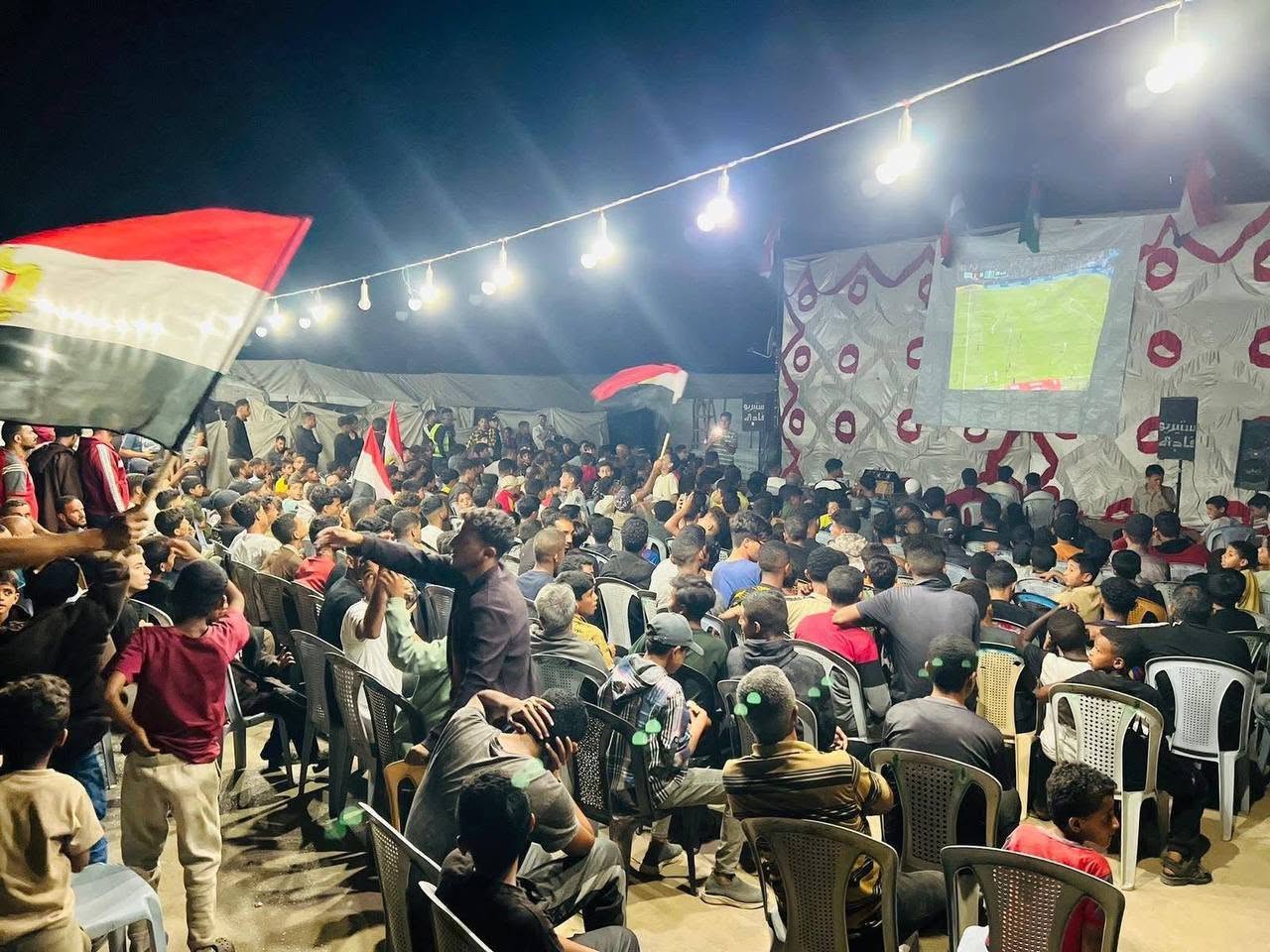
With the start of the Arab teams’ matches in the world’s most important football tournament, displacement camps in the Gaza Strip have been transformed into something resembling “popular caravans” or open-air cafes, where hundreds of displaced people gather in front of large screens or televisions to watch the matches and cheer on their favorite teams.
In the Nuseirat camp in the central Gaza Strip, hundreds of Gazans gathered in the main square of the Nuseirat market in front of a giant screen to watch the match between the Egyptian national team and their Belgian counterparts, which ended in a 1-1 draw. Cheers and popular songs filled the air during the match, a scene that brought a measure of vitality back to faces worn down by war.
In the Khan Younis area of southern Gaza, some of the tents housing displaced people have been transformed into makeshift cafes. Young men sit on wooden benches in front of televisions to watch matches of the Arab teams participating in the tournament. Some tents are decorated with Egyptian flags, and several young men drape the flags over their shoulders while watching the games.
During major sporting events, Gazans typically make a point of showing their support for the Arab teams, expressing the cultural and social ties that bind them to the Arab world and emphasizing their shared sense of solidarity and belonging.
For many residents of the Gaza Strip, these gatherings represent a rare opportunity for recreation and a break from the pressures of daily life. They also offer a temporary space for joy and engagement with a global event, away from the constant bombardment, displacement, and suffering.
However, watching the World Cup in Gaza is not as easy as it is in other parts of the world. In addition to the dire humanitarian situation and economic collapse, residents face financial, technological, and security challenges that make watching the matches a difficult task.
High Subscription Costs
The high subscription cost of beIN SPORTS channels, the exclusive broadcaster of the tournament, stands out as one of the most significant obstacles, in addition to the large time difference, as most matches are held in the early morning hours due to the United States, Canada, and Mexico co-hosting the tournament.
In an attempt to alleviate this crisis, the sports channels’ agent in Gaza managed to obtain a special exemption from the network’s headquarters in Qatar, allowing the reactivation of older equipment within the Gaza Strip, taking into account the exceptional circumstances faced by the residents. This exemption was granted for monthly subscriptions ranging between 350 and 420 shekels (US$120-150), providing some cafes and fans with a limited opportunity to watch the matches.
Alternatives, but Not Enough
Other alternatives are no more readily available. Free Turkish or Iranian channels may broadcast some matches, but they lack the Arabic commentary that has become a cherished part of the Arab public’s experience with major tournaments.
On the other hand, IPTV services rely on a stable internet connection, which has become virtually impossible given the extensive damage inflicted on the telecommunications infrastructure during the war.
Security Concerns Over Renewed Israeli Bombing
The suffering of Gazans is not limited to material and technical aspects; it also extends to security concerns. Gathering in cafes or public squares to watch matches has become fraught with danger due to the ongoing Israeli bombardment, prompting many to avoid going out at night. Despite this, some cafes continue to broadcast matches at night, even with the possibility of renewed Israeli attacks.
Despite all these challenges, football remains a rare outlet for many Gazans and a way to cling to life, a temporary attempt to postpone the pain of war and engage, even for a few hours, in a collective joy that restores some semblance of normalcy.
Since October 8, 2013, Israel, with American and European support, has committed genocide in the Gaza Strip, including killing, starvation, destruction, displacement, and arrests, ignoring international appeals and orders from the International Court of Justice to cease its actions.
The genocide has left more than 246,000 Palestinians dead and/or wounded, most of them children and women, and more than 11,000 missing, in addition to hundreds of thousands of displaced people and with a famine that claimed the lives of many, most of them children, as well as widespread destruction and the erasure of most of the cities and areas of the Gaza Strip from the map. Quds Press