‘Can You Look in The Mirror After You Have Bombed an Entire Neighborhood?’

By Dr Ahmad Tibi

In the midst of the Spanish Civil War, some time in 1937, fascist dictator Francisco Franco’s regime bombed the Basque town of Guernica, with the help of Germany and Italy. In less than four hours, and after bombs weighing a total of 22 tons were dropped on it, the town was completely destroyed.

Hundreds were killed in the bombardment, which shocked the entire world and became a symbol of the cruelty of those times. Guernica was immolated in the fire of fascistic propaganda and in historical memory it is testimony to the fragility of justice during war. Pablo Picasso’s famous masterpiece, “Guernica,” has become a symbol of the destruction and horror of war.

In the bombing of Guernica, no pilot refused to obey orders. They flew – and carried out their job as dictated. Obedient soldiers. Eighty-seven years later, it is the same old song. No Israeli pilot has stood up and said “No.” “This is the limit.”

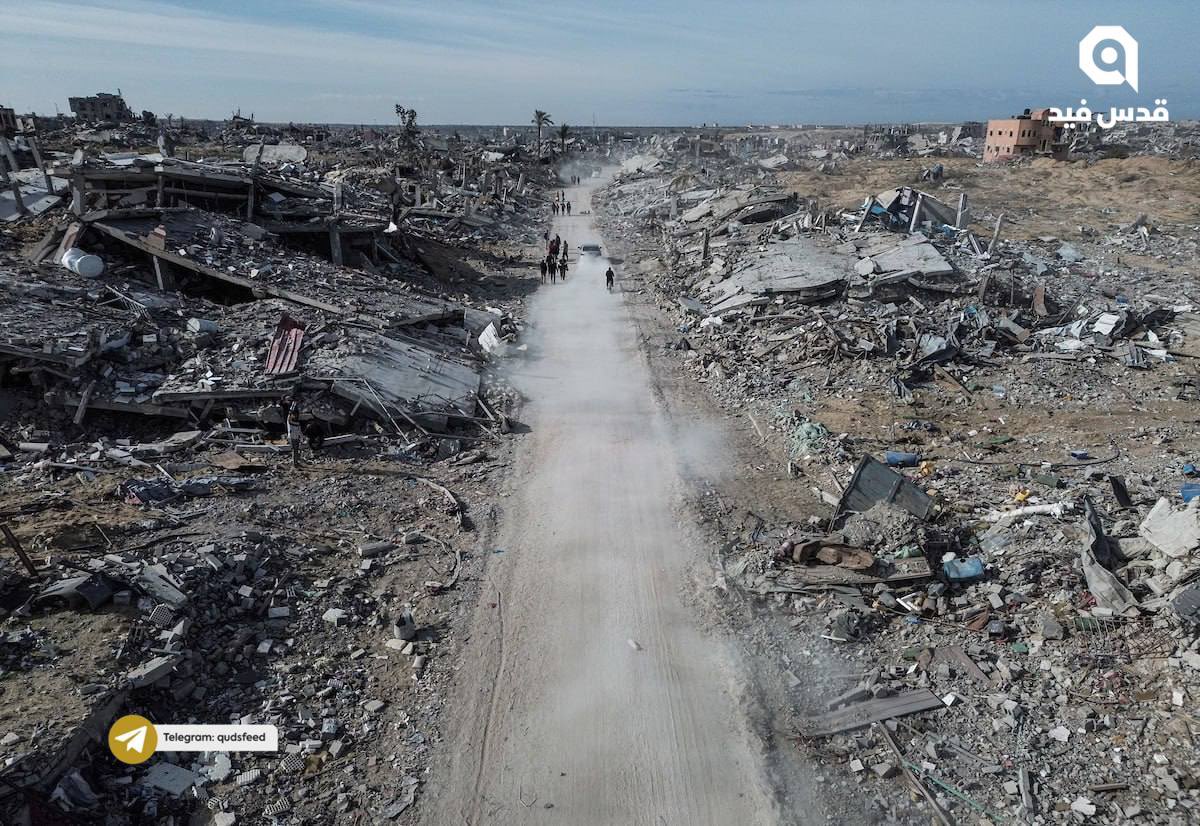
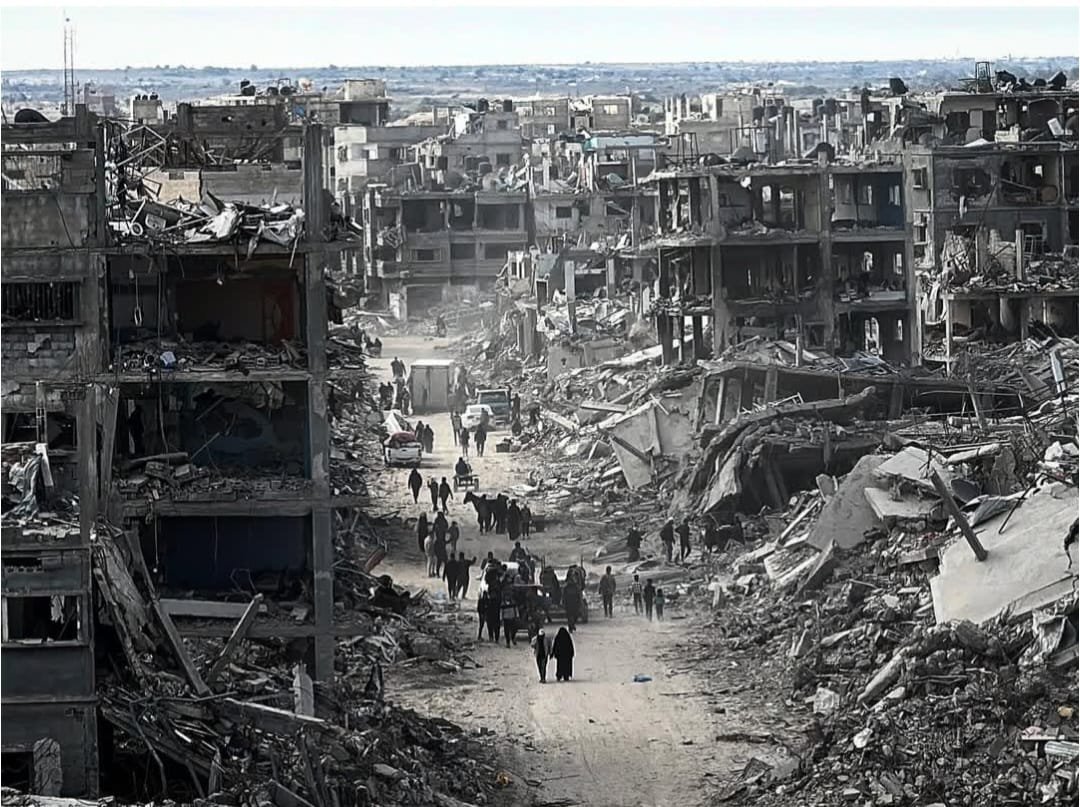
The bombardments in the Gaza Strip have hit and damaged hospitals, schools, kindergartens, mosques and churches, bakeries, public buildings and entire neighborhoods – leaving behind tragedies too numerous to elaborate – and not a single pilot has said “No.”

The pilots, who in their private lives are apparently considered by themselves and their surroundings moral men of integrity and values, sons of parents, fathers of children, good friends to their buddies – have made themselves a major part of the well-oiled killing machine that knows no mercy. Or limits.

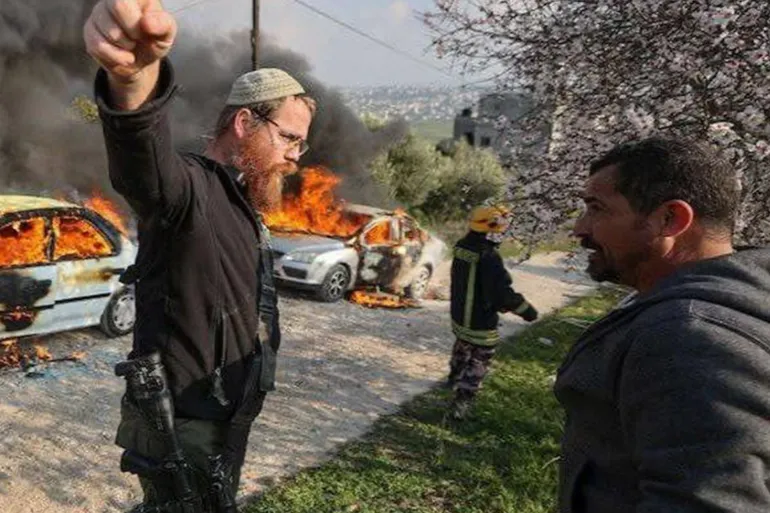
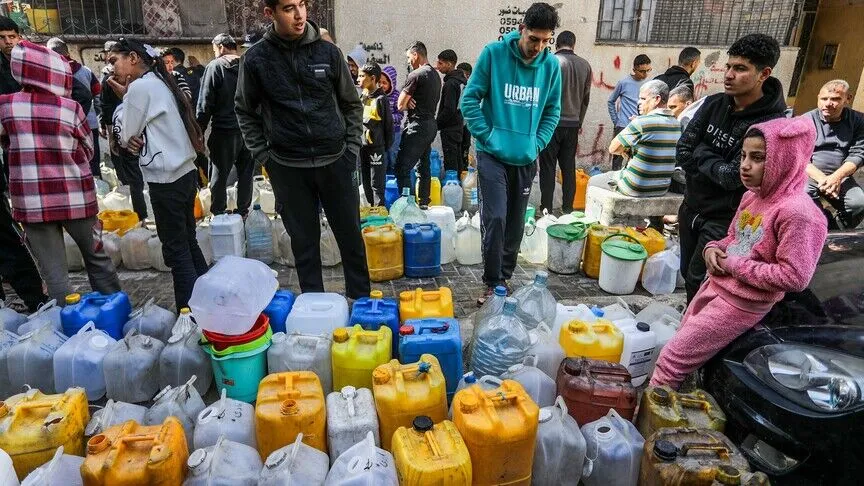
During the past 14 months, and after multiple Guernicas in Gaza – human morality is facing yet another test. Since the war began, tens of thousands of children, women and men have lost their lives, and entire towns – like Beit Hanoun, Beit Lahia and Jabalya – have been wiped off the face of the earth in bombings by the IDF.

Cities comparable in population size to Herzliya and Dimona have been bombed into rubble. And the world, with its silence and its armaments and materiel support, is supporting this. The media in Israel wobbles between total denial and depicting the actions as heroic, justified, essential deeds.

How can a pilot be proud of this? How does he sleep at night? Killing 17,000 children and wounding about 100,000. Killing masses of civilians is not “self defense” even in the face of the horrors of the killing of dozens of children alongside hundreds of other civilians in the Gaza border communities.

We have arrived at an absurd rule: Nothing justifies October 7 – but in the name of October 7 everything is justifiable. There is no security justification for such massive bombing. No military action can justify bombing helpless human beings, or the eradication of Beit Lahia, Beit Hanoun and Jabalya from the face of the earth. This ethnic cleansing is reminiscent of the ethnic cleansing of 530 villages in 1948.

In the Israel of 2024, after 14 months of nearly constant bombardment, day and night – the voice of refusal has gone silent and is unheard. In the Jewish Israeli public, voices of protest and resistance are hardly audible.

The planes thunder and morality is silenced – and there are even those who are demanding yet more bombing and even more destruction. The few who refused to be conscripted this year – for example, Ido Ilam – and kudos to him for that – can be counted on the fingers of one hand, and the letters of refusal and resistance actions on the fingers of two, but no more than that.

Conscientious objection is entirely a personal gesture: It is a political act of resistance to the system. It is a refusal to commit war crimes in the name and for the sake of the system, a refusal to be part of a process of destruction and ruin. A refusal to kill. A refusal to steal. To destroy. To burn down a home. To rob. To deprive. And to ruin. But refusal only because of a judiciary reform is not enough.

Without refusal to take part wholesale military destruction, human society sinks ever deeper into its moral darkness, which has no limits.

“The West,” which for years fought for the values of democracy and human rights, is choosing to turn a blind eye to the horrors of Gaza. Under cover of “the right to self-defense” – as though Israel were not a regional military superpower and lacked might and means – the West is allowing it almost unlimited freedom of action and giving it a green light to destroy Gaza and deepen the occupation of the Syrian Golan Heights.

The ethnic cleansing taking place before our very eyes, and which is being broadcast live on social media, is made possible under the auspices of the Western countries that are enlightened only in their own eyes.

And the administration of the Democrats in the United States, led by President Joe Biden and Secretary of State Antony Blinken, will be remembered forever in disgrace, alongside Prime Minister Benjamin Netanyahu, as the destroyers of Gaza, perpetrators of ethnic cleansing and mass murder of women and children.

What will they say about this a few decades hence? What will you tell your children? Your grandchildren?

Ultimately, every individual’s morality – including a pilot’s morality – is measured by his deeds. What he agrees to do and what he refuses to do. Are you prepared to press the button that will kill scores of children? That will burn to death three generations of a single family? Can you look in the mirror after you have bombed an entire neighborhood?

Do you love the person the mirror reflects back to you in the morning? Gaza, like Guernica, did not ask to be a moral test and a symbol of the human cruelty of these times. Above all, it is a place, a home to millions of people – men, women and children – who want to live outside the walls of the biggest prison in the world. A prison that has become the biggest graveyard in the world.

Gaza, like Guernica, reminds us how important it is to resist and refuse to participate in injustice – loudly and clearly, even at a steep personal price. Where there is resistance, there is hope, and where there is hope there is a future for all of us.

Dr Ahmad Al Tibi is a Palestinian-Israeli politician and has been a member of the Knesset since 1999. This opinion was reproduced from the Israeli Haaretz.

Continue reading
Syria: A Hot Political Potato

By Dr Khairi Janbek

All eyes are on Syria, simply because the only thing known about how the new Syria will look like is frankly, the unknown. What is prevailing in the new predictions and analysis is at best, and at worst blunt fears.

Of course, this is understandable considering the composition of the groups which are now trying to run the country. What is vey disconcerting however, is how the international media presented the war prior to the fall of Damascus in no more than a side show, giving the impression that, as big Syrian cities fell one after the other in the hands of the rebels, that an agreement was likely to be struck which will solve the concept peaceably. Well, such an agreement was not struck, and the victorious rebellion became the hot potato in the hands of all.

Now, how will the new regime look like in Syria? Frankly your guess is as good as mine. Will they act momentarily in a pluralistic manner, then adopt political Islam as regime ideology? Again, only time will tell, but also that would depend primarily, on the prevailing regional and international actors and players.

For a start, the rapprochement between Russia and Turkey will not greatly depend on the shape of the new regime, so long of course, as the new regime in Damascus continues to protect the Russian interests in warm water bases, and be a wall against Kurdish armed groups threatening Turkish interests.

Then of course there is Israel, which after it destroyed Syrian military capabilities, has no fear of war with Damascus, but does fear the potential presence of a regime adopting political Islamist trappings on its borders, which it will use as an excuse use to expand and probably annex Syrian, and maybe Lebanese territories before the dust settles down.

However, when it comes to the Arab neighbors of Syria, Jordan and Iraq, it’s only natural they would feel concerned but for different reasons. For Jordan, the recent history of Iraqi political instability and the associated acts of terrorism are still fresh in the mind of everyone in the Kingdom, so in no uncertain terms, Jordan would wish to see on its border, a regime adopting political Islam, lest it suffers once more from terror acts that are likely to push for military action and in which it doesn’t wish to be involved in.

As for Iraq, the sectarian troubles are still fresh in the minds of everyone. Certainly the Iraqi government doesn’t wish to see a regime on its borders which has the potential of igniting an unwanted sectarian civil war. As for the rest of the Arab countries, the question remains theoretical – plainly speaking being against political Islam .

As for Syria itself, it’s rather banal to repeat the obvious which is, that it is pluralistic country. But, how can you mange such a country, if indeed this is the intention intention and not shoving it up everyone’s throat ideology by blood and fire.

For a start every community, ethnic and religious, has to feel secure, and secondly they need to know that they have a stake in the future of the country, and that can only happen by establishing a truly functioning parliament freely elected by all of its constituents, then adopt a prime ministerial system of government accountable to the people with a titular president of the republic. No political party should be prohibited to field parliamentary candidates except those associated with armed groups.

At the end of the day, the only thing which will turn the current victorious rebels into extremist islamists is the specter of internal civil conflict which everyone is trying to avoid.

Dr Khairi Janbek is a Jordanian commentator currently based in Paris.

Continue reading
How is an Extremist Marketed in Syria?

As the Syrian regime collapsed, Israel shifted its efforts towards redrawing the security geography and penetrating deeper into Syrian territory in an attempt to establish a future reality where some strategic Syrian land would remain under Israeli control and surveillance. These efforts included targeting Syria’s military infrastructure and dismantling its army’s arsenal, with the aim of creating a demilitarised Syria and rendering its geography unusable in any future equation that might target Israel.

While the world has been preoccupied with tracking the movements of the leader of Hay’at Tahrir al-Sham (HTS), Abu Mohammad al-Jolani (Ahmad al-Sharaa), his transformation in presence and rhetoric has drawn attention. This appears to be part of a strategy to market him as a suitable political option for the next stage. Despite his repeated assertions about respecting diversity within Syrian society, maintaining the country’s unity, and ensuring a democratic transition, doubts remain about HTS’s ability to translate these statements into practical action.

Al-Jolani, who currently leads the Syrian scene as a figure representing an ideological stance, may face serious challenges in accepting others, managing differences, or embracing the principle of power-sharing. His initial steps, forming a homogeneous government and attempting to dominate power, indicate a lack of a genuine strategy to address Syria’s social complexities and political legacy. The regime’s collapse may lead to significant difficulties in dealing with this legacy, both in its security and bureaucratic aspects. Such an approach could provoke expected reactions from various internal factions, such as the Druze and Kurds, or even within Idlib itself, who see this monopolisation of political decisions as a threat to their interests and future.

While simplifying al-Jolani and HTS’s rise to power by emphasising the oppressive image of the previous regime may make the Syrian scene appear clearer, the complexity of the current reality cannot be ignored. International support from the US and regional backing from Turkey may not fully guarantee a political transition, as the real challenge lies in how HTS handles extending its influence over the entirety of Syrian territory, a goal yet to be achieved. Additionally, integrating all segments of Syrian society into a national project remains nearly impossible for an ideologically driven organisation that struggles to embrace political diversity or power-sharing principles.

In recent years, the Biden administration took a notable step in Afghanistan by withdrawing and leaving the country to the Taliban, later marketed desperately as a reformed, moderate movement. Today, this phenomenon is being repeated with HTS, as promises to remove it from the terrorist list, distinguish it from other extremist groups, and present al-Jolani as a progressive, politically competent figure gain traction. However, removing HTS from the terrorist list warrants careful consideration of the potential repercussions. Most extremist groups may adopt escalation and rebellion as a primary strategy in the coming phase, particularly in their competition with each other and in their efforts to gain recognition as viable governing entities. This trend could extend beyond Syria’s borders.

Additionally, this development may reignite aspirations among Islamic parties, which retreated after the Arab Spring, to resume their pursuit of power. The symbolism of certain actions since the Syrian regime’s collapse, such as al-Jolani’s speech at the Umayyad Mosque, framing the event as a victory for the Islamic nation rather than a triumph for Syria’s opposition, and the newly appointed Prime Minister Mohammad al-Bashir delivering his first address from a Friday sermon pulpit at the same mosque, reflects an ideological agenda being marketed as the product of a political rather than religious revolution.

Political transition in Syria remains a challenging and complex process due to historical, social, economic and institutional factors. The risk of internal conflict remains significant, as many Syrian factions have yet to express their stance or acceptance of current developments. Furthermore, ceding control of their areas of influence will not be easy. The position of Daesh also remains ambiguous, with its movements since the regime’s fall unclear.

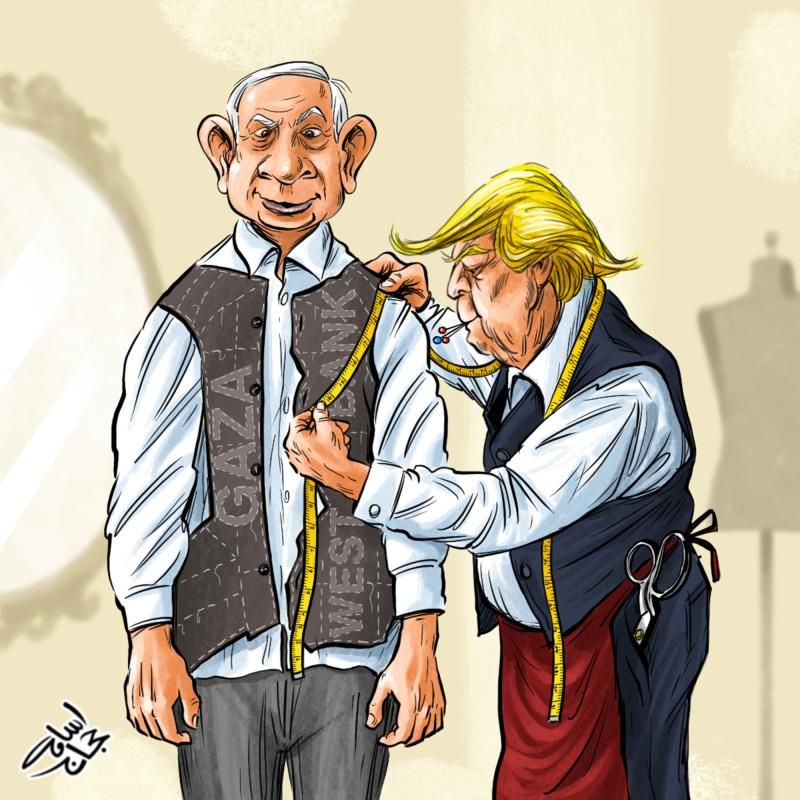
The region may be on the brink of significant repercussions resulting from what has happened and how things will develop in Syria, both politically and in terms of security. The next phase may also see Israel advancing practical measures on the ground before the Trump administration returns to the White House, including annexing areas of the West Bank, securing its borders with Lebanon and Syria, and striking farther targets which Israel considers to be fronts of Iranian influence extending from Iraq to Yemen and even inside Iran.

Dr Amer Al Sabaileh, a professor in the University of Jordan, is a columnist in The Jordan Times

Continue reading
Dysfunctional Netanyahu

If all the criticism directed at Israel’s current prime minister, Benjamin Netanyahu, fails to unseat him, then there is something deeply troubling about Israeli democracy—it is fundamentally dysfunctional.

Netanyahu has been the most influential architect of Israel’s policies and politics since 1996, when he first became prime minister.

He has often been quoted as saying, “Israel has no negotiating partner on the Palestinian side.”

Yet, we should ask: Where is the negotiating partner on the Israeli side?

Since taking office, Netanyahu has waged wars against nearly all of Israel’s neighbours, particularly Lebanon, Gaza, the occupied West Bank, and Syria and the occasional bouts with Iraq and Iran.

If we tally all the conflicts under his leadership, they exceed ten, many of them prolonged and devastating.

The cumulative cost, both in human lives and property, is staggering—over $500 billion lost and at least 100,000 people killed.

Netanyahu has systematically violated agreements, expropriated land for illegal settlements, and sanctioned the destruction and pillaging of homes, hospitals, schools and infrastructure.

His policies have included uprooting trees, destroying livelihoods, and killing tens of thousands of civilians, including children and women.

He stands as an indicted war criminal and is currently being tried in Israeli courts on charges of bribery, fraud, and abuse of power.

Many respected Israeli voices—authors, journalists, political analysts, human rights activists, lawyers, peace advocates, as well as his political allies and adversaries—express anger and even sometimes contempt for him, criticising his deceit and betrayal.

Every time Netanyahu insisted on engaging in dialogue with the late King Hussein or King Abdullah II, shortly after his army would commit grave atrocities against Palestinian civilians in the occupied territories.

Thus creating the false impression of a sequitur relationship between the meeting and the atrocities.

He even welcomed the Israeli guard who killed two Jordanians at the Israeli embassy in Amman with open arms, celebrating him instead of subjecting him to trial, despite Jordan’s accepting the murderer’s return to Israel, out of respect for the international diplomatic protocols.

Why does Netanyahu continue to act with such impunity? His actions appear to be deeply influenced by the ideology of his father, Benzion Netanyahu.

Born in Warsaw, Poland, Benzion served as the secretary and close aide to Ze’ev Jabotinsky, who instilled in him—and later his son Benjamin—the principles of revisionist Zionism.

It is exceedingly difficult to make peace with the proponents of the maximalist and revisionist branch of Zionism, which was established by the extremist Abba Ahimeir.

Although Benzion was a historian specializing in the history of Jews In Spain—a history rich with examples of tolerance and coexistence between Muslims and Jews under Islamic rule—he chose to become a disciple and propagator of revisionist Zionism. He became a staunch spokesperson for this ideology in the United States.

To better understand the radicalisation of Netanyahu and his father, one need look no further than the statements made by their mentor, Jabotinsky.

The following quotes are sourced from betarus.org, a well-known Zionist website:

1.“We, the Zionists, all applaud, day and night, the iron wall.”

This is the same iron wall that neo-historian Avi Shlaim described as being created to hammer Arab heads against, until they agree to Zionist claims to their lands.

2.“We hold that Zionism is moral and just, and since it is moral and just, [that means] justice must be done, regardless of whether Joseph, Simon, Ivan, or Ahmet (Ahmad) agree with it or not.”

3.Finally, Jabotinsky declared, “We were not created in order to teach morals and manners to our enemies. We want to hit back at anyone who harms us—only someone who can hate his enemies can be a faithful friend to those who love him.”

With sentiments like these, what chances does a serious, just, and lasting peace—or perhaps any peace at all—have?

Dr Jawad Al Anani, a former Jordanian government minister, contributed this piece to The Jordan Times.

Continue reading