Latest US ‘Art’ Defense Secretary
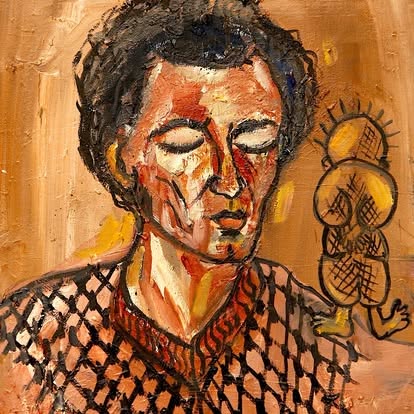
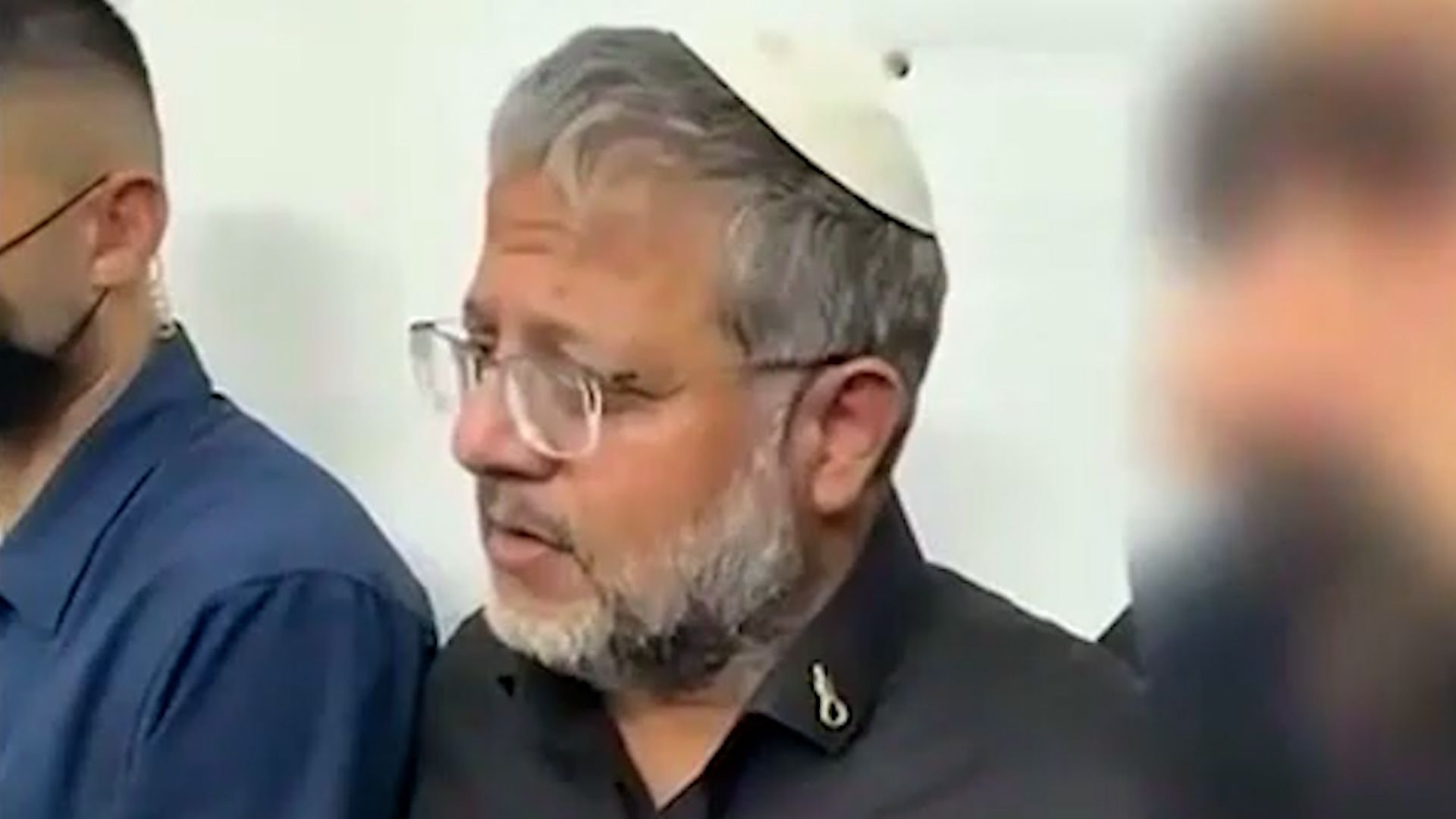
According to Khalissee, this is the new Donald Trump nominee for the next US Secretary of Defense.
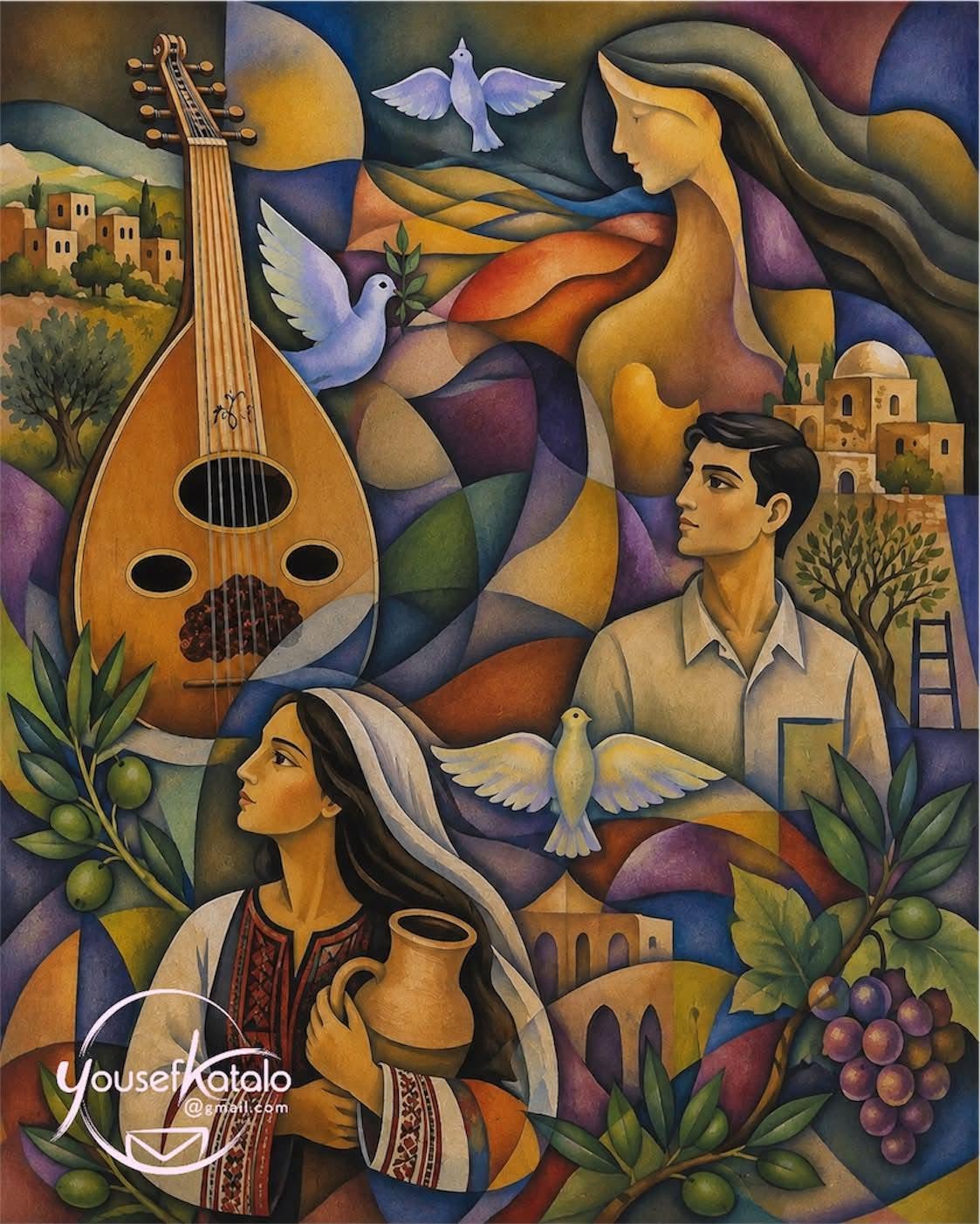
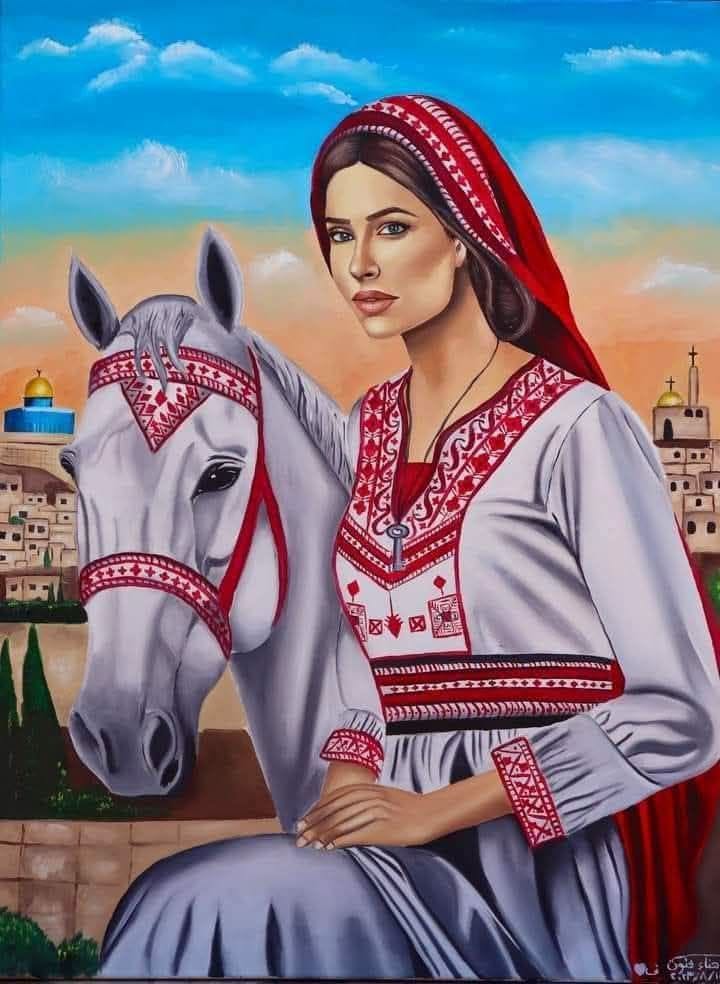
She calls it pure artwork
According to Khalissee, this is the new Donald Trump nominee for the next US Secretary of Defense.
She calls it pure artwork
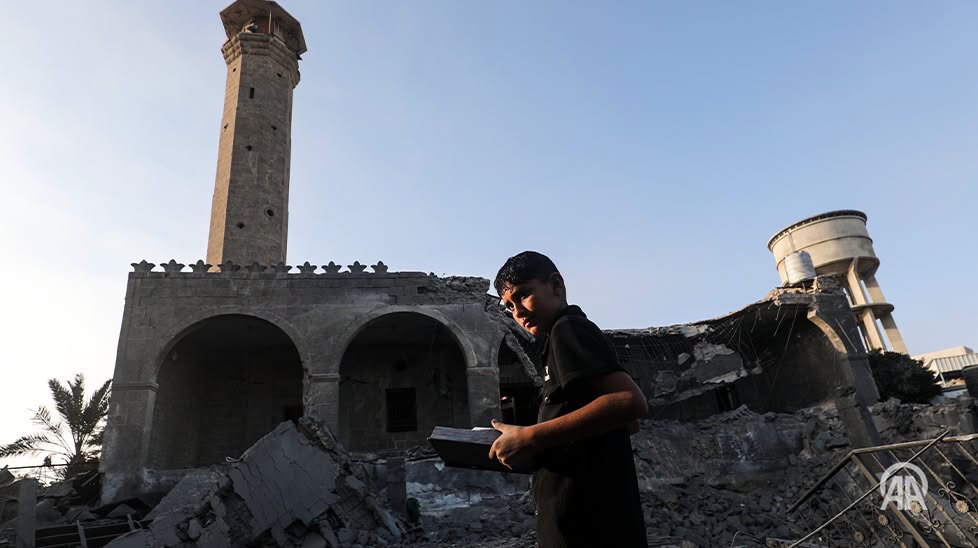
The UN urged the protection of cultural heritage sites on Wednesday after reported Israeli airstrikes on Baalbek in eastern Lebanon.
“Clearly, we do not want to see any harm, tend to people and also to the cultural heritage,” spokesperson Stephane Dujarric said at a news conference.
“I think one of the things we’ve seen in conflicts in recent years is the destruction of cultural heritage that can never be replaced,” he added according to Anadolu.
His remarks came in response to a question on the situation in Lebanon after a new wave of Israeli airstrikes near Baalbek, which reportedly killed 30 people.
An important urban center in the Bekaa Valley, Baalbek is famed for its towering Roman ruins. It is a UNESCO World Heritage site and home to more than 100,000 residents.
Previous Israeli airstrikes in Douris have destroyed ancient sites.
Israel last month launched a massive air campaign in Lebanon against what it claims are Hezbollah targets in an escalation in a year of cross-border warfare between Israel and the group since the start of Israel’s brutal offensive on the Gaza Strip.
More than 2,700 people have been killed and nearly 12,500 injured in Israeli attacks since last October, according to Lebanese health authorities.
Israel expanded the conflict by launching an incursion into southern Lebanon on Oct. 1.
Over 1,000 writers, publishers, and literary professionals, including prominent authors Sally Rooney, Arundhati Roy, and Rachel Kushner, have signed a letter committing to boycott Israeli cultural institutions.
The signatories pledged to disengage from Israeli publishers, festivals, agencies, and publications they say are “complicit in violating Palestinian rights” or remain “silent observers” of what they describe as systemic oppression.
Organized by the Palestine Festival of Literature (PalFest), the campaign urged global literary figures to boycott any institution that, in the organizers’ view, has failed to recognize the “inalienable rights of the Palestinian people as enshrined in international law.”
The letter criticized Israeli cultural institutions for allegedly “normalizing these injustices,” asserting that many of them play an “integral role” in obscuring the effects of occupation and displacement.
The signatories declared that they will avoid collaborating with institutions supporting “discriminatory policies and practices” or contributing to “whitewashing and justifying Israel’s occupation, apartheid, or genocide.”
“We, as writers, publishers, literary festival workers, and other book workers, publish this letter as we face the most profound moral, political, and cultural crisis of the 21st century,” the letter said.
“Israel has killed at the very least 43,362 Palestinians in Gaza since last October and that this follows 75 years of displacement, ethnic cleansing and apartheid,” it added.
“We cannot in good conscience engage with Israeli institutions without interrogating their relationship to apartheid and displacement,” it reads, noting that “countless authors” took similar stands against apartheid in South Africa.
The campaign has received backing from groups like Fossil Free Books, which advocates against investments linked to Israel and fossil fuel interests. The letter concludes by inviting peers to join the pledge, emphasizing a call for solidarity as the crisis persists.
The Israeli army has continued a devastating offensive on the Gaza Strip since a cross-border incursion by Hamas last October, despite a UN Security Council resolution calling for an immediate cease-fire.
More than 43,000 people have been killed, most of them women and children, with over 101,100 others injured, according to local health authorities.
The Israeli onslaught has displaced nearly the entire population of the territory amid an ongoing blockade that has led to critical shortages of food, clean water, and medicine.
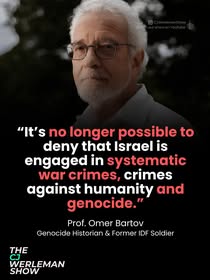
Israel also faces a genocide case at the International Court of Justice for its actions in Gaza.
Words that didn’t last for long because of the pounding Israeli warplanes that seeks to end anything called Gaza, Palestine and Palestinians.
The young woman always tried to stay cheery and alive. But her death was always to be expected as she was killed by an Israeli missile that pulverized her home.
She finally become a martyr with her family in indiscriminate Israeli military strikes on the Jabalia Camp, northern Gaza on 18 October, 2024. The camp has been under constant bombardment for the last two week. This is the third time the Israelis tried to enter the camp in a year-long onslaught.
Artist and painter Mahasen Al Khatib life was cut too short by a merciless, blinded Israeli war on defenseless civilians while world leaders look on with hands tied behind their backs.
Today she stands as the owner of the “famous chicken” videoclip in which she documented the happiness of her brother when they managed to get a chicken after months of eating leaves on a starvation diet.
She watches her brother playing with the dead naked, meat, laughs and asks:
“How are we going to cook it…?”
“Magloba…[Arabic dish with rice and vegetables,” comes the reply.
“How about roasting yet,” she interjects.
“Yes, that would be great too.”
Oh, I know, how about boiling it,” she wounders as if this is a great festive occasion.
“Yes, that too would be nice,” with the eyes of her little brother lighting up.
‘Or, what about cutting it, or even stuffing it?”
She made the videoclip on 9 August, 2024. Little did she know would be at the end of an Israeli two months later.
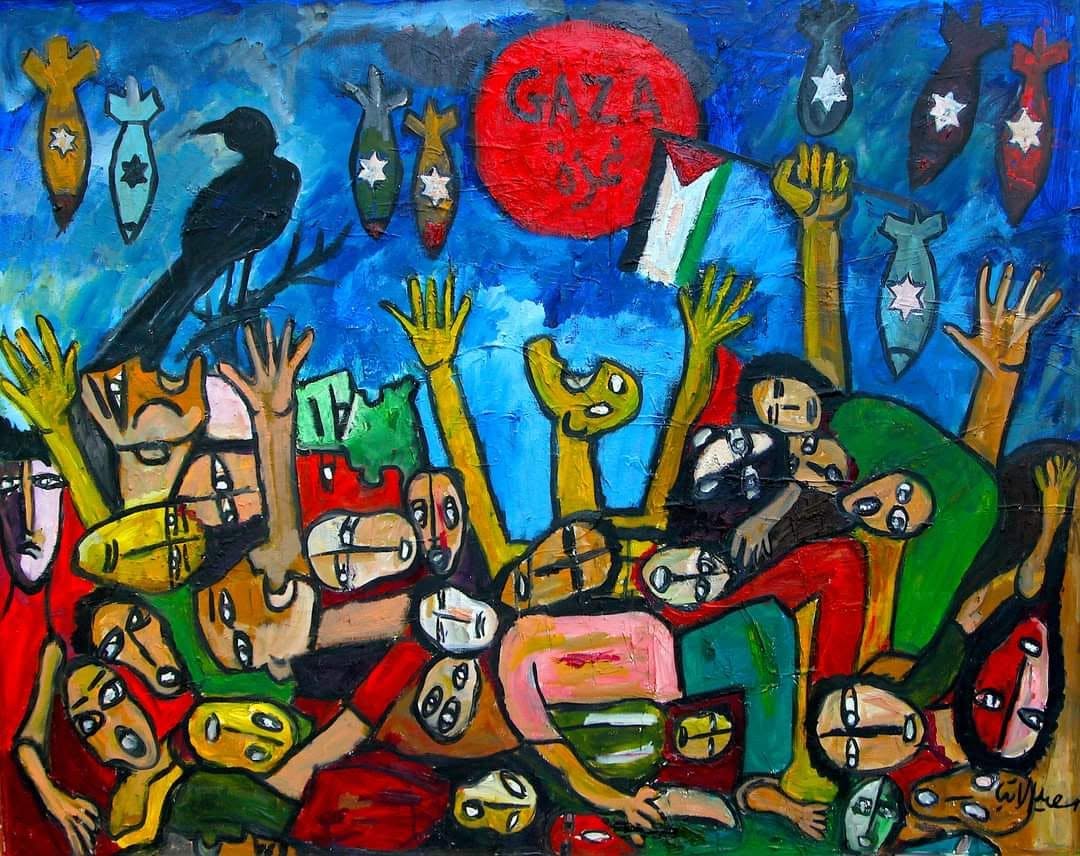
Mahsen drew with her pencils the heinous conditions of the people of Gaza that have been unrelenting in an Israeli genocide of death and destruction.
Her last post was on Facebook of a youth being burnt alive. His name was Shabaan Al Dalo.
He was burnt alive in a tent outside the Al Aqsa Martyrs Hospital on 14 October, 2024.
“How do feel when you see any person burned alive,” she wryly commented a few days later.
Mahasen Al Khatib established Rawasi Palestine Foundation for Culture, Art and Media.
Palestine and Gaza lost a creative personality. She sought to communicate the merciless, ungodly heartache of the people whose lives have long been turned upside down. She wanted to send a message to the world in a clever way about the tragedies of Gazans through her artistic works.
Mahasen left us with a creative, national heritage that sought to fight ethnic cleansing and presented us with immense digital works that expressed our wounds, devastation and hopes for an end to the massacres and killing.
The artist was firm against people leaving their homes. She and her family stood against displacement and fought it tirelessly through her works that depicted the harsh realities in a caricaturist, funny manner which she published on her social media accounts.
“God sends us a chicken after long months…thanks be to God, she says….It was a chicken for eight people and I ate a part of it,” she emphasized.
The social media became alert when news of her martyrdom was announced.
Mohammad Saeed wrote: “The martyr Mahasen Al Khatib documented for us the moment the flour arrived at their home after months of hunger and eating tree leaves. She also documented the arrival of the first chicken for her entire family after many months of absence. She stood firm in Jabalia and didn’t move. Mahasen was martyred tonight in a violent shelling in Jabalia camp. Remember her in your prayers…”
In another post that included a video of the fire, Mahasen wrote, “We saw people burning, we saw people with no one helping, we saw people dying in front of our eyes… May God have mercy on us.”
From Joy to Martyrdom
Over the past years, Mahasen Al-Khatib has spread joy through her artwork. Even in the darkest moments, she would draw a smile by publishing her family’s daily life under the bombing and harsh conditions of war. However, the last thing the Palestinian artist published before her martyrdom carried a lot of pain, which she described as “difficult nights,” according to Al Jazeera.