UN: $70 Billion Needed For Gaza Rebuild

Around $70 billion will be needed to reconstruct Gaza and make it safe after two years of war, UN development experts said on Tuesday, while aid agencies reported that far too little aid is getting in to meet the needs of desperate Palestinians.

At just 41 kilometres long (25.4 miles) and two to five kilometres wide (1.2 to 3.1 miles), few places in the Gaza Strip had been left unscathed by the constant Israeli bombardment before the latest ceasefire came into effect haltingly last Friday.

According to the UN Development Programme Special Representative for the Palestinians, Jaco Cilliers, destruction across the enclave “is now in the region of 84 per cent. In certain parts of Gaza, like in Gaza City, it’s even up to 92 per cent.”

$20 billion needed now

Speaking from Jerusalem, the UNDP’s Mr. Cilliers highlighted the findings of the latest Interim Rapid Damage and Needs Assessment (IRDNA) on Gaza by the UN, the European Union and the World Bank, which estimated the damage at $70 billion.

To kickstart the massive operation, some $20 billion will be required in the next three years alone, he told journalists in Geneva.

The UN development agency is present in Gaza alongside humanitarian partners to provide immediate support to the enclave’s 2.1 million people.

This includes providing clean water, emergency employment, medical supplies, solid waste removal and making homes and public spaces safe by clearing rubble potentially hiding unexploded ordnance or the many thousands of missing Palestinians.

“We’ve already removed about 81,000 tonnes. That is about…3,100 truckloads,” Mr. Cilliers explained. “The majority of the debris removal is to provide access to humanitarian actors so that they can provide the much-needed aid and support to the people in Gaza. But we also help with hospitals and other social services that need to be cleared of debris.”

The UNDP official pointed to “very good indications” from potential donors in support of reconstruction from Arab States, but also from European nations and the United States “which has also indicated that they are going to be coming in supporting some of the early recovery efforts”.

Immediate aid essential

Important as reconstruction is for Gaza’s long-term future, UN humanitarians once again clamoured for the Israeli authorities to open all access points into Gaza, after the remaining 20 living Israeli hostages were freed on Monday and Palestinian prisoners were released from Israel.

The development followed the signing of a ceasefire deal between Hamas and Israel signed on Monday evening in Sharm El-Sheikh by US President Donald Trump, and the leaders of Egypt, Qatar and Turkïye.

Earlier on Monday, UN Secretary-General António Guterres welcomed the release of all living hostages from Gaza, two years since they were among some 250 taken during Hamas-led terror attacks in Israel on 7 October 2023.

Gaza City testimony

Speaking to UN News from Gaza, UN Children’s Fund (UNICEF) aid worker Tess Ingram described the story of one family displaced five times by the war:

“I met a family today, Mustafa and Syeda and their children, and they told me that they were among the lucky ones because while Mustafa was pulling rubble out from the building, that is their home, at least he said, we have a home.”

The family was relieved on Monday at the appearance of a water truck, Ms. Imgram told us: “But they live in fear that truck might not turn up today or tomorrow. She also can’t get the medicine she needs and her sons had to walk a really long way today just to buy the basics that she needed to make some bread.

“Families need absolutely everything right now. We need the hundreds of trucks a day that were promised to get into the Gaza Strip.”

Families return home amidst the destruction in Gaza. (file)

© UNICEF/Eyad El Baba

Hostage remains

On Tuesday, the focus shifted to the transfer from Gaza of all deceased hostages, an extremely difficult process overseen by the International Committee of the Red Cross (ICRC). It remains unclear how many deceased hostages will be transferred by Hamas.

“When it comes to the living hostages or Palestinian detainees – and believe me that’s a big issue for us – we actually don’t know, we know that we have to be ready,” said ICRC spokesperson Christian Cardon, adding that the complex search is getting underway today.

In the meantime, needs in Gaza remain enormous and “fluid”, aid teams report, with more than 300,000 Palestinians heading north to Gaza City since Friday, as the ceasefire agreement seemed to hold.

“The enthusiasm that came from the international community, from people on the ground that this was the beginning of the end of all the suffering and things would change rapidly, is just not being reflected on the ground, day in and day out. We are not getting enough aid in,” said UN Children’s Fund (UNICEF) spokesperson Ricardo Pires.

The Israeli authorities have agreed to allow 190,000 tonnes of relief supplies into Gaza and UN agencies and their partners are scaling up operations rapidly, but a far greater amount is needed overall, humanitarian agencies including the UN aid office, OCHA, have said repeatedly.

“Of course, we are advocating with everyone, and we were there in Sharm El- Sheikh yesterday as well, with 22 heads of state of government, who we are asking to help us push all buttons you can to get this up and running as soon as possible,” said OCHA spokesperson Jens Laerke.

Aid hub carnage

Aid teams continue to insist that there needs to be a move away from handing out lifesaving supplies from remote areas including non-UN aid hubs that are difficult to reach and where hundreds of Palestinians have been shot or injured.

“Most of the actors – ICRC included – were not able to organize sufficient distribution of aid inside Gaza,” said Mr. Cardon. “And what we’ve seen instead, it’s people coming back from distribution sites being wounded, if not killed, in many instances…It’s about aid coming to the people and not any more people going to the aid,” as reported by UN News.

Continue reading
Trump ‘Oks’ Hamas Action Over Criminal Gangs

Gaza’s Interior Ministry and affiliated security forces have launched a large-scale campaign aimed at restoring order and stability across the Gaza Strip, following weeks of clashes between armed groups and reports of criminal activity in several neighborhoods of Gaza City.

According to a statement released by the Hamas-affiliated Radaa security force, the campaign “conducted a precise operation in the center of Gaza City, resulting in the neutralization of several wanted individuals and outlaws.” 

The group said in the statement it has taken control of several positions in Gaza City and “conducted sweeps and arrests of individuals who participated in shootings, the killing of displaced persons, and attacks on civilians.”

Radaa added that the operation was part of “wide-ranging security measures” aimed at “arresting a large number of collaborators and individuals operating outside the law.” 

The statement also reported that a number of suspects “implicated in cooperating with an armed militia and recruiting collaborators during the war” were detained in southern Gaza.

CNN, which cited the Radaa statement, said it could not independently confirm the identities of those detained, though the video of the operation surfaced after several days of reported clashes between Hamas fighters and members of the Doghmush family, a powerful clan based in Gaza City’s al-Sabra neighborhood.

In a joint statement, Palestinian resistance factions described the ongoing security operation as “a national necessity to protect citizens and preserve internal stability.” 

The factions urged families “to hand over their sons involved in such acts” and said the campaign enjoyed “national consensus to restore security and pursue mercenaries and agents of the enemy.”

The Palestinian Authority, meanwhile, issued a statement condemning the reported executions in Gaza, calling them extrajudicial.

US President Donald Trump also commented on the developments, saying that Hamas had “taken out two of the gangs that were very bad,” adding that the killings “didn’t bother” him. 

Speaking to reporters as he traveled to the Middle East, Trump said, “They do want to stop the problems. They’ve been open about it and we gave them approval for a period of time.”

Israel has been pushing for the complete disarmament of Hamas as part of the second phase of the ceasefire agreement. 

However, the movement’s renewed internal security campaign appears to signal its determination to maintain control over the enclave while asserting its authority against criminal and collaborator networks according to The Palestine Chronicle.

Continue reading
‘We Were Kept Naked’, Freed Palestinian Prisoner Says

Palestinian detainees freed from Israeli jails on Monday under the Gaza ceasefire agreement once again showed signs of torture and starvation.

Israel released 1,968 Palestinian abductees on Monday, as part of the latest exchange deal with the Palestinian resistance in Gaza. Among them were 250 serving life sentences and 1,718 hostages from Gaza who were kidnapped during Israel’s recent genocide campaign.

“Beaten and Humiliated”

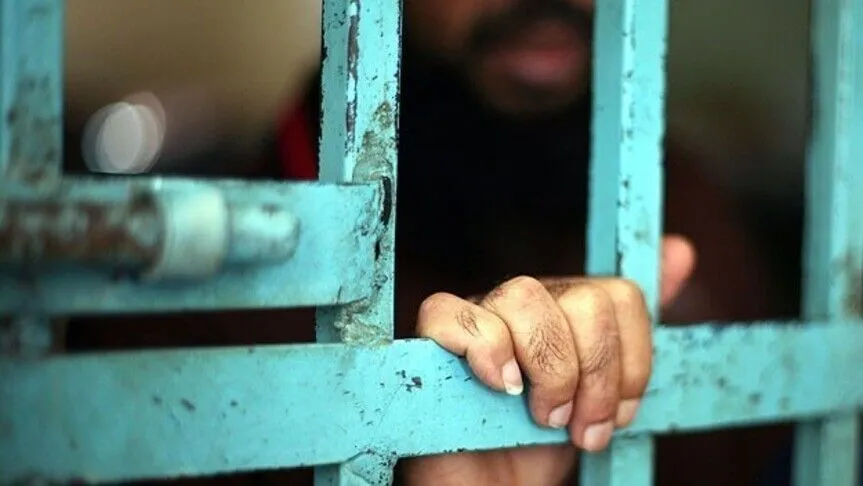
The freed Palestinians said they were beaten and humiliated, describing the Israeli prisons they were held in as “slaughterhouses”.

Al Jazeera correspondent Ibrahim al-Khalili’s brother, Mohammed, who was held for more than 19 months without charge, described his ordeal as a “big struggle”.

“We were beaten and humiliated. We suffered a lot. But thank God, it’s all over now,” al-Khalili said.

Abdallah Abu Rafe described his release as a “great feeling”.

“We were in a slaughterhouse, not a prison. Unfortunately, we were in a slaughterhouse called the Ofer prison. Many young men are still there. The situation in the Israeli prisons is very difficult. There are no mattresses. They always take the mattresses away. The food situation is difficult. Things are difficult there,” he said.

Another released detainee, Yasin Abu Amra, described conditions in Israeli jails as “very, very bad”.

“In terms of the food, the oppression, and the beatings, everything was bad. There was no food or drink. I hadn’t eaten for four days. They gave me two sweets here, and I ate them,” he said.

Saed Shubair, who was also freed on Monday, said he did not know how to describe his feelings.

“The feeling is indescribable,” he said. “Seeing the sun without bars is an indescribable feeling. My hands are free from the handcuffs. Freedom is priceless.”

In the occupied West Bank city of Ramallah, freed Palestinian prisoners were met by a cheering crowd so dense they struggled to get off the bus that delivered them from jail.

“It’s an indescribable feeling, a new birth,” said Mahdi Ramadan, flanked by his parents after his release from prison.

Palestinian journalist prisoner Shadi Abu Seed has given a harrowing account of life inside an Israeli prison after his release.

“I went hungry for the past two years. I swear to God, they didn’t feed us. They kept us naked. They beat us while we were naked day and night. We were tortured,” Abu Seed said.

“Until our last day in Israeli prison, they cut us and hit us and abused us. We endured every kind of torture, emotional and physical.”

“We couldn’t even sleep. They threatened us with our children. They told me they killed my children. They told us that Gaza was destroyed. I arrived here and found that everything was gone. It looked like the end of the world. Everything is different.”

“He’s been locked up for 24 years,” said a relative of Saber Masalma, who was arrested in 2002 and sentenced to life in prison. “He looks like a dead body. But we will bring him back to life,” he said according to the Quds News Network.

Palestinians have faced abuse and inhumane treatment in Israeli prisons “as a matter of policy” according to the Israeli human rights organisation B’Tselem. The group says that Palestinian detainees are denied medical treatment, adequate food and face physical abuse in Israeli prisons.

According to Palestinian prisoner advocacy groups, every time prisoners are released, the prisoners’ bodies reflect the level of crimes committed against them, including torture that is “unprecedented” in its level after October 7, “starvation crimes, systematic medical crimes, and the infection of a number of them with scabies, in addition to the severe beatings that the prisoners were subjected to before their release.”

Continue reading
Post-War Gaza: ‘Let The Journalists in’

International media, fact-finding commissions, UN special rapporteurs, ICC investigators, and all expert technical teams must be granted unfettered access to Gaza to document the genocide committed by Israel and ensure accountability for those responsible, thereby promoting justice and redress for victims.

The success of the ceasefire between Israel and Palestinian factions, which entered into force at noon on 10 October 2025, depends on full respect for international law, cessation of genocide against Palestinians in Gaza, and concrete steps to address the root causes of their suffering. Foremost among these are ending Israel’s illegal occupation, fully lifting the blockade on Gaza, dismantling the system of segregation and apartheid imposed on Palestinians, and guaranteeing their right to self-determination.

There is an urgent need to open Gaza to international journalists and media teams for unrestricted field access to cover the humanitarian catastrophe left by this genocide. Israel has systematically sought to erase truth by targeting Palestinian press, killing at least 254 journalists, destroying most media institutions, and continuing to bar international journalists from entering the enclave.

Euro-Med Human Rights Monitor calls on International media outlets to immediately dispatch their teams to Gaza to document the scale of destruction, the extent of civilian suffering, and to monitor compliance with the ceasefire. Covering developments in Gaza is not merely a professional mission but a moral and humanitarian duty toward victims of one of the most brutal crimes of modern times.

Any restriction on press freedom or denial of entry to media and international investigation mechanisms perpetuates efforts to conceal facts and withhold evidence from the global public, obstructing independent documentation of genocide and widespread destruction inflicted upon civilians and infrastructure.

Immediate, unconditional access must also be granted to forensic and criminal investigation teams, with the necessary equipment, to assist in recovering victims’ bodies from beneath rubble and areas of Israeli military incursion, identifying their identities, and clarifying the fate of missing persons. Swift field access for experts is essential to preserving truth and ensuring justice for victims and their families.

Initial field visits following the ceasefire revealed large numbers of bodies of Palestinians killed by Israeli bombardment, many decomposed after being trapped for extended periods beneath rubble or within former combat zones. Volunteer rescue and civil defence teams retrieved 135 bodies, mostly from Gaza Governorate, while many others remain buried due to the vast destruction and lack of necessary equipment.

Investigators from independent UN inquiry committees, the ICC, UN special rapporteurs, and other international mechanisms must be allowed into Gaza to examine crimes, gather and preserve forensic evidence, and ensure accountability for serious violations, particularly genocide. Gaza’s population requires far more than a ceasefire; they demand a complete end to the genocide and destruction, and a radical remedy to the root causes through the full lifting of the siege, free movement and supply of aid, and reconstruction led by Palestinians, grounded in dignity and the right to life.

Any ceasefire or arrangement must uphold human rights standards and not condition humanitarian aid on political considerations. Such aid is a protected right under international humanitarian law, not subject to bargaining or restriction.

All agreements must guarantee the complete cessation of hostilities, the removal of all restrictions on the movement of food, medicine, fuel, and reconstruction materials, and the restoration of essential civilian services after years of systematic destruction. Central to this is ensuring the immediate and full withdrawal of Israeli occupation forces from Gaza and the rapid reconstruction of vital infrastructure, including health, education, and public services.

Israeli attempts to impose permanent “security zones” or buffer areas in Gaza must be firmly rejected, as these measures seek to demographically and geographically reconfigure the Strip, annex fertile land under false security pretexts, entrench segregation, and turn Gaza into isolated ghettos, threatening food security and Palestinians’ right to life.

Any political or security arrangements that impose external oversight or governance over Gaza undermine Palestinians’ right to self-rule and constitute extensions of Israeli domination. Such measures threaten Gaza’s unity, territorial integrity, and legal status.

Ignoring human rights or the ongoing occupation in any political initiative perpetuates impunity and enables Israel to repeatedly commit atrocities without accountability. Rigorous monitoring of Israeli practices in Gaza is vital to prevent the recurrence of genocide. Preventing genocide is not a political choice or negotiable matter but an absolute legal and moral duty requiring decisive international action.

Tolerating serious violations or settling for temporary or conditional promises effectively legitimises the re-creation of conditions that enabled genocide and prolonged civilian suffering. The international community must activate accountability mechanisms, punish perpetrators, ensure full reparations and redress, uphold victims’ dignity, and enforce the principle of no impunity.

The international community must act swiftly and decisively on its legal obligations: to end the root causes of Palestinian suffering and persecution over the past 77 years; to guarantee the inalienable rights of Palestinians to freedom, dignity, and self-determination under international law; to terminate Israel’s illegal occupation; dismantle settler colonial and apartheid structures; fully withdraw Israeli presence from the 1967 occupied territories; lift the unlawful blockade on Gaza; ensure full accountability for crimes committed; and secure fair, comprehensive compensation and justice for Palestinian victims.

Continue reading
‘We Will Rebuild’ – Khan Younis Returnees Say

Hundreds of thousands of displaced Palestinians continue to return to Gaza City and other areas, amidst the rubble and destruction left behind by the two-year Israeli military offensive on the Gaza Strip.

Families are walking along Rashid and Salah al-Din streets, carrying their children and their few belongings. Many have no homes to return to.

Palestinians were also able to return to the center of Khan Yunis, in the southern Gaza Strip, after Israeli military vehicles withdrew from the city center following the ceasefire announcement.

The mayor of Khan Yunis said that 85% of the Khan Yunis governorate was destroyed, adding that 400,000 tons of rubble must be removed from the city’s streets.

He added that 300 kilometers of the city’s water network have been destroyed, and 75% of the city’s sewage network has been destroyed.

He also explained: “We have to deal with more than 350,000 tons of waste in the city,” noting the need for modern mechanisms to deal with the rubble.

Holding on to the land


The military operation that lasted more than five months in Khan Yunis left unprecedented destruction to its buildings, commercial, health, and educational facilities.

Returnees stress their commitment to remaining on their land and not leaving it, despite the difficult and complex reality created by the Israeli war machine.

The Ministry of Interior in Gaza stated that police and security forces were deployed in the areas from which the occupation forces withdrew to restore order and address the chaos that the occupation sought to spread.

The Ministry of Interior called on citizens to preserve public and private property and to cooperate and adhere to the directives and instructions issued by the relevant authorities.

Yahya al-Sarraj, the mayor of Gaza, said that the current priority is to prepare to receive returnees from the southern Gaza Strip. He explained that the capabilities to prepare the roads are almost nonexistent, stressing that the municipality is communicating with several parties to provide the necessary equipment as soon as possible.

Major Challenges
Local authorities in Gaza City have begun to open roads in the city, with images showing bulldozers removing rubble and debris from one street.

Such operations are expected to continue due to the extent of the destruction inflicted by Israeli forces on infrastructure and housing throughout the Gaza Strip.

In this context, the Gaza government stated that it had completed more than 5,000 field, service, and humanitarian missions within 24 hours as part of an emergency plan to gradually restore life to the Strip.

A spokesperson for the Gaza Municipality stated that the current priority is securing water, opening streets, collecting waste, and addressing sewage problems.

The return of displaced persons to areas from which the army had withdrawn in various areas of the Strip began on Friday, as the ceasefire came into effect.

Some of the displaced expressed cautious joy at this agreement, expressing hope that it would contribute to a permanent end to the war. Meanwhile, hundreds of displaced persons who arrived in their residential areas on Friday were forced to set up tents in the rubble of their homes after they were destroyed by Israeli forces.

Ceasefire
The first phase of the ceasefire agreement between Hamas and Israel went into effect at 12:00 noon on Friday, Jerusalem time (09:00 GMT), after the Israeli government approved the agreement at dawn.

The Israeli military withdrawals included Gaza City (north), with the exception of the Shuja’iyya neighborhood and parts of the Tuffah and Zeitoun neighborhoods.

In Khan Yunis (south), the army withdrew from the central areas and parts of the east, while preventing Palestinians from entering the towns of Beit Hanoun and Beit Lahia (north), Rafah (south), and the Gaza Strip Sea.

The agreement is based on a plan proposed by US President Donald Trump, which calls for a ceasefire, a gradual withdrawal of the Israeli army, a mutual release of prisoners, the immediate entry of aid into the Gaza Strip, and the disarmament of Hamas.

The approval of the first phase came after four days of indirect negotiations between the two sides in the Sharm el-Sheikh resort, with the participation of Turkey, Egypt, and Qatar, and under US supervision.

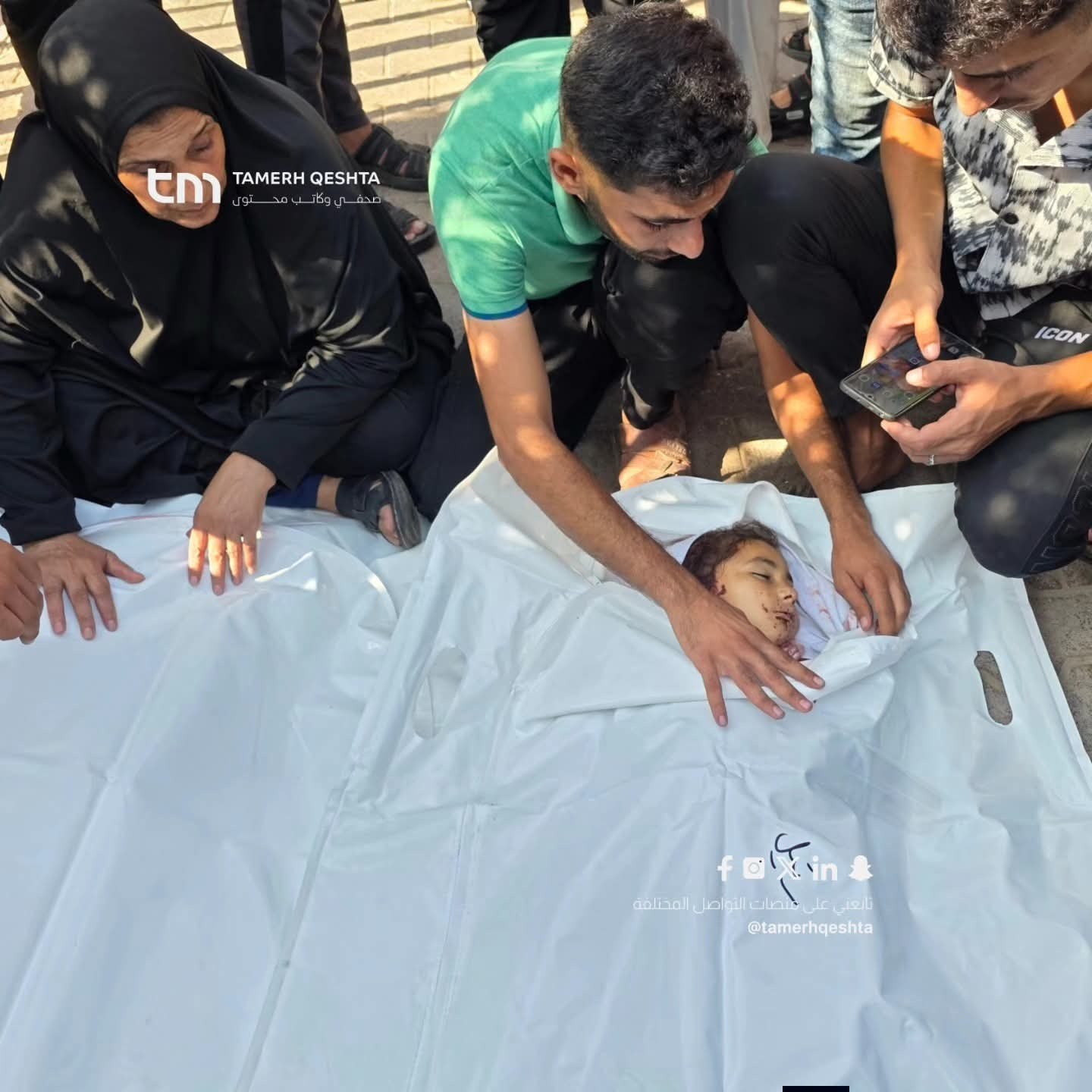
With American support, Israel has been committing genocide in Gaza for two years since October 8, 2023, leaving at least 67,211 martyrs and 169,961 wounded, most of them children and women, and causing a famine that claimed the lives of 460 Palestinians, including 154 children.

Continue reading