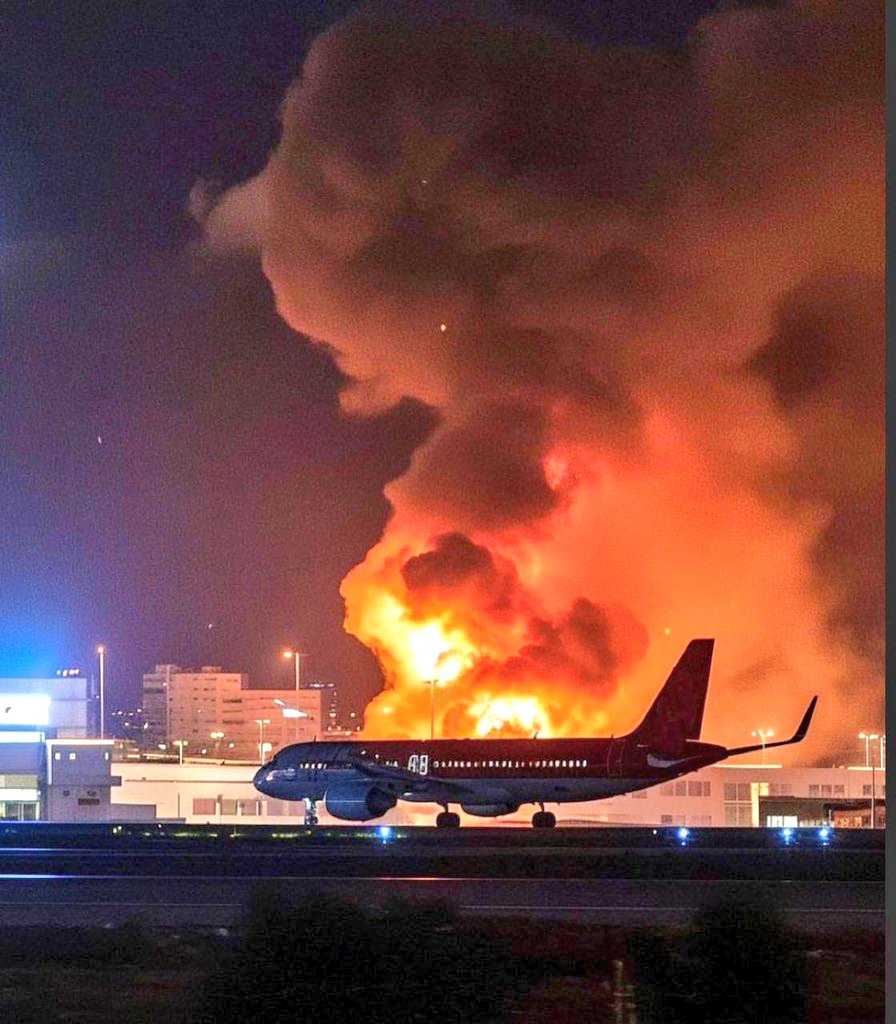
Beirut Under Israeli Attacks

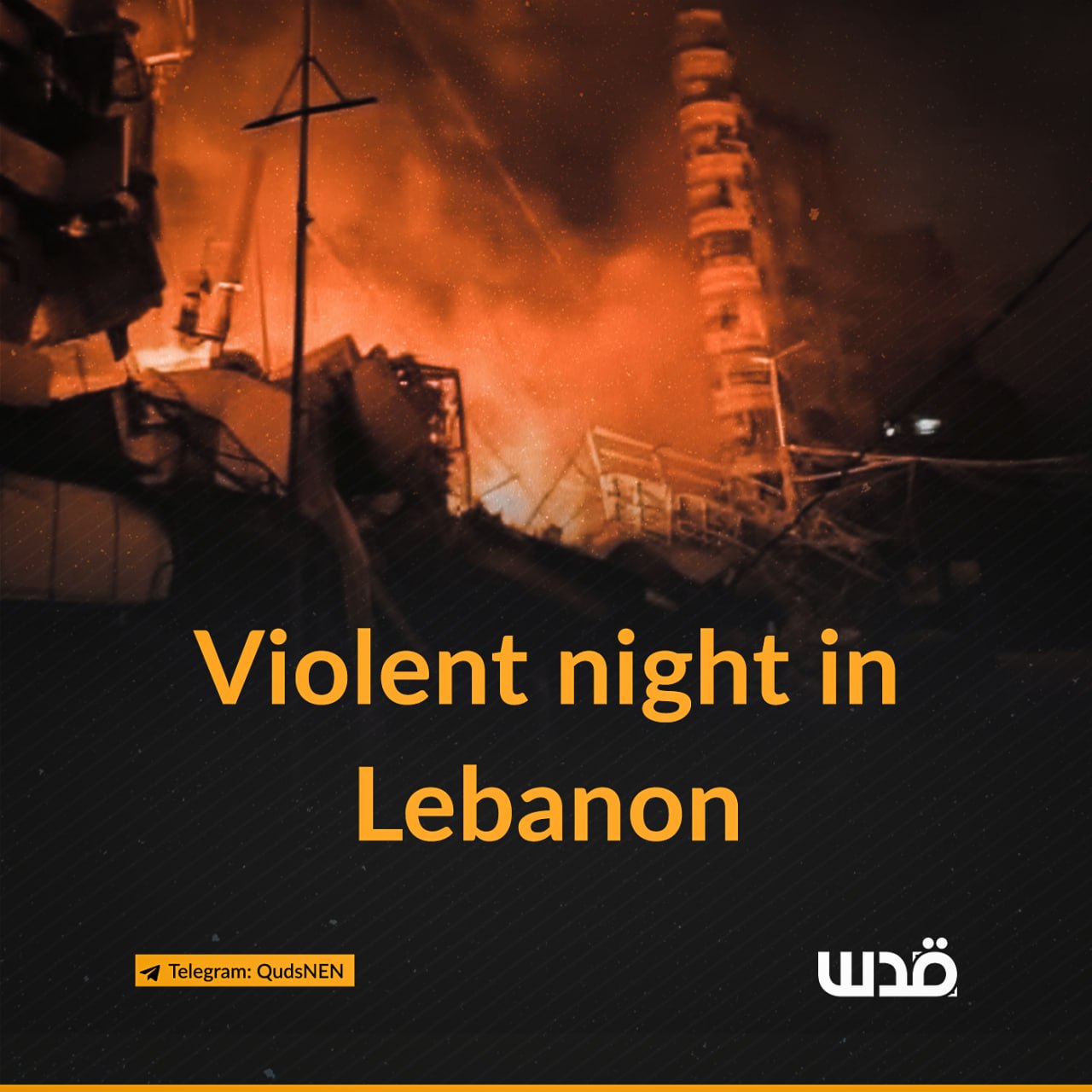
Israeli warplanes have launched what is described as massive airstrikes on Lebanon’s capital Beirut, Saturday night according to the Quds News Network.

Meanwhile the Israeli army on Saturday claimed killing Hezbollah’s top intelligence commander in an airstrike in the southern suburb of Beirut. In a statement, the army said its air force targeted Hassan Khalil Yassin, who was responsible for Hezbollah’s intelligence unit according to Anadolu.

Continue reading
Nasrallah killed in ‘mad’ 85 Ton Bombs on Beirut  

Hassan Nasrallah and his colleagues were killed Friday evening, after 85 bunker-busting bombs, each weighing a ton of explosives, dropped on the southern districts of Beirut.

Hezbollah officials confirmed the killing of its Secretary-General in the raids that targeted the party’s central command headquarters.

A party statement said, “His Eminence Sayyed Hassan Nasrallah, Secretary-General of Hezbollah, joined his great and immortal martyred comrades, whose path he led for nearly 30 years.”

His name and murder soon started to trend on the social media former Lebanese Prime Minister and leader of the “Future” Movement Saad Hariri saying the assassination of Sayyed Hassan Nasrallah is a cowardly act condemned in its entirety by us, and it has led Lebanon and the region into a new phase of violence.

In its statement Hezbollah honored Nasrallah as a brave, wise, and courageous martyr, recognizing his lifelong dedication to the resistance movement.

Over the past three decades Nasrallah’s leadership was unique represented by his role in Hezbollah’s victories, from the liberation of Lebanon in 2000 to the 2006 war with Israel with the party praizing his unwavering support for Palestine and Gaza.

He led the resistance since 1992 building on the legacy of Sayyid Abbas al-Musawi the previous secretary-general and who was also assassinated by Israel on 16 February of that year.

Continue reading
Israel Kills 50 Children in Two Days in Lebanon

The average number of children killed per day in Lebanon this week is more than double the number of children killed per day during the country’s devastating 2006 conflict.

An estimated 400 children, or about 12 children per day, were killed during the 33-day 2006 conflict[1]. Now, 50 children were killed in a span of two days, on Monday and Tuesday of this week according to the Lebanese Ministry of Public Health. The ministry also expects that more children remain buried under the rubble of destroyed buildings across the country.

The escalation in recent days has killed and injured thousands, spurred mass displacement, caused extensive damage to infrastructure and instilled an unimaginable fear in the daily lives of people across the country.

“As this week continues the devastation mounts, piling tragedy upon tragedy,” said Edouard Beigbeder, UNICEF Representative in Lebanon. “The attacks on Lebanon are killing and injuring children at a frightening rate and devastating any sense of safety and security for hundreds of thousands of children across the country.”

The conflict comes on top of the already fragile situation for tens of thousands of families in Lebanon. The country has been impacted by a string of unrelenting crises in recent years, including the massive Port of Beirut explosion, the impact of the COVID-19 pandemic, and the fifth year of a crippling economic collapse that has sent poverty rates soaring.

November 2023 survey conducted by UNICEF in Lebanon found more than 8 in 10 households had to borrow money or buy on credit to purchase essential grocery items, a 16 percentage point increase over six months. The same survey found that in the South Governorate, 46 per cent of households said their children were anxious and 29 per cent were depressed.

In the last 72 hours alone hundreds of thousands of people are estimated to have been displaced to host communities and over 70,000 people to shelters, according to the Lebanon Disaster Risk Management Unit. Before the intense military operations of this week, more than 111,000 people, including more than 39,000 children, had already been displaced from villages and towns in the south of Lebanon. It is most likely that they are being displaced for a second time now.

Amid the extensive damage to civilian infrastructure this week, water pumping stations constructed or rehabilitated by UNICEF in the Bekaa and South Governorates have been damaged, leaving 30,000 people with no access to clean drinking water.

In response to the rapidly deteriorating situation, UNICEF in collaboration with the government of Lebanon, has provided essential supplies to shelters, including thousands of bottles of clean drinking water, hygiene kits, education and recreation supplies for children, blankets and sleeping bags, personal hygiene items for women and girls, and nutrition supplies including supplements and baby food. UNICEF is also providing psychosocial support, including child protection services, education, and recreational activities at many shelters.

UNICEF has urgently initiated critical repairs on damaged water and sanitation facilities, dispatched 20 mobile health units to provide life-saving medical care and immunizations, and delivered 100 tons of emergency medical supplies to hospitals facing severe shortages and stock-outs.A further 25 tons of emergency supplies are due to arrive in Lebanon in the coming days and 53 tons are under procurement.

“The situation in Lebanon, already teetering on the brink, has moved from crisis to catastrophe. The suffering of children must stop,” Beigbeder continued. “The only way to do this is through an immediate de-escalation. A full-scale conflict would have a devastating impact on the country’s 1.3 million children.”

UNICEF urgently calls for all parties to uphold their obligations under international humanitarian law to ensure the protection of civilian objects and civilians, including children, humanitarian workers and medical personnel. This includes facilitating the safe movement of civilians seeking safety.

UNICEF remains committed to responding to the increasing needs. UNICEF requires $US39 million to implement its 2024 conflict response plan but has only received $US7.6 million to date. More funds are urgently needed to support the children of Lebanon during this dramatic escalation.

Reliefweb

Continue reading
IOM: Over 90,000 People Displaced in Lebanon

The International Organization for Migration (IOM) has released its latest Mobility Tracking displacement update showing at least 90,350 people have become newly displaced since 19 September, following the latest military escalation in Lebanon.

According to the Lebanese Ministry of Public Health, nearly 600 people have been killed, including 50 children, and approximately 1,700 injured, since Monday.

IOM Director General Amy Pope, speaking from the United Nations General Assembly in New York reiterated a call for diplomacy, peace and de-escalation.

“We are deeply alarmed by the military escalation in Lebanon, which has claimed hundreds of lives, including women and children.” DG Pope said. “The welfare of civilians and protection of related infrastructure must be respected, in line with international humanitarian law and United Nations Security Council Resolution 1701 which calls for peace and stability in the region.”

IOM is working with government authorities and partners to address immediate humanitarian needs. It is responding with the delivery of assistance, services, and protection to internally displaced persons by supporting local authorities and partners.

The Organization is distributing essential relief items to internally displaced persons and host families, and protection services, including psychosocial support services. In close coordination with the Government of Lebanon, IOM provided 1,350 mattresses, blankets, and pillows in the past 48 hours to individuals sheltering in schools and other buildings that have been converted into shelters for displaced families.

Since October 2023, IOM has delivered lifesaving medicines and supplies to Ministry of Public Health hospitals and health centres across the south, prepositioned vital equipment and more recently, provided logistics support the Ministry’s primary warehouse facility.

“Our teams are on the ground, working tirelessly alongside our government counterparts and local partners to deliver vital humanitarian support to those who need it most. We are committed to scaling up our response to meet the growing needs faced by so many across Lebanon” said Mathieu Luciano, IOM’s Head of Office in Lebanon.

Prior to the recent displacement across Lebanon, the country was already in the grips of a protracted political and socio-economic crisis, with more than 3.7 million people in need of humanitarian assistance.

In support of the Government of Lebanon, IOM is scaling up its critical humanitarian support to ensure the needs of displaced populations and host communities are met.

Reliefweb

Continue reading
Nasrallah: ‘No Lebanon-Gaza Separation’

CEOSSFIREARABIA – Israeli Prime Minister Benjamin Netanyahu and his military establishment led by Chief of Staff Herzi Halevi are determined to separate the Lebanese and the Gaza fronts. 

To do that the Israelis are bombing Lebanon in all sorts of directions  right, left and center, in the south of the country, its east and of course, southern Beirut – considered the prime Hezbollah stronghold – as hard as they can to achieve their illusive objectives which are nowhere near to being realized.

Israeli air raids, bombings, killing of civilians and murder of claimed Hezbollah fighters have increased in the last 48 hours with death knocking on the door of the Lebanese. Last Monday alone Israeli warplanes killed 274 people and injured 1024 in 1100 air raids all over Lebanon with the number of those killed rising daily.

But in contrast, Hezbollah attacks – through missiles and drones – have been tough on northern Israel including its cities like Haifa, Tel Aviv, in the Galilee, Safad, Jewish colonies/settlements  and military bases have continued non-stop where reports of fires, deaths and hundreds of thousands hiding in underground shelters.

Secretary-general Hassan Nasrallah has been very clear in his approach. In this escalation which started last week through the so-called pager and wireless massacre when Israeli killed around 3000 people in the southern neighborhood of Beirut, Hezbollah quickly regrouped and started firing on the north and center of Israel in unexpected moves.

He said there will be no separation between the Lebanese and Gaza fronts until the Israeli military machine stops bombing Gaza once-and-for-all. Hezbollah and Gaza has long become an unparalleled equation, he maintains. The war must stop in Gaza so that Fadi I, Fadi II and more recently Fadi III as well as more missiles stop landing on the different and sensitive areas of Israel.

However he tried to be reasonable saying that if a settlement is reached within the Palestinian groups and be acceptable to them his party would stop firing on Israel. Nasarallah couldn’t be more clearer than that.

Meanwhile the ‘trading over the border escalation’ between Hezbollah and the Israeli warplanes continues with missile swaps and bombs continuing. Despite the war utterings from certain quarters, Israel doesn’t want a northern front as their leaders keep saying and is not expected to start a ground troop offensive into southern Lebanon because of what is being termed as their ‘debilitating’ ability and exhaustion of their soldiers after their nearly 12 months of fighting in Gaza. 

But in this respect too, Nasrallah has been clear too saying if the Israeli army wants to enter south Lebanon, Hezbollah would be ready for them, going all the way of inviting them to invade and see the real force of the resistance in Lebanon that had been fighting Israel, albeit on a ‘low level’ since Israel started its war and onslaught on the Gaza Strip soon after 7 October, 2023. 

All indications suggest Israeli will not be able to separate this front from the Gaza one. Though Israeli planes are in a state of bombing momentum believing if they bomb certain regions of Lebanon fiercely enough, and aim to kill their top caders by bombing south Beirut, Hezbollah will eventually give up by themselves and wrap up the war.

But the situation is particularly fluid, neither side is budging from their positions. With Hezbollah termed to be recruiting 40,000 fighters from Iraq, Syria and Yemen, it insists that this front is their to support Gaza while Netanyahu refuses to accept a ceasefire deal on the enclave.

Both parties are in “military deadlock”, while a third party, the Biden administration, is walking in the middle. Its officials right from US president Joe Biden, Secretary of State Antony Blinken and other lowley staff stated many times they want a deal on Gaza, and don’t want the war to spread to the region, to Lebanon, possibly Iraq, Syria and even Yemen which have been up till now low key operators.

In this war first on Gaza, and now developing into Lebanon, the US has been a constant behind-the-scene player, politicking in Lebanon through its special envoy and Qatar and Egypt acting as mediators in the past months to work a ceasefire that didn’t work mainly through Israeli intransigence, Washington must take much of the blame.  

This is because Washington has been a constant supplier of weapons to the Israelis in this war right after 7 October, 2023 through an active air and sea bridge to Tel Aviv. It has, till this day, been providing Israeli with technical advice on the conduct of the war with at least 2000 US military personell and many would argue, the United States has not been forceful enough with Netanyahu who worked to disrupt the talks and make sure the war on Gaza continues.

With the war switching to the Lebanese-Israeli border, it seems that the US would continue to supply Israel with weapons, increase its intransigence even further, keep up the Hamas-Hezbollah ante up and suck the regional into an even bigger regional war.

Continue reading