Palestinian Filmmaker: From Gaza to Norway

Mohamed Jabaly, Palestinian filmmaker from Gaza, has lived through extraordinary circumstances. Born during the first intifada and raised during the second, Jabaly’s life has been shaped by the relentless turbulence in his homeland.

Now residing in Tromso, Norway, his journey is a testament to resilience, displacement, and the power of storytelling.

Jabaly’s path to Tromso, however, was not a straightforward one. “Tromso and Gaza, in the first place, are twin cities,” he tells Anadolu, referring to the long-standing relationship between the two. In 2013, a Norwegian delegation screened one of his short films in Gaza, marking the beginning of a meaningful connection. “They invited me in 2014 to visit Tromso and be a part of the film festival there.”

However, life in Gaza rarely follows a predictable script. The summer of 2014 brought a 51-day assault on the blockaded enclave, delaying Jabaly’s departure. Amid the chaos, he joined an ambulance unit, capturing the harrowing reality of frontline responders. This footage became his first feature documentary, Ambulance.

“Shortly after the attacks, I traveled to Tromso,” he recalls. “What was supposed to be a one-month visit turned into seven years.”

Two weeks after his arrival, the Rafah border closed, trapping him in Norway. “I decided not to seek asylum. Instead, I applied for an artist visa, and that’s when this whole journey began.”

Starting from below zero

Life in Tromso was a stark contrast to Gaza. Jabaly describes his first winter in Norway with characteristic candor. “It was dark, below zero, and everything was new. I had never touched snow in my life,” he says. Adapting to this unfamiliar environment was not just a physical challenge but an emotional one as well.

“Being far from my family, my friends, my city … that was the biggest challenge,” he says. With limited resources, he relied on the generosity of friends who hosted him. Volunteering at film and music festivals allowed him to contribute to his new community while earning small amounts to survive. “Norway is an expensive country, but I managed to stand on my feet. I started from below zero, not just with the temperature but in life.”

Capturing the human impact of displacement

Jabaly’s second feature documentary, Life is Beautiful, chronicles his experience of being caught between two worlds: the homeland he could not return to and the foreign land he had to call home. “It puts new names and faces into the struggle of displacement and statelessness,” he says. The film not only highlights the challenges of being a Palestinian in exile but also raises awareness about the broader human struggle of stateless individuals worldwide.

“In Palestine, I was always Palestinian. In Gaza, I was always Gazan. Suddenly, I’m considered stateless,” he explains, touching on the complex legal and emotional terrain of his identity. “I didn’t make the film just to make a film. I wanted to shed light on our human struggle and fight the term ‘statelessness.'”

The indelible mark of Gaza

For Jabaly, Gaza is not just a place; it is an integral part of his identity. “You cannot escape from your identity,” he asserts. “Being from Gaza became even more special today with what’s happening. But all Palestinians share the same struggle. We try to raise awareness and insist on our freedom.”

This deep connection fuels his work. “If life had been normal, I wouldn’t need to make films about freedom. But I was born into a struggle, and that’s what drives me to tell our stories.”

Looking ahead

Despite the heavy burden of his past and the ongoing challenges facing Gaza, Jabaly remains hopeful. “I imagine having a film school in Gaza in five years,” he shares. “If life gave me normalcy, I would build things. But for now, I feel compelled to make films about war and our human struggle.”

As for his immediate plans, Jabaly’s work continues to be shaped by the present-day realities of Gaza, where Israel has killed more than 45,000 people since Oct. 7, 2023. “It’s difficult to be creative when your mind is occupied with worry. But we have to insist on our narrative and raise awareness for future generations.”

‘Life is beautiful’

Jabaly’s unwavering optimism shines through, even in the face of despair. “I named my film Life is Beautiful because I hope one day life will be beautiful. If not today, maybe tomorrow, or next year.” It is a sentiment that encapsulates his journey and his vision — a reminder that even amidst the darkest times, hope persists for a new dawn.

Continue reading
‘Israel Drowns in Gaza’ – Maariv

Yedioth Ahronoth acknowledged that after nearly 15 months since the start of the war on Gaza, Israel continues to pay a heavy price in wounded and dead every time it takes a step forward.

The newspaper continues that “…no one really understands the reason” why the “army takes two steps back.” It noted that every time the army announces the “cleansing” of an area, it states that the “terrorists” (Palestinian resistance fighters) return to it.

The newspaper asked: “What is happening behind the scene? After 15 months since the start of the war, we have proven to ourselves, to the enemy in Gaza, and to the entire Middle East, that we are failing to accomplish the mission.”

The Jewish daily therefore poses the other question and states: “Isn’t it a crime to send our sons over and over again to shed their blood in the same area,” stating that don’t “Israelis deserve senior leaders at the political level who know how to bear responsibility, and know how to determine policy, without excuses and without cover-up.”

This is while Maariv, another Jewish daily acknowledged that “Israel has begun to feel drowning in the Gaza quagmire and intellectual stagnation regarding the future,” adding: “We are paying a very heavy price.”

Continue reading
Israeli Media: 1000 Soldiers Wounded Monthly in War on Gaza

Different Israeli media confirmed about 1000 soldiers are wounded and registered in the Ministry of War’s Rehabilitation Department every month. This is due to Israel’s ongoing war on the Gaza Strip.

The Israeli Broadcasting Authority (KAN) reported that more than 13,500 Israeli soldiers wounded have been registered in the Ministry of War’s Rehabilitation Department since 7 October, 2023.

It explained that 51% of the wounded are under the age of 30, noting that 43% of the wounded suffer from psychological trauma.

Last August, the number of disabled in the occupation army who received treatment in the Ministry’s Rehabilitation Department from all the wars that Israel fought reached 72,056. These include soldiers and officers who suffered from mental and psychological disorders and trauma. It pointed however that more than 10,000 were added during the war on Gaza.

The Israeli Ministry of War estimated that by the end of 2024, the Rehabilitation Department will have to care for about 82,000 disabled soldiers, adding more than 20,000 wounded and disabled as a result of the present ongoing war on Gaza.

However, the occupation army has only admitted – according to its website – to only 5,550 soldiers and officers that have been injured since the beginning of the war, 2,504 of whom since the start of the ground operation in the Gaza Strip on 27 October, 2023.

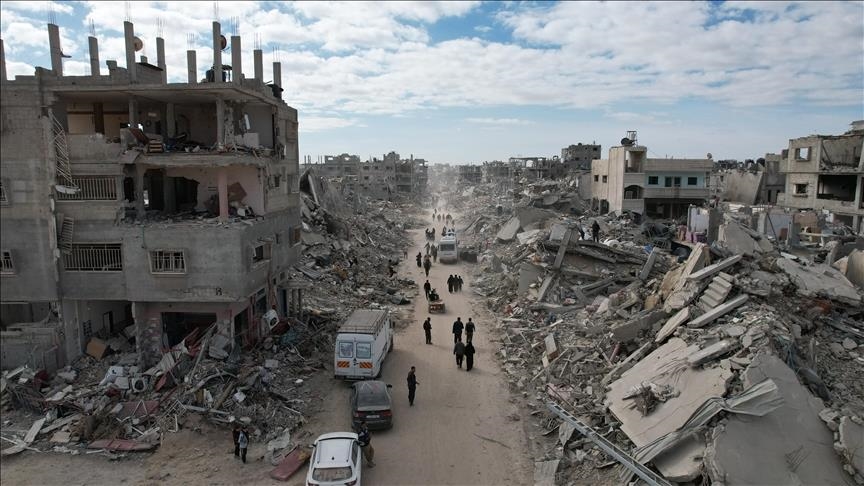
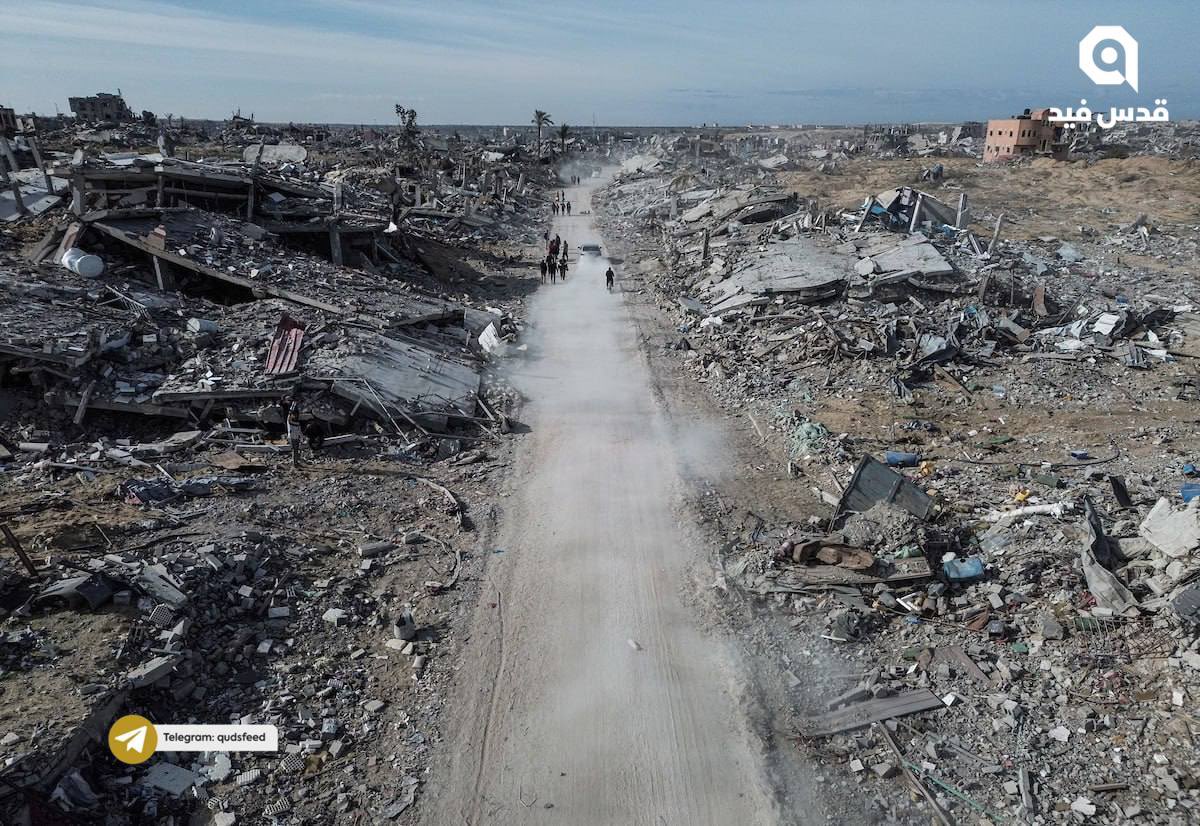
The Israeli occupation army, supported by the United States and Europe, continued its aggression on the Gaza Strip since 7 October, 2023, where its aircraft have bombed the vicinity of hospitals, buildings, towers and homes of Palestinian civilians and destroyed them over the heads of their residents, and prevented the entry of water, food, medicine and fuel.

The aggression left about 154,000 Palestinian martyrs and wounded, most of them children and women, and more than 10,000 missing, amid massive destruction and famine that killed dozens of children and elderly people, in one of the worst humanitarian disasters in the world according Quds Press.

Continue reading
Gaza Genocide: Death Toll Spikes to Over 45,000

The Ministry of Health in the Gaza Strip announced, Monday, the death toll from the genocide committed by Israel against the Palestinians has risen to 45,541 dead and 108,338 wounded since October 7, 2023.

The ministry stated in its daily statistical statement the Israeli army “committed three massacres against families in the Gaza Strip, with 27 martyrs and 149 wounded arriving to hospitals in the past 24 hours.”

It reported “the death toll from the Israeli aggression has risen to 45,541 martyrs and 108,338 wounded since October 7, 2023.”

The ministry indicated there are victims under the rubble of destroyed homes and on the roads, but the civil defense and ambulance crews are unable to reach them due to the repeated Israeli targeting.

The Israeli genocide since 7 October, 2023 with American support has caused the loss of more than 11,000 Palestinians, amid massive destruction and famine that killed dozens of children and the elderly.

Israel continues its massacres, ignoring two arrest warrants issued by the International Criminal Court on 21 November against Prime Minister Benjamin Netanyahu and former Defense Minister Yoav Galant, for committing war crimes and crimes against humanity against Palestinians in Gaza.

Tel Aviv has turned Gaza into the largest prison in the world, besieging it for the 18th year, and the war of extermination has forced about two million of its citizens, numbering about 2.3 million Palestinians, to flee in tragic conditions with a deliberate severe shortage of food, water and medicine.

For decades, Israel has occupied lands in Palestine, Syria and Lebanon, and refuses to withdraw from them and establish an independent Palestinian state, with East Jerusalem as its capital, on the borders before the 1967 war as reported in Anadolu.

Continue reading