Hammering The UN?

By Dr Khairi Janbek

Even from the moment of its inception, the UN was subjected to constant criticism and derision. Though it started as a coalition of the willing in order to deal with differences and sources of conflict in a peaceable and/or diplomatic manner, the term willing remained nebulous.

The strong and mighty wanted to bend this will to suit their interests, and the weak and the needy wanted to bend this will for their own protection. Still in this dialectical formula the need for the UN remains as the only viable formula which offers the possibility of negotiations in the Churchillian wisdom of jaw jaw, better than war war, and it remains in this sense, the standard which provides the vaneer for international legality and the semblance of consensus.

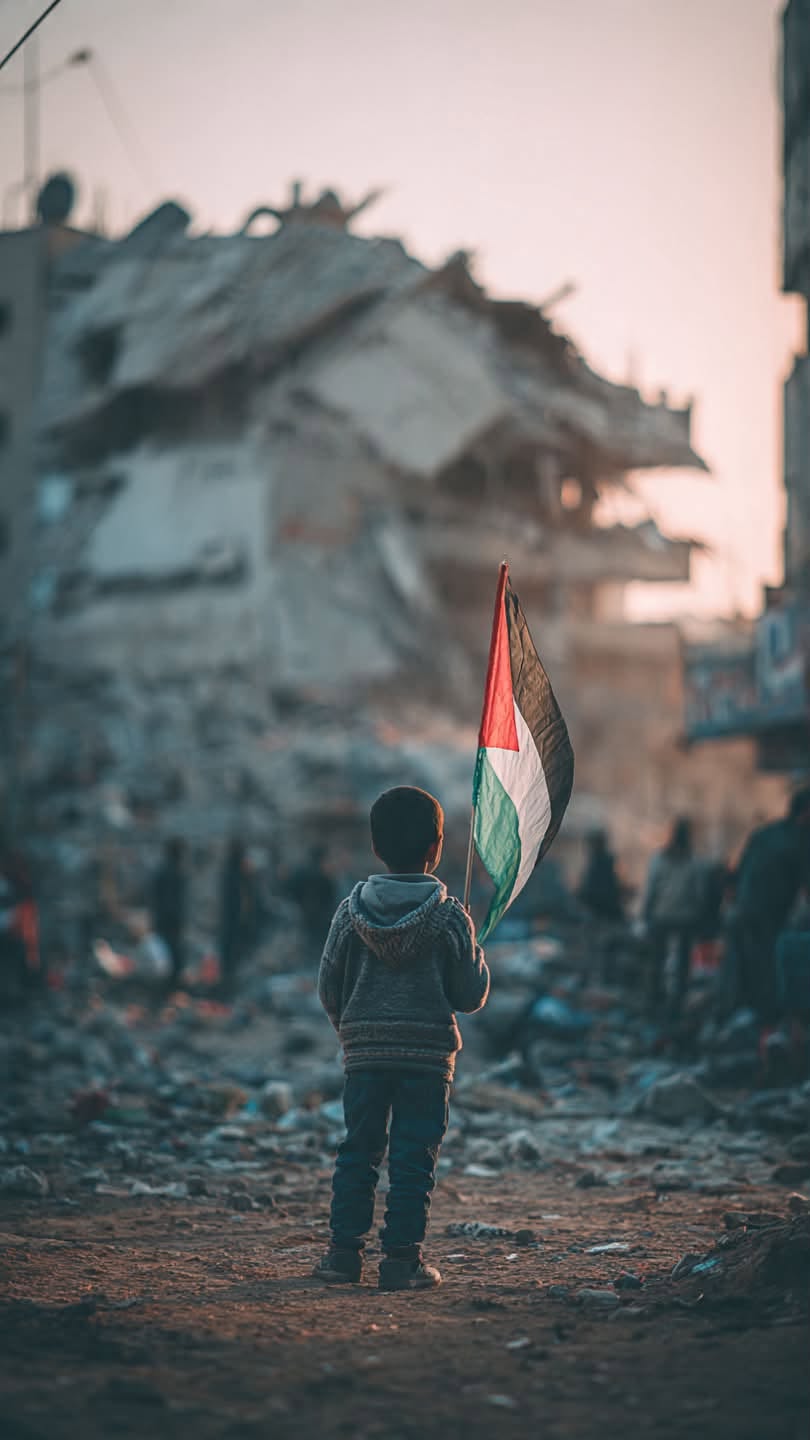
Then suddenly and apparently, the concept of the Donald Trump Board of Peace emerged on the scene, thought of, initially, as an effort to deal with the mayhem of Gaza, and to which one may add ironically and cynically, that the most two concerned parties – Palestinians and Israelis – are out of its functioning. On top of this, the notion was propelled in the media that this Board is really an attempt to replace the UN.

So in this context we can assume what is meant is that if the UN started, all these years ago, as a coalition of the willing, today’s Board of Peace is a coalition of the frightened, of states who want to stay on the good side of Trump. This is aside from the reluctant opportunists whom seek some benefits out of becoming a member of this entity.

On the face of it, one can say that the real purpose of its establishment is not to replace the United Nations per se, but a serious attempt to bypass the UN and redefine international relations in accordance with the Trump notion of who is the enemy of peace and who is its friends, with the essential outlook of not needing the international organization at all. Under the new legality, it is Trump who lays down the law, and the one whom distributes the spoils. As for the UN it remains in his eyes as a gathering for losers.

But if we go back to the beginning, in fact the Board of Peace, not only got the blessing of the UN for its creation, but also the support of the Security Council with resolution 2038, but then again, it was linked to the reconstruction and ‘stabilization’ of Gaza, while the current format of the Board emerged on the sidelines of the recent World Economic Forum meetings.

Now irrespective of some in the international community wanting to spite Trump or of waning his influence, there is a serious and big concern that President Trump and the fact that he is presiding over this Board, will mean that the talked about peace will be the peace of the strong imposed by the strong. In itself this rings many alarm bells on the strategic level for many regions in the world about the kind of peace Trump is talking about.

Among the myriad of world conflicts, currently the Palestinian problem, Ukraine war, and Iran, stand out as the most deadly and critical. So in what shape the proposed peace will come?

Dr Janbek is a Jordanian writer based in Paris.

Continue reading
Trump’s War Through Politics

By Dr Amani Al-Qarm

About 2,500 years ago, there was a Chinese general named Sun Tzu, renowned for his military genius and unique philosophy on achieving decisive victory. He compiled his vision in a famous book called “The Art of War.” Sun Tzu states in his book that subduing the enemy without fighting is better than winning a hundred battles, and that a skilled commander feeds on his enemies.

This means exploiting the enemy’s resources, weaknesses, and even strengths, striking at their strategy and alliances, and besieging them to achieve victory, rather than relying solely on one’s own resources. In other words, achieving victory at the lowest cost is preferable to destroying a country, and capturing the head of state is better than killing him.

The Trump administration’s slogan, “Peace Through Strength,” is not new to American administrations, but it was perhaps more blatant and explicit during Trump’s presidency, as was the case with everything else under his rule: no embellishment, no lofty phrases, no justifications to appease hypocritical Western arrogance, such as democracy and human rights. There are only declared and clear objectives: oil, minerals, money, and control without cost.

The entire world is watching the current unique American approach to dealing with the Islamic Republic of Iran. Just when the world expected an American strike on Iran, the door was opened for negotiations under the auspices of the massive aircraft carrier USS Lincoln and its destroyers and missiles stationed in the Arabian Sea.

This leaves allies and adversaries alike bewildered and unable to predict the outcome, while Trump maintains the element of surprise and the timing of the strike. It seems that Trump is not content with the slogan “Peace Through Strength” alone, but has added to it some of the principles of General Sun Tzu’s doctrine. Trump Feeds on His Enemies:

Iran is in a state of weakness unprecedented in decades. Internally, the country is seething with poverty and oppression, and the recent protests are unlike any before. Internal affairs are no longer purely domestic; they now carry external costs, given the threats the US president has made against the Iranian regime throughout the past month.

Furthermore, the country is strategically exposed. Its alliances have been shattered, and it and those who deal with it economically and militarily are besieged. The time is ripe to pounce on the prey. And because, as Tzu said, subduing the enemy without cost is better than winning a hundred battles, Trump has opened the door to negotiations to achieve his objectives.

What does Trump want from Iran? Is he negotiating to restore relations between the two countries? Or to liberate the Iranian people? Of course not. He seeks victory without a fight. The collapse of the country as a result of war would transform it into scattered chaos throughout the region, as has already been witnessed in Iraq, Libya, Yemen, and Syria.

Therefore, containing it to the greatest extent possible and completely changing its hostile behavior since 1979 is preferable to destroying it. And to strip it of everything it considers its sources of power: eradicating any nuclear ambitions, eliminating its missile program, and reducing its regional role to the bare minimum, while also constantly reminding it that America is serious and ready to confront it. From America’s perspective, qualitative and nuclear superiority should belong only to Israel in the region.

What happens next depends on Iranian behavior. Will it submit and be pragmatic, as it has been in the crises that have characterized its relationship with the United States since 1979, or will the Iranian regime feel that this crisis is existential, thus raising the voice of ideology where there is no turning back?

This article is republished from the Arabic Al Rai Al Youm website.

Continue reading
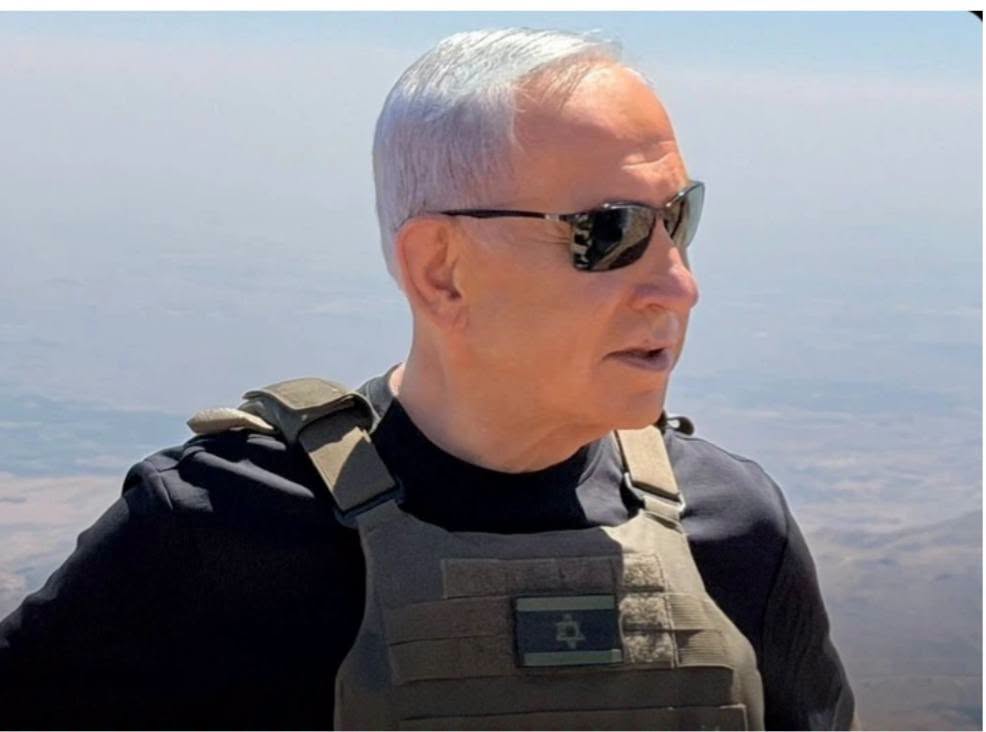
Netanyahu Leaves Washington Empty-Handed

By Mohammad Al-Kassim

Israeli Prime Minister Benjamin Netanyahu returned from Washington without the outcome he had clearly hoped for, or the outcome he had led his domestic audience to expect in the days before the trip.

The visit, hastily moved up by a week and framed by Netanyahu as urgent and decisive, ended with a brief, anodyne statement from his office. There was no joint appearance, no press conference, and no public declaration of alignment with President Donald Trump on Iran. 

When Netanyahu met with Trump at the White House on Wednesday, Iran was top of the Israeli PM’s agenda. And on his way back to Israel, Netanyahu said he had made his feelings clear – “not hide my general scepticism about the possibility of reaching any agreement with Iran”. 

For a leader who typically amplifies diplomatic achievements and personal rapport with American presidents — from his 2015 address to Congress opposing the Obama administration’s Iran deal to his close partnership with Trump during the Abraham Accords — the restraint was striking.

President Trump, for his part, said “nothing definitive” had been decided. 

The White House made clear that negotiations with Iran remain ongoing following the first exploratory round of US–Iran talks aimed at testing parameters for a possible new nuclear framework. 

That, in itself, was the headline Netanyahu had hoped to prevent.

Meeting defined by what didn’t happen

Netanyahu arrived in Washington, saying he would present Israel’s “guiding principles” for negotiations with Iran. 

But there was nothing fundamentally new in those principles — nor in the message he delivered.

For more than three decades, Netanyahu has framed Iran as an existential threat to Israel, warning of its nuclear ambitions in international forums, including at the United Nations General Assembly in 2012, where he famously drew a red line on a cartoon bomb.

His objectives have been consistent: weaken Iran by any means available; prefer regime change if possible; and, failing that, ensure Iran is permanently deprived of nuclear capabilities and long-range missiles.

After last year’s direct, unprovoked Israeli attack on Iran, missile capabilities have become even more central to Israel’s demands.

In Washington, Netanyahu pushed a maximalist position:

  • no uranium enrichment on Iranian soil, a demand that goes beyond previous US negotiating frameworks, including the 2015 Joint Comprehensive Plan of Action, which permitted limited enrichment under strict monitoring;
  • strict limits — ideally elimination — of Iran’s ballistic missile programme, a core pillar of Tehran’s deterrence strategy and long considered non-negotiable by Iranian leadership;
  • constraints on Iran’s regional allies and proxy networks, and
  • Israeli freedom of action to strike Iran, even under any future agreement.

He also opposes any ‘sunset clause’ seeking permanent restrictions that would entrench Israel’s strategic dominance in the region.

None of this aligns with the trajectory of US–Iran diplomacy. 

While the Trump administration has yet to spell out the precise parameters of a potential agreement, early signals from Washington point to a more limited objective than Israel has been demanding. 

The focus appears to be on extending Iran’s nuclear breakout timeline and preventing weaponisation — rather than eliminating uranium enrichment altogether or dismantling Iran’s ballistic missile programme.

In effect, the White House seems to be testing whether an imperfect but enforceable deal is achievable before turning to escalation. 

That approach reflects a calculation that containing Iran’s nuclear advances, even partially, may be preferable to the risks of confrontation or military action.

At the same time, President Trump has sharpened his rhetoric. 

He reiterated his commitment to negotiations but paired it with a stark warning: if Iran fails to reach a nuclear deal with Washington, the outcome would be, in his words, “very traumatic”. 

For the first time, Trump also attached a timeframe to that ultimatum, suggesting that diplomacy has a limited window — roughly the next month — before consequences follow.

The message from Washington is deliberate ambiguity: diplomacy remains the preferred path, but the clock is now publicly ticking.

The timing of Netanyahu’s trip is critical. Netanyahu advanced the visit shortly after the first round of US–Iran talks, signalling urgency — and concern. 

Israeli officials feared momentum: that negotiations might move ahead before Israel could shape their parameters.

That fear appears well-founded. While Trump continues to issue rhetorical threats toward Iran, his actions suggest a preference for testing diplomacy before escalating militarily. 

Domestic pressures and political stakes

Netanyahu’s urgency is also driven by domestic considerations. 

His governing coalition faces mounting pressures, including disputes over military conscription exemptions for ultra-Orthodox parties, budget constraints linked to prolonged wartime expenditures, and ongoing public dissatisfaction following the October 7 attacks and subsequent regional escalation. 

A dramatic confrontation with Iran — or even the perception that he is leading one — would be politically transformative.

Iran remains one of the few issues in Israel that still commands near-consensus across coalition and opposition lines. 

Netanyahu knows that. He has long positioned himself as the indispensable guardian against Tehran, and he needs to show Israeli voters that Washington remains closely aligned with him.

That explains the repeated emphasis, aimed at domestic audiences, on “coordination” with the US — even when public evidence of such coordination is thin.

According to Israeli assessments, Netanyahu brought intelligence to Washington intended to cast doubt on Iran’s intentions, including claims that Tehran is stalling negotiations, continuing executions, and refusing to engage seriously on missiles.

But if this intelligence was meant to derail diplomacy, it appears not to have succeeded.

Trump’s team — including Steve Witkoff, Jared Kushner, Marco Rubio, and others — listened. 

But the White House has not embraced Israel’s conclusion that negotiations are futile. 

Instead, it appears determined to test whether a deal is possible, even if imperfect. That leaves Israel preparing for an alternative outcome.

The prevailing assessment in Israel is that talks may ultimately fail — either because Iranian demands prove incompatible with US red lines, or because Israel’s demands make an agreement politically or technically impossible. 

That is precisely why Netanyahu insists on keeping the military option alive.

Behind closed doors, the three-hour meeting likely went beyond negotiating positions to contingency planning: what happens if talks collapse, how far Israel can act independently, and what level of US support or tolerance it might expect.

Israel’s core demand remains unchanged: freedom of action.

Despite public expressions of unity, Netanyahu and Trump are approaching Iran from different strategic premises. 

Trump appears to value flexibility and leverage, using the prospect of force to extract concessions while keeping diplomatic channels open. 

Netanyahu seeks permanence: structural constraints that prevent Iran from re-emerging as a threshold nuclear power under any future political configuration.

What binds them — at least for now — is political self-interest. Both prefer to avoid public confrontation. Both face domestic calculations. And both understand the risks of escalation.

For Netanyahu, however, the Washington visit underscored an uncomfortable reality: Israel can influence US policy, but it does not control it.

Diplomacy is moving forward — whether Israel likes it or not. – TRTWorld

Continue reading
Donald’s War Bells

By Dr Khairi Janbek

When talking about the stand off between the US and Iran, in fact, anything can happen on the kaleidoscope of endless talks to an endless war. Usually it is possible to predict the reaction of one collective or another with some knowledge, but impossible to predict the reaction of an individual no matter what knowledge is available.

This is especially the case if this individual is Donald Trump. He makes it his business to be unpredictable and depending who tells him what and whether he likes it or not; but at least we can attempt to drive some inference from the situation, a situation which finds the current American president who heavily criticized his predecessors for dragging the United States into protracted wars with dubious results.

In this sense, the operative term is a short and decisive war, which is unclear in terms of what duration in order to be decisive about what? From the term, short and decisive, President Trump seems to know what he wants, which we can pontificate on in a myriad of possibilities, however, and for all intents and purposes, it can only mean a campaign of targeting the current leadership, civilian, military and security, coupled with targeting Iran’s missile and nuclear capabilities.

Alternatively, for a leader obsessed with reality show image, he wishes to drag Iran to the negotiations table, which is not supposed to appear as a negotiations table, rather a table which will show a supposedly humiliated Iran, accepting the terms of the Washington administration: Those terms being a peaceful nuclear programme under close international supervision, no missile development programme, and stopping its support to its current regional proxies.

But the snag in all those plans,seems to be based on the reports indicating that the president has been told, that in order for the war to be decisive, it’s not likely to be a short one, which puts Trump in the conundrum of dragging the US into a protracted war on many other fronts, ranging from Iran to Iraq to Yemen. One is not saying at all that the US military cannot handle it, rather how costly will be the confrontation with Iran and its proxies be to achieve a decisive objective, which Trump desires to achieve in a short war?

In effect, if he does go to war at this point the objective has to change, and the meaning of decisive has also to change, meaning it would have to be regime change, knowing only too well, that there is no viable political alternative to the Mullahs except the Shah of Iran, which Trump doesn’t seem to be too keen on, and no one else in the region; for they are not much qualified to deal with day of regime change in Iran.

Also from an economic point of view: How long can a standing navy fleet stay on alert for war. The matter is not only psychological, but rather financial, as the moving of such a sizable war machine costs millions of dollars, now, if there are sponsors for this big operation and whom are willing to pay the expenses, then the US navy, similar to its Venezuelan operations, can encircle Iran and confiscate its oil shipments in the high seas , but if the US is paying for this big operation, then it won’t be long before we hear about a war breaking out.

Continue reading
Gulf Escalation: A Blaze Awaits The Region

By Dr Marwan Asmar

With the Abraham Lincoln destroyer entering Middle East waters, everyone is gearing up for another US–Israeli war on Iran—the second in less than eight months.

Anxiety is gripping the region from the Gulf to Iran and all the way to Israel. Foreign states are warning their citizens in these countries to leave, while some airlines have suspended flights to the region. Once again, the Middle East is on a war footing, with fears that a wide conflict could erupt at any moment.

With an additional 7,000 US troops moving to the region, along with jets and fighter planes, the buildup is being described as the biggest “get-ready” military move since 2003, when the US launched its major war on Iraq and reshaped the region. Today, Middle Eastern countries are jittery about the current situation and the possibility of looming instability.

US President Donald Trump is not helping matters. He says he is weighing all options but keeps everyone guessing about his next move. He has warned that if the Iranian government continues its iron-fisted crackdown on protesters, the US could intervene militarily and wage another war on Tehran—much to the delight of the Israeli government, which is reportedly playing a behind-the-scenes role in encouraging unrest in Iran.

Although Trump is raising the war tempo and increasingly saber-rattling through military entrenchment, he is also sending mixed signals. He is not as boisterous as he was when he launched US strikes on Iran’s nuclear facilities in June 2025. What he really wants is to push Iran back to the negotiating table and secure a lasting deal on its nuclear programme. He claims Iran’s facilities have been dealt a significant blow and may never recover, but this seems unrealistic, given how far Iran has advanced in nuclear enrichment.

While Trump describes Israel as a “role model” ally and urges Arab countries to follow suit—a claim many find laughable—Washington appears to be diverging from Tel Aviv over objectives on Iran and may even be at odds with it. Analysts say Israel wants strikes, even multiple ones, to change Iran’s regime and is less concerned about the chaos that could follow.

The United States, by contrast, appears more cautious. US officials do not necessarily want a new regime in Iran, uncertain of what might replace it. They prefer the logic of “the devil you know rather than the devil you don’t.” Washington wants a regime it can work with, despite ideological differences, notwithstanding Trump’s bombastic rhetoric, which Tehran may exploit if it chooses to play the “Mr Nice Guy.”

One analyst suggests Trump wants tangible gains from Iran, preferably access to its oil resources through US petroleum companies, but this may be a pipe dream.

If that fails, Trump is likely to push for a revamped nuclear deal to replace the 2015 agreement, which reached its term in September 2025 and is up for renewal. He wants a deal stamped with a distinctly “Trumpian” identity, even though many issues are already settled. Needless to say, Trump wants to claim credit for clinching the deal.

Today, the region stands on the edge of a precipice. It is touch-and-go. Many experts argue that a Middle East war is not imminent because it is neither politically nor economically feasible. Yet logic often takes a back seat in Trump’s world, especially with Israel pushing for a new wave of attacks on Iran, this time targeting its ballistic missile programme.

Iran, however, says it is ready. It has warned it will strike US bases in the region and beyond if it detects even a hint of an imminent attack. Iranian political and military leaders insist they will not remain sitting ducks for Washington or Tel Aviv. As a result, the region is caught in an escalating poker game.

While many believe Iran and its regional allies, such as Hezbollah and Hamas, have been significantly weakened over the past two years, neither the US nor Israel can be certain of Iran’s real capabilities. This uncertainty leaves them unsure about their next move—or Iran’s.

All this makes both Israel and the United States nervous about unpredictable scenarios across the region. Everyone is waiting, tapping their fingers, bracing for what may come next.

This article was originally published in Countercurrents.org

Continue reading