How do You Stop Israel’s New War?

As Israel’s forces intensify their assault on the occupied West Bank, concerns are mounting over its broader objectives, further territorial expansion, forced displacement of Palestinians, and the gradual annexation of the occupied land.

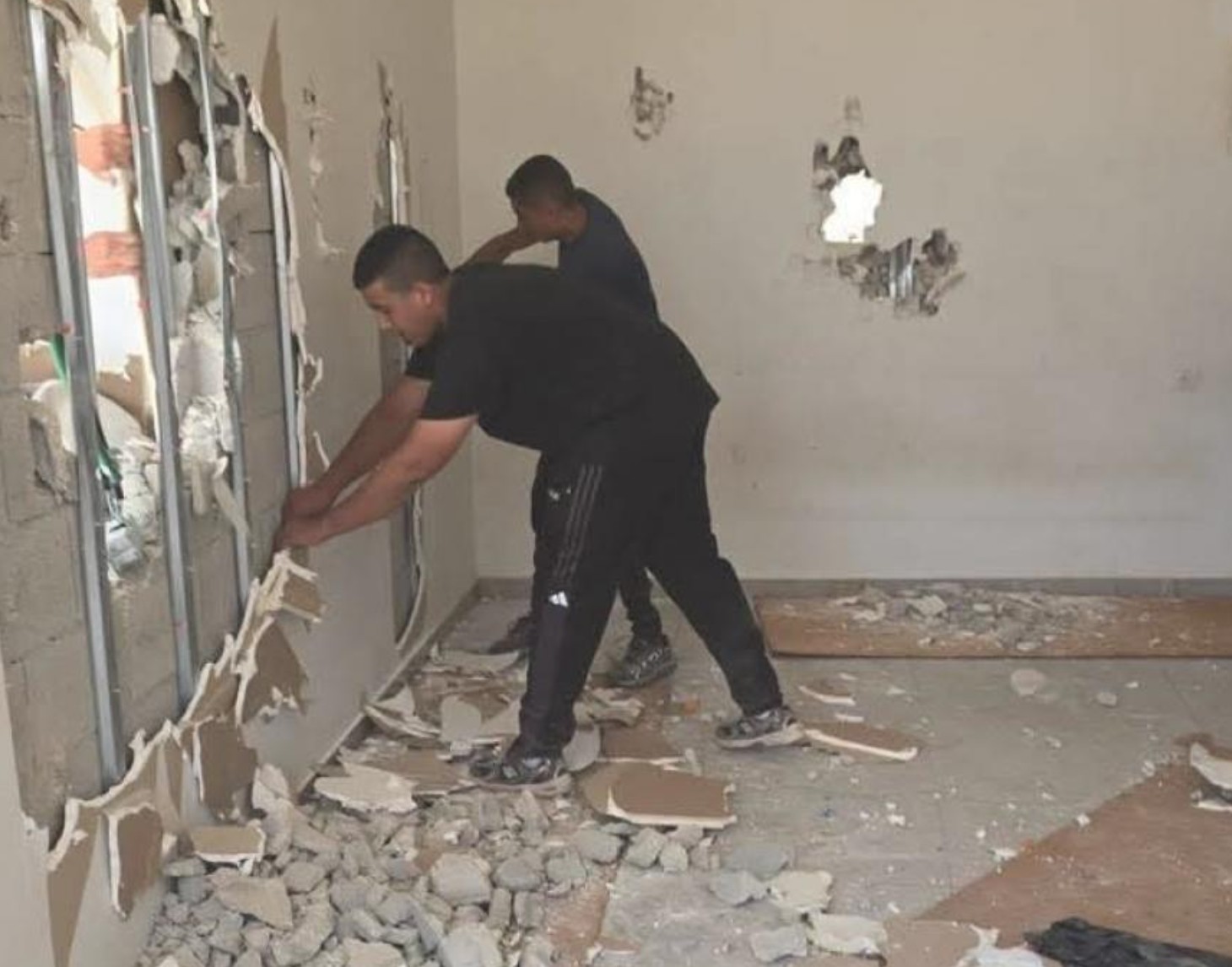
Israel has killed more than 64 Palestinians, arrested at least 365, displaced hundreds of thousands and destroyed scores of homes and properties in the occupied West Bank since it launched its operation, the “Iron Wall,” on January 21, just days after a ceasefire took effect in the Gaza Strip.

For the first time in more than 20 years Israel deployed tanks in the West Bank and Defense Minister Israel Katz said that the army will remain in some refugee camps “for the next year.”

Since the start of the operation by the Israeli forces on January 21, several refugee camps have been nearly emptied of their residentsand over 5,000 Palestinian families have been displaced by the ongoing Israeli attacks in the West Bank according to the Palestinian government.

Starting in Jenin Camp, the operation has expanded to Tulkarm, Nur Shams, and El Far’a refugee camps and led to the displacement of more than 40,000 Palestine refugees. 

As well, the occupation forces stormed several towns, including Idhna, Al-Shuyukh, and Beit Awa in Hebron, as well as the Al-Disha and Aida camps in Bethlehem, the Al-Mughayyir and Birzeit towns in Ramallah.

Israeli troops also raided the Amari camp in Al-Bireh and the Airport Street area in the Kafr Aqab neighborhood, located north of Jerusalem. 

As the operation is spreading across most West Bank cities and refugee camps, analysts say that Israel’s long-standing aim to annex the occupied Palestinian territory is now more evident than ever and that it plans to annex the West Bank, squeeze the Palestinians into the smallest areas possible, particularly to expel them from Area C,referring to the division that makes up some 60 per cent of the Palestinian territory.

The use of air strikes, armored bulldozers, controlled detonations, and advanced weaponry by the Israeli forces has become commonplace, a spillover of the war in Gaza.

Such militarised approaches are inconsistent with the law enforcement context of the occupied West Bank, where there have been at least 38 airstrikes in 2025 alone. 

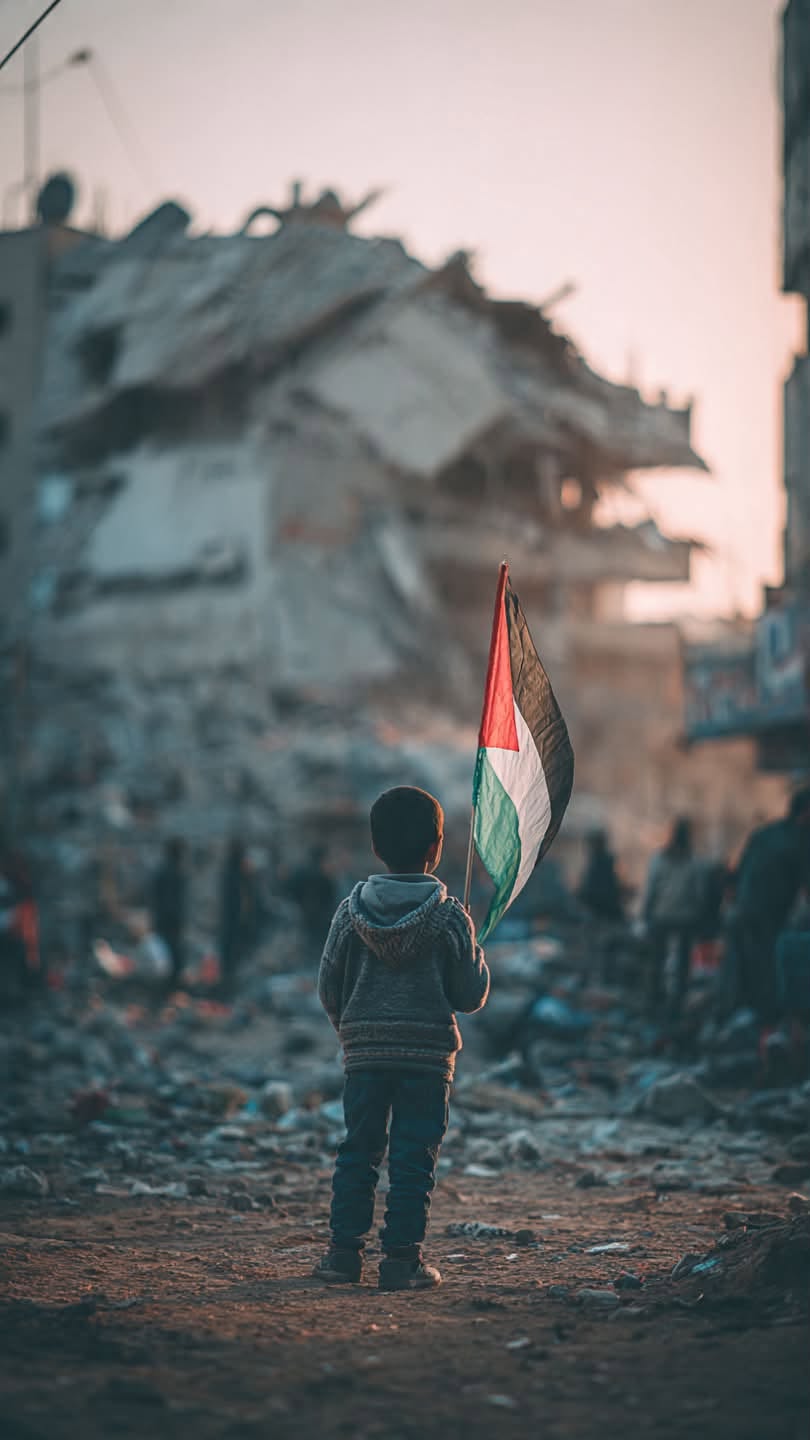
Jenin Camp stands empty today, evoking memories of the second intifada and this scene stands to be repeated in other camps. 

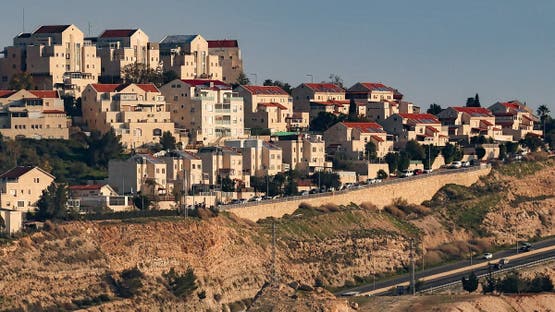
On the other hand, as the Israeli operation escalates, illegal settlers push further into Palestinian territories as 

Area C -over 60 per cent of the West Bank- is basically what the Israeli settler movement and the Israeli state view as ultimately theirs. 

Besides, they are creeping into Area B, which constitutes approximately 22 per cent of the West Bank. 

The illegal settlers are backed by the Israeli state, which provides them with military, economic, and political support across the political spectrum, not just from right-wing factions.

Since the start of the onslaught against the Gaza Strip on Oct. 7, 2023, at least 927 Palestinians have been killed and nearly 7,000 injured in attacks by the Israeli army and illegal settlers in the West Bank, according to the Palestinian Health Ministry.

In January, the Israeli anti-settlement group Peace Now warned that Israeli authorities were planning to approve the construction of 2,749 new settlement units in the occupied West Bank.

The group said 2025 could see “record numbers” of settlement expansions, an average of 1,800 units per month.

On its part, the International Court of Justice declared in July that Israel’s long-standing occupation of Palestinian territories is “unlawful,” demanding the evacuation of all settlements in the West Bank and East Jerusalem.

The United Nations Relief and Works Agency for Palestine Refugees (UNRWA) reiterates that civilians and civilian infrastructure must be protected at all times and that collective punishment is never acceptable.

However, under the Knesset laws implemented on January 30, UNRWA no longer has any contact with the Israeli authorities, making it impossible to raise concerns about civilian suffering or the urgent need for the delivery of humanitarian assistance. 

UNRWA, the main agency providing humanitarian aid for Palestinians in the refugee camps, has been banned by Israel to operate in East Jerusalem and now in the West Bank which is having a huge impact on the well-being of people, and on the economic situation.

This puts at grave risk the lives of Palestine Refugees and the UNRWA staff that serve them.

 Israel has long tried to eliminate the UN agency, which enshrines the right of Palestinian refugees to return home.

Israel’s aggressive assault on the refugee camps and the UNRWA, aligns with Israeli Prime Minister Benjamin Netanyahu’s goal “to end the concept of a Palestinian refugee”.

Moreover, the ongoing West Bank operation is seen as part of Israel’s plan to establish an exclusively Jewish state and recent reports surface that Israel is preparing to set up a military base in the Jenin camp, a part of its strategy to eliminate the refugee identity. 

All of Israel’s actions and policies throughout the last several decades have been geared toward the ultimate goal of creating a Greater Israel across all of historic Palestine.

Najla M. Shahwan is a Palestinian author, researcher and freelance journalist. Author of 13 books in literature and a children story collection. Chairwoman of the Palestinian Center for Children’s Literature (PCCL). Founder of Jana Woman Cultural Magazine. Recipient of two prizes from the Palestinian Union of Writers. She contributed this article to The Jordan Times.

Continue reading
Jordan’s Red Lines

Jordan’s King Abdullah II will reject US President Donald Trump’s plan to take over Gaza and resettle Palestinians even if Washington cuts aid to the kingdom, local media said. 

Abdullah is set to meet Trump at the White House on Tuesday, in the first meeting between an Arab leader and the US president since he assumed office last month. 

The meeting comes shortly after Trump said Monday that he may cut aid to Jordan and Egypt if they don’t take in Palestinians from Gaza. 

The US is a key supporter of Jordan, having signed a memorandum of understanding in September 2022 under which Washington provides $1.45 billion in annual financial aid to the kingdom from 2023 to 2029. 

Last month, however, the Trump administration decided to freeze all foreign aid for 90 days to conduct a review process.  

Red lines 

In an article titled “The King and Trump: A Historic Meeting,” Al-Dustour editor-in-chief Mustafa Ryalat described the monarch’s visit to Washington as “historic in every sense of the word.” 

He emphasized that the meeting comes at a “highly sensitive political moment as crises escalate across the region, but the king carries with him the well-known red lines of Jordan.” 

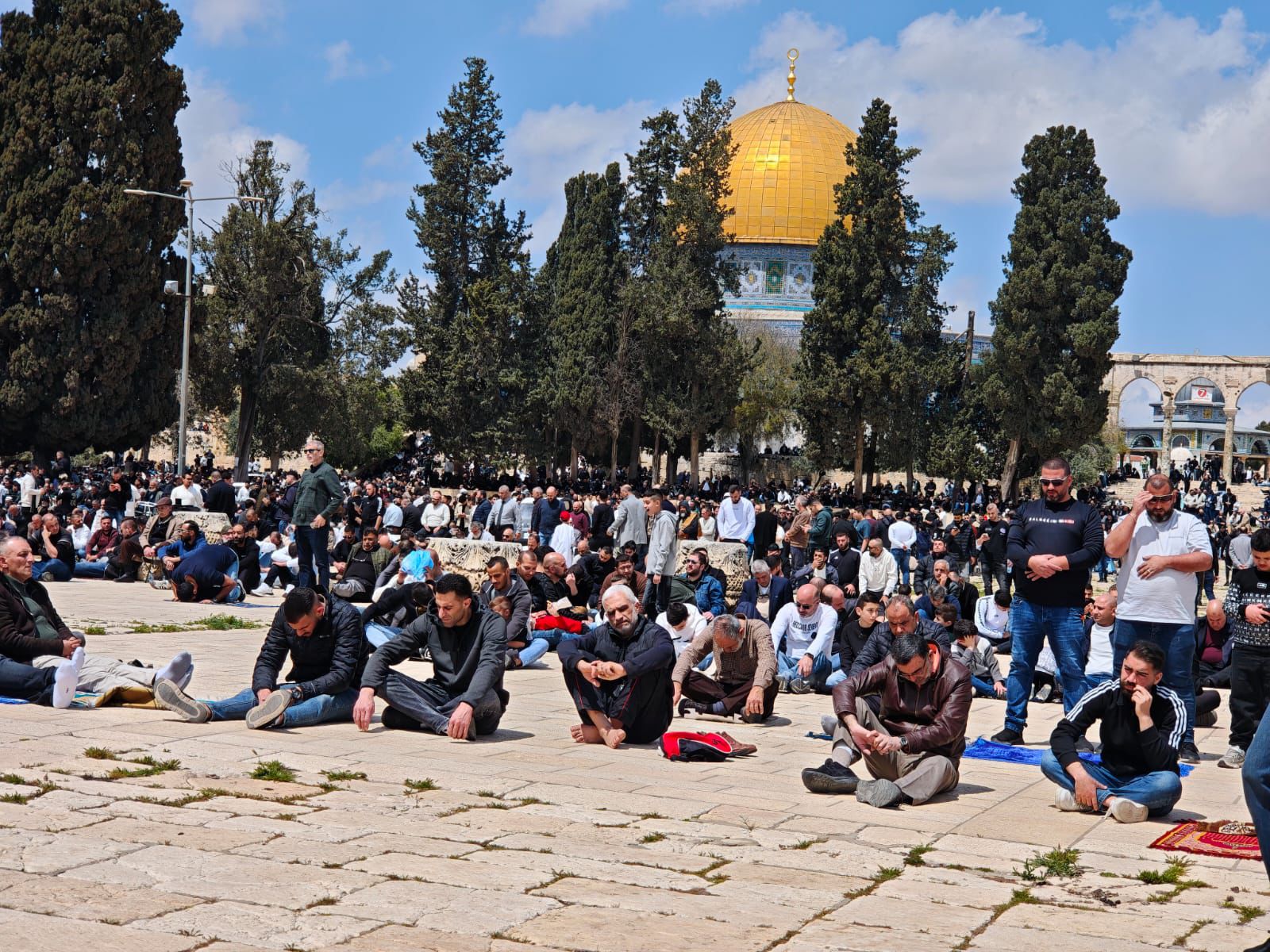
Ryalat recalled that when Trump’s so-called “deal of the century” was rumored to include a plan for resettling Palestinians to Jordan as an alternative homeland, King Abdullah responded, “As a Hashemite, how can I back down on Jerusalem? Impossible. This is a red line. No to Jerusalem; no to an alternative homeland, no to resettlement [for Palestinians in Jordan].” 

Trump’s “deal of the century,” unveiled in 2020 as a proposal for resolving the Israeli-Palestinian conflict, was widely rejected by Palestinians and the broader Arab world as it heavily favored Israel at the expense of Palestinian rights. 

Ryalat acknowledged the difficulty of the current situation, stating, “Yes, the challenge is great, and yes, we are dealing with the most dangerous issue of the moment – forced displacement – but we, as Jordanians, led by our king, do not have the luxury of making deals at the expense of our principles. In our hands, we hold a firm position: No to resettlement.”  

3 possible scenarios 

In an article titled “The King-Trump Meeting: Three Scenarios for the Region’s Future,” Al-Rai editor-in-chief Khaled Al-Shuqran described the summit as a “critical turning point that could either reshape Washington’s position or deepen the crisis, with analysts focusing on three possible outcomes.” 

He said the king, as a strategic US ally, could succeed in persuading Trump to abandon his displacement plan and return to supporting the two-state solution as the only viable path to peace. 

Shuqran said another possible scenario includes US insistence on implementing the displacement plan, whether by forcibly transferring Gaza’s population to other countries or displacing them internally within the enclave. 

The Jordanian journalist said Tuesday’s meeting could also end without a resolution, leaving the situation unchanged, with Israel maintaining its occupation, continuing the siege on Gaza, and freezing peace negotiations. 

Shuqran warned that the third scenario “is the most dangerous because it fuels Palestinian despair and could trigger a third Intifada, potentially more violent than before, especially with rising extremism on both sides.” 

“This stagnation will drain the resources of neighboring countries like Jordan, Egypt, and Lebanon, all of which are already struggling with refugee crises, leading to further social and political instability in the region,” he said. 

“The US decision will determine not just the fate of the Palestinians, but also the future of regional alliances and the so-called ‘economic peace’ strategy that Trump’s administration has been promoting.”  

Blackmail 

In an article titled “Cutting US Aid to Jordan: We Will Not Bow, We Will Not Bargain,” journalist Awni Rjoub criticized Trump’s threat to halt financial assistance to Jordan, calling it “a new chapter of cheap political blackmail aimed at subjugating Jordan and forcing it to accept the rejected deal of the century.” 

“Trump believes that Jordan, a small country in size but strong in will, can be coerced with financial threats. He is gravely mistaken,” he said. 

“Jordan – its leadership and its people – will not bow. Our hands will not be forced, even if the entire world stands against us,” he added.    

Jordan’s leverage 

In the Al-Ghad newspaper, journalist Nidal Mansour highlighted the diplomatic significance of the king’s visit to the US. 

“This is a politically complex and sensitive visit that will showcase Jordan’s strategic leverage after decades of close relations with Washington. The outcome will define the next phase both politically and economically.” 

In an article titled “Before the King Meets Trump,” Mansour noted, “This may require shifts in alliances and strategies to confront upcoming challenges.” 

“What is certain is that Jordan-US relations are entering uncharted waters under Trump, and the world is watching closely.” 

Under the headline “Jordan, Trump, and the Bold Confrontation,” journalist Mundher Al-Houarat argued, “Trump has gone too far. He does not care about international law, making legal appeals futile.” 

Instead, he suggested that Jordan should “deepen alliances with China, Russia, and the EU, convene an emergency Arab League summit, and engage with US institutions and the UN.

However, given Trump’s unpredictable nature, these efforts may not yield the desired results.” 

He proposed a more direct approach: “To make Trump understand the consequences of his actions, Jordan must consider bold steps – such as hinting at freezing the Wadi Araba Peace Treaty (1994) with Israel, halting security and military cooperation with the US, and outright rejecting any aid that comes with conditions,” according to Anadolu.

Continue reading
Over 500,000 Return Home in North Gaza

The UN on Tuesday reported that “more than 565,000 people have crossed from the south to the north of Gaza since” Jan. 27.

Citing the Office of the Coordination of Humanitarian Affairs (OCHA), spokesman Stephane Dujarric reported during a news conference that “more than 45,000 people have been observed moving from the north to the south” of the Gaza Strip.

He stated that the UN and its partners on the ground are “working to mitigate the impact of the widespread destruction of critical water, sanitation and hygiene infrastructure that has taken place throughout the Gaza Strip.”

Asked about US President Donald Trump’s impending executive order to withdraw from the UN Human Rights Council and block funding for the UN relief agency for Gaza (UNRWA), Dujarric said: “We will obviously see what is being signed right.”

“But the US will take the decision that it takes. It doesn’t alter our position on the importance of the Human Rights Council,” he said according to Anadolu.

Describing the executive order as “something that’s very new,” Dujarric affirmed that the decision will not change the UN’s ” commitment to supporting UNRWA in its work and in its work of delivering critical services to Palestinians under its jurisdiction, its mandate.”

The US funding to the UNRWA was suspended in 2024 under the Joe Biden administration after Israel accused 12 of UNRWA’s thousands of employees in Gaza of being involved in the Oct. 7, 2023, Hamas attack on Israel.

Amid a probe of the claims, at least 16 countries, including the US, paused or suspended funding to the agency, and its aid work for Gaza’s famine-stricken population. But most of the key donors resumed aid after an independent review of UNRWA found that Israel had not provided any evidence to back its claims.

UNRWA was created by the UN General Assembly more than 70 years ago to assist Palestinians who were forcibly displaced from their land

Israel had ordered UNRWA to shut down all operations in East Jerusalem by Thursday, in line with a directive communicated in a letter from Israel’s Permanent Representative to the UN Danny Danon to UN Secretary-General Antonio Guterres on Jan. 24.

Following the order, UNRWA evacuated its headquarters in Sheikh Jarrah in East Jerusalem, where it had operated since 1951, as well as a clinic in the Old City and multiple schools, including a vocational training center.

The move came amid growing tensions between Israel and international organizations, as multiple UN bodies continue to raise concerns over the deteriorating humanitarian situation in Gaza and the West Bank.

Continue reading
Israel Must Not Be Allowed to End UNRWA

As Israel shuts down UNRWA in Gaza and the occupied West Bank, the move serves a strategic purpose: Undermining Palestinian national liberation and the right of return.

Sara Troian

By Sara Troian

This week, Israel’s ban on the United Nations Relief and Works Agency (UNRWA) takes effect, cutting off its services in its two main areas of operation in Palestine; namely, Gaza and, the occupied West Bank, including east Jerusalem.

Established in 1949 in response to the Nakba, UNRWA was meant to provide humanitarian aid and protect Palestinian rights until a just resolution to the refugee crisis was achieved. Central to this is the Palestinians’ inalienable right of return, which Israel has consistently denied.

Beyond the 5.4 million UNRWA-registered refugees, at least five million more Palestinians have been forcibly displaced by Zionist colonisation. The right of return belongs to them all.

Calculated attack on Palestine

In October, the Israeli parliament passed two bills targeting UNRWA. The first prohibits the agency from operating within the 1948 borders. The second bars Israeli officials from engaging with UNRWA in any capacity.

These laws are designed to remove Palestinian rights to a homeland and further weaken the agency that serves them. They also mark the culmination of decades of attacks by Israel and its allies seeking to dismantle UNRWA as part of the broader Zionist settler-colonial project.

For the 2.1 million Palestinians in Gaza, this will cripple efforts to rebuild the warmth of their homes and the safety of life-sustaining infrastructure vaporised by Israel’s annihilatory violence. This will further obstruct the restoration of life and the healing from nights spent beneath skies ablaze with fire and days suspended between slow and quick death in dwindling food rations.

In the West Bank and east Jerusalem, 49,000 students will be forced out of UNRWA schools, and will be left either without education or, in Jerusalem, to the whims of Israeli curricula that distort, dehumanise and erase their history and culture.

Nearly a million Palestinians will be denied medical care. The loss of thousands of jobs will further drive Palestinians into economic precarity, deepening the cycle of engineered de-development.

Political goals and neoimperial strategies

The dismantling of UNRWA is not just a humanitarian crisis; it is a political manoeuvre. Zionism has slated Palestine for erasure as part of a broader regional strategy. In this imperialist framework, the US and EU finance oppression, Israel enforces it, the local bourgeoisie complies, and the UN provides a thin veil of legitimacy.

The timing of the ban aligns with Israel’s shifting tactics. While the intensity of genocide in Gaza has momentarily slowed, violence in the West Bank—particularly in Jenin and Tulkarem refugee camps—has escalated. Zionist forces use airstrikes to destroy life-sustaining infrastructure, obstruct healthcare, and drive mass evacuations, all while continuing the daily expansion of settlements and mass arrests.

Palestinians today face the same oppressive forces as during the 1936-39 revolt: self-serving leadership, Arab regime complicity, and Zionist-imperialist domination.

At the core of these dynamics is Palestinian refugeehood—a fundamental consequence of Zionist colonisation. Since 1948, Israel has displaced over 10 million Palestinians, most, descendants from the Nakba, severing them from their homeland.

The right of return threatens Zionism’s foundation because it challenges Israel’s colonial reality, built on destruction and displacement.

The Zionist-Western axis‘ attacks on UNRWA aim to depoliticise its mandate, while crystallising Palestinian refugeehood into a permanent humanitarian crisis to be managed.

While the status of Palestinian refugees and their right of return cannot be solely determined by UNRWA or any international agency–as it is a condition that stems from the implementation of Zionist settler-colonialism– these attacks weaken the agency’s ability to advance Palestinian political claims within the UN.

Moreover, heavy reliance on donor-driven funding has transformed the agency into a semi-corporate entity, dependent on fluctuating foreign funding, further undermining its capacity to support Palestinian political aspirations. This, however, is a symptom of the neoliberal exploitation that, disguised as humanitarianism, treats Palestinians as disposable and expendable subjects to Western imperial expansion.

Palestinians are therefore held hostage by a global structure designed to rob them of their autonomy. This is reflected, for example, in the fact that all senior UNRWA officials are non-Palestinian, making decisions for 5.4 million refugees, yet often against their quest for national liberation.

Integration?

Meanwhile, US imperialism has dealt another blow by freezing all USAID projects–except for those in Israel and Egypt– and halting military aid to all countries except Israel, Egypt and Jordan.

The suspension of USAID serves as a coercive tool to absorb the thousands of Palestinians whom Israel’s brutal campaign aims to expel in the coming months. For example, in Jordan, where USAID plays a critical role in supporting public services like healthcare, justice, and water supply, the freeze pressures the Kingdom to participate in this plan, which has been in the works for years, but only recently the US has openly encouraged Egypt and Jordan to endorse a new wave of forced Palestinian exile.

In recent years, experts and international bodies have proposed integration into host countries or resettlement in third countries as pathways to securing a modicum of rights and emancipation for Palestinians who have been forcefully encamped for over seven decades.

While access to civil and political rights in places of exile is crucial, these proposals must not be weaponised to suppress the central struggle for return. At this moment, such narratives risk legitimising forced expulsions, under the guise of legal solutions, erasing Palestinian claims from the global agenda.

Access to rights must never serve as a strategy to downplay or marginalise the central struggle for return and efforts to secure it. At this moment, it is crucial to recognise how such narratives and solutions can be exploited—either to hinder Palestinian survival amid genocide or to suppress resistance against forced displacement.

Read More

Türkiye condemns Israel’s ban on UNRWA in occupied Palestinian territories

Many Palestinians in the West Bank already hold Jordanian citizenship—remnants of the Nakba and Oslo. If Palestinians will be forced to relocate to Jordan or third states under the pretense of naturalisation and resettlement, this strategy, framed as a legal solution, will ultimately legitimise further forced expulsions and erase their right of return from the international agenda.

This will facilitate the elimination of 10 million Palestinians as a political force challenging Western imperial expansion.

The time for return

A just solution cannot emerge from the very institutions and structures that have perpetuated Palestinians’ plight and the plundering of their land for decades. Such alternatives merely rebrand subjugation of the people.

The answer lies in the steadfastness of Palestinians themselves. Over the past 16 months, in defiance of over a century of disenfranchisement and exile, including 480 days of settler-colonial erasure, Palestinians alone have transformed return from a distant dream, into a tangible reality.

As displaced Palestinian in Gaza flood back towards their destroyed homes in Gaza City, Beit Lahiya, Jabaliya, and Beit Hanoun, this marks only the beginning of their Great March of Return. Eighty percent of Gaza’s population descends from those expelled from 247 villages in central-southern Palestine through waves of Zionist massacres.

This must be the guiding principle for any just and lasting solution—one that restores Palestinians to their homes, land, and dignity from which they have been forcibly expelled for far too long.

SOURCE: TRT World


Sara Troian

Sara Troian

Sara Troian is a Hume PhD Scholar in the Department of Law and Criminology at Maynooth University. Her PhD research examines the tension between international law and settler-colonialism in Palestine.

Continue reading