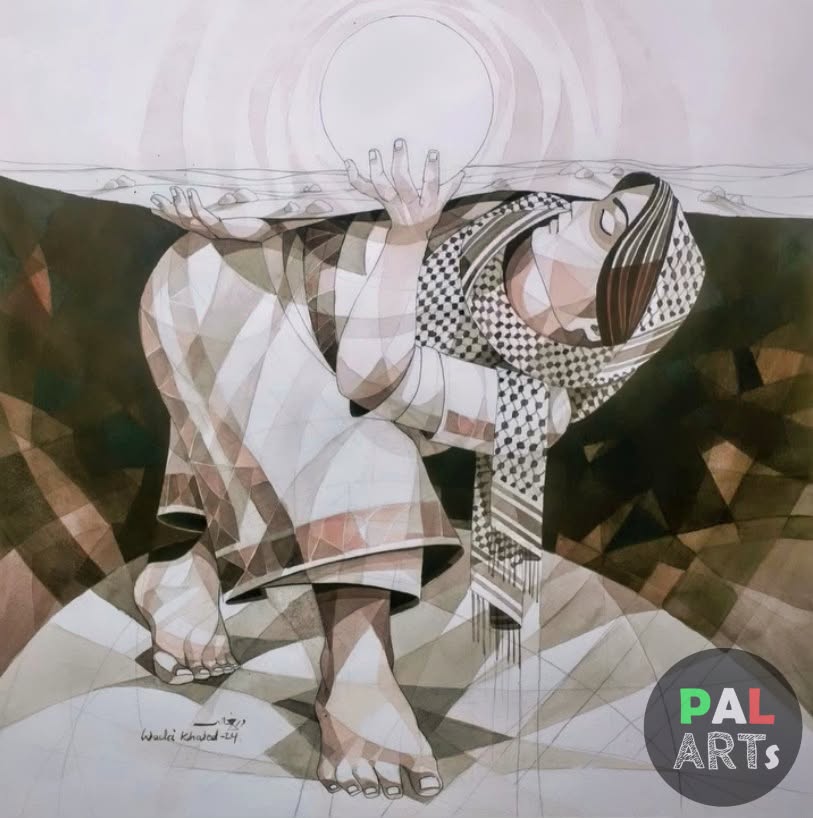
Ode to a Homeland
 CrossFireArabia
- June 17, 2026
“Ode to a Homeland” by Palestinian artist Wadei Khaled
 CrossFireArabia
“Ode to a Homeland” by Palestinian artist Wadei Khaled
CrossFireArabia
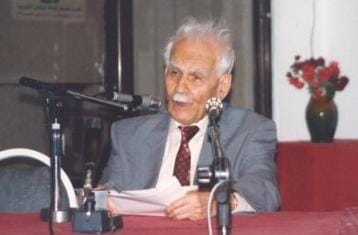
EDITOR’S NOTE: This is a tribute article I wrote originally about the Palestinian dictionary-maker who died on 5 May, 2007. It is befitting to reprint now from the hackwriters website because of the enormous contributions this man made to Arabic-English, English-Arabic dictionaries.
I first met Hassan Al Karmi when he was in his 90s. He was still as sharp as a tack. He was living another of his golden ages. He had already 14 Arabic-English, English-Arabic dictionaries under his belt and he was now writing treatises on Islam and the West. After our first meeting to do an article on him that appeared in a local newspaper–not written by me–we became friends and I started to visit him regularly though not as much as I would have liked. He would tell me Marwan keep coming to see me, I want to discuss what is happening in this world that has gone mad!
He first lived alone with only a Sri Lankian maid to look after him although he had numerous old guard friends, part of them his relatives, and part admirers, just happy to be in the company of a man who started to make dictionaries in the 1960s.
Hassan Al Karami made Amman his home in 1990 saying this is where he wanted to spend his retirement and the rest of his life. He came here quite by chance en route to Damascus where his wife wanted to see her original birthplace. Whilst in Amman, she passed away and so Hassan Al Karmi, nom de guerre Abu Zeyad, decided to make his home permanently here. He says he was 87 or there about by then and felt that it was time to come home.
Hassan Al Karmi had lived most of his life in London, and therefore could legitimately be called Anglo-Palestinian as he migrated to Britain in 1948 when Palestine fell to the Zionist occupiers. However, he never forgot his roots.
He was a Jerusalemite, born and bred, a teacher and an educational inspector by profession who traveled all over Palestine in the inter-war years from 1918 till 1948. He wasn’t too sure of the exact date of his birth, although he would tell me it was either in 1904 or 1907 but all he would say is he and his family would move at that time freely between Palestine, Syria and Jordan where his father served as chief judge in the 1920s to then Prince Abdallah of Trans-Jordan.
In an unpublished autobiography, Al Karmi vividly describes these years. The information he provides about his life in the various cities of Palestine during the 1920s and 1930s in places like Al Ramleh and Jerusalem are particularly illuminating. The reader receives a sketchy but a clear picture of the educational system in Palestine under the British Mandate with the young Al Karmi moving from one school to another.
From 1948 to 1990 London was to be his home, finding a job at the British Broadcasting Corporation–BBC Arabic–as a language supervisor, checking and correcting the Arabic that was spoken and broadcast to the Arab world. He remained at the BBC till his retirement in 1968, but by then he was known all over the Arab World through his program Qawl al Qawl, “Saying Upon Saying” that started in 1954 and lasted till the 1970s.
This program made him famous, almost a star, heard by many across the Arab world, commoners and kings, intellectuals and princes. He would tell me his presence at the BBC allowed him to meet and interview people like the late Sir Anthony Eden who was British Foreign Secretary at the time of the Suez Crisis in 1956 when Britain, France and Israel attacked Egypt, and he frequently interviewed Glubb Pasha who headed the Arab Legion in Jordan in the early 1950s.
The late King Faisal of Saudi Arabia who was murdered in the early 1970s wouldn’t miss an episode of the program, Karmi told me when they used to meet in the 1960s the king would tell him he was a judicious listener to the program. The late Egyptian President Gamal Abdel Nasser was another admirer, and ordered his own media to emulate the program.
Abu Zeyad was very proud of his BBC series not only because of the many friends he made across the Arab world including the late King Hassan II of Morocco but it helped him to maintain his roots and culture for he would frequently travel to the region to buy books and dissect the knowledge which he would use as quizzes for his program.
And in his London home he built an impressive collection of books, numbering at least 1000, which he left to one of his two daughters, Ghada Karmi, a medical doctor-turned academic, an author, commentator, and now a researcher at Exeter University’s Institute of Middle East Studies. Although the 48-volume collection of “Saying Upon Saying” was brought from London to stay as a cherished prize in his Amman flat.
He only bought a fraction of his books to Amman and some of his dictionaries, a number of which are out of print, but many others still on the market. He used to say to me proudly in actual fact he wrote 14 dictionaries but only eight are published, a great achievement in itself.
His first, Al Manar dictionary, was started in the early 1960s at the height of his career at the BBC, but was published in 1970, it is today long out of print although I managed to see a copy of it in one of the bookshops in downtown Amman.
On occasions I tried to ask him how he actually went about making his dictionaries but at many times his thoughts would seem intellectually scattered and his mind thinking of too many ideas. He was much too concerned with the malaise of the Arab world, arguing there was now another Christian crusade led by the United States against every Arab man and women, young and old.
Words seems to him superfluous if they are not connected to the culture, politics, religion and economics of the region. He looked for social habits and idiosyncrasies, seeing the Arab man as riddled with contradictions that are as much as his own fault as the fault of the globalist culture and the dictation of the outside world, of Bush’s America.
He was an inter-disciplinarian in the way he approached his work. He would always say that making dictionaries was the hardest projects he ever embarked on, but it was one of his priceless projects because it put the course of the Arabic language on a fixed linage and protected it. That’s why an endless amount of reading was required to look at the normative values of Arabic words and phrases, how the Arabic word was used and understood by the ordinary man-in-the street rather than how the intellectual and the pedagogues understood them and handed them down to the plebs.
What made making dictionaries in Arabic harder still he would say is, because unlike English, there is no ready-made references in Arabic and involved looking at words and going back to their origins, dissecting their consonants, or when they were said and come up with modern equivalents but one that ensure consistency and not deviate from the tone, intonation and syntacs.
Of course he had to look at other dictionaries which he brought back to London from his frequent trips to Arabia. Sometimes he would expressly travel to Egypt, Lebanon and Syria to gather what he termed as a book culture which he would ship to his house in London and sift through patiently to understand how one would differ from another and the context in which it is being used.
He thought there was no time to lose, for him time was of the essence, his dictionaries, books and world news was of paramount importance. When he wasn’t preparing one book, he would be seen scribbling in his shaky writing and would at times amusingly say ‘I can’t make head or tail of what I wrote’. On seeing him sign a book for me, his son Zeyad once comment amusingly, ‘take care of the signature, one day it will be very valuable.’
I remember his late 90s, where he would be sitting at his desk or at his favorite armchair with a magnifying glass in one hand and a pen in the other saying I just completed the adding of 10,000 extra words to one of my dictionaries that was to be printed in Beirut, then switching his mind to George W. Bush and his neo-conservatism, curse their politics in Iraq and on Palestine and say ‘why don’t they leave us in peace, we are a peaceful people.
The sum total of all of his printed dictionaries was eight over the span of the 1970s, 1980s and 1990s. They included Al Mughni Al Akbar, (English-Arabic), Al Mughni Al Kbir (English-Arabic), Al Mughni (English-Arabic), Al Mughni Al Waseet (Arabic-English), Al Mughni Al Waseet (American English-Arabic, Al Mughni Al Wajeez (English-Arabic), Al Hadi for Arabic language, Al Hadi Al Waseet, Al Hadi for students).
It was very strange to be in the company of such a man, I never thought of him per se as a dictionary-maker. I suppose I was very privileged to have known a man whose mind was to say the least multi-dexterous, leaping from one idea to another, it simply kept buzzing and enthused with intellectual thought. There was no end to his surprises.
One day I went to see him and out of the blue handed me a book he just published on a cat he had in his inter-war years in Palestine. Would you believe somebody would write a book on his cat, he would tell me, and yet why not, cats are very clever things you know and we should appreciate them more, one day I was trying to get rid of my cat, so I took it 20 kilometers from where I lived and left it there, and when I went back home there it was on my door step, what other animals would have the sense to do that.
He would tell me the story time and again and I would just nod my head and think of his many talents. It was his almost devoutness to knowledge, almost a humbling trait, that would probably stick out as his most basic of his character.
Hassan Al Karmi was not the kind of person who would be sidelined. While many people start becoming peripheral as they enter their octogenarian years, the intellectual caliber of Al Karmi left no room for peripheralism or the sense of being left out on any topic of conversation.
His mind never surrendered to his enfeebled body, and which radiated with sparkles of intellectualism about the moderation and enlightened forces of Islam and the godlessness of the West led by America and George Bush’s version of global domination. Towards his latter years, and through a penetrating historical analysis he came to speak of an embedded alliance between Judaism and Christianity and even supported the coining of the phrase of “Judeo-Christianity” to express an intrinsic relationship between the USA and Israel.
Towards the latter part of his life, his daughter Siham, herself a lady in her 70s and a biology teacher, came all the way from London to be with her father, while the others would try and come as much as possible. He and they shall be remembered as living in two cultures and trying to reconcile themselves with both.
 Dr Khairi Janbek
By Dr Khairi Janbek
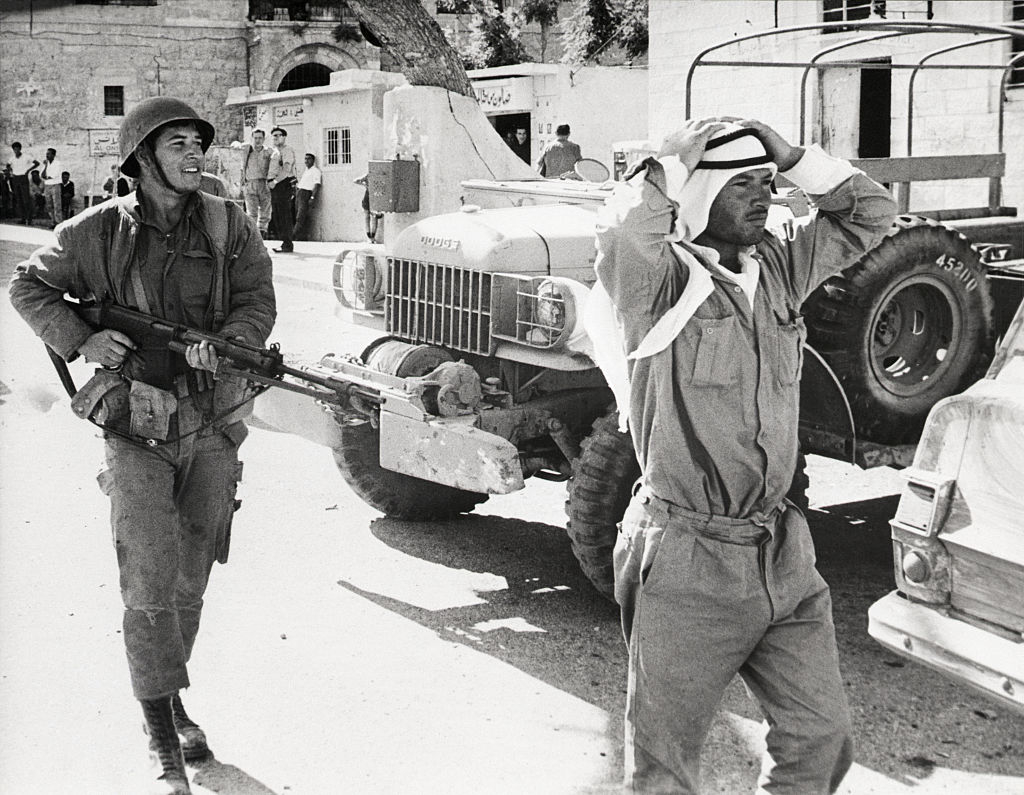
What can one say about the defeat of 1967 war, more than what the experts, the memoirs, and the active participants in it have said and written already, save from the eyes and ears of a child; for after all one was a child at the time and one must admit that growing up with defeat did have profound effect on one’s developing personality.
As it happened, in fact we were on a family holiday driving to Turkey when we heard the first actions in the war. By the time we crossed Damascus towards the north, the car radio was blasting with the advances made by the Arab armies on the path towards liberating Palestine.
However, by the time we reached an area close to the Syrian-Turkish border somewhere near Jabla in Syria, we discovered the the border was closed on the Syrian side and people including my late father were stuck around the big radio in the small roadside hotel talking about the destruction of the Israeli military forces, and the remarks that in a couple of days, Israel will cease to exist,
But low and behold, after a few days and by the time the border was opened, Egypt had lost Sinai, Syria, the Golan Heights, and Jordan the West Bank and Jerusalem; the jewel in the crown.
The car was tense, and for the first time I was disappointed, not because of the news of defeat rather, rather because I was no longer the centre of attraction for the family. As we entered Iskenderun in Turkey, a couple of young men crossing the streets, seeing our car number plate in Arabic, spat on the ground and said in Turkish; Pis Arap, meaning dirty Arab.
I didn’t undrestand Turkish at the time, until my father smiled bitterly and said, so we have just become dirty Arabs. In the small hotel in Iskenderun owned by a generous Armenian family, they brought us their transistor which could catch Syrian broadcasts and heard my father saying Nasser has resigned, and I was wondering how could he do that. For me, Nasser’s image was a cross between a king and an idol football player.
By the time we reached Ankara, it was all over. We were nothing in the eyes of the Turks at the time, but lying impotent Arabs. As the years passed, maturity set in as a strong slap in the face, with my childhood’s main scar left inside me, engulfing me with doubt, and disbelief, not only regarding what I now hear but also in what I see: with Arab politics to me, becoming just a mixture of cynicism, blatant lies, and regimes self-preservation.
The disaster from top to bottom was, unqualified military officers in Egypt, only accustomed to internal security and privileges were punching above their weight and carrying ranks which were above their undrestanding of warfare. Their ignorance was stark obvious when they knew about the attack and opted for absorbing the first blow before counter-attacking, not knowing they’ll have nothing left to counter with.
Jordan was squeezed between the hammer and the anvil diplomatically, though there were voices among the statesmen at the time urging not to participate in the impending whilst recognizing the perils, yet the decision to participate in the war and opening the Jordanian couldn’t be avoided because first of all the belief in Nasser’s victory held sway among the people, and secondly, to imagine an Arab defeat would not spare Jordan who will be blamed for this defeat due to the lack of giving support in the war.
In the case of Syria, how could an army in which the first officer who wakes up before the others and carries out a coup d’état, fight a war; and how could an army in which a general has to walk behind the coup d’état lower ranks whom are only concerned about preserving their own hold on power, conduct warfare? In fact the fall of the Golan Heights was declared by the Syria representative in the UN, 36 hours before it actually fell. And why was this? All in aid for withdrawing the army to protect Damascus.
Has anything changed? Everything has changed so that nothing changes!
Dr Janbek is a Jordanian writer based in Paris, France
CrossFireArabia
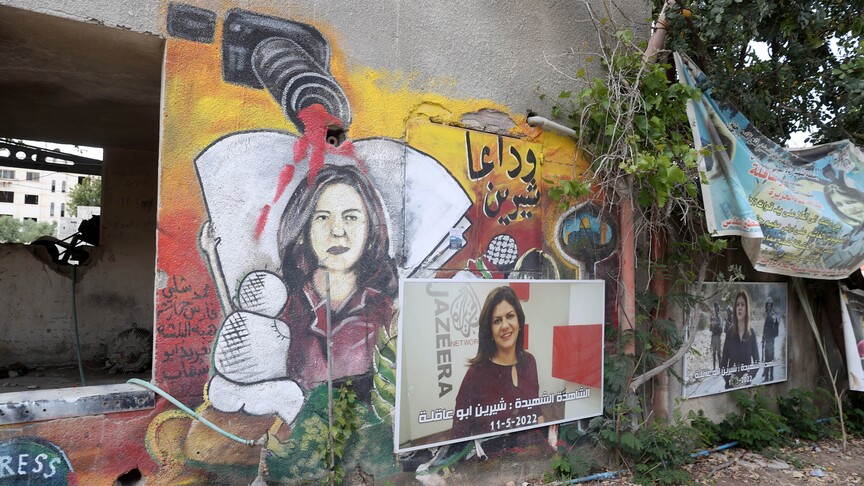
The Committee to Protect Journalists (CPJ) on Friday demanded an “public progress update” on the FBI’s investigation into the Israeli military’s 2022 killing of Palestinian-American journalist Shireen Abu Akleh in the occupied West Bank.
In an open letter to the Justice Department and FBI chief Kash Patel, the CPJ expressed concern that the US had diluted its official assessment of her death.
The group urged the department and the FBI – which falls under the Justice Department – to “provide a public progress update on the Federal Bureau of Investigation’s (FBI) investigation into the killing of Shireen Abu Akleh,” a US citizen and journalist fatally shot on May 11, 2022, by the Israeli army while reporting in the West Bank city of Jenin, the letter said according to Anadolu.
“The effectively stagnant status of this case is inconsistent with ensuring the security of US citizens anywhere in the world — a clear priority of President Donald J. Trump’s administration,” the letter said.
It noted that although the FBI opened an investigation into her killing in November 2022, “it has made no demonstrable progress more than three years later,” adding that there have been “no signs of FBI investigative activity to gather other evidence in Israel or Palestine.”
“This troubling lack of concrete progress — four years after Abu Akleh’s death — represents a profound failure of the U.S. government to respond promptly and impartially to the killing of one of its citizens by a foreign military,” the letter said.
“We therefore urge you to support justice and accountability by: • Providing a public update on the status of the investigation and reasons for delay. • Committing to a timeline for the FBI to complete a thorough criminal investigation and to publicly release its findings, with full transparency as to the methodology and conclusions.”
It also called for ensuring that the investigation “is impartial and independent, free from political considerations, and consistent with U.S. domestic laws and obligations recognized under international law.”
CrossFireArabia
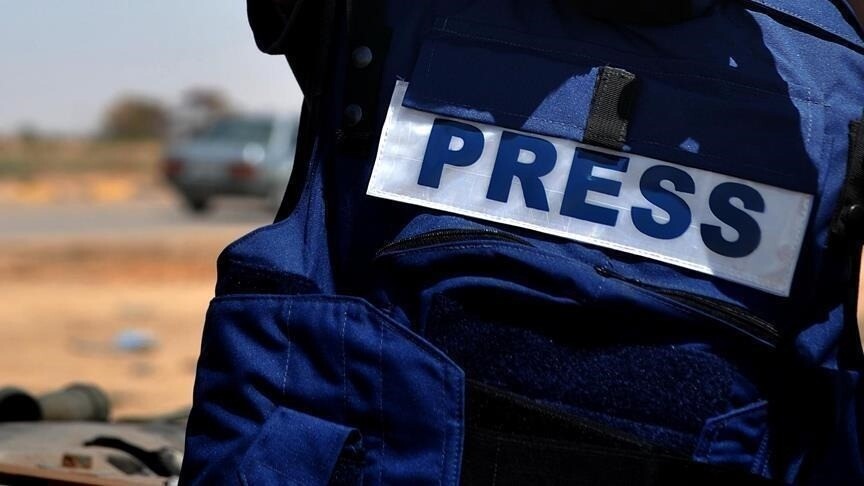
The Palestinian Journalists Syndicate said Sunday it had recorded about 300 violations and attacks against Palestinian journalists since the start of 2026, amid escalating targeting of media workers.
The announcement came during a rally organized by the syndicate outside its headquarters in the city of al-Bireh in the occupied West Bank, marking World Press Freedom Day and protesting continued attacks on journalists.
Participants raised banners demanding an end to the killing of media workers and accountability for Israel.
“Activities organized on World Press Freedom Day aim to highlight the exceptional and unprecedented conditions under which the Palestinian journalist operates,” Omar Nazzal, the deputy head of the syndicate, addressed the crowd.
Journalists are facing “the fiercest Israeli war machine,” he added, noting that more than 4,000 violations have been recorded against them since the start of the war on Gaza in October 2023.
“The number of journalists killed has reached 262 male and female journalists since that date, including 261 in the Gaza Strip, in addition to six journalists killed since the beginning of 2026,” said Mohammad al-Lahham, head of the syndicate’s freedoms committee.
He added that the current year has also seen 10 direct injuries, 22 arrests, 120 cases of detention or prevention from coverage, and 12 attacks carried out by Israeli occupiers.
Lahham said total violations since October 2023 reached 3,983, including 1,072 in 2023, 1,325 in 2024, 1,286 in 2025, and 300 in 2026.
These violations included 240 cases of direct gunfire at media crews and 352 cases involving tear gas and stun grenades, as well as beatings, confiscation of equipment, and travel bans, he added.
The syndicate said in a report read at the event that it had documented 188 arrests since October 2023, along with the destruction of 187 media institutions and offices and 140 homes belonging to journalists.
The syndicate reported the killing of 713 family members of journalists, indicating that the targeting extended beyond media workers to their social environment.
The syndicate said the targeting of journalists “is not individual behavior” but part of a “systematic policy” aimed at restricting journalism and silencing the Palestinian narrative, particularly amid field coverage of events.
It called on the UN and international organizations to provide urgent protection for Palestinian journalists, open independent investigations into violations, and ensure accountability.
The Israeli genocidal war on Gaza began on Oct. 8, 2023, and has killed more than 72,000 Palestinians and wounded over 172,000, according to Palestinian figures.
Despite a ceasefire in effect since October 2025, Israel continues daily strikes and a blockade that has killed hundreds more and worsened humanitarian conditions in the enclave, home to about 2.4 million Palestinians, including 1.5 million displaced.