Camp Refugees in Lebanon speak fondly about Palestine and the collective memory that refuses to stay dormant but lives on through their identity and consciousness of its people
By Samaa Abu Sharar
BEIRUT – Ninety-year-old Hajj Ahmad Abdullah and his wife, Fayrouz Rustum, led us into the living room of their apartment, opening up the spaces of his memory, allowing us, from their home in the Zarout area of Iqlim al-Kharroub, to take a glimpse into the hidden world of his village, Kabul, in the Acre district, he left when he was 15 years old.
His memory overflowed, revealing its richness and an intimacy that 78 years of absence failed to diminish. It stands against the endlessly repeated Zionist refrain of “a land without a people for a people without a land,” a claim that was used to convince the world of a falsehood resting on hollow myths and illusions that falter before a coherent and living narrative.
Hajj Ahmad speaks of growing figs, olives and vegetables on land that has never disappeared from his memory. He recalls the simplicity and beauty of life and the warmth of human relationships. With bitterness, he recounts the story of his displacement from Palestine and his movement from one place to another in southern Lebanon before eventually settling in “al-Bass camp.”
Hajj Ahmad Abdullah: “I lived amid Palestine’s abundance, and I know the value of Palestine”
“I lived in the camp before I got married and travelled to the Gulf and Africa to earn a living,” he says, passing through the many stages of a life spent struggling to survive after suddenly finding himself cast into a void. He eventually settled in Zarout after long years of expatriation.
He keeps a file filled with papers on which he has recorded some of his memories of “beautiful, captive Palestine,” as he describes it, as well as reflections on what has become of his people’s cause. Among those papers is his will to his children, asking them to bury him in Palestine.
Hajj Ahmad points to his wife, now in her 70s, who left her village of Sheikh Dawud in the Acre district when she was only a week-old.
“This is my beloved,” he says. “But whatever she feels toward Palestine, or whatever my son or daughter feels, it cannot compare with what I feel, because they did not live in Palestine. They don’t know Palestine the way I do. I know Palestine. I lived amid Palestine’s abundance, and I know its value. I know every town and every city and what makes each one special.”
Hajja Fayrouz interrupts him, saying that the bond connecting a person to Palestine is not necessarily physical, but spiritual.
“My niece was born in Vienna and is married to an Austrian. Her daughter tells me she comes from Ain al-Hilweh refugee camp. She speaks Palestinian Arabic and loves Palestinian food.”
Narrative of the Camps
Among the narrow, dilapidated alleys of the Shatila refugee camp—where a passerby can feel as though the streets themselves are an extension of footsteps marked by oppression, humiliation and deprivation—we stop several people and ask them what the Palestinian narrative means to them.
Some ignore the question and continue on their way. Others stop to speak with us for a few minutes before moving on.
Mohammad, whose family comes from Sa’sa’ in the Safad district, tells us that he “drank in the love of Palestine and its suffering from his family.”
The young man, in his twenties, says he grew up listening to stories about Palestine’s beauty and what life there had been like. Ultimately, he believes that love for Palestine is “instinctive.”
Mohammad says his knowledge of Palestine began with the stories told by his parents and grandparents and deepened through information available on social media. These platforms allowed younger generations to learn more about the struggles of successive generations to liberate Palestine, about everyday life there, the process of displacement, and much more.
Mohammad believes the Palestinian narrative remains secure as long as successive generations continue to hold on to it. He gives the example of his three-year-old daughter, who, despite her young age, introduces herself as “a Palestinian refugee in Shatila camp.”
He attributes this to the continuing suffering inherited by the new generation from its parents and grandparents.
Rahaf, 14, and her nine-year-old sister Aseel were walking home carrying household supplies when we met them. Their family comes from the village of al-Na’ima in the Safad district, which was destroyed by the Zionist occupation along with many other Palestinian villages.
The two girls say their greatest aspiration is “the liberation of Palestine.” They proudly mention that their grandfather was killed during the War of the Camps in the 1980s—an indication of how deeply the experience of the Palestinian cause and refugeehood remains part of their lives.
Captain Tareq Abdul Rahman, who runs Al-Karmel Club, which trains children and young people in football and basketball in the camp, believes that accumulated knowledge of the Palestinian narrative began with the stories of grandparents and parents and developed further through individual efforts to search for information about Palestinian history and the Palestinian cause.
Abdul Rahman’s family comes from the village of Amuqa in the Galilee, and he remains in daily contact with children and young people in the camp. His work with them is not limited to sports. The club also organizes cultural activities introducing them to Palestine and commemorating national occasions.
He says the younger generation possesses a different body of knowledge from the generations before it. This is partly because stories passed from one generation to another lose some of their details over time, and partly because of the declining role of the United Nations Relief and Works Agency for Palestine Refugees (UNRWA) in fostering national awareness.
“The younger generation may know fewer details, but the most important thing is that the cause remains alive within them,” Abdul Rahman stresses.
He also points to difficult living conditions and the increasingly frantic pace of life, which leave parents with less time and energy to educate their children about the Palestinian cause.
Inside a tiny coffee shop barely large enough for a few seats, we sit with Abu Tareq al-Sadiq, whose family comes from Haifa and who lives in Shatila camp.
Abu Tareq, who trains scouts at the Dreams of a Refugee Association, says Palestinian identity is “inherited through the genes” from grandparents and parents who experienced displacement and suffering and passed those experiences on to their children.
“My daughter lives far away from the Palestinian environment, but imagine this: Today, her children are completely preoccupied with what is happening in Palestine, and that has a lot to do with what happened in Gaza,” Abu Tareq explains.
Abu Tareq al-Sadiq: “Palestinian identity is inherited through the genes”
Through his work with younger generations and the conversations he has with them, Abu Tareq has become convinced that the Palestinian narrative is safe despite the difficult circumstances Palestinians face.
He sees the emigration of young Palestinians abroad—a phenomenon increasingly common among Palestinian refugees—as an escape from a painful reality, but not as something that diminishes anyone’s Palestinian identity.
“They want to emigrate because there is a problem in this country, not because they want to forget Palestine,” he says.
In his view, migration does not necessarily distance young people from Palestine; it can actually bring them closer.
“They can obtain citizenship that enables them to visit Palestine. And they can work for Palestine more freely in another country of refuge, allowing their narrative to spread more widely throughout the world.”
He emphasizes that the Palestinian narrative cannot be reduced to the Nakba alone:
“It is all the living stories Palestinians have experienced since 1948.”
In the Mar Elias refugee camp, near Shatila, the Klas Palestinian Heritage shop overlooks one of the camp’s narrow alleys. The shop sells Palestinian symbols—keffiyehs, embroidery and other traditional items.
Journalist Imad Mukhtar, the shop’s owner and president of the Yafa Return Association for Heritage and Culture, considers these symbols an inseparable part of the Palestinian narrative and believes they should be circulated and promoted as widely as possible.
Imad Mukhtar: “The narrative is everything our grandparents and parents lived through, everything we lived through, and everything our children and grandchildren live through”
“When our families left Palestine in a hurry, they took some of their personal belongings with them,” Mukhtar says.
“The women, for example, took some of the embroidered dresses they had spent long nights working on. The men took their work tools—the pickaxe and the plough—to help them earn a living wherever they went. They also carried things such as bridal chests, grain mills, keys and land ownership documents.”
Mukhtar continues:
“Many of those belongings are still in our homes today. They used to tell us stories about these things—real stories about the lives they had lived. We grew up with those stories, stories about our Palestinian customs and traditions. We preserved them and raised our children on them. That is why the narrative is everything our grandparents and parents lived through, everything we lived through, and everything our children and grandchildren continue to live through.”
Mukhtar keeps a photograph of his mother taken in 2017. In one hand, she holds a Jerusalem ka’ak, and in the other she holds a photograph of herself as a child in Palestine in 1948, holding the same kind of bread.
“When she saw the Jerusalem ka’ak, she insisted that I photograph her with it because it reminded her of her childhood in Palestine,” Mukhtar says.
He is certain that the Palestinian narrative is safe with the younger generation, which has grown up learning about Palestinian history, the Palestinian cause and the sacrifices made by the Palestinian revolution.
“And besides that, they themselves experience refugeehood, marginalization and the lack of employment opportunities in Lebanon. This is part of the suffering that has continued across generations, and it is part of resistance,” Mukhtar concludes.
Many people link the survival of the Palestinian narrative to the continuation of Palestinian suffering.
Among them is Amira al-Saleh, who lived in the Nabatieh and Tel al-Zaatar refugee camps before both were destroyed and has lived with her family in Mar Elias camp for many years now.
Amira says that, in addition to the stories her grandparents and parents told her about Palestine, her consciousness was also shaped when she was a child of no more than 11-years-old through awareness sessions organized by Fatah cadres about the Palestinian cause in Nabatieh camp.
Amira al-Saleh: “The 10 days became long years, and we are still waiting”
Amira remembers a famous phrase repeated by residents of Nabatieh camp:
“Ten days and we will return to Palestine.”
But “the 10 days became long years, and we are still waiting,” she says.
Now in her 60s, Amira insists that it is impossible for Palestinians to forget their narrative because they continue to live the Nakba and witness continuing Israeli massacres against their people.
“Even if a Palestinian wanted to forget, they couldn’t forget the humiliation and deprivation they experience every day because they are not in their own country.”
The Narrative of Place
Palestinian novelist and visual artist Marwan Abdel Aal believes that the Palestinian narrative cannot be confined to a single event or element.
“The Palestinian narrative is not a single, closed story. It is a river of flowing stories, bringing together history, memory and everyday experience. The Nakba was not a passing historical event that can be placed between parentheses and then closed, nor was it a moment that ended when its year came to an end,” Abdel Aal says.
Abdel Aal, who grew up in Nahr al-Bared refugee camp and whose family comes from the displaced village of al-Ghabisiyya in the Acre district, believes everything that followed the Nakba was shaped within its long shadow: Language, memory, fear and deferred hope.
What happened reshaped Palestinian consciousness. It was not merely an uprooting from place, but an initial rupture in the relationship between human beings and their land, between time and its meaning.
Marwan Abdel Aal: “The Palestinian narrative is not a single, closed story. It is a river of flowing stories”
Abdel Aal attaches great importance to the consciousness created by place and to its influence on the Palestinian narrative and its evolution.
“The camp was the center of gravity of my consciousness. It was not merely a confined space on a map, but a laboratory of Palestinian existence—a place that taught me that identity is not an identification card. It is an ongoing act, a form of knowledge that cannot be reduced to a single word or to a temporary homeland,” Abdel Aal explains.
Palestinian writer and journalist Ramzy Baroud, who grew up in the Nuseirat refugee camp in Gaza, engages in this continuous act through what he describes as his work toward “liberating the Palestinian narrative.”
“When I was young in Gaza, like others of my generation, I was passionate about the dream of liberating Palestine. But as I grew older, I realized that liberation is not limited to removing Zionism from Palestinian land. It also means liberating Palestinian history, identity, memory and imagination.”
Ramzy Baroud: “Everything I write is an attempt to reclaim the Palestinian narrative on behalf of those who created it, preserved it and sacrificed for it”
For Baroud, liberating the narrative means freeing the study and teaching of history, as well as academic research, from the dominance of Zionist thought. It also means refusing to limit Palestinian discourse to merely responding to Zionist claims and myths.
Baroud’s family comes from the village of Beit Daras, from which his relatives were displaced to Gaza.
“Everything I write is an attempt to reclaim the Palestinian narrative on behalf of those who created it, preserved it and sacrificed for it: The refugees of Gaza, the West Bank, Lebanon, Syria and elsewhere; the descendants of farmers; workers, prisoners, fighters and martyrs; and everyone who sees themselves, first and foremost, as Palestinian,” Baroud says.
According to Abdel Aal, the narrative of place creates a particular complexity in defining identity.
“As a Palestinian, I say I am from the camp because it is the living memory of the continuing Nakba. To an Arab, I say I am from Palestine because the name itself bears witness to a wound. To a foreigner, I say I am Arab because the world wants to simplify the narrative and flatten it into a single mould. Sometimes I have said I am from Lebanon. In other words, the narrative is built upon a narrated memory rather than one personally lived—not as a form of belonging, but as a temporary legal reference—with a profound awareness that true belonging is not an identification card, but memory, practice and a continuing voice.”
One Narrative or Many?
Abdel Aal and Baroud agree that there is no single Palestinian narrative, but rather multiple narratives.
“There are particular experiences shaped by geography and different circumstances: The camp, the Palestinian interior, the West Bank, Gaza and the diaspora. But these are not separate narratives. They are different chapters of the same book, beginning with the Nakba and extending into the present, united by a shared memory, identity and cause.”
The Palestinian novelist considers this natural because the Palestinian does not conform to a “ready-made image.”
“The Palestinian is neither a silent victim nor a fighter stripped of complexity. The Palestinian is a human being who lives with contradiction: Someone who loves life and knows its price, who dreams and is prepared to defend that dream, who laughs because laughter is an act of resistance, and who writes because writing is an extension of political action. The Palestinian narrates and falls silent, disagrees, loves and hates. The Palestinian is, at heart, a natural human being—not a historical exception, but a moral test for the world.”
Baroud, meanwhile, regards the collective memory of the Nakba as one of the fundamental pillars of the Palestinian narrative.
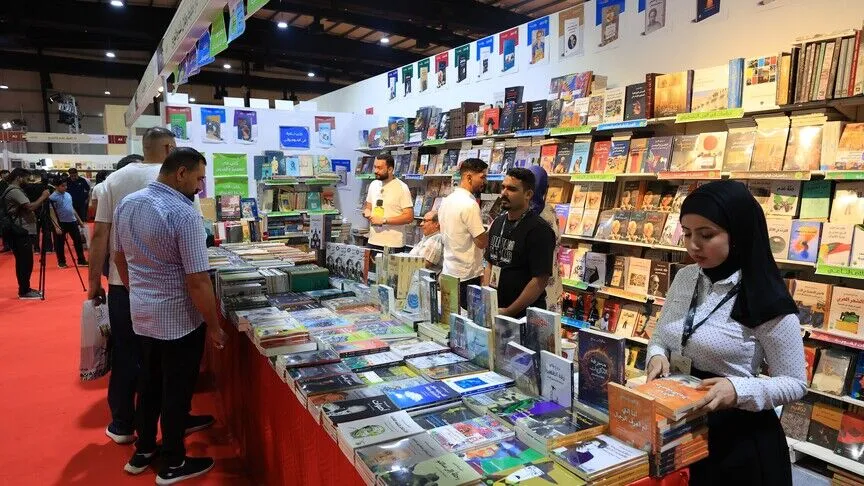
“The stories of grandparents and parents were the primary means of resisting the systematic erasure of the Palestinian presence: The destruction of libraries, universities, research institutions and archives, and the imprisonment and assassination of intellectuals who had always served as guardians of history and knowledge.”
For Baroud, however, the narrative is not limited to memory. It encompasses other equally important elements, including the daily documentation of Palestinian life and Palestinian steadfastness.
“In previous generations, this documentation took the form of clandestine literature, prison writings, drawings on the walls of refugee camps, poetry and oral testimonies,” he says.
Baroud stresses that the survival of the Palestinian narrative depends on its continuous renewal. This renewal takes many forms: The courage of ordinary Palestinians, the steadfastness of prisoners, the persistence of hope in Gaza’s displacement camps, and countless other acts of everyday resistance that, in his view, are producing new stories that will shape the consciousness of future generations.
There is also what he describes as a seemingly non-political form of “quiet resistance” practiced by ordinary Palestinians through their insistence on “education, music, art, family and life itself, without the noise of intellectuals or the fiery rhetoric of politicians.”
Palestinian poet and writer Mosab Abu Toha, from Gaza, said in an interview with prominent American television host Jon Stewart that someone once asked him whether he would tell his children the same stories about the continuing Nakba that he tells his audiences.
He replied:
“My children are the story, and I am the story.”
“The old will die and the young will forget,” Israeli Prime Minister David Ben-Gurion is said to have declared in the 1940s.
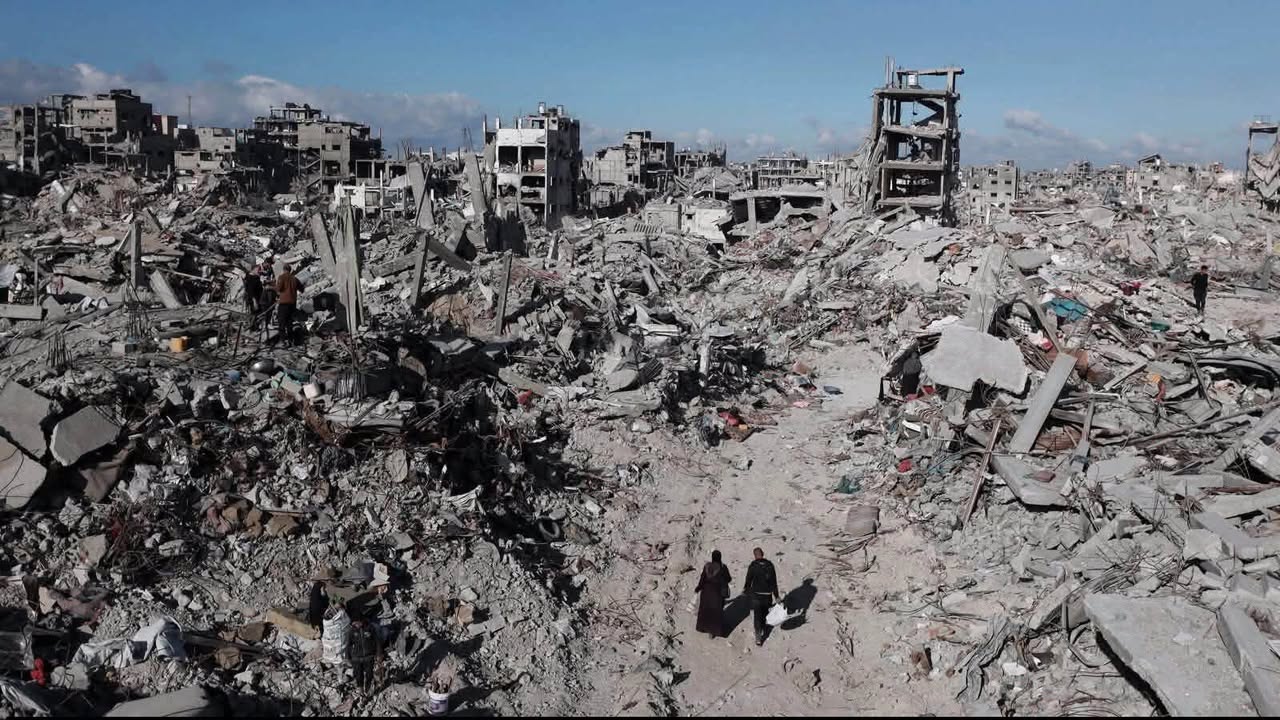
Nearly 80 years have passed since those words, yet the Palestinian story continues to be passed from one generation to the next, despite the darkness of the current Palestinian reality, deep political divisions, and the continuing Israeli violence in the Gaza Strip and the West Bank.
This article originally appeared in Al Quds Al Arabic. Sama Abu Sharar is a professional journalist, writer and translator with skills in three languages: Arabic, French and English. She is currently residing in Beirut and writes on different Palestinian and Lebanese issues for publications such as the online Palestine Chronicle and the Al Quds Al Arabi, a prestigious Arabic language daily newspaper published in London. Her articles appear in translated form in crossfirearabia.com.

 CrossFireArabia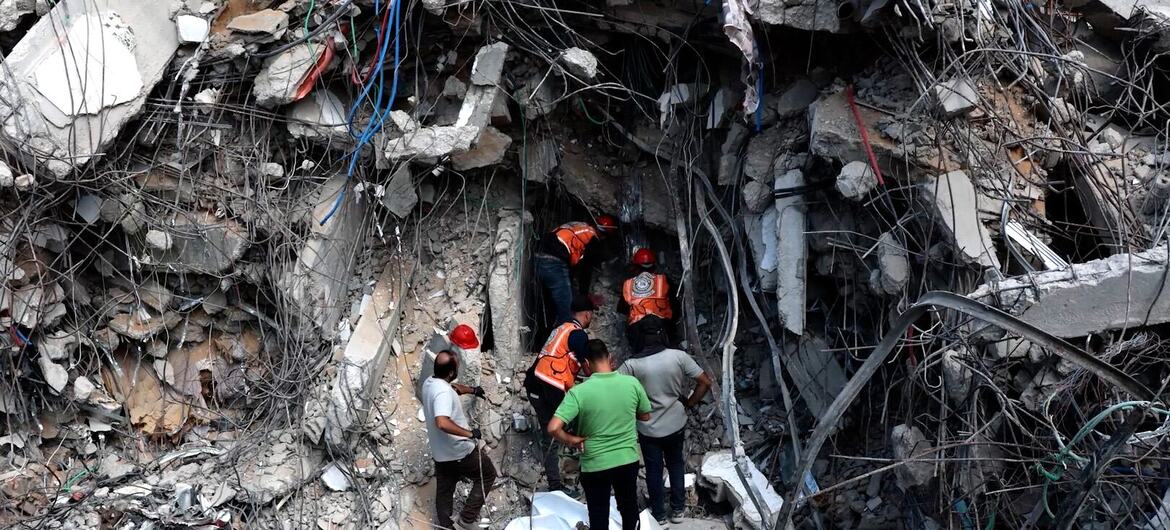
 Heba
Heba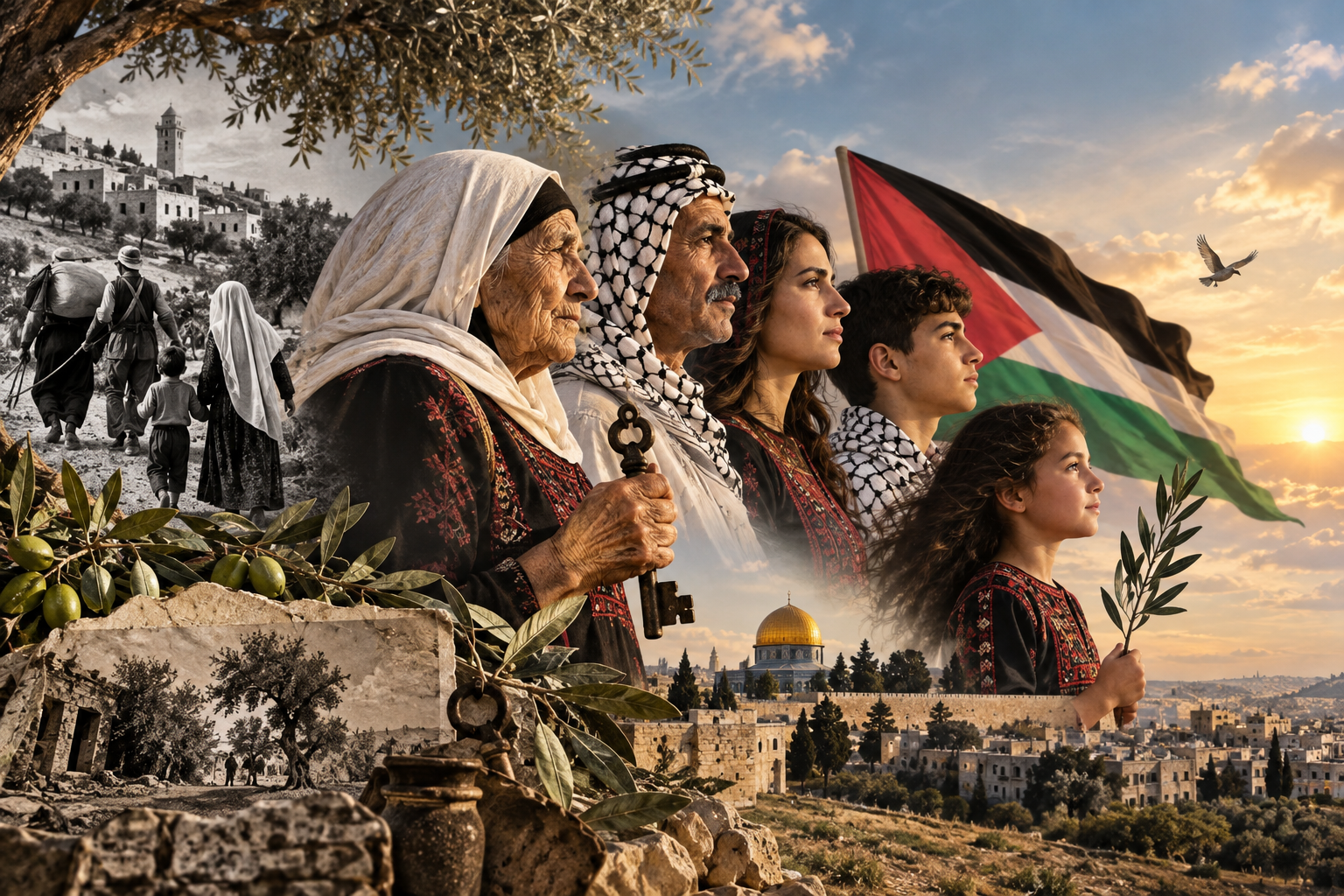
 marwan