The Gaza Death Trap

While everyone waits for the full-blast war on Gaza which Israel promises to continue, Tel Aviv must know this will not be an easy matter not least of all by the Benjamin Netanyahu government whose ministers are split over allowing the army to resume its “fighting” position in Gaza.

Not everyone holds the view of extremist Finance Minister Bezalel Smotrich. He wants to resume, or continue, a large scale offensive on Gaza and reoccupy the enclave forever! For these opposing ministers as well as a large number of army soldiers and officers are not in favor of going back to fighting in Gaza because (a) of the bloody situation and danger soldiers were subjected to since 7 October, 2023, and because they want the rest of the remaining hostages – 59 and about 24 still thought to be alive – to be returned.

They fear – and reflecting major sections of society who have been demonstrating daily in Tel Aviv and other major Israeli cities under the of banner “bring them home,” – that increasing the wheels of war on Gaza would be signing the death warrants of the remaining hostages, originally marked at 250 and over 40 of them killed by indiscriminate Israeli bombing of the different areas of enclave over the past 17 months or so of fighting.

In the eyes of Smotrich, and he doesn’t mince his words, the return of the hostages is now secondary and what is crucial is to destroy Hamas and end its presence in the Gaza Strip.

But this is not happening. Since the resumption of the Israeli war on Gaza on 19 March, 2025 the resistance led by the Islamic organization and the other Palestinian factions have also resumed their fighting. While it is true, Hamas was slow in getting back to the war, preferring to give the ceasefire and peace talks a chance, and which led many to say the resistance are finished, this was far further from the truth.

Fighting again

Exactly one month later after 19 March, the Palestinian resistance led by Hamas and Islamic Jihad, re-started their fight against the Israeli army and the targeting of its soldiers; the Zionist army had maintained an active presence in the different areas of the Gaza Strip since the ceasefire took effect on 19 January, 2025 when the newly-elected US president was installed in the White House.

After much waiting and the gradual realization that Israel was no longer interested in the ceasefire nor in ongoing talks in Doha and Cairo, Hamas and Islamic Jihad reignited their war tactics on the Gaza battlefield. They realized Netanyahu, as prime minister of an extreme right-wing government, was no longer interested in maintaining a ceasefire.

Analysts maintained that Netanyahu was encouraged by Trump’s conflicting and dangerous stance on Gaza on top of which was the dramatic and subsequently abhorred idea of expelling the 2.1 million population of Gaza to build the Strip as the newly-plushed Middle East Riviera.

Although he quickly backed down due to Palestinian, Arab and even world pressure, Netanyahu interpreted this hugely-wrongful idea as greenlight to continue to hammer Gaza from the air and reimpose the starvation policy of its population.

Although the people got the backend of the Israeli willful mad firepower while shutting down the curtain on aid entering the 364-kilometer enclave, Hamas and the other Palestinian groups begun to regroup and re-started its military operations against the Israeli army in Biet Hanoon in the northern Gaza Strip to Gaza City in the center, Shujaiyia to the west, Khan Younis lower down and Refah, further south on the border with Egypt.

Like before, since 7 October, 2023, the resistance has now embarked on the increasing use of ambushes and booby-trap operations of luring Israeli soldiers and targeting Israeli tanks, armored vehicles and bulldozers while firing at them through locally-made, cheap but effective and deadly missiles that resulted in many of these soldiers being killed and badly-injured – numbers in the thousands – while many of the tanks and bulldozers either blown up and/or put out of action.

Towards the end of April onwards, this strategy was reactivated at full length and on different days sniping Israeli soldiers and targeting armoury would rise in multiple and different operations through the Gaza Strip. What is today of major worry to the Israeli army is that these geographical areas which were supposed to be “cleaned up” from Palestinian operatives are becoming active once again which means that for the Israeli army its back to square one.

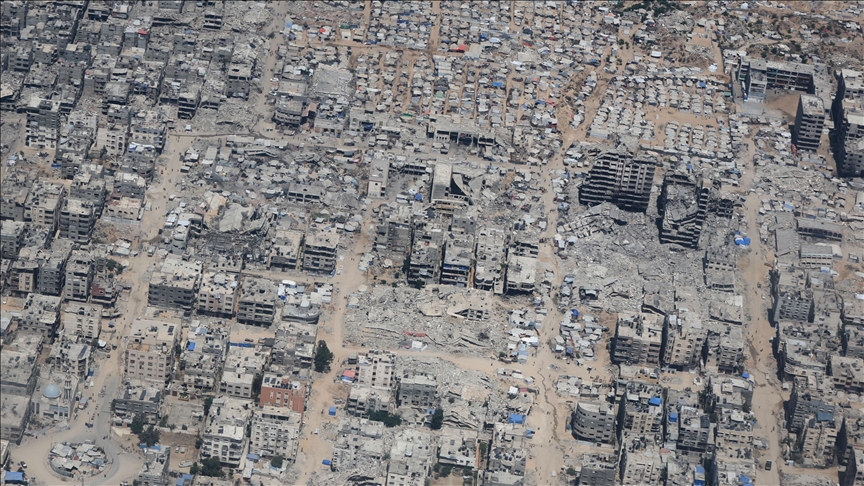
The Israeli army had literally destroyed many of the major cities, towns, neighborhoods, villages of Gaza not once but many times. They entered places like Khan Younis, Jabalia, Shujaiyia, Nuseirat, Rafah and many more multiple times and declared them free from Palestinian resistance groups but these fighters just continue to emerge as seen recently and to the chagrin and frustration of the Israeli army.

Such frustration has led Israeli politicians like Netanyhu, and arch anti-Palestinian politicians like Itamar Ben-Gvir, Minister of National Security and hated by some Israelis for his extreme rightwing views to call for the re-occupation of Gaza, something that Netanyahu is actively contemplating. The prevailing view that once the army gets into Gaza once again, and on a mass scale, they can never leave! There are many in the army who have long rejected such an idea because they know of the “bloody situation” their soldiers would face.

However, the Israeli government and its army continues to operate under a set of illusions it is refusing to budge away from simply because Hamas and the Palestinian resistance presence is still operating in Gaza and in a robust mode to fight and kill Israeli soldiers and destroy their tanks and military hardware.

This is in addition to the fact the Israel and its army is getting nowhere near to freeing the rest of the hostages and who are likely to die if Israel embarks on a bigger war on Gaza and which Netanyahu and his extremist government are determined to do despite the warnings of the Israeli army which admits the rest of the hostages could die in any bigger military offensive.

Trump in region

Throughout this war there was always one external factor that played a permanent role in fuelling the Israeli genocide of Gaza and that was the United States through its provision of military support to Tel Aviv first under the Joe Biden administration and now under Trump.

If he could be persuaded to stop the supply of weapons to Israel, Netanyahu will finally stop the war on Gaza. Trump is on record, especially when he was running for the White House he would stop the war in Ukraine and Gaza. But will he? First of all, the Israeli lobby is entrenched in the US government.

However, there is one important factor that can pressure the Trump administration and that is the Arab countries. Trump is soon visiting Saudi Arabia and the Gulf countries including Qatar and the United Arab Emirates. If enough pressure can be applied from these quarters then surely the US president can move on the Gaza issue and halt any plans that Netanyahu is concocting for the enclave.

The Trump visit is being made in mid-May and its already played as a “bilateral” tour between the United States and these states whilest focusing on investment. And this is where their influence can be made with investment, economics and politics moving on one pedestal.

So the ball at the present time is in the hands of the Arab Gulf countries!

This comment is written by Dr Marwan Asmar, chief editor of the crossfirearabia.com website. 

Continue reading
Trump’s War in The Red Sea

Dr Khairi Janbek

The US foreign policy in the Red Sea today is characterized by a robust military response to Houthi threats, aiming to protect critical maritime trade routes and assert influence in a geopolitical strategic area. While these military operations garnered international support, the ongoing conflict underscores the complexities and challenges of Middle East interventions.

The US military’s increased involvement in the Red Sea, including the deployment of two aircraft carriers, signals a commitment to ensuring freedom of navigation and countering the Iranians in the region. However, the present ongoing escalation also risks entangling the US in a prolonged conflict.

This is reminiscent of past Middle East engagements which the Americans should be well-aware of, and may put additional strain on the US military resources amid other pressing global priorities if faces.

That said, the present military strikes on Yemen are not just about the Houthis. They are also widely seen as demonstration of US strength towards the group’s main backer: Iran.

The Washington administration is currently locked in a series of negotiations regarding Iran’s nuclear programme and Trump has not ruled out military action if those talks fail, yet, it is possible still, that the US, and judging by recent history, the Americans may change their mind and everything is put on hold yet again.

But we need to wait and see! The US has already moved its patriot and THAAD missiles from Asia to the Middle East, and only in the first month of the preparedness campaign, $200 million of ammunition has been used and this is making military officials greatly concerned about the impact on stocks the US Navy might use in the event of a Chinese attack on Taiwan.

At the same time, there are various Yemeni groups opposed to the Houthis with regional backing, and dare one say with some international backing, reportedly considering taking advantage of the situation to launch a ground campaign to oust the Houthis once and for all, but Washington is yet to make a decision on whether to back such operations or not.

Most analysts and officials say that, American troops participating in any ground operations in Yemen is highly unlikely, moreover, even more limited support for ground operations would still be another case of the US backing armed groups in a messy middle Eastern war; exactly the sort of situation Trump blasted previous administrations for falling into.

Dr Janbek is a Jordanian analyst based in Paris, France.

Continue reading
‘Zionism a Mistake’ – Israeli Historian Tom Segev

Tom Segev, one of Israel’s most renowned historians, has broken a decades-long silence. On his 80th birthday, he declared that Zionism—Israel’s founding ideology—was a mistake.

In a deeply personal interview with Haaretz, Segev said, “Zionism is not such a great success story. It also doesn’t provide security to Jews. It’s safer for Jews to live outside Israel.” He added that Zionism created myths instead of solutions.

Born in Jerusalem in 1945 to Jewish German parents who fled the Nazis, Segev has spent more than 50 years researching Israel’s history. His books include 1967, The Seventh Million, and Soldiers of Evil, all known for challenging Israeli narratives.

In the interview, Segev shared a painful truth about his father’s death. He grew up believing his father was killed by an Arab sniper during the 1948 war. “I was able to say that he was killed during the War of Independence and that I was a war orphan.”

But later, Segev’s sister revealed a different story. Their father had actually died in a freak accident—falling from a drainpipe while trying to deliver coffee to guards. He stated that he was brought up on a lie.

This moment of reckoning made him question everything—including the stories Israel tells about itself.

Segev now says the Zionist project was never meant for people like his parents. “My parents started to plan their return to Germany”, he revealed. “They were never Zionists and they wanted to go home. A month after the last letter my father wrote to a friend about how much he wanted to go back – he was killed.”

Despite growing up in Israel, Segev never fully embraced Zionist ideals. He stressed that much of what Israelis were told was myth.

In his academic work, Segev often turns to documents rather than oral testimonies. He famously challenged former Prime Minister David Ben-Gurion in a 1968 interview, questioning the idea that Ben-Gurion became Zionist at age three.

Segev believes the Holocaust has been politically weaponized. In The Seventh Million, he argued that instead of teaching democracy and human rights, Israel used the Holocaust to fuel fear and justify wars.

He also criticized internal discrimination within Israeli society. In his book 1949: The First Israelis, Segev exposed how Jewish colonial settlers from Arab countries were pushed into camps, while Europeans were given hotels.

Segev insists he isn’t ideological. “People have also said I am anti-Zionist, but I am not an ideologue and not a philosopher, and I don’t think in terms of ideologies,” he says. “It was said that I want to shatter myths. But that’s not true, either. I was not part of the ‘New Historians’ but rather of the ‘First Historians.’ With respect to the state’s establishment there was no history here – just mythology and a great deal of indoctrination. In the 1980s we opened documents in the archives and said, ‘Wow, this isn’t what we were taught in school.’”

“We need to remember that the majority of the Holocaust survivors did not come to live in Israel and that the majority of Jews in the world are not coming to Israel”, he stressed. “They can, but they don’t want to live in this country. So Zionism is not such a great success story. It also doesn’t provide security to Jews. It’s safer for Jews to live outside Israel,” as reported in the Quds News Network.

Continue reading
Sheep in a Wolf Clothing

When Donald Trump become US president and just before, many in the world and the Middle East thought he would have the imagination to end the Israeli war on Gaza.

But everyone, including this writer, were sadly mistaken. He appears to be fueling the conflict on the little enclave and satisfying the inclination of Israeli Prime’s Benjamin Netanyahu’s appetite for repeated genocide on the territory. 

It has become quickly, and blatantly obvious that Trump was not in interested in wrapping up this catastrophic war  and ending it but to follow the machinations of the previous Joe Biden administration of adding fuel to the fire, giving Israel more open-cheque, deadly arms under the pretext of finishing the presence of Hamas in Gaza.

The fact that the Israelis with the help of the Americans were only killing more helpless civilians most of whom are babies, toddlers, children and women was neither here nor there. Their bombs fall on what used to be residential areas and certainly not on Hamas fighters and other operatives.

While Trump must be credited for achieving a ceasefire on Gaza in 19 January, 2025, just days before he officially entered the White House, he did nothing to stop Netanyahu when he re-started the war on the strip exactly two months later on 19 March and continues to do so today with no end in sight. 

Despite the diplomatic trips of his personal envoy in the name of Steve Witkoff, Netanyahu is thought to be telling Trump that the war on Gaza will continue till Israel roots out Hamas from the enclave regardless of the mostly-Israeli hostages, now standing at 59 and half of whom are in body bags, thanks to the constant Israeli bombardment of the Palestinian enclave.

Despite his “peace” boasts, Trump has long appeared to be giving Netanyahu the green light to continue the war on the strip as he already stated he wants to displace the Gaza Palestinians to safer places such as Jordan and Egypt while the United States goes into the Strip and clns up the Israeli-purpetrated ruins and develops into a so-called Middle East Riviera under the pretext that Gaza has become an unlivable area. 

It would have been nice of the new peace-tainted US president to say that Gaza was unlivable because of the mass Israeli bombing but Trump is well-aware of that since America has been the superpower behind this genocide since 7 October, 2023.

While he may have since backtracked on the transfer issue because of the mass opposition to it not least of all from Arab countries and the Palestinians themselves Trump’s displacement idea has since become a catchphrase for Netanyahu and other Israeli politicians in his extremist government as a feasible idea to be carried out on a “voluntary” basis and which they are now preparing the ground framework for.

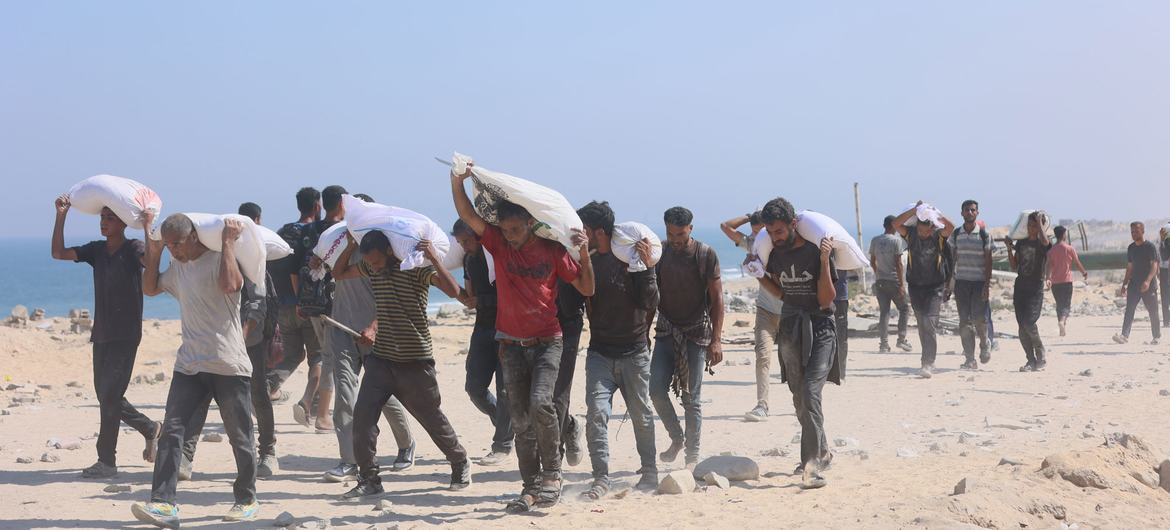
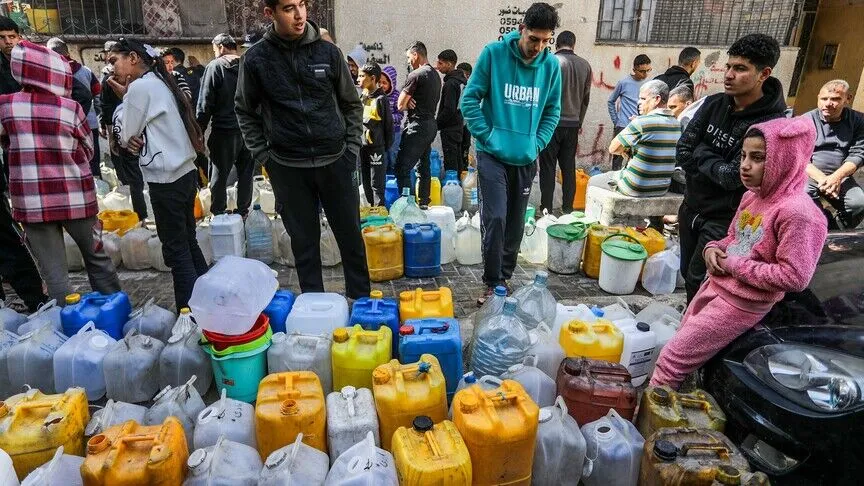
Today Gaza is in a ruinous state. After the 19 January ceasefire, UN food and aid trucks started to enter the beseiged enclave, however all that has stopped when Israel re-started its war on the lone-standing territory. Israel has reinstated the sieged, sealing the Strip with no aid lorries being allowed with the trucks once again standing on the dfifferent entry points of Gaza including Rafah.

For Gaza it is back to the bad old days of starvation, Israeli bombardment, targetting at civilian tents in places like Mawasi and bombing hospitals, a bloody status quo that continued from just after 7 October, 2023 till 19 January 2025 and is resumed today.

Only Trump can stop the present carnage. Only he can put an end to the bloody actions that are being dictated by Natanyahu who is hell-bent on continuing to destroy and kill the people of Gaza who presently stand at 2.1 million.

It is ‘sealed’ starvation for Gaza. It has been now over 50 days when nothing has been allowed to enter the strip but the road is long and the people are bracing themselves for more deaths, not to mention the deadly strikes carried by Israeli planes and drones carried out on a daily basis.

Continue reading
Rehabilitating Iran?

By Dr Khairi Janbek

All eyes now are on the new game in the Middle East: The US-Iran negotiations. One would say the aim here is far more advanced than the Iranian nuclear programme when the agreement was torn up by US President Donald Trump himself who was more concerned with details which would eliminate all threats against Israel, and would that in all liklihood, transform the whole region.

It seems that in this early intense stage, the ambiance is for reaching an amicable agreement through the recognition that no matter of the outcome, there will be nothing divisive. Trump will continue creating crisis just for the sake of showing that he can control those crises, and act in the manner of the old Arabic adage, for neither the wolf to die nor the sheep to parish. While for the Iranians, they have everything to gain from a positive outcome to those negotiations.

Of course, the Iranian nuclear programme is an important component of these negotiations, and most often than not, at times Iran and at times its enemies, exaggerate the potential of the country to making nuclear weapons for political purposes.

Yet the fact remains that despite the possibility of Iran being still far from creating weapon-grade enrichment programme, if carried on unchecked, it is inevitable that at one point in the future it will have nuclear weapons. Consequently the fact remains, the onus is on Iran to prove credibly that its nuclear programme is for peaceful purposes, and accept periodically, the checks of the international nuclear inspectors.

The other dimension is the relationship of Iran with its proxies in the region, which falls under the category of threats to Israel. Well, and under the circumstances, Iran has to decide the reasons for its continued alliances with its proxies – whether such alliances served their purpose, or have become a burden than an asset – or if it can maintain these alliances with definte no threat commitment Israel but with political clout in Arab world affairs, which incidentally may not seem such a bad idea for Trump.

After all eliminating the threat against Israel is the primary concern, while at the same time his rich Arab allies buy their protection from him, a protection which Iran cannot dare to test.

But what is in it for Iran to reach an accord with the United States? One would say plenty. For a start it’s reintegration back into the region. After all it kept claiming it’s nuclear programme, is in reality, a peaceful programme and Tehran never had the intention of enriching weapons grade uranium.

Well, and with an accord it can now easily prove, and then can start dealing with the issue of not being a threat to Israel by either dissociating itself from these proxies which have become costly to its image and/or work in their transformation to political, unarmed forces and parts of the political structures wherever they exist in the Arab region.

Essentially if the sanctions against Iran are lifted and its assets are no longer frozen, Iran will be able to assume a very strong position in the Middle East region based on its economic strength and its enormous trade potential. In fact, Trump knows that any military action he takes against the Iranian nuclear installations, and any possible response will not have a decisive result. Therefore, the most likely decisive result will be, a new Iran, big in the region as well as moreover, that will owe him a favour.

In the meantime , we are still at the very early stage to even try to guess, but we can safely assume, that no matter how those negotiations proceed, nothing tangible is likely to happen before the visit of President Trump to the Gulf region in May.

Dr Khairi Janbek is a Jordanian analyst based in Paris, France

Continue reading